
The wedding ring goes on the fourth finger of the left hand in the United States, a placement the Romans justified with a vein they believed ran straight to the heart.
That single vein, the vena amoris, never actually existed, yet it was enough to keep the custom alive for centuries.
Not every country accepts the left hand as correct, though. Germany, Russia, Poland, and Orthodox Christian traditions worldwide place the ring on the right, where the hand’s strength in oaths and blessings carries more symbolic weight than any romantic anatomy.
The Left Hand Fourth Finger
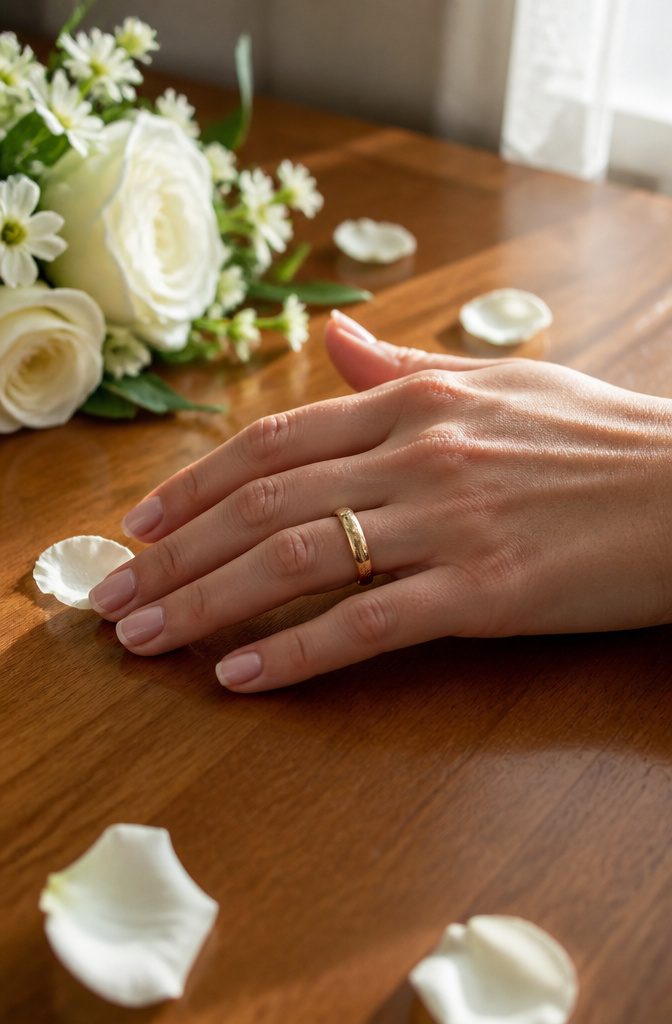
In the United States and most Western cultures, the wedding ring goes on the fourth finger of the left hand.
That is the immediate practical answer, and it is the one I reached for myself when I first started reading about this.
The custom traces back to ancient Rome and Egypt, where people believed a vein ran directly from that finger to the heart.
They called it the vena amoris, the vein of love. Modern anatomy shows no such single vein exists, but the symbolism held on long enough to become standard practice.
The left hand itself mattered too.
Historically it was considered the less dominant hand, so a ring worn there faced less daily wear and damage. That practical angle helped the tradition stick in cultures where manual labor was more common.
Not every country follows this. Germany, Russia, Poland, Austria, India, and parts of Scandinavia place the wedding ring on the right hand instead, where it is seen as the more honorable or stronger hand.
Some of those couples even move an engagement ring from left to right after the ceremony. For an American wedding, though, the left hand fourth finger remains the expected placement.
The Vena Amoris Story

The ancient Romans believed a single vein ran directly from the fourth finger of the left hand straight to the heart.
They called it the vena amoris, the vein of love, and it became the reason that finger carried a wedding ring. Modern anatomy has long since shown no such direct connection exists, yet the placement stuck.
By the time medical understanding advanced, the symbolism had already hardened into Western tradition. King Edward VI made it official in 16th-century England, declaring the left hand’s fourth finger the proper seat for a wedding band.
What started as a romantic error became a rule couples still follow centuries later. The heart connection was never literal, but it never needed to be.
Right Hand Traditions
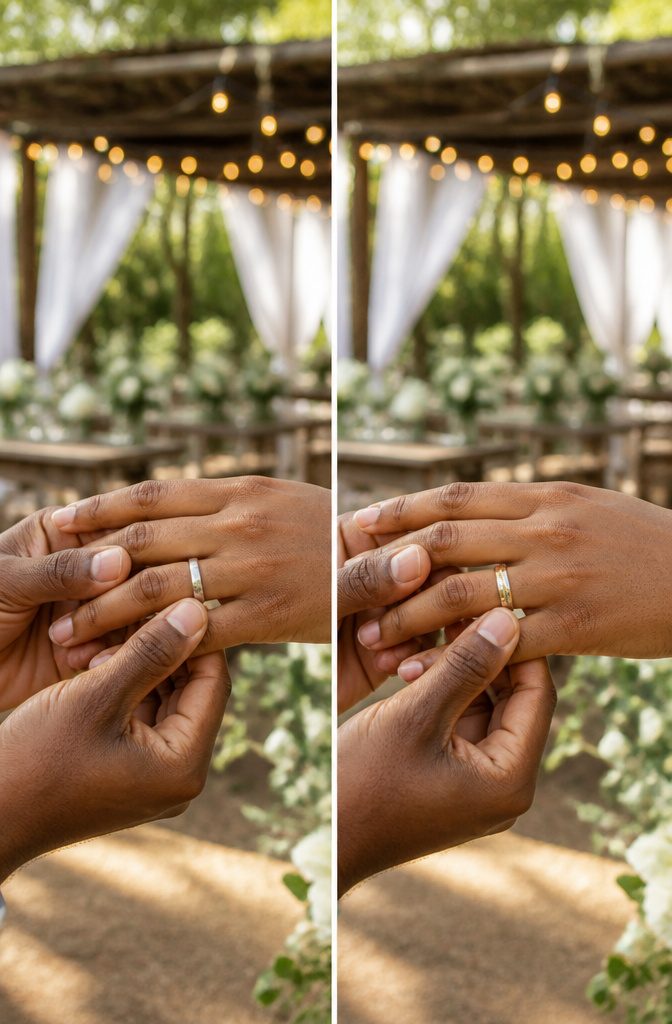
Orthodox Christian weddings place the ring on the right hand, a choice rooted in the right hand’s role in oaths and blessings. Greece and Poland follow this practice, as do several countries across Europe and beyond.
Germany and the Netherlands add their own twist: the engagement ring starts on the left hand, then moves to the right once the wedding happens.
Spain, Norway, Austria, and Hungary also favor the right hand for the wedding band. In Brazil and Colombia, couples sometimes wear the engagement ring on the right hand before the ceremony, switching it to the left alongside the wedding band.
India stands apart for a different reason.
The left hand carries traditional associations with inauspiciousness, so the right hand becomes the natural home for a wedding ring. The distinction is less about which finger and more about which hand carries symbolic weight.
What this means for a couple in the US is simple: if your family or faith carries any of these traditions, the right hand is not a mistake.
It is the correct hand, and the switch from left to right after marriage is a ritual in itself, not an afterthought.
Engagement Ring Placement
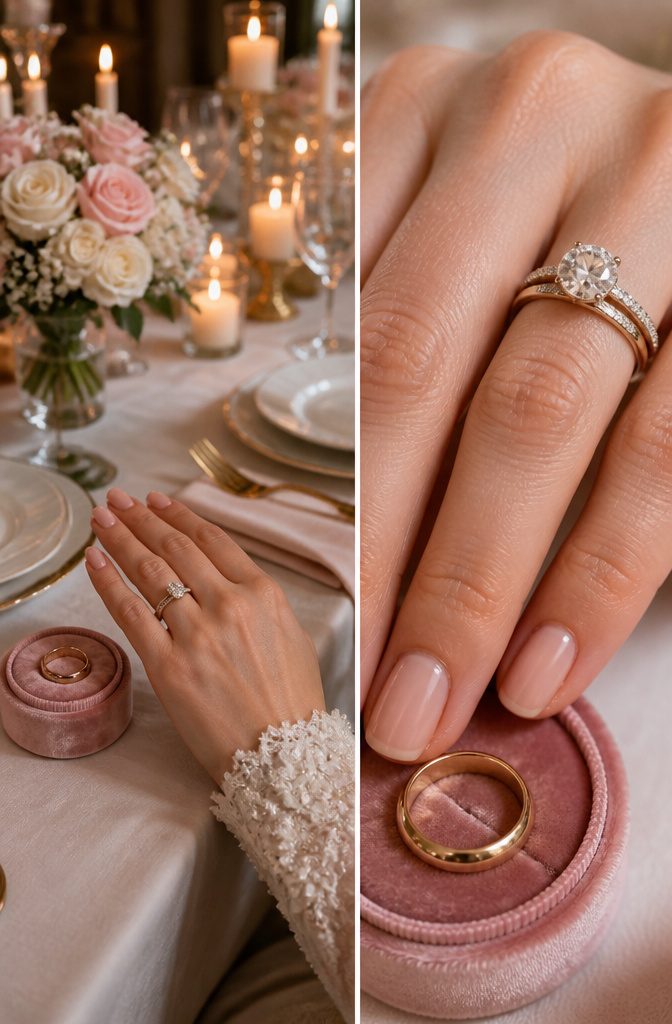
In Western practice, both the engagement ring and the wedding band share the same finger: the left ring finger.
The question of what finger does your wedding ring go on gets slightly more complicated on the actual wedding day, because the engagement ring is already sitting there.
Many brides move their engagement ring to the right hand before the ceremony starts.
That leaves the left ring finger bare so the wedding band can be placed first, closer to the heart, during the exchange. After the ceremony, the engagement ring slides back on top, creating the familiar stacked pair.
Not everyone bothers with the shuffle; some brides leave the engagement ring in place and let the officiant work around it, or they skip wearing the engagement ring entirely for the ceremony and add it later.
The right-hand move is the common compromise when you want the wedding band to hit the finger first without leaving the engagement ring behind.
Stacking Order on the Finger
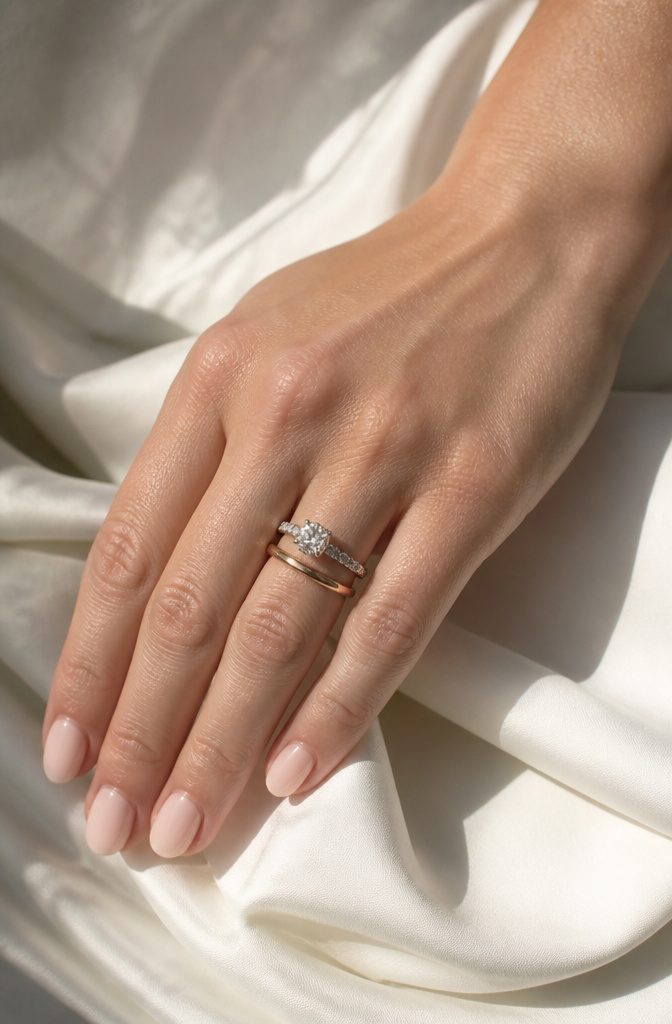
The wedding band sits closest to the heart, with the engagement ring stacked on top.
That order, base to tip, is the standard most American couples follow, and the symbolism is straightforward: the band representing your vows stays nearest the pulse, while the engagement ring guards it from above.
Some brides temporarily shift the engagement ring to the right hand during the ceremony so the wedding band can be placed first on the left, then slide it back on top afterward. Others find that design matters more than symbolism.
Large or unusually shaped engagement rings can make the traditional stack uncomfortable or lopsided, and in that case wearing the engagement ring closer to the palm, or even on a separate finger entirely, solves the practical problem without much fuss.
Bridal sets designed to nestle together, flush-fitting or contoured, remove the question entirely.
For everyday wear, plenty of women leave the engagement ring at home and wear only the band, especially if the diamond setting catches on gloves, gym equipment, or work tools.
The stack looks romantic in photographs, but the version that actually lives on your hand is the one worth committing to.
When Tradition Meets Real Life

A jeweler once told me that the left-hand fourth finger is still the default, but the couples she sees lately are more likely to ask whether they have to.
The answer is no, and the reasons are usually practical. A right-handed guitarist needs that finger free for fretting.
A mechanic working near spinning equipment does not want a platinum band caught in a lathe. For them, a silicone band or a chain around the neck keeps the symbol close without the hazard.
Same-sex couples in particular have pushed this conversation forward, not by rejecting symbolism but by owning it.
Matching rings on different hands, one partner wearing a pendant while the other wears a band, or skipping rings entirely for a tattoo: the choice is the custom. What matters is that both people know what the arrangement means.
The active-lifestyle question is the one I see most often.
Rock climbers, nurses who wash hands fifty times a shift, parents afraid of scratching an infant: all need a plan. Some buy a second cheap band for work hours.
Some resize the original for a tighter fit on a middle finger. The ring finger is traditional, not mandatory, and the best choice is the one you will actually wear without resentment or risk.
What I Got Wrong at My Own Ceremony
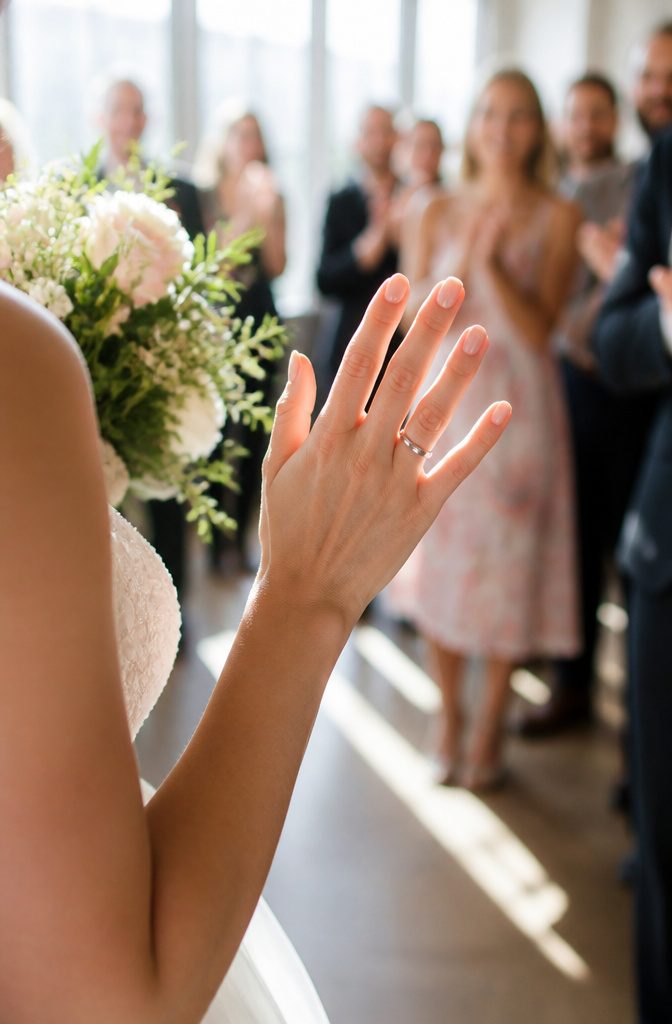
The officiant had already reached for my hand when I realized I had slid the band onto my right ring finger out of nerves. A small correction, a half-second pause, and we were back on script.
Nobody gasped. The photos from that angle all look the same.
That moment stuck with me less as embarrassment and more as proof of how little the mechanics matter against the intent.
I had spent weeks reading up on which hand carries the vow, worried about getting the symbolism exactly right, and still fumbled it live.
The marriage was valid. The ring was on a finger, any finger, and the meaning traveled with it.
What I took from it was a looser grip on the checklist.
The placement is tradition, not law. If you swap hands for work, for comfort, or because you simply forgot under pressure, the ring keeps doing its job.
The guests will not remember which finger. They remember whether you looked at each other when you said it.
That is the detail worth rehearsing.
Ring Finger by Culture
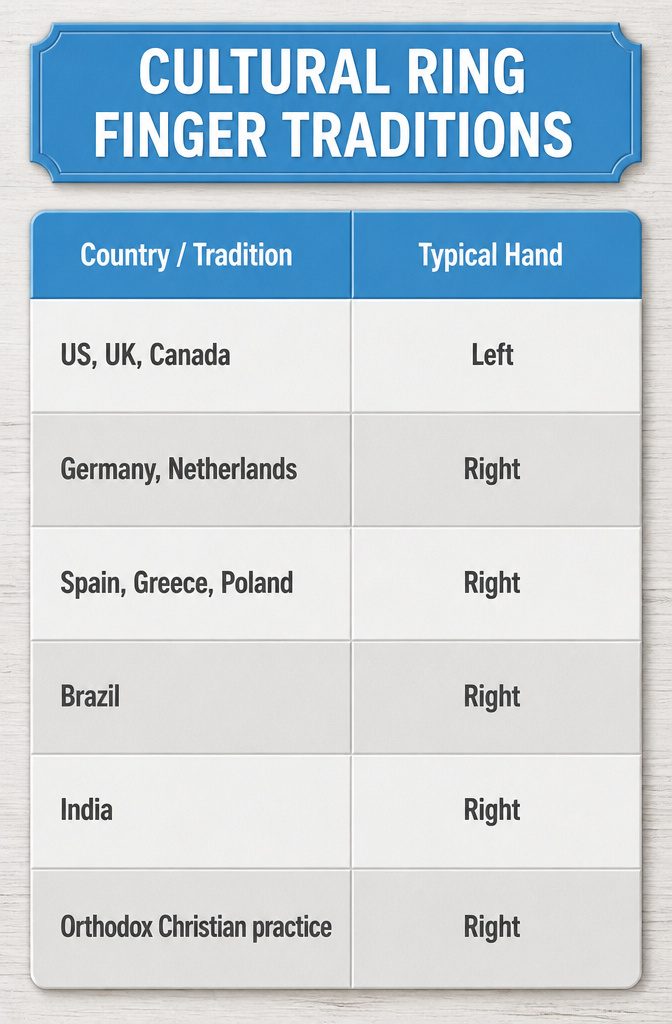
The hand you wear your wedding ring on depends almost entirely on where you grew up or what tradition your family follows.
In the US, the UK, and Canada, the left hand fourth finger is the standard placement most people recognize.
Shift across the Atlantic to Germany, the Netherlands, Spain, Greece, or Poland, and the right hand takes over, a pattern tied closely to Orthodox Christian practice where the right hand carries symbolic weight in oaths and blessings.
Brazil and India add their own wrinkles: Brazil follows the right-hand rule, while India does as well, though regional and religious variation there runs deep enough that a single "correct" hand is harder to pin down.
| Country / Tradition | Typical Hand | Notes |
|---|---|---|
| US, UK, Canada | Left | The Western default |
| Germany, Netherlands | Right | Shared with much of Northern Europe |
| Spain, Greece, Poland | Right | Strong Orthodox Christian influence |
| Brazil | Right | n/a |
| India | Right | Regional variation common |
| Orthodox Christian tradition | Right | Symbolic link to strength and blessing |
Budget Choices That Affect the Ring

A wedding ring budget sits somewhere between the catering deposit and the photographer’s final payment, and the finger you choose can quietly reshape what that money buys.
The traditional left ring finger placement, rooted in the ancient Roman belief in the vena amoris running to the heart, still dominates American ceremonies.
That single choice keeps you in the mainstream of jewelers’ standard sizing and display stock, which matters when you’re already stretching a modest budget against a hard deadline.
Some couples split the pair across hands, wearing the engagement ring on the right until the wedding band takes the left, a practice that distinguishes the two stages without requiring a second purchase to match.
Same-sex couples and working artists increasingly treat finger choice as flexible, moving rings to the dominant hand or switching to silicone or neck chains when the job demands it.
The comfort of your own hand is the only rule that holds.
What I notice reading through these customs is how often the practical override arrives after the purchase, not before.
Budgeting for the ring means budgeting for the possibility that your first choice of finger, metal, or daily wear will not survive first contact with your actual work and habits.
Questions Guests Actually Ask
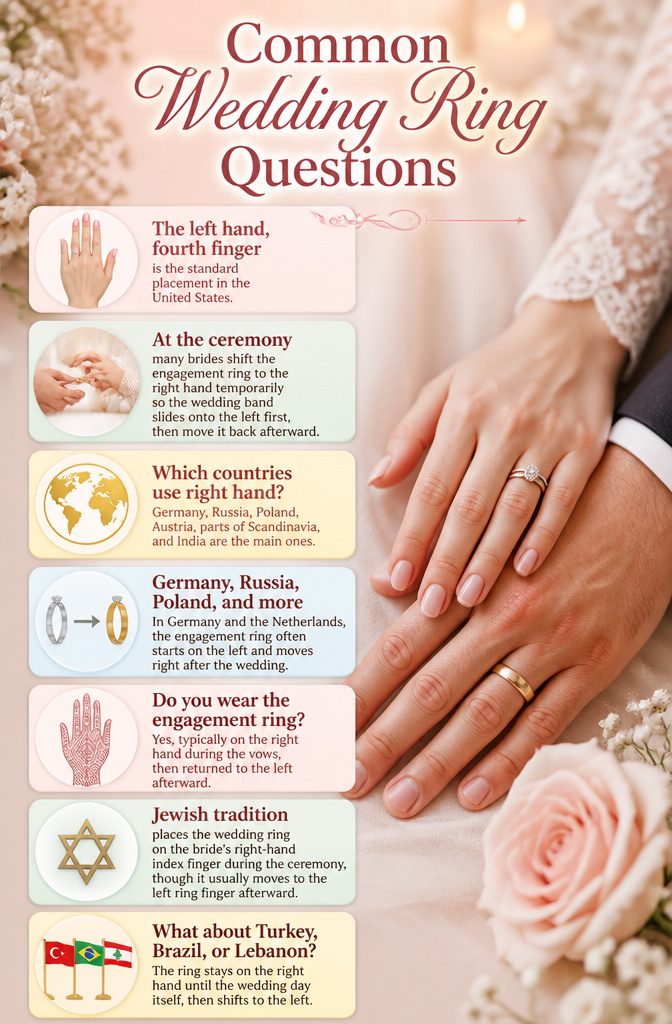
The left hand, fourth finger is the standard placement in the United States.
At the ceremony, many brides shift the engagement ring to the right hand temporarily so the wedding band slides onto the left first, then move it back afterward.
A few practical points that come up in conversation:
- Which countries use the right hand? Germany, Russia, Poland, Austria, parts of Scandinavia, and India are the main ones. In Germany and the Netherlands, the engagement ring often starts on the left and moves right after the wedding. In Hindu culture, the left hand is considered less auspicious, so the right hand carries the ring.
- Do you wear the engagement ring on the wedding day? Yes, typically on the right hand during the vows, then returned to the left afterward.
- What about Turkey, Brazil, or Lebanon? The ring stays on the right hand until the wedding day itself, then shifts to the left.
- Jewish tradition places the wedding ring on the bride’s right-hand index finger during the ceremony, though it usually moves to the left ring finger afterward.
Frequently Asked Questions
What hand does a wedding ring go on?
In the United States and most Western cultures, the wedding ring goes on the fourth finger of the left hand.
This tradition traces back to ancient Rome and Egypt, where people believed a vein ran directly from that finger to the heart. Germany, Russia, Poland, Austria, India, and parts of Scandinavia place the wedding ring on the right hand instead.
Does the engagement ring or wedding ring go on first?
The wedding ring goes on first, sitting closest to the heart, with the engagement ring stacked on top.
Many brides move their engagement ring to the right hand during the ceremony so the wedding band can be placed on the left ring finger first, then slide it back on top afterward.
Which countries wear the wedding ring on the right hand?
Germany, Russia, Poland, Austria, parts of Scandinavia, Spain, Greece, Brazil, and India are among the countries where the wedding ring traditionally goes on the right hand.
In Germany and the Netherlands, the engagement ring often starts on the left hand and moves to the right after the wedding ceremony.
Do you wear your engagement ring on your wedding day?
Yes, many brides wear their engagement ring on the wedding day and temporarily move it to the right hand during the ceremony.
This leaves the left ring finger bare so the wedding band can be placed first, closer to the heart, during the exchange.