You have six clear paths for what to do with a wedding ring after divorce, and the right one depends almost entirely on how much time has passed since the papers were signed.
Sell too early and you may later regret losing the stone; hold on too long and the metal keeps whispering a version of yourself you have already outgrown.
A bank safe deposit box runs about sixty dollars a year, and that small cost buys the one thing you actually need right now: distance from a decision you are not ready to make.
1. Sell the Ring
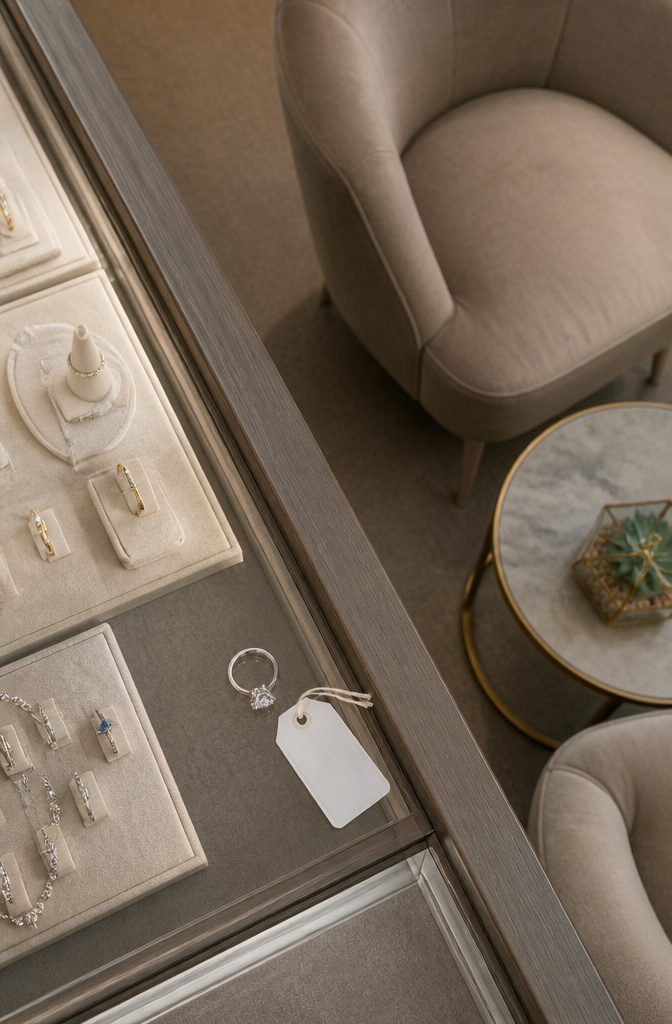
Selling a wedding ring after divorce turns a painful reminder into cash, but the process demands more patience than most people expect.
A professional appraisal runs $75 to $150, and that figure stings when you learn the resale value almost always sits below what was originally paid. Replacement value, which appraisals typically measure, differs sharply from what buyers actually offer.
Local jewelry buyers pay quickly, though shopping multiple shops matters since pricing varies widely. Pawn shops move fastest and hand over cash immediately, yet they typically offer the lowest payout because they shoulder resale risk.
Online gold buyers compete harder on price and spare you the drive, while consignment shops can yield more but may tie up the ring for weeks or months, sometimes charging fees up to half the sale.
Peer-to-peer marketplaces like eBay promise the highest return but demand time, seller ratings, and tolerance for scams; only about five percent of diamond sales there succeed.
The IRS treats jewelry as a collectible, so if you somehow sell above the original purchase price, capital gains tax bites at up to 28%.
Most rings sell at a loss, so no tax is typically owed, though that loss is not deductible.
For many, the real value is not financial at all: converting a symbol of a ended chapter into funding for the next one, whether that means a project, a trip, or simply a new piece worn without the old weight attached.
2. Repurpose the Ring
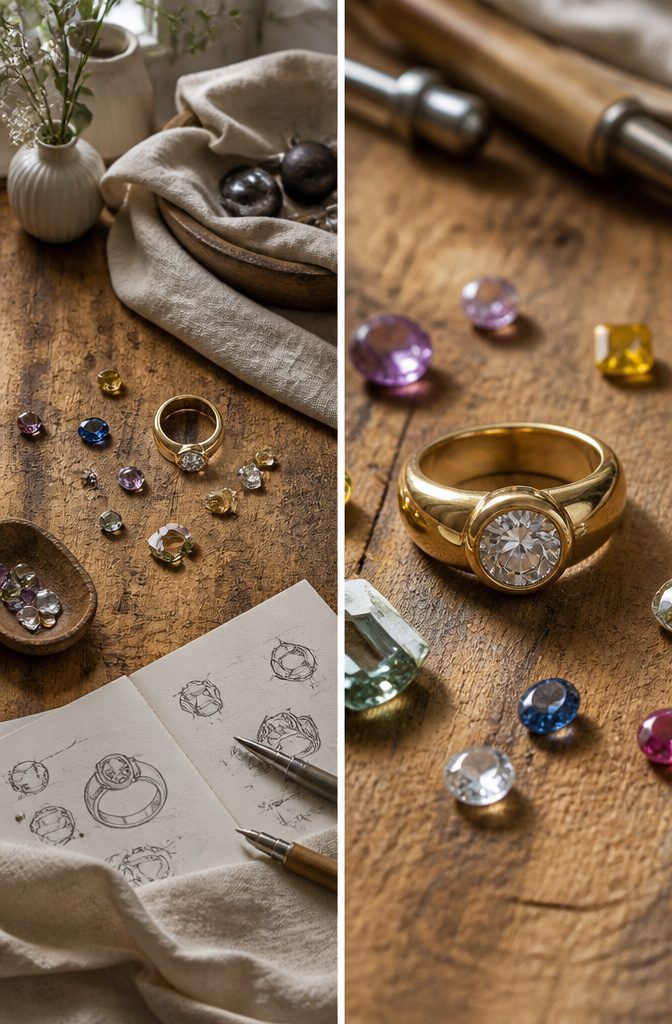
Some women are pulling the stones from their rings and turning them into something that reads as theirs alone.
The divorce ring trend picked up in 2024 after Emily Ratajkowski showed two rings on Instagram, previously set together as one, worn now as separate pieces.
That image stuck because it offered a visual for what a lot of people were already doing: keeping the material, losing the marriage.
The practical options run from cocktail rings to earrings to pendants.
A center diamond over a carat can carry a reset well. Others build a mother’s ring with the original diamond in the center and birthstones for each child around it, which shifts the meaning without pretending the stone never existed.
A few go further and sell the original to fund something entirely new, like the woman who traded her large diamond for a piano.
Jewelers who do this work are increasingly familiar with the request. The emotional logic is straightforward: the gold and stones hold value, but the setting carries memory.
Melting or resetting lets the material stay in your life while the shape changes. One woman kept her ring for her daughter, planning to have it remade into something the daughter would actually wear.
Another built her reset around the years she spent fighting for her children’s safety, with stones added to mark each of them.
The cost is whatever a custom reset runs in your city, and the risk is that the finished piece still feels like the old one.
Some people solve that by altering enough that the original form is unrecognizable. Others find the halfway point harder than selling or storing would have been.
3. Donate the Ring
Some divorced people find that keeping the ring stings more than letting it go, and selling feels too cold. Donation sits in the middle: you part with the piece, but its value lands somewhere that matters.
Two organizations handle this specifically.
Wish Upon a Wedding grants weddings and vow renewals to couples facing terminal illness or serious health challenges. Your ring becomes part of someone else’s meaningful moment rather than a reminder of yours.
Jewelers for Children works differently; they’ve raised over $65 million for children facing significant hardships. The ring’s sale or liquidation feeds that pool.
The practical upside is that a jewelry donation can carry potential tax advantages, though you’ll want to confirm the deduction rules with whoever prepares your taxes.
The emotional profile here tends toward someone who doesn’t need the cash, doesn’t want the symbolism in a drawer, and likes the idea of the ring’s value being converted into relief or celebration for someone else.
It is not a dramatic ritual; it is a quiet redirecting of worth from one life chapter to another.
4. Keep the Ring
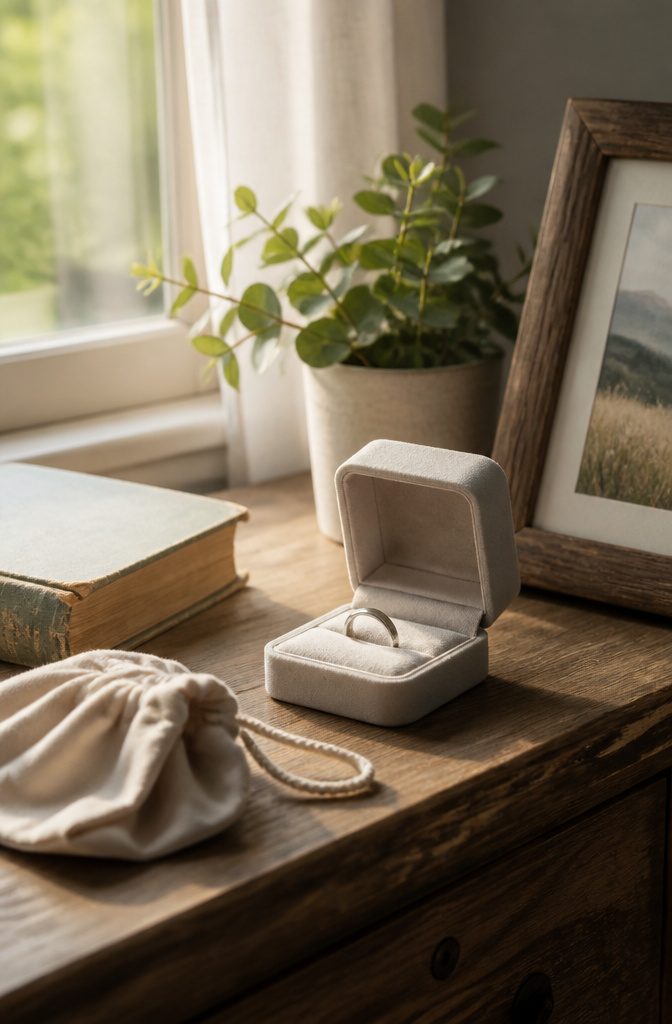
Most people slip their ring into a drawer the week the papers are signed and leave it there for months, which is exactly what I did.
The metal still carries weight even when the marriage doesn’t, and that hesitation is usually worth respecting rather than rushing past.
A ring can sit in a small cloth pouch or a jewelry box divider without demanding anything of you while you figure out whether the memory is truly poisoned or just complicated.
Holding onto it for children or grandchildren makes sense to some, though the gesture lands differently depending on how the divorce played out.
The ring might read as proof that love existed in the family line, or it might read as a relic of pain; only you know which side your story falls on.
What convinced me, reading through a dozen of these accounts, is that most people who keep the ring don’t make a permanent decision in year one. They store it, they wait, and often they choose differently once the urgency fades.
A safe deposit box runs maybe $60 to $200 yearly if the piece has real value and you want it off your dresser. Otherwise, any dark, dry spot with the original box or a soft pouch will keep the metal from dulling.
The practical part is easy. The harder part is admitting you might not know yet what this object means, and that not knowing is its own valid answer.
5. Throw It Away
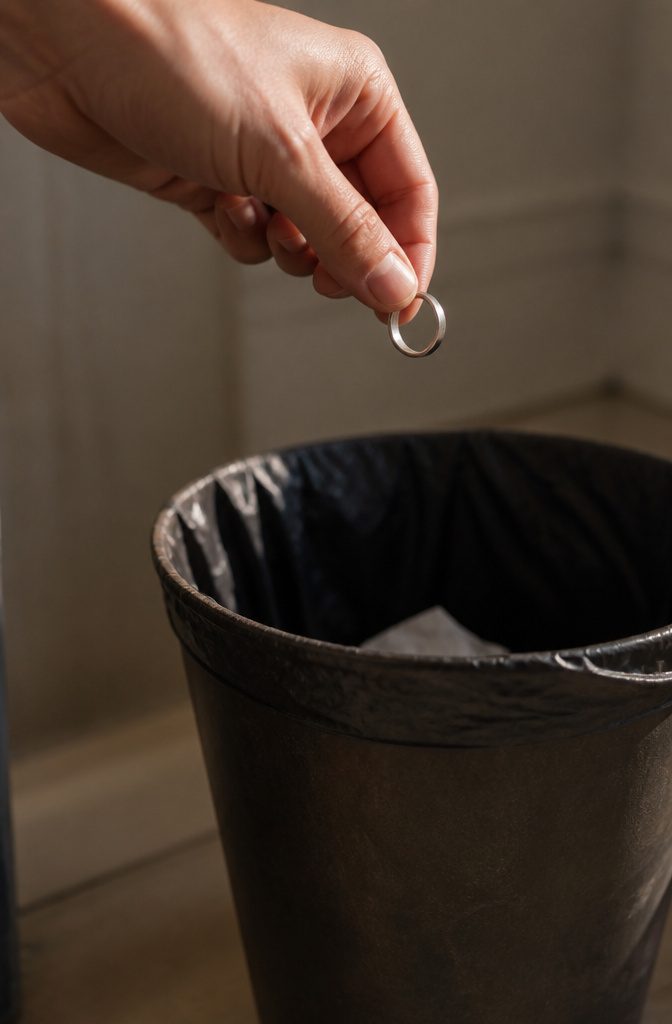
Some people need the ring to disappear completely.
The man who sold his band and spent the proceeds on a single weekend of pure indulgence understood something practical: converting that frozen emotional energy into liquid cash, then burning through it fast, closes the ledger in a way no drawer can match.
The permanence is the point. You cannot un-throw, un-sell, or retrieve what is gone.
This option usually arrives after time, not in the raw weeks after signing papers.
Early on, the ring still pulses with argument; later, it is only metal and memory, and the act of stripping it back to raw economic value, of de-sacralizing it, becomes possible. The cost is literal and final.
You get nothing back, not even the resale price. The emotional cost cuts both ways: relief for some, regret for others who later wished they had kept the object to hand to a child or melt down into something new.
The symbolism outlives the act.
A ring in the trash is a story you tell yourself about moving forward. Whether the story holds depends less on the gesture and more on whether the gesture matched what you actually needed.
6. Store It for Now
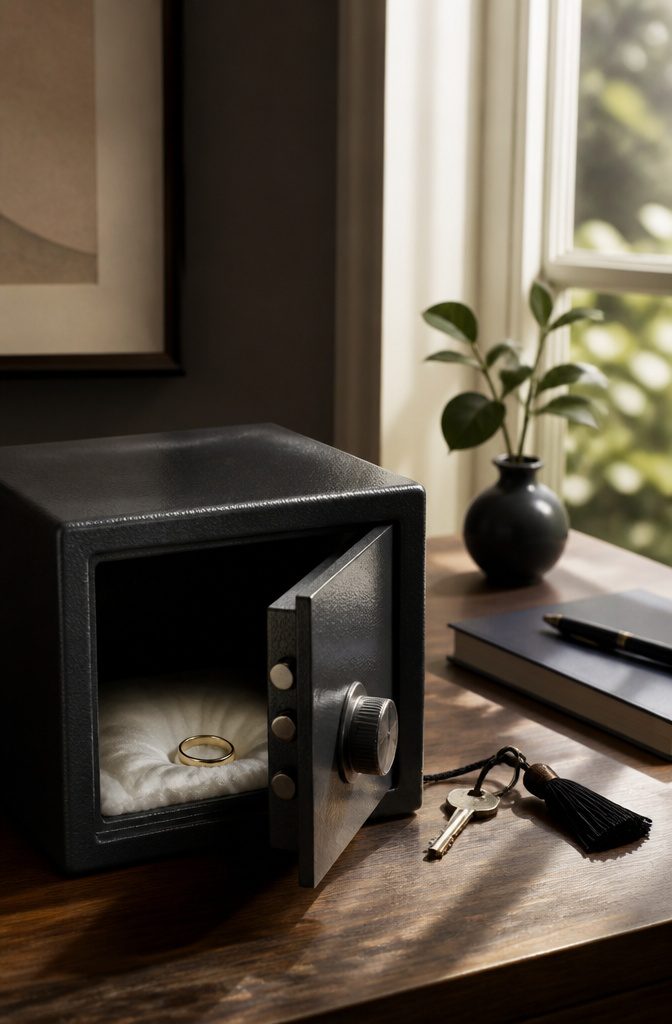
A bank safe deposit box runs about sixty dollars a year in most cities, and that small cost buys the one thing you actually need right now: distance from a decision you are not ready to make.
I have seen this pause work. A friend dropped her rings in a box the week the papers were filed, drove home, and did not think about them for fourteen months.
When she finally opened it, the charge had gone out of the metal. She sold without grief.
Time is the only storage method that reliably changes how you feel. The ring does not soften, but your relationship to it does.
Home safes work if you already own one bolted to a stud; buying new hardware just to avoid deciding is a way of pretending the choice has already been made.
The same trap hides in handing the ring to your mother or your best friend. That move feels like action, but it is delegation, and it comes with strings.
Their closet is not neutral territory. Their opinion of what you should do will leak into every conversation, and you will feel watched.
Insure the piece first if the policy lapsed in the chaos. That is the only urgent task.
Everything else can wait. The box does not judge, does not nudge, and does not expire.
Who Legally Owns It
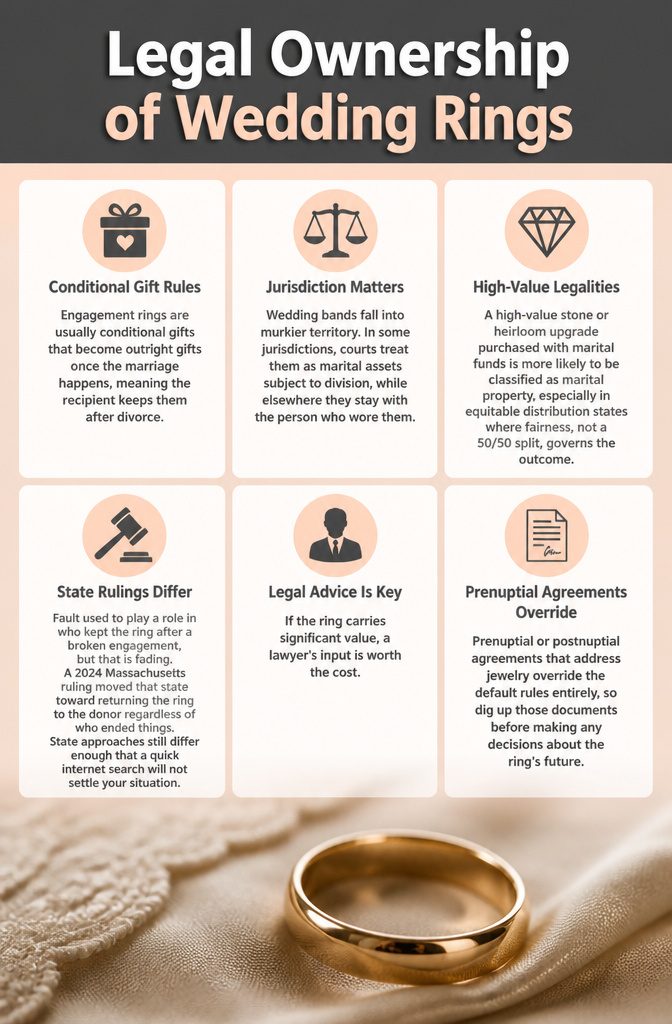
Engagement rings are usually conditional gifts that become outright gifts once the marriage happens, meaning the recipient keeps them after divorce.
Wedding bands fall into murkier territory. In some jurisdictions, courts treat them as marital assets subject to division, while elsewhere they stay with the person who wore them.
The distinction matters because it determines whether you can legally sell or repurpose the ring without your ex-spouse’s involvement.
A high-value stone or heirloom upgrade purchased with marital funds is more likely to be classified as marital property, especially in equitable distribution states where fairness, not a 50/50 split, governs the outcome.
Fault used to play a role in who kept the ring after a broken engagement, but that is fading.
A 2024 Massachusetts ruling moved that state toward returning the ring to the donor regardless of who ended things. State approaches still differ enough that a quick internet search will not settle your situation.
If the ring carries significant value, a lawyer’s input is worth the cost. Prenuptial or postnuptial agreements that address jewelry override the default rules entirely, so dig up those documents before making any decisions about the ring’s future.
What the Ring Means Now
The ring on your finger carries two stories at once now.
One is the promise you made, and the other is the fact that it ended. In the first weeks after a divorce, that small circle of metal can feel like a door you keep walking into.
Worthy, the online resale platform, has heard this repeatedly from clients who finally sell: the band itself becomes a physical barrier to moving forward, a constant reminder of grief that refreshes itself every morning.
But the weight shifts. A man removing his band for the last time often describes it less as taking off jewelry and more as a kind of identity severance, the moment he stops being "the man with the ring."
That same act, six months or a year later, can look like reclaiming a story rather than ending one. The emotional math changes because you change.
The mistake is deciding too fast or holding on too long out of guilt. The ring means what you are currently feeling, and that feeling has an expiration date.
Sell it in the raw first month, and you may later wish you’d kept the stone for something new. Store it forever, and it keeps whispering a version of yourself you have already outgrown.
The practical choices, the ones this article covers next, work best when you match them to where you actually are in that shift, not where you think you should be.
What It Is Worth
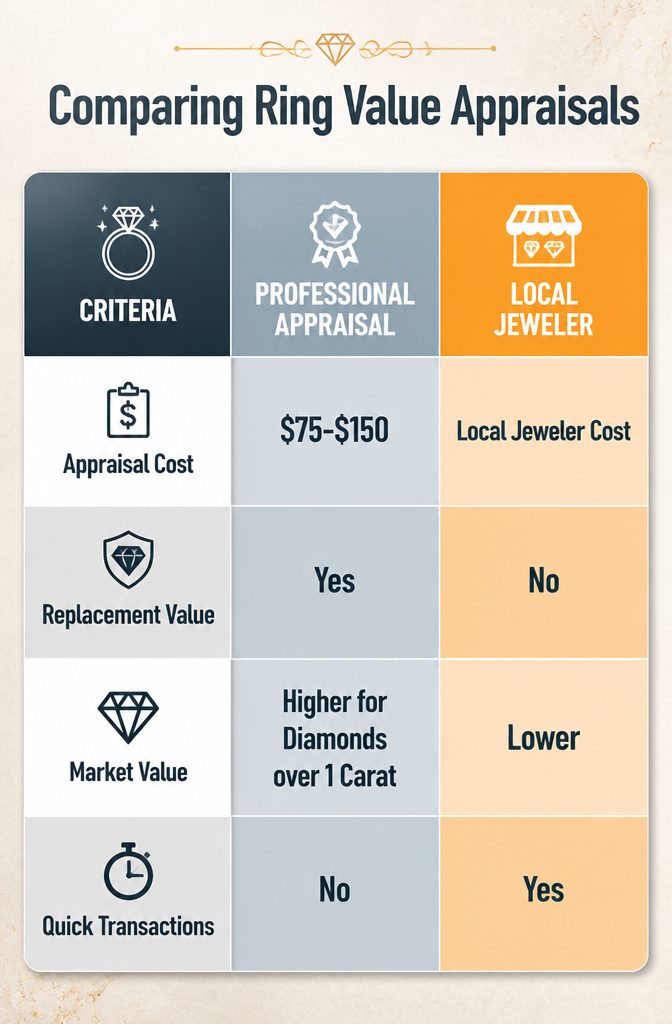
A professional appraisal runs $75 to $150 and gives you a replacement value for insurance, not a selling price. That distinction matters more than most people expect.
The appraisal number is built on replacing the ring with something new, which assumes retail markup, fresh labor, and a full-service jeweler. Cash buyers do not.
Local jewelers and estate appraisers can give you a resale evaluation closer to reality, especially if the diamond is over a carat or the design is currently in demand. Below that threshold, the secondary market for diamonds thins out fast.
I have seen this mismatch frustrate people who expected the appraisal figure to anchor their sale. It does not.
If the ring will not move as a ring, buyers weigh the gold, check purity against the day’s melt price, and offer a percentage of that metal value.
The transaction is quick, which is the point. Pawn shops work this way too, though their offers tend to sit lower; you would need to check several to find the least disappointing one.
The gap between the number on paper and the cash in hand is almost always the hardest part of this decision. Knowing it exists before you walk in keeps the conversation shorter and the frustration smaller.
Rituals for Letting Go

The physical act of removing a wedding band often hits harder than the paperwork, and what you do next can either speed recovery or keep you anchored.
Structured rituals work when they match your actual emotional need, not when they look dramatic on paper.
- Burying the ring gives a gravesite to visit and grieve, which helps if you process loss through place and return. The risk is creating another monument to a past version of yourself when the goal is identity severance.
- Burning converts the object to ash and removes the option of reversal. The finality helps some people close the ledger, though the performance can outrun the feeling and leave you with ritual residue and no shift inside.
- Casting into water, ocean or river, spreads the symbol beyond retrieval. Water carries the weight for you, which suits those who want distance without a landmark to circle back to.
- Ceremonial handoffs, giving the ring to a friend to hold or destroy, outsource the final act. The trust required mirrors what marriage asked, and completing that transfer with someone who shows up can rewire the ring from anchor to object someone else manages.
- Selling the ring and immediately converting proceeds to experience, a weekend or a trip, performs liquidation as release. The money becomes liquid potential, and the transaction itself marks a closed ledger.
What separates useful ritual from performance is whether the act removes a decision you keep revisiting. If you are still deciding six months later, the ritual failed its job.
Frequently Asked Questions
What should I do with my wedding ring after divorce?
You have six main paths: sell it for cash, repurpose the stones into new jewelry, donate it to a charity like Wish Upon a Wedding or Jewelers for Children, keep it stored away, throw it away for complete closure, or store it in a safe deposit box while you decide.
The right choice depends on whether you need money, emotional distance, or a way to redirect the ring’s value toward something positive.
Can I keep my engagement and wedding rings after divorce?
Engagement rings are generally considered completed conditional gifts that belong to the recipient once the marriage happens. Wedding bands sit in murkier territory; some jurisdictions treat them as marital assets subject to division, while others let the wearer keep them.
If the ring is valuable or was bought with marital funds, check with a lawyer before selling or resetting it.
How much is my wedding ring worth after divorce?
Almost always less than you paid. A professional appraisal costs $75 to $150 and gives a replacement value for insurance purposes, not a selling price.
Resale buyers weigh the gold melt price and diamond characteristics against current demand. Below one carat, the secondary market thins out fast, so expect a gap between the paper number and actual cash offers.
What are the best ways to sell a wedding ring?
Local jewelry buyers pay quickly but shop several since prices vary.
Pawn shops hand over cash immediately at the lowest payouts. Online gold buyers compete harder on price and spare you travel.
Consignment shops can yield more but may hold the ring for months and charge fees up to half the sale. Peer-to-peer marketplaces like eBay promise the highest return but demand time and tolerance for scams.