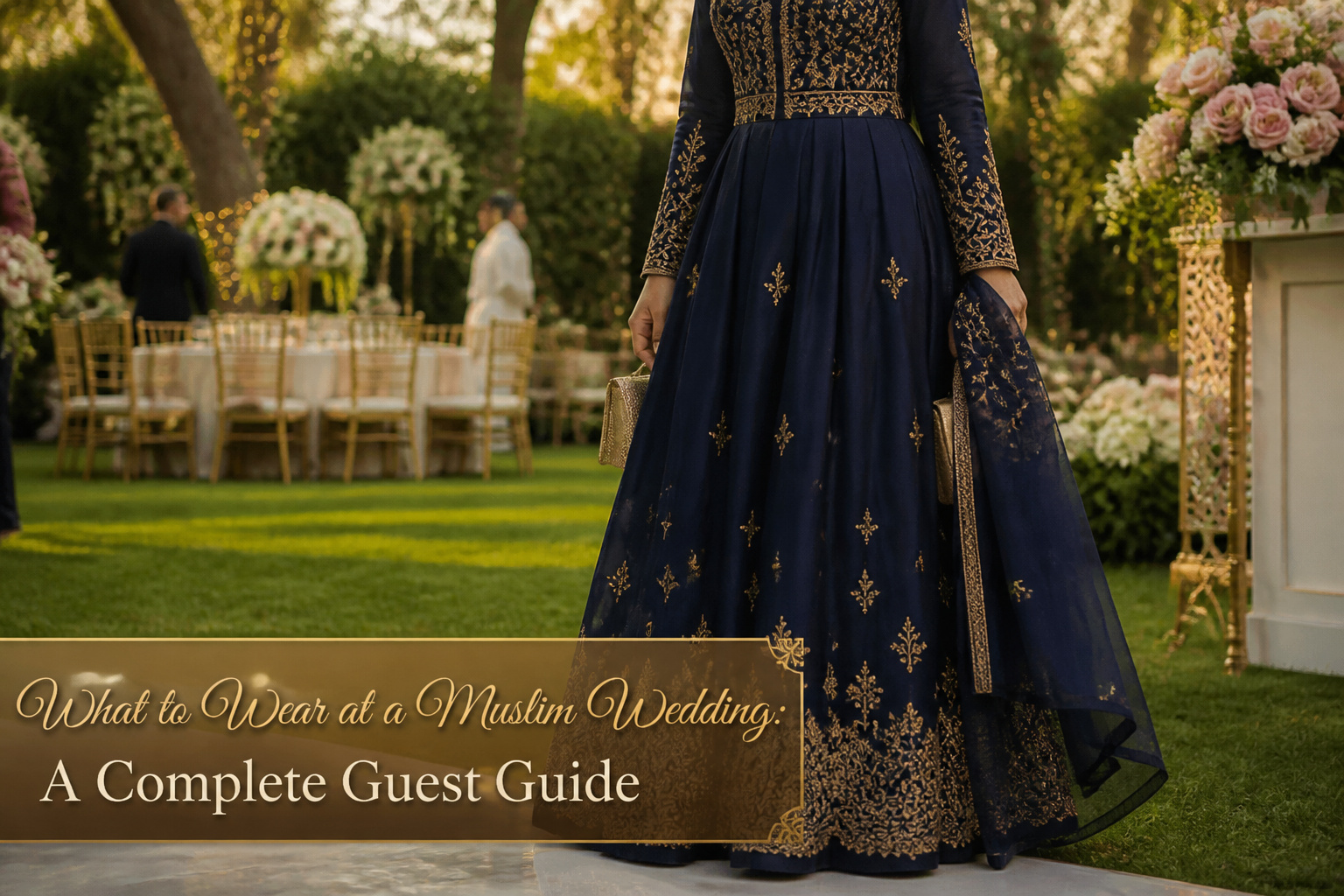
A Muslim wedding guest dress code balances modesty with celebration, and the line between appropriate and awkward shifts depending on the couple’s culture. White is reserved for the bride entirely, while red may be too, depending on the family.
A silk or chiffon maxi dress with long sleeves and a high neckline satisfies most ceremonies, though a mosque nikah may call for a headscarf even where other receptions would not.
Flowy Dresses and Kaftans
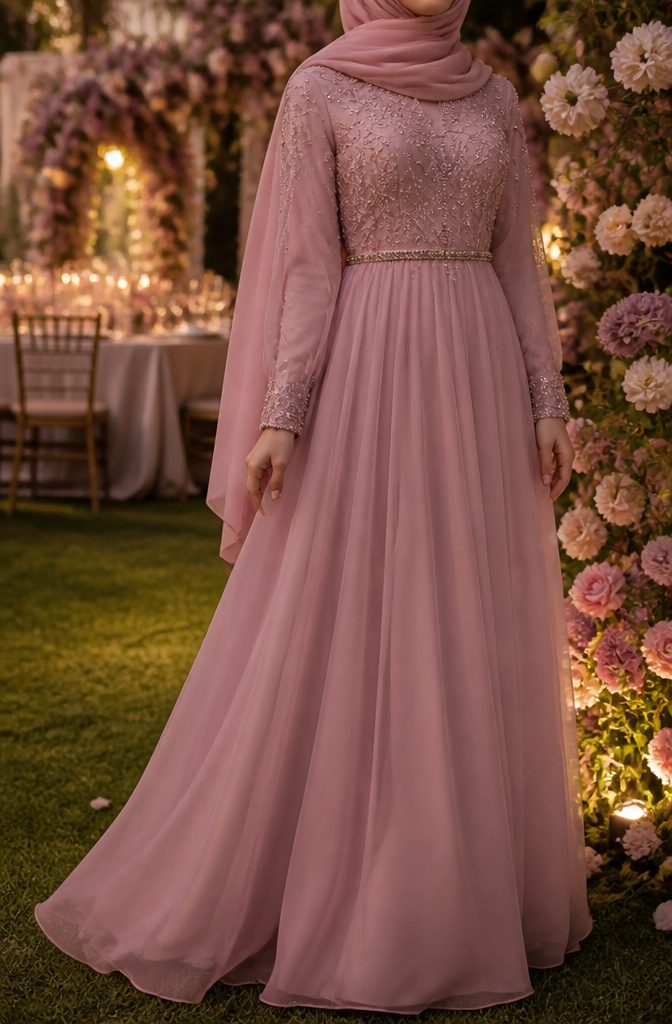
Maxi dresses and kaftans hit the sweet spot for a Muslim wedding because the cut does the modesty work for you. Silk, chiffon, or velvet with embroidery or beadwork reads festive without fighting the dress code.
Pastels and jewel tones both land well, and soft florals work if the print isn’t oversized or loud. The one hard rule is skip all-white entirely; that territory belongs to the bride.
Red can sit in the same category depending on the family’s culture, so a quick text to the couple or a glance at the invitation suite saves you from an awkward entrance.
Fabric weight matters more than you’d think. Chiffon catches the light beautifully for evening receptions but sometimes needs a slip underneath, while silk drapes cooler than it looks and carries a reception from dinner through dancing without wilting.
Velvet with gold or silver threadwork feels appropriately grand for a winter walima, though it can read heavy under summer tent lighting.
The kaftan’s advantage is built-in coverage; the sleeve and hemline are already solved. A belt or sash underneath the bust line keeps the shape from reading like a tent, which is the detail that separates guest attire from loungewear.
Loose-Fitting Styles
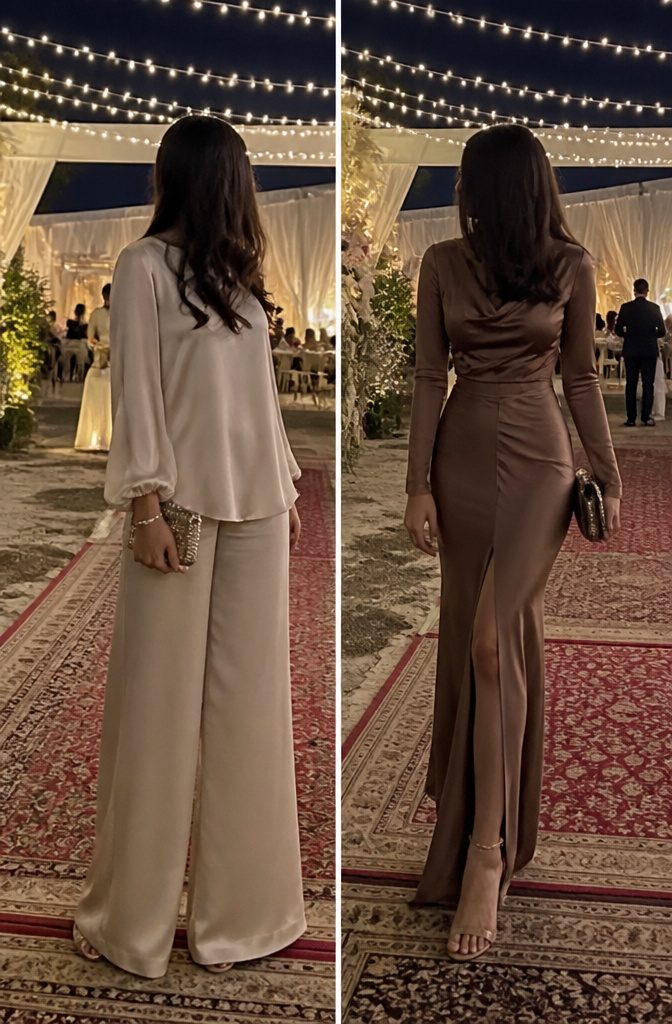
A body-skimming dress that felt perfect at a cocktail party will read differently under the lights of a Muslim wedding reception. The same cut that earned compliments at the office becomes a distraction here, and not the kind anyone wants.
Modesty at these events means loose fabric that drapes rather than defines, and that principle runs through every layer of what a woman wears.
Trousers follow the same rule. Wide-leg or softly tailored cuts leave the silhouette undefined, while skinny jeans or fitted cigarette pants contradict the modesty the occasion asks for.
Tops, too, need breathing room. A blouse that floats away from the torso works; one that tucks in and pulls across the back or bust does not.
The sources agree on this across communities, from conservative ceremonies to more Westernized celebrations.
Dress is one tradition that holds. Silk, chiffon, and velvet all lend themselves to this cut, and the elegance comes from how the fabric moves, not from what it reveals.
Sleeves and Necklines
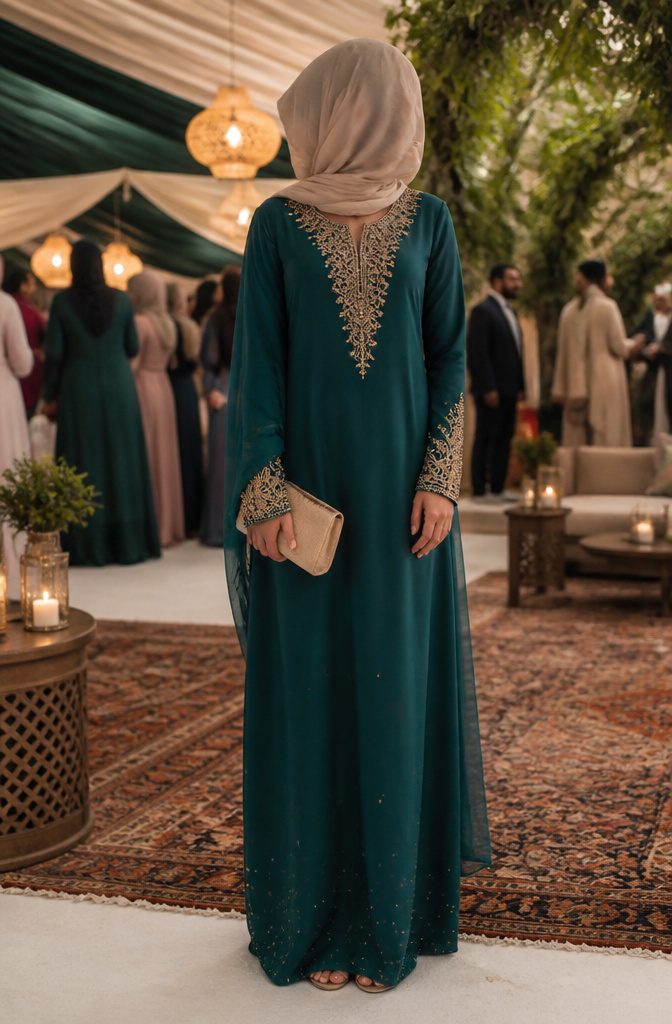
Long or three-quarter sleeves and a high neckline are the baseline for women’s attire at most Muslim weddings, and the cut matters as much as the coverage itself.
A three-quarter sleeve that hits near the elbow still reads modest in many South Asian and Arab communities, while Southeast Asian or more conservative gatherings may expect the wrist fully covered.
I learned this distinction the hard way after showing up to a nikah in what I thought was a perfectly appropriate elbow-length dress, only to feel conspicuous among a sea of full sleeves and feel the need to borrow a pashmina I hadn’t planned on carrying.
The neckline sits just as high on the priority list.
A collarbone-covering scoop or a jewel neck keeps the look respectful without drifting toward matronly, especially when the fabric itself carries celebration: silk, chiffon, or velvet with embroidery or embellishment reads festive rather than severe.
The sources note that low necklines and short sleeves simply do not align with modesty principles, but they also emphasize that bright colors, florals, and rich fabrics are welcomed.
The tension resolves in the construction: a high neck on a flowing maxi dress in jewel-toned chiffon honors both the religious context and the party.
Headscarf
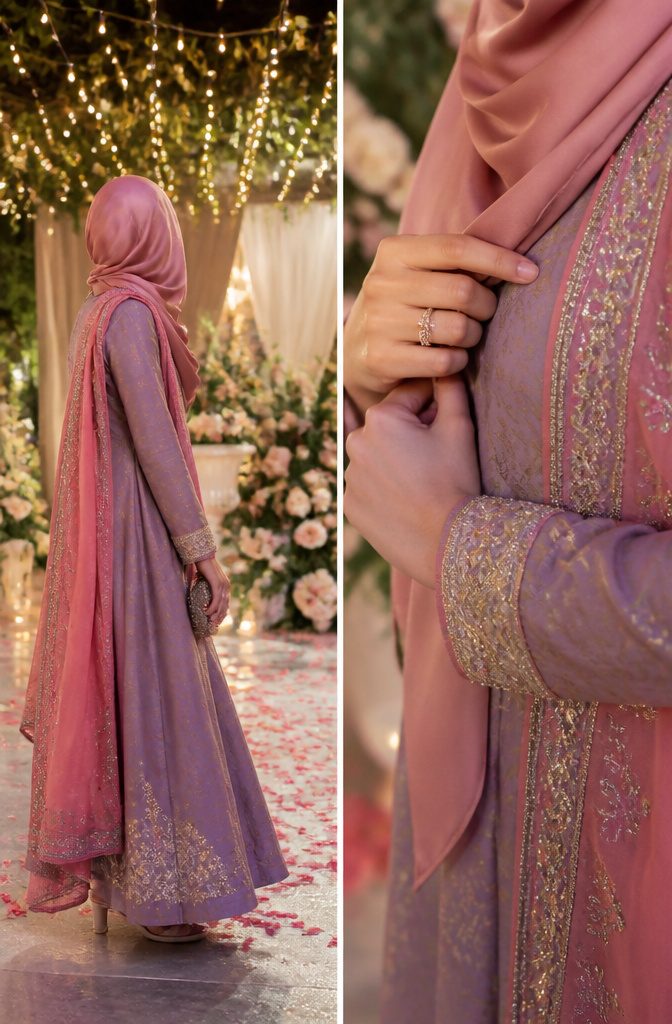
A headscarf for women sits in an optional space at most Muslim weddings I have looked into.
It is not universally required, and a guest who skips it will not be out of place at many celebrations. What changes the calculation is the setting.
A mosque ceremony nudges the choice toward covering, and the scarf itself can be chosen as a style piece: a silk wrap in a color pulled from the outfit, tied so it reads considered rather than apologetic.
Men face a softer version of the same question. A kufi or similar cap may appear at traditional ceremonies, sometimes offered at the door rather than expected in advance.
Arabic celebrations can bring out the shemagh or keffiyeh, though the ways to tie them carry meaning, and wearing one without knowing the signal risks costume.
The safer path is to watch whether other male guests have covered, or to ask the couple directly, since the requirement is not common and the gesture, when made, should look informed rather than borrowed.
Sherwanis, Thobes, and Tailored Suits
A sherwani signals you belong in a South Asian celebration, while a thobe does the same at an Arab wedding. Close friends of the family wear these traditional pieces with particular ease; the hosts notice, and the gesture lands.
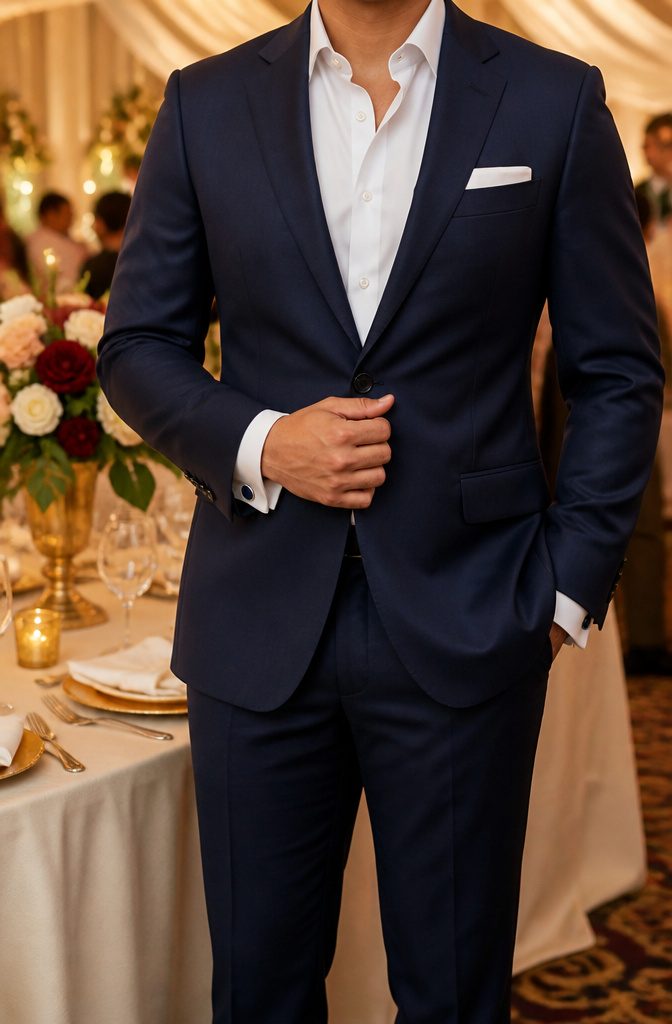
A tailored suit in black, navy, or grey carries you through any Muslim wedding in the West without looking like you missed the memo.
Most guests will be in regular suits anyway, though you will spot plenty of cultural dress alongside them.
The thobe is a long, flowing robe, the sherwani a more structured coat worn over matching trousers, both cut to respect the modest dress code by their nature.
If you are not from the culture and still want to wear one, borrow or buy through someone who knows the cut; a rental thobe that pools at the ankles or a sherwani with misaligned closures reads costume, not participation.
Long-Sleeved Shirts and Dress Pants
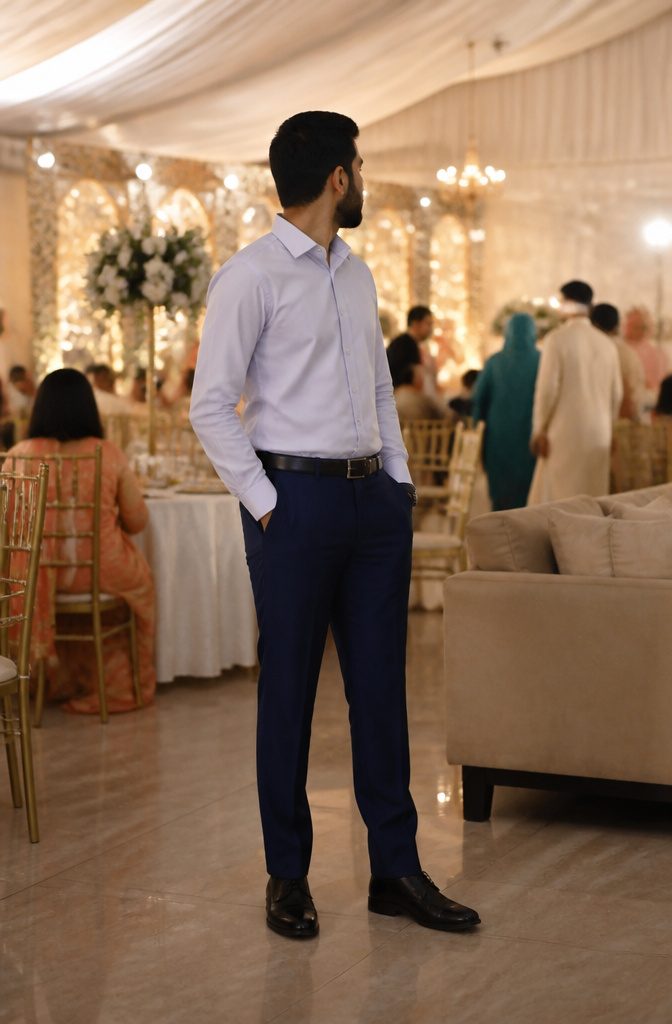
The baseline for men’s attire at a Muslim wedding is straightforward: a long-sleeved button-down shirt with dress pants, topped with a blazer when the occasion calls for it.
Short sleeves and shorts read as disrespectful even at outdoor summer celebrations, so the standard holds regardless of venue or weather.
This expectation mirrors the modesty principle that applies across gender lines. Men are expected to cover arms and legs completely, just as women navigate their own coverage requirements.
The parallel is worth noting because some guests assume modesty rules target women alone; in practice, the code is mutual, only the specific garments differ.
A well-tailored suit works universally, though you will also see sherwanis at South Asian celebrations or thobes at Arab weddings. Those cultural variations belong to their own sections.
For a guest unsure of the specific dress code, the long-sleeved shirt and dress pants pairing is the safest default, and it transitions cleanly into a blazer if you arrive and find the room more formal than expected.
Dress Shoes and Minimal Accessories
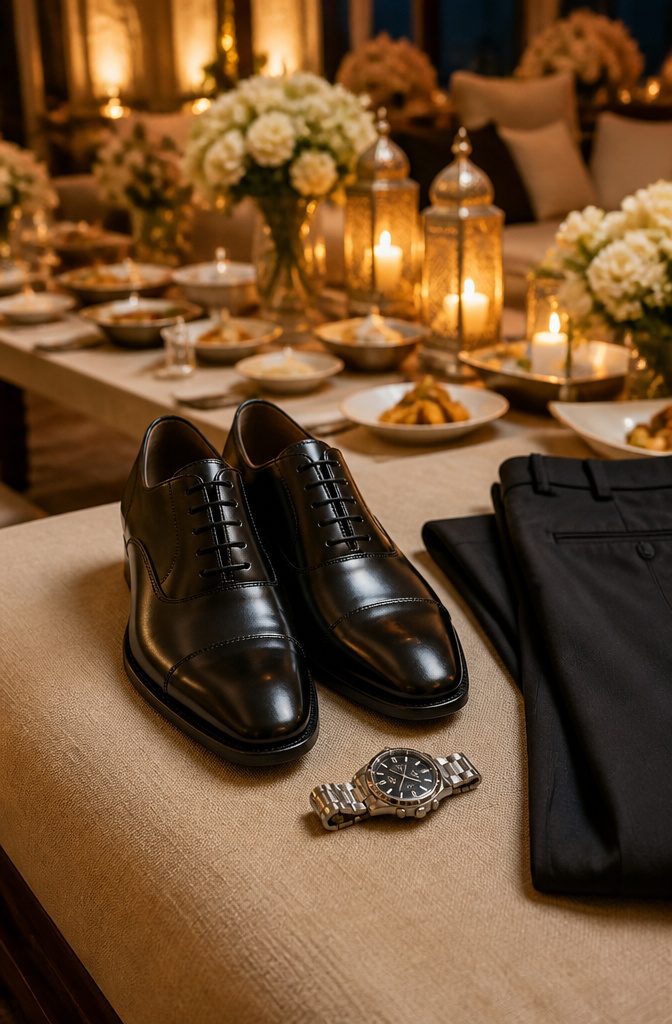
The right shoes pull a suit together, and the wrong ones sink it before you reach the seating area.
Closed-toe dress shoes or loafers are the standard for men at a Muslim wedding; sneakers, even clean ones, read as too casual for an event where guests are often seated separately and the tone stays formal throughout.
I learned this the hard way at a college friend’s nikah, where my leather oxfords felt stiff but let me walk into the men’s hall without second-guessing myself.
Accessories stay minimal for the same reason.
A watch, cufflinks, or a simple tie does the job. Flashy pieces draw attention in a space where the point is modesty and respect, not standing out.
Skip anything that clinks, shines, or competes with the groom’s family. The watch I wore that day was plain, silver, and small enough that I forgot it was there until I needed it.
What to Avoid
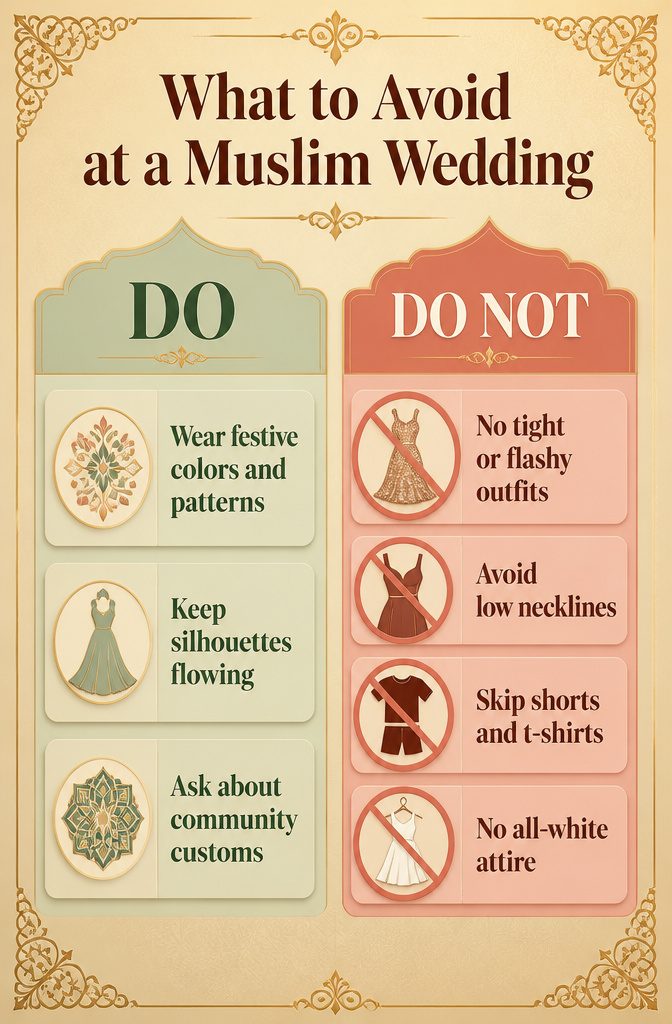
Tight, short, flashy, or overly casual outfits will mark you as someone who missed the point of the gathering.
I have seen guests show up in jeans and sneakers assuming a Muslim wedding works like a courthouse ceremony, and the sideways glances start before they even find their seat.
The nikah itself typically lasts about 20 to 30 minutes, but that window is the heart of the event, not a formality to dress down for.
Men should skip shorts, t-shirts, and anything that reads weekend rather than witness.
Women need to avoid low necklines, short sleeves, and silhouettes that cling rather than flow. Bright colors and festive patterns are welcome, but there is a line between celebratory and attention-seeking that sheer fabrics or oversized jewelry cross.
Color carries its own quiet code. All-white risks echoing the bride’s look, and in some communities red is reserved for the couple or carries associations guests should not borrow.
When I am uncertain about a host family’s specific customs, I ask directly rather than guess. The couple would rather field one polite question in advance than manage a distraction during a ceremony they have spent months preparing.
Modesty as the Guiding Principle
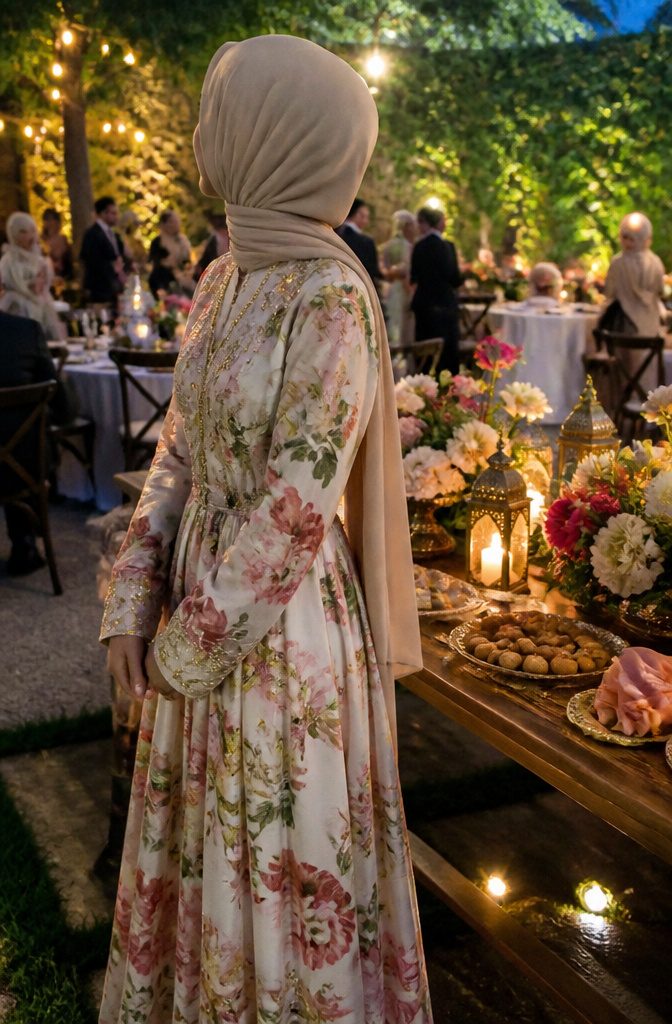
Modesty runs through every choice at a Muslim wedding, but it does not flatten personal style into a uniform. The principle asks that skin and silhouette stay covered, not that celebration drain out of the room.
A female guest might reach for a dress with a higher neckline and sleeves that reach the wrist, then let bright florals or a rich fabric carry the mood.
Men trade shorts and casual shirts for a well-fitted suit in navy, grey, or black, or choose a kurta or thobe that respects the occasion while nodding to cultural heritage.
Avoid anything tight, low-cut, or overly revealing; that single boundary leaves enormous room for color, texture, and accessories that feel like you. The couple still matters most, so the extravagance stays measured, but modesty and elegance have never been opposites.
Shoes deserve a quick thought too: pick something easy to slip off if the ceremony moves into a prayer space or mosque. The rule is coverage and respect; the execution is yours.
Reading the Cultural Context
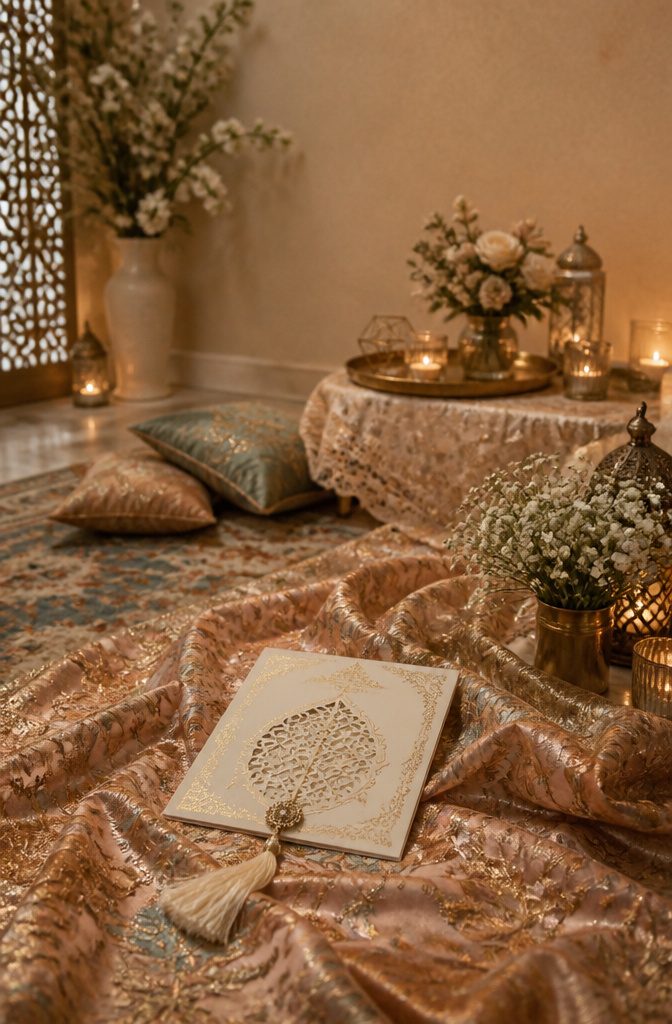
Islam stretches across Morocco to Indonesia, Turkey to Chad, and wedding dress codes stretch with it.
A thobe that fits naturally at an Arab celebration would look out of place at a traditional Malaysian wedding, so the couple’s background is your first and best clue.
I start with the invitation. Names, location, and language all signal region: Urdu or Hindi on the card points toward South Asian sherwanis and lehengas; Arabic script toward thobes and flowing gowns.
When the couple’s families are from different traditions, the event itself usually follows one or the other, or blends them deliberately.
If the invitation stays quiet on dress, I look up the family online. Wedding videos on YouTube show what guests actually wore, not just the couple.
Watch whether men and women sit together, whether there’s dancing, how formal the crowd looks. That footage beats guessing.
Still unsure? Ask directly.
A quick message to the couple or a family member you know beats arriving wrong. Most hosts would rather answer once than watch a guest guess badly.
The Celebration in the Clothes
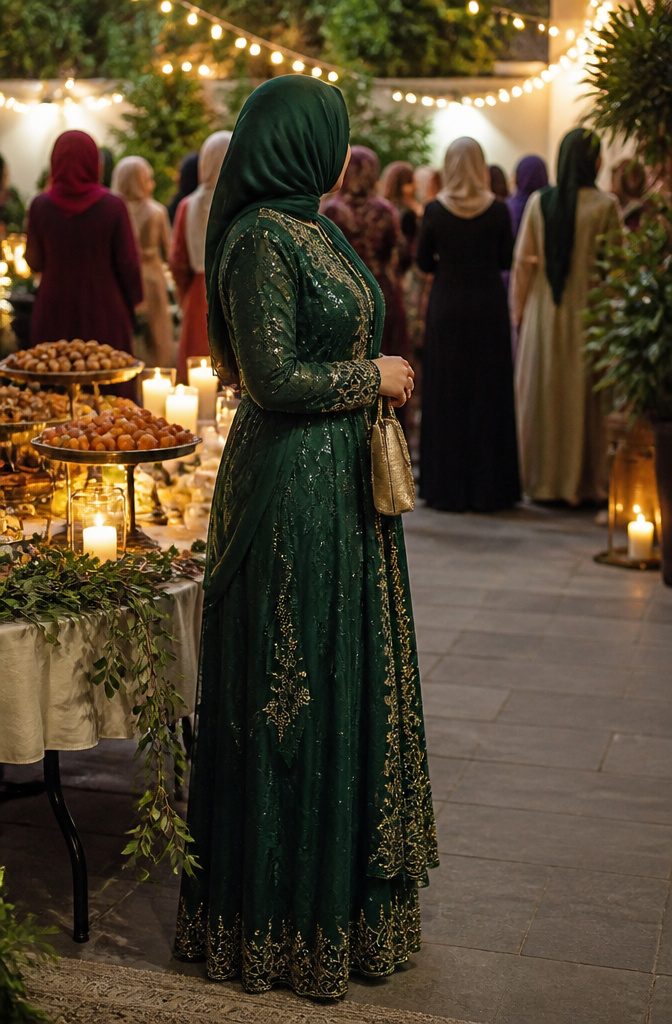
The balance between modesty and festivity at a Muslim wedding is less rigid than most guests first assume.
Bright colors, floral patterns, and rich fabrics are not only welcomed but expected, a clear step up from everyday modest dress. The same sources that emphasize covered arms and necklines also describe weddings saturated in jewel tones and celebration.
What shifts is the frame, not the fabric: a long-sleeved maxi in emerald silk reads festive where a black sheath reads funereal, even when both cover identically.
Men face the same translation.
A navy suit or a crisp kurta both satisfy the modesty standard, but the kurta signals participation in something specific and joyful. The thobe, that long white robe, turns formal with the right weight of cloth and a careful press.
The mistake is playing it so safe you drain the color out. I have seen guests arrive in beige and gray that technically check every modesty box and still feel wrong, like wearing office clothes to a birthday party.
The couple chose a celebration; your clothes should answer that choice. Bright hues and rich fabrics honor both the joy and the dress code at once, while reserved tones can slip into looking like you missed the point.
Frequently Asked Questions
What should women wear to a Muslim wedding?
Women should choose long, loose-fitting dresses or kaftans that drape rather than cling, with sleeves that reach at least the elbow and preferably the wrist.
High necklines that cover the collarbone keep the look respectful, while fabrics like silk, chiffon, or velvet with embroidery or beadwork keep it festive. Bright colors, jewel tones, and soft florals are all welcome.
What should men wear to a Muslim wedding?
Men should wear a long-sleeved button-down shirt with dress pants, adding a blazer for more formal celebrations. A tailored suit in black, navy, or grey carries you through any Muslim wedding in the West without looking out of place.
Sherwanis fit South Asian celebrations and thobes suit Arab weddings, but only wear traditional attire if the cut is right.
What colors should I avoid at a Muslim wedding?
Skip all-white entirely; that territory belongs to the bride. Red can fall into the same category depending on the family’s culture, so a quick text to the couple or a glance at the invitation saves you from an awkward entrance.
When uncertain about a host family’s specific customs, asking directly beats guessing.