

Most couples open a planning tab sometime in the first week of engagement and immediately feel behind.
That feeling is accurate. Photographers book out 14–18 months in advance, popular venues fill spring and summer dates just as fast, and every vendor you delay pushes the next decision back with it.
Get the guest count and total budget settled first — those two numbers set the ceiling on everything else.
Set Your Budget and Priorities First
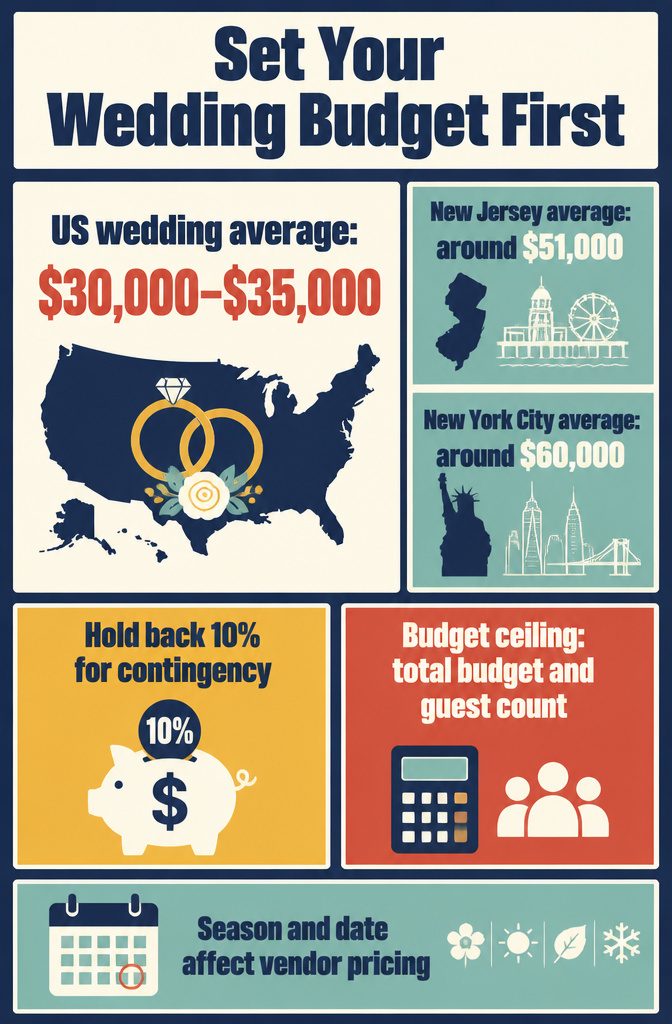
Every other planning decision flows from 2 numbers you agree on before anything else: your total budget and your guest count. Those 2 figures set the ceiling on your venue, your catering, every vendor after that.
The average US wedding runs $30,000–$35,000, though regional costs swing hard.
New Jersey averages around $51,000; New York City closer to $60,000. Know your region before you anchor to a number.
Have the money conversation with your partner and anyone contributing early, and find out whether family money comes with conditions attached. Build your budget in categories and hold back 10% as a contingency from the start, not as an afterthought.
Season and date range belong in this same first conversation. Both affect venue availability and vendor pricing, which means they shape the budget just as directly as guest count does.
Research and Choose Your Venue
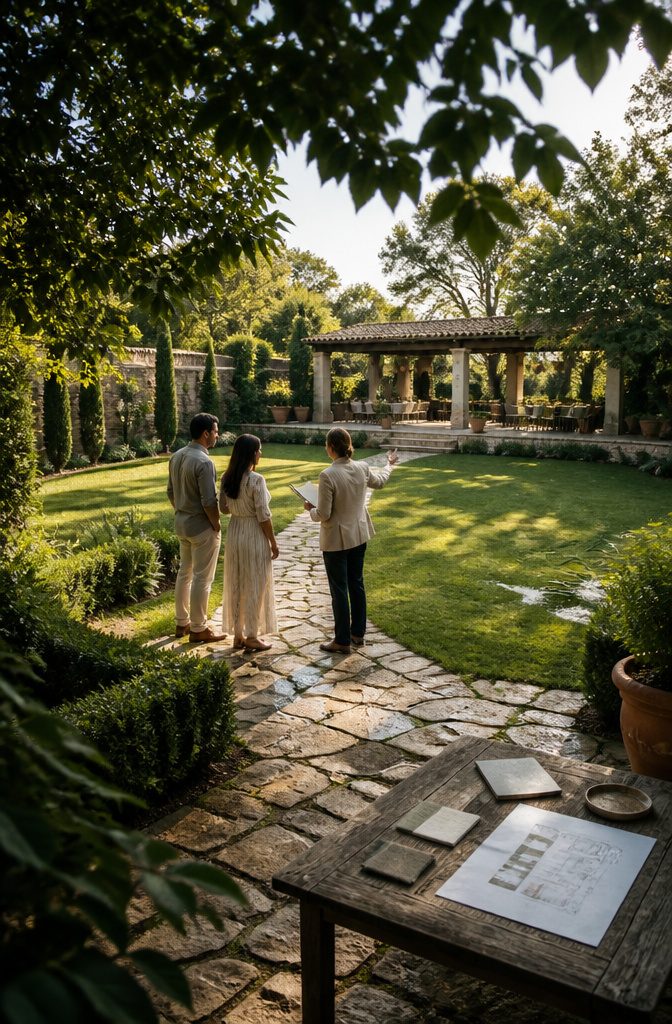
The venue sets your date, your guest count, your visual style, and a large chunk of your budget before you book a single other vendor.
Tour at least 3 venues in person, because photos flatten a space and can’t tell you whether the bridal suite is actually usable, how the afternoon light falls on the ceremony spot, or whether traffic noise bleeds in from the road.
When you visit, ask specifically what’s included in the rental fee, who handles setup and cleanup, what restrictions apply to candles or sparklers, and what the weather backup looks like for any outdoor space.
Venues fill fast, especially for spring and summer dates, so the window to decide is 12–14 months out. Waiting on the venue means waiting on almost everything else.
Book Core Vendors Early
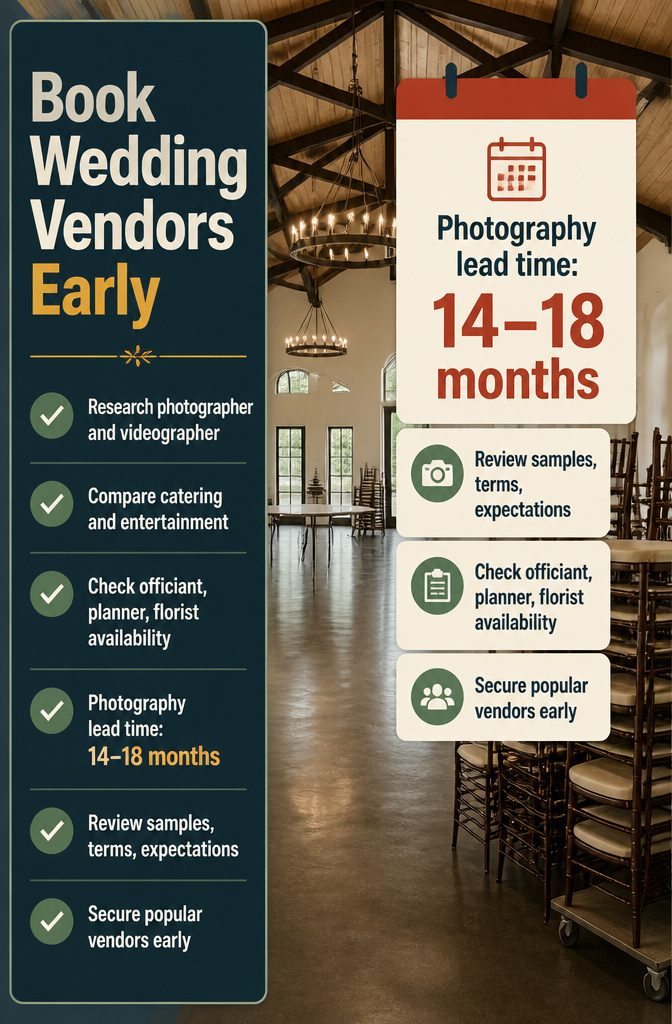
The best vendors book 14–18 months ahead for photography, often earlier for prime dates. Secure them before they disappear.
- Photographer and videographer: Look through full galleries, not just highlight reels. The full gallery shows what your wedding will actually look like.
- Caterer: Schedule tastings and compare multiple quotes if the venue does not include food service.
- Entertainment: Book a DJ or band. Ask for recent playlists or live performance videos.
- Officiant: Choose someone whose ceremony style matches what you want.
- Planner or coordinator: They become a resource for timeline advice and vendor recommendations throughout the process.
- Florist: Bring inspiration photos and your color palette to the first meeting.
Check availability for your date range first, review work samples, and read every contract before signing. Popular vendors disappear fast, and waiting past 10 months means your top choices are likely already booked.
Set Up Guest Information and Travel

A wedding website keeps everyone on the same page without fifty separate texts. The site holds your venue address, hotel blocks, registry links, dress code, RSVP form, and answers to the questions guests will ask three times anyway.
53% of guests say online RSVP is most convenient, and most platforms cost nothing to set up. Build it once the venue is booked, then point every other piece of communication back to it.
Collect guest addresses as soon as you finalize the list. You need them for save-the-dates, which go out 6 to 8 months before the wedding or 10 to 12 months before for a destination wedding.
Save-the-dates lock in the date and stop the "are we still invited" questions before they start. Include the website URL on the card.
Reserve hotel blocks 8 to 10 months out if you have out-of-town guests or a late-night reception.
Guests booking their own rooms will appreciate a rate you negotiated, and the block gives you visibility into who is actually traveling in. Add shuttle or parking details to the website if the ceremony and reception sit at different locations.
Plan Attire, Wedding Party, Registry, and Honeymoon
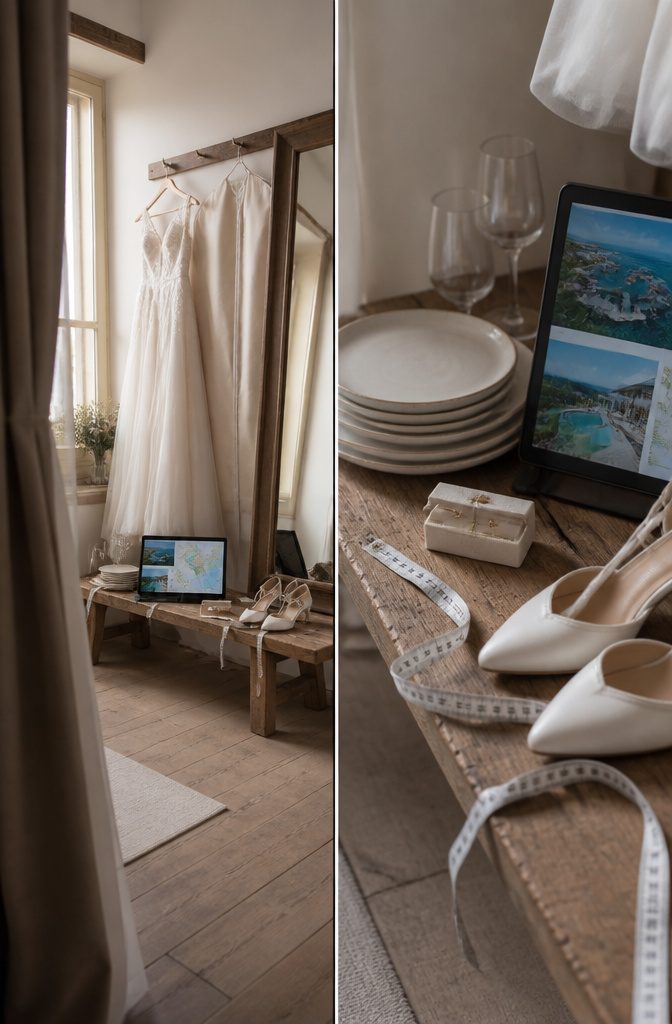
The fun part: tastings, fittings, and attire.
- Ask your wedding party 8 to 10 months out. Bridesmaids, groomsmen, flower kids, ring bearer, MOH, best man. Tell them upfront what they’ll spend on attire, party costs, and travel. Surprises here cause real friction later.
- Shop for wedding-party attire 6 to 8 months before the wedding. This gives friends time to find a dress or suit and get alterations. Choose shoes and accessories early, picking comfort-friendly options for your venue’s terrain.
- Set up your registry if you want one. This can be fun, but don’t go trigger happy. Look into the things you’ll really need. If a traditional registry doesn’t feel right, consider honeymoon registries or photography registries instead.
- Start planning your honeymoon 6 to 8 months out. Book flights, hotel, and travel insurance. Set a honeymoon budget about a year before you go, and set aside extra income in the months leading up to the wedding. If you’re traveling internationally, check or renew passports no less than 9 months before the wedding.
Plan the Ceremony and Reception
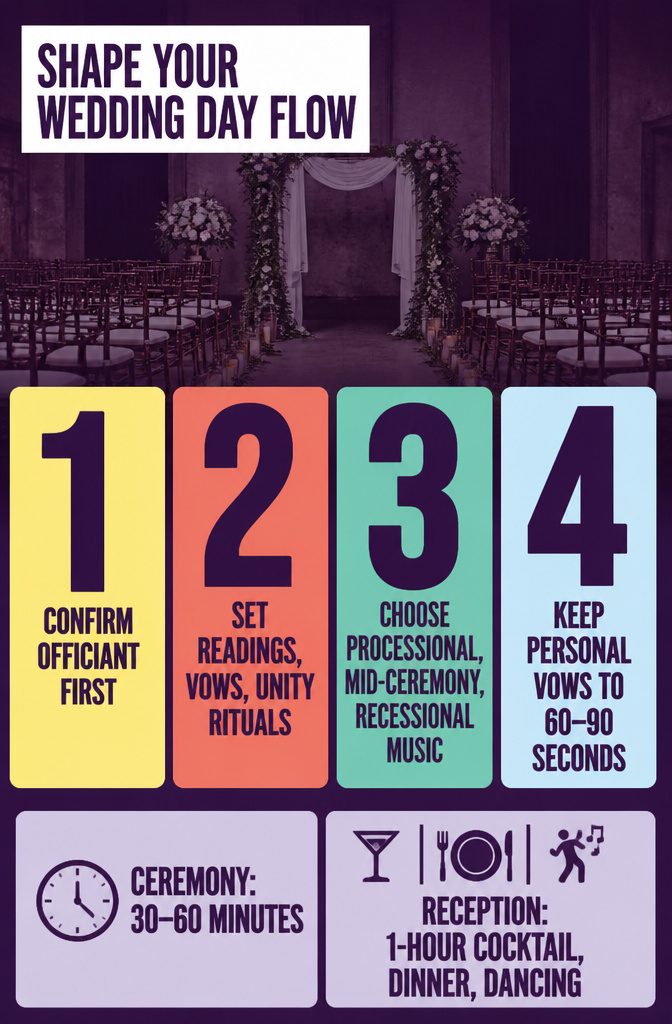
The officiant decision shapes everything else in the ceremony, so lock that in first: ordained friend, clergy, or civil officiant all require different lead times and paperwork.
Once you have your officiant confirmed, work out the order of readings, vows, and any unity rituals together. Keep personal vows to 60–90 seconds each — longer and the emotion starts to blur.
For music, you need 3 distinct moments: processional, any mid-ceremony music, and recessional. Each wants a different energy.
A typical reception runs about 5 hours: 30–60 minutes for the ceremony, a 1-hour cocktail hour, 1.5–2 hours for dinner, and 2–3 hours of dancing.
Plan food, drinks, and dessert service around that structure. Entertainment fills the gaps, but the meal pacing is what keeps the evening from dragging.
Develop Décor and Floral Design
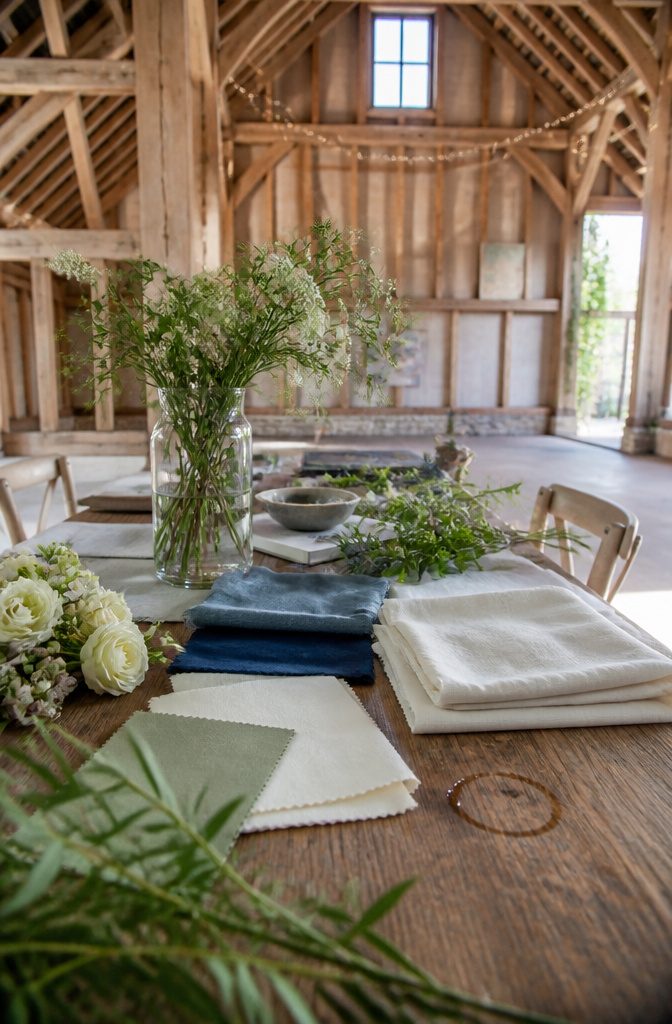
Colors come first because every other decision follows from them. Pick your palette before you talk to a florist, order linens, or think about signage, because the same creamy white reads warm against sage and cold against navy.
Flowers typically run 8%–10% of the total wedding budget, so it helps to know your number before the first florist meeting.
Bring your colors, your venue photos, and your season; a florist can steer you toward flowers that work with all three at once. Centerpieces, bouquets, and cake flowers are the line items to price separately.
Venue layout shapes everything else.
A high-ceilinged barn needs anchoring light — string lights work well there — while a low-ceilinged ballroom gets overwhelmed fast. Walk your space before renting anything.
Send Invitations and Manage RSVPs
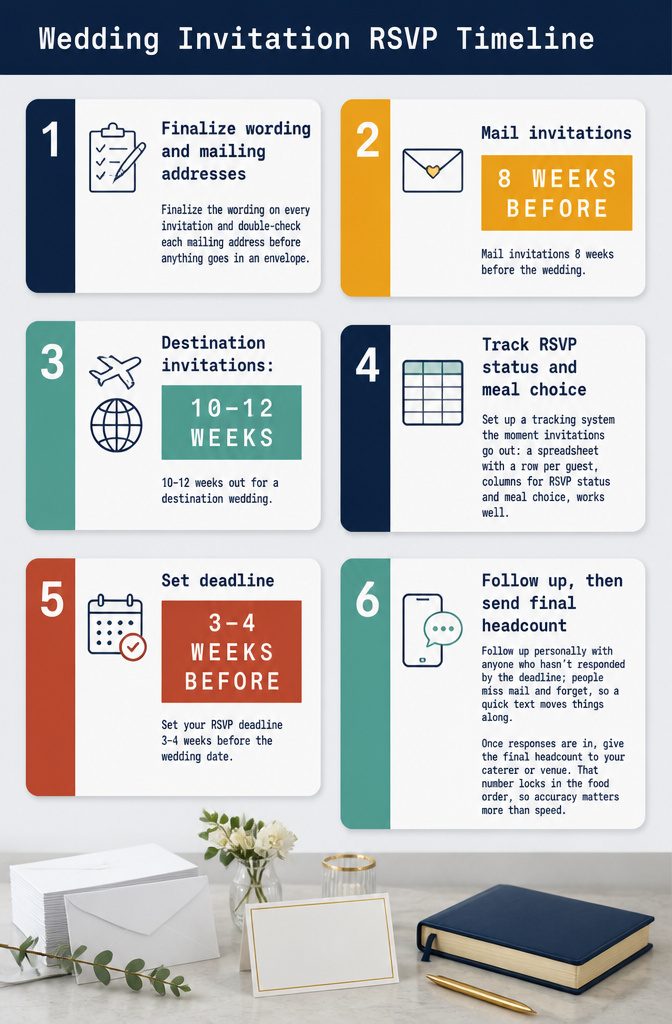
- Finalize the wording on every invitation and double-check each mailing address before anything goes in an envelope.
- Mail invitations 8 weeks before the wedding, or 10–12 weeks out for a destination wedding.
- Set up a tracking system the moment invitations go out: a spreadsheet with a row per guest, columns for RSVP status and meal choice, works well.
- Set your RSVP deadline 3–4 weeks before the wedding date.
- Follow up personally with anyone who hasn’t responded by the deadline; people miss mail and forget, so a quick text moves things along.
- Once responses are in, give the final headcount to your caterer or venue. That number locks in the food order, so accuracy matters more than speed.
Organize Seating and the Day-of Timeline
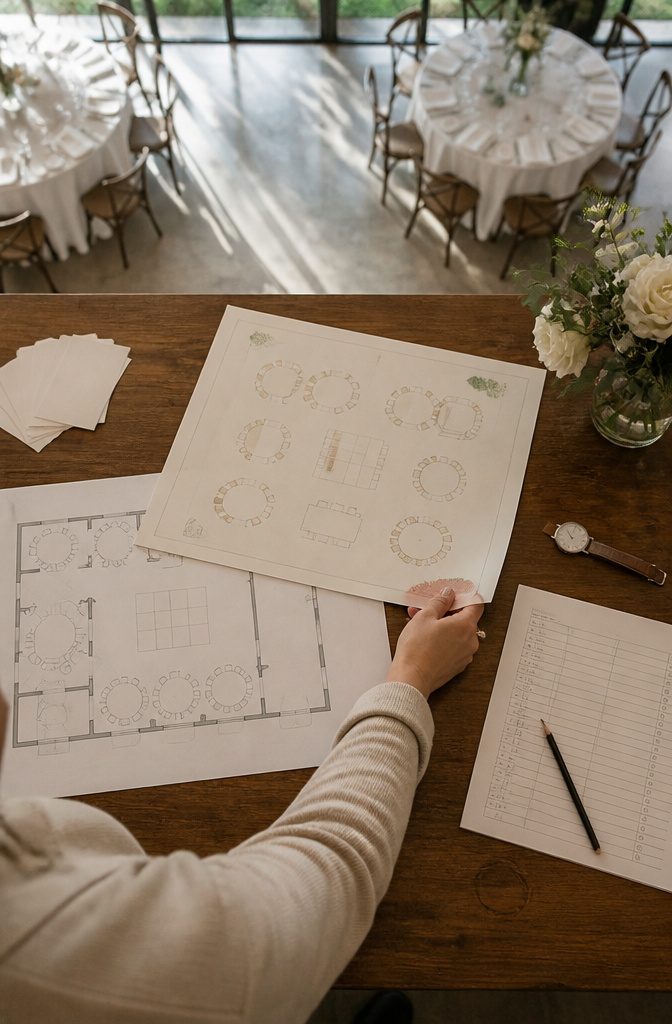
Building the seating chart starts with your final guest count and the confirmed floor plan from your venue.
Assign guests to tables first, then decide whether you need place cards at each seat. Give a copy of the completed chart to your on-site coordinator along with any special setup instructions.
Confirm arrival times and send your finalized day-of timeline to every vendor at least one month out. Include transportation pickup times, the order of reception events, and any cues your DJ or photographer needs to hit.
On the day itself, don’t hold that timeline yourself. Hand copies to your maid of honor and best man, introduce them to your venue coordinator, and let them field questions or problems.
Your ceremony and reception will run smoother when 2 people with copies are fielding the small stuff and you are not.
Confirm Final Logistics
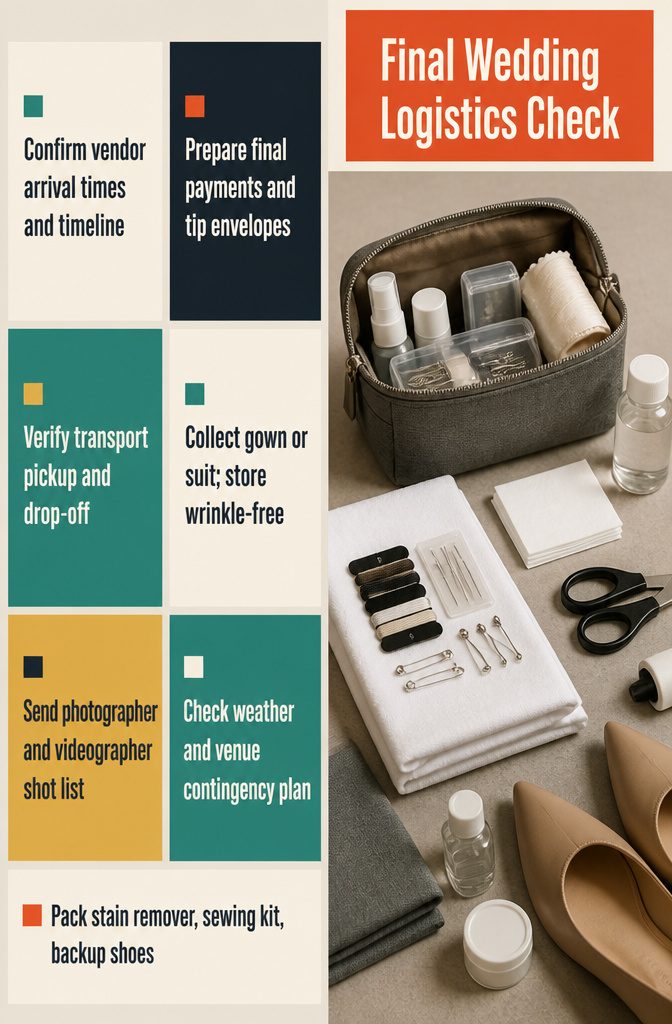
In the final 1–2 weeks, run through every open item so nothing lands as a surprise on the day.
- Confirm arrival times with every vendor and send each one a copy of the day-of timeline.
- Verify that all final payments and tip envelopes are ready; most vendors expect final payment 1–2 weeks out.
- Go over pickup times and drop-off locations with your transportation vendor.
- Pick up your gown or suit and store it somewhere clean and wrinkle-free.
- Deliver your shot list to the photographer and videographer.
- Check the weather forecast. If anything looks uncertain, contact your venue to confirm the contingency plan.
- Pack a wedding emergency kit: stain remover, a needle and thread, scissors, blotting papers, a comfortable backup pair of shoes.
- Confirm rehearsal times and communicate any last-minute changes to your wedding party and helpers.
Handle the Wedding Day and Follow-Up
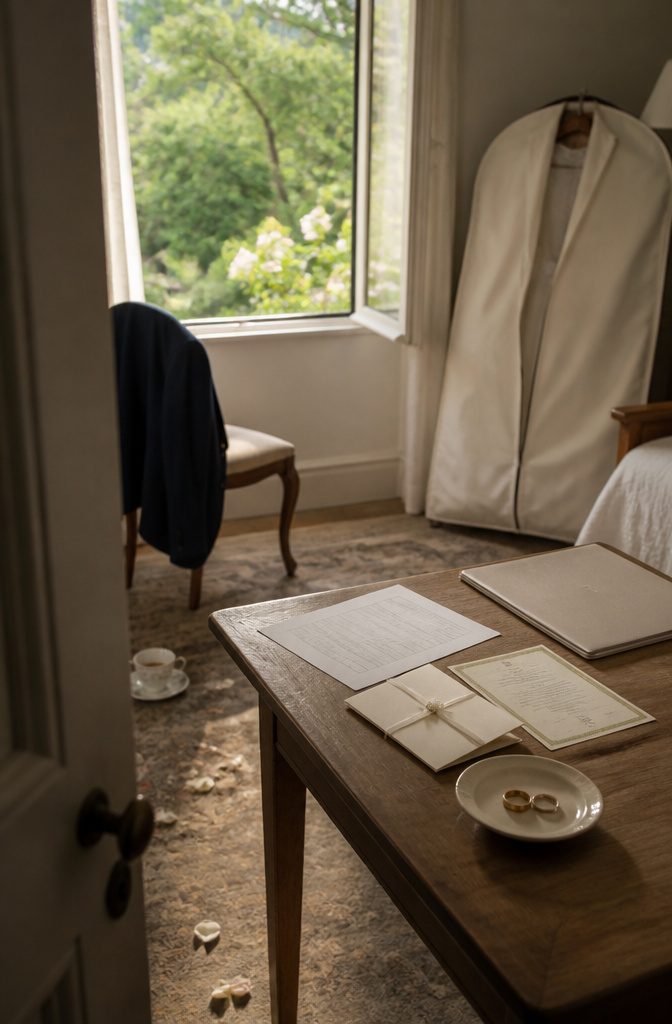
Assign the rings, marriage license, and vows to one person before the ceremony starts, and give your timeline and vendor contact list to whoever is running logistics. Your job on the day is to show up, not to manage it.
After the wedding, return any rentals first, since contracts set the dates and missing them costs money.
Clear any remaining vendor balances before the honeymoon if you can. Send thank-you cards with a favorite photo enclosed.
Preserve your attire properly rather than leaving it in a bag. Order prints or an album if that is not already part of your photographer’s package, because those files will not feel real until something is hanging on a wall.
File your marriage certificate with the appropriate state office to make the name change and legal paperwork easier later.
How Long Wedding Planning Takes
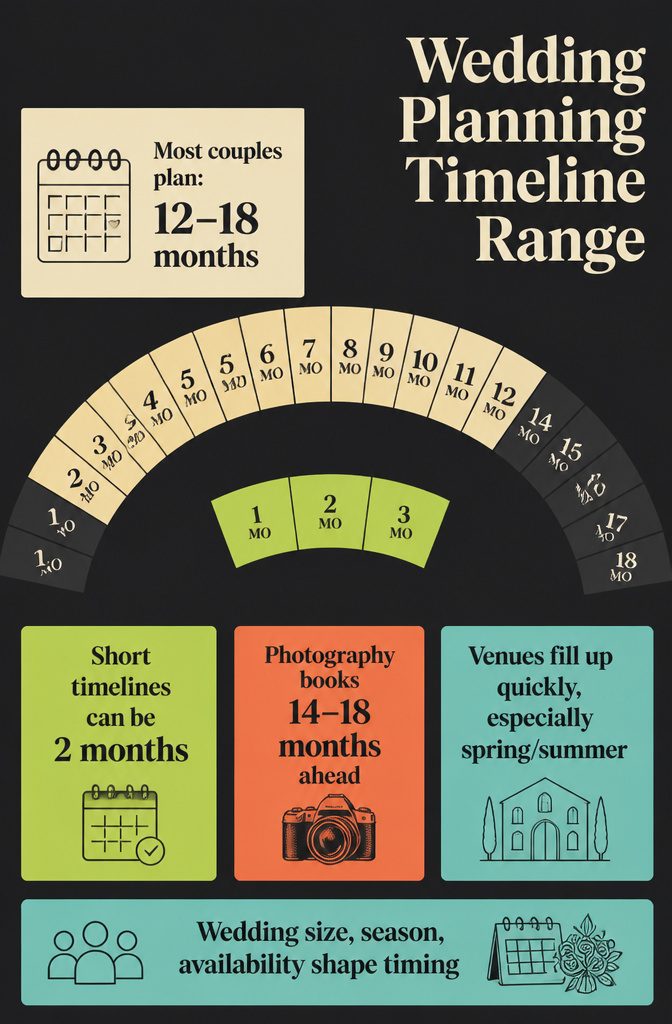
Most couples plan over 12 to 18 months.
That window gives you first pick of venues and photographers, especially if you want a spring or summer wedding. Venues fill up fastest, and the best vendors tend to book within that same time frame.
Whatever your reason for expediting your nuptials, we’ve got you covered with our incredibly efficient 90-Day Wedding Planning Checklist!
Shorter timelines work, but you trade options for speed.
I have seen weddings come together in 2 to 3 months when couples book what is available rather than what they pictured first. The pace you can sustain matters less than what is still open when you start looking.
Popular dates book early.
If you are set on a specific venue or photographer, start at least a year out. Beyond 18 months, some vendors will not commit yet.
What to Bring to a Venue Consultation
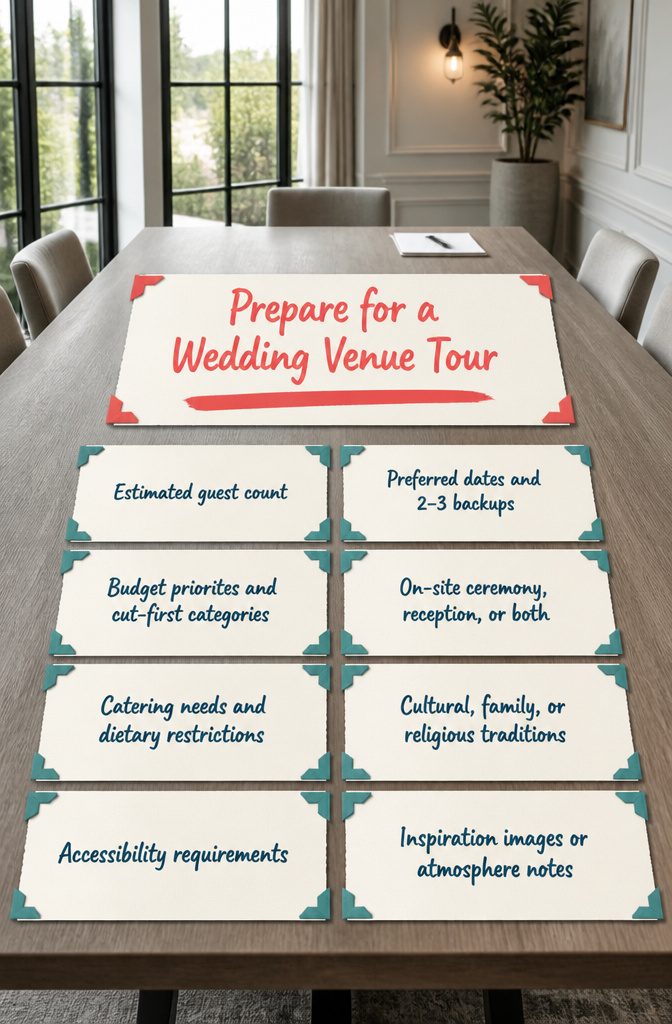
Bring these to your venue walkthrough so the conversation stays useful:
- Estimated guest count, even a rough range: venues size packages and catering minimums around it
- Preferred wedding dates, including 2 or 3 backup options
- Budget priorities, meaning which categories matter most to you and which you’d cut first
- Ceremony and reception plans, whether you want both on-site or just one
- Catering needs, including any dietary restrictions or service style preferences
- Cultural, family, or religious traditions the space needs to accommodate
- Accessibility requirements for guests with mobility or other needs
- Inspiration images or notes that capture the atmosphere you’re going for
The venue coordinator will ask about almost all of this anyway. Showing up with answers already organized keeps you from agreeing to something in the moment that doesn’t actually fit your plan.
Frequently Asked Questions
How long does it take to plan a wedding?
Most couples plan over 12–18 months. That window gives you time to book the best venues and vendors before they fill up, send save-the-dates 6–8 months out, and mail invitations about 2 months before the date.
A shorter timeline is possible, but your options for venues, photographers, and florists narrow fast.
What is the first thing to do when planning a wedding?
Set your total budget and guest count before anything else.
Those 2 numbers set the ceiling on your venue, catering, and every vendor after that. Once you have them, locking in a date range and starting your venue search is the logical next move.