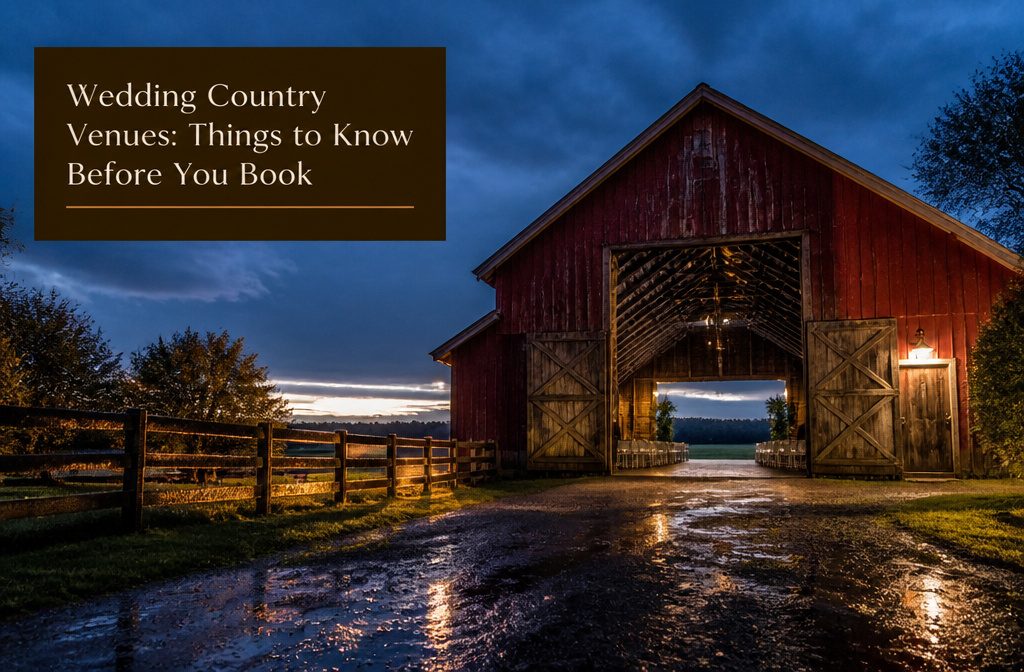
Wedding country venues are outdoor-focused properties, usually farms, ranches, or working rural estates, where the land itself is the primary backdrop.
The detail that trips most couples up: the scenery that makes these places worth booking is also the detail that makes weather planning non-negotiable.
One venue in this article runs a 30-foot barn ceiling overhead; another leans entirely on golden hour as its ceremony backdrop.
Rural Settings and Outdoor Spaces Define Country Venues
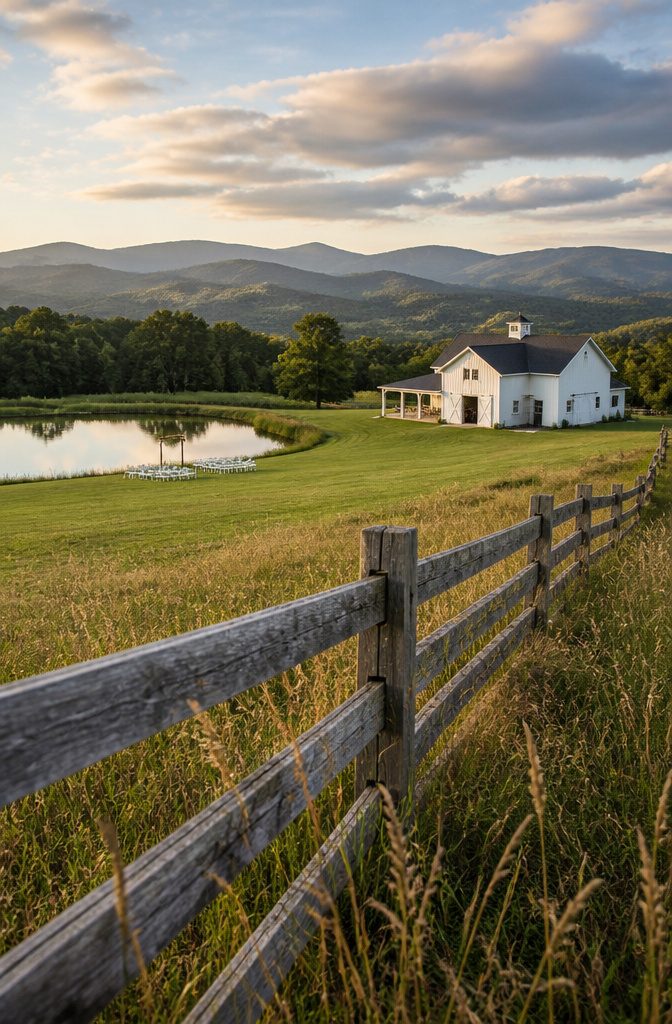
Country wedding venues sit on working farmland, open fields, hilltops, and ranch property, surrounded by trees, ponds, and views that stretch across the countryside.
The setting itself does the work: rather than decorating a blank ballroom, you’re choosing a backdrop that already feels like an event.
Washington’s green fields and alpine scenery give you mountain views, while Texas properties offer white dairy barns, open landscapes, and Hill Country panoramas.
The outdoor component separates country venues from indoor-only spaces.
Ceremony sites include scenic tree lines, open-air chapels with countryside views, and hilltop locations that frame the landscape. You’re working with natural light, whether at golden hour or midday, and the property itself becomes the photo backdrop.
Professional photographers get multiple settings without leaving the grounds: grand staircases, covered areas for weather, and fields that read as unmistakably rural.
Indoor spaces anchor the day but rarely look urban. Barns dominate the category, from historic white dairy structures to modern white barn architecture with rustic-inspired details and natural light.
1. Barns and Ranch Buildings Shape the Character
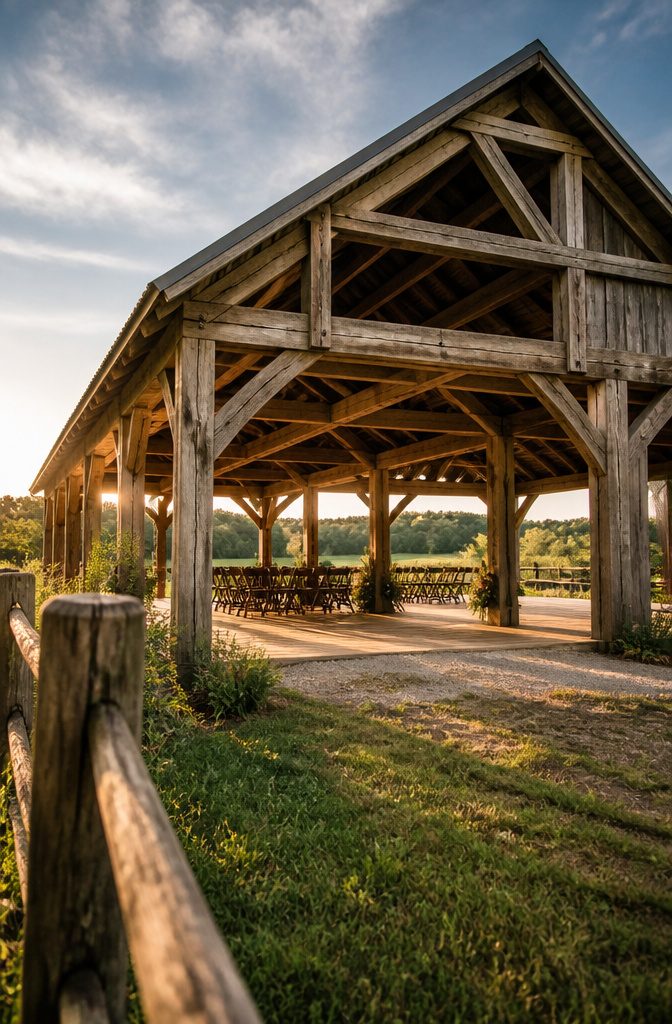
The structures themselves set the aesthetic register before a single flower is arranged.
A 12-sided barn with all its original woodwork, like the one at Pretty Prairie Farm, reads differently from a post-and-beam build; the geometry is genuinely unusual, and no amount of draping hides or replicates it.
The Barn at Lacey Farms runs to 30-foot ceilings, which changes what floral installations and lighting rigs are even possible.
On the historic end, Giddings Stone Mansion dates to 1870, with 13-foot ceilings and original fireplaces that give indoor gatherings a period backdrop without any added decoration. The Willow Tree puts ceremony and reception on the grounds of an 1830s home.
Barnhill Center, opened in 1925, sits in the same company. Older buildings carry character that newer builds are still working to earn.
2. Multiple Event Spaces for Ceremony Through Reception
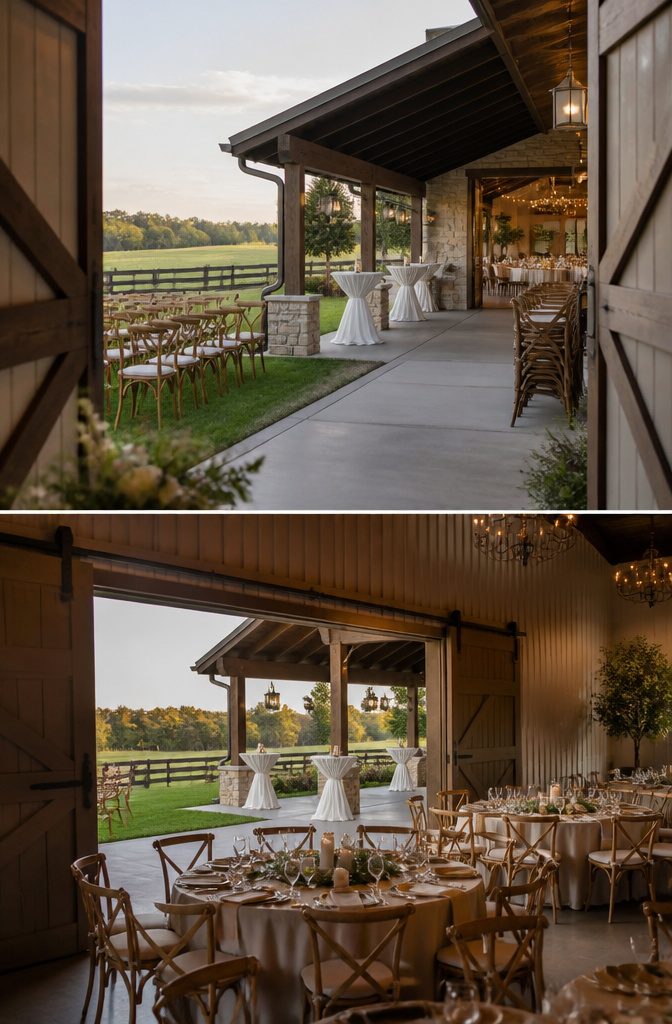
The typical country venue breaks the wedding day into 3 distinct spaces, and the sequence between them matters more than any single room.
A ceremony space leads to a cocktail area, which feeds into the reception hall. Done right, guests move without being herded.
The 6,600-square-foot Grand Hall, which seats 350 for dinner and dancing, is where most of the evening lives.
The 3,000-square-foot Open-Air Chapel handles the ceremony for up to 300 guests, and the 2,500-square-foot Covered Terrace bridges the two as a cocktail hour space.
That middle step is what keeps the flow from feeling abrupt: guests have somewhere to land while the room turns over.
A layout like this also means the ceremony and reception happen in genuinely different spaces, which changes how the day feels.
3. Guest Capacity Ranges From 10 to 1,000
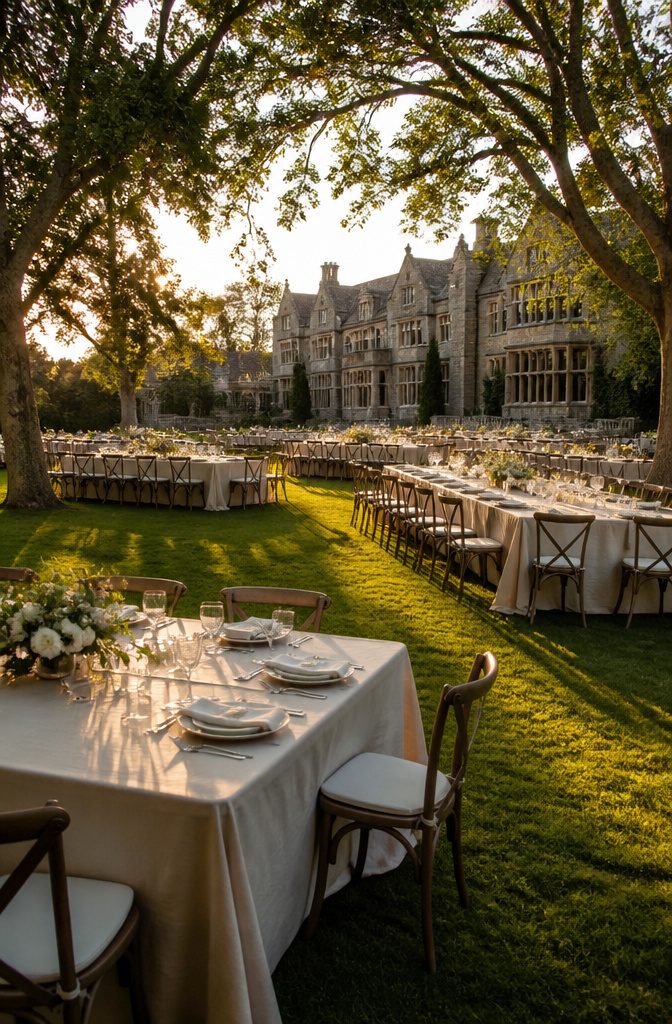
Capacity at wedding country venues runs from 10 to 1,000 guests, and that range matters more than almost anything else in the booking decision.
A converted industrial space like The Laundry Event Hall tops out at 200; a working ranch configuration such as PermaVista caps at the same number, while Liesel Farm handles 250–400. The 1835 Event Hall sits at 200.
Hummingbird Hill scales up to 700. At the high end, the grounds of Giddings Stone Mansion hold up to 1,000 for an outdoor reception.
Venue type drives the ceiling more than square footage does.
Indoor historic halls cluster in the 200-guest range; open grounds and ranch properties are where larger guest lists actually work. If your list runs past 250, filter for outdoor-capable venues first.
4. What Venues Include and What You Source Separately
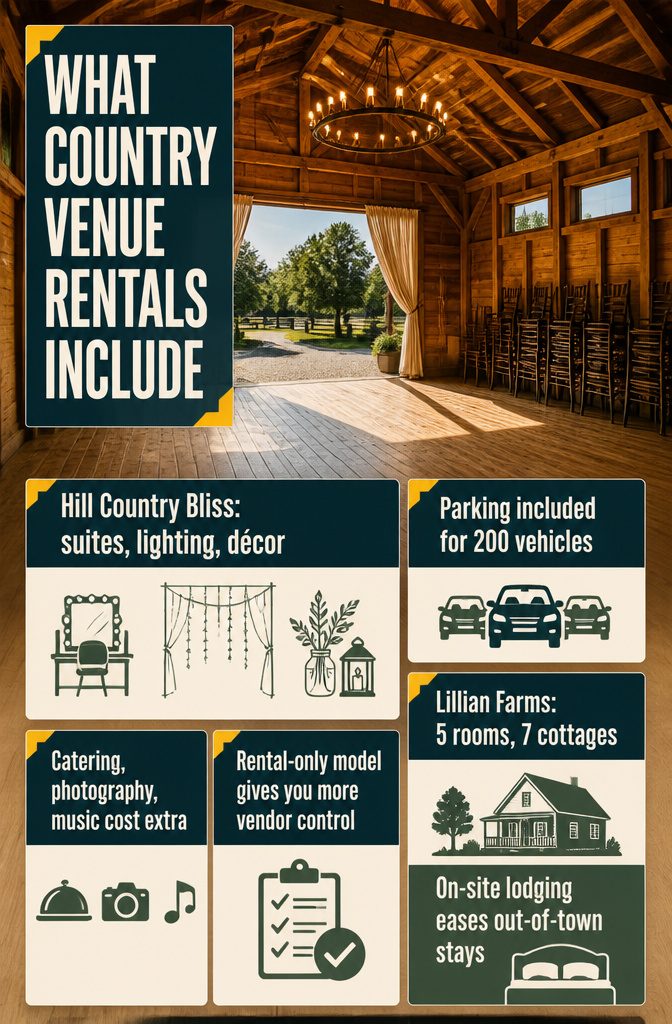
Venues split into two rough types: those that hand you a blank space and a vendor list, and those that wrap lodging, meals, and coordination into the rental.
Hill Country Bliss takes the first approach, with the rental covering getting-ready suites, lighting, basic décor, parking for 200 vehicles, and rehearsal time, while catering, photography, and music stay your budget lines to fill.
Lillian Farms sits at the other end, where 5 bed-and-breakfast rooms and 7 private cottages with hot tubs mean your wedding party can sleep on the property.
That on-site lodging is genuinely worth paying for if your guest list is traveling in from out of town. The rental-only model gives you more vendor control; the full-service estate gives you less to coordinate the morning of.
5. Pricing Runs From $600 to $9,000 for the Venue Rental
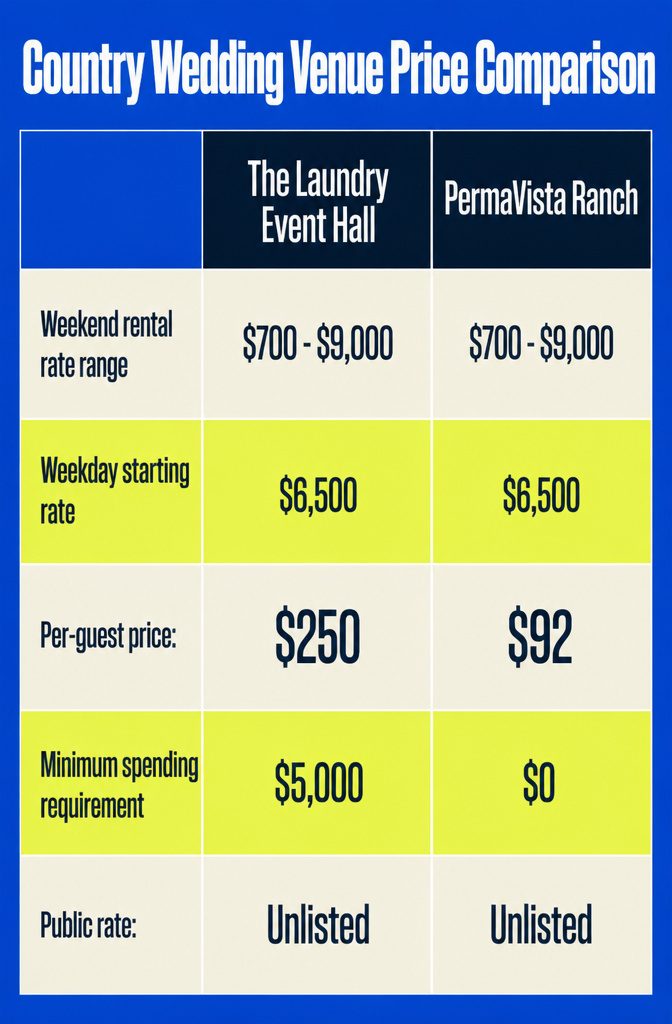
Venue rental costs vary more than most couples expect. Weekend rates run from $700 at the lower end up to $9,000, while weekdays tend to come in under that ceiling, with some properties starting around $6,500.
Per-guest pricing adds another way to read the numbers: $250 per person at The Laundry Event Hall, $92 at PermaVista Ranch. Some venues set a spending floor instead: Hummingbird Hill requires a $5,000 minimum before you even ask about dates.
A few properties, including Hummingbird Hill and The Laundry Event Hall, list no public rate at all and ask you to request pricing directly.
That gap between $92 and $250 per guest is real, and it compounds fast as your guest count climbs.
Book Spring and Fall Weekends 12 to 18 Months Ahead
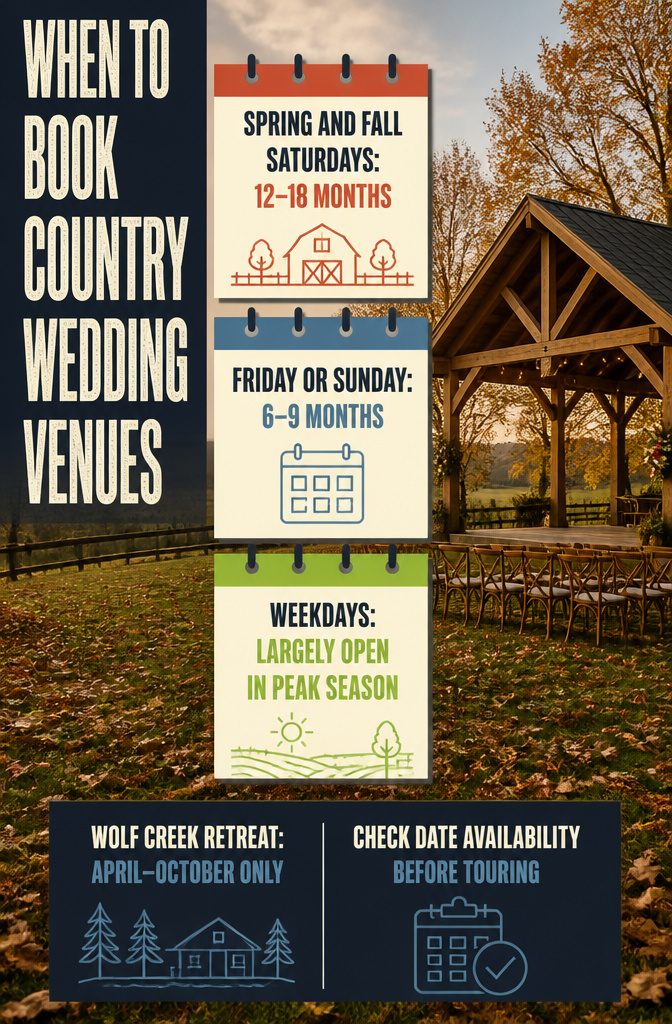
Spring and fall Saturdays at wedding country venues book 12–18 months out, and that window closes faster than most couples expect.
If your date is flexible, a Friday or Sunday can open up with six to nine months of lead time and sometimes comes at a lower rental rate. Weekdays are largely wide open, even in peak season.
Some venues run a restricted calendar.
A venue like Wolf Creek Retreat operating April through October means a November date simply isn’t available, no matter how early you call. Check the operating season before you fall in love with a property.
If you have a specific date in mind, call before you tour. Visiting a venue, getting excited, and then learning the date is gone is a real way to lose a Saturday.
Weather Contingencies and Indoor Backup Options
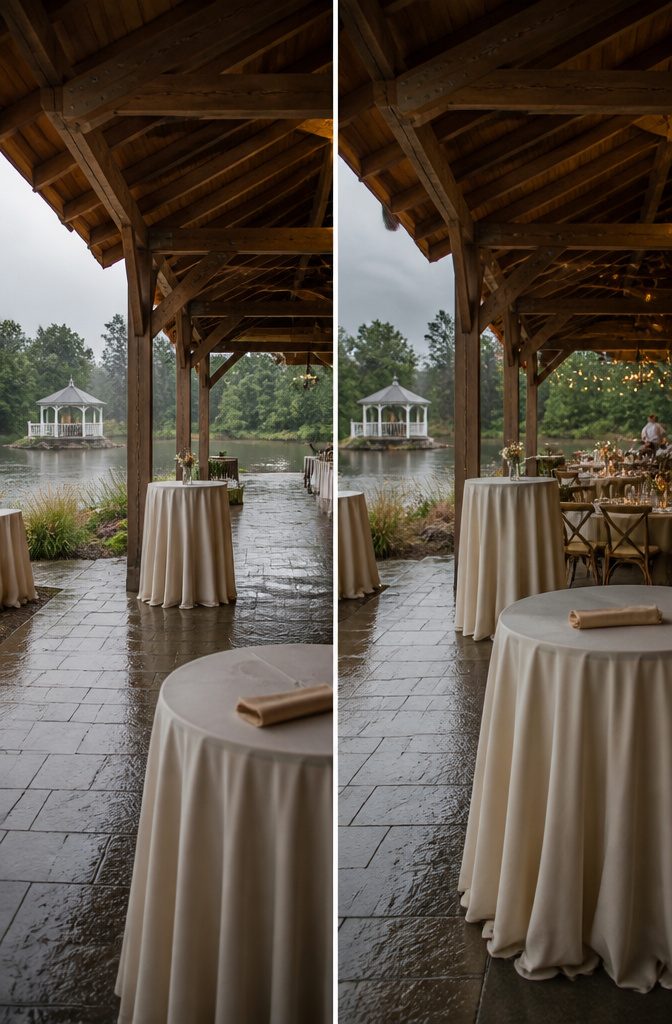
Most country venues hold the ceremony outdoors and the reception under a roof, but weather does not always cooperate. I look for venues where indoor spaces are large enough to hold both events if rain forces the ceremony inside.
The Grand Hall at Hill Country Bliss, for instance, seats a full ceremony and fits reception tables with proper spacing between them. That keeps your timeline intact rather than scrambling to rearrange furniture mid-morning.
Covered structures give you a middle option. Cedar Springs Pavilion near Dayton runs ceremony vows under a waterside gazebo, then moves guests to a covered pavilion for dinner and a separate covered area for cocktail hour.
The roof keeps rain off without feeling like you moved the whole wedding indoors. Covered terraces work the same way at barn venues where the building wraps around an outdoor courtyard.
Ask how much rearrangement the backup plan requires.
If moving inside means folding chairs, breaking down an arch, and clearing the floor in under an hour, you need crew on standby and a weather call made early enough to act on it.
Frequently Asked Questions
What is included in a country wedding venue rental fee?
Most country venues bundle the event spaces, parking, bridal and groom suites, customizable lighting, basic décor, and rehearsal access into the base rental.
Catering, photography, music, and any additional décor come from vendors you hire separately. Weekday dates often carry reduced pricing, with some venues starting at $6,500, so if budget flexibility matters, that is worth asking about early.
How far in advance should you book a country wedding venue?
Spring and fall weekends at popular country venues book out 12–18 months ahead.
Weekday dates stay open longer and sometimes come at lower rates. If your date is firm and your season is peak, treat the venue deposit as the first item on your planning list, not a later one.
What happens to an outdoor country wedding ceremony if it rains?
Any country venue worth booking has a named indoor backup, not just a vague promise.
One option is the Grand Hall, which holds both ceremony and reception seating with proper spacing so the timeline stays intact. Ask every venue candidate to show you the rain plan in writing before you sign.
Can you bring your own catering and alcohol to a country wedding venue?
Rental-only venues let you bring your own catering team and give full access to kitchen prep space.
Alcohol is allowed with the proper permits through a bar provider you select. Confirm permit requirements with your county before finalizing a vendor, since rules vary by state.