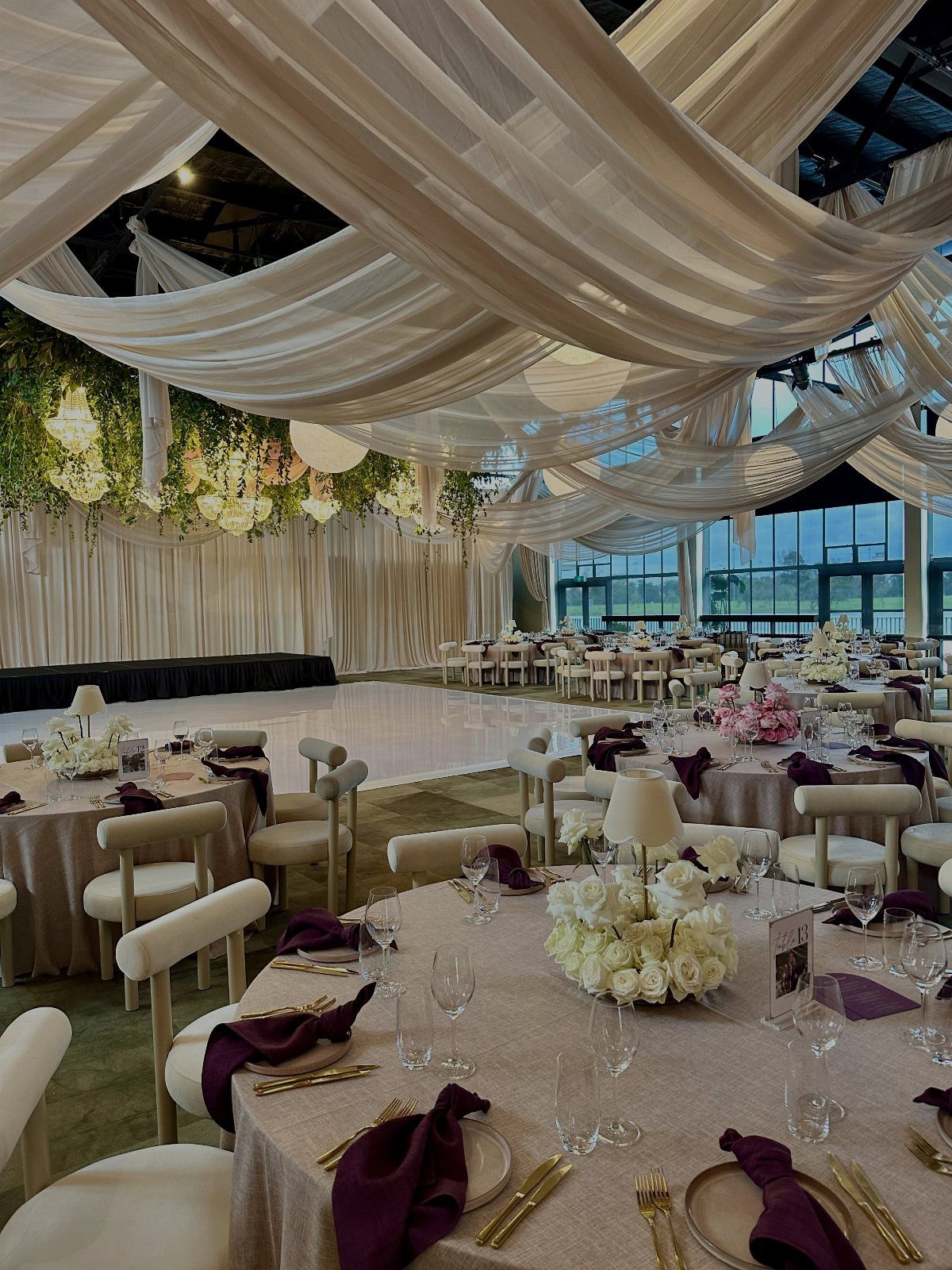
An indoor venue takes weather off the table entirely, so your timeline runs as planned and guests stay comfortable whether your date falls in summer heat or unpredictable spring rain.
The seated guest count matters more than the advertised capacity, which usually assumes a standing cocktail setup, and venues that include tables, chairs, and lighting in the base rate can cost less overall than spaces with a lower hourly price but separate charges for each rental.
If ceremony and reception share the same room, ask who flips the space and where guests go during that window, because moving 80 people from chairs to cocktails takes planning even when the venue handles it.
1. One Broadway Ballroom
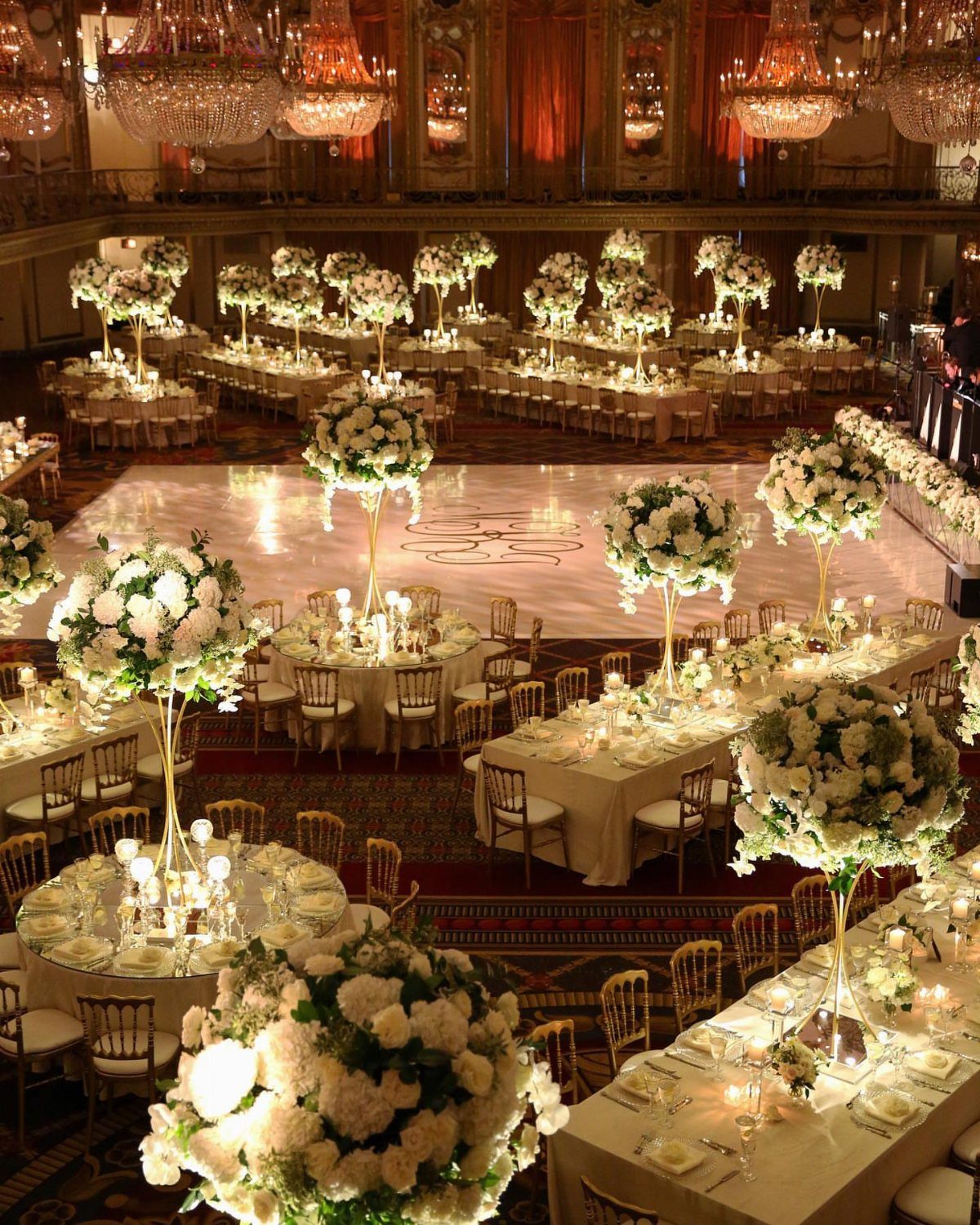
A downtown hotel ballroom gives you high ceilings, built-in chandeliers, and room for a large guest list at round and long tables.
The polished floors reflect light beautifully, and the hotel usually handles catering, bar service, and table setup in one contract.
If most of your guests are traveling, booking a block at the same hotel keeps everyone close.
The ballroom itself needs less added decor than a raw space, so you can keep florals minimal or go big with centerpieces depending on your budget.
2. The Reverie Event Venue
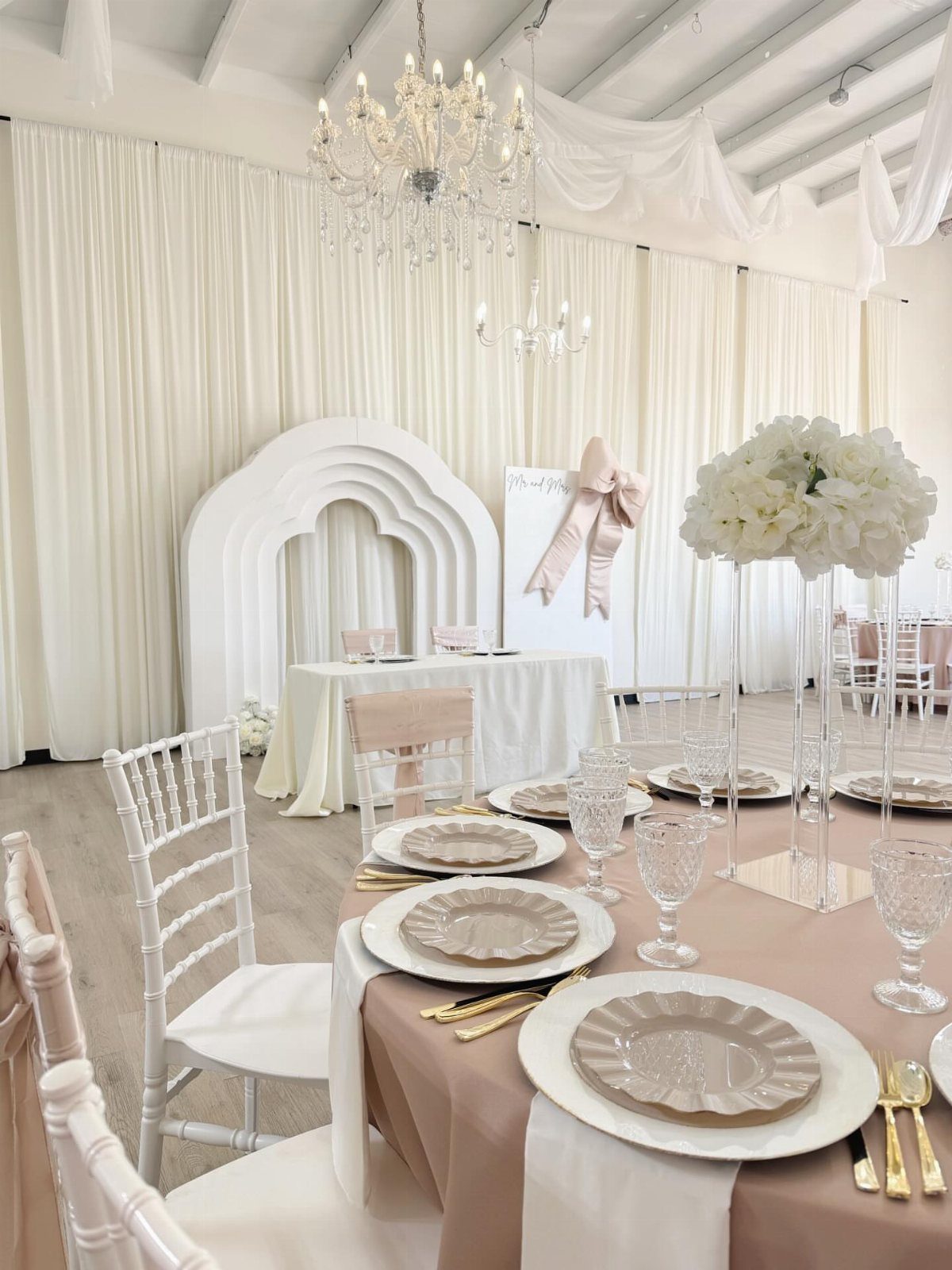
An all-white event space with drapery and chandeliers already in place cuts down on what you need to bring in.
The Parisian-inspired look suits smaller guest counts, often 50 to 100, and the neutral backdrop lets you add color through flowers, linens, or table settings without clashing with the room.
The built-in arch and soft lighting mean you can skip some rentals. If your guest list is under 80 and you want a polished look without heavy decorating, this type of space does most of the work for you.
3. Grand Foyer with Chandeliers
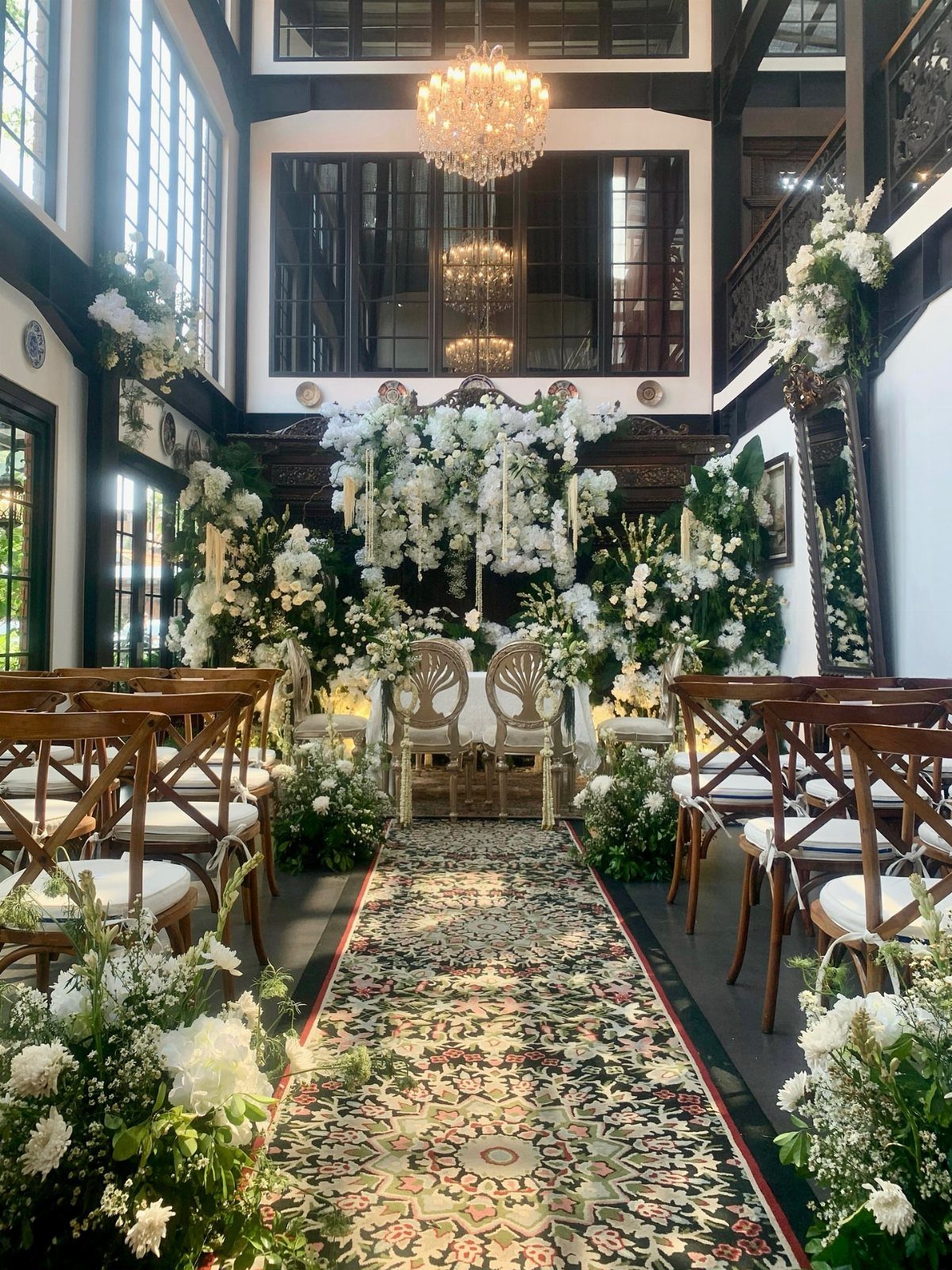
A grand foyer with double chandeliers and high ceilings gives you a ceremony space that feels formal without needing a separate church.
The tall windows let in natural light through the ceremony, and the chandeliers light the space once the sun goes down.
Many foyer venues include a loft or balcony for cocktail hour, so guests can move upstairs while the crew flips the space for dinner.
4. Indoor Barn and Lodge
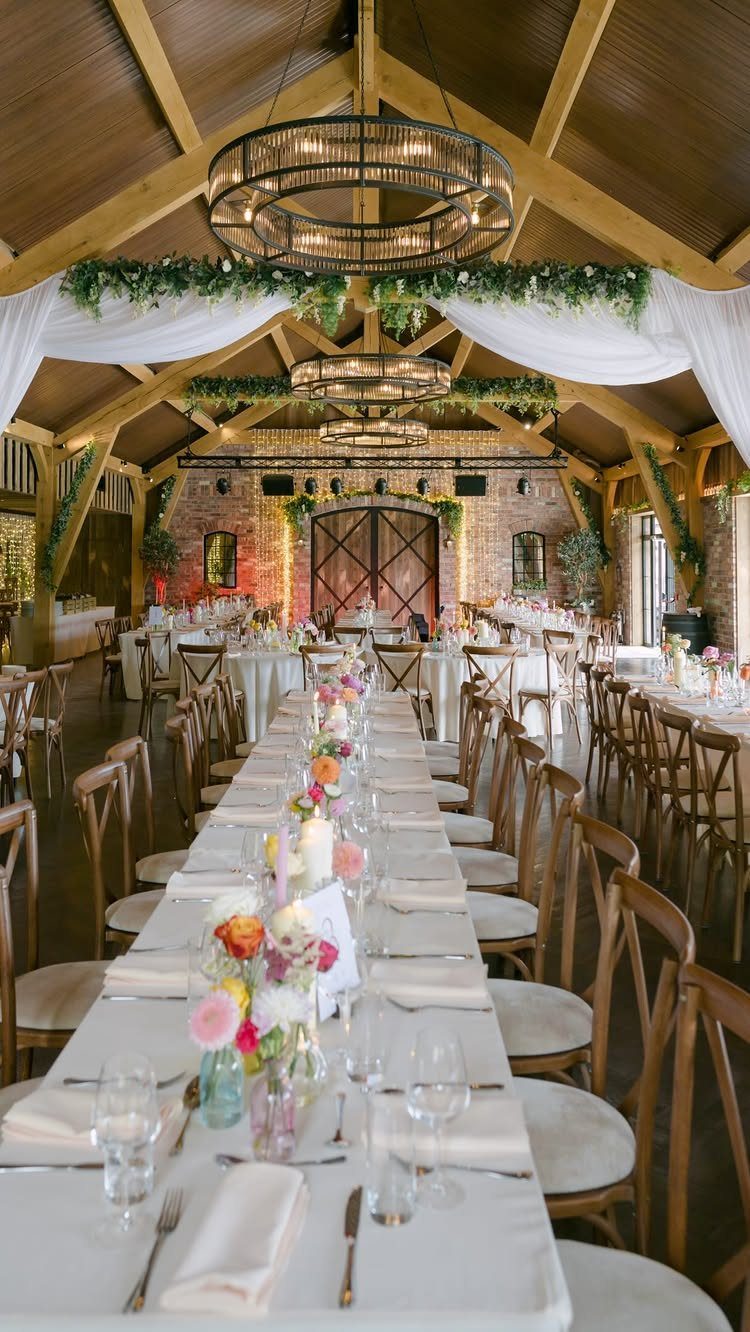
A barn with vaulted ceilings and white fabric draping gives you rustic bones with a refined look. The chandeliers and draping are usually permanent fixtures, so you get the softness without rigging your own fabric or renting lighting.
Long tables fit the barn layout better than rounds, and the wood beams warm up white linens without needing much else.
If you want a farm setting with weather protection, an indoor barn with a lodge for getting ready keeps everything on one property.
5. Floor-to-ceiling Windows
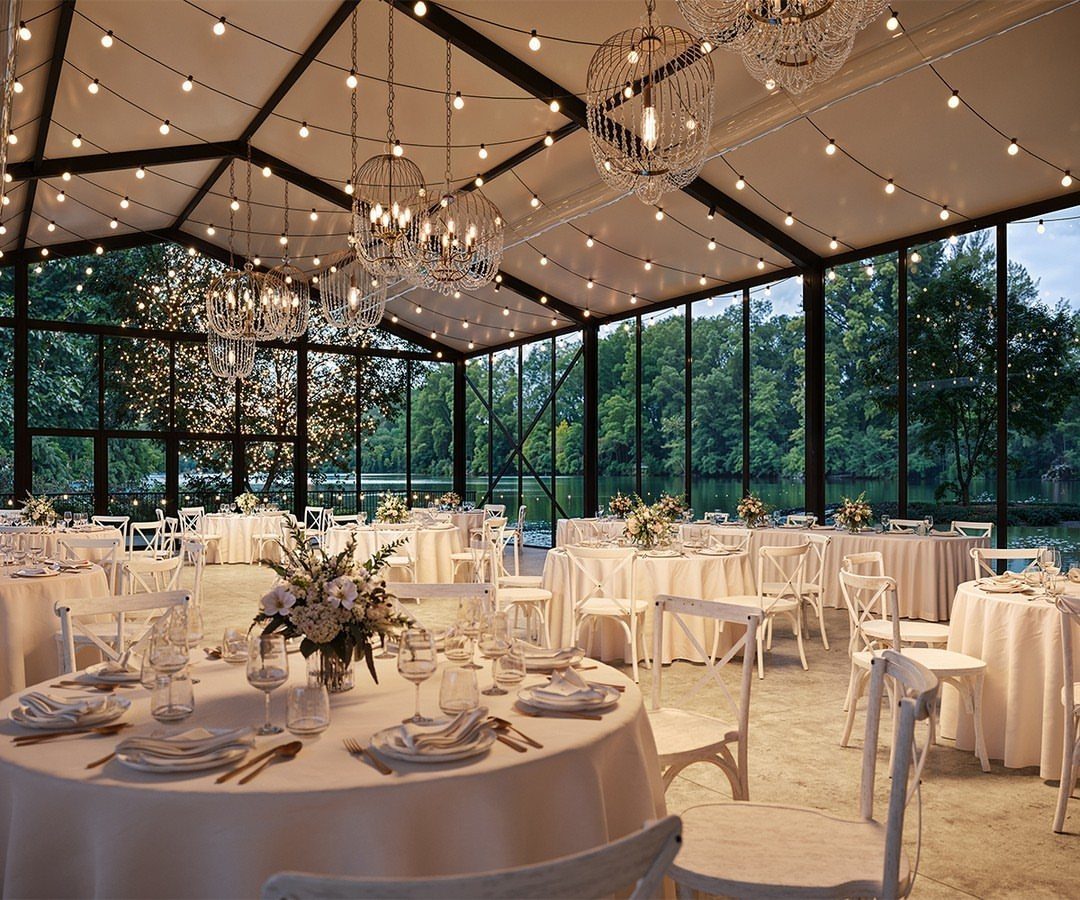
Floor-to-ceiling windows at a vineyard venue let you keep the view while staying indoors.
The glass walls work best when the view is water, vines, or open land, and the natural light during the day means you can skip uplighting until evening.
String lights or chandeliers handle the lighting after sunset, and the enclosed space protects against wind or rain without feeling closed off.
The Museum’s 55-foot-tall Dale Chihuly glass tower anchors the lobby, while a Dale Chihuly Waterford crystal chandelier lights the Theater Lobby’s original Art Deco architecture, giving the venue an art-filled backdrop that few event spaces can match.
6. Glass Pavilion by the Water
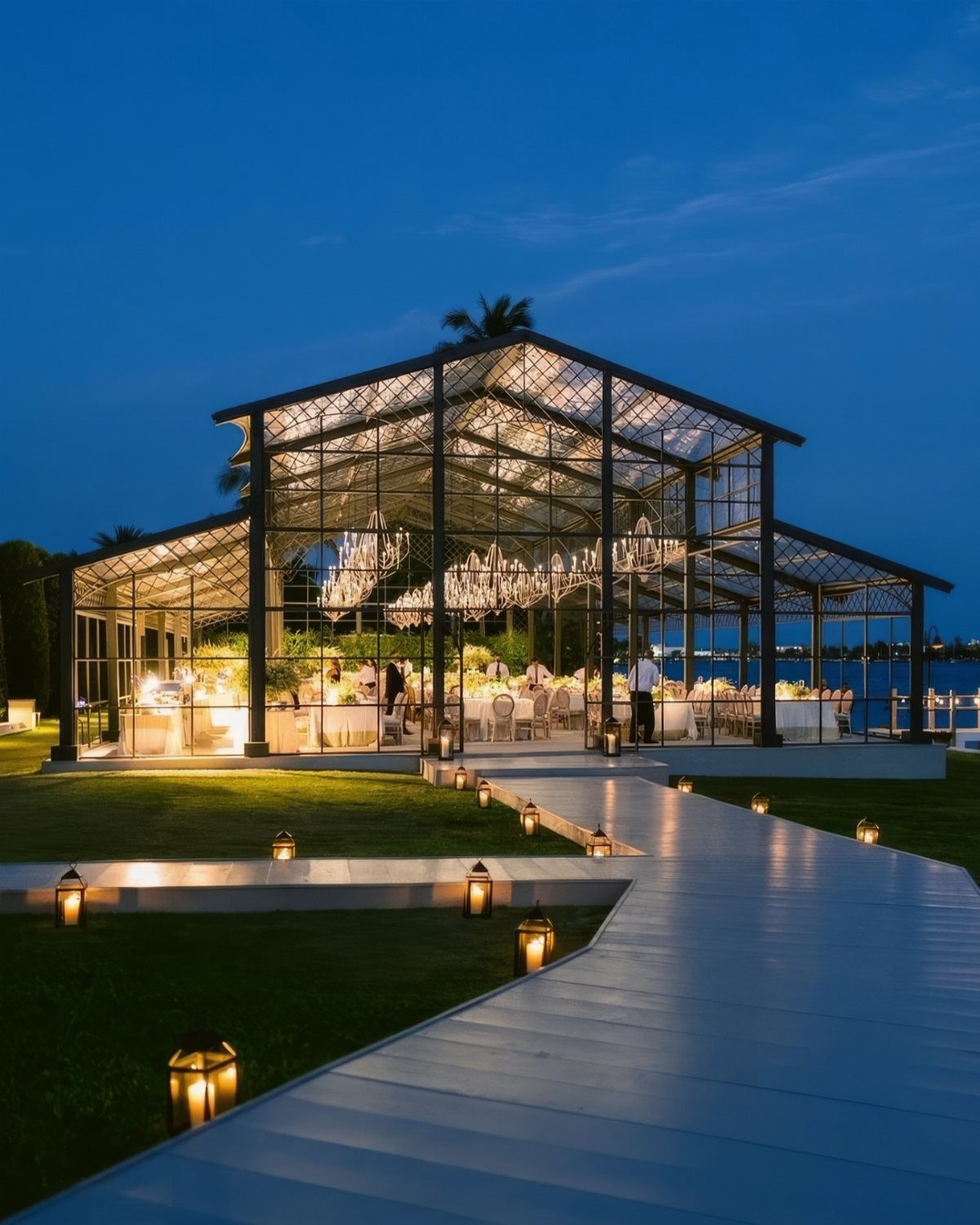
A glass pavilion by the water gives you an enclosed structure with views on all sides.
The transparent walls mean guests see the water and landscape while staying protected from weather, and the chandeliers inside provide lighting once the sun sets.
If your ceremony is outdoors and your reception needs to be weatherproof, this setup keeps both in the same location without moving guests far.
7. Stone-arched Hall
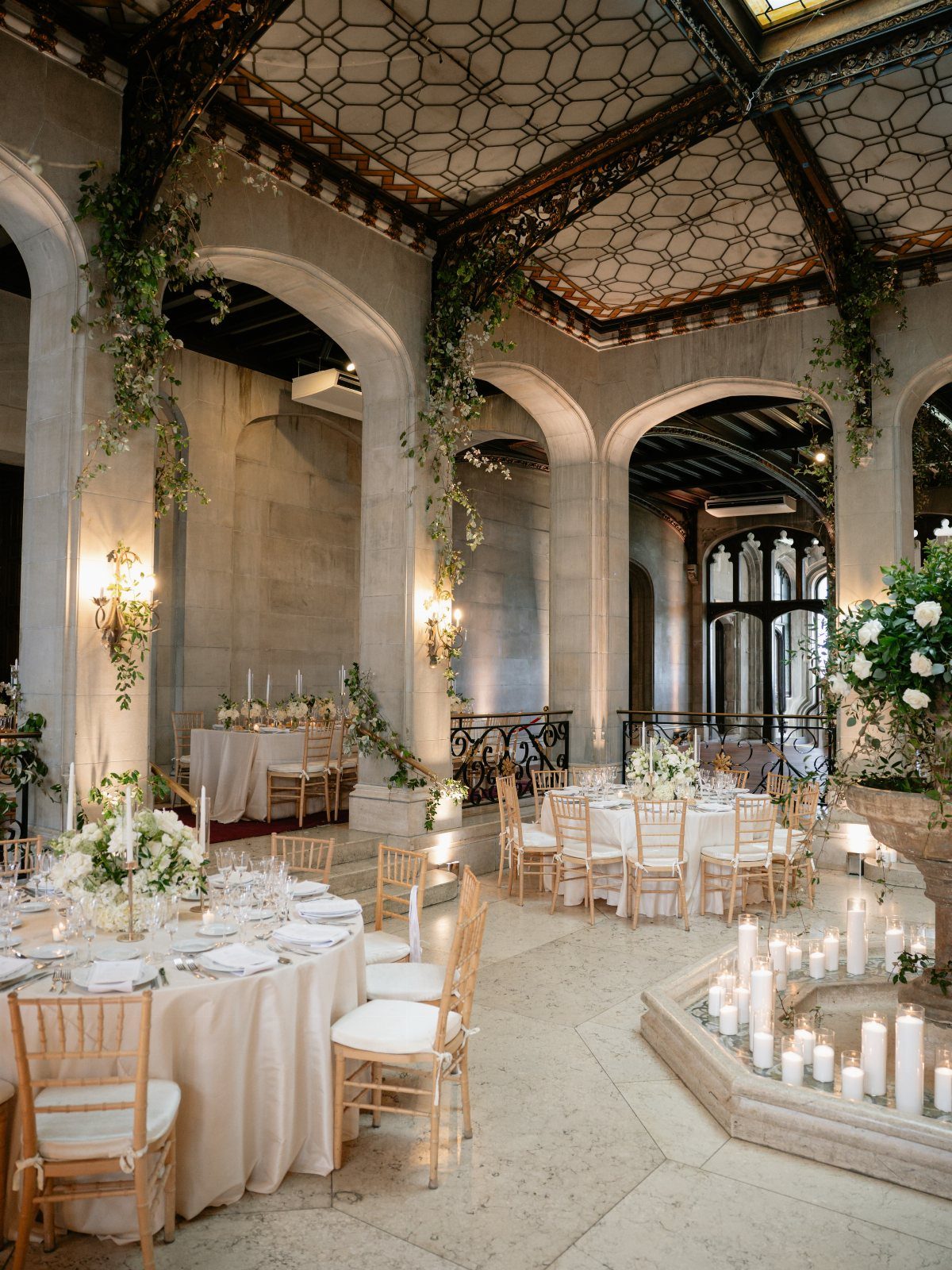
Stone arches and a central fountain give this hall a courtyard feel without the weather risk. The arches frame the tables, and the fountain works as a focal point that needs no extra florals or decor to hold attention.
The stone keeps the space cool, which suits summer weddings but may need added heat in winter.
If you want a Mediterranean or European look and your venue has the arches built in, you can skip most decorating and let the architecture carry the room.
8. Wood-beamed Reception Hall
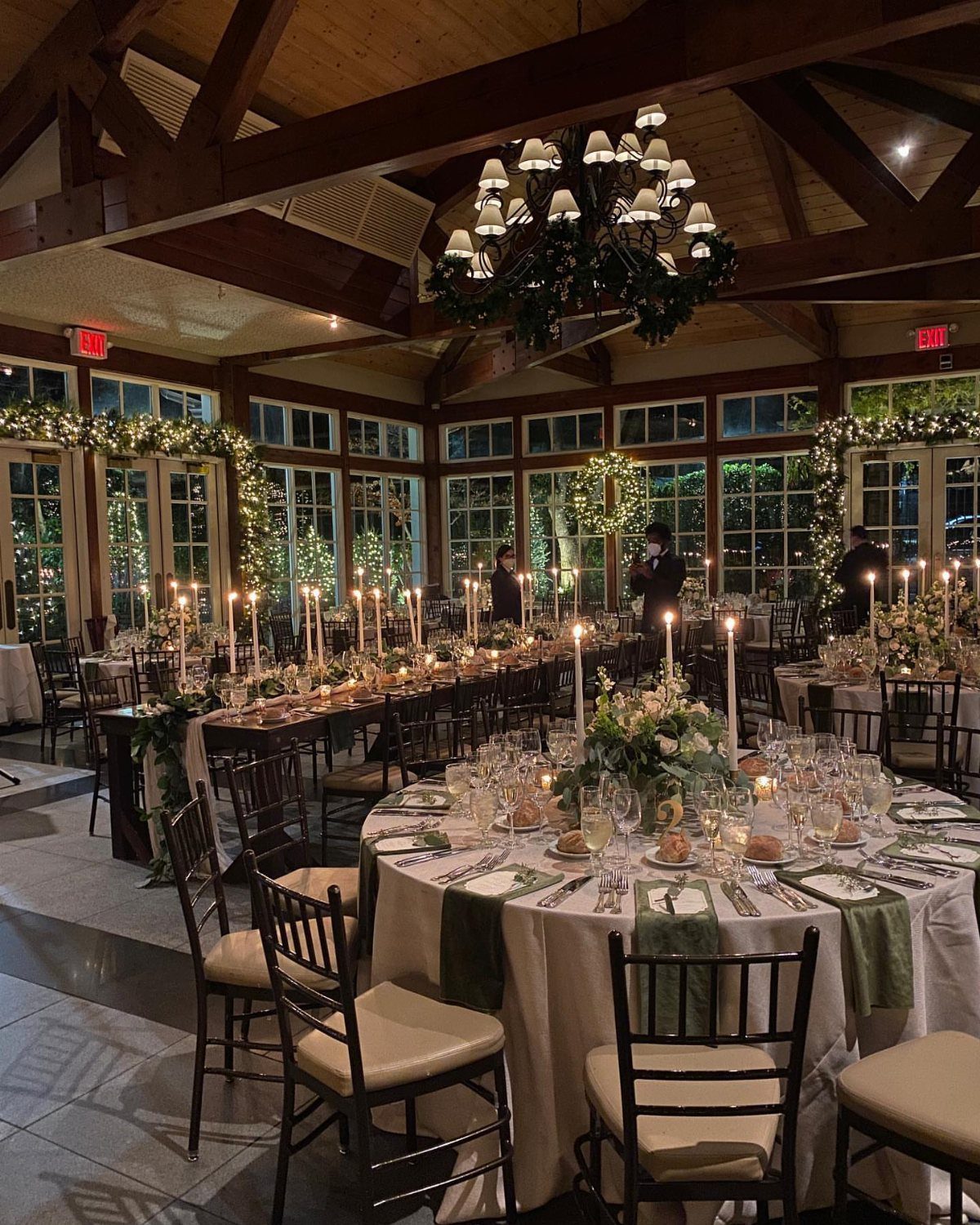
Exposed wood beams and large windows give warmth without needing heavy draping or added texture. The chandelier and candles handle the lighting, and the windows show the landscape during cocktail hour before it gets dark.
This setup works at round tables, and the wood tone means you can use white linens without the room feeling cold.
9. Industrial Event Hall
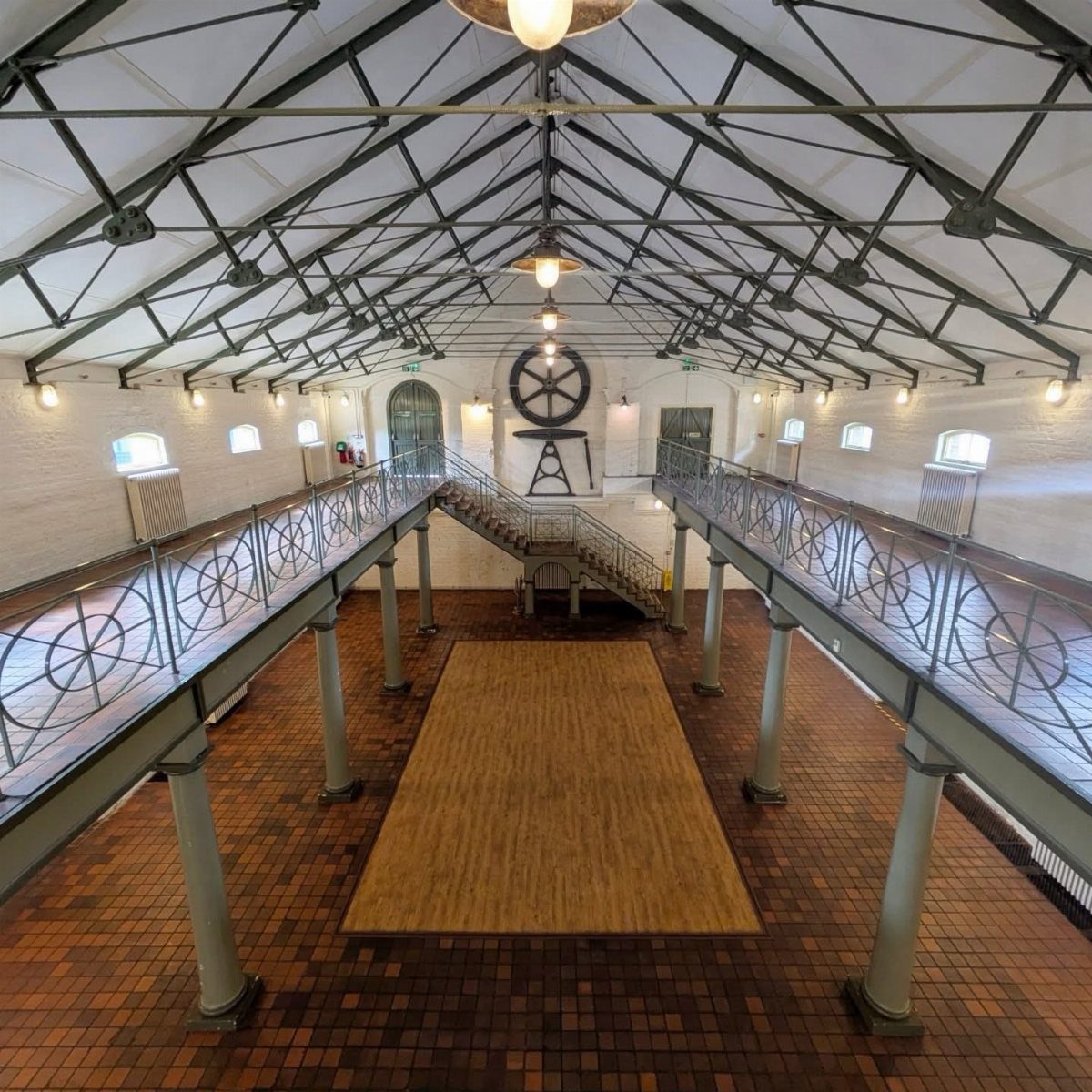
A raw industrial hall with metal trusses and a high peaked ceiling gives you room for a large guest count without dividing the space.
The open layout works for dancing, and the elevated walkways can hold musicians or additional seating if your guest list grows.
The wood dance floor sits on tile, so you get a smooth surface for dancing without renting one separately. If you want a blank canvas for lighting and decor, this type of space lets you build the look from scratch.
10. Modern Luxury Venue
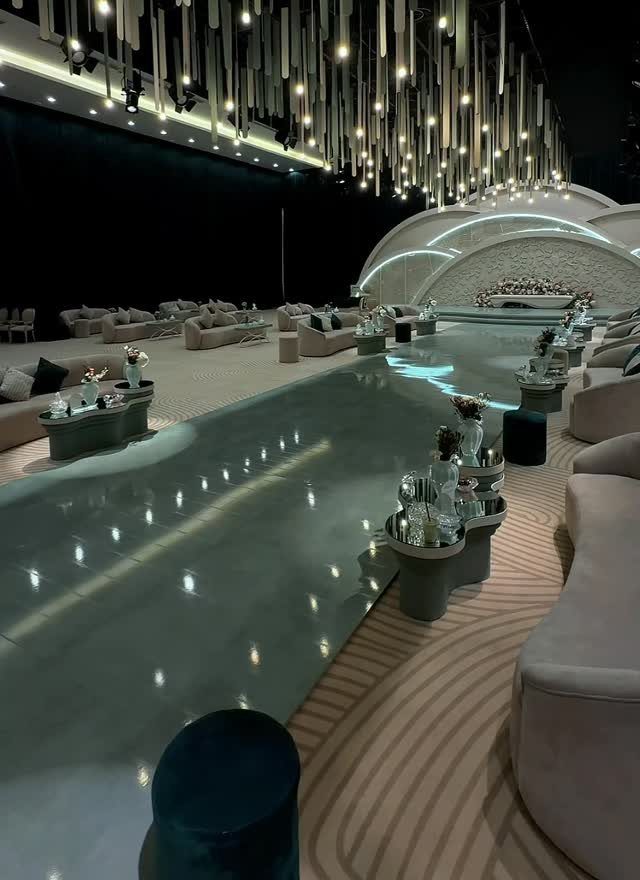
Curved lounge seating and a glossy floor give you a cocktail-style reception instead of a seated dinner. The sculptural lights and blue floor create the look, so you can skip centerpieces and focus on bar stations and passed appetizers.
This layout suits smaller guest counts, usually under 75, and works best when your crowd prefers mingling to a long sit-down meal.
11. White Draped Reception Hall
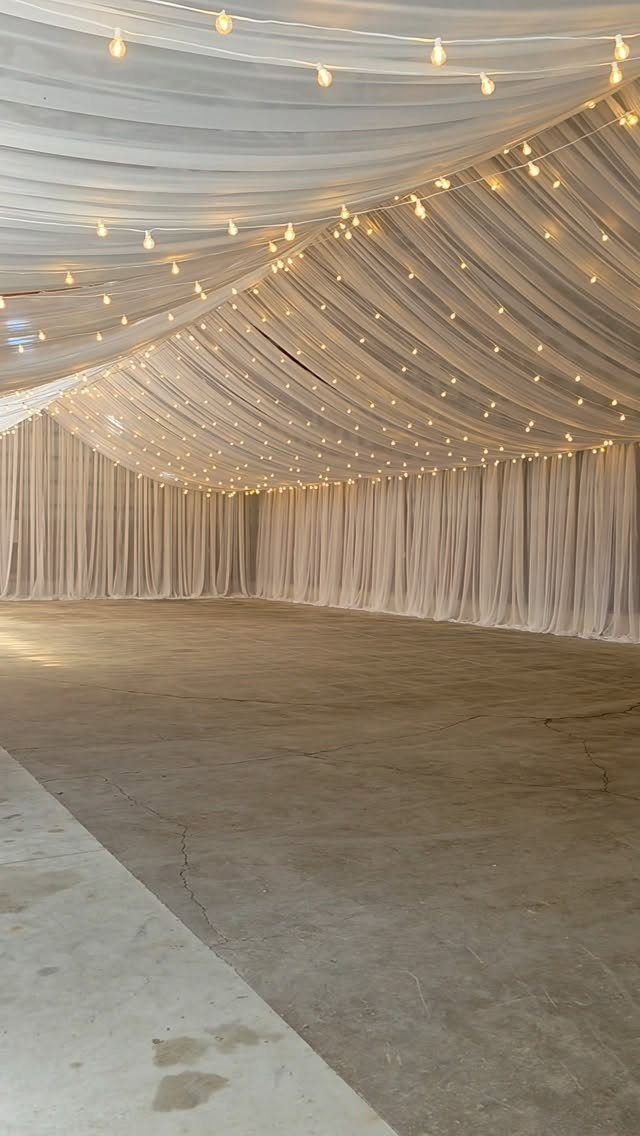
White fabric across the ceiling softens a concrete or industrial space without permanent construction. The draping and string lights are usually rigged by the venue or your decorator, and the setup takes a full day before the wedding.
The concrete floor stays visible, so you get the raw-meets-soft look without covering everything. This suits couples who want a blank space with one dramatic element that changes the whole feel.
12. Glass-roofed Dining Space
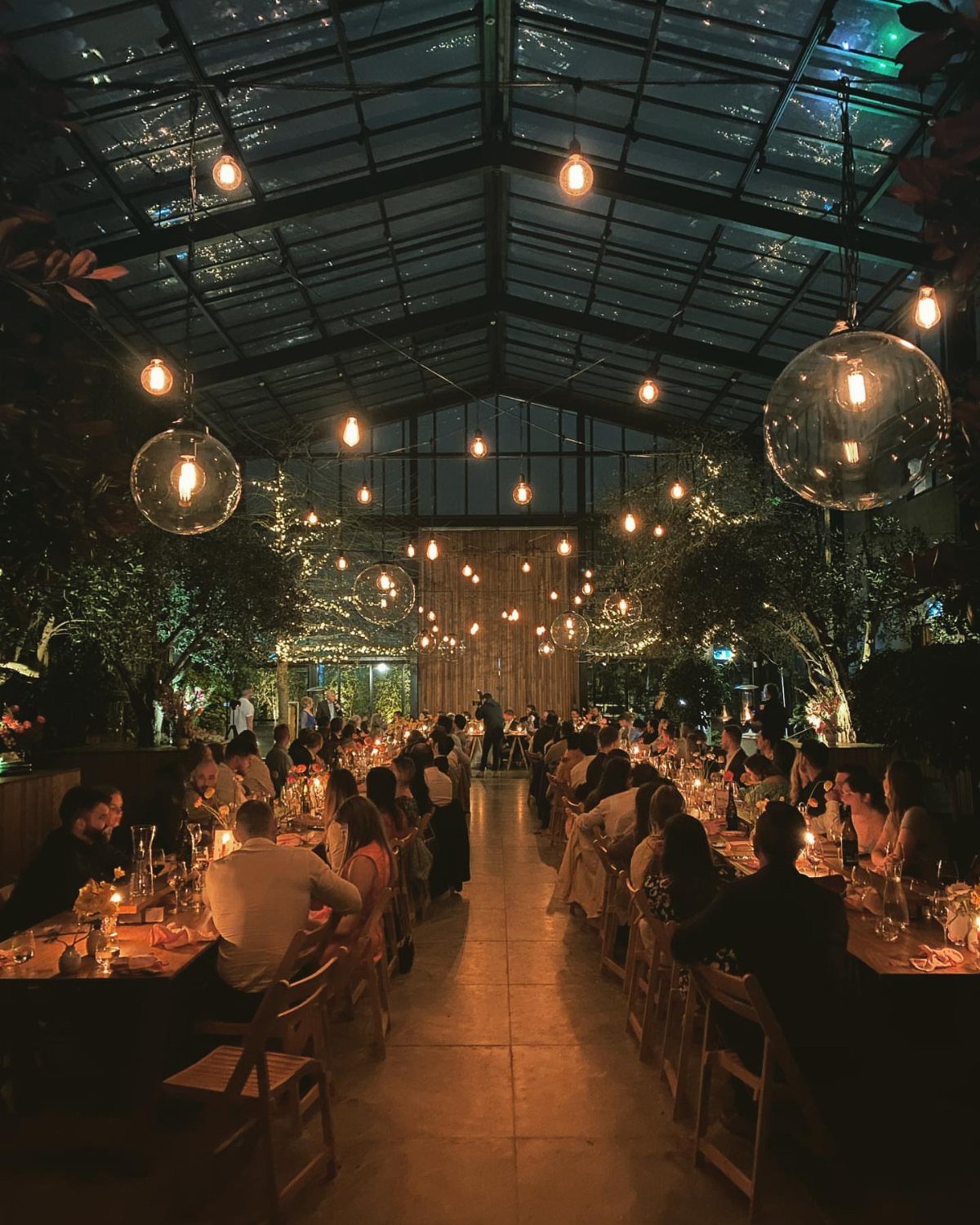
A glass roof brings daylight to a long table setup and keeps guests dry if it rains.
The globe lights and greenery add warmth once the sun sets, and the enclosed structure means you can use candles and linens without worrying about wind.
Long tables fit more guests in a narrow space than rounds, and the glass roof works year-round as long as the venue has heating or fans.
If you want natural light with weather protection, this setup keeps everyone together at one table.
Choosing an Indoor Venue
An indoor venue keeps weather out of the equation. Rain, wind, heat, cold, and snow stay on the other side of the walls, so your timeline runs as planned and guests stay comfortable through the ceremony and reception.
You skip the backup tent plan, the day-before weather watch, and the last-minute call to move everything under cover. Ceremony and reception can happen in the same building, so guests stay in one place instead of driving between locations.
If your date falls in a season with unpredictable weather, or if your guest list includes older relatives or young children, an indoor venue takes the risk off the table.
Compare Full Venue Costs
Look at what you pay in total, not the hourly rental rate alone.
Some venues include tables, chairs, lighting, audiovisual equipment, setup, teardown, and parking, while others charge separately for each. Hangar 21 in Orange County gives you tables and chairs with the space, and Jay’s Catering handles food for an extra fee.
Check the catering rules.
Some places insist you use their caterer or a short list of approved ones; others let you bring whoever you want. The difference in final cost can run into thousands.
Weekday and off-season dates can cost less if your schedule allows flexibility.
Plan the Room and Logistics
The guest count a venue advertises usually assumes a standing reception with cocktails. Get the seated number for your full setup before you sign anything.
If ceremony and reception share the same room, decide who flips it and how long that takes.
Guests need somewhere to go while the crew moves chairs and sets tables, so check whether the venue has a separate cocktail area, loft, or courtyard.
Ask where vendors park and how close they can get a van to the door for load-in.
If you are bringing outside vendors, make sure they can unload near the entrance and that there is enough parking for guests who are driving.
Frequently Asked Questions
What is the difference between a wedding venue and a wedding reception?
A wedding venue is the physical location where you hold your ceremony, reception, or both.
A wedding reception is the event itself after the ceremony, where guests eat, drink, and celebrate. Some venues host both parts in one space, while others require you to book a second location for the reception.
How does the room flip work?
The venue team moves ceremony chairs and sets up tables while guests go to a separate cocktail area.
Ask how long the flip takes and where guests go during it, since some venues charge extra for the staff or the second space.
Venues with multiple rooms can skip the flip by holding the ceremony in one area and the reception in another.
What should couples check about catering rules?
Many venues insist you pick from their caterer or a handful they trust, and others turn you loose to hire whoever you like.
The difference can add thousands to your final cost. Get the full cost with food included from each venue so the numbers are honest when you compare.
What should couples consider about parking and load-in?
Check where guests will park, whether valet runs that night, and if a shuttle can loop from overflow lots.
Check whether a game or concert falls on your date if the venue sits downtown. Confirm how close vendors can park to the entrance for load-in and whether there is enough parking for everyone driving.