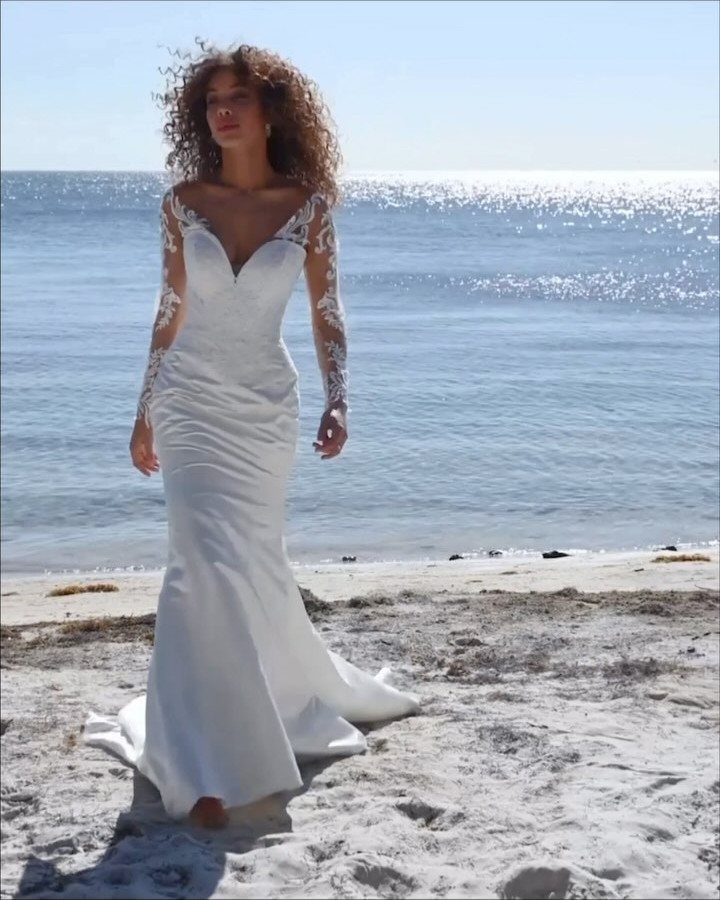
The sweetheart neckline curves into 2 soft points at the center and frames the bust without covering the shoulders.
It works across silhouettes from strapless ballgowns to mermaid cuts with long sleeves, and across fabrics from smooth satin to layered tulle.
Because the curve sits against your chest, you will still want a tailor to check the bodice before the day.
1. Strapless Sweetheart
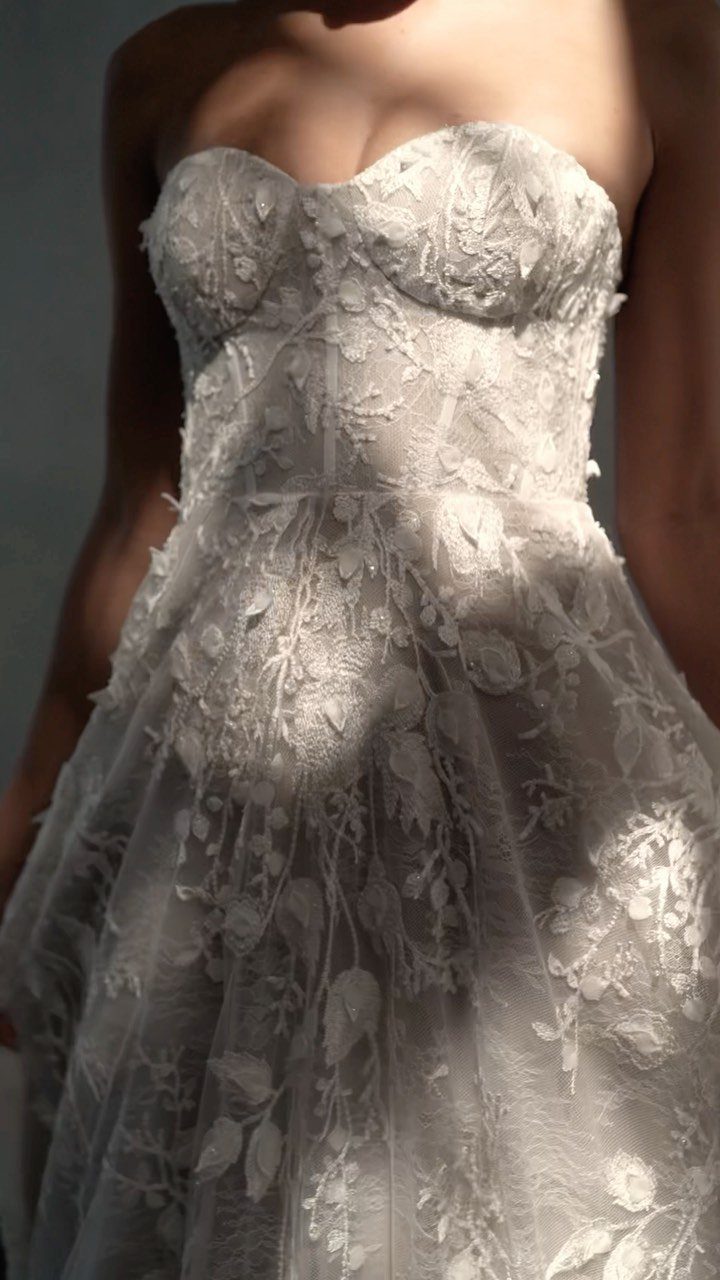
This version drops the straps entirely and leaves shoulders bare. The bodice curves into 2 soft points over the bust, like the top half of a heart.
Fit matters here more than with most necklines.
A well-fitted bodice stays up without shifting, so plan for alterations if you’re ordering online or buying off the rack. Most shops build in boning or internal structure to hold the shape.
Pair it with a long veil or statement earrings to balance the bare neckline.
2. A-line Sweetheart
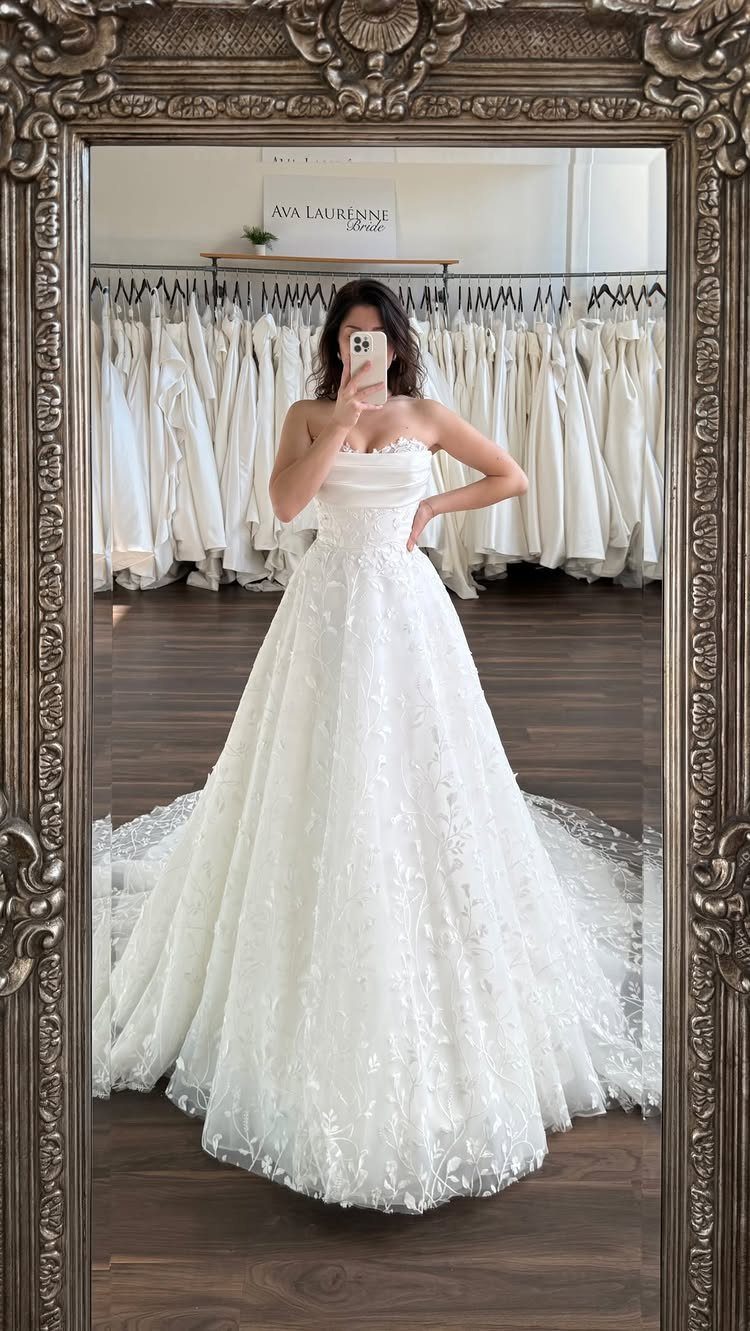
The skirt here fits through the bodice and hips, then opens gradually to the hem. It skims rather than clings, so it suits most body types and moves easily.
This silhouette keeps the sweetheart neckline visible without competing shapes below. If you’re planning a long ceremony or reception with dancing, the skirt gives you room to move without the weight of a ballgown.
Lace overlays and beading work well on the bodice, where detail shows.
3. Fit-and-flare Sweetheart
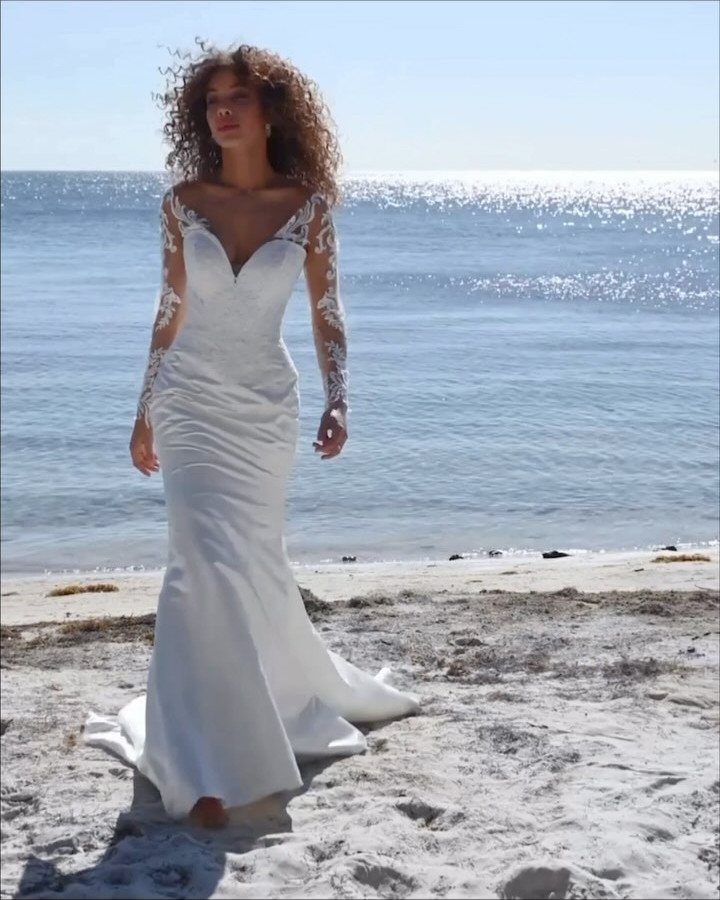
Fit-and-flare follows the body closely through the hips, then flares out from mid-thigh. It shows shape without the dramatic kick of a mermaid hem.
The fitted section means alterations usually matter.
Expect tailoring at the waist, bust, and hips to get the right line. Stretch fabrics like crepe or jersey give a little more forgiveness than satin or taffeta.
This cut pairs well with long sleeves for arm coverage while keeping a defined silhouette.
4. Mermaid Sweetheart
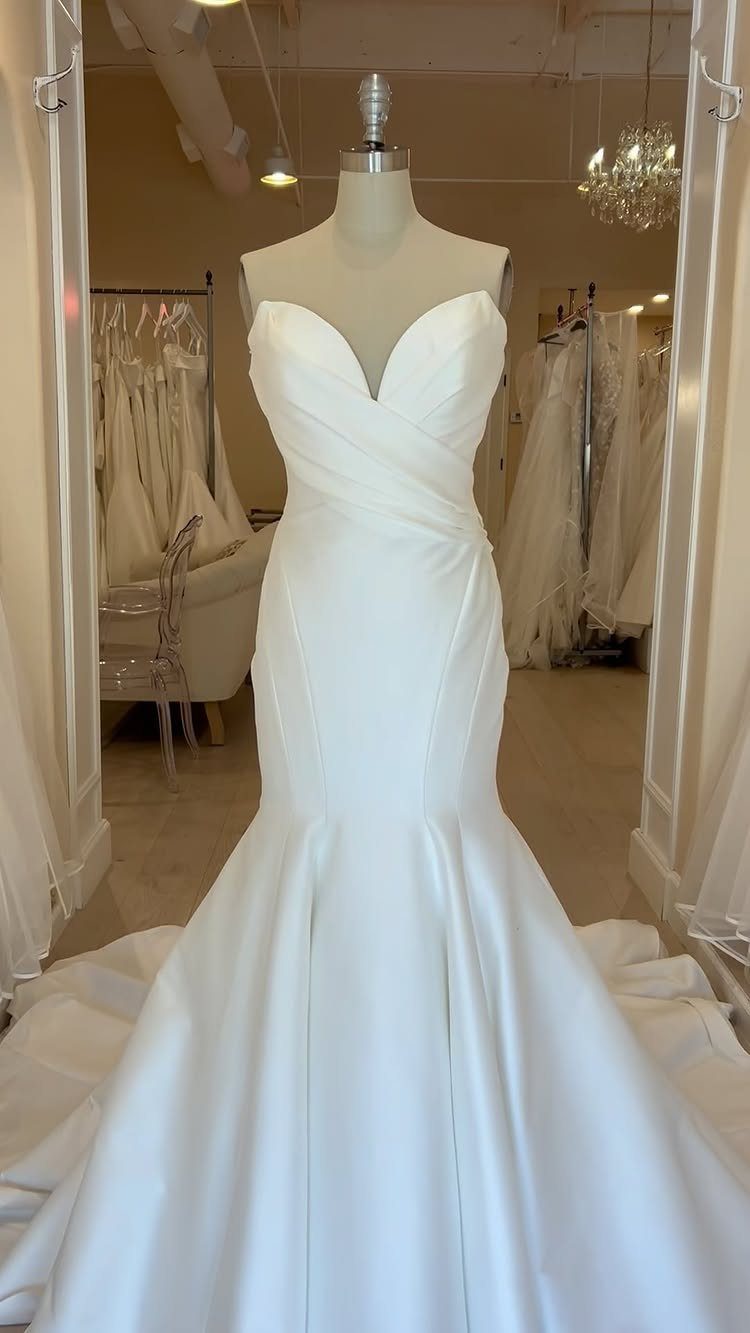
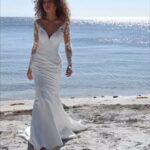
Mermaid gowns hug the body from chest to knee, then flare sharply at or below the knee. The sweetheart neckline softens the otherwise structured shape.
This silhouette shows every curve, so fit is non-negotiable.
Plan for multiple fittings and possibly custom sizing. Walking and sitting take a little getting used to, so wear it around the house before the wedding day.
For ease of movement, this is not the cut. For drama and a defined shape, it delivers.
5. Ball Gown Sweetheart
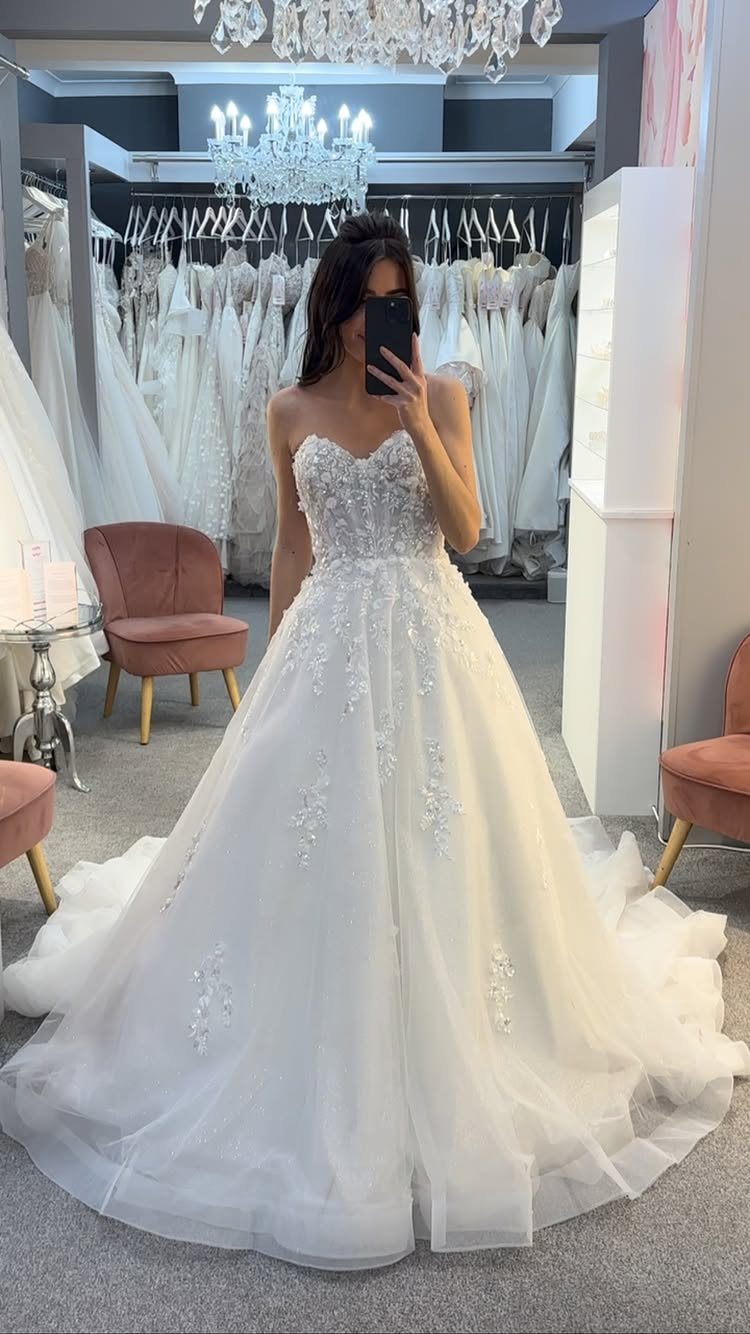
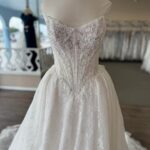
The bodice fits close through the waist, then the skirt fans out into a full, structured shape. This is the most formal silhouette on the list.
A ballgown skirt usually has multiple layers of tulle, organza, or crinoline underneath to hold the volume.
That adds weight, so if you’re wearing it for hours or walking on grass, think about how much skirt you actually want to carry.
Strapless works well here because the skirt already provides enough presence. Add a cathedral veil or tiara for the full princess effect.
6. Illusion Sweetheart
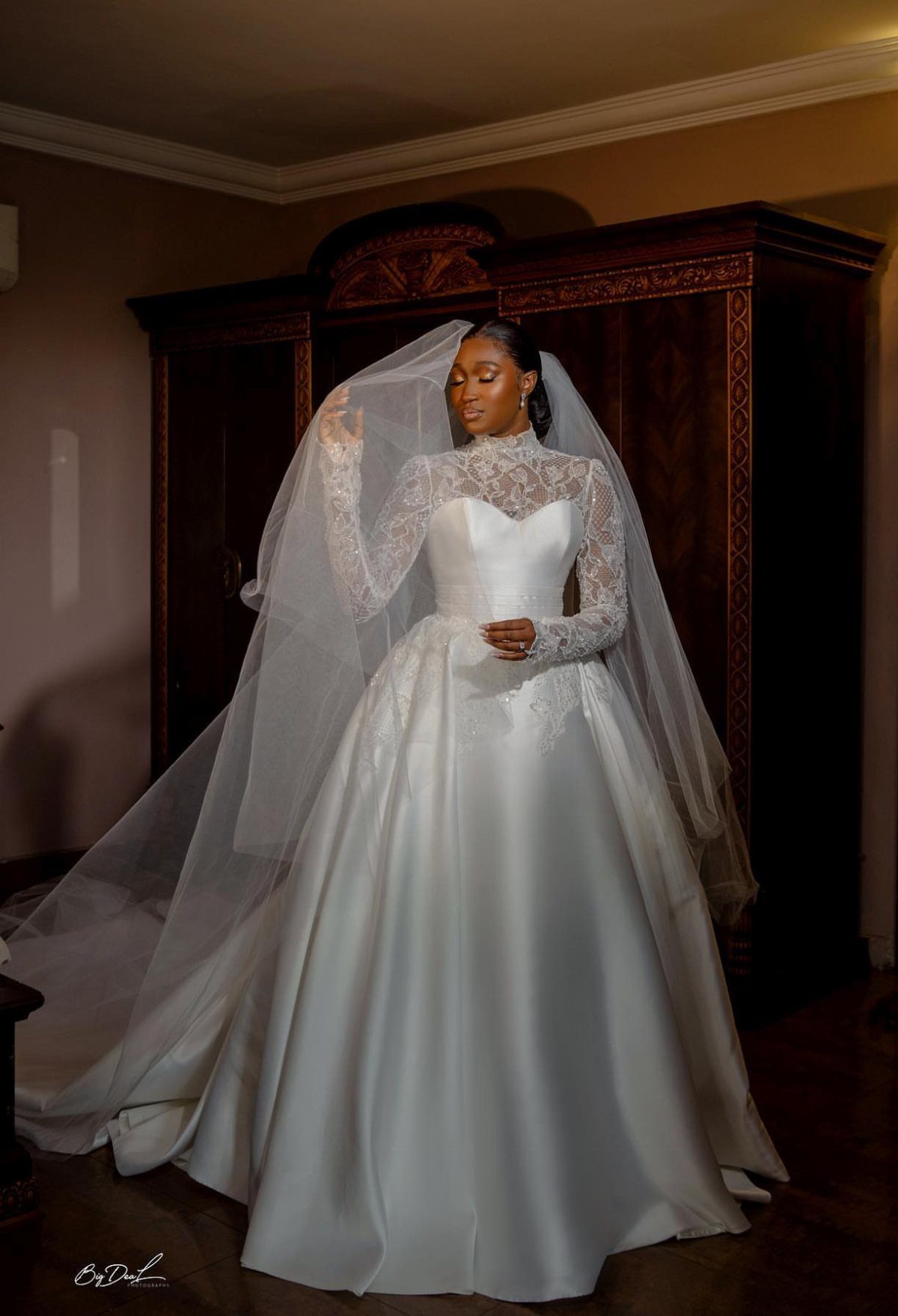
Sheer fabric covers the chest and shoulders above the sweetheart line, so the neckline stays visible but you get more coverage. The illusion panel is usually tulle or mesh, often with lace appliqués or beading.
This option works for the sweetheart shape with shoulder coverage, or when your venue has a modesty requirement. The sheer section can extend to the collarbone, high neck, or long sleeves depending on how much coverage you want.
Fit the illusion panel carefully so it sits flat against the skin without gaping.
7. Sweetheart with Sleeves
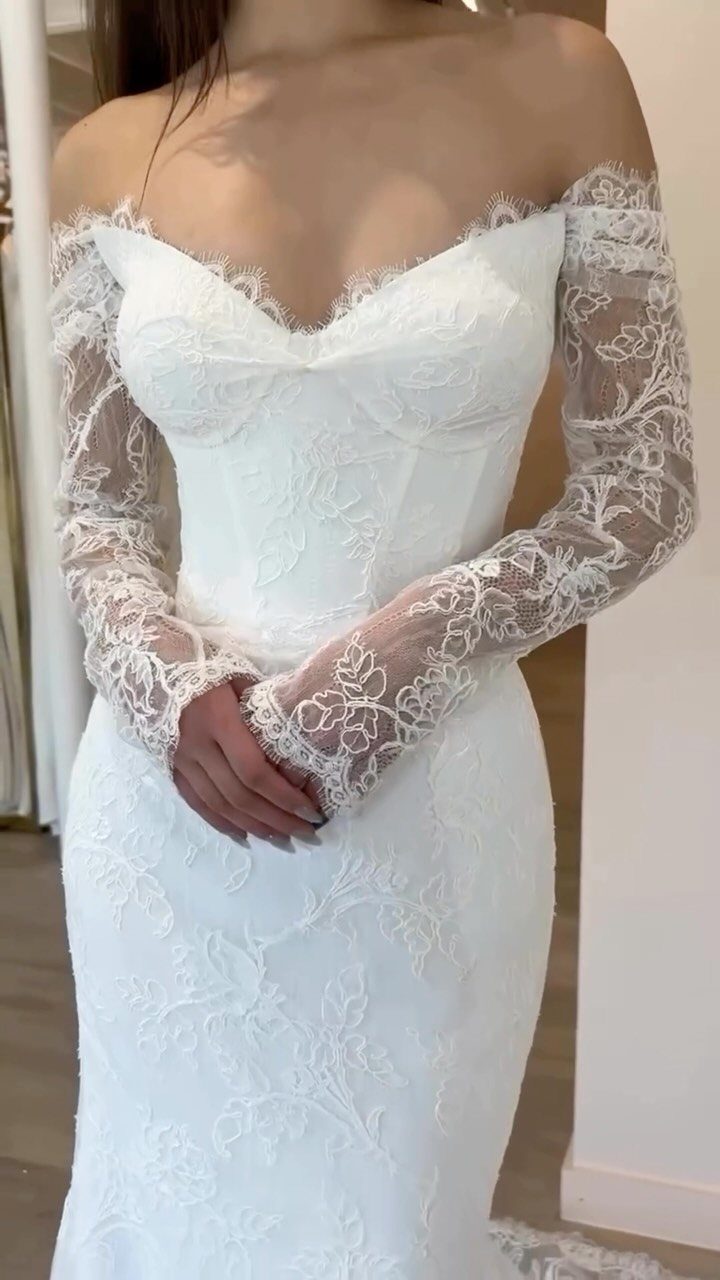
Long sleeves cover arms while leaving the heart-shaped neckline open. You can choose sheer lace for romance, solid fabric for structure, or fitted illusion mesh for a barely-there look.
Lace sleeves add detail without weight.
Solid fabric gives full coverage and works for cooler months or formal venues. Sheer sleeves with appliqués split the difference.
Sleeves change the fit through the shoulders and arms, so budget time for alterations if you’re ordering online.
8. Off-the-shoulder Sweetheart
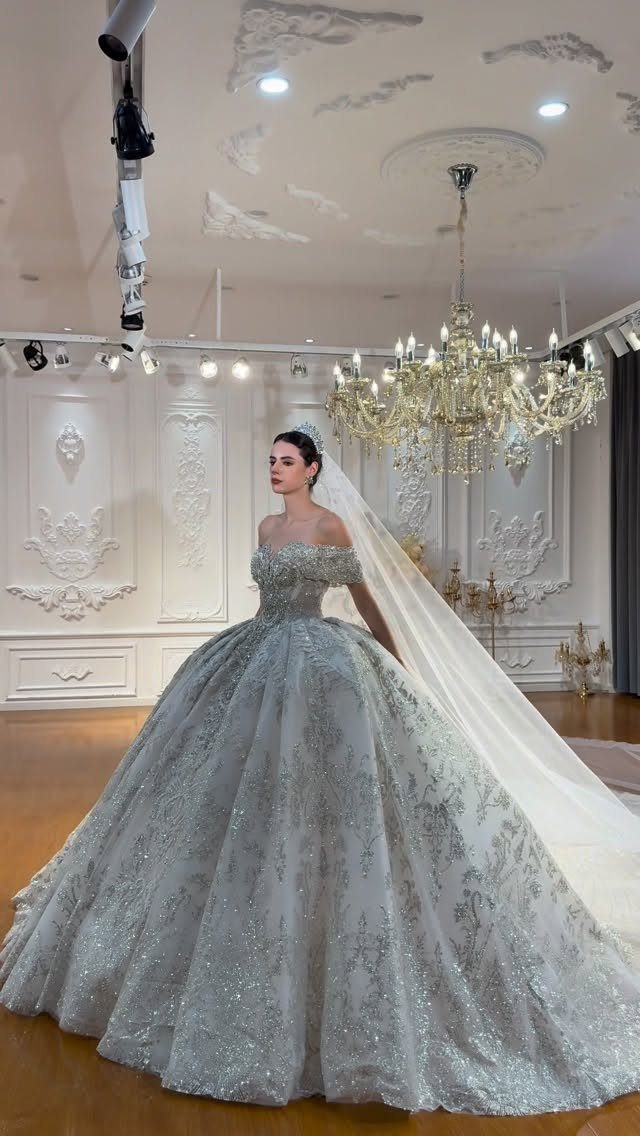
The fabric or sleeves sit below the shoulders, leaving the collarbone and upper chest bare. This keeps the sweetheart curve visible while adding structure across the arms.
Off-the-shoulder straps stay in place with internal elastic or a snug fit through the bust. If the straps feel too loose or slip during fittings, ask for adjustments before the wedding day.
This cut suits formal ceremonies and pairs well with drop earrings or a simple necklace.
9. Plunging Sweetheart
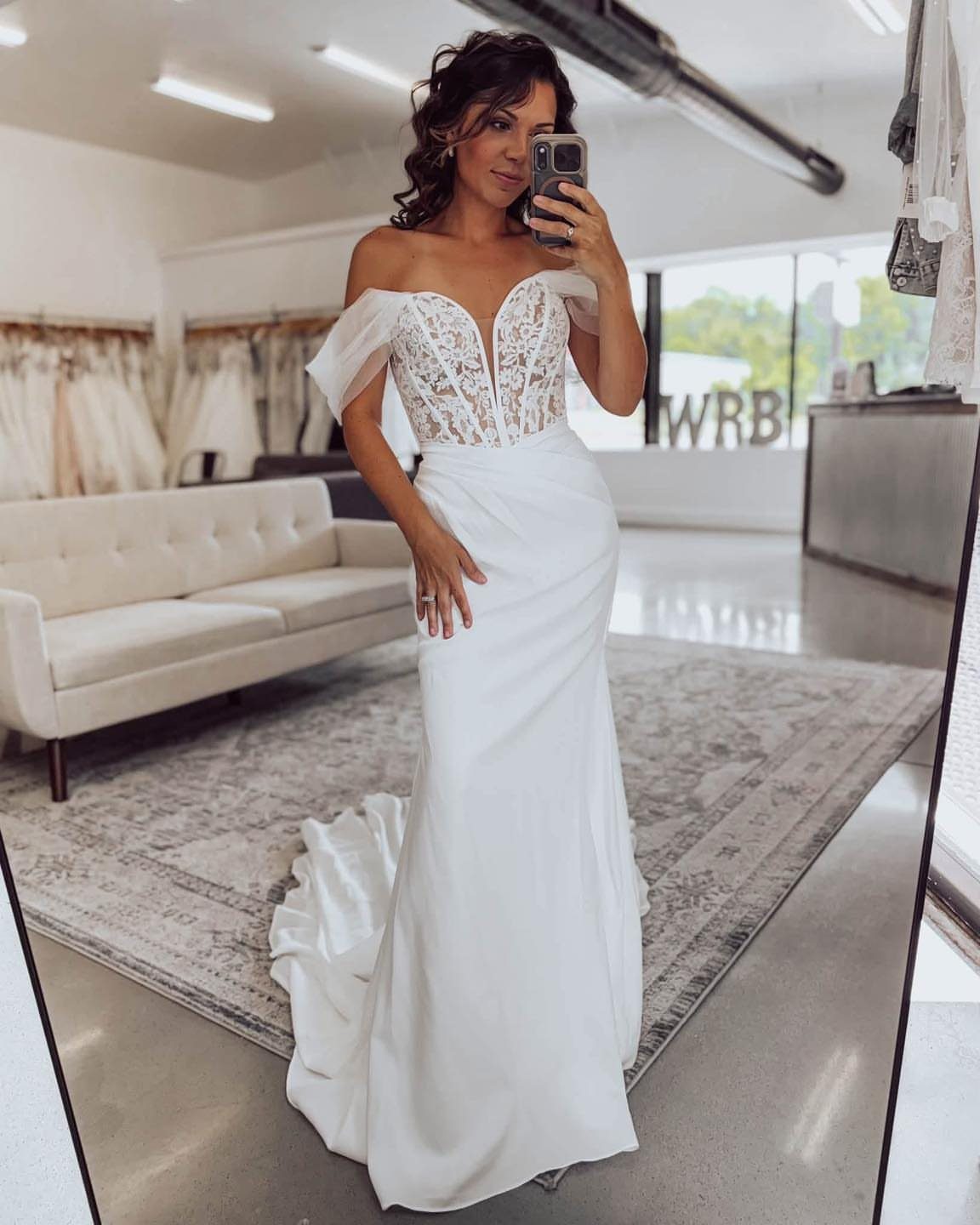
The center of the neckline dips lower, often to the sternum or below. The heart shape stays, but the depth changes the look entirely.
This version shows more skin than a standard sweetheart, so consider your comfort level and venue formality. Some plunging styles include illusion mesh or boning at the center for support without changing the visible line.
A plunge bra or fashion tape helps keep everything secure during movement.
10. Ruffled Sweetheart Skirt
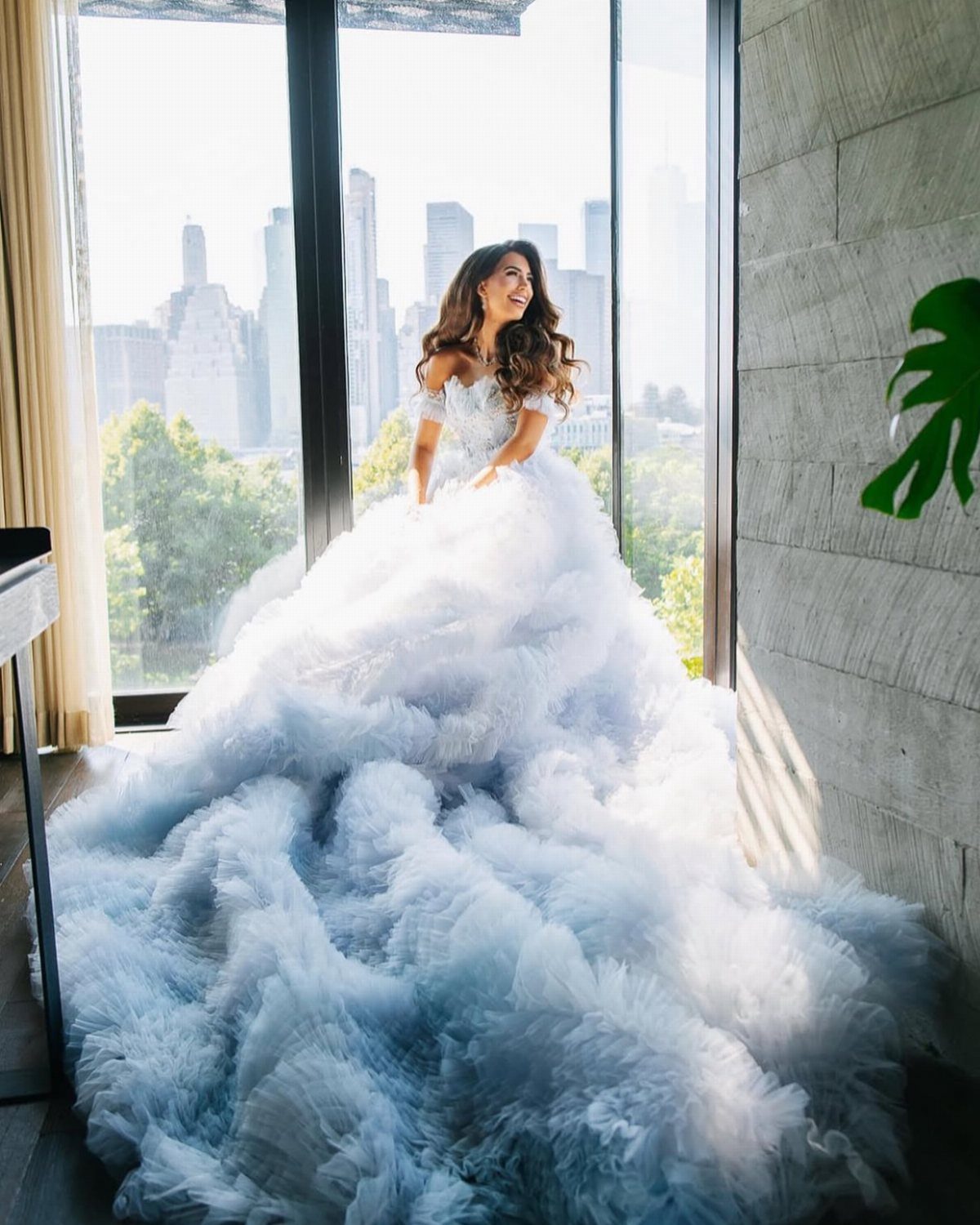
Layers of ruffled fabric build volume through the skirt. The ruffles can run horizontally in tiers or cascade vertically, depending on the cut.
Ruffled skirts add movement and texture without the structure of a ballgown. They usually weigh less than stacked tulle but still photograph with dimension.
This skirt works well with a fitted bodice to keep proportions balanced. If you’re wearing it outdoors, ruffles catch wind and move more than smooth fabrics.
11. Sweetheart with Overskirt
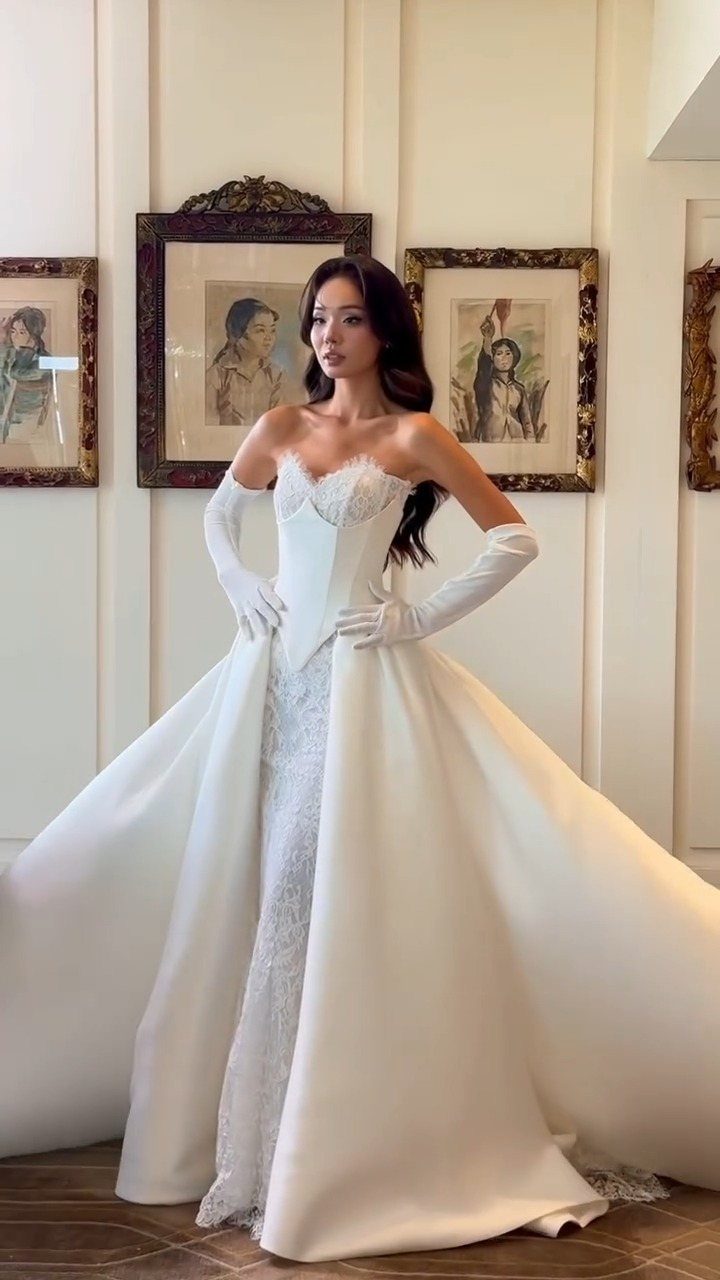
A detachable skirt sits over the fitted gown and lifts off for the reception. The base dress underneath is usually a sheath, fit-and-flare, or mermaid cut.
This option gives 2 looks without a full dress change. The overskirt adds formality and drama for the ceremony, then comes off to make dancing easier.
Overskirts attach at the waist with buttons, snaps, or a ribbon tie. Check the attachment during fittings to make sure it stays secure and removes easily.
12. Sweetheart with Cape
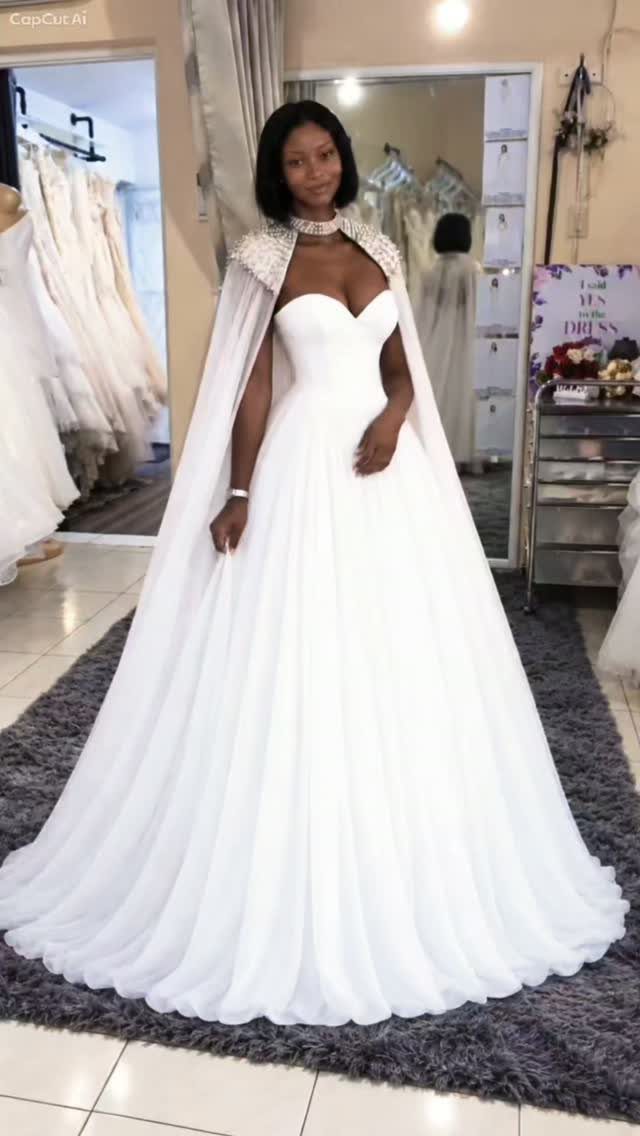
A cape attaches at the shoulders or back and flows behind the dress. Pick sheer tulle for something light, beaded lace for texture, or solid fabric if you want weight and presence.
Capes add drama for the ceremony, then detach for the reception.
Most fasten with snaps, hooks, or ties at the shoulder seams or upper back. If the cape is beaded or heavy, make sure the attachment points are reinforced.
This works well when you want coverage without altering the dress itself. Pair it with a low bun or updo so the cape sits flat.
13. Short Sweetheart Dress
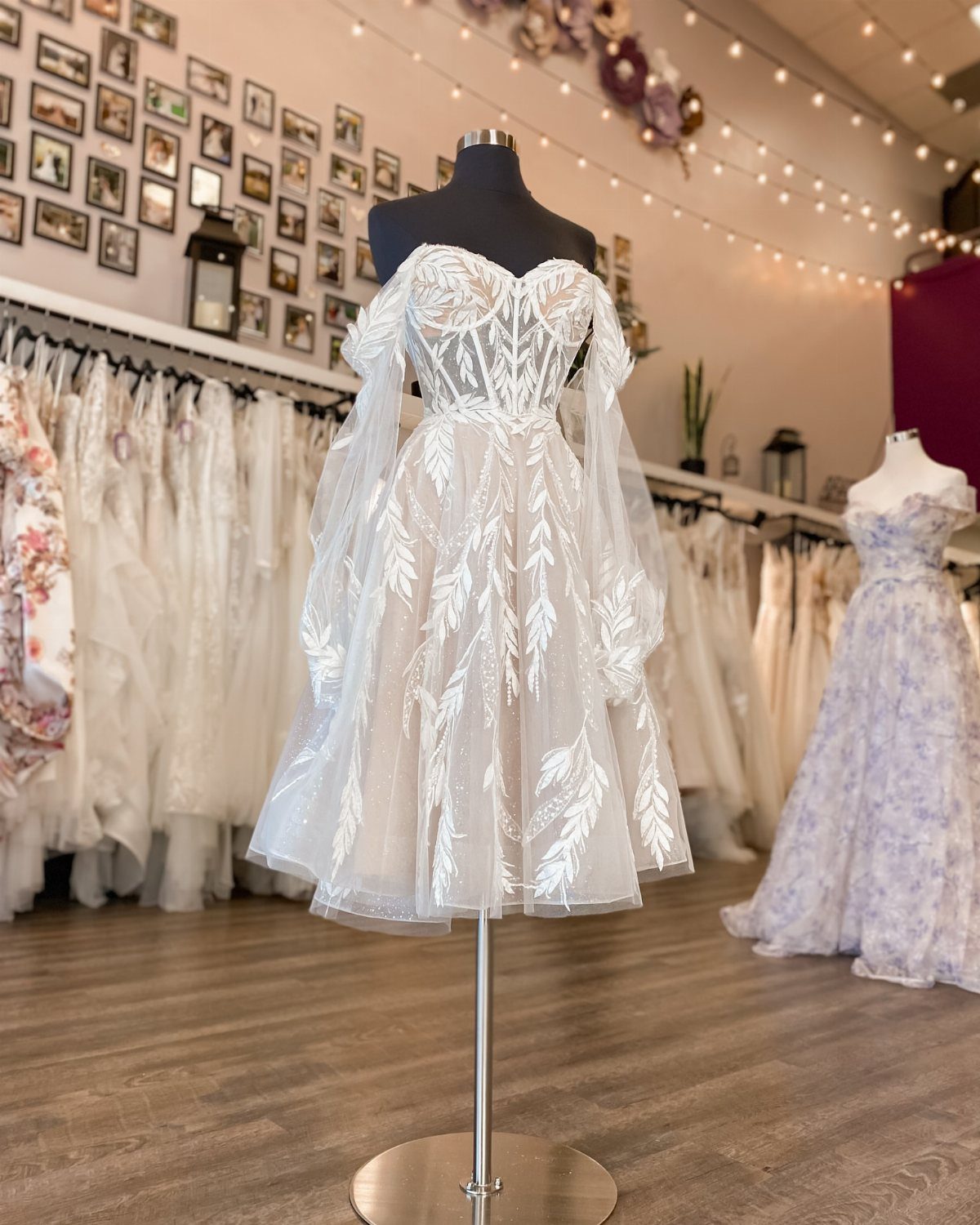
A shorter hem brings the sweetheart neckline down to knee, tea, or mid-thigh length. This version suits receptions, elopements, or casual ceremonies where a full gown feels like too much.
Movement is easier with less fabric, and the shorter cut works well for outdoor weddings on sand or grass. Heels stretch the line; flats give you comfort through the whole day.
Embroidery and lace show more on a short dress because there’s less surface area competing for attention.
14. Tulle Sweetheart
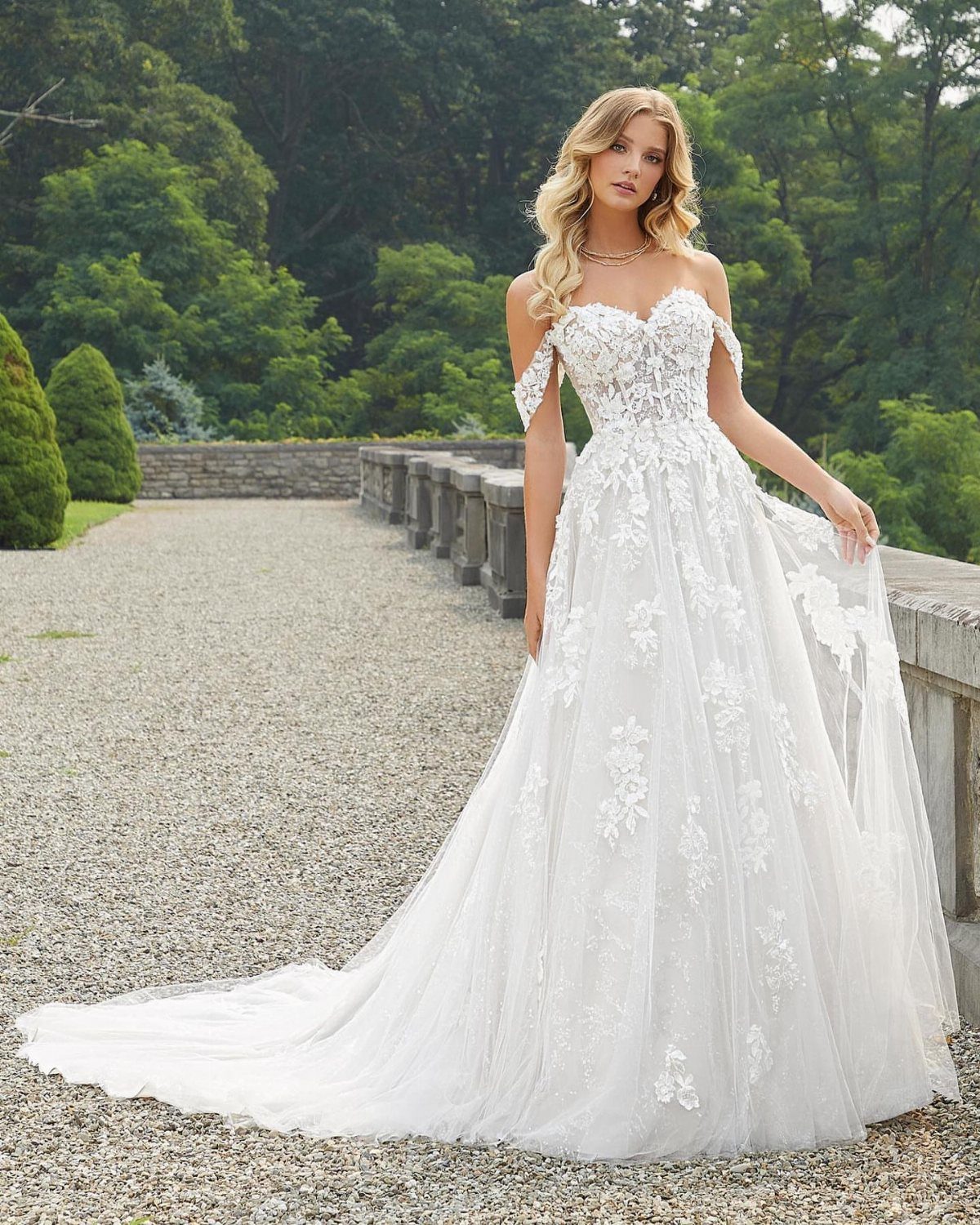
The fabric drapes and gathers easily, so it suits romantic or garden ceremonies where you want movement over formality.
Tulle weighs less than satin or taffeta, but multiple layers still add bulk.
Lace overlays on tulle add texture without stiffness. Natural light loves the way tulle catches it.
15. Sparkly Sweetheart
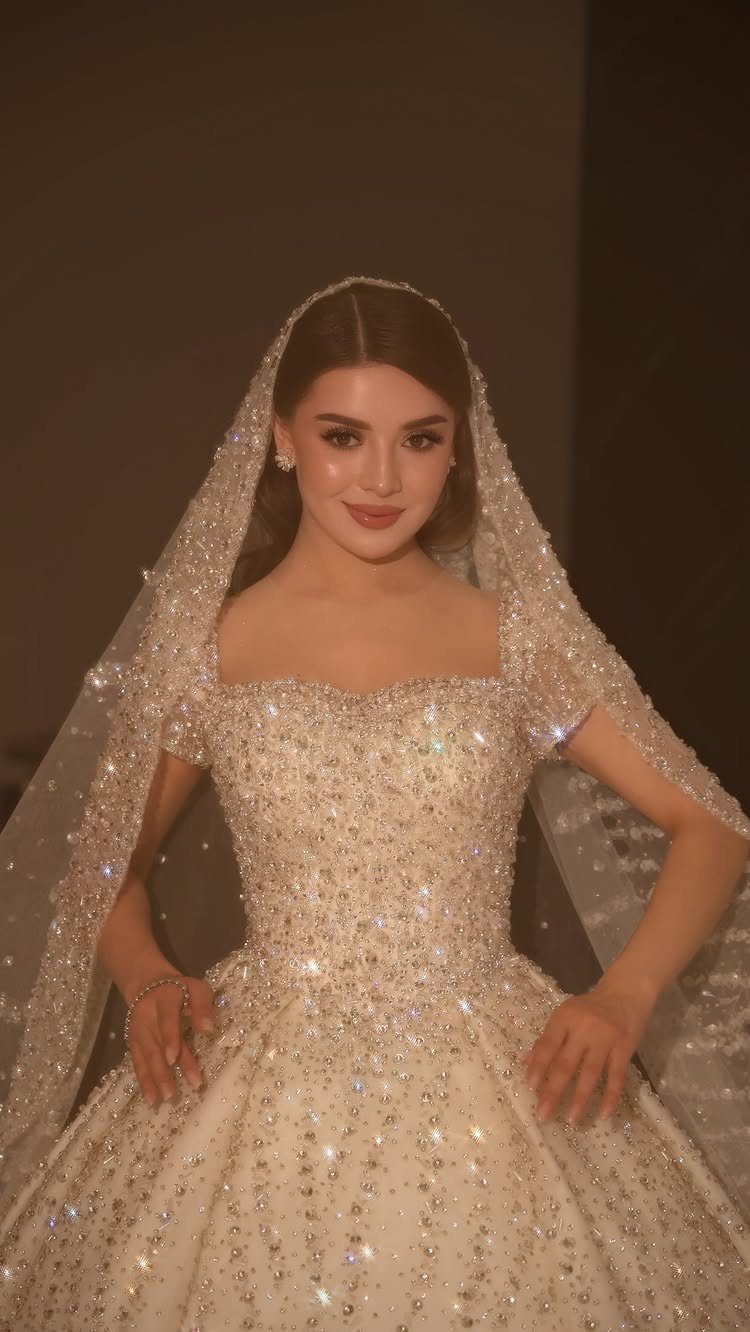
Sequins or glitter cover the bodice, skirt, or both for a reflective finish. This option works for evening receptions or formal venues where you want the dress to catch light.
Sparkle adds weight, so a fully beaded gown is heavier than plain fabric.
Try it on and move around before committing. If you’re sitting for a long ceremony, sequins can feel scratchy against bare arms or legs.
For a lighter option, limit sparkle to the bodice and keep the skirt plain.
16. Sweetheart with Flowers
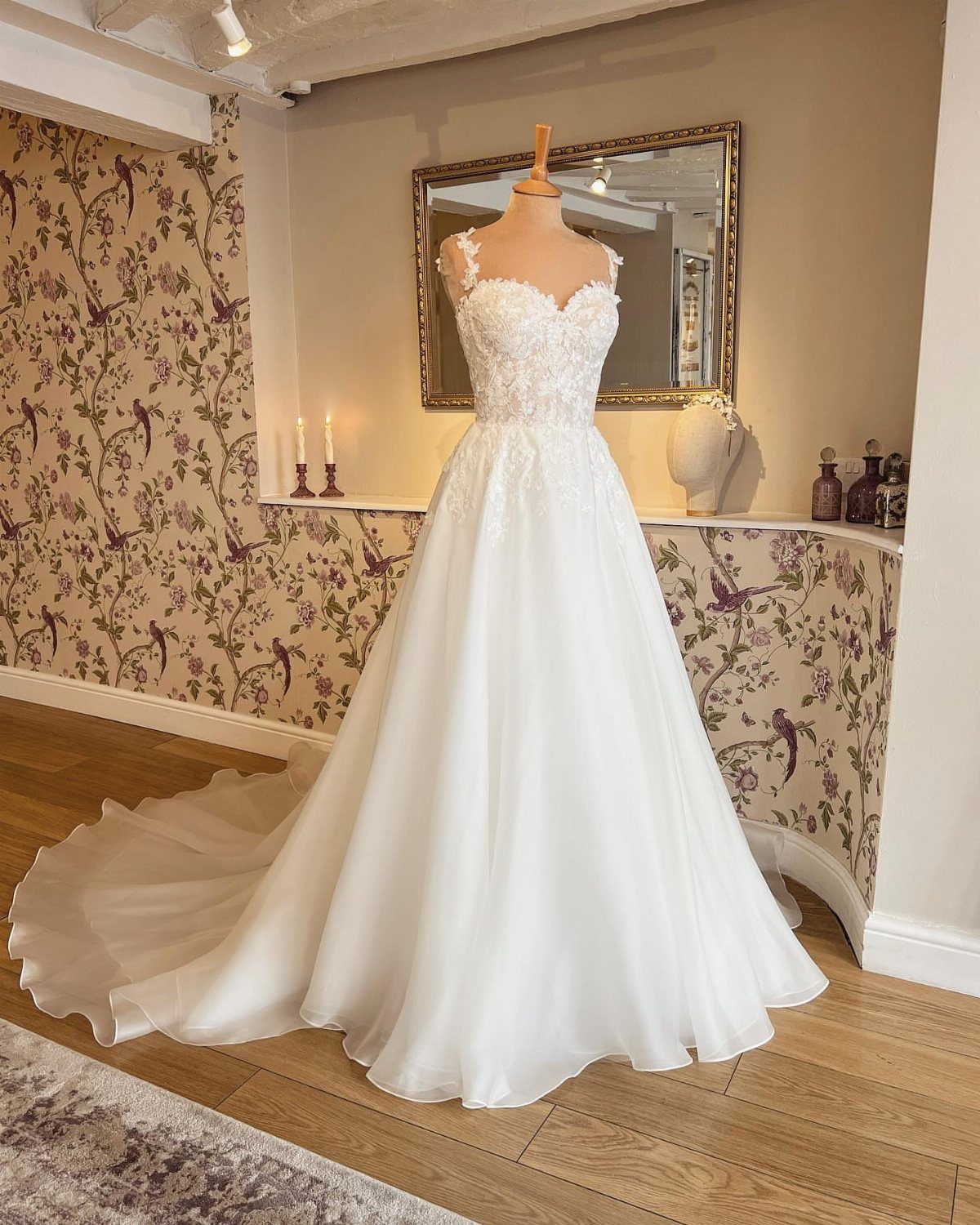
Fabric flowers or three-dimensional blooms sit on the bodice, straps, or skirt.
Lace flowers are lighter and usually appliquéd flat against the fabric. Organza or tulle blooms give you shape but carry real weight.
Flowers work well as an accent rather than full coverage. Too many can overwhelm the sweetheart neckline, so place them at the waist, hem, or shoulders instead.
If you’re ordering online, check whether the flowers are sewn on or removable. Removable blooms give you 2 looks.
17. Sweetheart with Slit
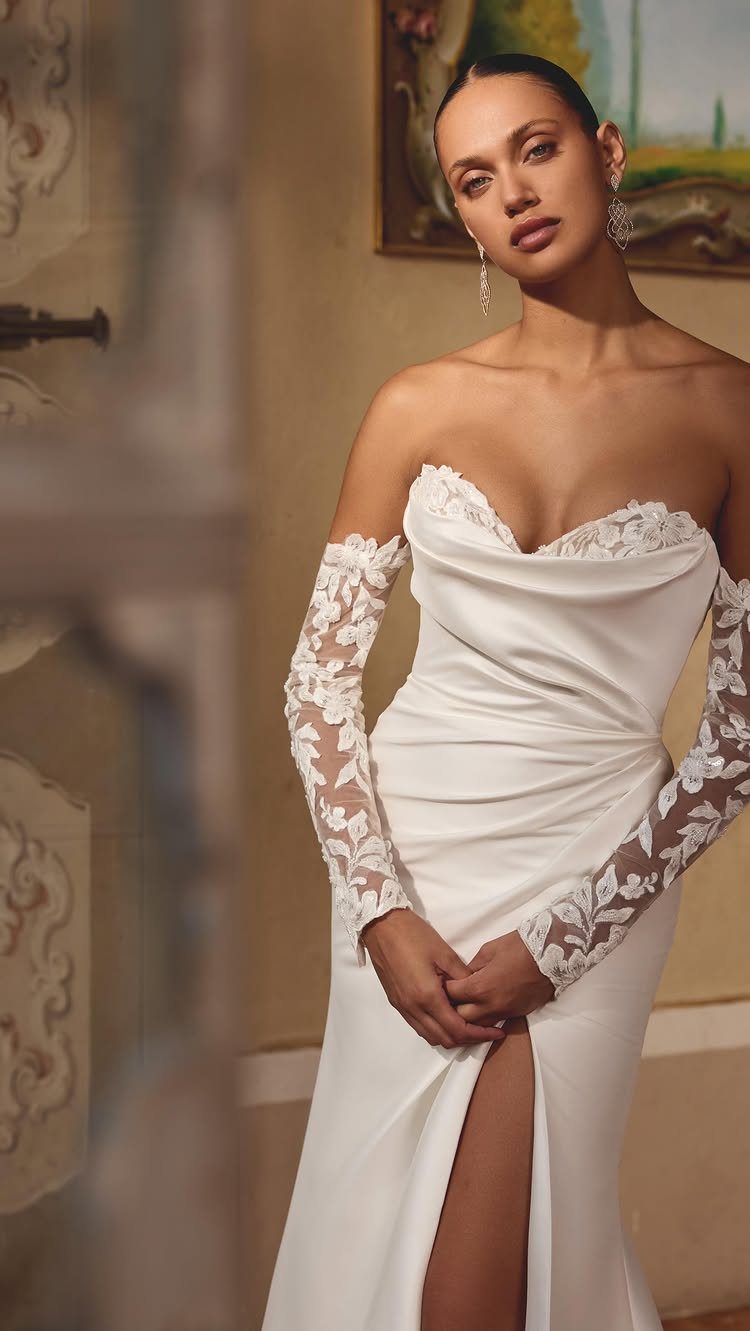
The skirt opens along one leg, usually from mid-thigh to hem. A slit adds movement and makes walking easier in a fitted silhouette.
Stretch mikado is one fabric choice that holds shape without restricting movement, as the maker of this piece notes. Other options include crepe or jersey, both of which drape smoothly and give a little.
For more coverage, ask for a lower opening during alterations.
18. Sweetheart with Train
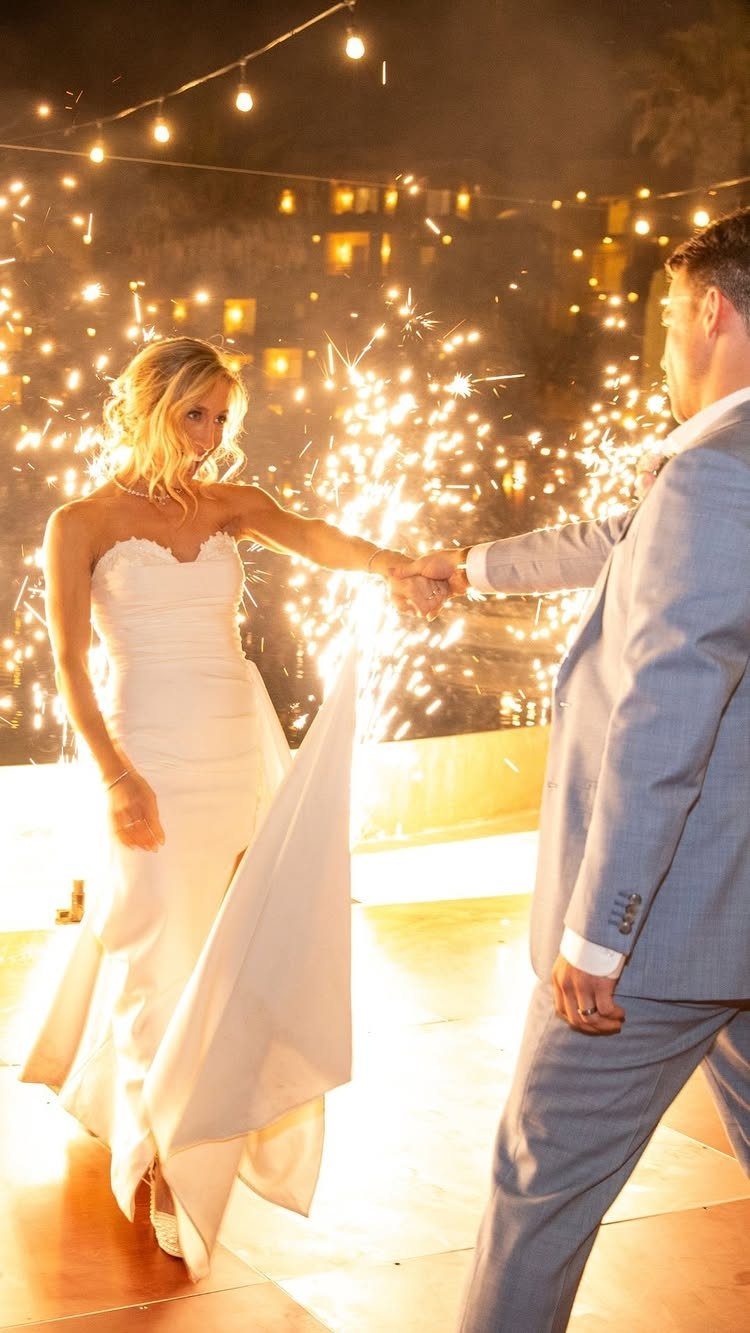
Fabric extends behind the dress and trails along the floor. Train length ranges from a sweep that just brushes the ground to a cathedral length that runs several feet back.
A train adds formality and photographs well during the ceremony.
For the reception, most trains bustle up with hooks, buttons, or ribbons sewn into the back seam. Run through the bustle with whoever’s helping you so nobody’s learning it that morning.
Longer trains are harder to manage on grass, gravel, or stairs. A shorter sweep train gives presence without the same risk of tripping.
19. Sweetheart with Thin Straps
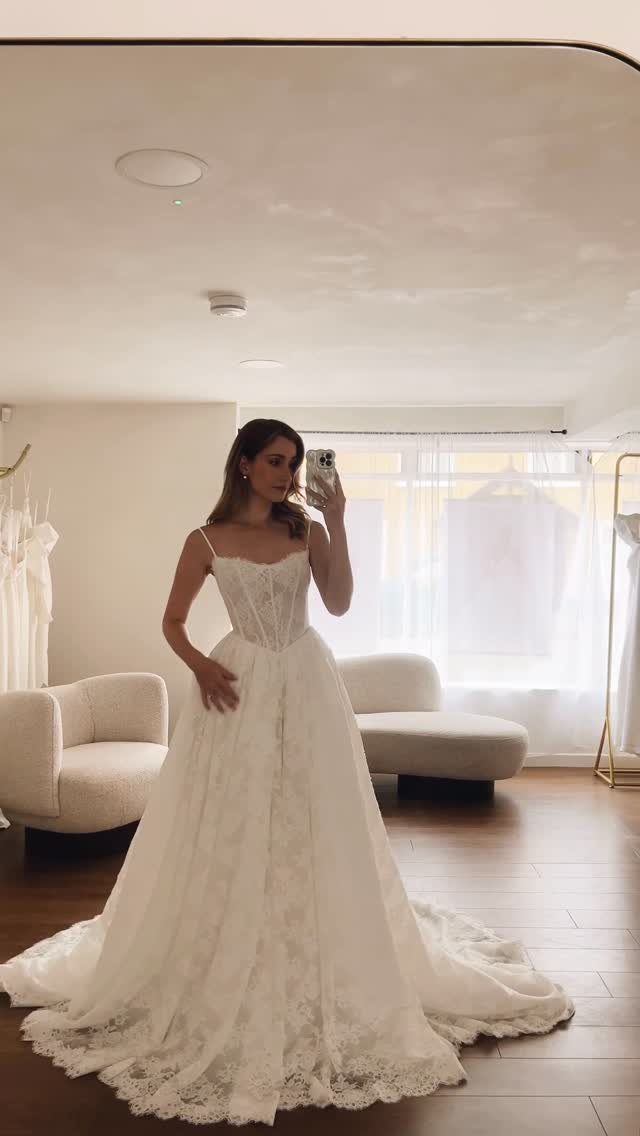
Thin straps add structure to the sweetheart neckline without covering the shoulders. The straps sit close to the neck rather than at the edge of the shoulder, which keeps the chest open.
This option works when you want shoulder support but prefer to skip sleeves. Lace straps give texture; satin or crepe keeps the line clean.
If the straps dig in during fittings, ask for padding or a wider strap. Alterations here are straightforward.
20. Sweetheart with Puff Sleeves
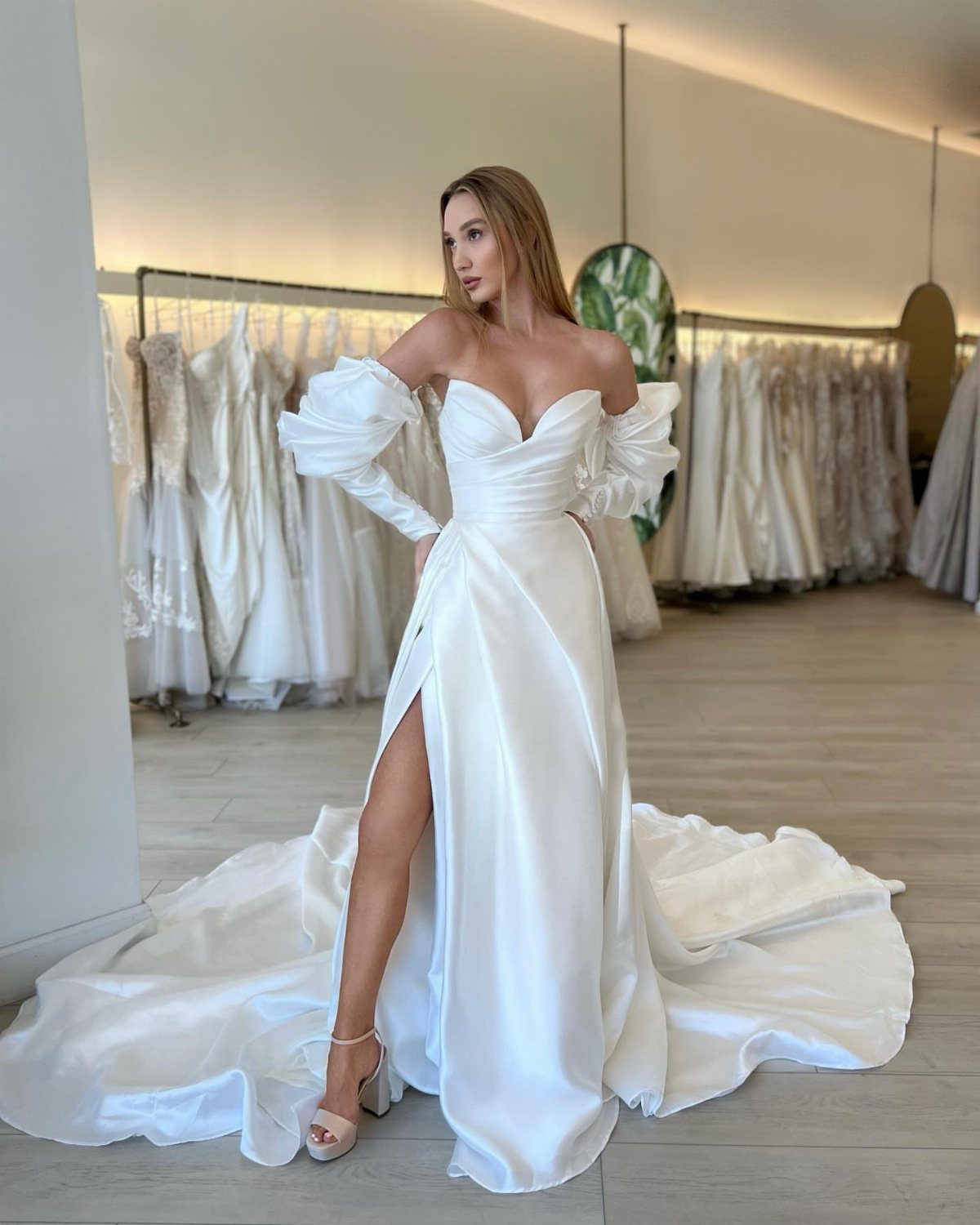
Volume gathers at the shoulder, then the sleeve tapers toward the elbow or wrist. The puff sits off the shoulder, so the sweetheart neckline stays visible while the sleeves add drama.
Puff sleeves photograph well and suit romantic or vintage-inspired ceremonies. The volume adds structure through the upper arm, which balances a fitted bodice or a full skirt.
Satin holds the puff shape better than tulle. If the sleeves feel heavy, ask about lighter lining during alterations.
21. Lace Sweetheart Bodice
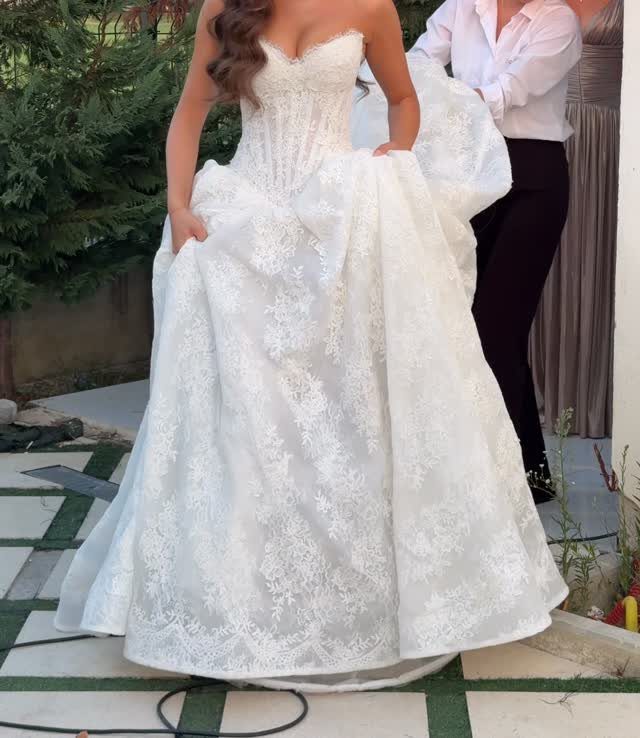
Lace covers the sweetheart bodice and extends into the skirt. The texture shows well against skin and photographs with dimension.
A full skirt balances the detail on the bodice. If the lace is dense or beaded, it adds weight, so move around in the dress before committing.
Match the lace pattern to your venue formality. Delicate floral lace suits garden ceremonies; geometric or bold patterns work for evening receptions.
22. Sweetheart with Detached Sleeves
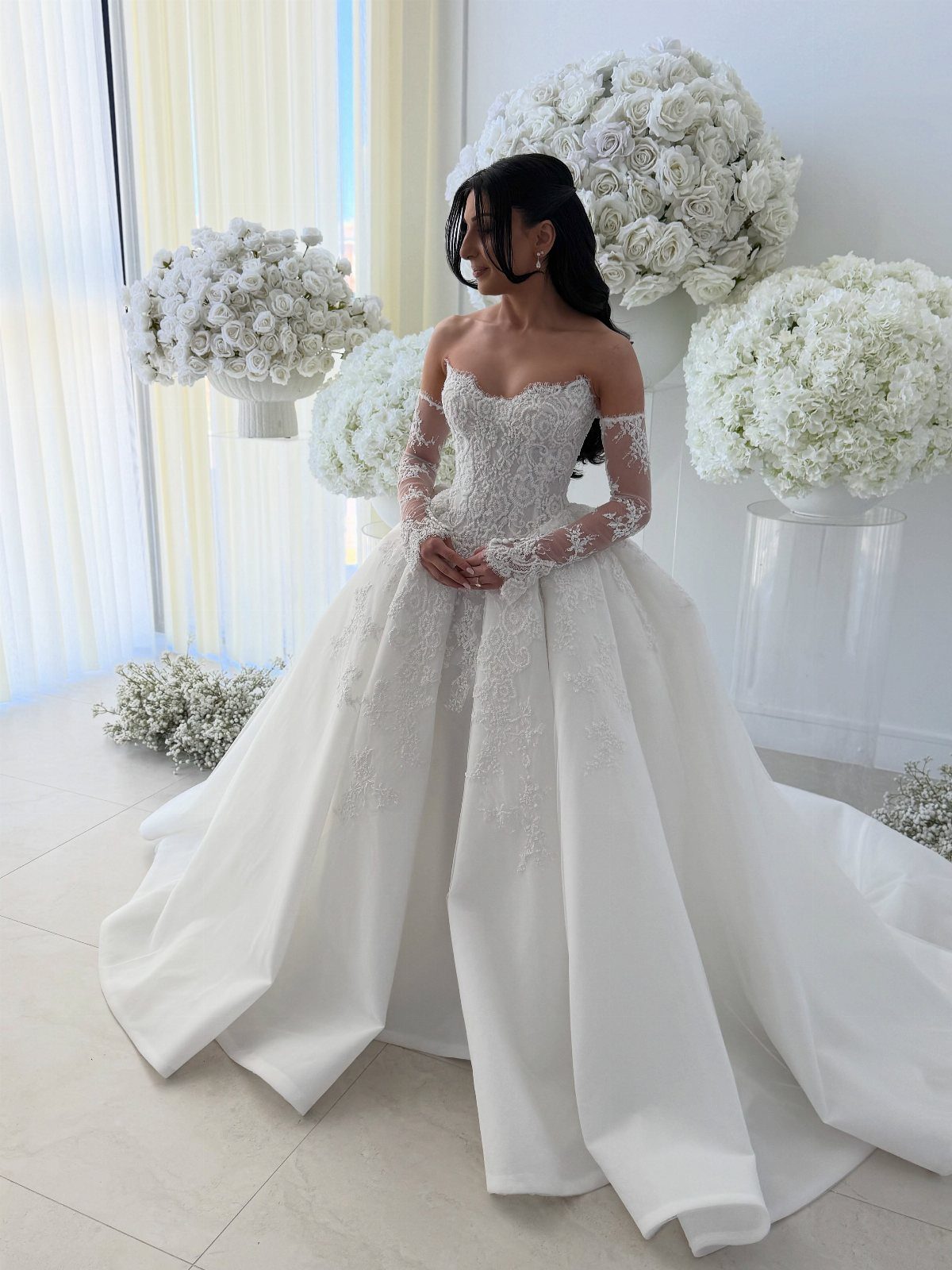
Separate sleeves attach at the upper arm or shoulder and sit apart from the bodice. They give arm coverage without altering the sweetheart neckline.
Detached sleeves fasten with elastic, hooks, or ties. Try reaching overhead and moving through a full range of motion at your fitting so you know the sleeves will hold.
Detach the sleeves after the ceremony and you have two looks from one dress. Remove the sleeves between events for 2 looks.
23. Sweetheart with Veil
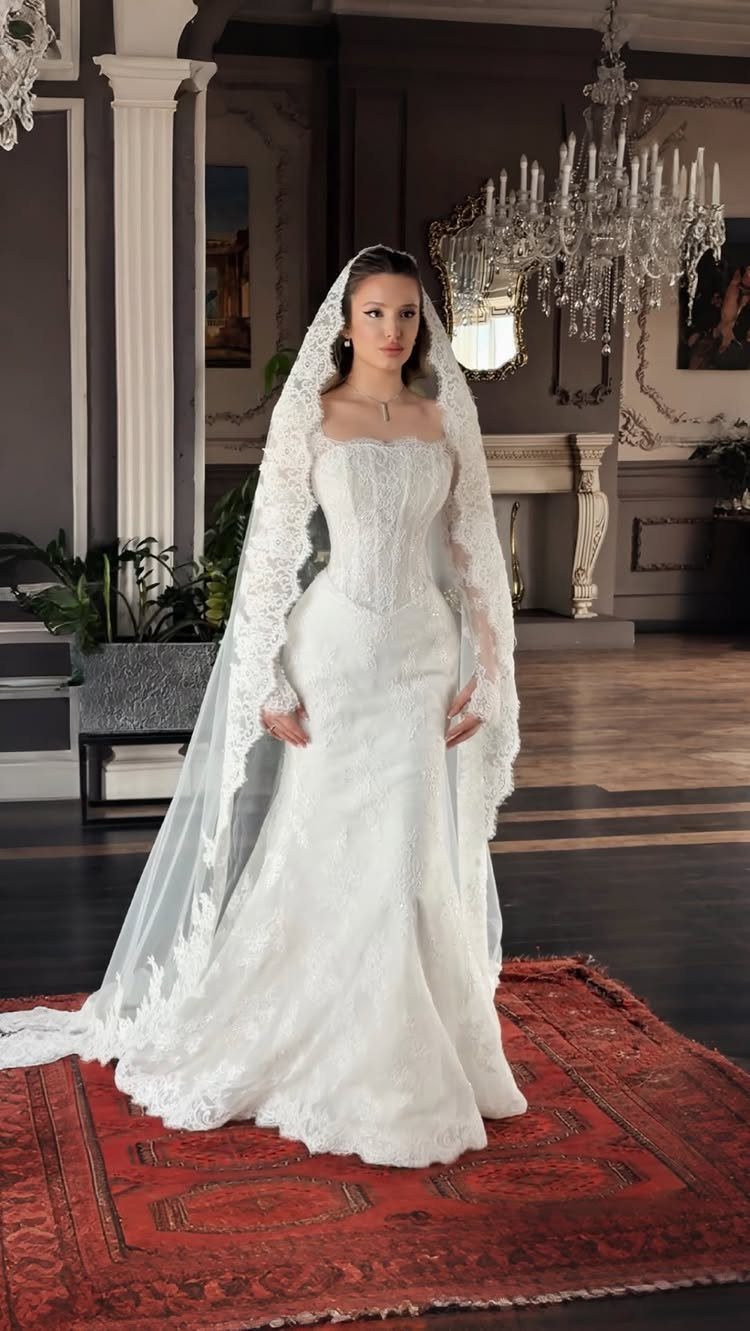
A veil layers over the sweetheart neckline without changing the dress itself. Length runs from shoulder to cathedral, depending on the formality you want.
Lace-edged veils add texture and match a lace bodice.
Plain tulle keeps the focus on the dress. For outdoor ceremonies, weight the veil at the hem so it does not lift in wind.
Pin the veil into an updo rather than a low bun so it sits flat and does not pull.
24. Satin Sweetheart Ball Gown
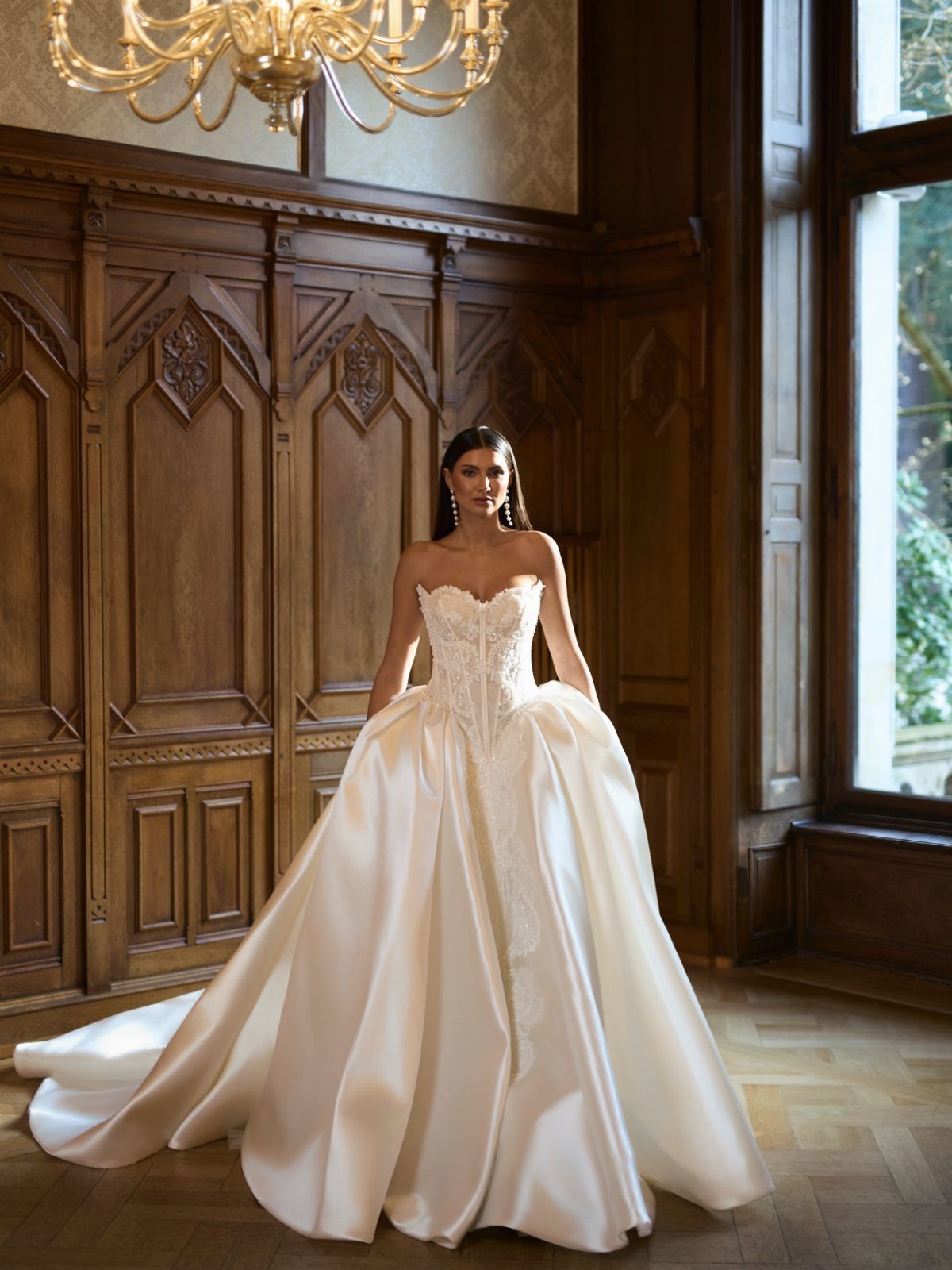
Smooth satin gives the bodice structure and the skirt a formal drape. The fabric reflects light, so this version suits evening receptions or ballroom venues where you want presence.
Satin wrinkles easily and shows every crease, so hang the dress rather than folding it. Steam it the morning of the wedding, not the night before.
A ballgown skirt in satin is heavier than tulle or organza. Put the dress on at home a few times in the weeks before so the weight and silhouette feel familiar.
25. Sweetheart with Floral Appliqués
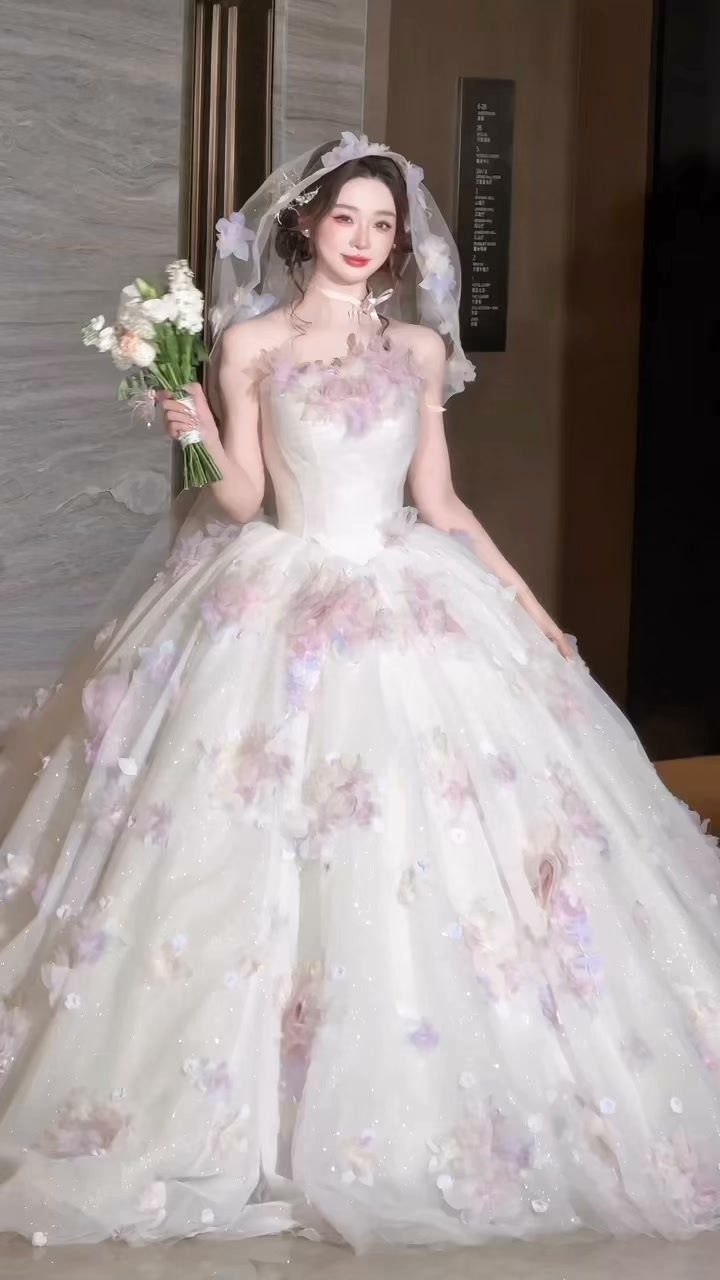
Blooms in soft pastels or jewel tones scatter across tulle or organza, adding dimension without embroidery. The appliqués add texture and bring color into the dress without changing the sweetheart line itself.
This option suits garden or outdoor ceremonies where you want the dress to reflect the setting. The flowers photograph with dimension and hold up better than real blooms pinned on the morning of.
Appliqués add weight, so check the dress on a hanger before you buy. If the flowers cluster too heavily at the neckline, they can distract from the sweetheart shape.
26. Sweetheart with Leg Slit
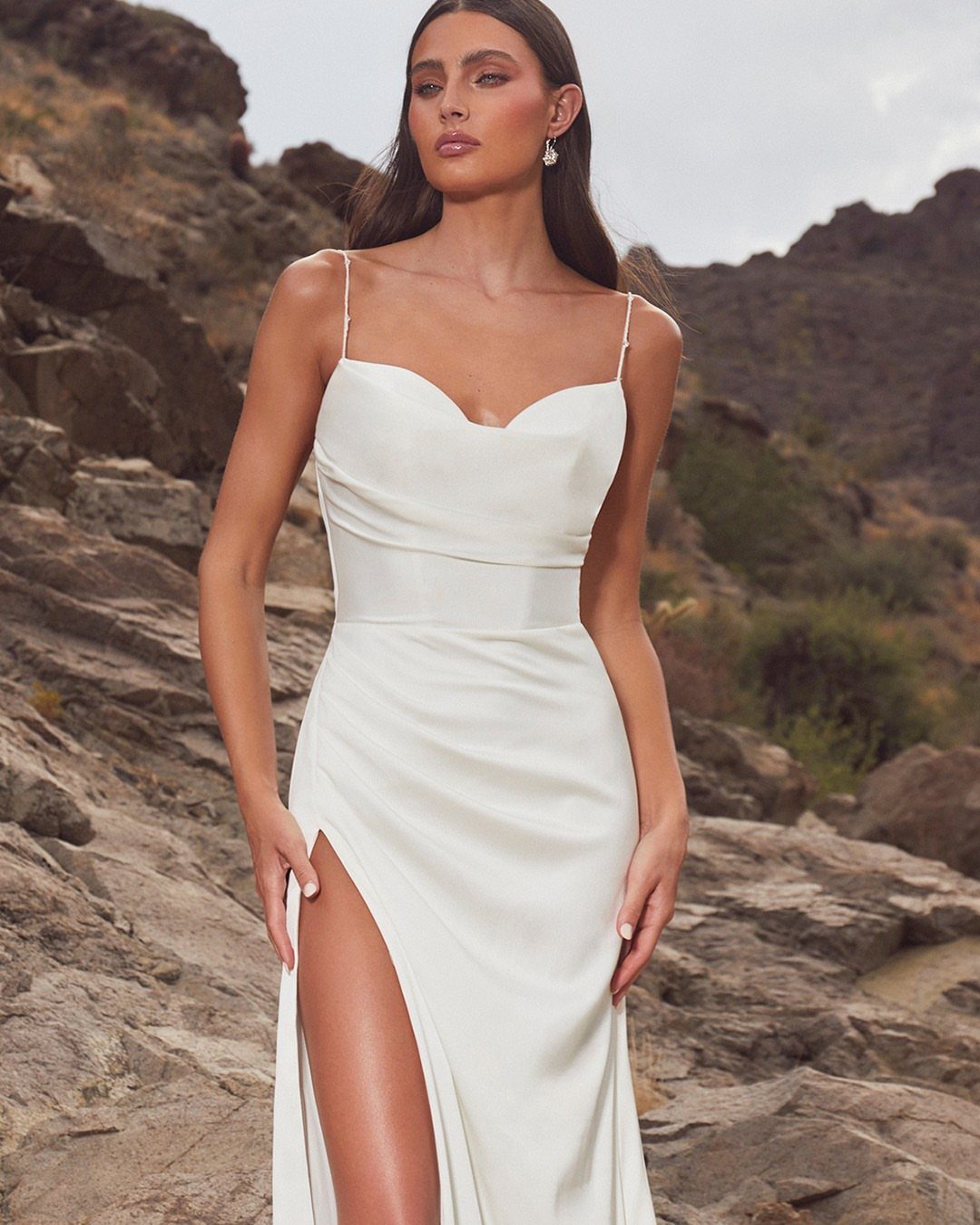
The split lets you move and dance without fighting yards of fabric. The slit adds movement to a long hemline.
That sheen reads formal, so save this one for ballrooms or candlelit spaces after dark. The slit balances the coverage of a full-length gown with easier movement for dancing or outdoor terrain.
Ask for a lower slit during alterations if you want more coverage, or leave it high for a dramatic line.
Neckline Shape and Appeal
The sweetheart neckline curves down from the straps or upper bodice, then dips into 2 soft points at the center, forming the upper half of a heart.
The shape sits between a V-neck and a square neckline in how much chest it shows.
It frames the bust and collarbone without covering the shoulders, so it photographs well and suits both formal ballrooms and outdoor ceremonies. The curve softens structured silhouettes like mermaid or fit-and-flare cuts, and balances the volume of a ballgown skirt.
The neckline works across wedding styles. A clean satin bodice reads classic and formal.
Lace or beading adds texture for garden or vintage themes. Tulle overlays keep it romantic without adding weight.
Flattering Different Figures
The sweetheart neckline follows the natural curve of the bust, so it can enhance shape for larger chests or create the appearance of more volume for smaller ones.
The dip at the center draws the eye inward, which balances wider shoulders or a broader frame.
The open neckline shows the collarbone and upper chest, which can make the neck appear longer. For petite frames, pairing the neckline with an empire waist or A-line skirt extends the leg line and adds height.
The shape suits a range of body types because it adapts to the silhouette you choose.
A fitted bodice shows curves; a ballgown skirt adds volume below the waist. Adjust coverage with illusion panels, sleeves, or off-the-shoulder straps without losing the heart shape.
Choosing a Gown
Pick a silhouette that fits the formality of your ceremony and the setting where you’ll be married. A ballgown sweetheart suits a ballroom or church wedding.
A fit-and-flare works for traditional settings where you want structure but not the full skirt. For a beach or outdoor ceremony, a mermaid cut gives you a contemporary line that photographs well in natural light.
Try gowns on at a bridal salon before ordering online.
The sweetheart neckline depends on fit through the bust and ribcage, and most silhouettes need tailoring at the waist and hips. Bring the undergarments and shoes you plan to wear so the fitting reflects the actual proportions.
Pick detachable sleeves or an overskirt if you want 2 looks without changing dresses. Both attach at the bodice or waist and lift off between the ceremony and reception.