
An engagement ring and a wedding ring are different in ways that matter for your budget and your ceremony, unless you choose one ring to do both jobs.
The $5,200 average engagement ring carries a center diamond; the $1,200 wedding band that follows is plainer, exchanged at the altar, and worn by both spouses.
Timing: When Each Ring Enters the Story
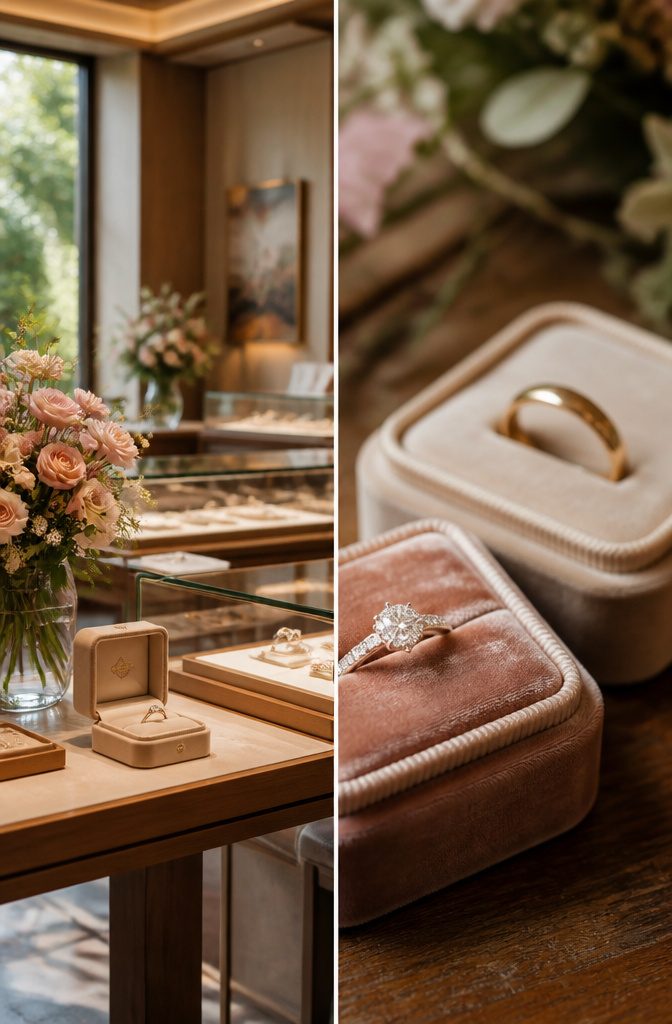
An engagement ring enters the story at the proposal and stays put for months, sometimes more than a year.
The wedding band does not appear until the ceremony itself, slipped on that same left ring finger while the engagement ring waits on the right hand or stays home entirely.
After the vows, most wear both together, wedding band closer to the heart, engagement ring stacked above.
Buying the wedding band early makes sense even though it sits in a box. Sizing, engraving, and any custom work need lead time, and trying to rush that in the final weeks before the wedding adds stress nobody needs.
I have seen friends assume the band is a last-minute purchase and then scramble when the jeweler’s schedule does not cooperate.
The practical shift from wearing one ring to wearing two is smaller than people expect, but it is real. The engagement ring gets all the attention during the engagement period.
The wedding band, plainer and built for daily wear, becomes the ring you actually live in. One marks the promise; the other marks the day the promise became the routine.
Purpose: Promise Versus Vow
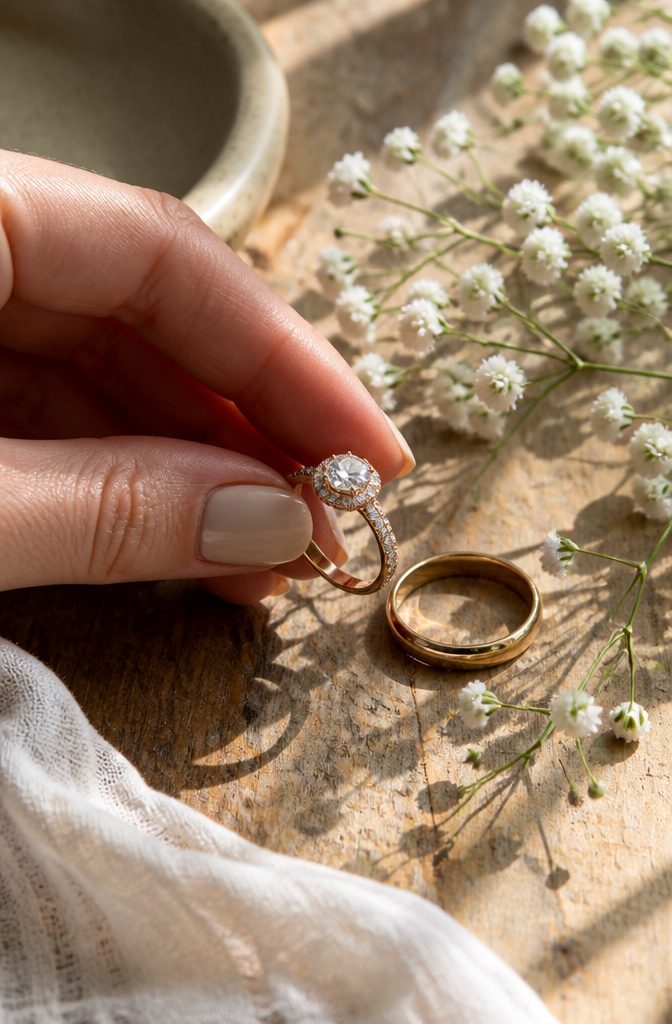
An engagement ring marks the moment one person asks another to build a life together. It is a promise of marriage still to come, worn through months of planning and anticipation.
The wedding ring enters later, exchanged during the ceremony itself, and it carries the weight of vows already spoken. Where the engagement ring looks forward, the wedding ring seals what has arrived.
That shift matters when you are choosing both. The engagement ring is typically more elaborate, often set with a prominent center stone, because it celebrates a future not yet realized.
The wedding band is usually simpler, built for comfortable everyday wear, because its job begins after the ceremony and does not end.
Some couples coordinate the two so they sit side by side; others treat them as separate expressions of meaning. Either way, the purpose changes from anticipation to fulfillment, and the rings reflect that.
Symbolism: Future Dream Against Unbroken Bond
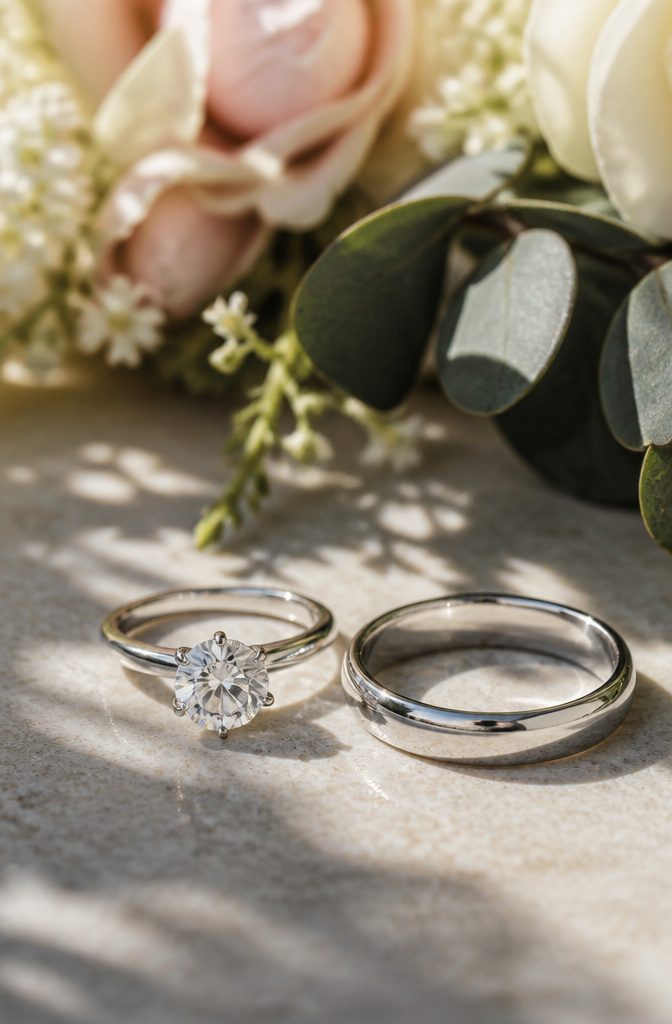
An engagement ring carries the weight of what is still ahead. When I look at mine, I see the months of planning, the apartment searches, the life not yet built.
The diamond, for all its sparkle, is really a placeholder for the shared future it represents. The promise matters more than the stone.
A wedding band tells a different story entirely.
That unbroken circle, worn after the vows, speaks to unity and loyalty, the bond that outlasts the wedding day. The shape itself carries the meaning: no beginning, no end.
The Romans placed rings on the fourth finger of the left hand because they believed the vena amoris, a vein of love, ran straight from that finger to the heart.
Biologists have since mapped human circulation and found no such direct route, but the placement stuck across centuries.
The tradition of wedding rings reaches back roughly 5,000 years to ancient Egypt, where couples exchanged rings woven from reeds and leather, the circle already standing for eternity.
Pope Nicholas I formalized the engagement ring as a declaration of marital intent in 850 AD.
Men’s bands did not become common until the twentieth century, when soldiers during World War II wore them as reminders of wives at home, and the practice remained.
Design: Center Stone Against Plain Band
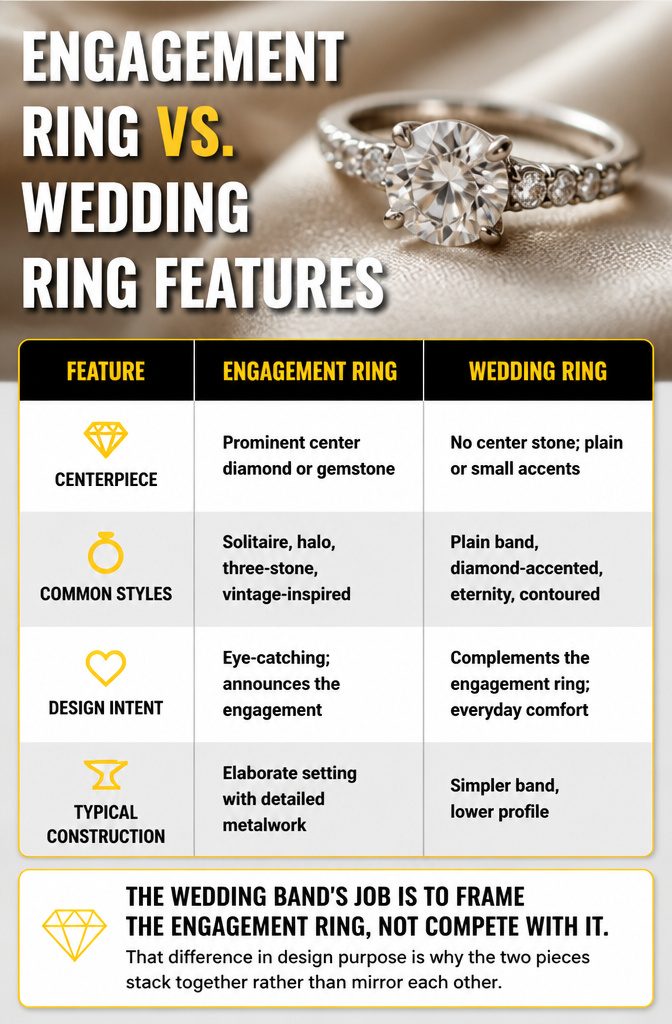
The first thing that separates an engagement ring from a wedding band is what sits on top. An engagement ring is built around a prominent center stone, usually a diamond, in a setting designed to catch light across a room.
Solitaire, halo, and three-stone arrangements dominate the cases I looked through, with that center gem doing the heavy lifting of the design.
A wedding ring flips that priority. Most are plain metal bands or carry only small accent stones, built for comfort through decades of daily wear rather than for a single dramatic moment.
Diamond-accented eternity bands and contoured styles that nestle against an engagement ring have grown common, but the center stone never steals the show.
| Feature | Engagement Ring | Wedding Ring |
|---|---|---|
| Centerpiece | Prominent center diamond or gemstone | No center stone; plain or small accents |
| Common styles | Solitaire, halo, three-stone, vintage-inspired | Plain band, diamond-accented, eternity, contoured |
| Design intent | Eye-catching; announces the engagement | Complements the engagement ring; everyday comfort |
| Typical construction | Elaborate setting with detailed metalwork | Simpler band, lower profile |
The wedding band’s job is to frame the engagement ring, not compete with it. That difference in design purpose is why the two pieces stack together rather than mirror each other.
Who Wears It: One Ring or Two
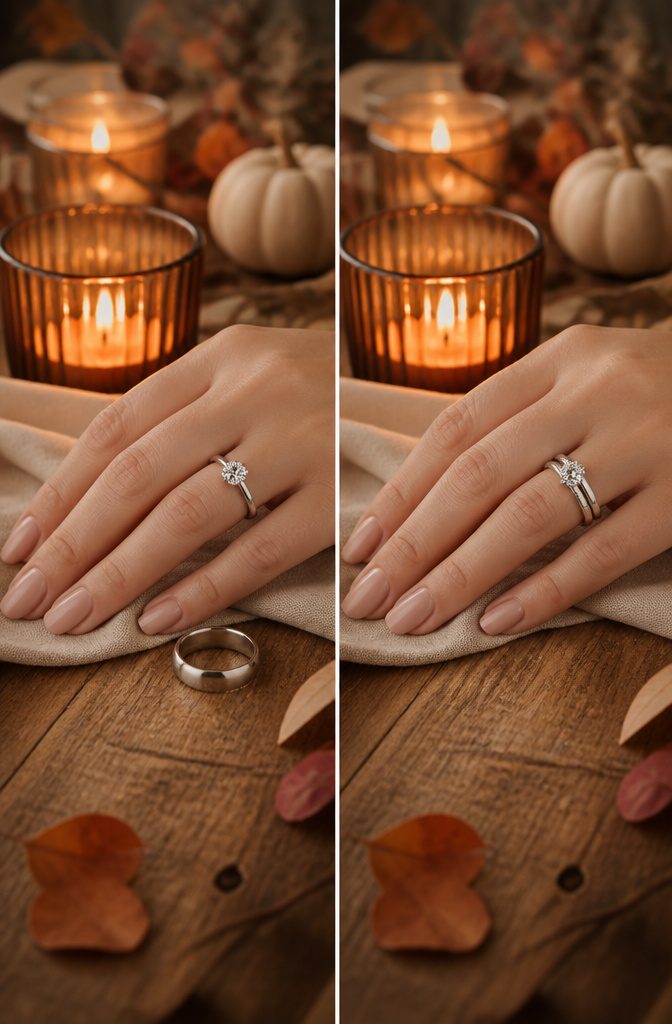
Only the partner who was proposed to wears the engagement ring, while both spouses wear wedding bands after the ceremony. That split is the cleanest way to tell the two apart.
I noticed this pattern most when friends started getting engaged. One ring appears at the proposal; a second band joins it at the altar for one person, while the other person gets their first ring right there during the vows.
The engagement ring signals intent; the wedding band seals the promise.
Men’s engagement rings exist and are slowly gaining traction, but they remain the exception in the U.S. market.
Most couples still follow the older model: one person wears the diamond through the engagement, and both leave the ceremony with a band.
If you are deciding what to buy, that tradition is the default you will encounter in every jewelry case.
What Each One Costs
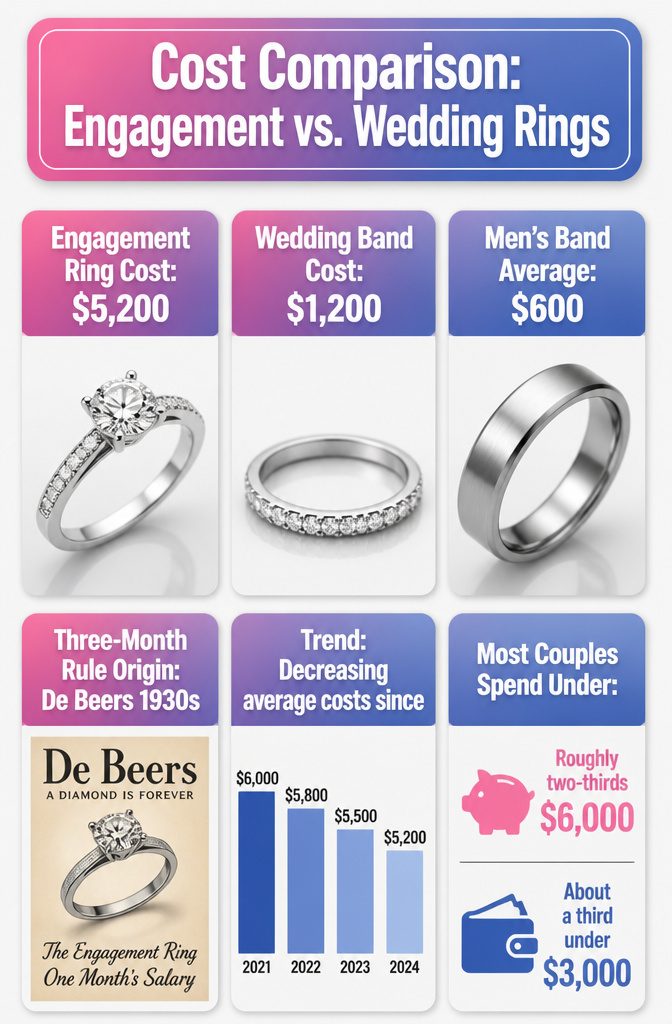
The average U.S. engagement ring runs about $5,200, while a women’s wedding band averages closer to $1,200 and a men’s plain band sits around $600.
That gap exists because the center stone swallows most of the engagement ring budget, and wedding bands carry little or no diamond weight at all.
I used to think the three-months’-salary rule had some old tradition behind it, but it turns out De Beers wrote it as advertising copy in the 1930s, starting at one month and inching the number up over time.
The company didn’t invent the ring; it invented the budget.
The average has also been sliding downward every year since 2021, dropping from $6,000 to $5,800 to $5,500 to that current $5,200 mark. Roughly two-thirds of couples now spend under $6,000, and about a third come in under $3,000.
For couples trying to keep costs in check, one ring can serve both purposes.
Most traditions separate the two, but there’s no requirement that says you must buy both. A single band exchanged at the ceremony works fine if the budget only stretches so far.
How to Stack Them
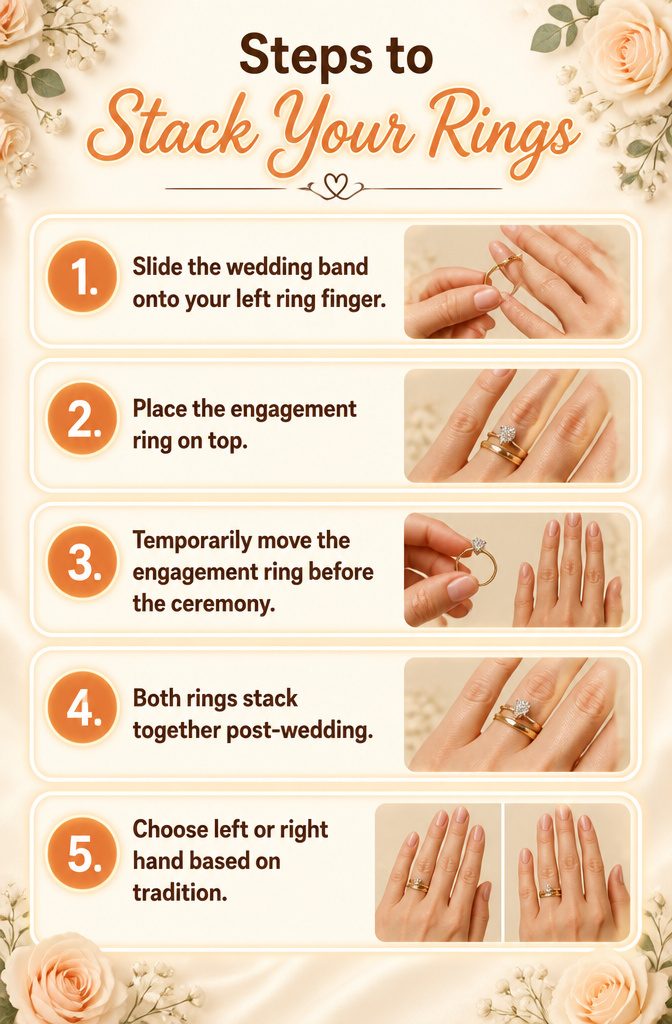
- Slide the wedding band onto your left ring finger first, pushing it all the way down so it sits closest to your heart. The engagement ring follows on top of that same finger.
- This order matters because the wedding vows, not the earlier promise, stay nearest to the heart. The engagement ring then acts like a guard above them.
- Most brides I have watched temporarily move the engagement ring to the right hand before the ceremony. That leaves the left finger bare for the band exchange, then both rings reunite afterward.
- The engagement ring does not retire after the wedding. Most people keep wearing it, stacked with the band, though some now choose just one ring or split them across hands.
- The left hand is standard in Western tradition, rooted in an old belief about a vein running straight to the heart. Some families and cultures use the right hand instead, so your own tradition decides which hand becomes home.
Common Mix-Ups
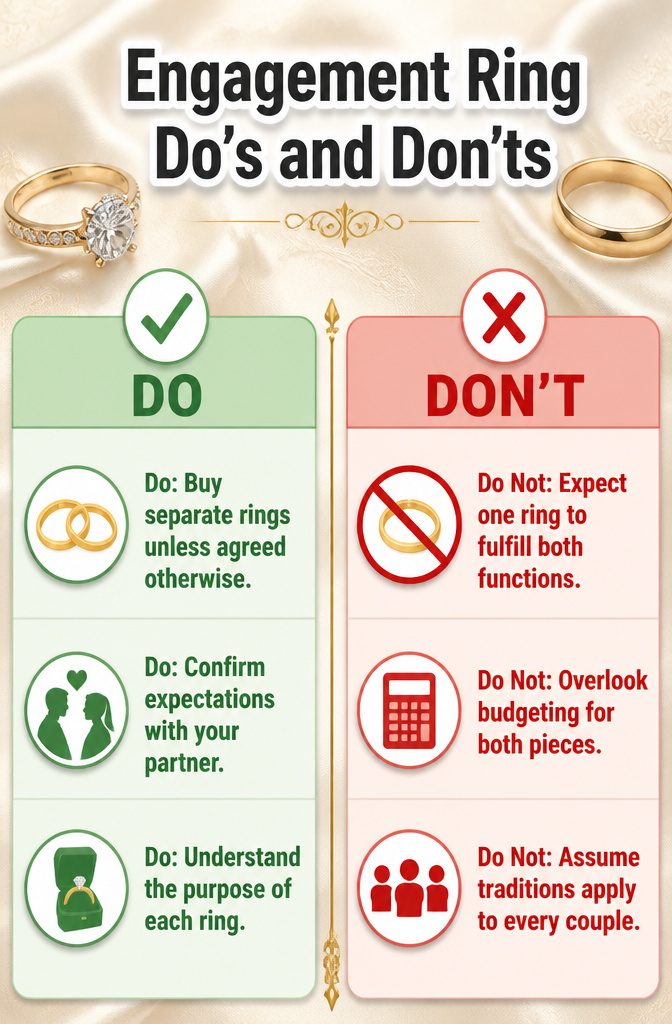
The mix-up is fair enough.
Both rings claim the same finger. Both are usually gold.
Both are supposed to outlast everything else you own. Yet an engagement ring and a wedding ring are not interchangeable, and treating them as the same thing causes real headaches during planning.
- One ring cannot serve both purposes unless you deliberately choose that path. Some couples do, for simplicity or to protect a tight budget. Most traditions involve two separate rings, with the engagement ring marking the proposal and the wedding band exchanged during the ceremony.
- A jeweler hears this confusion constantly: stacking order questions, price-gap anxiety, even who wears what. Nearly every one of those questions traces back to forgetting which ring belongs to which moment.
- The single-ring approach works only when both partners agree it carries the meaning of both. Otherwise, one person ends up expecting a second ring that never arrives, or feeling awkward about a band they never wanted.
- Budget planning suffers when couples price one ring but mentally count on two, or price two and later realize one solid ring would have freed up money for the honeymoon.
Styles That Sell
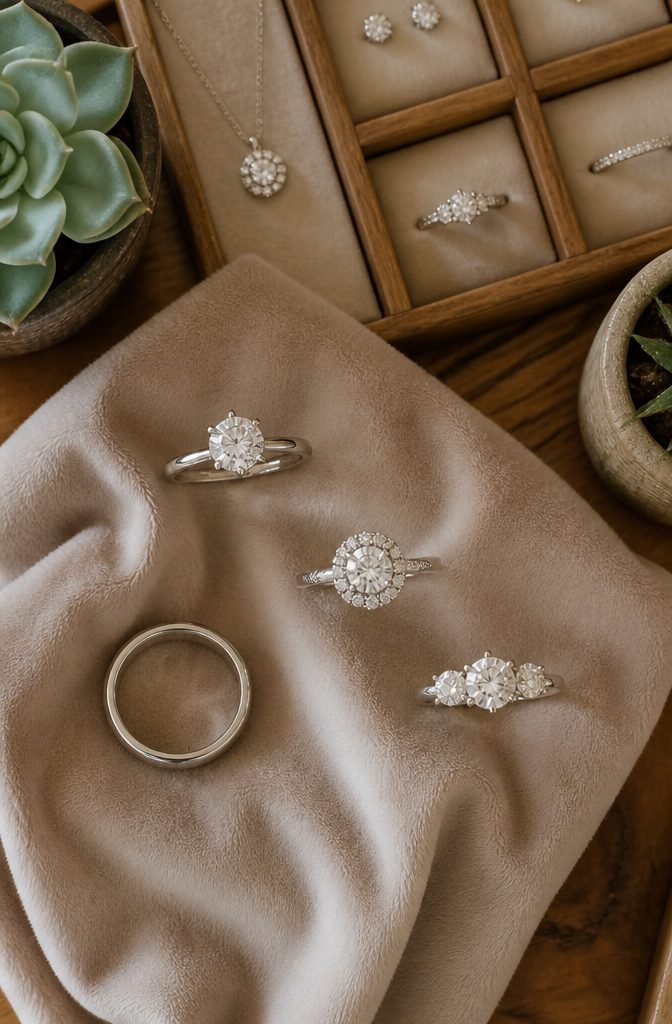
Engagement rings usually announce themselves with a center stone, and the three styles you will see in every case are solitaire, halo, and three-stone. A solitaire keeps the budget focused on one diamond.
A halo stretches the visual size with a ring of smaller stones around the center. A three-stone builds in two side stones that can be added later if the original budget only covered the center.
Wedding bands play a different game. The classic plain band in 14-karat gold or platinum runs 1.5–3 mm for women’s styles and 4–8 mm for men’s, and in the U.S. market most men still stop there.
Diamond-accented bands add channel-set or pavé stones, often matched to the engagement ring.
Eternity bands go all the way around with diamonds or gemstones, though that full circle means sizing later is nearly impossible. Contoured bands curve to nest flush against an engagement ring with no gap.
The practical pairing: a solitaire or three-stone engagement ring leaves room for a contoured or diamond-accented band to slide in later.
A halo already reads busy at the center, so a plain band or slim pavé line tends to stack cleaner.
If you are buying the engagement ring first and the wedding band second, the three-stone style gives you the most flexibility. The side stones can be upgraded, and the band gap stays predictable.
Where Culture Changes the Rules
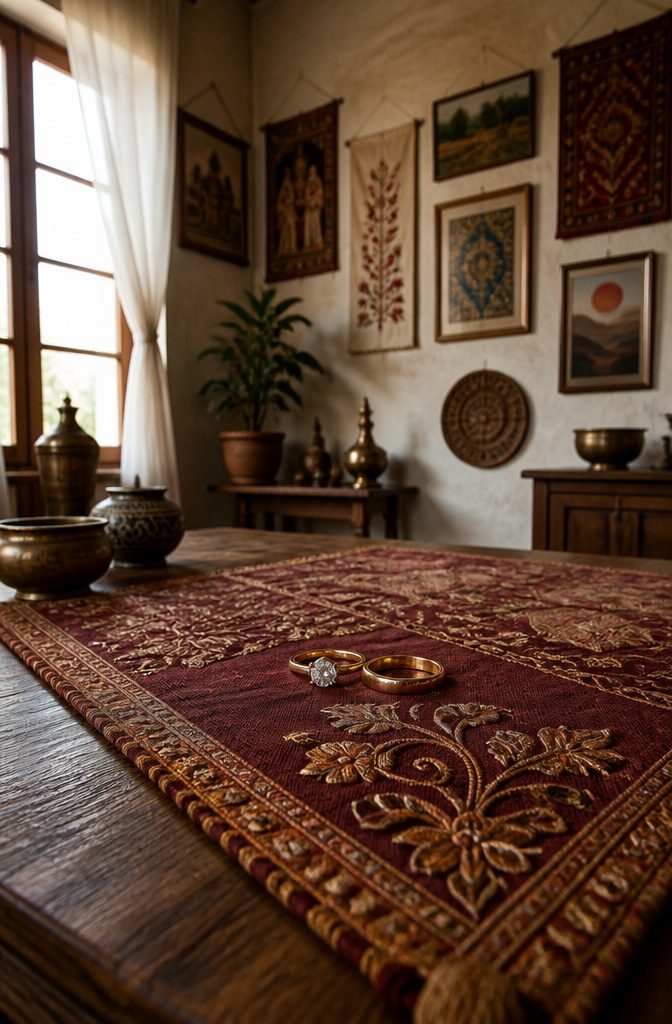
In most Western traditions, both rings sit on the left hand’s fourth finger, the one still called the ring finger from an old belief that a vein there ran straight to the heart.
That custom is not universal. Several European countries, including Germany, Russia, Greece, and Poland, place the wedding band on the right hand instead.
India follows the Western left-hand placement for engagement rings specifically. Jewish tradition has the groom place the wedding ring on the bride’s right index finger during the ceremony; she moves it to the left ring finger afterward.
Some Latin American couples start with the engagement ring on the right hand and switch it to the left after the wedding.
The ceremony-day switch is practical, not cultural. Many brides temporarily move the engagement ring to the right hand before the vows so the wedding band can be placed first on the unobstructed left finger.
Afterward, the engagement ring returns to the left hand, stacked above the band. Family tradition usually decides which hand you actually use, and there is no rule that overrides what feels right for your own ceremony.
Frequently Asked Questions
Are an engagement and wedding ring different?
Yes. An engagement ring marks the promise to marry, given at the proposal and worn through the engagement period.
A wedding ring is exchanged during the ceremony itself and represents the marriage already begun. They serve two separate chapters in the same story.
Can an engagement ring be used as a wedding ring?
Some couples do this for simplicity or to protect a tight budget. Most traditions involve two separate rings, but a single band exchanged at the ceremony works fine if both partners agree it carries the meaning of both.
Do you keep wearing your engagement ring after you get married?
Most people do.
The engagement ring stacks above the wedding band on the same left ring finger, though some now choose to wear just one ring or split them across hands. The engagement ring does not retire after the wedding day.
What is the correct stacking order for engagement and wedding rings?
The wedding band goes on first, closest to the heart, with the engagement ring above it.
Most brides temporarily move the engagement ring to the right hand before the ceremony so the left finger stays bare for the band exchange, then reunite them afterward.
Is there a price difference between engagement and wedding rings?
Yes, and it is large. The average U.S. engagement ring costs about $5,200, while a women’s wedding band averages closer to $1,200 and a men’s plain band around $600.
The center stone swallows most of the engagement ring budget, and wedding bands carry little or no diamond weight.