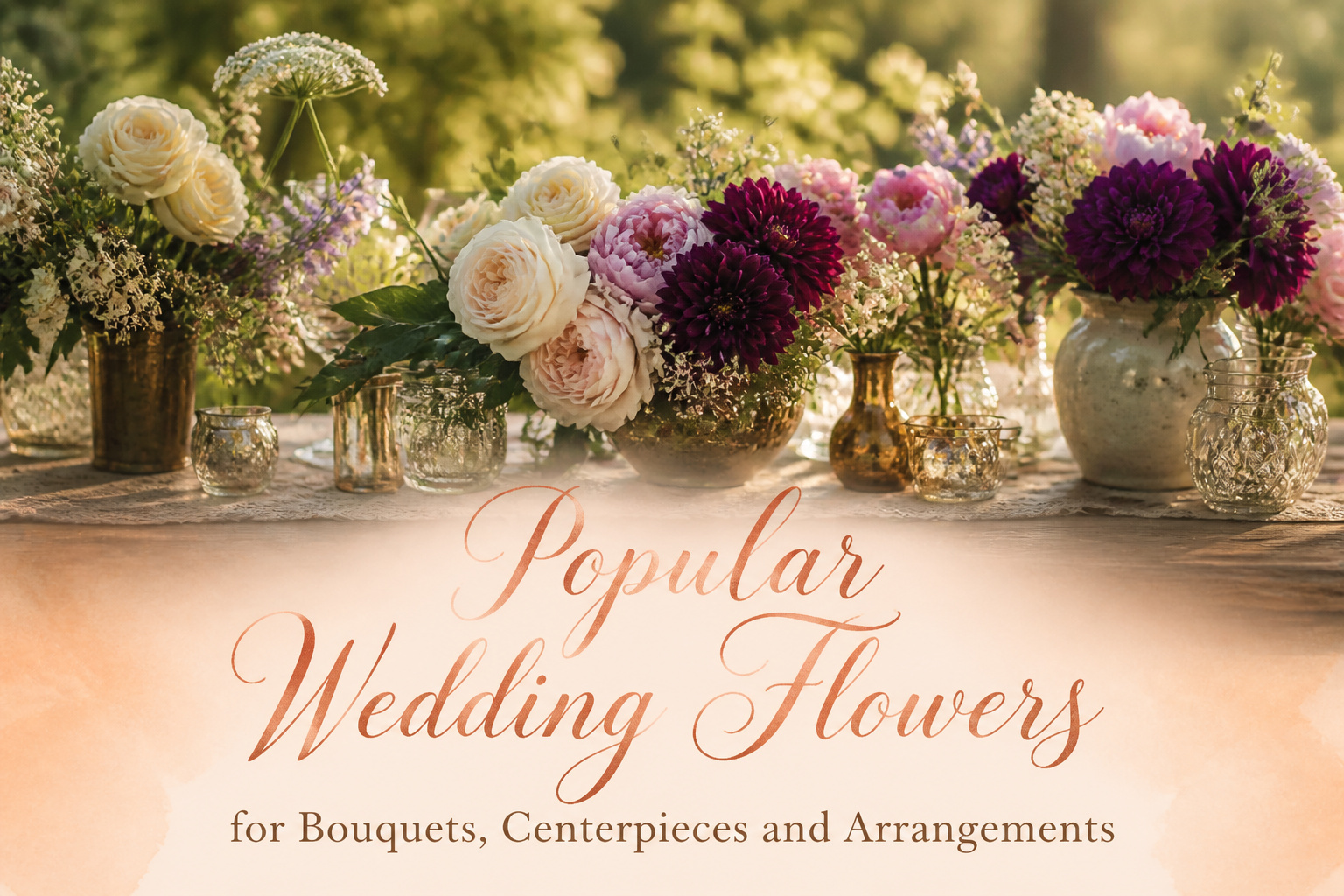
Popular wedding flowers vary by date more than most couples expect, because availability, not preference, is what actually shapes the bouquet. A peony stem that costs four dollars in May can run twenty dollars in December, and that multiplier applies to every petal in the arrangement. What sits in your centerpiece depends on when you asked, not just what you imagined.
Peonies
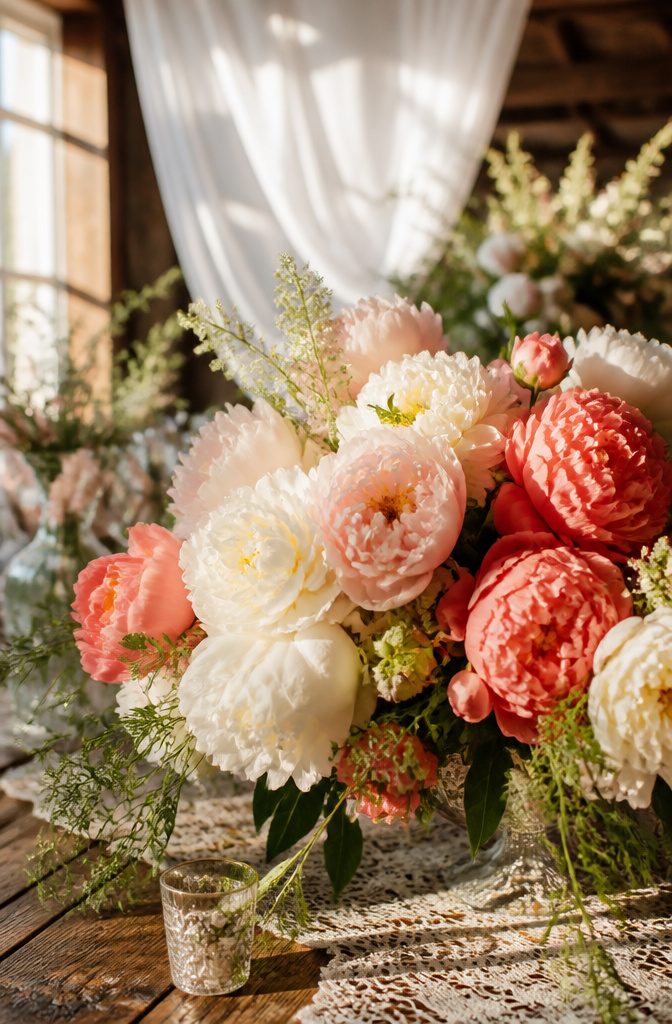
Peonies carry a natural sense of romance that explains why couples budget extra for them despite the narrow window. Their fluffy, ruffled form and abundant petals create that lush, full look photographers love, and the soft colors, from white through blush to deep coral, photograph with a dreamy quality that reads as classic rather than trendy. The season runs only April through June, which is the real catch. Outside those months, you are looking at imported stems or a different flower entirely, and either way the price climbs.
Their symbolism helps justify the splurge. Peonies represent prosperity and a happy marriage, a meaning that resonates during the ceremony itself. The fragrance is another factor, richly scented in a way that carries down the aisle without overwhelming the vows. I have seen brides use them as the star of the bouquet, as part of a floral arch, or massed in centerpieces where the volume does the work of more stems. The versatility is genuine, but the season is not negotiable. If your wedding falls in July, peonies become a conversation about shipping costs and stem quality, and most couples I have watched work through that math end up choosing something else in season rather than chasing the bloom.

Natural Appeal: Receive 36 artificial roses, including 6 ( hot pink, yellow, blue, purple, white, pink)blooms, each intricately crafted with lifelike details and gentle textures. Vivid hues and realistic petal designs infuse a sense of elegance and beauty into any environment

【MATERIAL】This artificial colorful roses flower is made of 90% high quality silk + 10% plastic long stem(metal wire as skeleton is wrapped by plastic.). realistic fake flowers looks like fresh rose.

31-Piece Artificial Flower Set: Includes 31 individual artificial flowers in assorted colors.
Roses
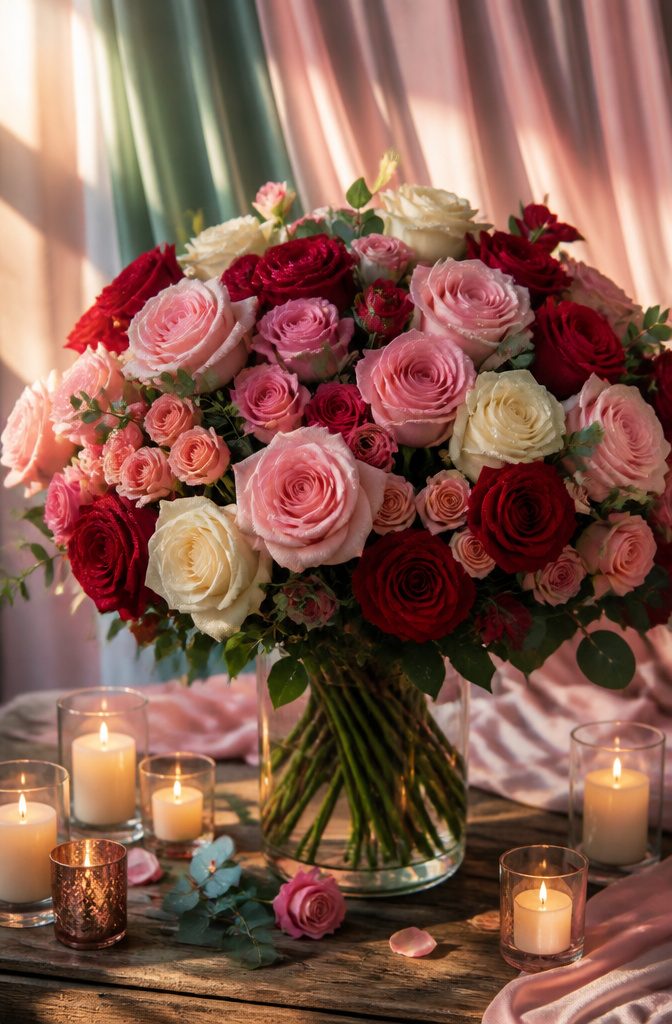
Roses are the one flower you can count on finding any month of the year, which already makes them a practical anchor when you’re booking a florist six months out and praying nothing falls through. More than 3,000 varieties are grown commercially, and that volume keeps prices surprisingly reasonable even when other blooms hit seasonal spikes.
The color range is where they stop being boring. Solid whites, pinks, yellows, purples, and oranges are table stakes. Bicolor, striped, and tipped varieties exist if you want something less expected than the standard bridal palette. Red still carries the heavy symbolism, love and passion encoded so deeply that three quarters of your guests will read it instantly without thinking.
Three types matter for wedding work. Hybrid tea roses give you that classic, uniform shape your grandmother pictured. Spray roses cluster five to ten smaller heads on a single stem and read more garden-grown, which helps when you’re aiming for that loose, organic bouquet shape every photographer is chasing right now. Garden roses cost more, open bushier, and actually smell like something, which matters more than I expected once I stood in a chapel full of scentless imports.
Not every rose is fragrant, so ask before you assume. The budget move is mixing types: hybrid teas for structure and volume, a few garden roses for the spots guests lean in close to.


Package includes: A total of 50 imitation pearl sticks (not including vase) are included in the package. The quantity is enough to meet your various needs. DIY pearl bouquets according to your ideas, or you can share them with family or friends

One single stem is 23.2inch tall and has 2 big open flowers 3 small open flowers and 1 buds. Big flower Diameter:7cm.Small flower diameter:4cm
Ranunculus
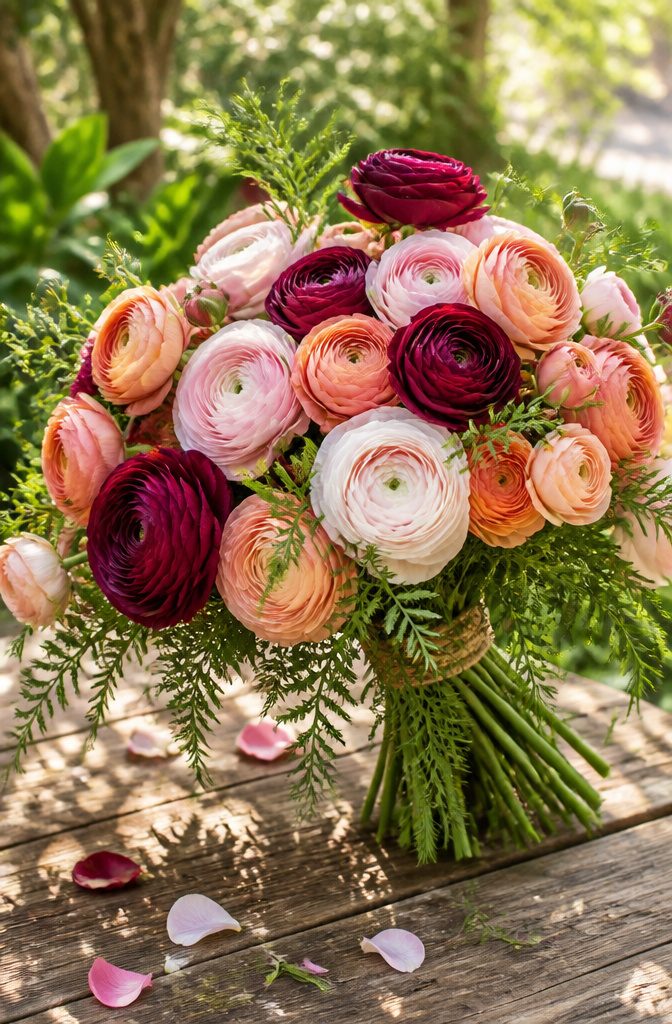
Ranunculus blooms from March through May, which makes it a natural anchor for spring wedding palettes. The layered petals stack so densely that, from a few feet away, the flower reads like a peony at roughly half the cost. That resemblance is why florists reach for it when a bride wants the romantic fullness without the premium price tag.
The color range runs from soft blush and peach to deeper burgundy and moody tones, so the flower works across pastel and saturated palettes alike. I have seen it hold its own in loose garden-style bouquets and in tighter, more formal arrangements. The stems carry several blossoms each, with fernlike foliage that adds texture without extra filler.
One practical note: ranunculus handles cool storage well. Held at 38°F–40°F, it stays usable for about a week, which matters when wedding timelines slip by a day or two. The 90-day growing cycle from corm to bloom also means local growers can produce it on shorter notice than roses, making it easier to source in season without the carbon footprint of long-distance shipping.

BLOOM TIME: Late Spring - Fall (Repeat Bloomer)


Unique and Rare: Cultivate the rare twin roses for a garden adorned with one-of-a-kind crimson-edged petals.
Hydrangeas
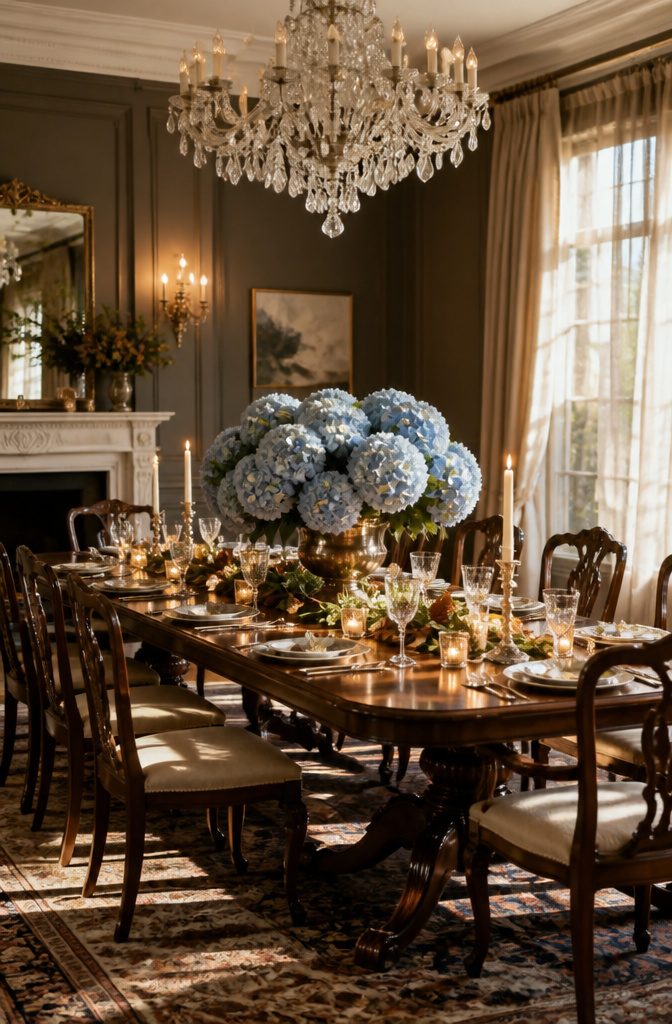
Hydrangeas run from April through November, which is a wider window than most couples realize. That alone makes them worth flagging early in the planning, especially if your date sits at either edge of the typical wedding season and you’re watching every stem.
The real budget stretch comes from their volume. One hydrangea head is roughly the size of a softball cluster, sometimes larger, and that cloud-like shape does the work of three or four smaller blooms. For bouquets, this means you need fewer stems to get a full, rounded look. For centerpieces, a few placed low in a vessel read as abundant without the layered cost of filling out with greenery or secondary flowers.
Color shifts with soil acidity, so the same variety can land anywhere from bubble-gum pink to sky blue. White, cream, burgundy, purple, and green tones are also in play. That range covers most palettes, though the blue-to-pink unpredictability is something to discuss with your florist rather than assume you can dial in precisely.
They carry no scent, which is either a relief or a loss depending on what else is in the arrangement. For outdoor summer weddings, the lack of fragrance is often a practical win.


💐Material: Silk flowers head and leaves. The fake flowers stem is made of metal wire and wrapped by plastic, flexible and not easy to break off. These roses are handmade and base on the real flower to produce, clear stripe leaf, vivid flower head and thorn make the artificial roses real-like and keep fresh.

Size: Each fake rose length is 1.64 ft/ 50 cm, flower 3.15 inch/ 8 cm in diameter, with realistic green leaves; Package: 1 Pack included 12 pcs artificial roses flowers in bulk
Tulips
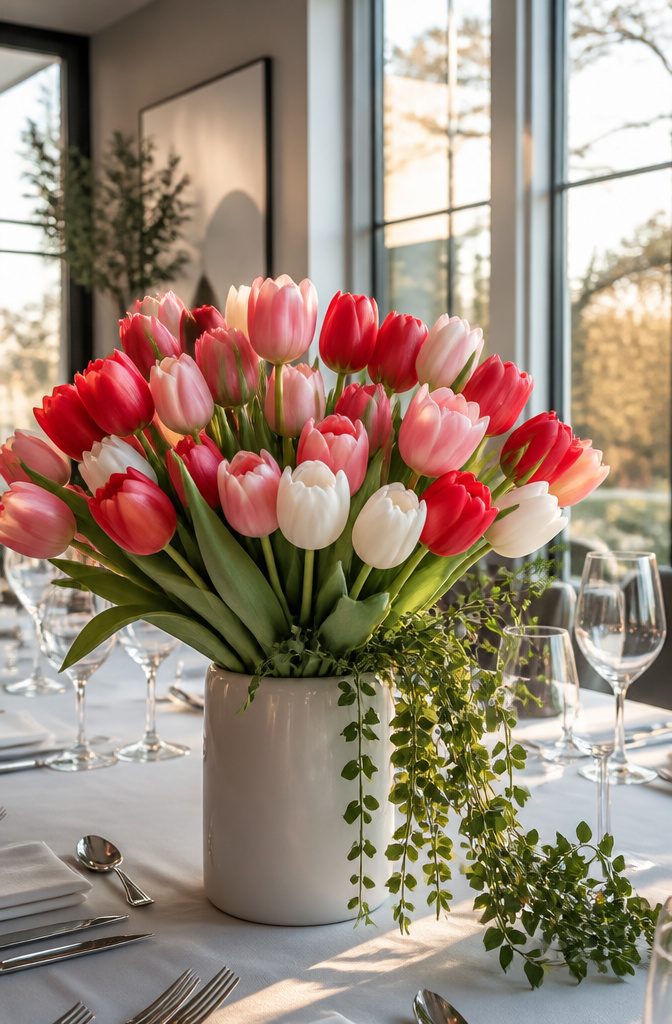
Tulips carry a meaning that still lands with couples: consuming love and happy years, which is why they keep showing up in spring ceremonies. Their season runs March through May, with the best prices hitting right in that window. I find their clean, simple stems read modern without trying too hard, whether the rest of the wedding skews minimalist or layered.
The catch is biological, not stylistic. Tulips continue growing even after they are cut, which means stems can bend and shift in water overnight. A bouquet assembled too early Friday for a Saturday ceremony may look like a different shape by the time the photographer arrives. Parrot tulips, with their fringed petals, add distinctive texture but share the same habit. For timing, harvest or receive them ideally 12 hours before designing, cut when fully hydrated, and get them into clean water immediately. Build arrangements closer to the event than instinct suggests, and check water levels the morning of.

String pearl stick is made of ABS plastic material, the beads will not stick, you don't have to worry about the glue exposed and the beads falling off

Multi Bloom Spray Roses – Each stem features multiple small rose blooms, creating a fuller and more delicate bouquet.
Calla Lilies
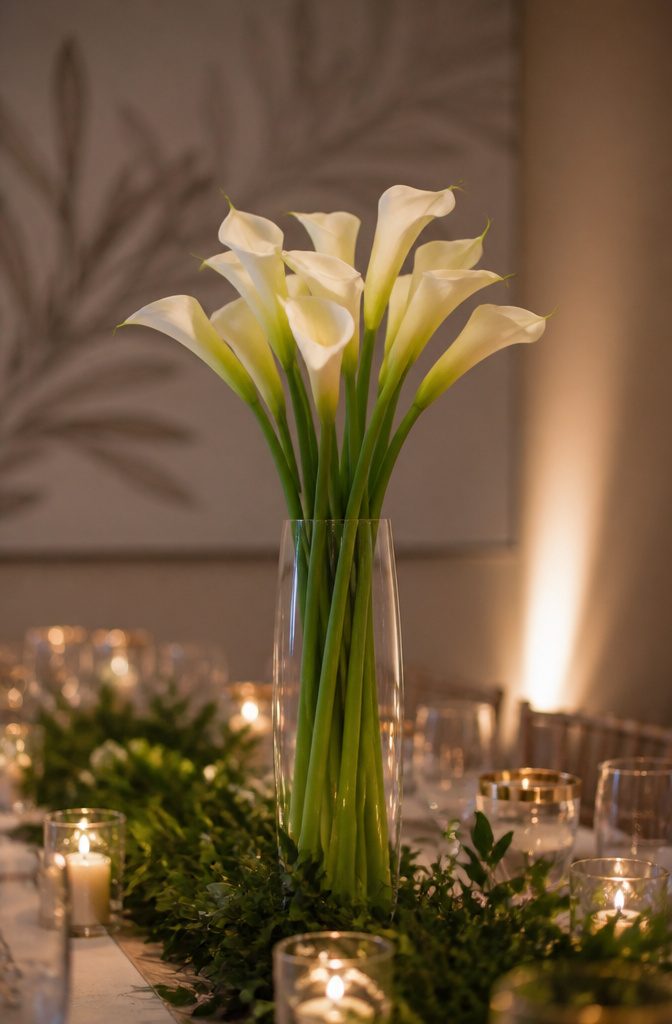
Calla lilies carry a sculptural trumpet shape that reads modern without trying hard, which is why they show up so often in minimalist bouquets and single-stem statements. The large-headed variety with its long, smooth stem suits tall arrangements or presentation-style bouquets, while miniature callas work for boutonnieres and smaller pieces. Creamy ivory dominates wedding orders, though yellow, orange, mauve pink, and dark purple are available if you want something slightly edgier for a cold-weather palette.
They bruise easily if handled roughly, a limit I kept in mind when I first worked them into a bridal party lineup. Their season runs February through August, though some suppliers list them year-round. The language of flowers ties them to magnificent beauty, and that distinctive form has been depicted in art nouveau and art deco works for good reason. For a contemporary aesthetic, their clean lines and architectural presence are hard to ignore.


REAL TOUCH ENGLISH GARDEN ROSES – David Austin-Inspired – Designed to mimic the beauty of freshly bloomed garden roses, these artificial flowers feature luxuriously layered, ruffled petals that feel soft to the touch and look incredibly lifelike. The realistic color gradients add a natural charm, making them perfect for home décor, wedding bouquets, and elegant floral displays

[Fragrant and Pollinator Friendly] Many varieties produce sweetly fragrant flowers that attract bees, butterflies and other beneficial pollinators throughout the blooming season.
Dahlias
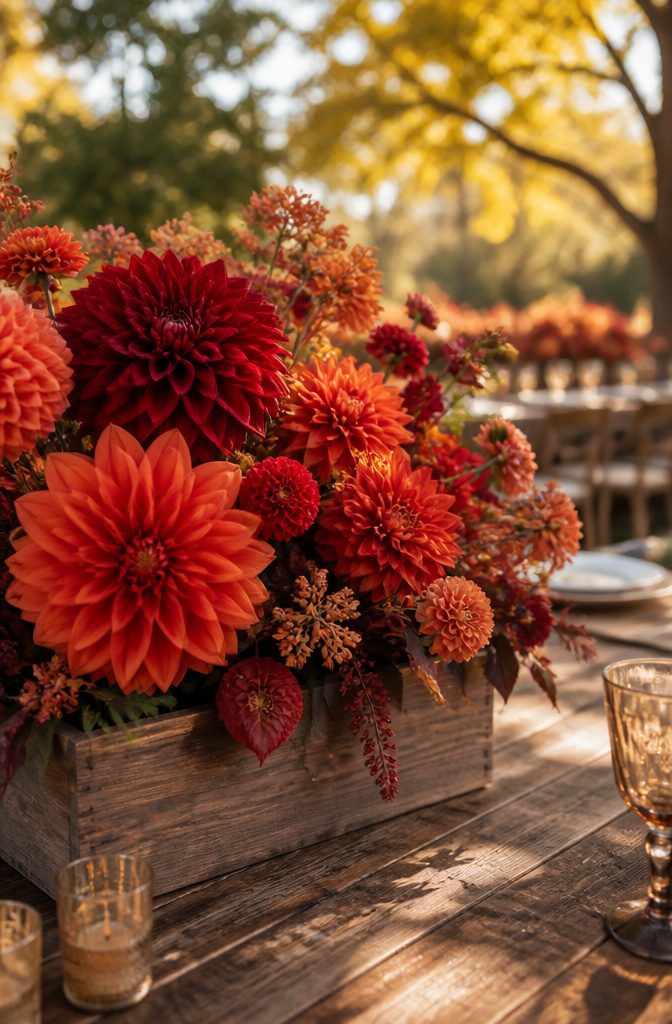
Dahlias bloom from July through October, so they arrive right when summer weddings are winding down and fall weddings need something bold to carry the palette. That late-season timing pushes autumn arrangements toward saturated colors: deep reds, scarlet, orange, and the moodier purples that read as rich rather than bright once the light changes.
The size range is enormous. Pom varieties stay small enough to add texture among other blooms, while dinner-plate dahlias open to at least eight inches across, some reaching nine. Those giant blooms command attention in large installations and can anchor a centerpiece with far fewer stems than a standard variety would need. But the visual impact comes with a practical catch. Dinner-plate dahlias grow top-heavy, and that weight travels down the stem. In arrangements, the stem strength does not always match the flower’s presence; they may need extra support or placement where they will not bear load alone. For brides working against a budget, the tradeoff is real: dinner-plate stems often run at a premium, roughly three times the cost of standard dahlias, and they demand more careful handling in return.
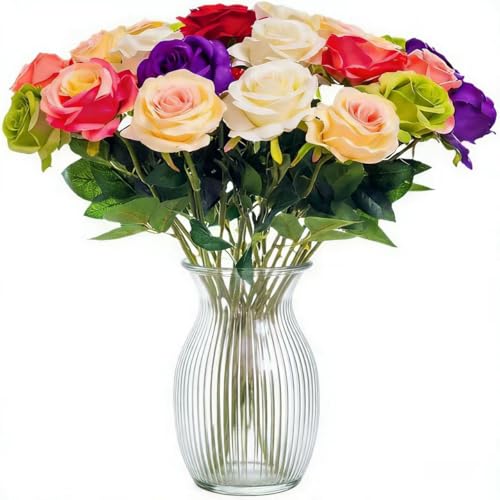
ARTIFICIAL FLOWER MATERIAL: Artificial rose are made of high quality flannel material and durable plastic stems (with wire inside to hold the shape) with realistic green leaves. It makes them look like real roses. It is wipe-cleanable, durable and does not fade easily with the stems that stay fresh and lifelike for a long time.

Assorted Plush Rose Combination: you will receive a total of 48 plush roses in 8 colors, including red, rose red, pink, purple, green, gold, orange, sky blue, 6 pieces for each color; Enough quantity and assorted colors can satisfy your various needs

Pack of 4 Pieces Fake Silk Flower (Not Included Vase)
Gardenias
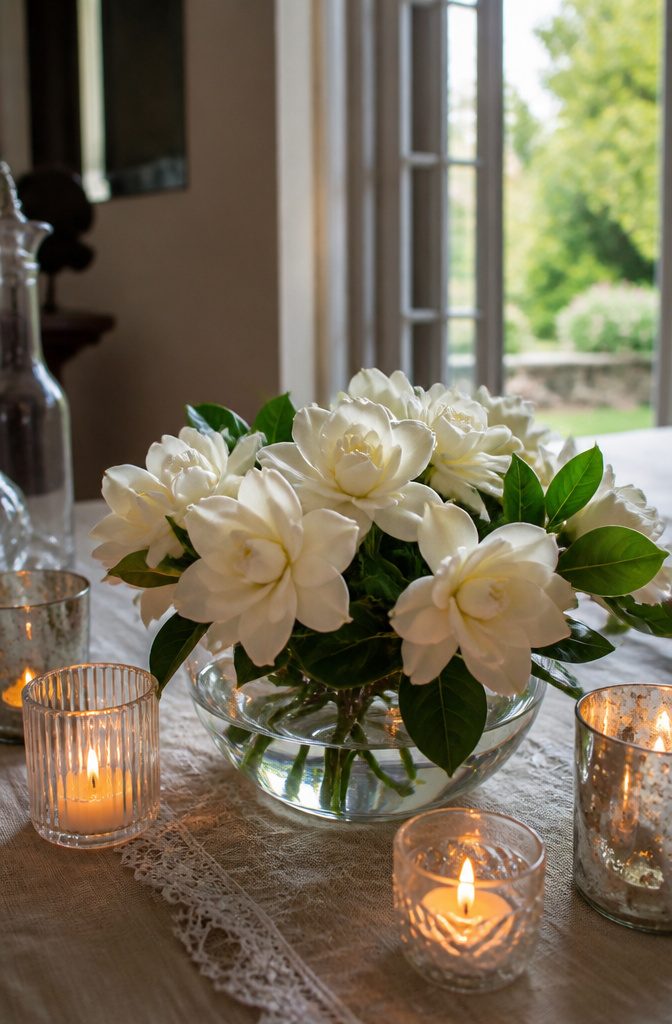
Gardenias bloom from May through September, a narrow window that lands squarely in peak wedding season. Their fragrance is the main event: heavy, sweet, and strong enough to fill a room without any help from candles or diffusers. A single blossom floating in a low bowl can carry an entire centerpiece.
The catch is the petals themselves. Ivory, waxy, and bruising at the lightest touch, they brown at the edges if you so much as handle them roughly. That fragility makes them a gamble for boutonnieres, which take abuse through hugging, dancing, and summer heat. One source frames them as "perfect" for boutonnieres; another warns to "be gentle." The honest read is that they work beautifully in a hair accessory or corsage you can protect, but pinning one to a lapel is asking a lot of a flower this tender.
Sweet Peas
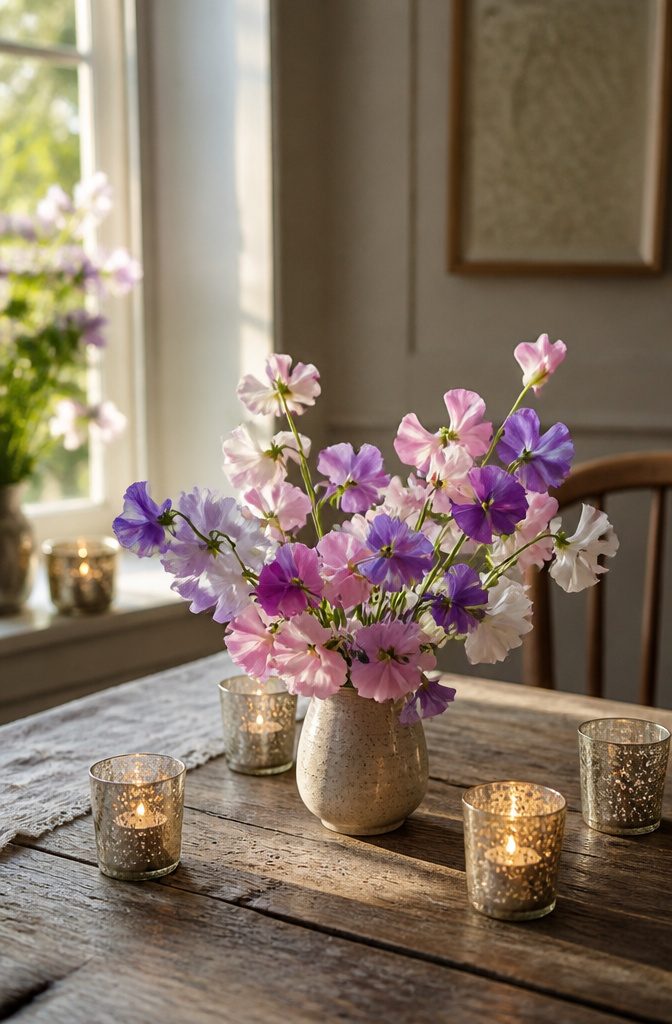
Sweet peas carry a candy-like scent that fills a room before guests even notice the arrangement, and their ruffled, tissue-paper petals look like something pressed between the pages of an old novel. They bloom from March through November, which makes them one of the longer-running seasonal options for wedding flowers, though their real window for peak freshness sits in spring and early summer.
The catch is structural. Their stems are short and their petals bruise if you so much as breathe wrong, so florists almost always use them as accents rather than focal flowers. I have seen brides fall in love with a single sweet pea stem at a consultation and want a whole bouquet of them; the florist’s job then becomes explaining why that stem will wilt before the ceremony ends and why mixing them with sturdier flowers is the only practical path. White, pink, coral, red, violet, and blue varieties exist, and the pastel shades suit vintage-inspired or garden-style weddings where a loose, hand-tied look is the goal. For anything architectural or modern, sweet peas fight the design.

Live Own Root Plant: Heirloom Grandiflora Roses Parfuma Madame Anisette, is a live own root plant ensuring that the root, stems & flowers are all from the same variety and will produce more blooms

Ready-to-Use Natural Confetti – No Cleanup Needed!Perfect for outdoor weddings! Unlike plastic petals, our real white rose petals + dried eucalyptus leaves blend seamlessly into grass and vanish naturally. Ideal for flower girl toss, aisle decor, or DIY wedding crafts (resin coasters, candle embeds).

Discover the joy of growing rare, exotic rose seeds in your own garden!
Anemones
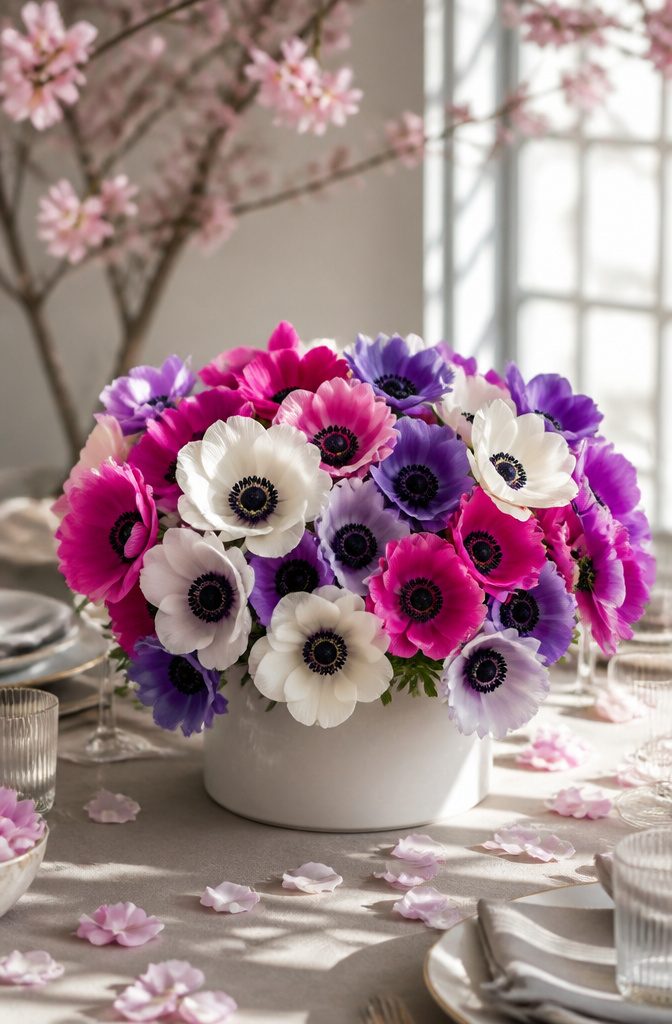
Anemones carry their bloom season from November through May, which makes them one of the few strong choices for couples working with a late fall, winter, or early spring date. The dark centers against white or colored petals give arrangements a graphic quality that reads modern without trying hard. White with black centers is the combination most people picture, but the flower also comes in pink, red, violet, and blue across more than 120 varieties.
That unusual season is the practical reason to know them. A March wedding that falls between tulip availability and peony season can use anemones as a bridge flower that does not look like a compromise. The cost runs moderate, not budget, so they work best as a focal element rather than a volume choice. Pair them with greenery and simpler blooms to keep the overall arrangement from becoming expensive fast.
The black-centered varieties suit monochrome or high-contrast palettes; the jewel-toned ones soften into romantic schemes more easily than the stark black-and-white reads. Either way, their limited window means booking a florist who sources them deliberately, not hoping they show up as a standard option.
Orchids
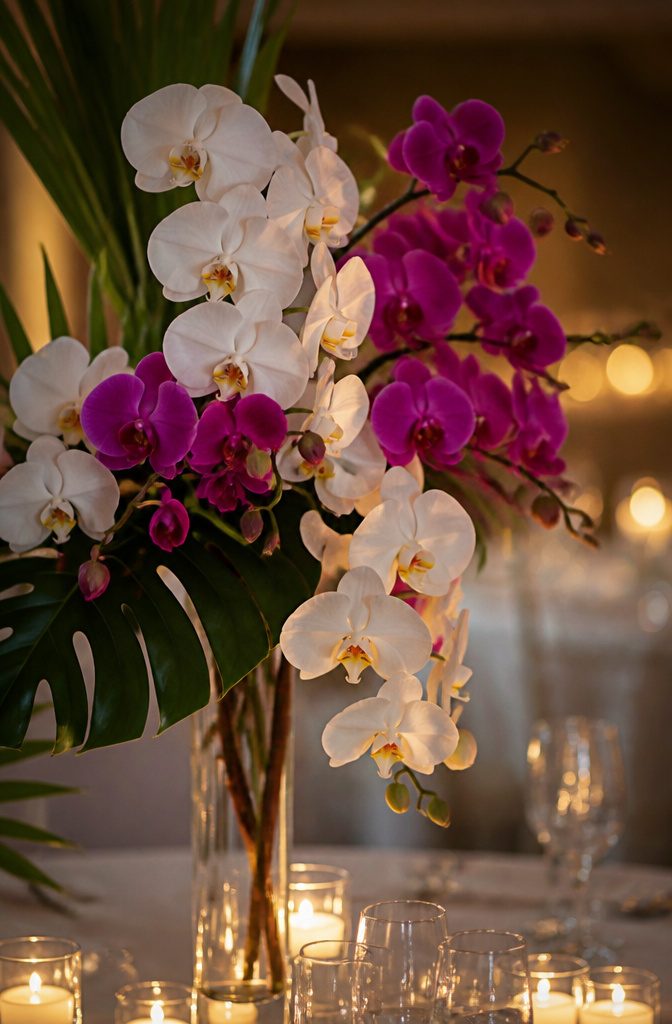
Phalaenopsis, Dendrobium, and Cymbidium orchids carry a tropical association that works whether the wedding actually lands on a beach or just needs to survive one. Their year-round availability means you are not waiting on a narrow window the way you would with peonies or dahlias, and that matters when your venue books up fast and your florist needs lead time.
The structural strength is what sold me, reading through the logistics of hot-weather events. These stems hold up out of water longer than most, transport without bruising, and keep their shape through a long ceremony and a longer reception. For a destination wedding or an August outdoor tent, that reliability is worth the mid-to-upper price range they run. A boutonniere that still looks crisp at the end of the night, or a centerpiece that does not wilt before the cake cutting, saves you from the quiet regret of watching your budget droop in real time.
Stephanotis
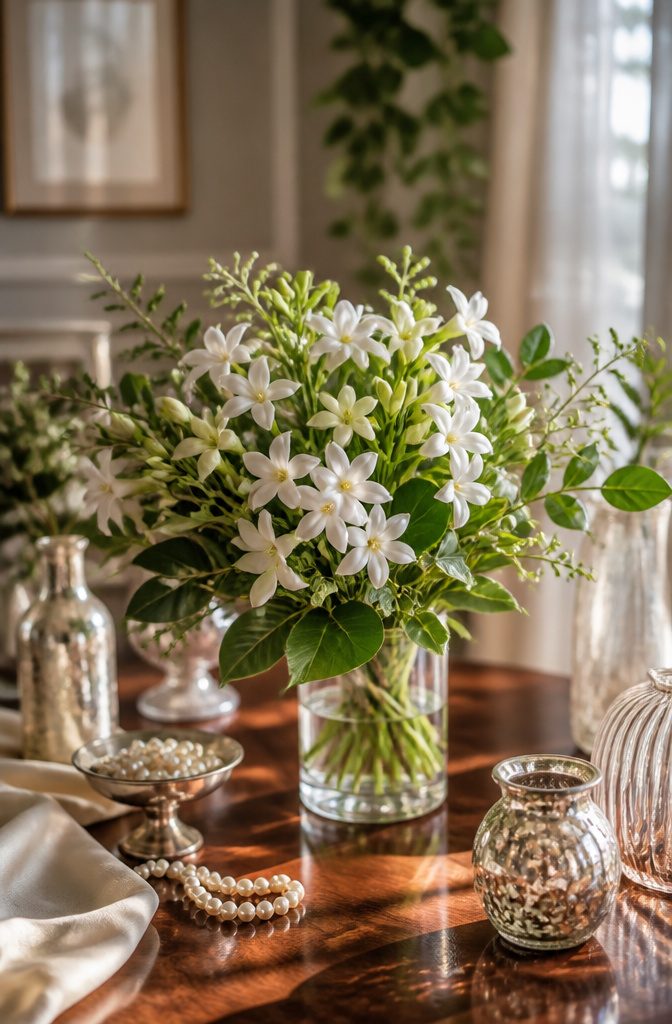
The Victorian meaning for stephanotis is "marital happiness," which is why this tiny white flower still shows up at formal weddings even though it demands more labor than almost anything else in the bouquet. Each star-shaped, waxy bloom grows on its own short vine, and those stems are too stubby to arrange loose the way you would with roses or hydrangeas. Your florist has to wire every single one onto a special holder, or work it directly into the bouquet structure, which is why a stephanotis piece costs more in labor than the flowers themselves. The same wiring makes them natural for hair pieces or boutonnieres, where the stem problem becomes an advantage: they sit flat and stay put. The scent is mild, the color is that crisp bridal white, and they are available year-round at a moderate per-stem price. I would not choose stephanotis for a loose, garden-style arrangement where you want things looking effortless; the wiring shows if you do not build around it. For a structured, traditional bouquet or a groom’s formal boutonniere, the symbolism and the star shape still justify the extra work.
Chrysanthemums
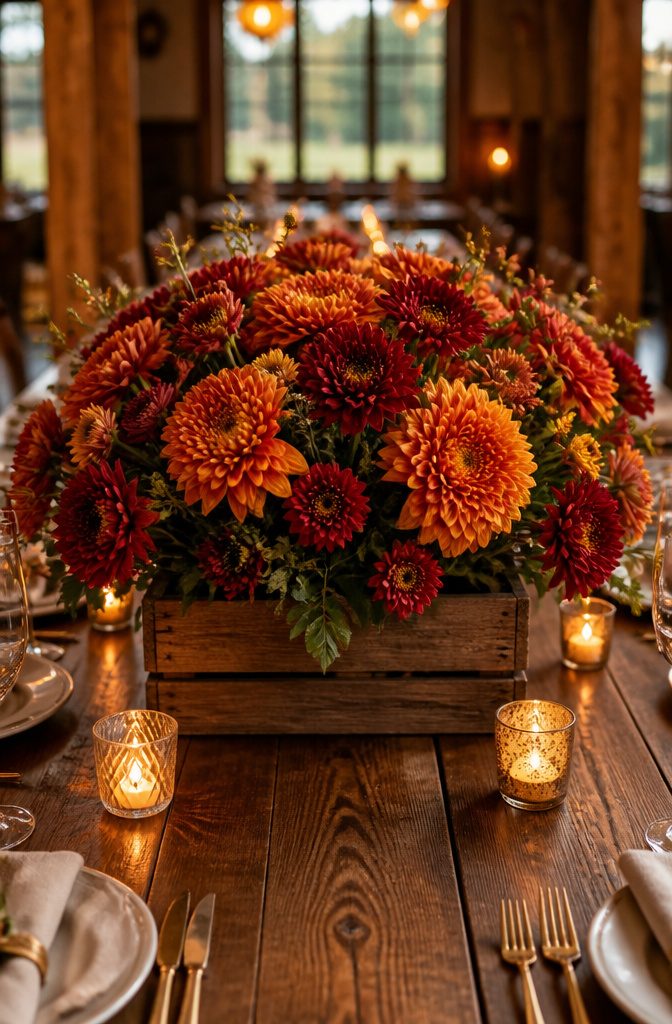
Chrysanthemums carry a meaning most couples want at a wedding: longevity and joy. The problem is the grocery-store reputation. Walk past a gas-station bucket in October and the flower reads "last-minute" rather than "chosen."
Autumn varieties change that. Football mums and disbud types, with their single large bloom per stem, look deliberate in a bouquet. Spider and cushion varieties add the structure that makes an arrangement feel designed rather than grabbed. August through November is their natural window, which lines up with the season when dahlias and moody burgundy foliage are already on the table.
The real move is treating the flower as a texture piece, not a filler. A few disbud chrysanthemums among roses and dried grasses give volume without the visual noise of a dozen mixed stems. Their price edge helps too, though costs shift too much by market to pin down here. What matters is that the bloom looks like it was selected for the day, not for the checkout line.
Lilies of the Valley
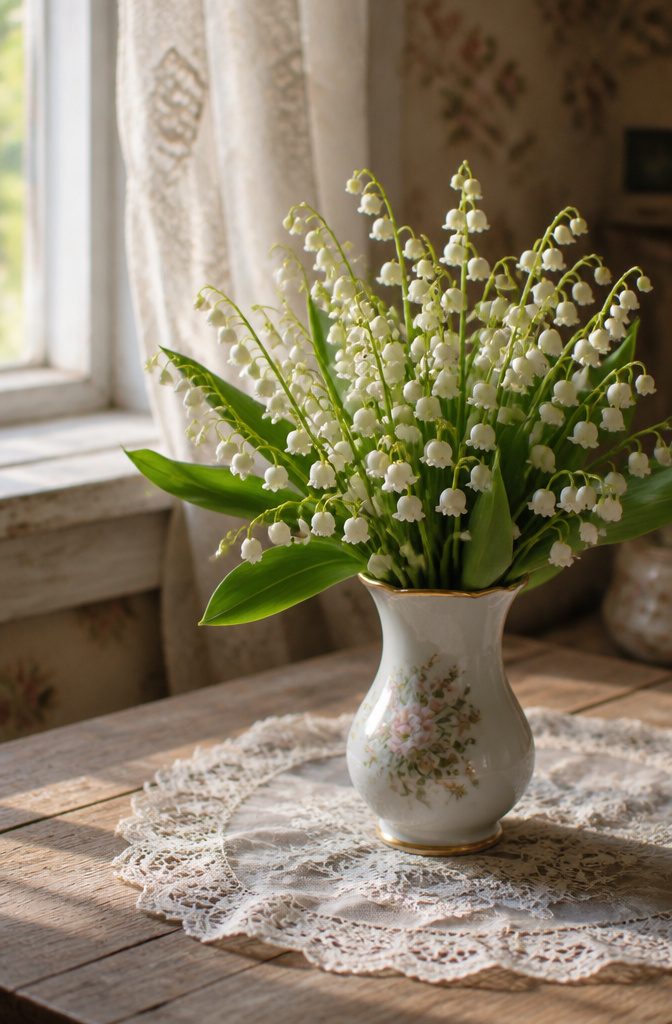
Lilies of the valley bloom from April into early May, a window so brief that most couples miss it entirely unless their date happens to land inside. The stems carry tiny bell-shaped florets in tight clusters, white and occasionally a rare rosy-pink, with a fresh perfumed scent that carries across a room. That delicacy comes at a cost: the season is short, the harvest is labor-intensive, and the price stays steep even when limited supplies are forced for off-month weddings. Kate Middleton’s 2011 bouquet put this flower back in every bride’s imagination, though Grace Kelly and Princess Diana had already made the same choice decades before.
What convinced me, reading through the practical warnings, is that every part of the plant is toxic to pets. Dogs or cats at a wedding, whether in the bridal party or simply attending with guests, make this a genuine liability. The stems, leaves, and those innocent-looking bells can trigger serious symptoms if chewed or even licked. A few stems tucked into a bouquet for fragrance and texture is the compromise most florists suggest, but that only works if you can trust every pet in the building to keep its distance.
Seasonal Availability
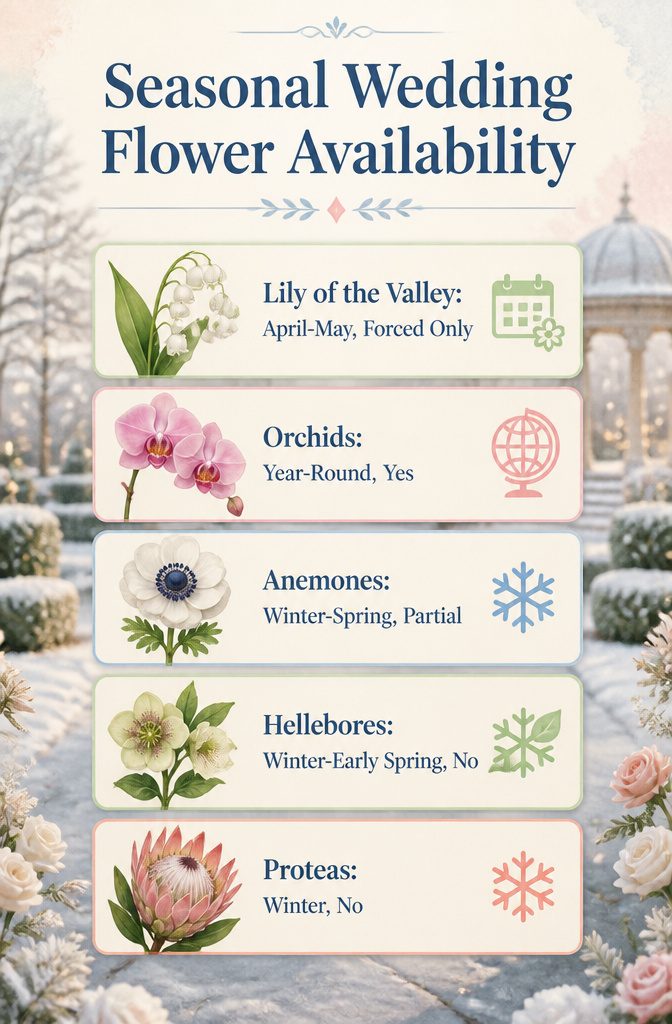
January weddings limit your palette to five reliable options: anemones, hellebores, orchids, proteas, and forced lily of the valley. Every other month widens or narrows from there.
| Flower | Peak Season | Year-Round? | Notes |
|---|---|---|---|
| Lily of the valley | April–early May | Forced only off-season | Kate Middleton’s 2011 bouquet; short natural window |
| Orchids | Year-round | Yes | Premium pricing holds steady |
| Anemones | Winter–spring | Partial | Reliable January choice |
| Hellebores | Winter–early spring | No | January-appropriate |
| Proteas | Winter | No | Distinctive, limited alternatives |
The real trade-off sits with lily of the valley. Its natural run spans April into early May, so January stems are forced and priced accordingly. Orchids escape this entirely; they ship year-round with no quality drop. For a winter date, the question becomes whether that bell-shaped look justifies the forced premium, or whether orchids’ modern lines serve the same bouquet role without the surcharge.
What Flowers Cost in Real Budgets
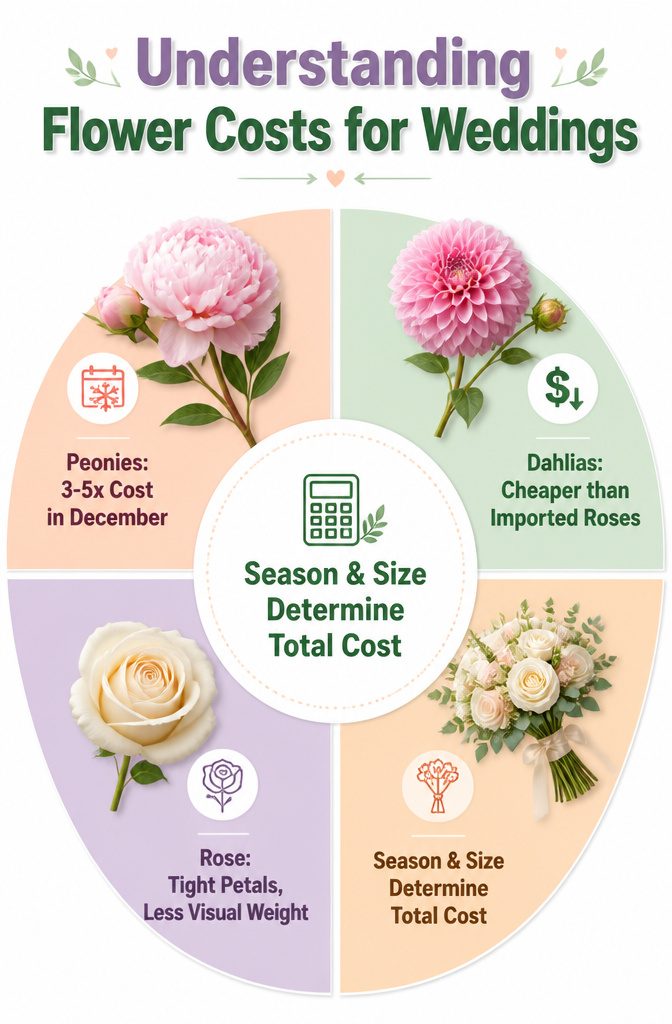
Peonies in December run three to five times what they cost in May. That multiplier is the first thing that rewired how I thought about wedding flower budgets. A stem that looks reasonable on a spring price list becomes a splurge in winter, and most couples first see numbers in the wrong season.
Local dahlias in August flip the math the other direction. They cost less than imported roses that ship year-round, even though the dahlia gives more visual weight per stem. Volume matters as much as price. A rose packs petals tight; a dahlia spreads wide. You need fewer dahlias to fill a bridesmaid bouquet, so the lower per-stem price compounds into real savings on total stem count.
Season and size together determine what you actually spend, not the sticker price in a catalog. I learned to ask florists two questions: when is this flower native here, and how much space does one stem cover? The answers changed every arrangement I planned.
Arrangements That Use Each Flower Best
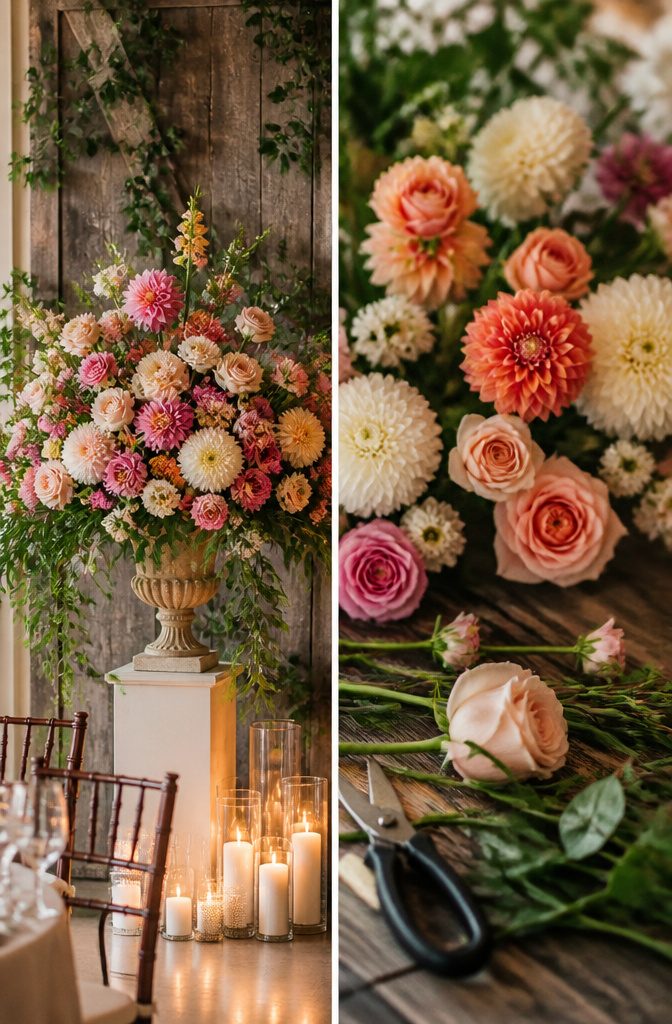
Roses hold up well enough out of water for boutonnieres and corsages, though floral water tubes keep them looking crisp through a long ceremony. Their stems are sturdy enough to anchor an arch or installation without extra support, which makes them the workhorse most florists reach for when structure matters. Dahlias bruise when pinned and their hollow stems need wiring or a hardier neighbor to stay upright in bouquets; the dinnerplate varieties, running up to 9 inches across, deliver the visual punch for large installations but cost roughly three times a standard stem. Smaller pom dahlias fill in texture where a bold bloom would overwhelm. Chrysanthemums add that same structural backbone in fall arrangements, their spider and cushion varieties carrying depth that dahlias alone might flatten. For centerpieces, roses and mums both outlast dahlias at room temperature; dahlias start drinking water the moment they leave the cooler and sulk in dry foam.
Sustainability and Local Sourcing
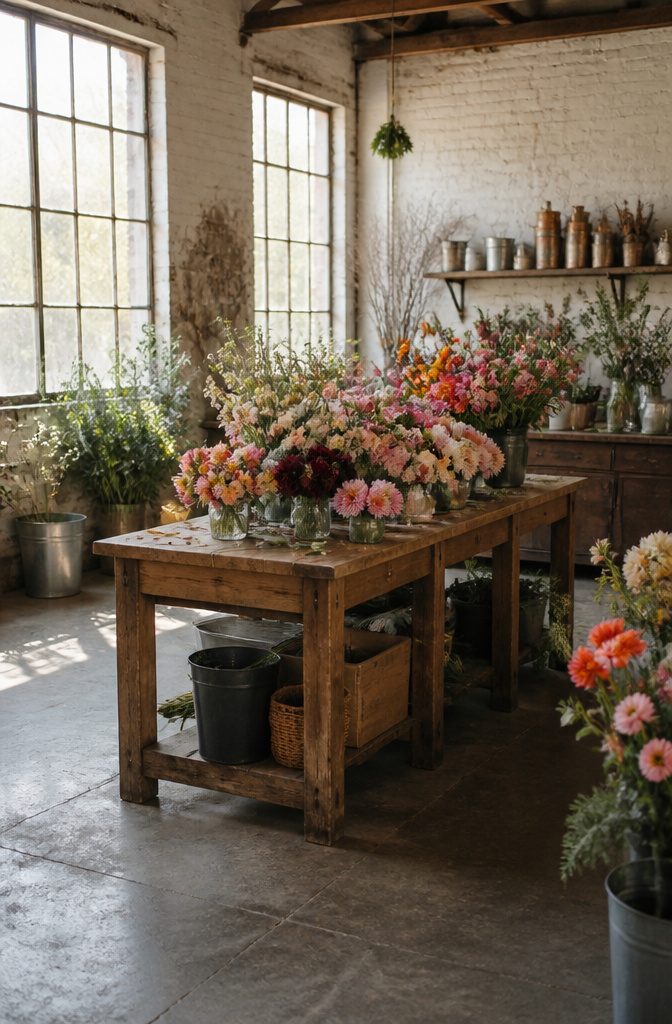
Locally grown wedding flowers cut the shipping distance and the carbon footprint, but the choice narrows quickly once you ask your florist for American-grown stems. Dahlias, zinnias, and certain roses have strong domestic growing seasons and hold up beautifully in bouquets and centerpieces. Orchids and proteas rarely do; they almost always arrive from overseas. That trade-off is the one to weigh upfront.
Seasonality matters just as much as geography. Dahlias dominate from July through October, and their quality peaks when they travel fifty miles instead of five thousand. The catch is timing: a June wedding will not see them at all. Ask your florist which local fields are harvesting during your month, and build the palette from there. The stems cost less in season, and the arrangements look fuller because the blooms were cut at peak rather than bred to survive a plane ride.
Frequently Asked Questions
What are the most popular types of wedding flowers?
The most popular wedding flowers are peonies, roses, ranunculus, and hydrangeas. Peonies bring romance and lush fullness but only bloom April through June. Roses stay available year-round with over 3,000 commercial varieties, making them the reliable anchor for most bouquets. Ranunculus offers similar fullness to peonies at roughly half the cost during its spring season, while hydrangeas stretch from April through November and fill space with fewer stems thanks to their large, cloud-like heads.
How much should I budget for wedding flowers?
Wedding flower costs swing sharply based on season and flower choice, not just catalog prices. Peonies in December run three to five times their May price, while local dahlias in August cost less than imported roses and need fewer stems to fill the same space. Most couples spend between $700 and $2,500 total, but asking your florist which flowers are native to your month and how much coverage each stem provides will reshape the real number.
What flowers are in season for your wedding?
Seasonal flowers hit peak quality, look right for the time of year, and can be sourced locally instead of shipped long distance. Dahlias dominate July through October, peonies only April through June, and tulips and ranunculus anchor spring palettes from March through May. For January weddings, anemones, hellebores, orchids, proteas, and forced lily of the valley are the reliable options. Ask your florist which nearby fields harvest during your month, then build from there.