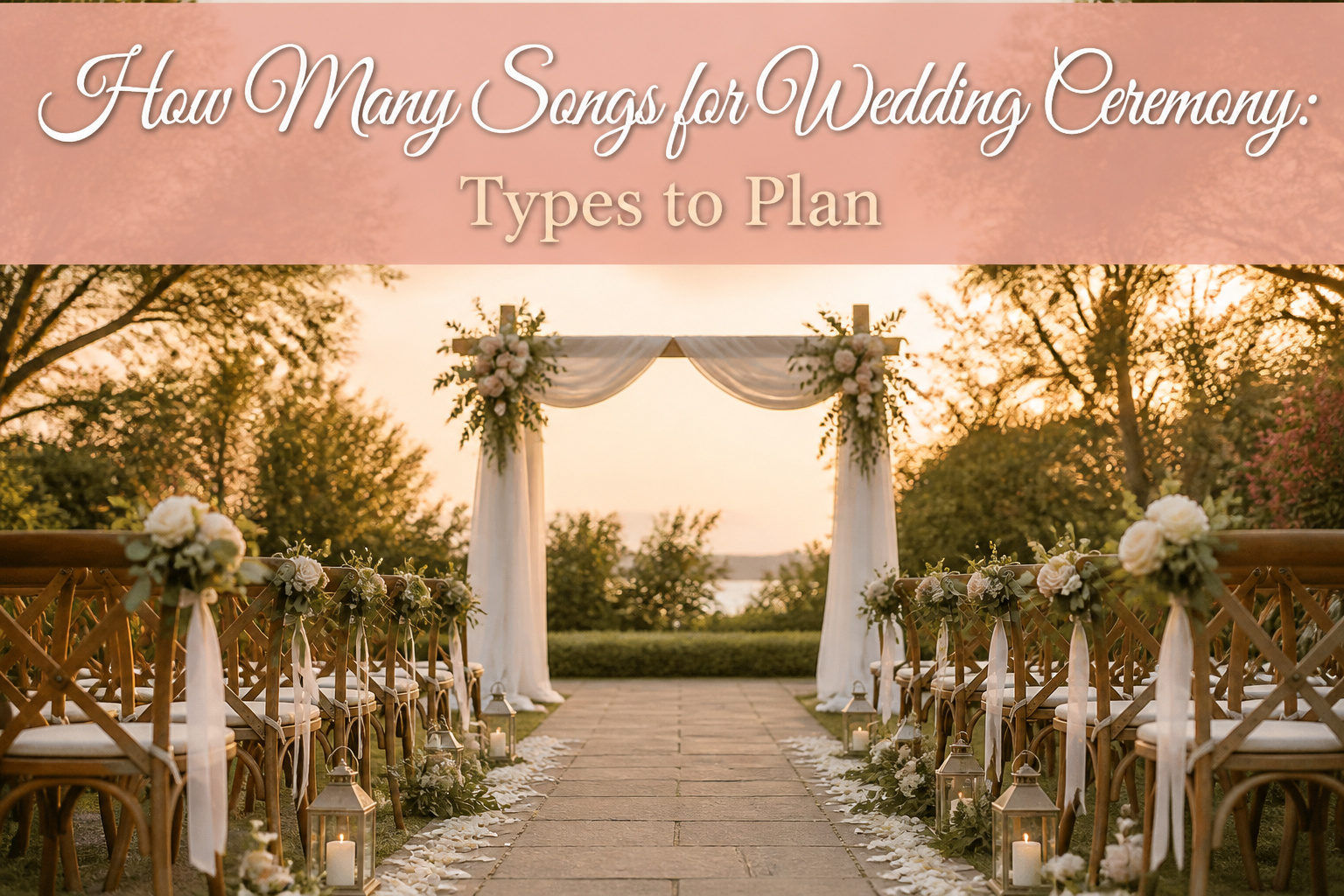
Most wedding ceremonies need three to four songs total: one or two for family and wedding party entrances, one for the couple’s processional, and one recessional. The exact count depends on whether parents walk separately with their own cues or fold into the wedding party entrance. Pacing matters more than playlist length; a gap of even a few seconds between the wedding party song and the bride’s entrance makes the room feel stalled.
1. Prelude Music
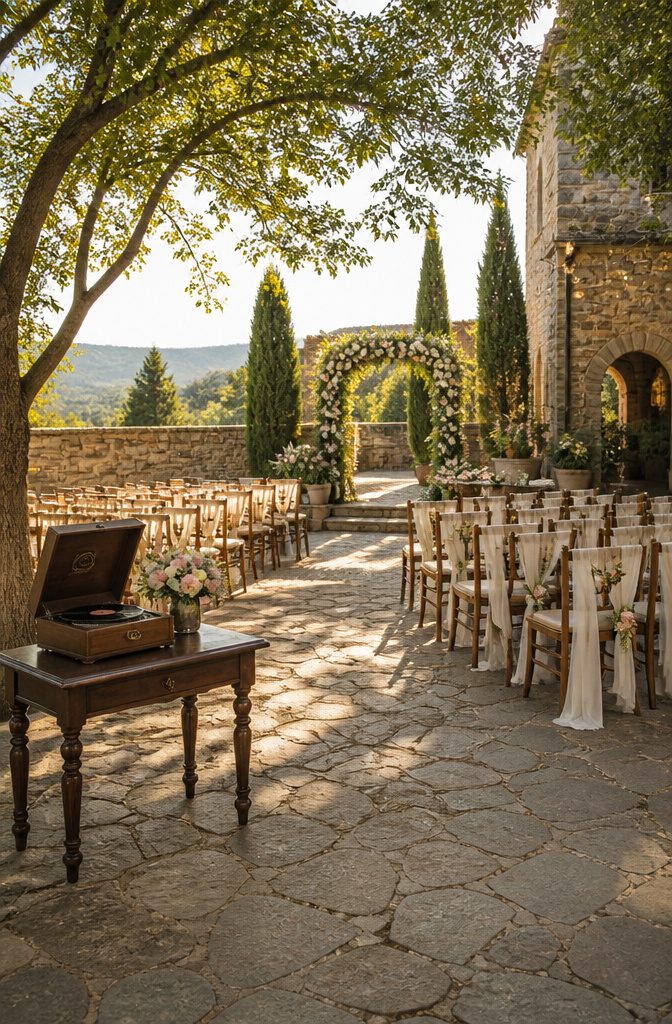
Prelude music runs from the moment the first guest arrives until the ceremony officially begins, usually 15 to 30 minutes of continuous sound. Three or four songs covers this window comfortably, with each track bleeding into the next so no awkward silence interrupts the room.
Instrumental pieces work best here, or at least songs soft enough to talk over. Guests are still catching up with relatives they have not seen in months, shuffling into rows, checking programs. Lyrics that demand attention fight against that energy; a solo piano or string arrangement lets the mood settle without forcing anyone to listen.
This stretch sets the tone before anyone walks down the aisle. Classical preludes, instrumental love ballads, even mellow acoustic covers all do the job. The goal is background that still matters: something guests notice enough to feel the occasion shift from ordinary Saturday to ceremony about to start, but not so loud they stop mid-sentence to hear it.


2. Parents’ Entrance Music
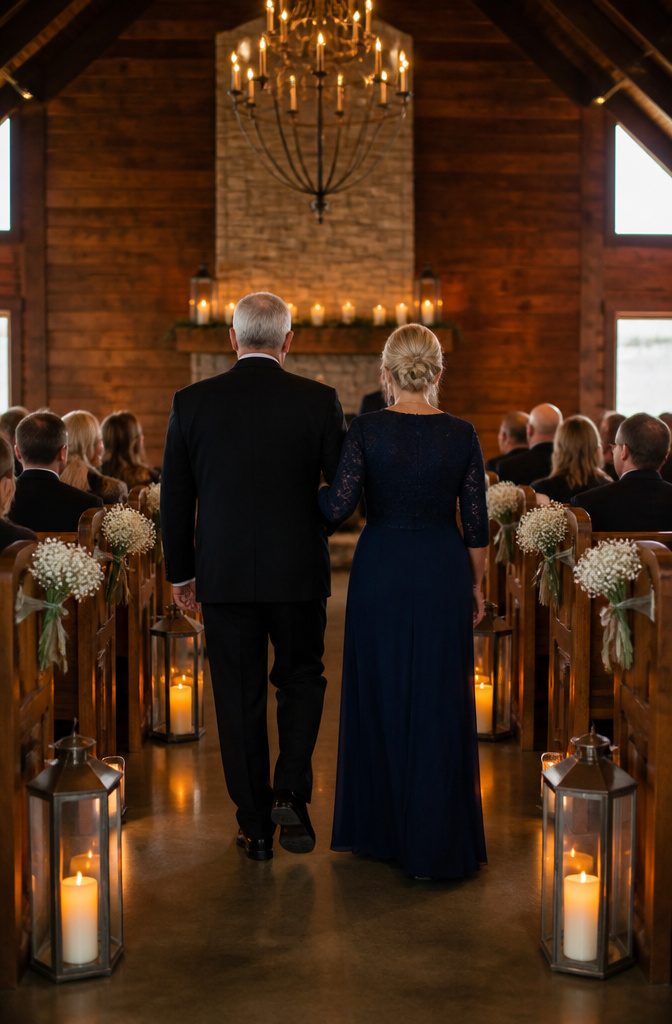
Most ceremonies give one song to each set of parents, which means two songs total for this moment. The groom’s parents usually enter first, followed by the bride’s parents, each with their own cue. I have seen couples skip this entirely and fold the parents into the wedding party entrance instead, which keeps the ceremony moving and trims the playlist by a track or two. If you do separate them, pick something with a slow to medium tempo that walks at the pace of an aisle, not a sprint. Classic ballads, acoustic pop, or whatever genre actually makes you feel something work better than a song chosen because it sounds "appropriate."


3. Wedding Party Entrance Music
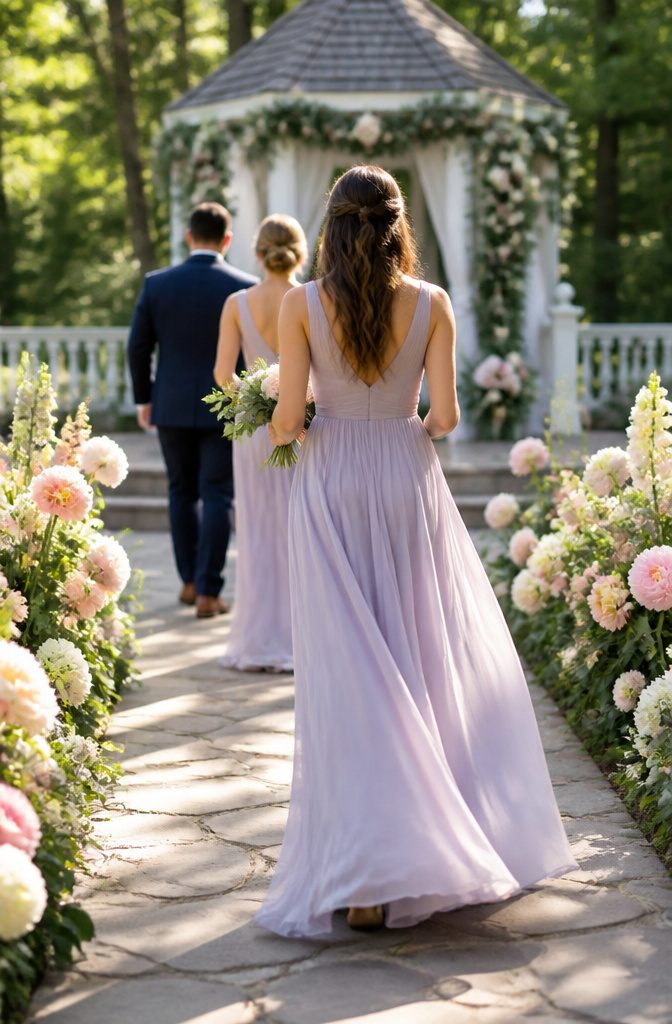
The wedding party entrance is the moment guests feel the ceremony shift from background waiting to something actually beginning. One song covers the whole group: bridesmaids, groomsmen, flower girls, ring bearers, anyone walking before the couple. That single track keeps the pace unified and signals to seated guests that the formal procession is underway.
Some couples let the parents’ processional music keep playing as the wedding party enters. Others switch to a different song to mark the new group. Either works, though a clean break tends to read clearer to guests who are not sure whether something has started.
The practical question is where that song ends. The wedding party song often continues straight into the bride’s entrance, or shifts into her separate track as the last attendant reaches the front. Timing that handoff with your musician or DJ matters more than picking the perfect cut, because a gap of even a few seconds of silence makes the room feel stalled.


4. Bride’s Entrance Music
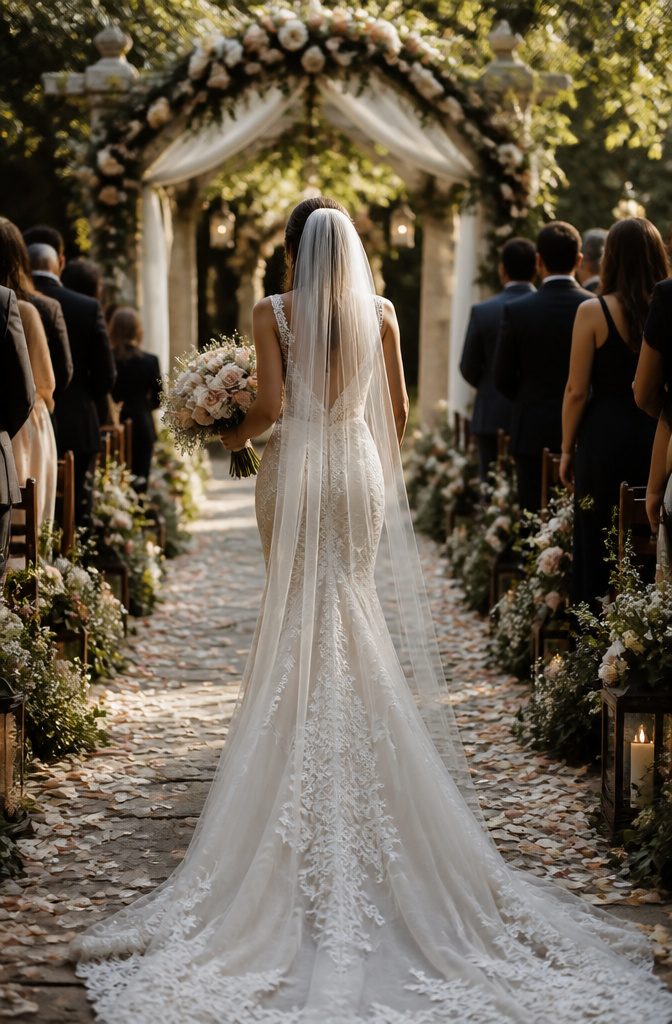
The bride’s entrance gets one song, and it is the one everyone remembers. Slow to medium tempos work best for walking, but the tempo matters less than the emotional pull. Classic ballads, chill indie-folk, soulful R&B, or acoustic pop all work if the song makes you feel something.
Two ways to handle it: use the same piece as the wedding party but shift it dramatically, louder or fuller, when the bride appears, or choose a completely separate song that stands alone. Pachelbel’s Canon still holds up for traditional ceremonies. Taylor Swift’s "Lover" has become the modern choice for couples who want something current and personal.
The song should be something that holds meaning for the couple, not just what sounds pretty in a playlist. Close your eyes and picture the walk. If it gets you emotional or excited, that is the one.


5. Couple’s Recessional Music
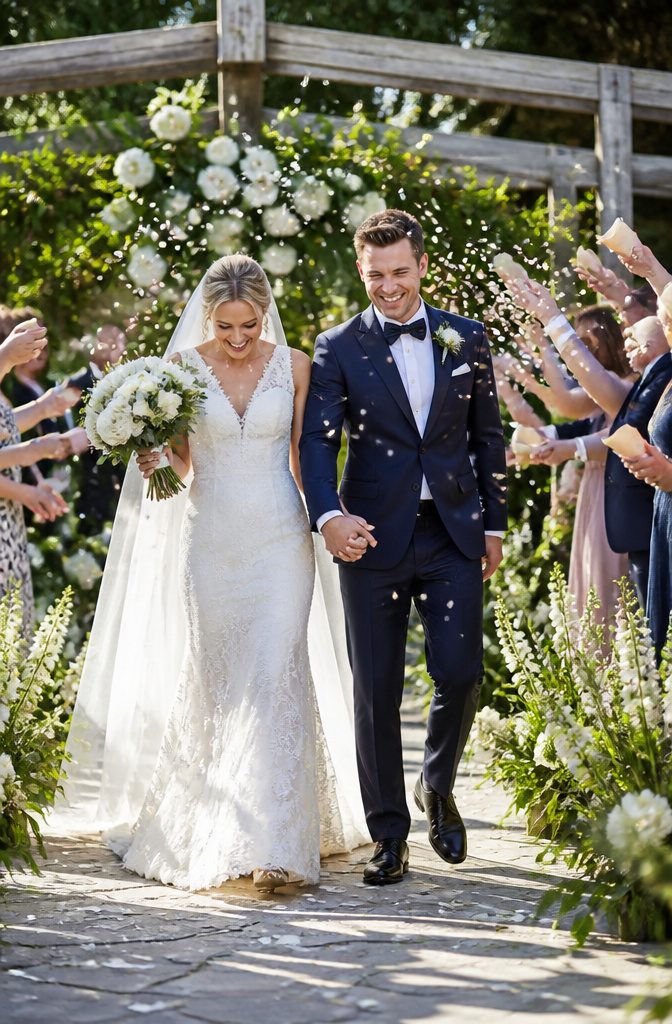
One song covers the couple’s recessional, and it needs to be the most joyful piece in the whole ceremony. The moment you are pronounced married, the mood shifts from solemn to celebratory, and the music has to drive that change. Most couples choose something upbeat and uplifting, a track that feels like a release of tension after the formal part is done.
The recessional song starts the instant you turn back up the aisle as a married couple, and it typically keeps playing while the wedding party follows you out. Your musicians or DJ will need to know whether to fade out or let it run to a natural end; the full wedding party exit can stretch the moment to two or three minutes, so a song with a strong opening and enough length works better than something that fizzles fast.


Full-screen image provided for each song.

6. Optional Ceremony Music
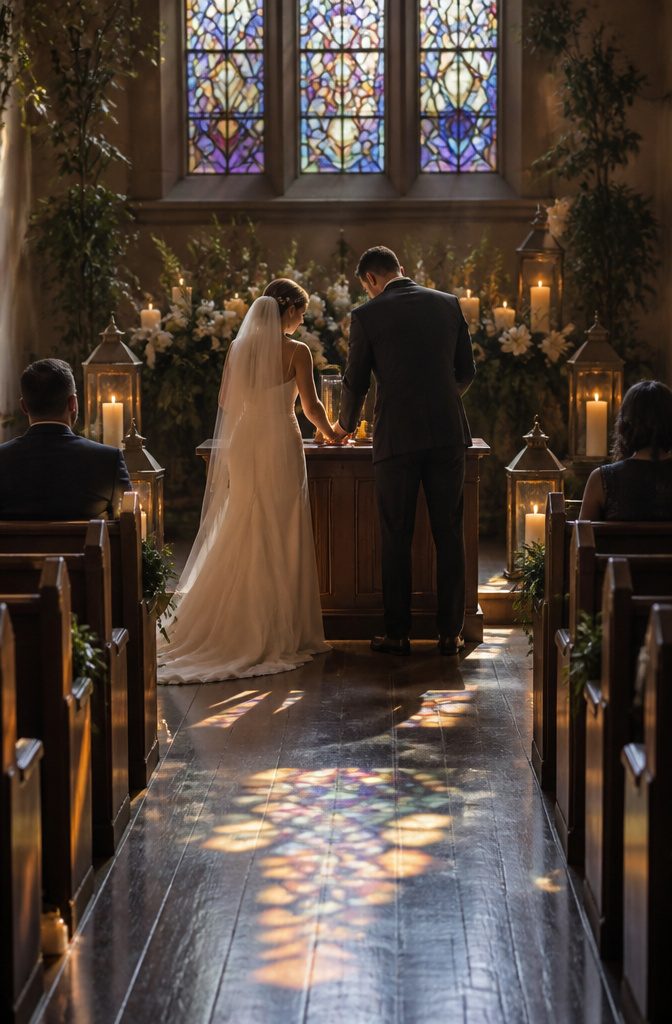
Not every ceremony needs music between the main entrances and the exit. Unity ceremonies, candle lighting, sand ceremonies, religious readings, and communion each get their own song only if you want one there. Silence is a valid choice, and in some cases the stronger one. A prayer spoken over quiet holds weight that background music can dilute.
If you do want accompaniment, light instrumental music underneath the ritual keeps the ceremony from feeling stalled while guests watch sand pour or candles light. A hymn during a religious reading works the same way, marking the moment without competing with the words. The groom walking down the aisle to his own song has become more common, though that counts as an additional processional rather than an optional interlude.
These additions are not universal. They add personalization when they mean something specific to you, and they add to your total song count only when included.


Top music selection suggestions for most wedding music categories!

How Ceremony Music Breaks Down
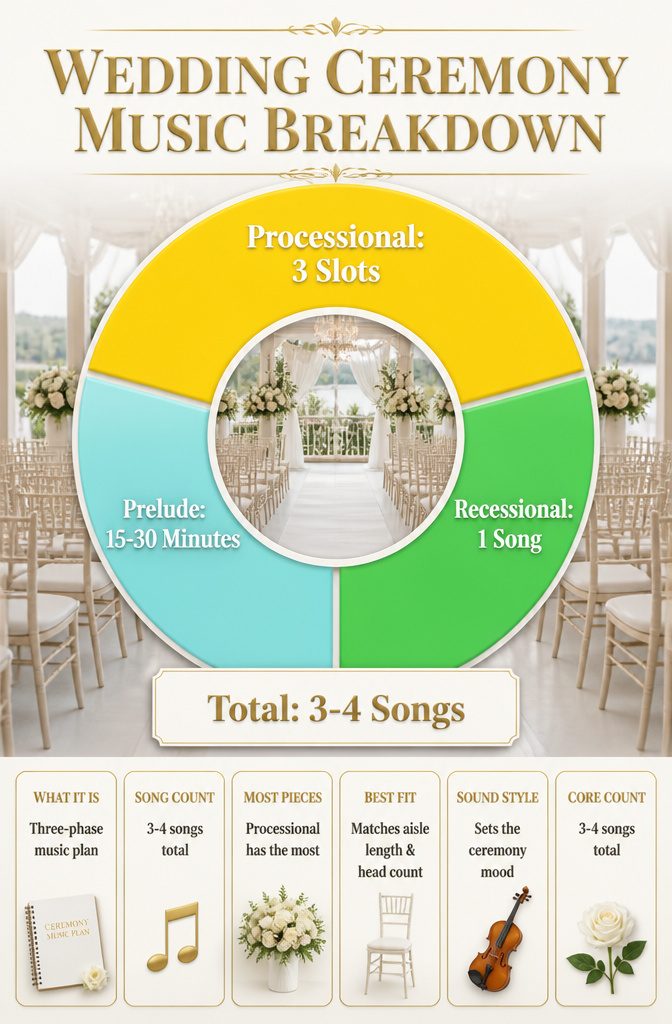
Wedding ceremony music splits into three clear phases, and the processional section holds the most individual pieces by far.
The prelude covers the 15 to 30 minutes before the ceremony starts, while guests find their seats. Mellow instrumental or chill vocal music works here, setting whether the room feels relaxed, thoughtful, or excited.
The processional itself breaks down further: one or two songs for family and bridal party entrance, depending on aisle length and head count, then one song for the couple’s grand entrance. That gives the processional a total of three possible slots, more than either other phase.
The recessional needs just one song, a single piece for the formal exit of family, wedding party, and newlyweds together.
Optional traditions during the ceremony can add background music, but the core count runs 3 to 4 songs total: 1 to 2 for the processional’s early walkers, 1 for the couple’s entrance, and 1 for the exit.


Song Suggestions by Ceremony Moment
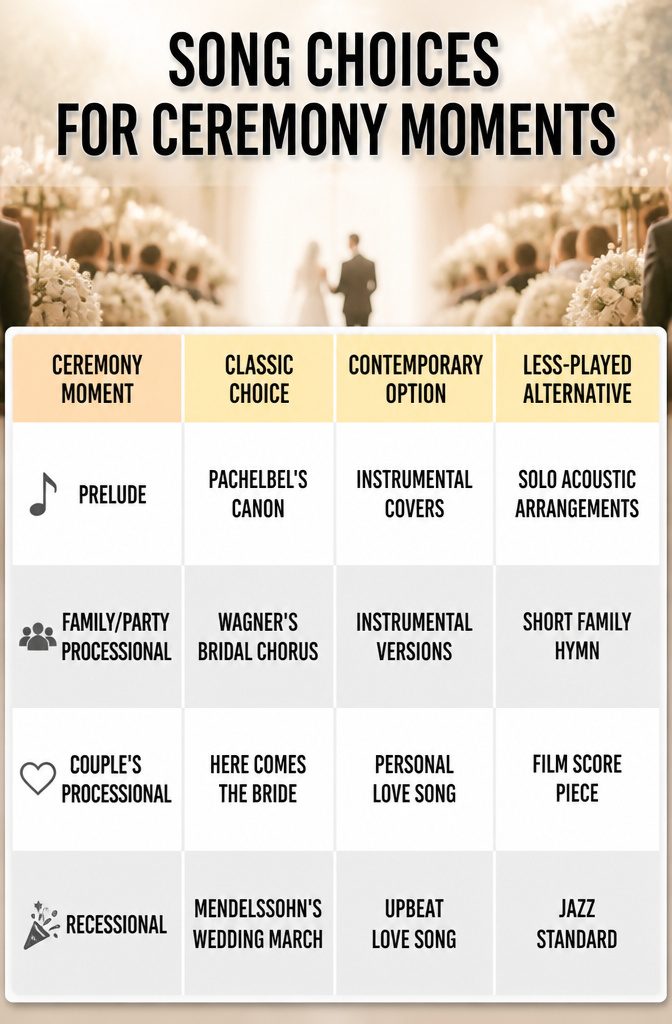
The ceremony breaks into three main parts needing music: the prelude, the processionals, and the recessional. Prelude music runs 15–30 minutes before the ceremony starts, signaling guests to find their seats. Processionals cover the formal entrance of family, the wedding party, and the couple. The recessional is the formal exit of everyone after the vows.
For a full ceremony, 3–4 songs usually cover it: 1–2 songs for family and bridal party entrance, depending on aisle length and number of people walking, 1 song for the couple’s grand entrance, and 1 song for the recessional.
| Ceremony Moment | Classic Choice | Contemporary Option | Less-Played Alternative |
|---|---|---|---|
| Prelude | Pachelbel’s Canon | Instrumental covers of love songs | Solo acoustic arrangements |
| Family/Party Processional | Wagner’s Bridal Chorus (adapted) | Instrumental versions of your first-dance song | A short hymn meaningful to your family |
| Couple’s Processional | Here Comes the Bride | A love song with personal lyrics | A film score piece you both love |
| Recessional | Mendelssohn’s Wedding March | Upbeat love song with strong opening | A jazz standard with energy |
Optional moments can include music during a unity ceremony or religious readings, and it’s becoming more common for grooms to walk down the aisle to their own song.

Why Music Sets the Tone
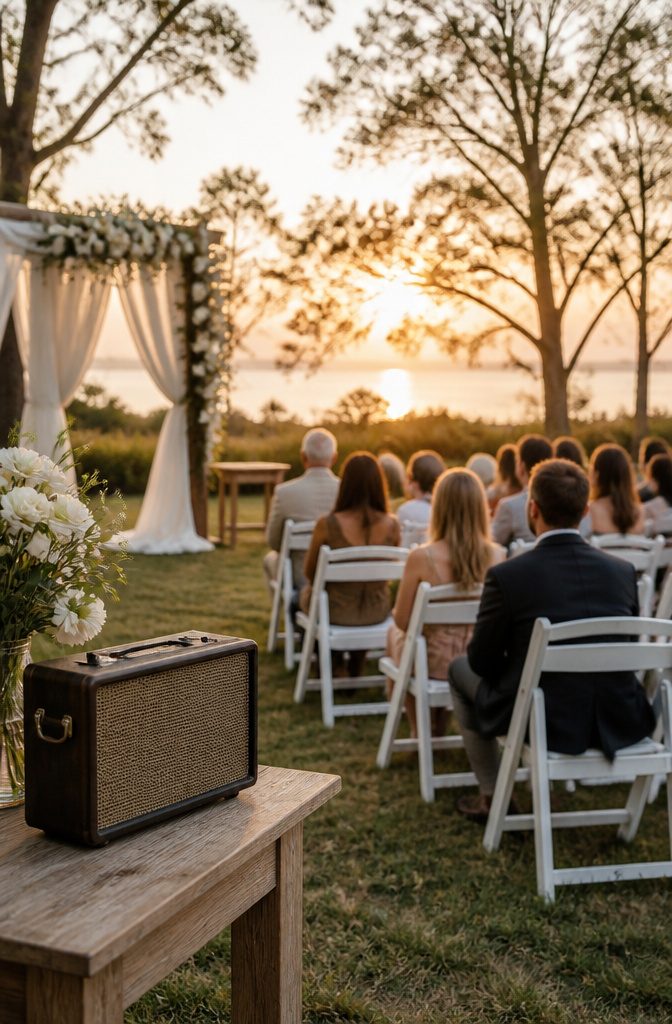
Music at a wedding ceremony does what no officiant’s script can: it tells guests how to feel before anyone speaks. Mellow instrumental tracks, or chill songs with vocals, pull people into the right headspace as they settle into their seats. Relaxed, thoughtful, excited, dreamy; the mood you choose becomes the room’s mood.
I watched this land wrong at a friend’s outdoor ceremony last spring. The couple wanted light and airy, but their prelude playlist leaned too heavy on solo piano with no vocals. By the time the processional started, the energy had flattened into something closer to a waiting room than a wedding. Guests were polite, but no one leaned forward. The moment the bride appeared, the shift to her entrance song felt abrupt, almost like two different events stitched together.
The right song choice makes the weight of a moment felt without a word. Soft instrumental accompaniment under a sand ceremony or a knot-tying ritual keeps the flow alive and combats the awkward silence that can swallow a symbolic gesture. Light background music during a prayer or communion gives guests permission to stay present rather than shifting in their seats. Skip it, and the ceremony still works; add it with intention, and the whole thing breathes.


Making the Music Yours

The songs that end up in a ceremony matter more than the count, and the gap between what moves one partner and what embarrasses the other is where most couples stall. I watched a friend spend three weeks arguing over whether a punk song she loved in college belonged in a church aisle; her fiancé wanted strings. They landed on a stripped-down acoustic cover played by a hired guitarist, and the compromise turned out better than either original choice.
Personal meaning has to survive the room it plays in. A song that sounds intimate on headphones can feel exposed or silly echoing off marble floors or carrying across an open field. Test the actual sound in the actual space, or at least in a similar one, before you commit.
Disagreements usually split on genre or on how much sentiment the moment can hold. One partner wants irony, the other wants tears. My rule after sitting through a lot of ceremonies: the entrance and exit carry the crowd’s energy, so they need broad appeal, but the moments in between belong to the couple. Slot your riskiest, most private choice where only the two of you are fully in focus, like a ring exchange or a unity ritual. That protects the feeling without asking eighty people to share it.
If you are deadlocked, each partner picks one untouchable song and defers on the rest. The ceremony is short; you do not need to prove the full history of the relationship in fifteen minutes.


Frequently Asked Questions
How many songs do you need for your wedding ceremony?
Most full ceremonies need 3 to 4 songs total. That covers 1 to 2 songs for family and bridal party entrance, 1 song for the couple’s entrance, and 1 song for the recessional. Prelude music before the ceremony runs another 15 to 30 minutes but flows continuously rather than as separate tracks.