
The right wedding photographer for you depends on how well their backup plans, delivery timelines, and working style match your actual wedding day, not just how beautiful their portfolio looks.
Most couples discover the hard way that a stunning Instagram grid hides whether they will see 200 or 400 final images, or whether a memory card failure mid-ceremony wipes out half the ceremony.
A photographer who shoots forty weddings annually has handled equipment failures and timeline collapses recently enough that adapting costs them nothing; one who shoots two a year may still be learning those reflexes.
Ask about dual memory card recording and specific illness backups before you fall in love with any highlight reel, because the thirty-second date check should come first, and the full gallery review should come second.
1. Availability on Your Wedding Date
"Are you available for my wedding date?" should be the first sentence out of your mouth, because nothing else about a photographer matters if they are already booked.
Most photographers require a retainer fee to lock in the date, and that payment typically comes due when you sign the contract, not later.
Ask exactly how much the retainer is and whether it is a flat dollar amount or a percentage of the total package price.
If your first-choice photographer is unavailable, ask whether they have an associate shooter they trust with a similar style, or if they can recommend someone whose work they actually follow.
I have seen couples fall in love with a portfolio, spend an hour on style questions, and only then discover the photographer was booked eleven months out. The date check takes thirty seconds and saves you from that particular heartbreak.
2. Years Shooting Weddings and How Many Per Year
A photographer who shoots two weddings a year for a decade carries a different kind of readiness than one who shoots forty. Ask how long they have been photographing weddings, then ask how many they shoot annually.
The first number tells you whether they have weathered a ceremony running late, a memory card failing mid-vow, or rain forcing every portrait indoors. The second tells you whether those lessons stay sharp.
Someone newer to the field but working a full season may have seen more curveballs in two years than a hobbyist saw in eight. The combination matters because wedding photography is situational, not theoretical.
Lighting changes, family dynamics flare, timelines collapse. You want the person who has handled it recently and repeatedly enough that adapting costs them nothing in the moment.
If they have shot weddings similar to yours in size, setting, or tradition, that specificity stacks on top of the raw count.
Indoor ceremonies with windowless ballrooms demand different instincts than open-air vineyards at sunset. Neither is harder, but they are not the same reflex.
3. Photography Style and How They Work a Room
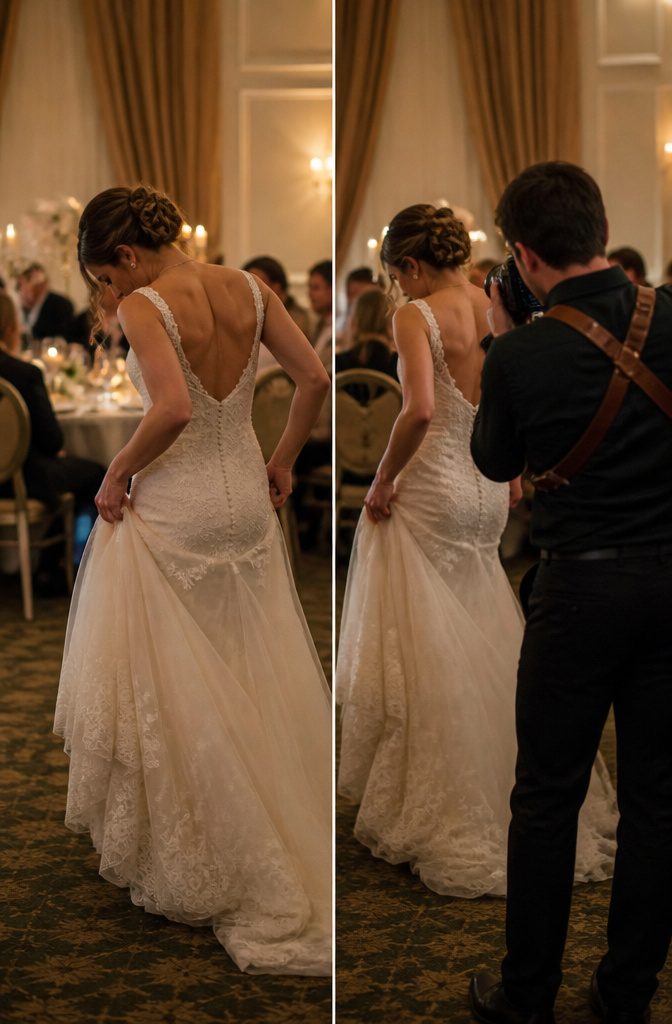
The labels documentary, editorial, and posed describe how a photographer moves through your space, not just how the final frames look. A documentary photographer works as a fly on the wall, capturing moments without interrupting them.
An editorial photographer steps in to adjust minute details: your sleeve, the light on your face, where guests stand. Most photographers fall somewhere between, and their balance of structure versus candid moments is what shapes how your day actually feels.
Ask how they interact with guests and how much posing they typically do.
If candid moments matter deeply to you, find out specifically how they capture those; a photographer who prefers portraits may still deliver beautiful candids, but you want to know their instinct before you hire them.
The gap most couples miss is editing style beyond the portfolio.
A curated website shows ten perfect minutes; a full gallery from start to finish, ideally spanning bright sun, rain, indoor ceremony, and low-light reception, shows consistency across the whole arc.
Ask to see one. Their post-production approach, their handling of different conditions, tells you what your delivered photos will actually look like, not what the highlights promise.
4. Full Wedding Galleries, Not Just Highlights
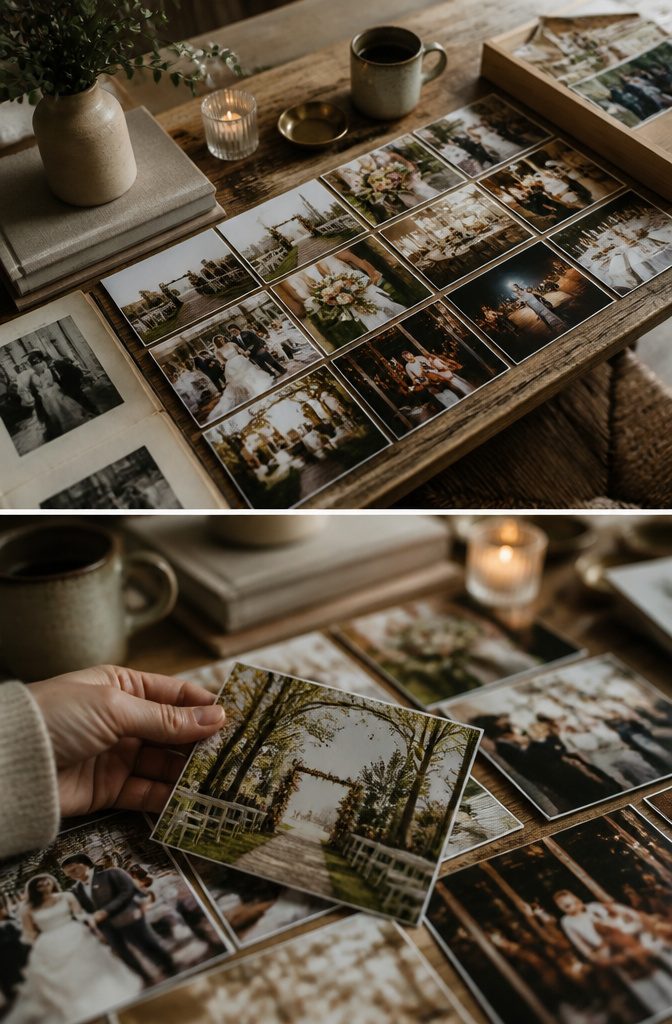
Instagram grids and portfolio websites are highlight reels, not the full story. A photographer can post the ten best minutes from a twelve-hour day and leave you guessing what happened in the other eleven hours and fifty.
That gap matters when your own wedding will include harsh midday sun, a dimly lit reception hall, or a rain-soaked ceremony.
Ask to see a complete gallery from a single wedding, start to finish, shot in conditions like yours.
Bright sun, indoor ceremony, low-light dancing, the awkward transitional moments between events. Scroll through the whole thing and look for consistency: does the editing style hold, or does it drift?
Are the candids as strong as the posed shots? Do the reception photos look as intentional as the golden-hour portraits?
Styled shoots and workshop images have no deadline pressure, no uncle stepping into the aisle, no DJ who forgot to turn down the uplighting.
Only a full gallery from a real wedding shows how a photographer handles what they are actually given.
The lighting will not cooperate at every turn. The question is whether they still deliver work you want to live with when it does not.
5. Backup Plan for Illness or Equipment Failure
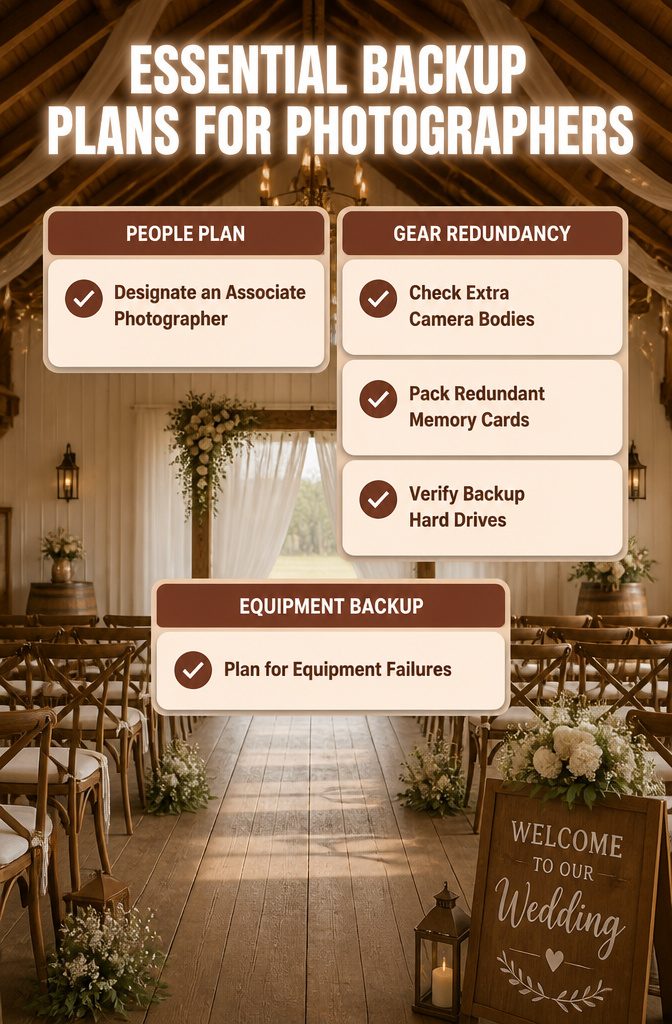
A photographer’s backup plan for illness is the question that separates weekend hobbyists from people who actually do this for a living.
Ask them directly: what happens if you get sick? The answer should come fast and name a specific person, not a vague "I know people."
Most working pros keep a short list of associate shooters they trust, experienced wedding photographers who can step in and run the day. Your original photographer still edits the images; the associate handles the shooting.
Gear redundancy matters just as much.
Dual memory card slots in the camera body mean every shot writes to two cards simultaneously. If one corrupts, the other holds the image.
After the wedding, files should live on multiple hard drives plus cloud storage before anyone wipes a card. I only erase mine after delivery is complete.
Equipment backup is simpler to verify. Ask what they carry beyond the camera in hand: extra bodies, lenses, batteries, flash units.
The number itself is less important than the fact that they have thought through every failure point and packed for it. Someone who shrugs off this question has probably never had a memory card fail at a ceremony.
6. Insurance Coverage They Carry
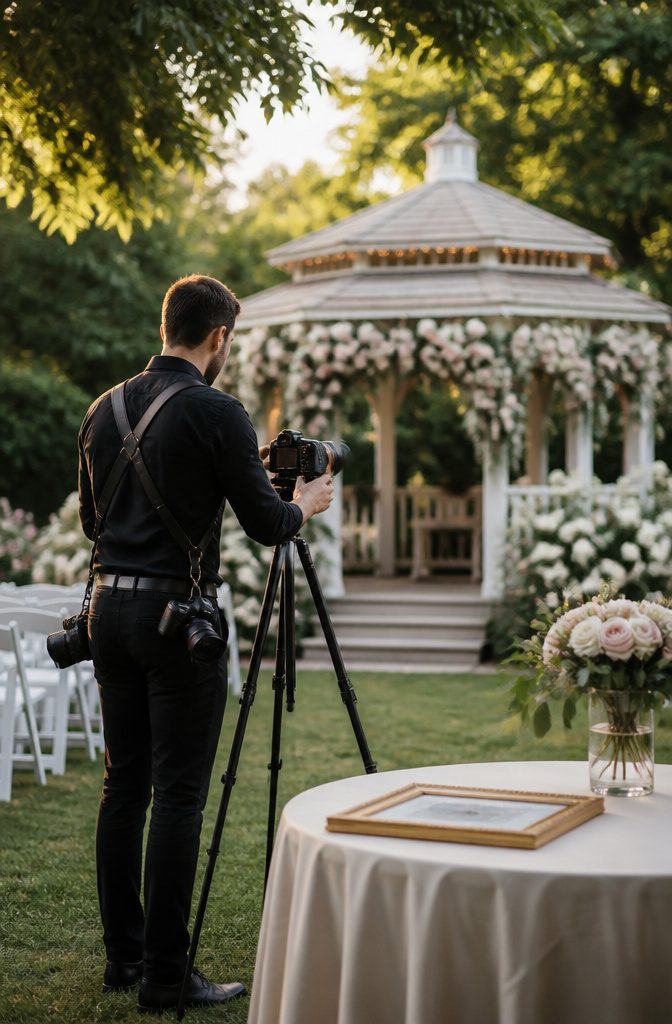
Professional wedding photographers carry liability insurance as a standard business practice, and the question to put directly to anyone you’re considering is "Do you have insurance?" Coverage protects against the obvious risks: a guest trips over a light stand, equipment damages venue property, or worse.
Some policies extend to assistants, which matters if a second shooter is part of your package.
A photographer who hesitates on this question, or treats it as an insult, is waving a flag you should not ignore. The sources I read split on whether you even need to ask.
One camp says true professionals carry it without prompting; another lists it among the logistics to confirm in writing. I land with the second group.
Ask anyway, then verify the answer appears in the contract. Venues increasingly require proof of insurance from every vendor, and a photographer caught without it on your wedding day can be turned away at the door.
The cost of their coverage is baked into their rates, not an extra line item for you. What you pay for is the peace of mind that someone else’s mistake does not become your lawsuit or your debt.
7. Engagement Photos in the Package
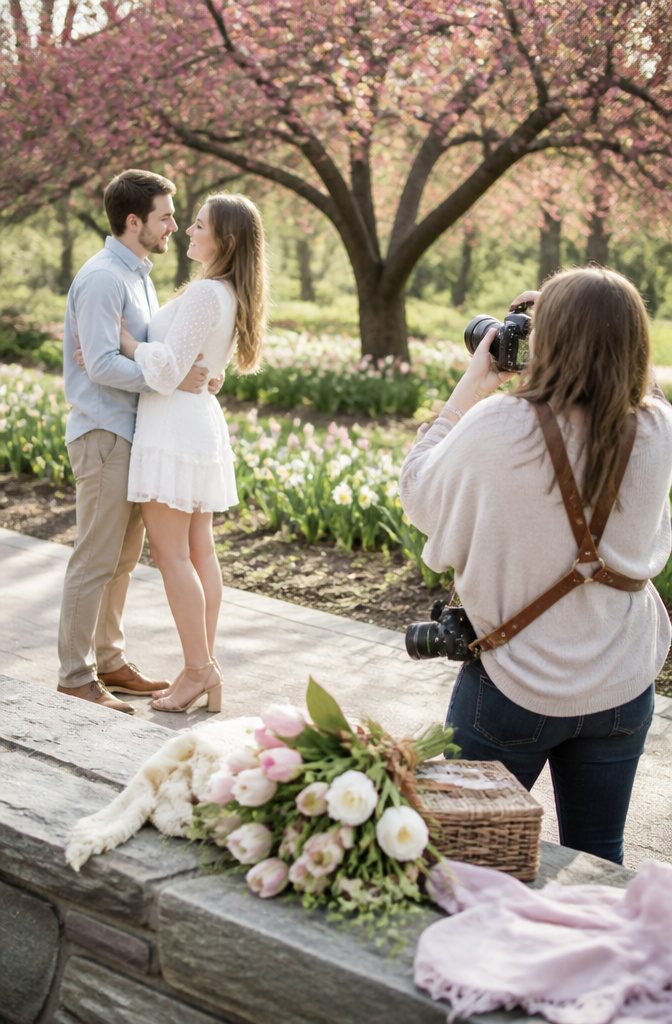
Some photographers fold engagement sessions into the package, and others treat them as an add-on you have to ask about. If having those photos matters to you, this is worth asking upfront, not assuming.
The session does double duty: you get images for save-the-dates and invitations, and you spend an hour or two learning how your photographer gives direction before the wedding day itself.
That familiarity shows up in the final gallery. Couples who skip it and meet their photographer for the first time at the getting-ready photos often spend the opening shots adjusting to a stranger’s voice and style.
If the photographer does not include engagement photos standard, ask what a standalone session costs and whether booking it later locks in the same rate.
Some vendors bundle it at a discount when you commit early; others price it the same either way.
8. Delivery Timeline for Final Photos

Final galleries can take up to around ten weeks to be delivered, so the wait is real and you want to know exactly what you’re signing up for before you book.
The first thing to pin down is the contract language itself: how long until we get our final gallery?
Some photographers promise forty days, others budget six to ten weeks, and a few offer a rush upgrade to two to four weeks for an extra fee. Ask which bucket yours falls into, and get it in writing.
Sneak peeks matter almost as much. A handful of preview shots within forty-eight hours changes the whole post-wedding stretch, especially if you want something to share while the day is still fresh or to include in thank-you cards.
Not every photographer includes this automatically, so ask whether a preview is guaranteed and what the timeline looks like. If the answer is vague, that tells you something about how they batch their workflow.
The gap between photographers who deliver in under six weeks and those who stretch toward ten is worth weighing against everything else you liked about them.
A slower turnaround is not automatically a red flag, but it needs to be a choice you made, not a surprise you discover after the deposit is paid.
9. Number of Final Images Delivered
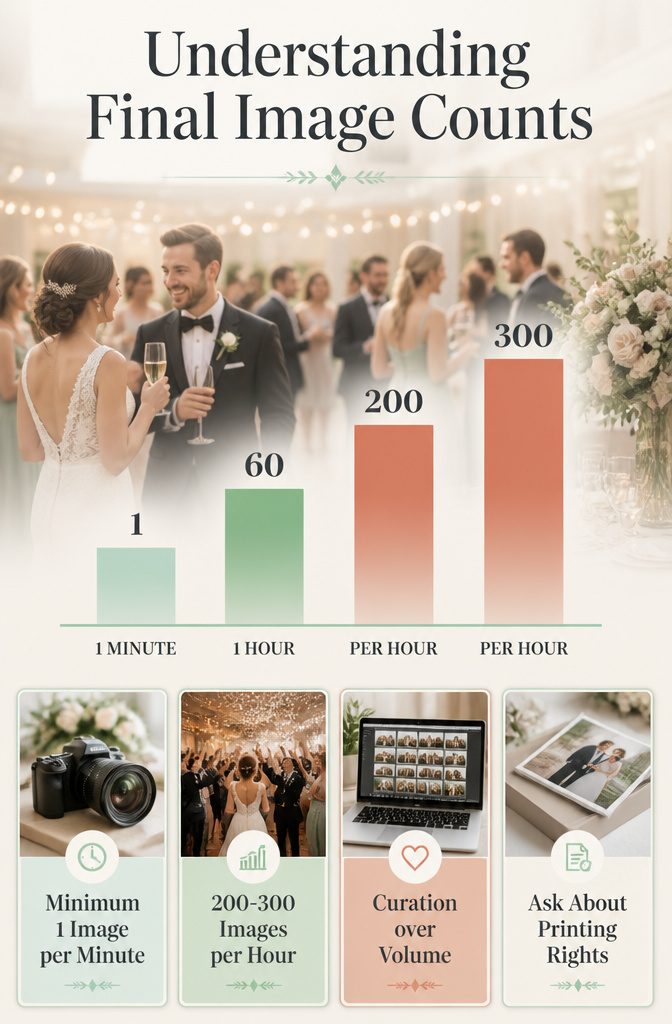
A typical photographer delivers a minimum of one image per minute of coverage, which usually works out to somewhere between 200 and 300 photographs taken per hour.
The final gallery you receive will be smaller than that raw count. Curation matters more than volume; your photographer is editing for emotional weight, not padding the folder with six nearly identical frames of the same hug.
What determines the count is partly the rhythm of your day itself.
A ceremony with long still moments yields fewer shots than a crowded dance floor or a chaotic getting-ready hour. Partly it is your photographer’s judgment about which frames carry the story and which merely repeat it.
You also need to ask directly about printing rights. Some budget packages only hand over watermarked web-resolution files and keep the full-resolution versions behind a paywall, forcing you to buy prints through the photographer at whatever markup they set.
Higher-tier packages more often include full printing rights by default. Ask before you sign, not after you have already paid.
10. Extra Hours and Overtime Charges
Most photographers bill extra coverage at an hourly rate that depends on how much additional time you need, so the exact figure should land in your contract before the day arrives.
The gap in what most pricing pages show is real: they list package hours and maybe a line about "overage available," but they rarely print the actual overtime number.
That leaves couples guessing at a moment when the dance floor is still packed and the photographer is already packing up.
An 8-to-10-hour day is the standard sweet spot for full coverage.
Drop to six hours and you risk losing either the getting-ready shots or the late-night dancing; add hours and the bill climbs in increments you should know in advance.
Some photographers now offer full-day or full-weekend flat rates specifically to kill the overtime math, which removes the stress of a timeline slipping but costs more upfront.
The judgment call is which structure matches your actual wedding. A strict timeline with a hard venue exit favors the hourly model; a relaxed day with unpredictable toasts and an after-party leans toward the flat rate.
Either way, ask for the per-hour overtime charge in writing before you sign, because the moment your reception runs long is the worst time to negotiate a rate you have never seen.
11. Vendor Recommendations and Working Relationships
A photographer who can name three DJs they have actually worked with is telling you something a hired gun cannot.
That network is your insurance against the day-of chaos that happens when vendors meet for the first time in your receiving line.
I have watched timelines collapse because the photographer and videographer were blocking each other’s shots, each blaming the other for the cramped ceremony space.
Ask directly: who else have you shot alongside?
Not who they follow on Instagram, but who they have called when a couple needed a last-minute replacement officiant. The answer reveals how they operate in the ecosystem.
A photographer embedded in a local scene knows which coordinator runs early and which florist needs an extra ten minutes before the first look. That knowledge saves you the cost of a day-of planner.
The involvement matters too.
Some photographers vanish after the contract is signed and reappear with a camera. Others, like the ones who schedule a full timeline review three months out, are functioning as informal planners.
You want the second kind, especially if your budget does not stretch to a dedicated coordinator. The review itself is a signal: it means they are thinking about flow, not just frames.
What you are really buying is not just photos.
It is the experience of a day that does not require you to troubleshoot vendor friction. Ask how they handle that, and listen for specifics rather than reassurance.
How Photographers Handle Backup and File Safety
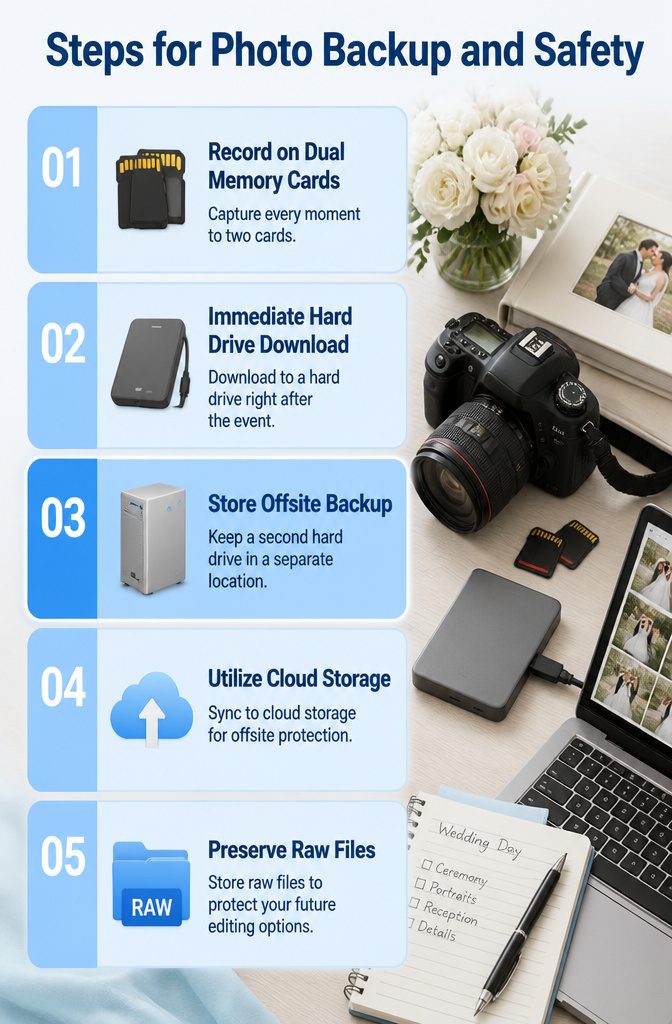
Dual memory card recording is the first thing to ask about, because it means every shot writes to two cards simultaneously while you are still walking down the aisle.
A single-card camera loses everything if that card corrupts, and corruption happens more often than couples realize. The photographer should also be downloading to a hard drive immediately after the event, not waiting until morning or the next booking.
Offsite storage matters just as much as the local copy. One hard drive on a desk still leaves your photos in one physical location; fire, theft, or a dropped drive takes the whole wedding with it.
Cloud backup plus a second hard drive gets you to three locations, which is where most seasoned photographers settle. Some keep the original memory cards untouched until delivery is complete, which adds a fourth layer but extends their gear costs.
Raw file preservation is worth a direct question.
A photographer who converts everything to JPEG before backup is saving space, not your options. Those raw files hold the editing latitude that saves an overexposed first kiss or a shadowed ceremony spot.
Ask how long raw files stay available after delivery, too. Six months, two years, indefinitely: the answer tells you whether they are treating your archive as a finished product or a long-term responsibility.
The workflow itself should sound boring.
Immediate download, duplicate drives, cloud sync running in the background, cards wiped only after delivery. If the explanation feels vague or improvised, that is your signal to keep looking.
Reading a Full Gallery for Consistency
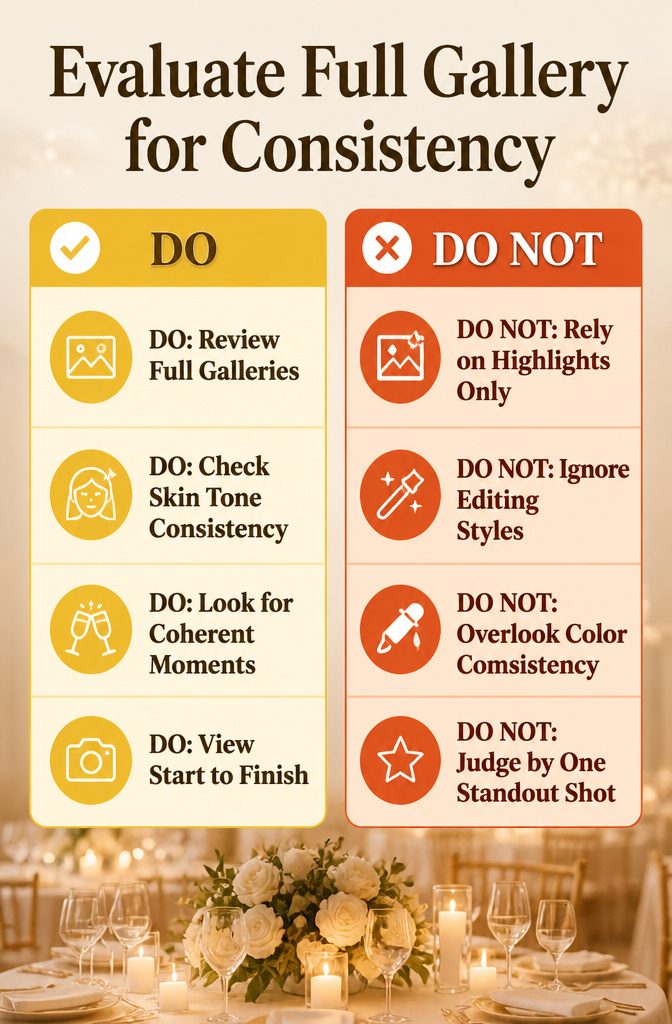
A photographer’s Instagram feed is a highlight reel, and even a polished website can hide behind its ten best shots.
The real test is a full gallery from start to finish, shot in conditions that match yours: bright sun, dim reception halls, or that unpredictable window between them.
When I scroll through a complete gallery, I look for the same skin tone in the first look and the last dance, not a face that looks porcelain at noon and orange by candlelight.
Heavy editing often shows up as identical warmth across every photo, or skies that turned the same dusty pink in two different venues.
A lighter hand leaves the imperfections that were actually there: the shadow your venue cast, the real color of the walls.
Red flags stack up fast when a photographer resists sharing more than a curated set.
One stunning portrait on a feed means they found one good minute; fifty coherent frames from a rainy ceremony mean they kept working when the light went bad.
Ask for a recent wedding with a timeline and setting close to yours, then look past the hero shots to the in-between moments: the cocktail hour, the toasts, the dance floor after the sun set.
That is where you will see what you are actually hiring.
Style Labels and What They Actually Mean
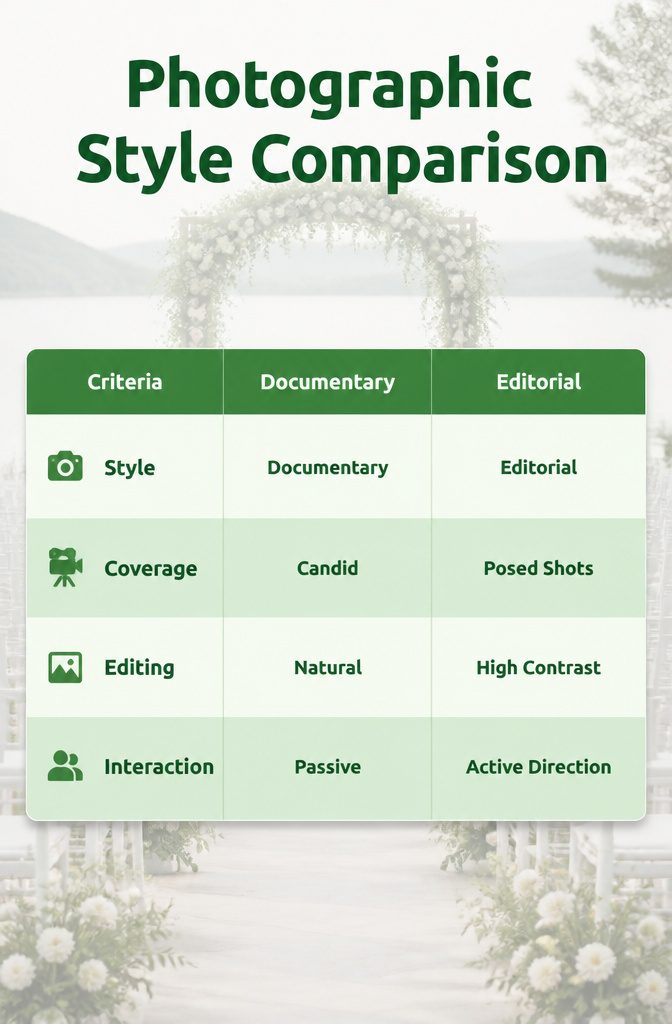
A photographer who calls their work "documentary" or "photojournalistic" should spend most of the day barely noticeable, catching what happens rather than making it happen.
The difference between those labels is smaller than most couples think, but the difference between claiming the label and actually working that way is enormous.
Ask how they handle the ceremony itself: do they move during vows, or stay fixed at the back? A true documentary shooter has a position for that.
"Editorial" and "fine art" are where the staging happens. Editorial means minute adjustments, a hand on a shoulder to turn someone toward the window, maybe a full rearrangement of the sweetheart table for the shot.
Fine art pushes further into controlled lighting and posed composition. The question that separates real editorial work from a borrowed tag is whether they bring an assistant or second shooter specifically to hold reflectors or move furniture during prep.
"Traditional" is the only label that means what it always did: formal groupings, checked lists, everyone looking at the camera.
Most photographers now blend two or three of these modes across the day, and that hybrid approach is fine if you know where the switch happens.
Ask when they shift from candid coverage into guided portraits, and whether you can set the boundary yourself. The photographer who cannot name that moment is probably selling you a style label they do not actually practice.
Experience with Different Couples and Body Types
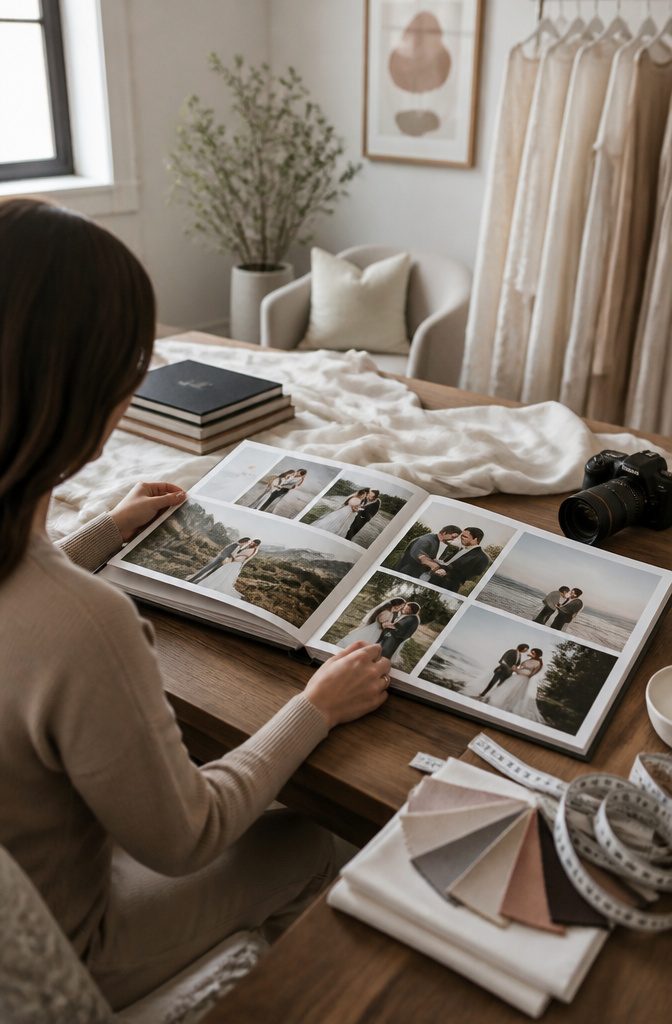
A photographer’s portfolio can look like a fashion spread and still leave you wondering whether they know what to do with your body, your height difference, your partner’s build.
The wedding industry still struggles with this. Many photographers have shot diverse body types but do not show that work in their marketing, which means the couple doing the looking has to ask directly.
Ask to see examples of couples with your body shape, your height dynamic, your physical proportions.
Not a token image buried in a blog post, but full galleries where people who look like you are posed in ways that flatter them rather than squeezed into a one-size-fits-all stance.
The right photographer adjusts angles, lighting, and posing to make each person comfortable and seen, not copied from a standard template.
Bonus points if they send a pre-wedding questionnaire about body comfort with posing; that kind of preparation shows they have thought about what it actually takes to photograph real people rather than idealized ones.
Frequently Asked Questions
what to ask wedding photographer about experience?
Ask how many years they have shot weddings and how many they shoot per year.
Someone who photographs forty weddings annually has sharper reflexes for timeline collapses and bad lighting than someone who shoots two, even if both have been in business for a decade.
The combination of total years and recent volume matters more than either number alone.
what to ask wedding photographer about backup plan if they get sick?
Ask what happens if they get sick and listen for a specific name, not a vague network.
Working pros keep a short list of associate shooters who can step in and run the day; your original photographer still edits the images. If the answer sounds improvised, that is a signal to keep looking.
what to ask wedding photographer about delivery timeline?
Ask how long until you receive the final gallery and get it in writing.
Standard turnaround runs six to ten weeks, though some offer a rush upgrade to two to four weeks for an extra fee. Ask separately whether a sneak peek within forty-eight hours is guaranteed, since that changes the whole post-wedding stretch.
what to ask wedding photographer about insurance?
Ask directly whether they carry liability insurance and verify the answer appears in the contract.
Venues increasingly require proof of coverage from every vendor, and a photographer without it can be turned away at the door. The cost is already baked into their rates, not an extra line item.
what to ask wedding photographer about seeing full galleries?
Ask to see a complete gallery from a single wedding, start to finish, shot in conditions like yours.
Instagram grids and portfolio sites are highlight reels; only a full gallery shows whether the editing holds, whether candids match posed shots, and how they handle bad light or rain.
Styled shoots have no deadline pressure and no uncle stepping into the aisle, so they do not count.