
A typical wedding band holds 3 to 10 grams of gold, though most fall between 3.4 and 5.8 grams. The catch is that two rings stamped with the same karat can carry meaningfully different amounts of actual gold, since gram weight rarely appears on the price tag and the alloy mixed in for durability counts toward that total too. When I compare listings, I always check whether the seller lists gram weight; without it, the karat stamp alone tells only part of the story.
1. How Much Gold Is in a Wedding Band
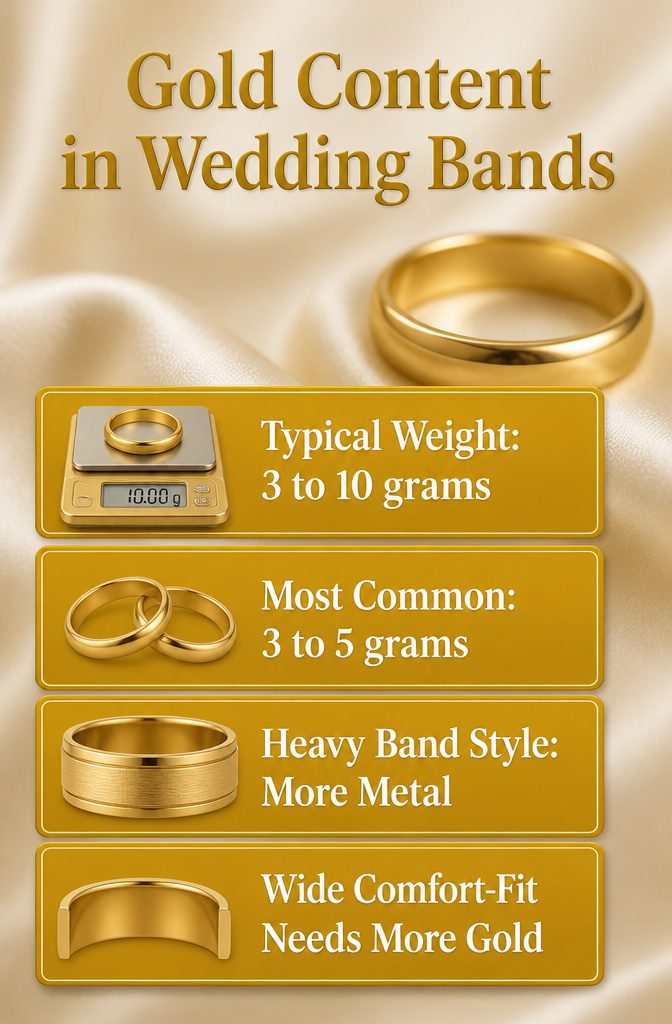
A typical wedding band contains 3 to 10 grams of gold, with most standard bands falling between 3.4 and 5.8 grams. For engagement and wedding rings together, the narrower range of 3 to 5 grams is more common, since finger size and design details pull the weight in either direction.
That spread matters when you are weighing a ring against its price tag. A 10-gram band carries roughly twice the raw metal of a 5-gram one, yet both might list for similar amounts once craftsmanship and retail markup enter the equation. The difference only shows up later, if you ever sell or melt the piece for its gold content.
Style is what pushes a band toward the heavy or light end. A wide, flat comfort-fit band needs more metal than a slim half-round profile, and intricate carved patterns or milgrain edges add grams that do not always read as bulk on the finger. When I compare listings, I look past the karat stamp and check whether the seller lists gram weight; without it, two 14-karat bands can hold meaningfully different amounts of actual gold.
2. Weight Range of Gold in Wedding Bands
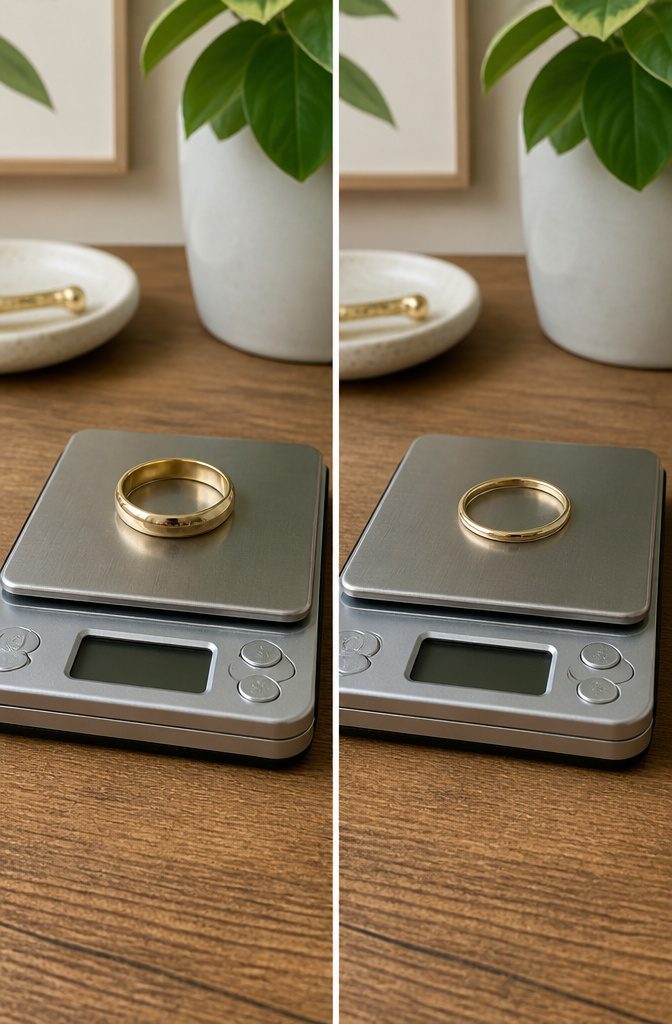
A typical wedding band lands somewhere between 3 and 5.8 grams, though where yours falls depends on more than ring size alone. Width and design details shift that number significantly. A slim, delicate band for a smaller finger sits at the lighter end, around 3.4 grams. Men’s bands and wider styles run heavier, pushing toward that 5.8 gram mark or beyond.
What the scale shows you is total ring weight, not pure gold content. The alloyed metals mixed in for durability count toward that gram total too. A 14k band, for instance, carries roughly 58% actual gold by weight. So a 4 gram 14k ring holds closer to 2.3 grams of pure gold, not the full 4. That distinction matters once you start calculating value from weight alone.
Comfort-fit bands with thicker walls also add grams without adding visible width. I learned to ask jewelers for both total weight and karat before doing any math on scrap or resale value. The number on the scale only starts the equation.
3. How Gold Purity Affects Value
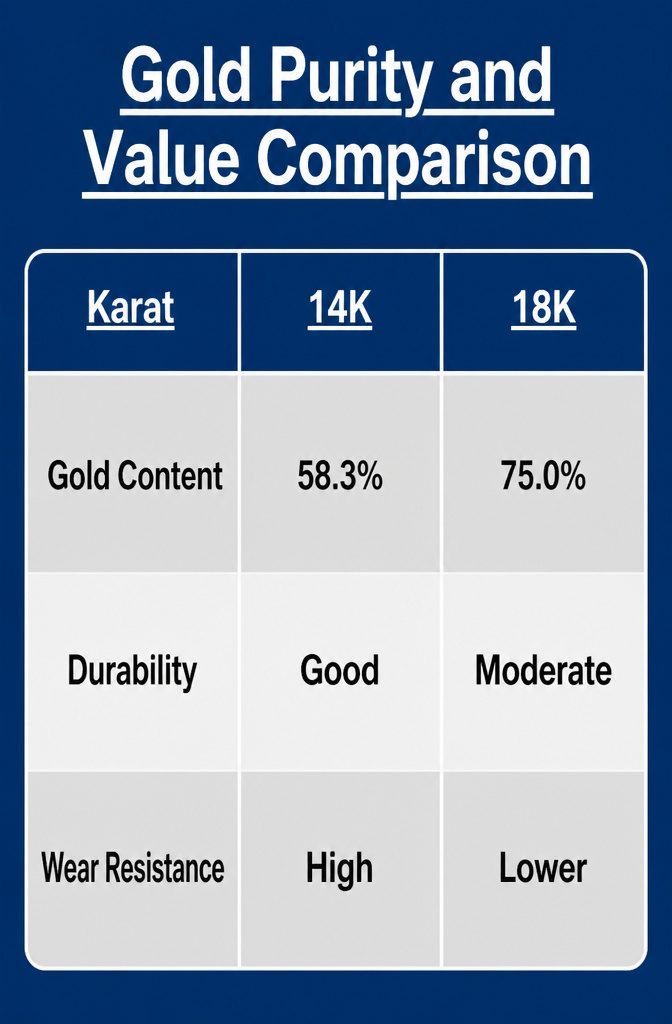
Karat is a fraction out of 24 parts, so 10k gold carries about 42% actual gold, 14k about 58%, and 18k about 75%. The rest is alloy, mixed in to keep the ring from bending or scratching the way pure 24k gold would. I learned this the hard way when I first assumed higher karat always meant "better" and nearly ordered an 18k band for my partner, who works with their hands daily. The jeweler pointed out that 18k is softer and will show wear faster, while 14k holds up to daily abuse without looking battered. Most American wedding bands land at 14k or 18k for exactly this balance: enough gold to matter for value and color, enough alloy to survive decades of dishwashing, gym equipment, and nervous fidgeting. 10k exists and costs less, but the lower gold content means less resale weight and a paler yellow that some couples find too far from the look they pictured.
18 karat is equal to 75.0% gold and is considered to be the luxury end of fine jewelry. 14 karat is equivalent to 58.3% gold and strikes a good balance between beauty and affordability.
That split matters directly for how much gold your ring actually contains and what a buyer would pay if you ever sell it. An 18k ring weighing 10 grams holds roughly 7.5 grams of pure gold; the same weight in 14k holds about 5.8 grams, and in 10k about 4.2 grams. For daily wear, 14k has become the practical default: the color still reads as gold, the metal survives real life, and you are not paying premium prices for softness you do not want.
4. Current Market Price of Gold
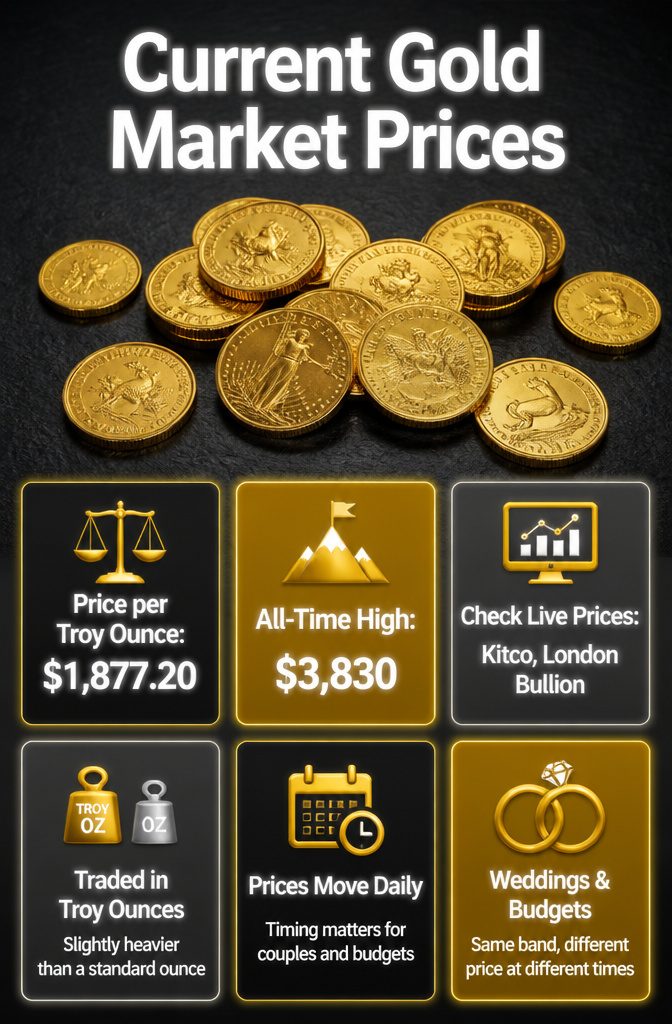
Gold prices move daily, and the unit jewelers use is not the ounce on your kitchen scale. They trade in troy ounces, a measure slightly heavier than a standard ounce and the only one that matters when you price a wedding band.
In September 2025, gold touched an all-time high of $3,830 per troy ounce. Right now it trades at $1,877.20 per troy ounce on the London Fix. That gap between peak and present is exactly why timing matters for couples working against a wedding deadline. A band that would have cost double six months ago might fit today’s budget, or the reverse.
I check live prices on Kitco or the London Bullion Market Association before I walk into any jeweler. The number you see there is raw material cost, not retail markup, but it gives you a floor for negotiation and a way to spot when a "gold surge" headline is actually old news.
5. Calculating Your Wedding Band’s Gold Value
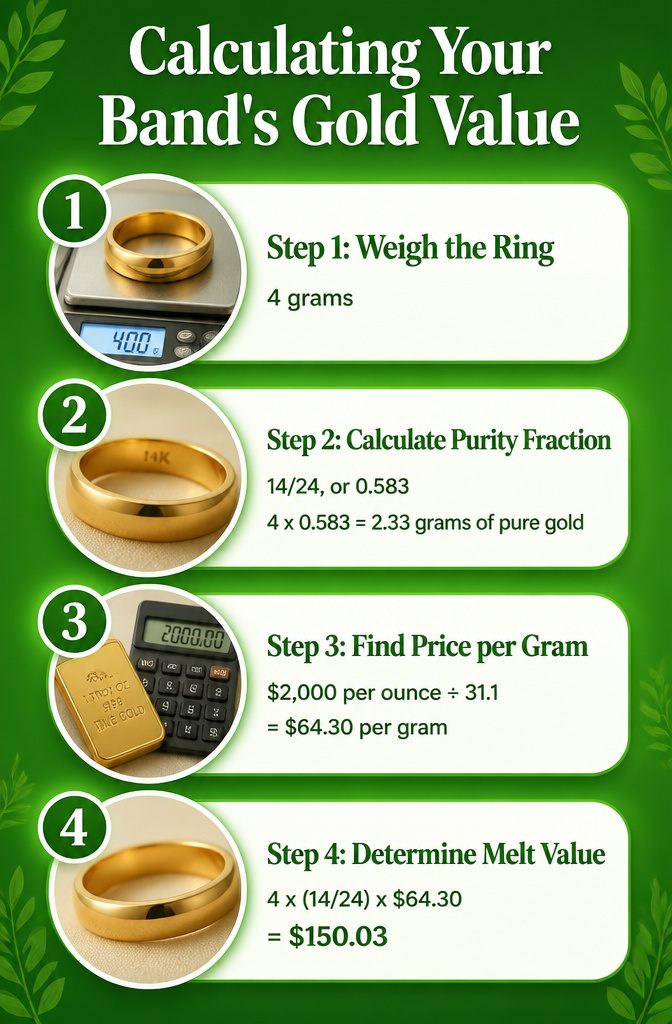
A 4-gram, 14k gold wedding band contains about 2.33 grams of actual gold. The rest is alloy, mixed in to make the ring durable enough for daily wear.
The math is straightforward once you know the pieces. I start with the ring’s total weight, 4 grams, then multiply by the purity fraction. Fourteen-karat gold is 14 parts gold out of 24 total parts, so that is 14/24, or 0.583. That brings me to 2.33 grams of pure gold inside the band.
For the price per gram, I divide the current troy-ounce price by 31.1, the grams in a troy ounce. At $2,000 per ounce, that works out to $64.30 per gram. The full calculation runs 4 x (14/24) x $64.30, giving a melt value of $150.03.
That $150.03 is not what you would pay at a jeweler, and it is not what you would get selling the ring. Craftsmanship, brand markup, and retail margins all sit on top of this base number. The melt value is simply the floor, the raw metal worth if the ring were melted down. When I ran this for my own budget planning, it helped me see how much of the sticker price was gold and how much was everything else.
Emotional Value Versus Cash Value
Sentimental worth does not translate to resale price, and most coverage of wedding band value skips this entirely. A ring bought for thousands at retail carries only a percentage of its melt value later, because gold buyers, whether online platforms, jewelers, or pawnshops, assess measurable criteria alone. They do not pay for the years it spent on a finger or the promise it once symbolized.
The gap hits hardest in moments couples rarely plan for. Estate sales, divorce, a sudden need to turn unused jewelry into cash. The karat, the weight, and the current spot price set the ceiling. What someone paid for design, casting, setting, and polish largely evaporates, the same way a new car demands far more than an older one traded in. Even a damaged, bent, or broken gold ring still carries scrap metal value, but that value is raw material value, not memory value.
Most sellers receive a percentage of the melt value, and where they sell changes that percentage. The practical move, if selling ever becomes necessary, is to confirm the karat, weigh accurately, and compare offers before walking in. The emotional work of letting the ring go is separate from the financial work of not being underpaid for it.
Where to Sell a Gold Wedding Band
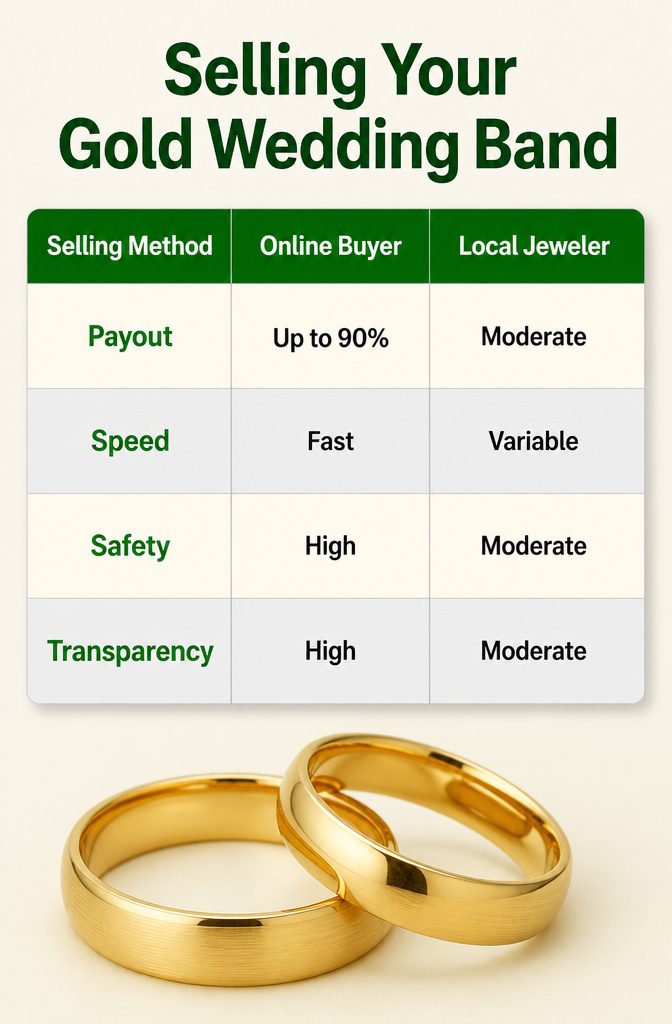
Selling a gold wedding band means choosing between speed and what you actually walk away with. I have watched friends take three different paths after a divorce, and the spread in outcomes was wider than any of them expected.
Online gold buyers pay the highest percentage of refined value, up to 90% by one major buyer’s stated rate, and they move fast. The tradeoff is shipping your ring to a place you have never seen. Local jewelers offer a moderate payout with variable timing; you hand the band across a counter and leave with a check, but their gold-buying is a side business, not the main one, and the offer reflects that. Pawn shops are the fastest option of all, though the payout lands lowest. Auction platforms can reach the highest sale price for an unusual or antique piece, yet the wait stretches and the fees bite.
| Option | Payout | Speed | Transparency | Safety |
|---|---|---|---|---|
| Online gold buyer | High | Fast | High | High |
| Online marketplace | Moderate to high | Variable | Low | Low |
| Local jeweler | Moderate | Variable | Moderate | Moderate |
| Pawn shop | Low | Fast | Moderate | Moderate |
| Auction platform | High | Slow | Moderate | High |
The right fit depends on what you need more right now: the money or the time. If you need cash this week, a pawn shop or online buyer is the realistic path. If the band is plain and the gold content is the whole value, skip the auction wait. If it is vintage or carries a name, patience might pay.
Best Karat for Daily Wear
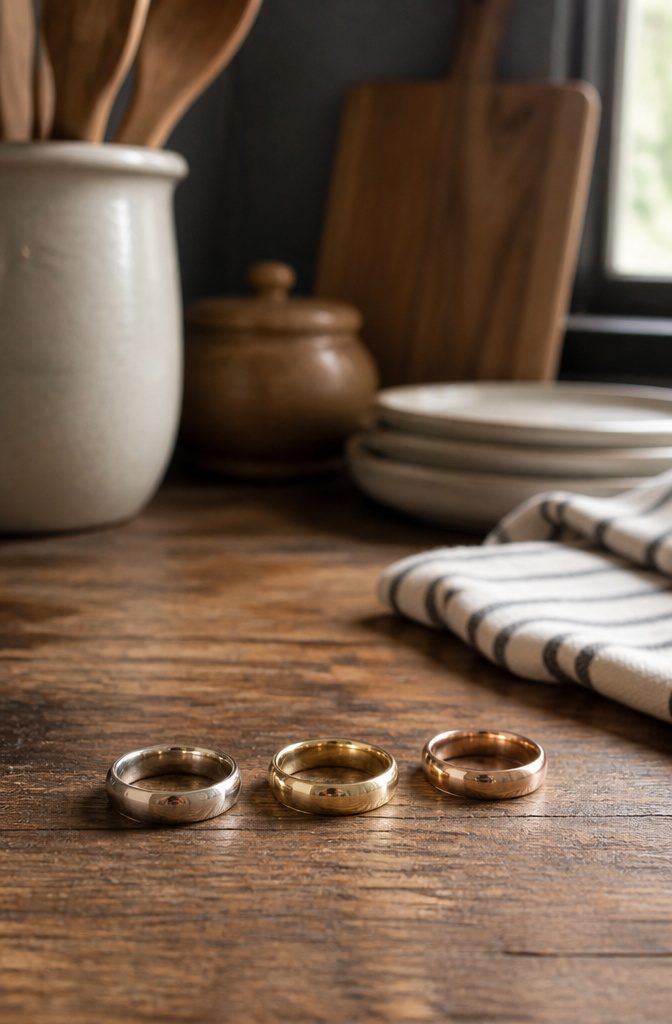
The karat you choose for a wedding band is less about prestige and more about how much punishment your hands take in an ordinary week. 14k gold, at 58.3% pure gold and 42% alloy, is the most popular choice in the US for exactly this reason. The extra copper, zinc, or silver in the mix hardens the ring enough to survive decades of gym equipment, kitchen knives, and the hand-washing that never really stops once you’re married. 18k gold, with 75% gold content, still holds up for daily wear but scratches more easily; the warmth is richer, and the price tag rises accordingly, which is why it reads as the luxury option in most showcases.
10k gold drops to roughly 42% gold and 58% other metals, making it the cheapest way to get a gold band on your finger. The catch is what those alloys do over time. Copper-heavy mixes can tarnish, and anyone with sensitive skin may find the lower gold content irritating after a long day. For a ring you never take off, 14k or 18k wins because the gold itself is what stays inert against your skin while the alloy does the structural work.
What I Learned Shopping for My Own Band
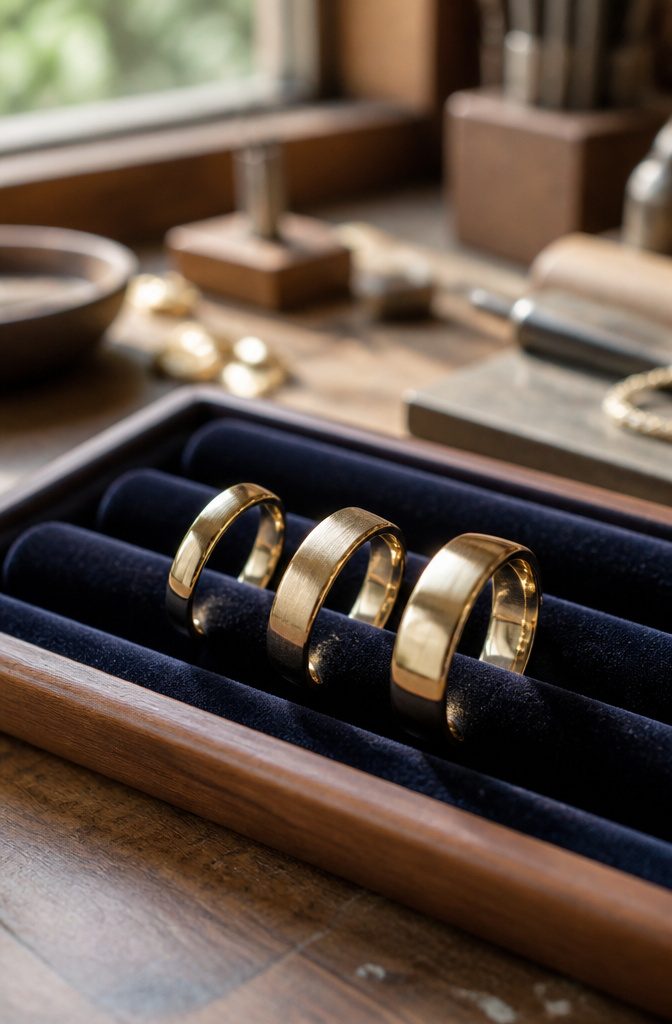
The jeweler set three 18k bands on the counter, and I picked each one up like I was testing avocados. The widest one felt almost nothing like the narrowest, even though the tag said they were the same size. That is the gram difference you do not see online: two rings can look identical and sit in your hand like completely different objects. I went with the middle weight, thinking I was splitting the difference between comfort and substance.
Two months in, the brushed finish on my band had collected a fine map of scratches from desk edges and car keys. I had assumed 18k meant more gold and therefore more durability. The opposite is true. The extra alloy in 14k hardens the metal, and nobody had mentioned this while I was comparing yellow tones under the case lights.
What stuck with me later was the receipt breakdown. The store had charged for design, for finish, for the name stamped inside. The actual gold value was a thin slice of that total. Selling it someday would recover only the material, not the afternoon I spent choosing. That gap between what you pay and what the metal is worth is not a secret; it is just easier to ignore when you are still holding the box.
Gold Price Timing for Budget Planning

Engagement ring shoppers sometimes have months to watch gold prices drift up and down before they pull the trigger. Wedding bands bought closer to the date do not have that luxury; you lock in whatever the market offers that week, and a price jump of even thirty or forty dollars an ounce can push a pair of bands past your ceiling.
When I was comparing quotes, one jeweler mentioned they would hold a quoted price for a short window if I put down a deposit. Another offered a layaway structure that let me pay in chunks and fix the price at signing, not at pickup. Not every store does this, so it pays to ask directly and compare what each shop is willing to commit to.
If your wedding is six weeks out and gold spikes, you are not going to wait it out. The practical move is to get your quotes early, ask about holds, and choose the jeweler whose policy gives you the most shelter from a market you cannot control.
Spotting Real Gold Content in Vintage Bands
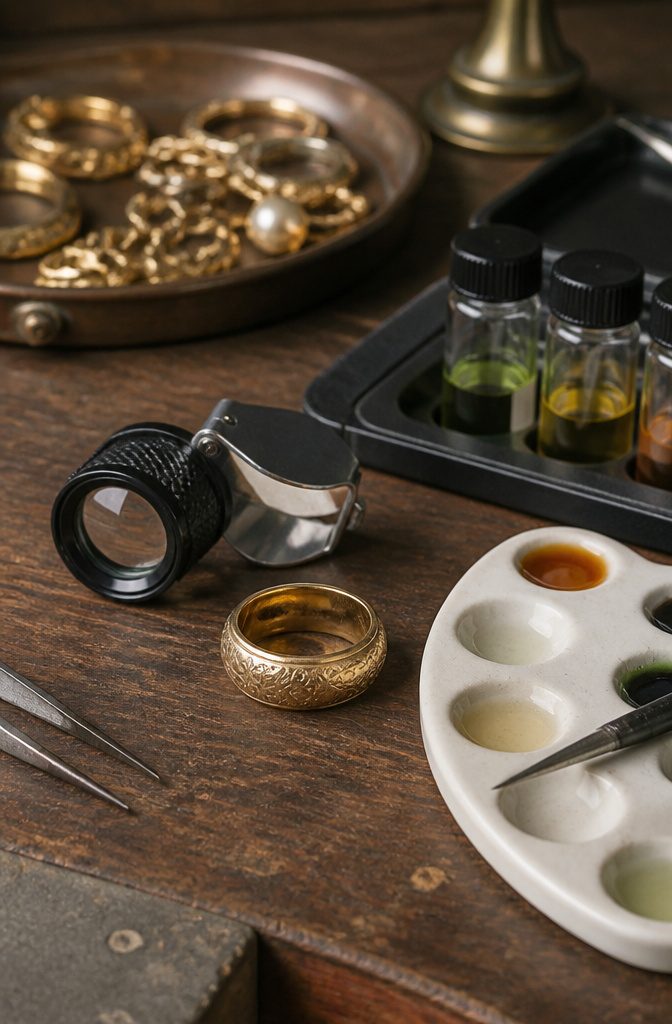
Hallmarks stamped inside a vintage band are the fastest clue to how much gold it contains, but decades of wear can fade those tiny marks into barely readable scratches. I have squinted at enough rings under a jeweler’s loupe to know that a missing stamp does not mean the piece is base metal; it means you need another way to confirm what you are holding. A basic gold acid test kit will sort 10k from 14k from 18k, though the acid leaves a small etch, so I only test on the inner surface where a future sizing job would hide the mark anyway.
Older alloy mixes complicate the math. A 14k band from the 1940s might not match the exact 14-parts-gold-to-10-parts-alloy ratio that modern standards enforce, because refiners varied their recipes by region and by what metals were cheap that year. The difference is usually small, but it is real.
Weight estimates on vintage pieces also need a haircut. A band that started at 4 grams in 1950 may have lost metal to sizing adjustments, surface wear, or a previous owner who filed the shank to make it fit. Do not plug the scale reading straight into the melt-value formula; round down by roughly ten percent for moderate wear, more if the edges are visibly thinned. The gold is still there, just not in the quantity the original weight suggested.
Frequently Asked Questions
How much gold is in a wedding band?
A typical wedding band contains 3 to 10 grams of gold, with most falling between 3.4 and 5.8 grams. What the scale shows is total weight, not pure gold; a 14k band, for instance, is only about 58% actual gold by weight, so a 4-gram ring holds roughly 2.3 grams of pure gold.
What is the best gold karat for wedding rings?
14k and 18k are the best choices for most people, and 14k is the most popular in the US. It has enough alloy to survive daily wear without looking battered, while 18k is softer and scratches more easily despite its richer color. 10k costs less but can tarnish and irritate sensitive skin.
How do you calculate the value of a gold wedding band?
Multiply the ring’s total weight by its gold purity, then by the current price per gram of gold. For a 4-gram 14k band, that means 4 x 0.583 x $64.30 per gram, which equals about $150 in melt value at $2,000 per troy ounce. Retail price sits well above this floor because of craftsmanship and markup.
Where can I sell my gold wedding band?
Online gold buyers pay the highest percentage, up to 90% of refined value, though you must ship the ring. Local jewelers offer moderate payouts with immediate checks. Pawn shops pay the least but move fastest. Auction platforms suit vintage or named pieces if you can wait.