
Wedding cakes range from single tiers that serve 50 guests to four-tier setups backed by sheet cakes for 150 or more.
Edible pearls go on by hand, one at a time, which drives up both labor cost and the final price per serving.
1. Floral Wedding Cakes
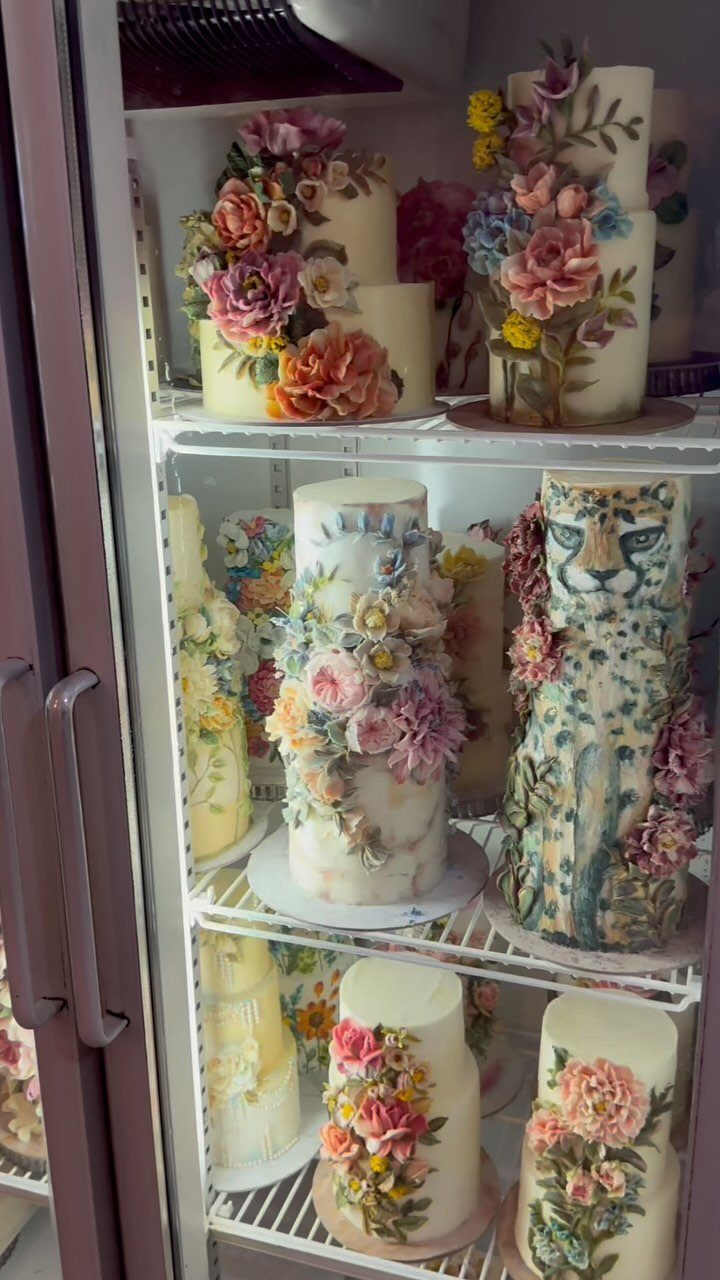
Flowers on a cake show up as fresh arrangements pressed into the frosting, piped buttercream florals, or hand-painted designs.
Fresh blooms match your bouquet and bring color to an otherwise plain tier, though you’ll want edible varieties if they touch the frosting directly.
Buttercream or fondant flowers stay put through a long reception and suit any season. I prefer them on larger cakes, where fresh flowers can wilt under venue lights before the last slice goes out.
2. Naked Cakes
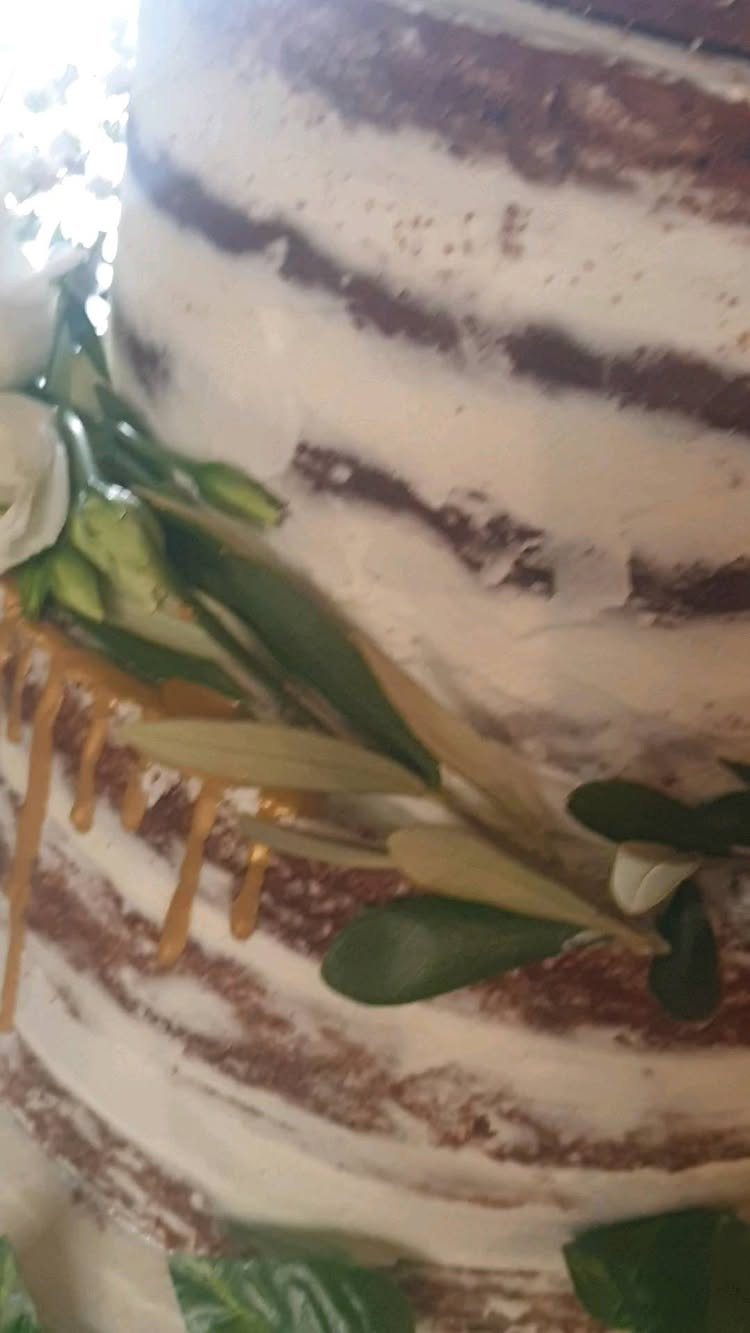
Exposed cake layers with frosting only between the tiers keep the look casual and the labor low.
You skip the time it takes to frost a smooth outer coat, and the unfinished edges suit barn weddings and outdoor receptions where a formal cake feels wrong.
The downside is structural.
Without a full crumb coat, the cake dries faster, so this works best when served soon after assembly. Pair it with a sturdy sponge that holds its shape at room temperature.
3. Personalized Cakes
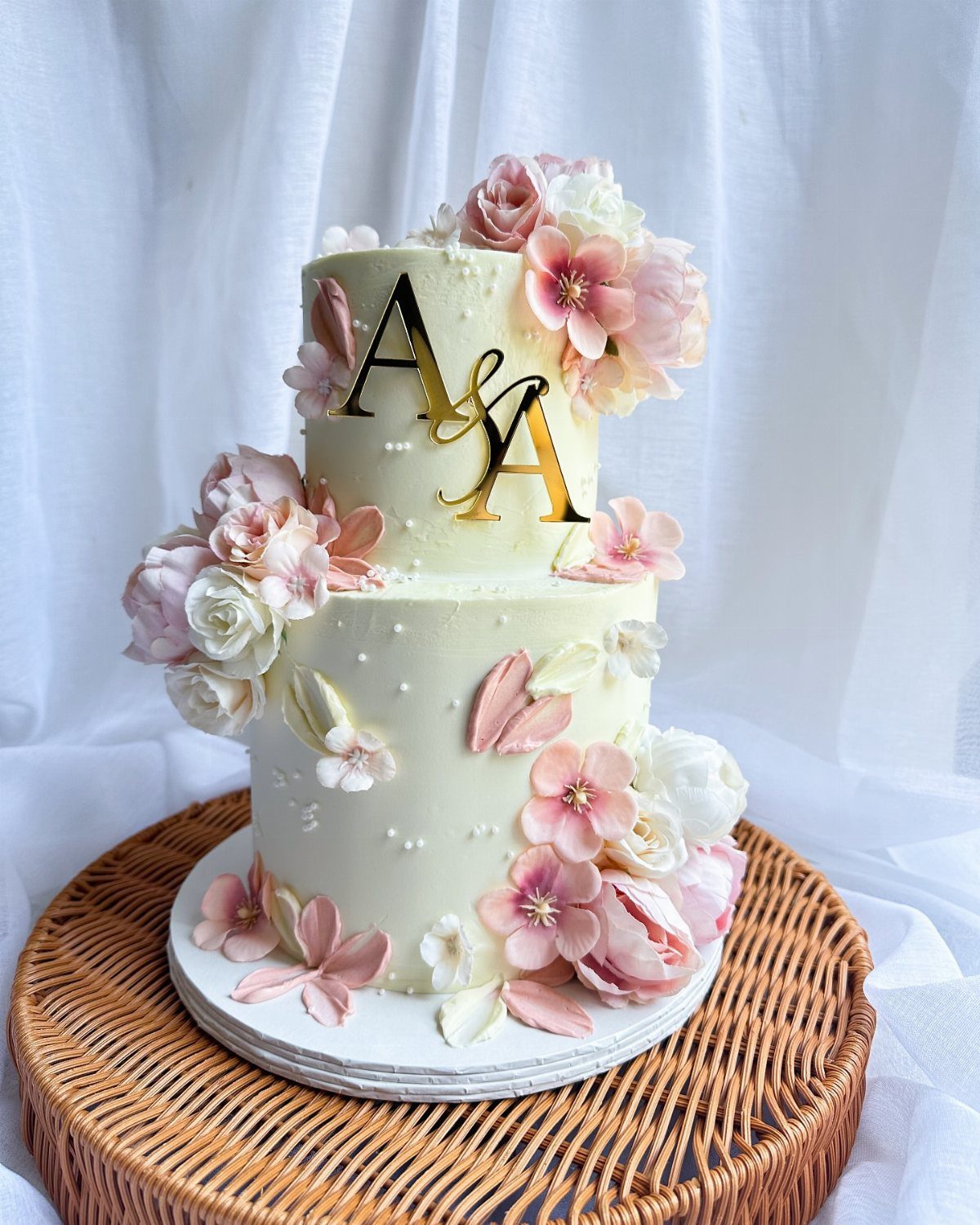
Initials, a meaningful date, or a detail from your story turn a standard cake into one that belongs only to your wedding.
The gold monogram visible here sits on top, but you can also pipe names into the frosting, match the cake’s colors to your invitations, or add a topper shaped like something you both collect.
Custom details cost more when they require hand piping or a sculpted topper, but a florist can often match your cake flowers to your centerpieces for less than ordering them separately.
According to data from Bridebook, the UK’s #1 wedding planning platform used by over 2.8 million couples, the average cost of a wedding cake in the UK is £360.
4. Sculptural Cakes
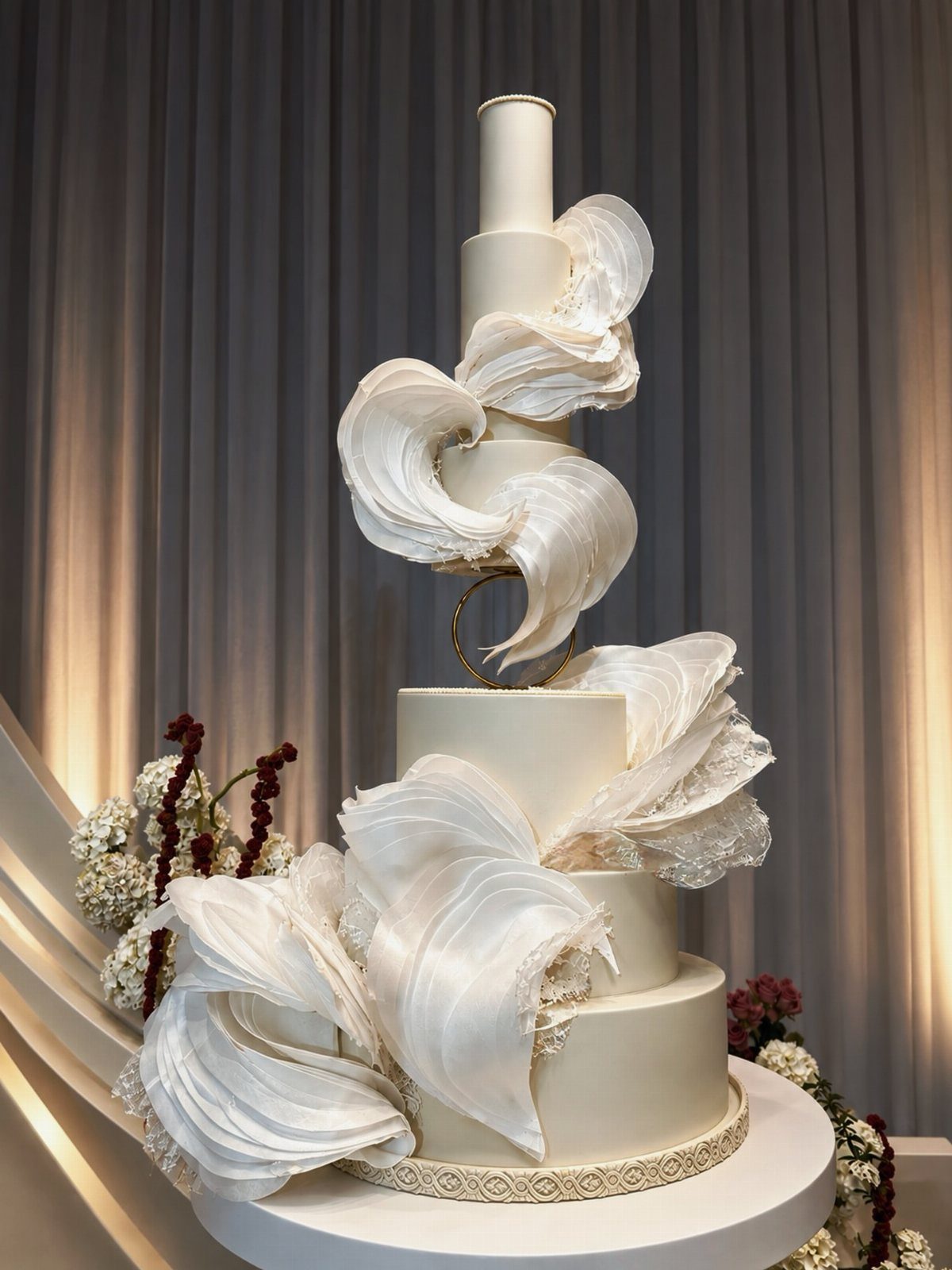
Cakes built with sweeping fondant waves, geometric angles, or fabric-like drapes function as table sculpture. They require an experienced baker who works in fondant or modeling chocolate, materials that hold a shape buttercream cannot.
Expect to pay more than a standard tiered cake of the same size. These designs also take longer to assemble, so confirm your baker’s lead time if your wedding falls during peak season.
5. Buttercream Cakes
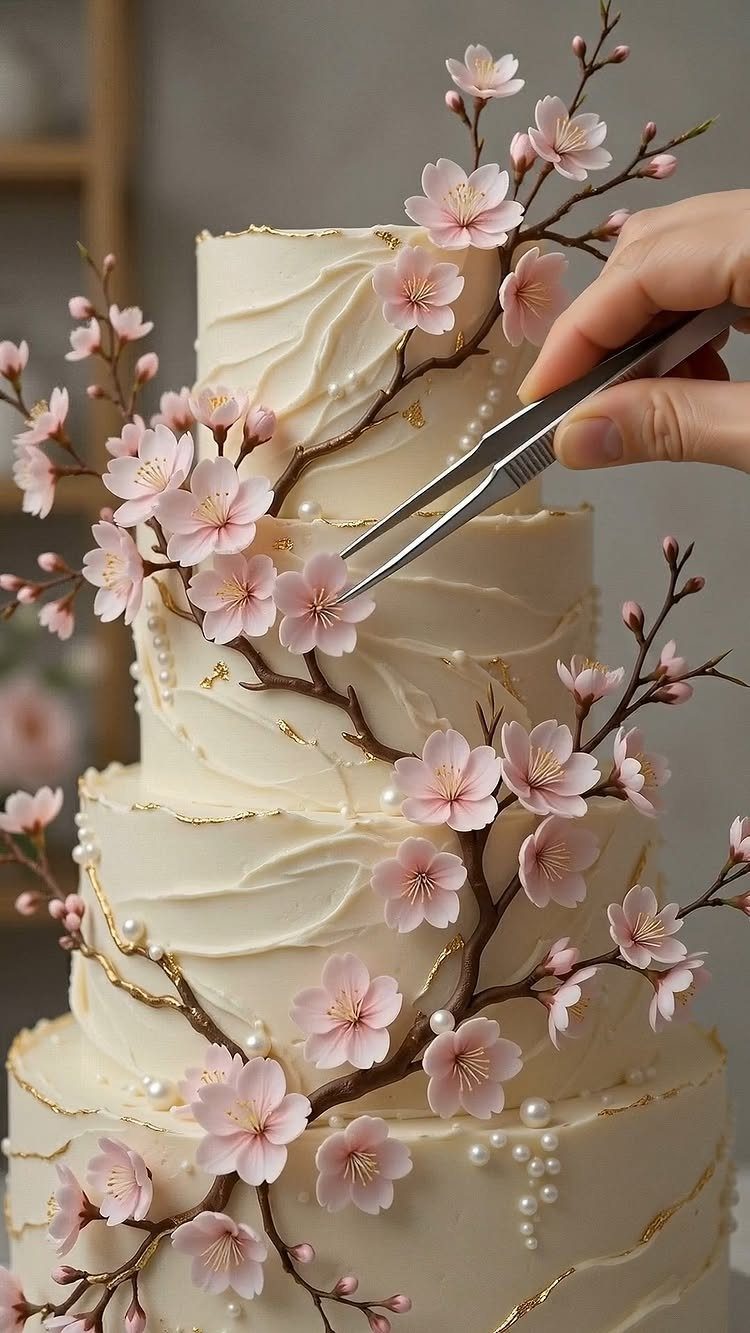
Textured buttercream, whether ruffled, basket-woven, or brushed into ridges, gives a cake dimension without fondant. The technique works on any flavor base and suits couples who want a homemade look with professional execution.
Buttercream holds detail better in cool weather. If your reception runs outdoors in summer, ask your baker about Swiss meringue buttercream, which softens less than American buttercream in heat.
6. Vintage Cakes
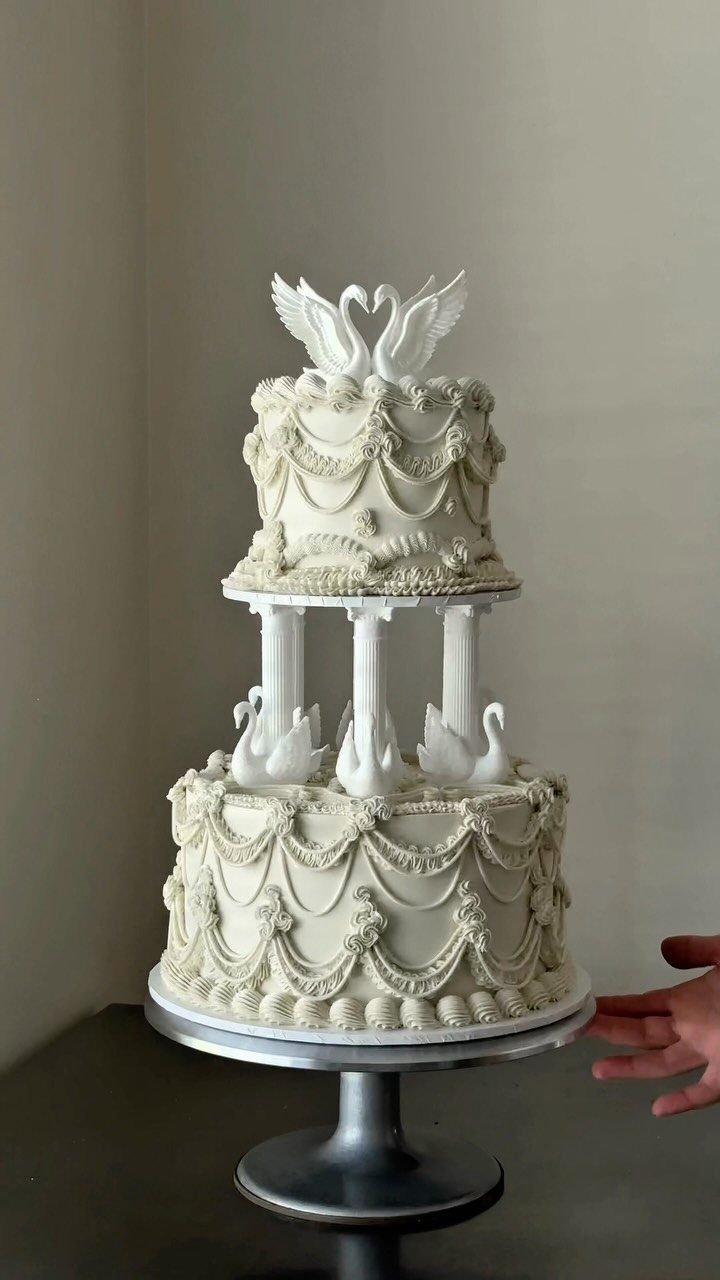
Ornate piping, scalloped borders, and figurine toppers pull from mid-century wedding traditions. The style suits couples drawn to lace, pearls, and heirloom details, and it pairs well with tea-length dresses and string quartets.
Royal icing holds intricate patterns longer than buttercream, but it dries hard. If you want a softer bite, ask for buttercream piping and plan to serve the cake within a few hours of setup.
7. Single-Tier Cakes
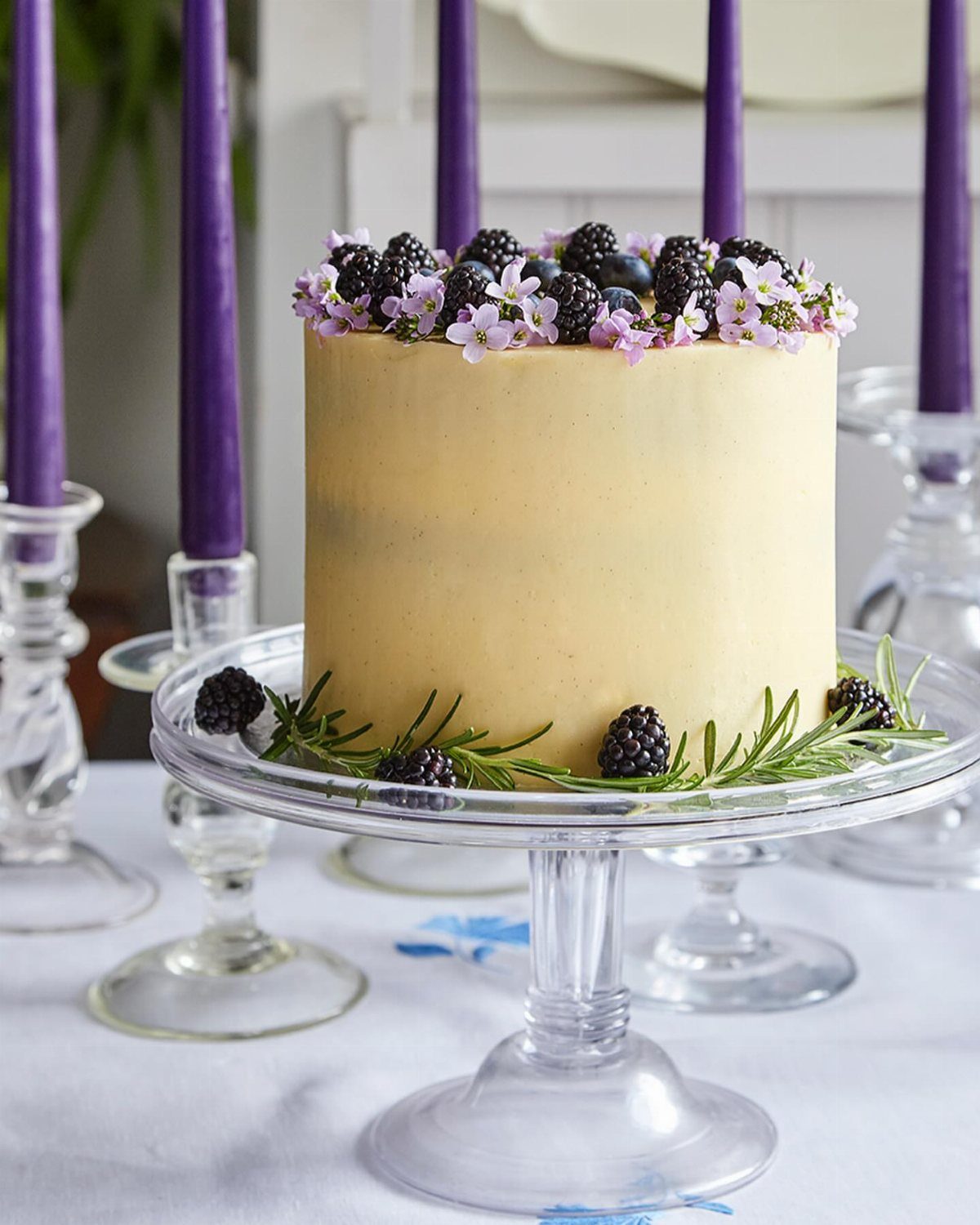
One tier feeds a small guest list without leftover cake or the cost of stacking multiple layers. The single round visible here sits at table height, so guests see the decoration up close instead of craning toward a tall centerpiece.
This works when your count stays under 50 and you want the cake to feel personal rather than formal. Budget drops with the tier count, and assembly takes less time, which matters if a friend is baking it.
8. Sheet Cakes
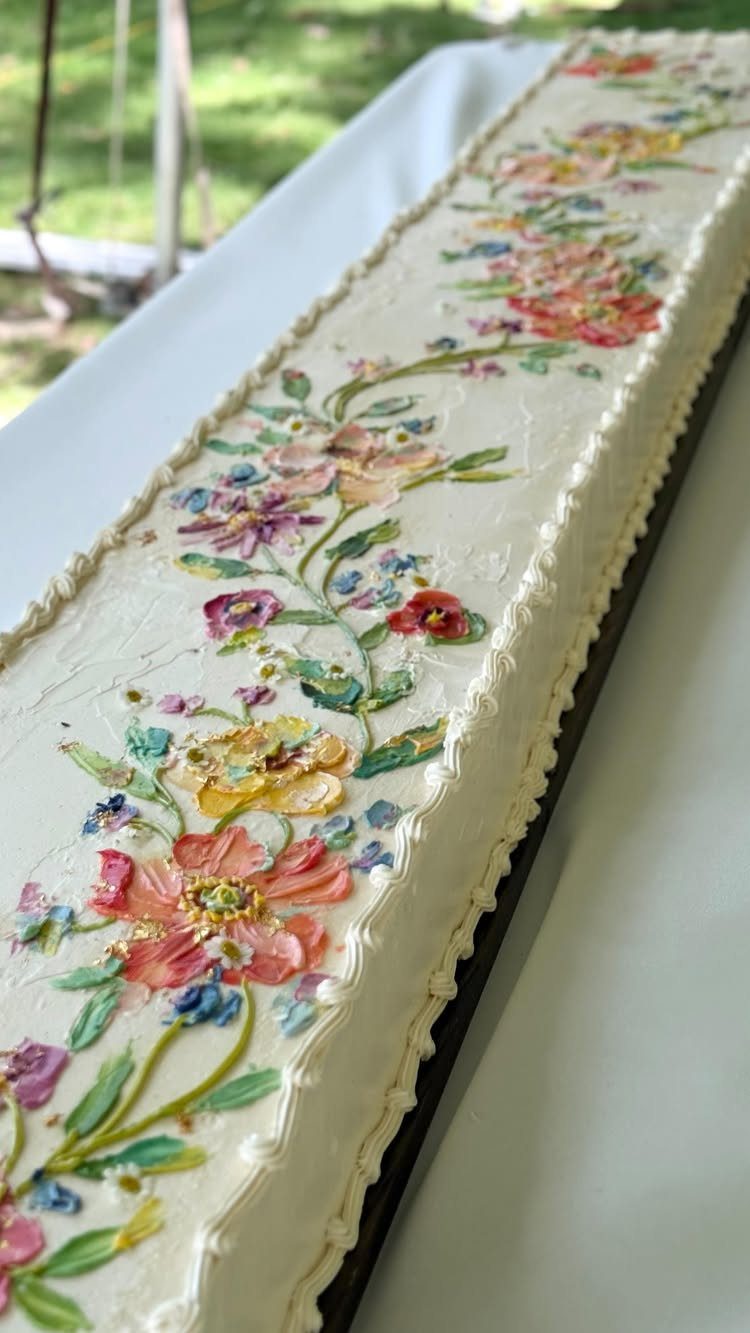
A rectangular slab feeds more people per square inch than stacked rounds, and most bakeries charge less per serving for sheet format. The flat surface gives room for piped borders and clustered flowers without the engineering a tall cake requires.
I’d pick this for a backyard wedding where the cake sits on a long table rather than a pedestal. It cuts fast, which keeps the serving line moving when you have a large guest count.
9. Fruit Decorations
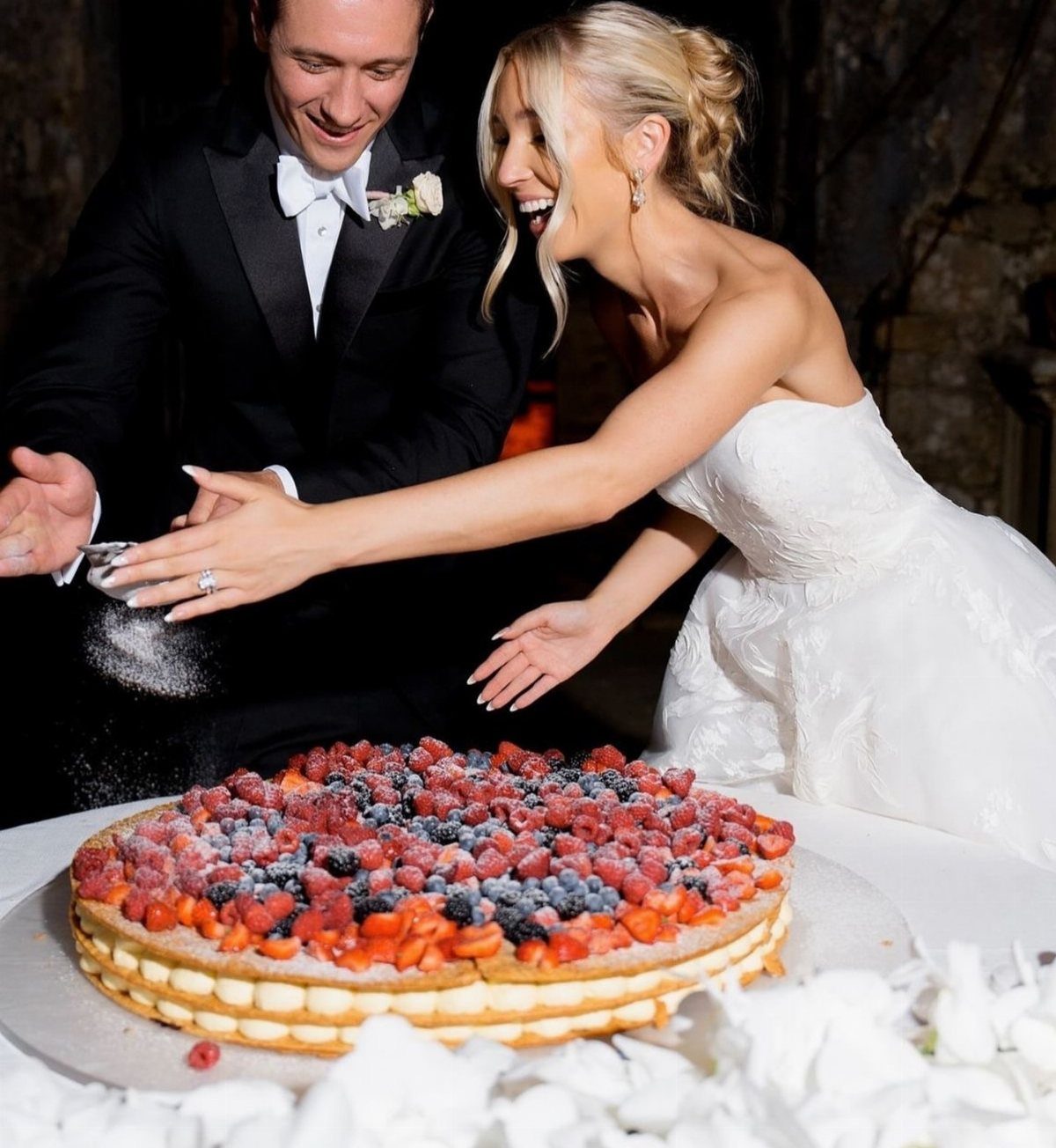
Berries, citrus slices, or stone fruit arranged on top bring color without food dye and suit couples who want the cake to taste like the decoration looks.
Fresh fruit stays brightest when added an hour before serving, so plan the timing with your baker.
The trade is structure.
Fruit releases juice as it sits, which can soften frosting and blur piped details underneath. Pair it with a sturdy base, and skip this if your reception runs long in warm weather.
10. Tiered Cakes
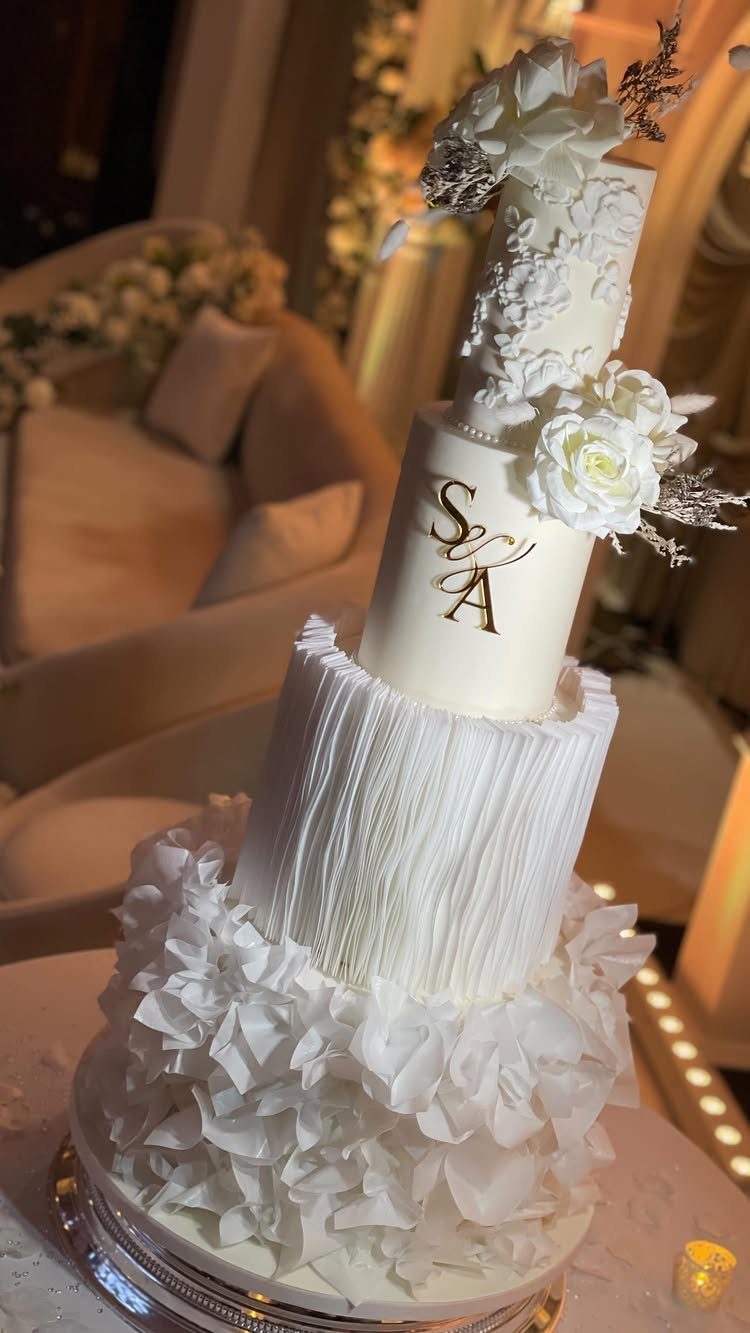
Stacked rounds give you room to vary the decoration by tier and serve a wide guest count from one centerpiece. Each layer can hold a different filling, so half the cake goes chocolate while the other half stays vanilla.
Height makes the cake visible across a large room, but it also adds cost. Dowels and support boards go into every tier above the base, and that labor shows up in the price.
11. Minimalist Cakes
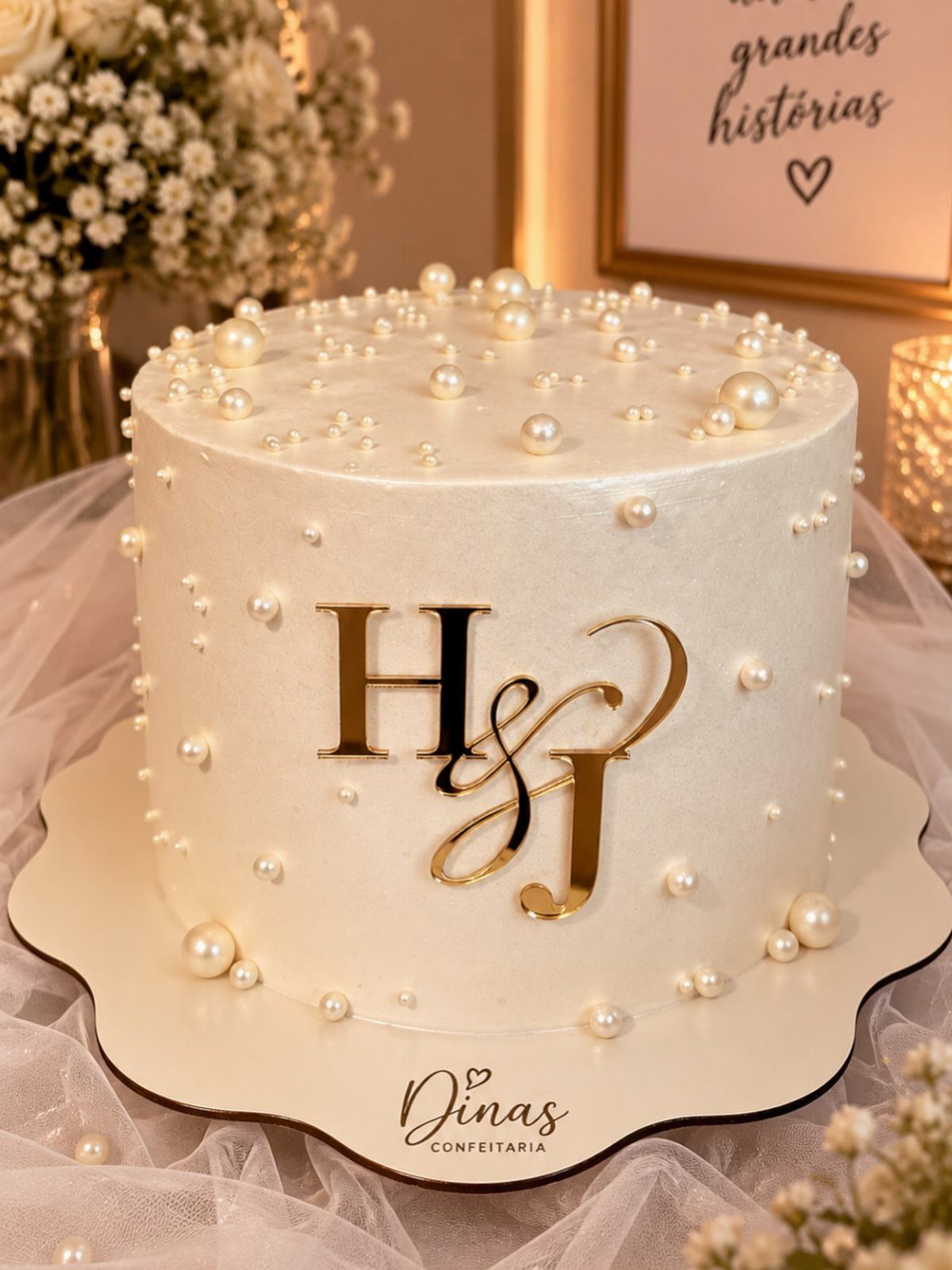
A smooth surface with one or two details keeps the focus on form rather than ornament. The single tier uses gold initials and a pearl border, and that restraint suits modern venues where the decor already does the visual work.
This style cuts setup time and often costs less than heavily decorated cakes, since the baker spends less time on piping. It reads formal without looking fussy, which I prefer when the rest of the wedding skews contemporary.
12. Bold-Colored Cakes
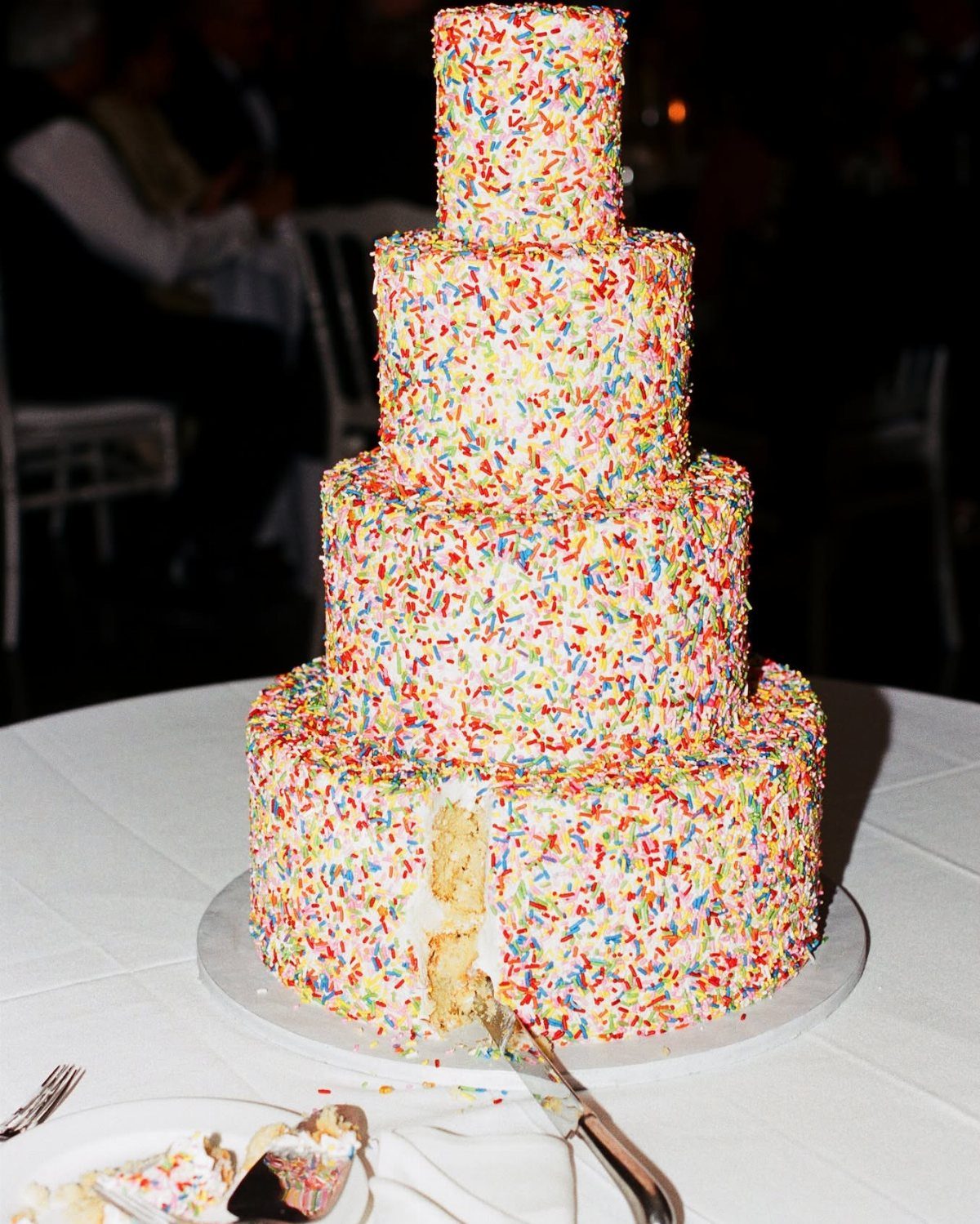
Sprinkles, bright fondant, or saturated buttercream replace the white-cake expectation and suit celebrations where the couple wants the dessert to feel like a party.
The confetti coating here covers all 4 tiers, so the cake photographs as one bold object rather than a neutral backdrop.
Colored frosting sometimes tastes different from white. Ask for a sample if your baker uses gel dye, since some brands leave a bitter aftertaste at high concentrations.
13. Wafer Paper Cakes
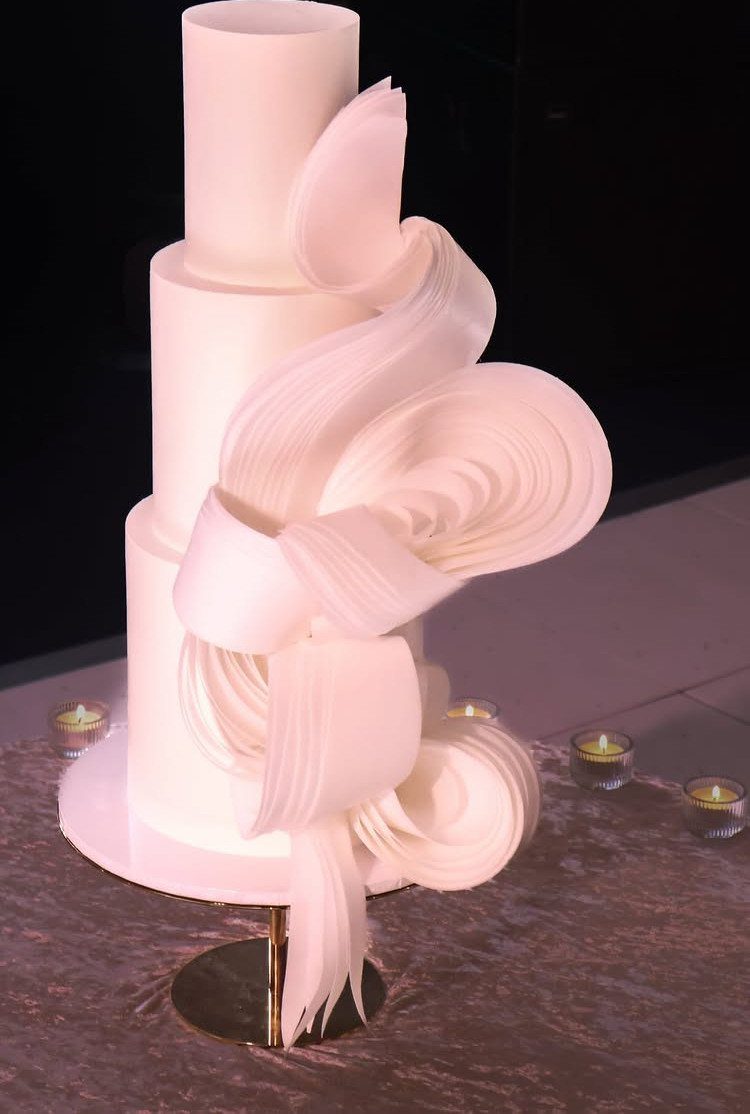
Wafer paper lifts away from the cake surface in thin, pliable sheets that curve into ribbons, petals, or geometric folds. The material is edible, lighter than fondant, and holds detail without weighing down a tier.
It photographs well under venue lighting because the edges catch shadows, but it softens in humidity.
14. All-White Cakes
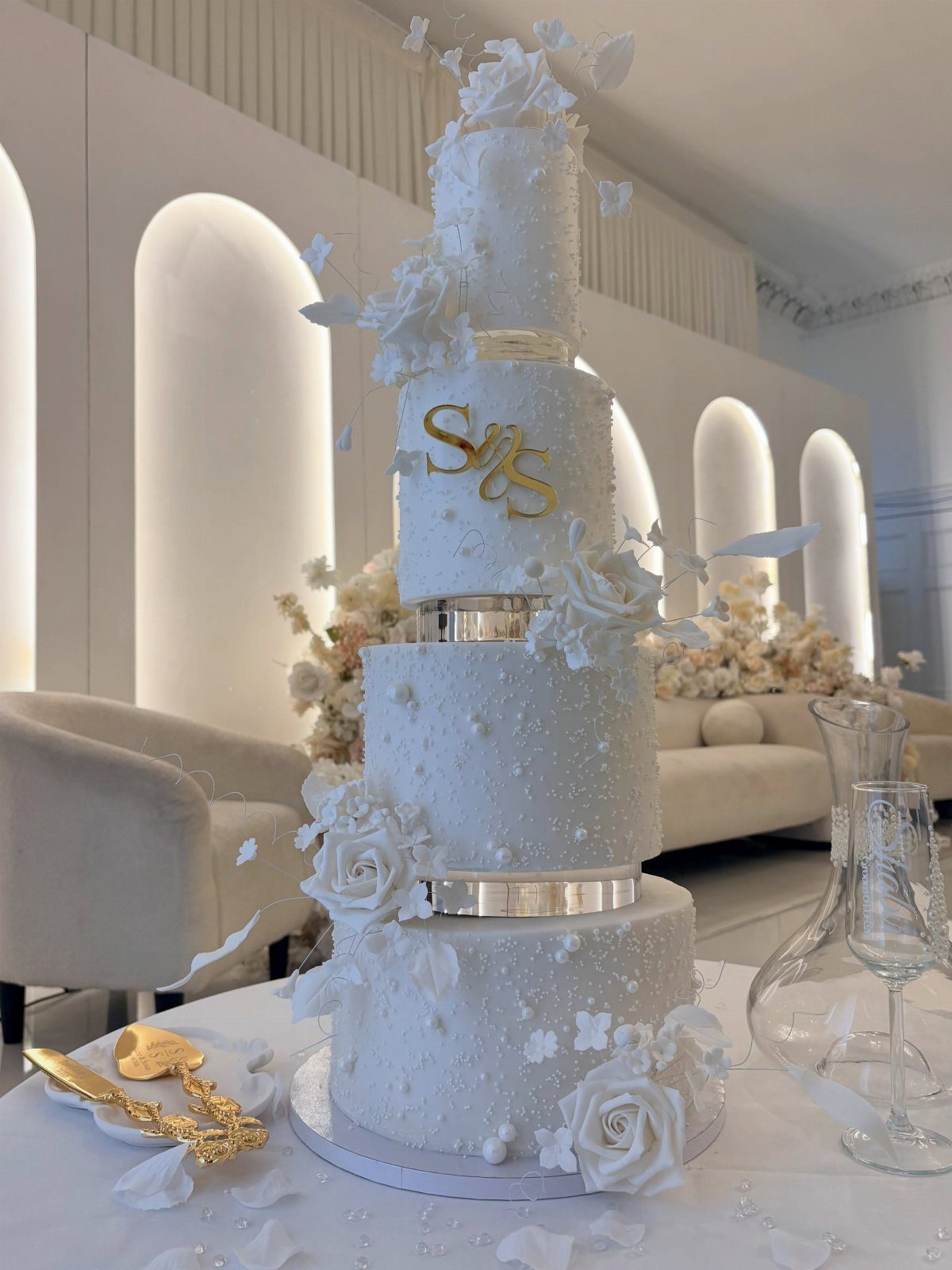
Piped rosettes, quilted fondant, or pearl borders give an all-white cake definition without introducing color. The technique here layers white-on-white textures across 4 tiers, so the cake reads formal but not plain.
I’d choose this when the rest of the decor already brings color and the cake needs to anchor the table without competing. It suits any season and photographs cleanly in low light.
15. Textured Cakes
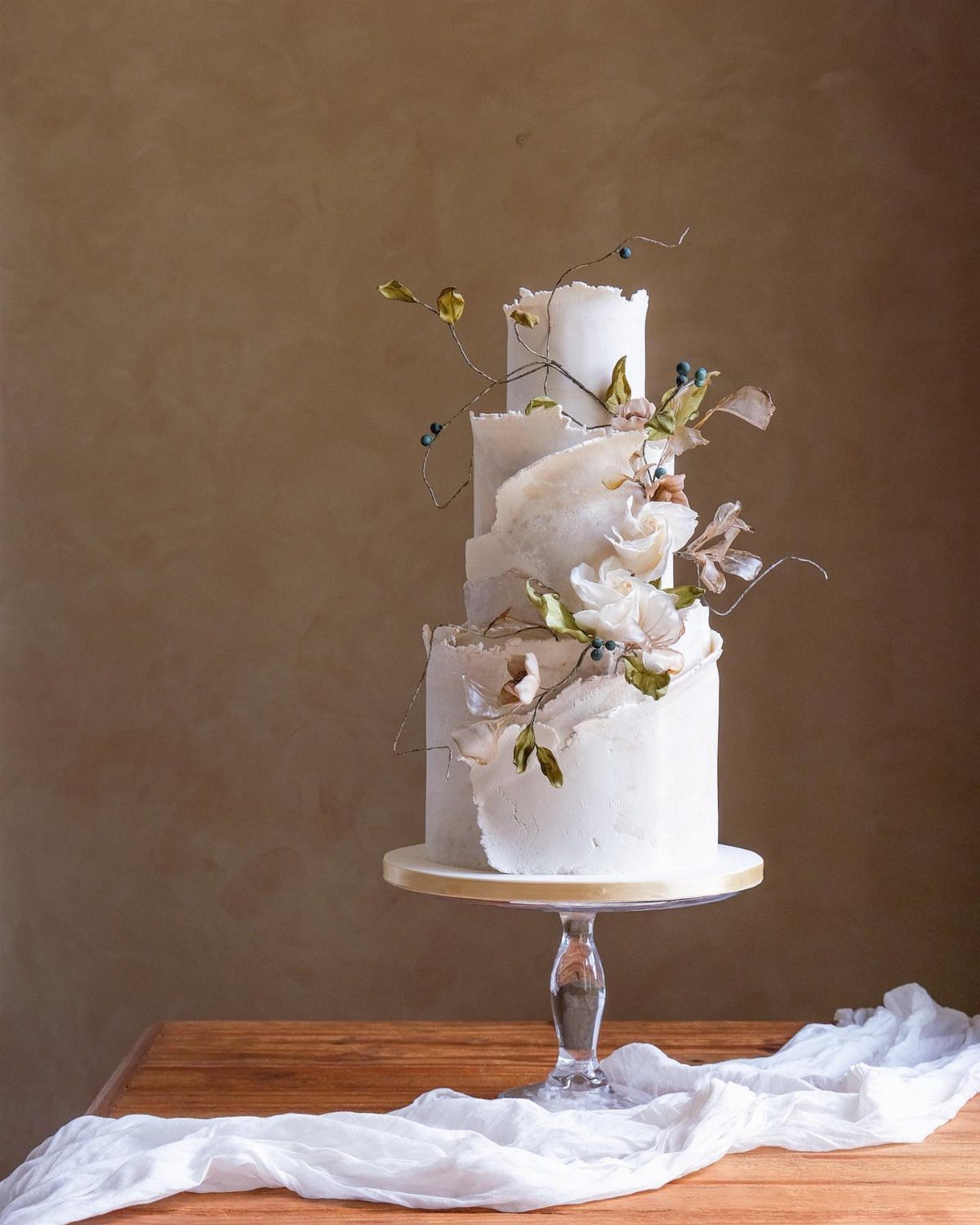
Torn fondant edges, brushed buttercream, or rough spatula strokes give the surface an unfinished, handmade quality. The organic finish here pairs with trailing greenery, and the torn edges suit outdoor ceremonies where a polished cake feels too formal.
This style takes less time than smooth fondant work, which can lower the cost.
16. Pearl Cakes
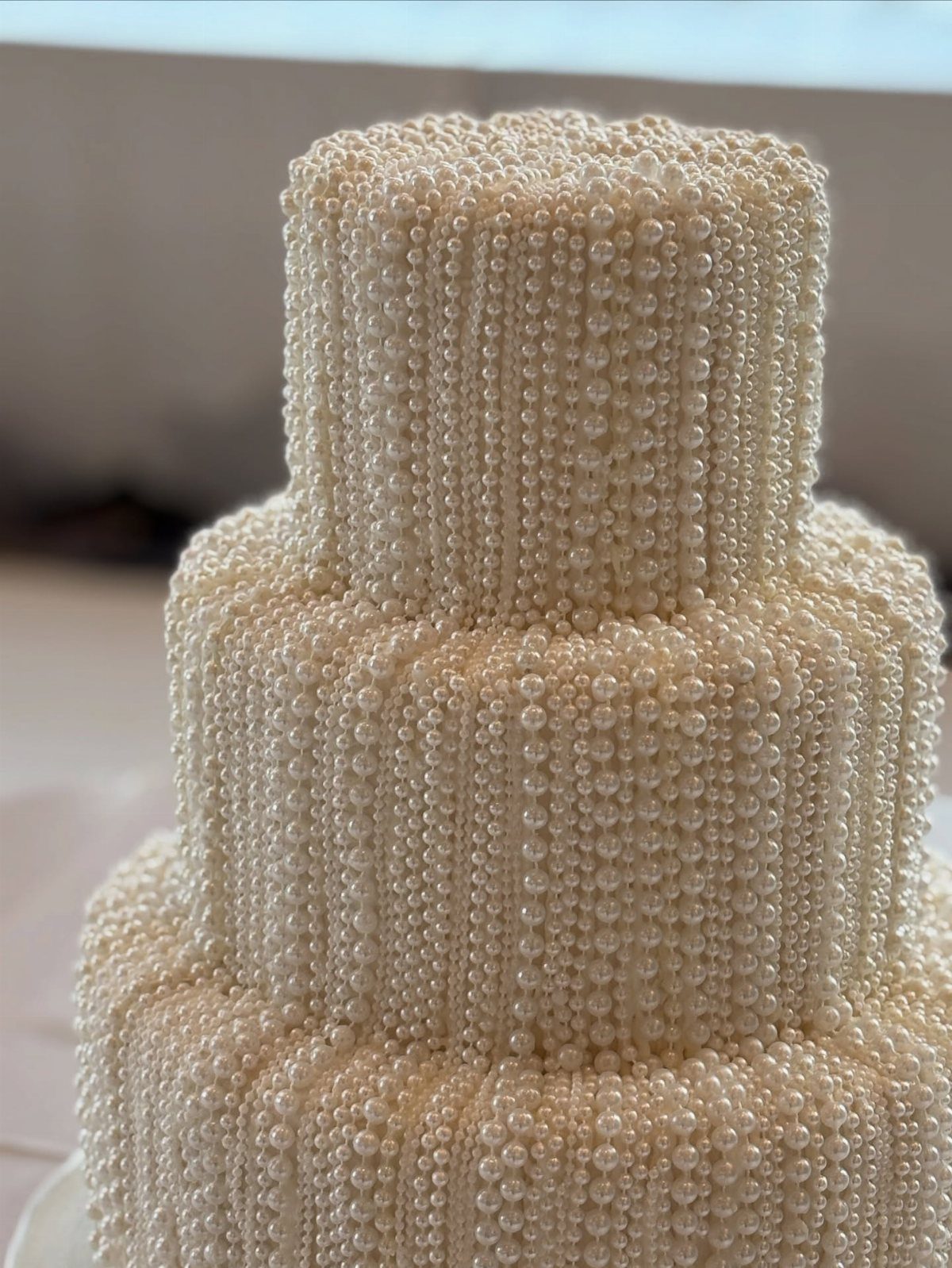
Edible pearls, piped individually or applied in clusters, cover the surface in a uniform shimmer. The coating here runs across all 3 tiers, and the pearls catch light without reading as glitter or metallic.
Application is labor-intensive, since each pearl goes on by hand.
17. Raspberry Wedding Cake
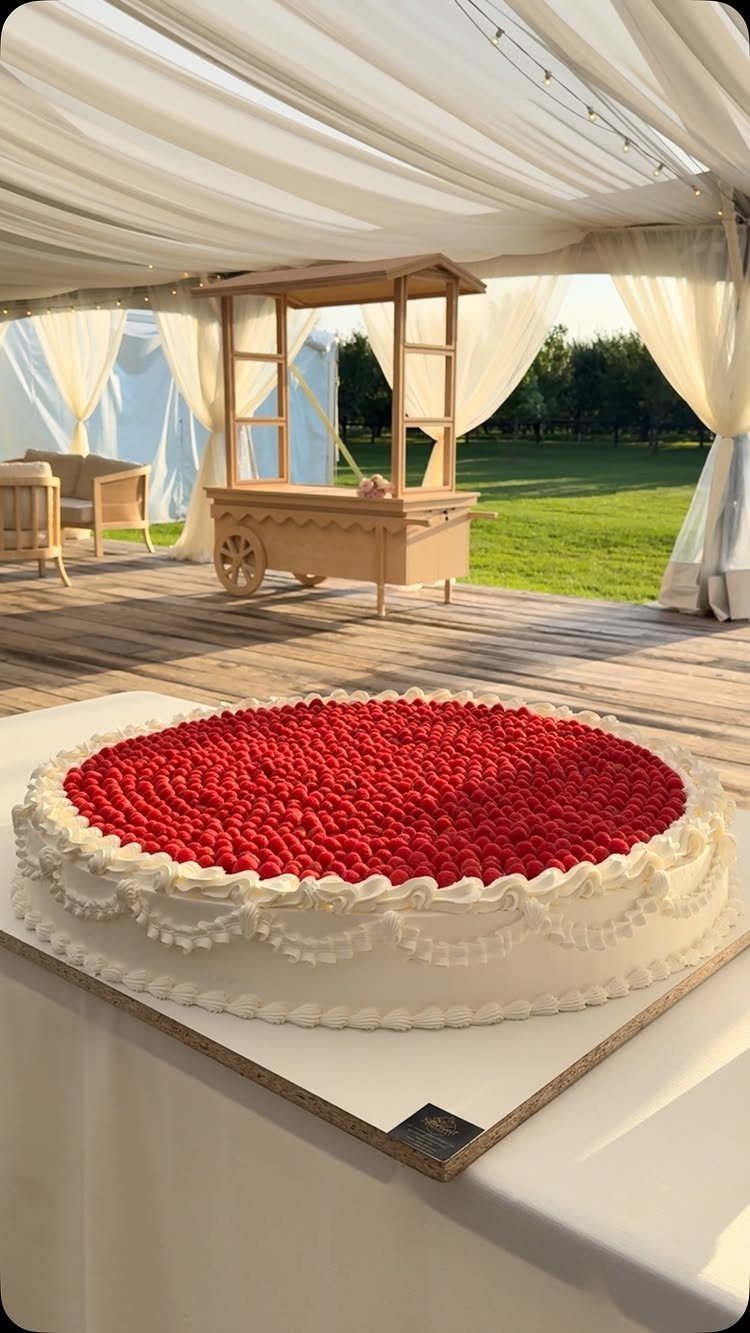
A wide, single-layer cake spreads horizontally rather than stacking upward, and the large surface gives room for rows of fresh raspberries without crowding. The low profile suits outdoor receptions where tall cakes topple in wind.
Raspberries release juice as they sit, so add them close to serving time. This format cuts faster than stacked tiers, which matters when you have a large guest count and want the line to move.
18. Personalized Cake Toppers
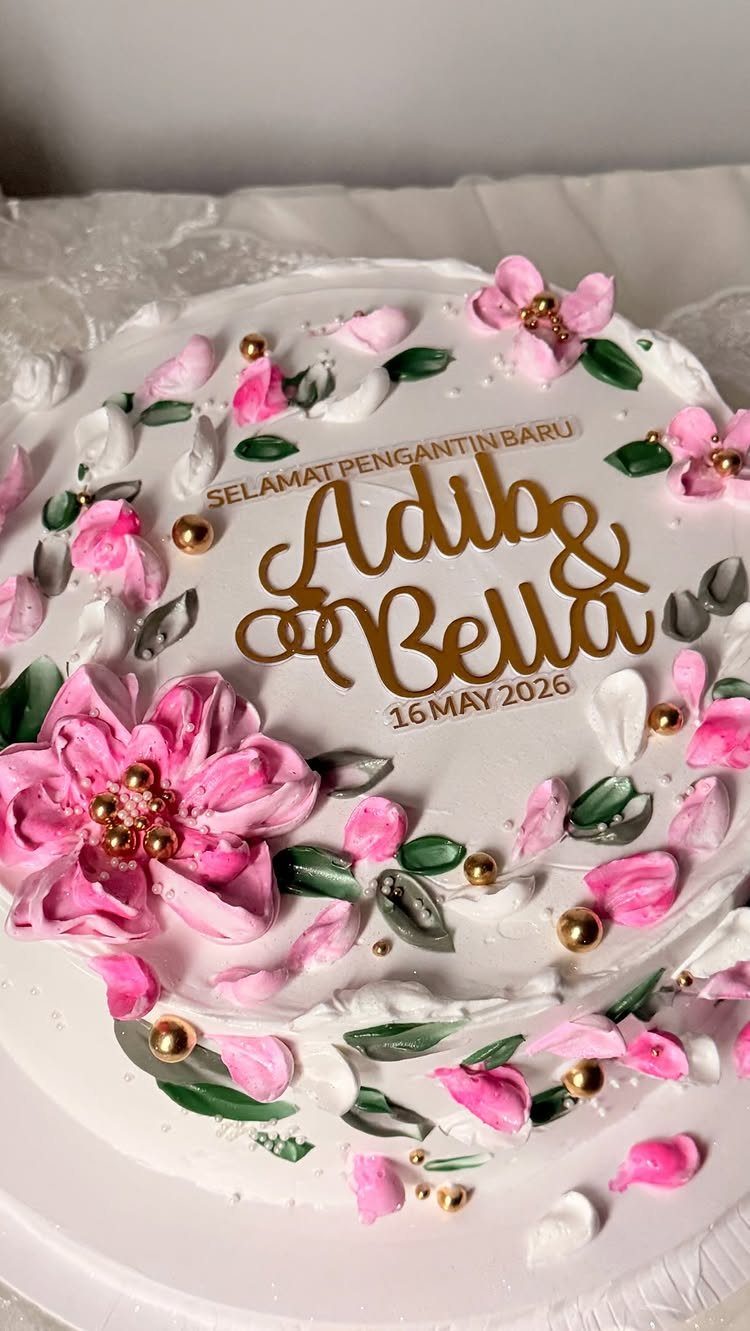
Acrylic, wood, or metal toppers laser-cut with names, initials, or a wedding date sit on the top tier and give the cake a custom finish without altering the frosting.
The gold script here reads from across the room, and the topper lifts off after the reception so you can keep it.
Order ahead if the topper requires custom engraving. The cost usually runs less than hand-piped lettering, and you avoid the risk of a piping error the day of.
Ordering and Cake Size
Contact bakeries as soon as you have a date and venue confirmed. Popular bakers fill their calendars several months out, especially for May through October weddings, and waiting cuts your options.
Size depends on guest count and whether you’re serving other desserts. A two-tier cake handles more than 50 guests when it’s the only sweet.
For 100 to 150 people, plan on three or four tiers, or add a sheet cake in the kitchen to extend servings. Once you cross 150 guests, plan on 4 tiers and a sheet cake in the back.
Portions shrink if the cake comes out late in the reception as finger food rather than plated dessert. For 50 to 100 guests in that format, three tiers usually suffice.
Ask your baker how many servings each tier yields. Sizes vary by height and filling, and the estimate keeps you from ordering too much or running short halfway through the line.
Matching Cake to Wedding Style
The cake should match the wedding’s tone and palette the way your invitations and flowers do. A ruffled buttercream cake suits a garden ceremony, while smooth fondant and metallic accents fit a ballroom.
Coordinate the cake’s colors with your florals and linens. If your centerpieces run blush and ivory, a white cake with matching sugar flowers ties the table together.
Season matters.
Buttercream softens in summer heat, so outdoor receptions in warm months call for Swiss meringue buttercream or fondant instead. Fresh fruit decorations suit spring and fall, when berries stay firm longer at room temperature.
Share photos of the space with your baker so they can judge scale and backdrop.
A tall tiered cake needs a sturdy table and enough ceiling clearance, while a low sheet cake fits better on a long outdoor table where guests approach from all sides.
Frequently Asked Questions
What are the top wedding cake trends for 2025?
Floral designs, personalized details, sculptural shapes, textured buttercream, and bold color all show up across 2025 weddings.
Minimalist cakes with restrained decoration and vintage piping techniques are equally popular. Naked cakes, fruit decorations, and wafer paper work suit couples looking for organic or handmade finishes.
How can I personalize my wedding cake?
Piped initials, a date that matters to the two of you, or a color pulled straight from your invitation suite turn the cake into something that is unmistakably yours.
You can also ask your florist to match the cake flowers to your centerpieces.
What flavors are popular for wedding cakes in 2025?
Matcha, lavender, and citrus offer a modern alternative to vanilla and chocolate. Matcha and white chocolate, lavender and honey, citrus and almond: flavor pairings that taste distinct without alienating half the room.
Are traditional white wedding cakes still in style?
Yes. Many couples now choose bold colors and unique designs instead, but white cakes still anchor formal receptions where the decor already brings color.
Is it acceptable to have a non-traditional wedding cake?
Absolutely. If a tiered cake does not suit you, do not order one; a sheet cake or a table of individual desserts can be exactly right.
Bold colors and sculptural shapes are increasingly common and work well when the wedding itself skews modern.
How far in advance should I order my wedding cake?
Reach out to bakeries the moment your date and venue are locked in.
Are wedding cake alternatives acceptable?
Yes. A dessert table, individual pastries, or something entirely different can leave the same impression as a traditional tiered cake.
A rectangular sheet cake or a single low tier suits backyard weddings and smaller guest counts where a tall centerpiece feels too formal.
What is the most popular wedding cake style right now?
Minimalist single-tier cakes with restrained decoration and vintage designs with ornate piping both rank high, alongside bold modern cakes with saturated color or sculptural fondant.
The right style is the one that fits your wedding, not the one that appears most often on mood boards this year.