
Wedding gown dry cleaning is the professional cleaning and preservation of a bridal dress after the ceremony, and most brides pay between $250 and $750 depending on fabric, soiling, and construction. The quote I got for my own dress varied by $120 across two shops because one counted the silk as specialty and the other did not.
What Wedding Gown Cleaning Costs
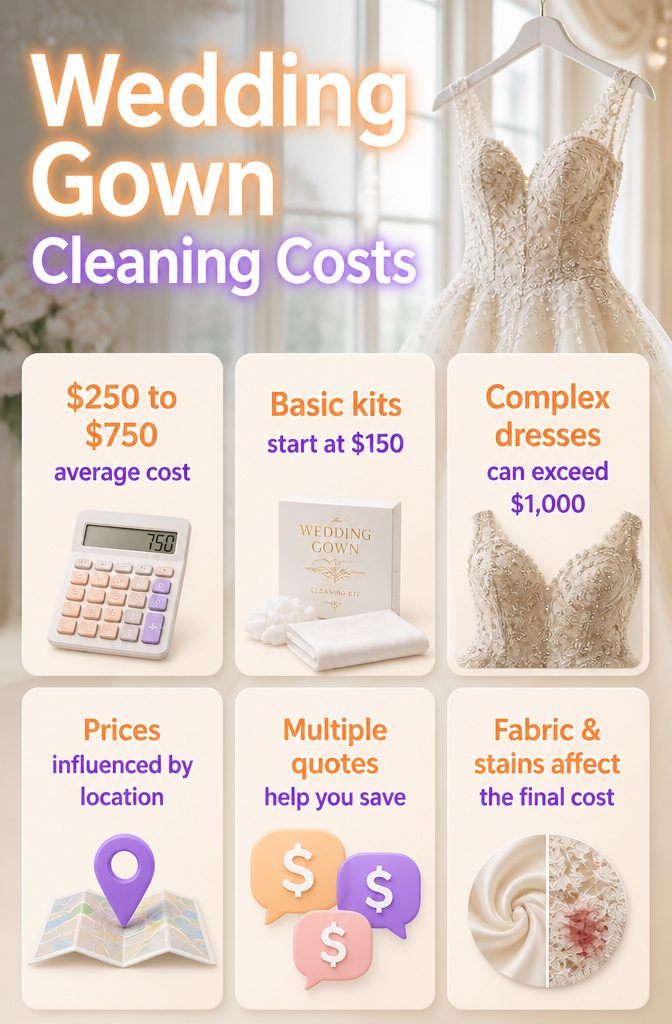
Most brides end up paying $250 to $750 for standard wedding gown cleaning and preservation. That is the middle ground where the majority of quotes land once the cleaner sees the fabric and the hemline.
The full spread runs wider than that. Basic kits start around $150, while heavily beaded designer pieces or gowns with serious staining can push past $1,000. I remember standing at the counter of my local cleaner, expecting something closer to a regular dry-cleaning bill, and feeling the air leave the room when the estimate came back at $380. Another shop across town quoted $260 for the same dress. The difference was in how they counted the layers and whether they treated the silk as standard or specialty.
Wedding dress cleaning prices range from $250-$400 on average, depending on the location.
That range from Tide Cleaners tracks with what I found, though your zip code will move the needle. A shop in a major metro area carries higher rent and labor costs, and that shows up in the quote. Calling two or three local cleaners is the only way to know where your area sits on that spectrum.

Rapid Refresh Technology: Clean, deodorize, and remove wrinkles in hand-wash or dry-clean-only clothing in minutes with the at-home dry cleaning kit. A single dryer-activated cleaning cloth is all it takes to leave clothes clean, refreshed and ready to wear in 20 minutes

Versatile storage: suitable for a variety of clothing items, from coats to dresses, this clothes dust bag is ideal for keeping your wardrobe organized and your garments protected,wedding dress storage bag,bridal dress bag

Perfect Wedding Gown Storage Option: The wedding dress storage box with acid-free paper sheets comprehensively protect your wedding dress free from dust, smells and stains, preserve them for much longer, maybe one day, you even pass it as good as new on to your future generations
Basic Cleaning and Preservation Kit
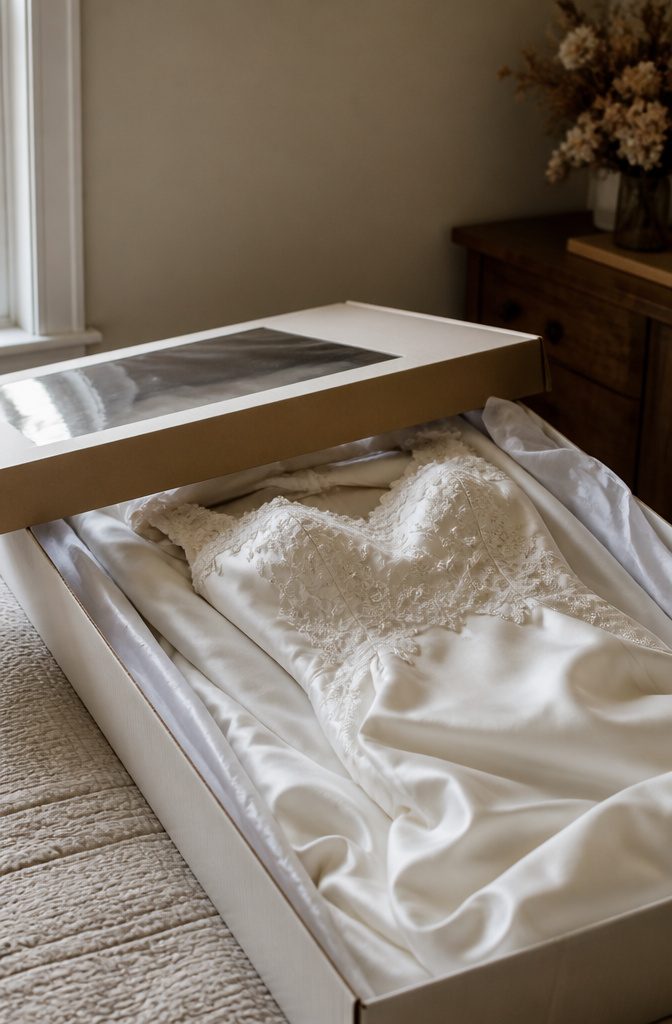
The $150 to $250 tier is where most brides land who just need the dress clean enough to box away. You get surface cleaning, light stain work, and a standard preservation box shipped back to you. For a polyester gown worn once with minimal damage, that is usually sufficient.
What this tier often skips is hand-finishing on delicate details like lace appliqués or beaded edges. The tissue inside the box is standard rather than acid-free, which matters less over five years than over twenty. One preservation company prices its entry service at $188–$214, right in this same band.
If you are storing the dress as a personal keepsake and not banking on your daughter wearing it, the trade-off is reasonable. The gown will look clean, the box will seal out dust, and you will have spent roughly the cost of a nice rehearsal dinner rather than a honeymoon upgrade.

Bride Musthaves:The wedding gown preservation box contains 1 wedding dress storage box (size: 29.9in*15.7in*7in), 1 pair of microfiber dust-free cloth gloves for operating,30 sheets of acid-free tissue paper to prevent the wedding dress from turning yellow.These are all essential items for professional wedding dress preservation

PERFECT SIZE: Medium 13.78" x 21.65" x 7.87" (35cm x 55cm x 20cm), which is ideal underbed storage for dresses, garments, quilts and blankets. For traditional dresses with lots of tulle we the larger option may be more ideal.

Spacious Design for All Gown Types-Measuring 33.07"×17.32"×7.87", this wedding dress box fits various wedding dress styles—from sleek silhouettes to voluminous ball gowns—keeping them flat, wrinkle-free, and well-preserved.
Standard Cleaning and Preservation Package
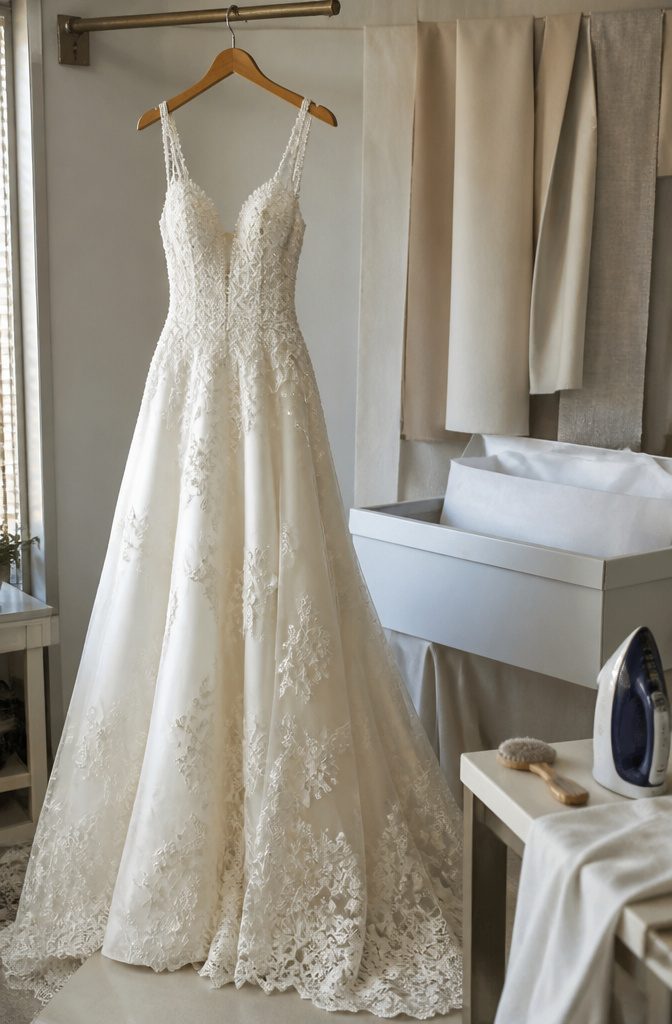
Most wedding gowns land in the $250 to $400 range for a standard cleaning and preservation package. That bracket covers hand-cleaning, targeted stain removal, steaming or pressing, and storage in an acid-free box with acid-free tissue. Two separate price surveys confirm this as the typical spend.
What pushes a gown into this middle tier rather than a basic kit? Silk or satin fabrics need gentler solvent and more careful handling. A hem that dragged through grass or dance-floor grit requires extended attention. Wine, makeup, or deodorant stains demand spot treatment before the full cleaning cycle. Beading, sequins, or lace appliqué that needs handwork rather than machine tumbling also nudges the quote upward.
This package is not the budget option, but it is where most brides stop. The balance is professional-grade cleaning with preservation methods that hold the dress in condition for years, without the premium markup of couture-level service. For a gown with some detail work and real fabric investment, this is the practical floor.

1、Quality Materials & Texture: Made with smooth rayon embroidery thread and clear glass beads secured onto a fine mesh background, providing an elegant tactile feel and subtle dimensional sparkle.

from nonwoven fabric, these breathable garment bags are odorless, a convenient for easy access.

from nonwoven fabric, these breathable garment bags are odorless, a convenient for easy access.
Premium Cleaning and Preservation Service
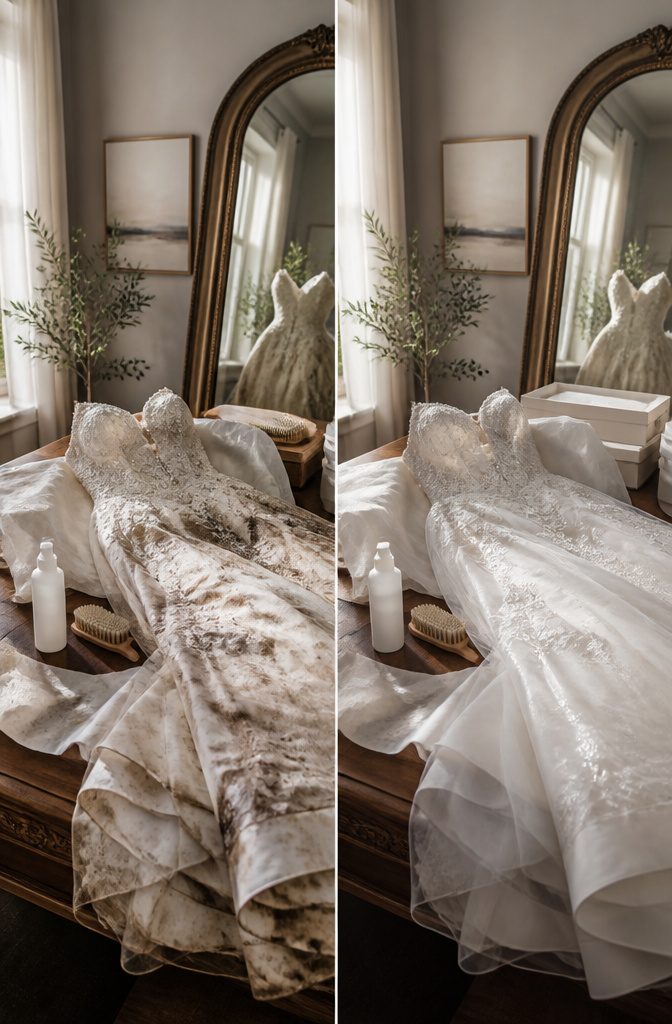
The $400 to $750 tier is where a gown goes when it has taken real damage or was built to outlast fashion itself. Heavy soiling from an outdoor ceremony, champagne stains worked deep into silk panels, or layered tulle that has dragged through grass and gravel: these push the price up because the labor changes from standard processing to hand work. I have watched specialists spend hours on a single Vera Wang bodice, cleaning each panel individually, wrapping beads and sequins one by one to protect them from solvent contact, then rebuilding the structure so boning and corsetry hold their shape through the process.
Museum-style boxing with acid-free tissue and a viewing window costs more than basic preservation packaging, and the difference shows up in the quote. Some services in this bracket also bundle insurance coverage, with policies I have seen running up to $10,000 against loss or damage. That is not a universal inclusion, so it pays to ask whether the quoted price carries it or leaves it as an add-on.

TIMELESS GLAMOUR: Dazzle when you step into any room with this beaded evening gown, featuring intricate beading across the sheer crew neckline and back, and down the classic short sleeves – finished with a satin waistband for an added touch of glam.

Elegant Evening Gown: Floor length jersey knit evening gown featuring a flattering V-neckline, beaded flutter sleeves, and ruched draping that create a graceful silhouette for formal occasions and special events.

MADE FOR THE OCCASION: This mother-of-the-bride gown combines timeless glamour with a tastefully refined silhouette, featuring classic short sleeves and a sleek boat neckline that beautifully showcases the collarbones while elongating the neck.
Designer Dress or Custom Work
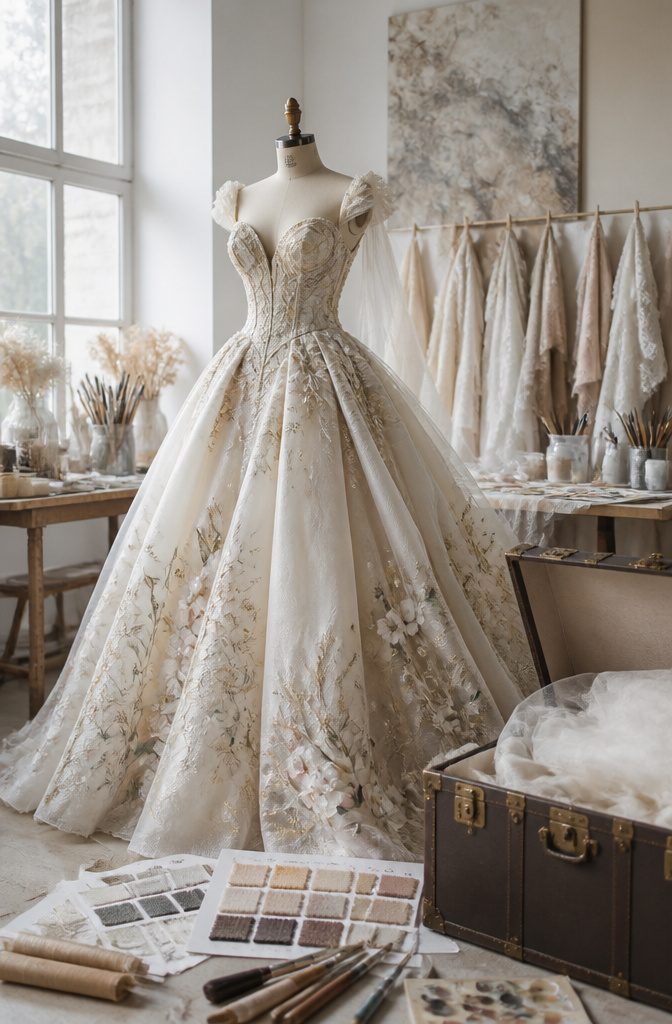
Haute couture gowns and fully custom pieces land in a tier where preservation stops being routine maintenance and starts being closer to art conservation. Think Vera Wang, Galia Lahav, or Berta: layered construction, imported fabrics, hand-painted details, and embroidery dense enough that standard cleaning methods would flatten or pull the work. $750 to $1,000 and beyond is the range here, and the upper bound keeps climbing if the gown needs restoration rather than just cleaning.
The specialists who handle this tier often treat archival pieces, museum loans, and century-old lace alongside modern couture. Their process is slower, more manual, and priced accordingly. Many services at this level include pickup and delivery, which sounds like a convenience perk but matters more than that: these dresses travel poorly, and a bride who drives her own gown across town in August heat can undo half the preservation work before the cleaner ever sees it.
A veil sent with the dress typically adds $35–$45 to the bill; sent alone, the same veil runs $85–$145. Antique veils needing restoration are priced case by case after inspection, with a 50% deposit required before any work begins.

Complete Storage Kit Included: Includes 1 wedding dress storage box, 30 acid-free tissue papers, and 1 pair of cotton gloves to help handle and store your gown safely while reducing yellowing and dust.

【Spacious, Crease-Free Storage】With generous dimensions of 33.3" x 16.8" x 7.9", our wedding dress storage box comfortably fits standard to large bridal gowns—including those with full skirts and intricate details—helping prevent wrinkles and folds.

PREMIUM WEDDING DRESS PRESERVATION KIT: This all-in-one preservation set provides everything you need to protect your cherished gown. The package includes a pair of soft microfiber gloves to prevent oil transfer and damage during handling, 20 sheets of acid-free pear blossom tissue paper to prevent yellowing and wrinkles, 5 natural cedar wood blocks to keep your dress fresh and dry, and a non-woven dust bag for storing your wedding shoes or accessories.
What Drives the Price Up
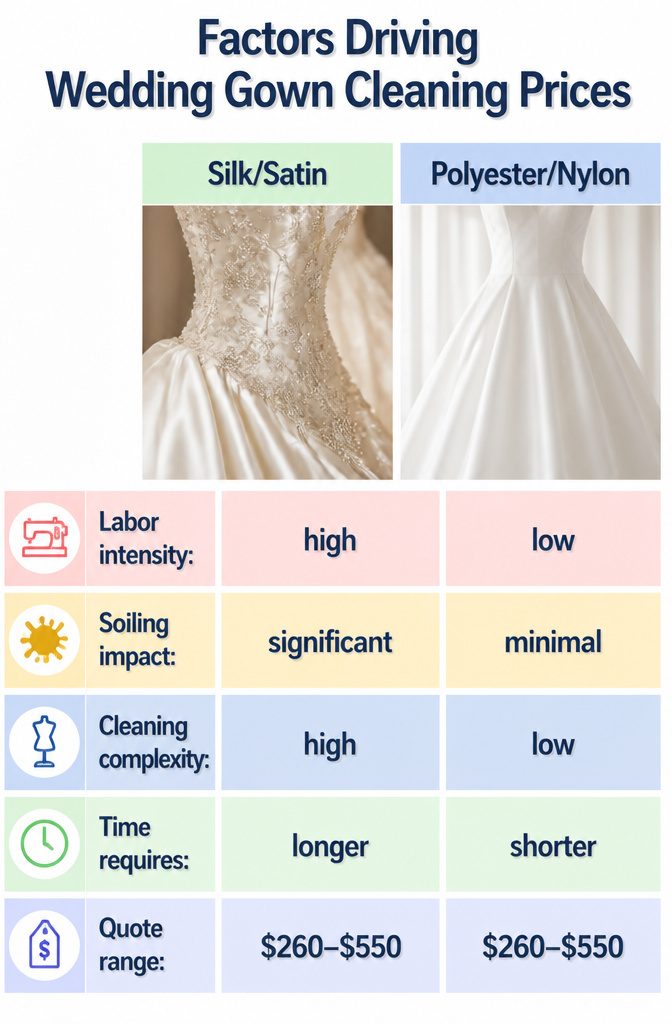
Silk and satin demand more labor than polyester or nylon because natural fibers swell and distort under standard solvents, so the cleaner has to hand-test every panel before committing to a bath. A heavily soiled hem, grass stains, or red wine on a silk bodice can add two to four hours of spot work before the gown ever enters the machine. The quote range I kept seeing ran $260–$550, and the top of that band belongs to dresses like a layered Vera Wang with ground-in train dirt, where each tier has to be floated separately so beads and attached slips do not abrade one another.
Design complexity stacks the hours just as fast. Beading means stitching a mesh guard over every crystal so it does not snag; a long train requires rolling rather than folding to set the creases out; multiple attached slips turn one garment into three or four separate cleanings joined at the waistband. Two of the services I looked at named fabric type, soiling level, and construction as the three non-negotiable variables in every quote, and the labor difference between a store sample gown and that large layered piece was the clearest example they gave. If your dress combines all three, expect to land in the upper third of any range you are offered.

🧺 Complete Starter Kit – Includes 6 cleaning cloths, stain remover, and wrinkle release spray for convenient at-home garment care

Safely clean your special care clothes at home

Starter kit with 6 Cleaning Cloths - NEW VERSION WITHOUT BAG
What the Service Actually Includes
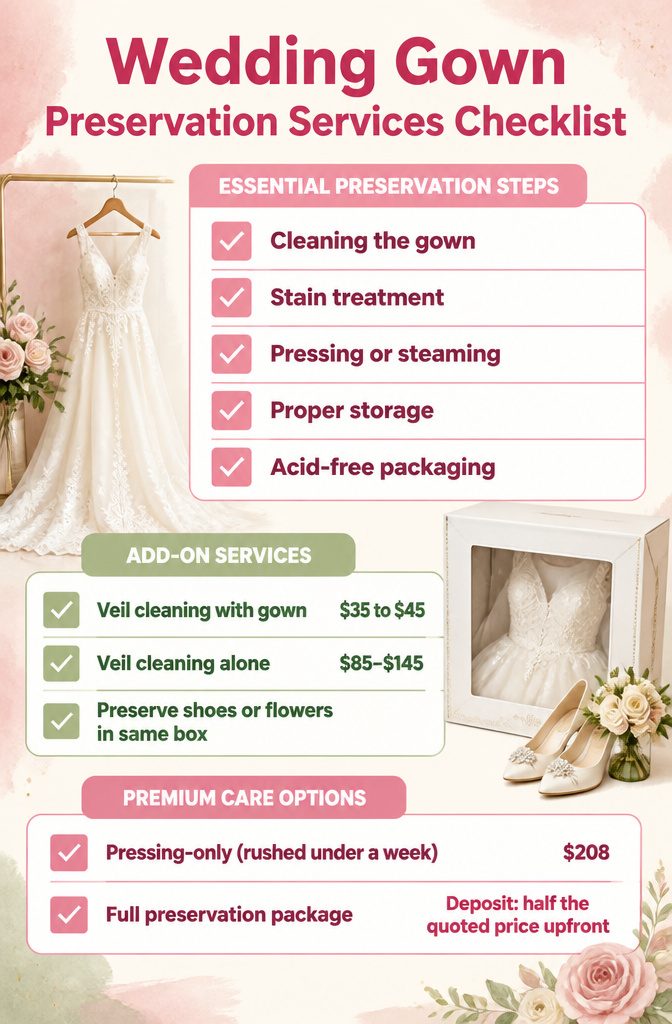
Wedding gown preservation starts with the cleaning itself, moves into stain treatment, then pressing or steaming, and ends with how the dress is stored afterward. The box matters more than most brides expect. Acid-free packaging prevents the yellowing that ordinary cardboard causes over years, because standard paper products release acids that slowly discolor fabric. A picture-window box lets you check on the gown without unsealing it, which protects the sealed environment inside.
Add-ons run the range from practical to sentimental. Veil cleaning paired with a gown runs $35 to $45; handled alone, that same service jumps to $85–$145. Some services will also preserve shoes or flowers in the same box, keeping the entire outfit in one place.
Higher tiers bring more intensive care. A pressing-only job before the ceremony, rushed under a week, costs around $208. The full preservation package includes deeper attention to fabric type, construction details, soiling level, and any repairs the gown needs. The deposit to start work is typically half the quoted price upfront.

ABOUT: The dimensions: 70" x 24" x 10" make the Garment Bag perfect for storing your garments and special items. Included in the Garment Bag is: 17" Muslin padded hanger, Acid-free tissue, an ID tag, and white cotton gloves.

【Bridal Gown Storage Box】Putting your dress at the back of the closet and forgetting about it is not an option. If you want to treasure the wedding dress loaded with love, happiness and joy,our wedding dress storage box is ideal. Made of breathable Oxford cloth,it contains a microfiber glove and acid - free tissue paper, offering comprehensive protection,helping your dress stay as stunning as on your wedding day.

ABOUT: This box has dimensions 32 ½” x 19 ½” x 7 ¼”. Includes: 1 viewing window, 1 acid-free box, 24 sheets of acid-free tissue paper, 1 muslin wrap, 1 information card, 1 muslin cover, 1 muslin accessory bag, 1 muslin drawstring bag, 1 bust form, 1 pair of cotton gloves, and 1 desiccant packet.
How Long the Process Takes
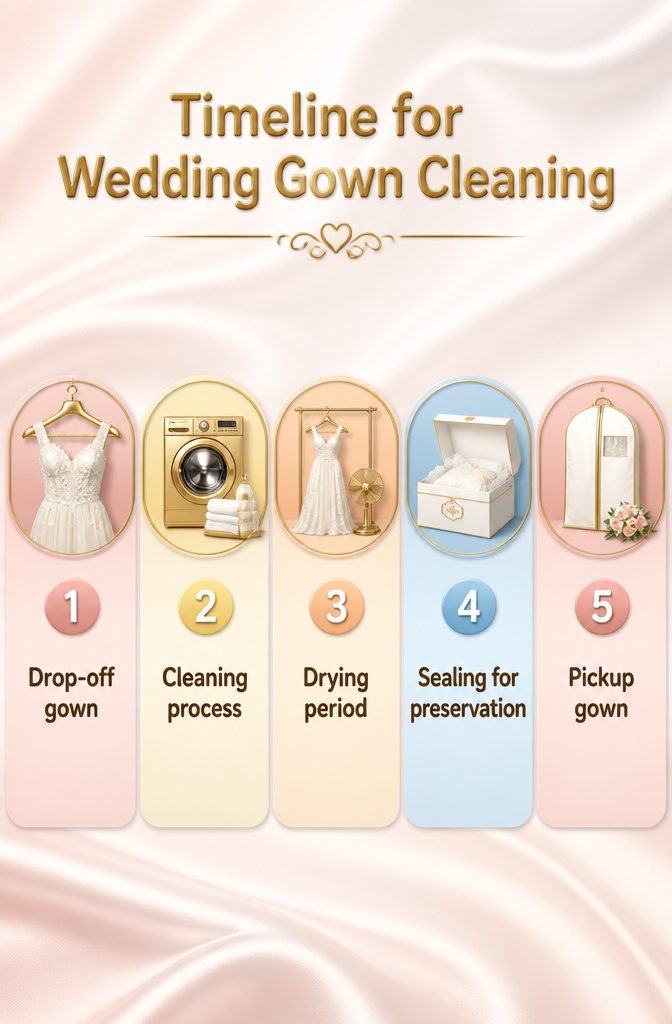
Most cleaners need two to six weeks from drop-off to finished gown, and that window shifts based on how busy they are in peak wedding season and how complex your dress actually is. Rush service exists, but the upcharge runs steep enough that it can reshape your whole budget line for this task.
Preservation work tacks on extra days because the gown has to be completely dry before anyone seals it into a box. Moisture trapped with fabric is what turns a stored dress yellow over the years, so the waiting step is not negotiable even when the calendar is screaming at you.
I mailed my own gown two weeks before an anniversary photo shoot, convinced the timeline would work in my favor. The tracking number sat unchanged for days while I refreshed the page and calculated whether I would be posing in a backup dress from a rental site. It arrived the morning before, which I count as luck rather than planning, and I have since built in a full extra month for anything involving bridal timing.

from nonwoven fabric, these breathable garment bags are odorless, a convenient zipper for easy access.

from PVC, these breathable garment bags are odorless, a convenient for easy access.

from nonwoven fabric, these breathable garment bags are odorless, a convenient for easy access.
Red Flags I Have Seen
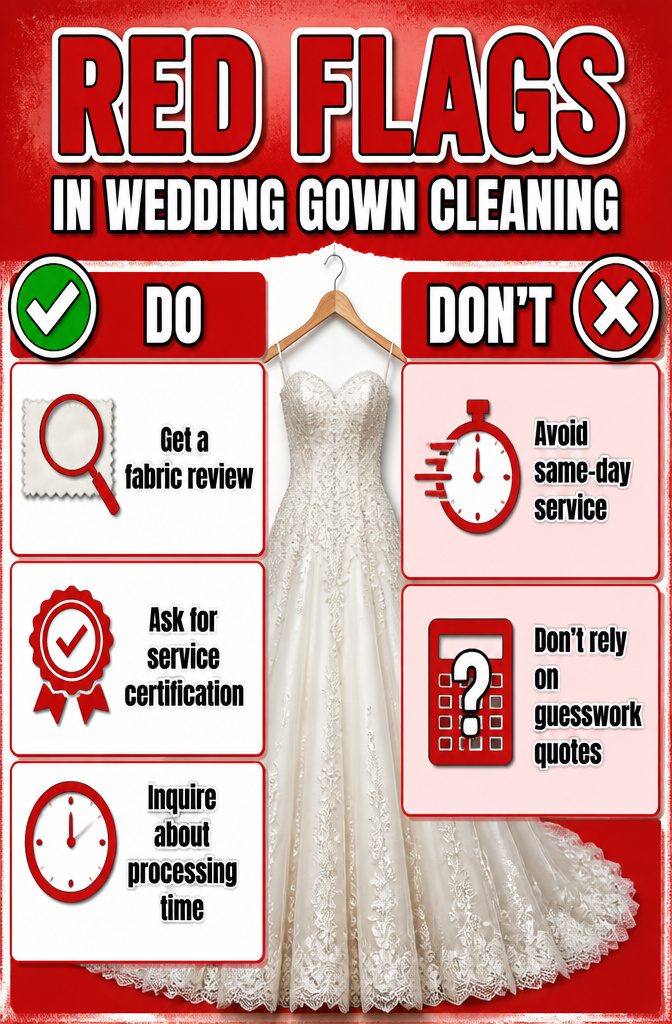
A cleaner who quotes how much to dry clean a wedding gown without touching the fabric first is guessing, not pricing. Reputable specialists require an in-house review because silk, satin, and layered construction change the labor entirely. The range I have seen runs $260–$550, but that spread exists because someone looked at the actual soiling and the actual seams.
Machine-washing every gown is another shortcut. Some dresses survive it; many do not, and a shop that treats a beaded Vera Wang the same as a cotton sundress is not handling your piece with the time the price implies.
Storage boxes without acid-free certification will yellow the dress over years, not months. Ask to see the certification; the box should carry it, not just the sales pitch.
Same-day service is the one that makes me pause most. Proper cleaning and preservation take time, and a shop promising to turn a heavily soiled gown around in hours is almost certainly skipping steps that protect the fabric. The deadline pressure brides feel is real, but this is one place where faster is not better.

ROMANTIC ALLURE: Make a sophisticated statement in this long formal gown, with intricate beading across the sheer illusion neckline and flattering short sleeves - a perfect choice for black-tie events, elegant weddings, and more.

ROMANTIC ALLURE: Make a sophisticated statement in this long formal gown, with intricate beading across the sheer illusion neckline and flattering short sleeves - a perfect choice for black-tie events, elegant weddings, and more.
Elegant Evening Gown: Floor length jersey knit evening gown featuring a flattering V-neckline, beaded flutter sleeves, and ruched draping that create a graceful silhouette for formal occasions and special events.
Frequently Asked Questions
How much does it cost to dry clean a wedding gown?
Most brides pay between $250 and $750 for standard wedding gown cleaning and preservation. Basic kits start around $150, while heavily beaded designer pieces or gowns with serious staining can exceed $1,000. Calling two or three local cleaners is the best way to find where your area sits on that spectrum.
What factors affect the cost of cleaning a wedding dress?
Fabric type, level of soiling, and design complexity are the three main drivers. Silk and satin demand gentler solvents and more hand work than polyester. A hem dragged through grass or wine stains on a bodice can add hours of spot treatment. Beading, lace appliqués, and multiple layers also stack labor because each element needs individual protection.
What services are included in wedding dress cleaning?
Standard packages cover hand-cleaning, targeted stain removal, pressing or steaming, and storage in an acid-free box with acid-free tissue. Higher tiers add museum-style boxing with a viewing window, insurance coverage, and intensive hand work on delicate details. Veil cleaning paired with a gown typically runs $35 to $45.