A maid of honor is the bride’s chief attendant and closest support system throughout the entire wedding process. The role carries real financial weight, usually running between $500 and $2,500 once you factor in the dress, travel, gifts, and your share of the pre-wedding events. She is the one fielding panicked texts about seating-chart wars at midnight, holding the bouquet during the ceremony, and keeping a wedding day emergency kit stocked with safety pins and fashion tape for when a bustle tears loose thirty minutes before vows.
What a Maid of Honor Actually Is
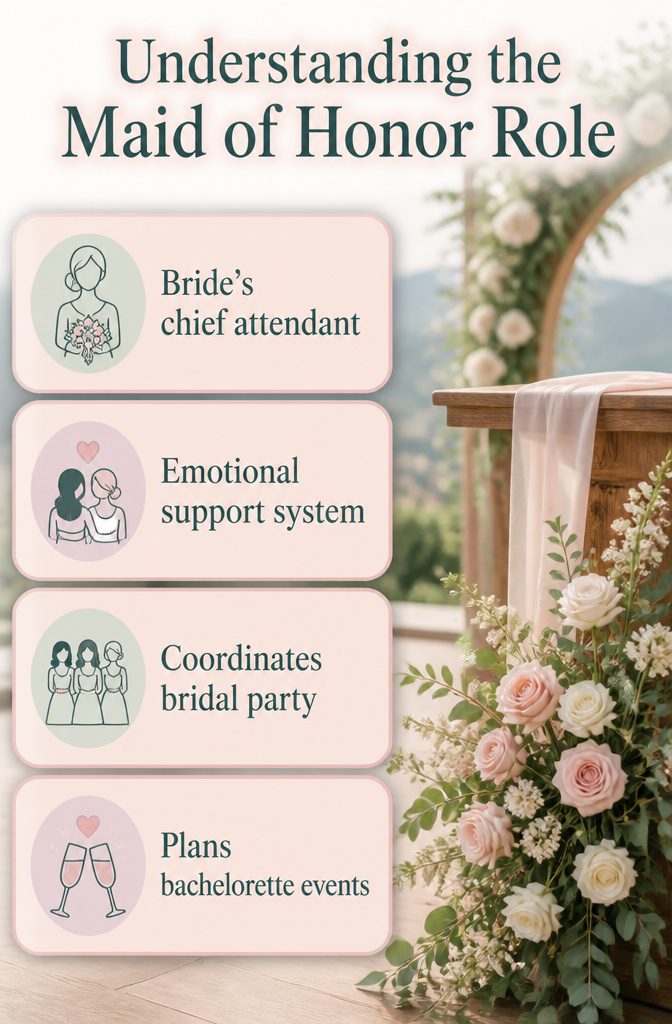
The maid of honor is the bride’s chief attendant and closest support system throughout the entire wedding process, typically a sister, cousin, or best friend who takes on both emotional and logistical weight. She is the one fielding panicked texts about seating-chart wars at midnight, showing up to vendor meetings when the bride cannot face another spreadsheet, and holding the bouquet during the ceremony itself.
Vogue puts the core of it plainly:
The maid of honor is a role designated by the bride as the leader of the bridal party… In this role, they will serve as the bride’s go-to throughout the entire wedding process.
That "go-to" status is what separates this role from simply being a bridesmaid with a fancier title. The maid of honor coordinates communication across the wedding party, consults on planning decisions, and plans the bachelorette and bridal shower. She is the operational hub and the emotional anchor at once.
The title’s origin is older than the modern wedding industry. The "maid" once indicated an unmarried woman, with a married counterpart called the "matron of honor," though that distinction has largely faded. Some historians trace the role back to ancient Roman and Anglo-Saxon customs where attendants dressed identically to the bride to confuse evil spirits or ill-wishers, or served as legal witnesses to the marriage contract itself.
Emotional Support Before the Wedding
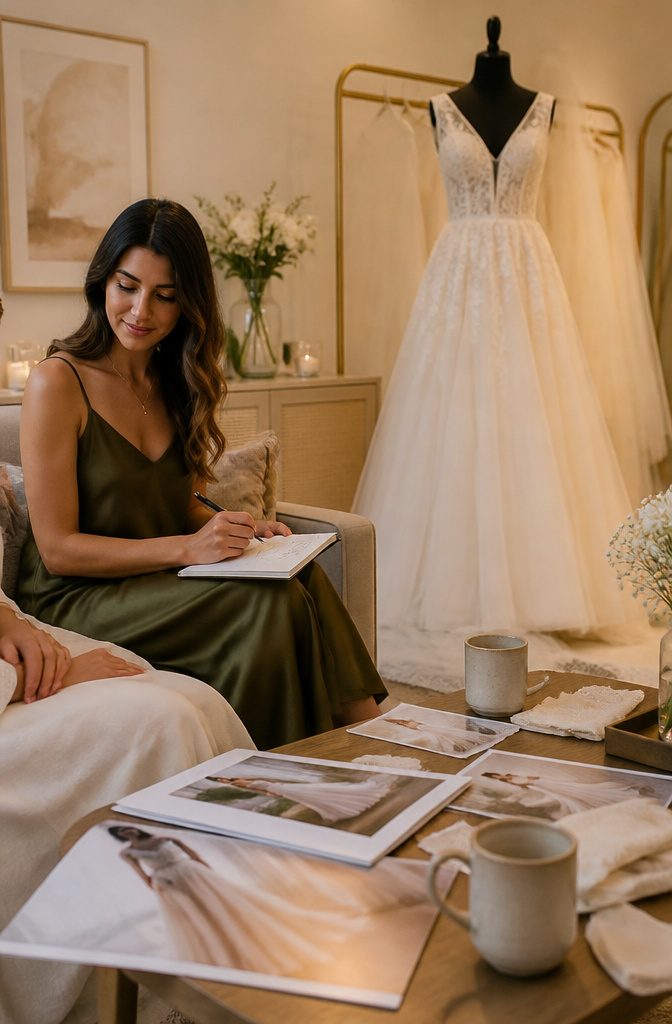
Stress shows up early in wedding planning, usually around the nine-month mark when the dress hunt begins. That is when a maid of honor shifts from occasional helper to something closer to a steadying presence. The bride is juggling vendor calls, budget spreadsheets, and the creeping sense that every decision is permanent. Someone who knows her well enough to say "that silhouette actually works on you" without making it a performance becomes more useful than another Pinterest board.
I have watched friends in this role treat dress appointments like a social event, which misses the point. The bride needs someone tracking which salon had the sample she loved, which styles are already ruled out, and whether the champagne is actually allowed in that boutique. The emotional weight of finding "the one" is real, but so is the exhaustion of repeating the same appointment four times because nobody took notes.
The support extends past shopping. Between nine and twelve months out, the bride is still excited enough to talk details, but far enough from the deadline that doubts feel enormous rather than urgent. A maid of honor who checks in regularly, who remembers what she wanted three months ago when she is tempted to scrap it all, saves more than time. She saves the bride from herself.
Dress Shopping and Fittings
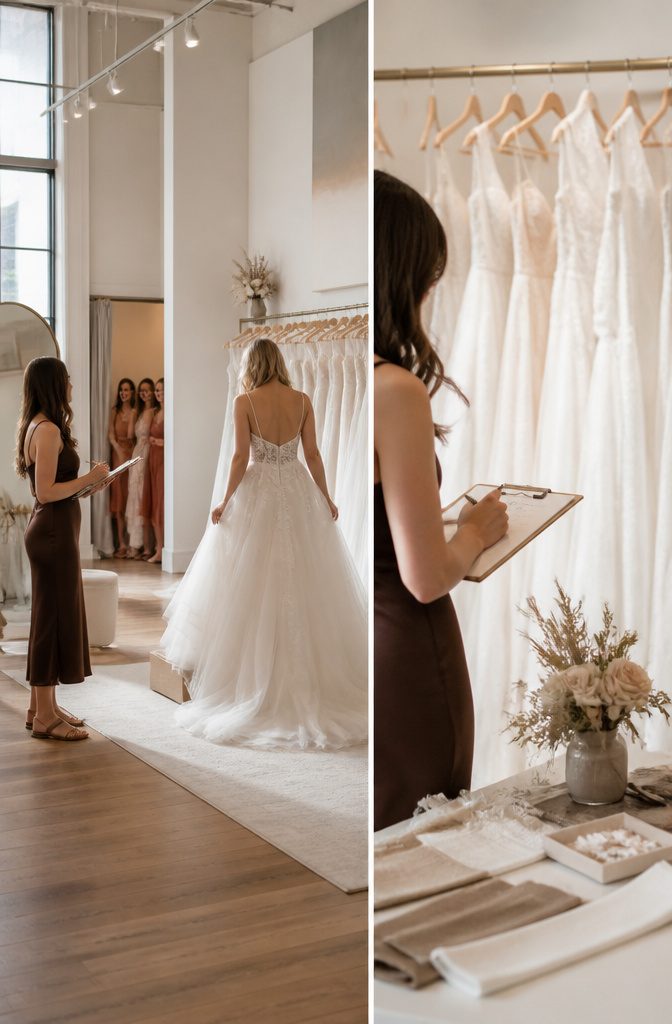
Dress shopping starts around 9 to 12 months before the wedding, and that lead time is not generous. Bridal salons book appointments weeks out, and weekend slots at popular boutiques disappear fast. The maid of honor who gets the calendar open early saves the bride from scrambling.
At the appointment, the role splits in two. Half of it is logistics: confirming the time, keeping track of which salon showed which gown, making sure the bride eats something before she is decision-fatigued. The other half is reading the room. Some brides want direct opinions on whether a silhouette flatters them. Others want validation for whatever they already love. The mistake is volunteering criticism she did not ask for.
Bridesmaid dress coordination runs on the same 9-12 month window, but the politics are harder. The maid of honor becomes the buffer between the bride and the rest of the party: collecting sizes, sharing options, chasing the one bridesmaid who does not respond to the group chat, and deciding whether a complaint actually needs to reach the bride or can be solved with a different neckline. A shared calendar with fitting dates and ordering deadlines keeps everyone from blaming each other later.
Pre-Wedding Events
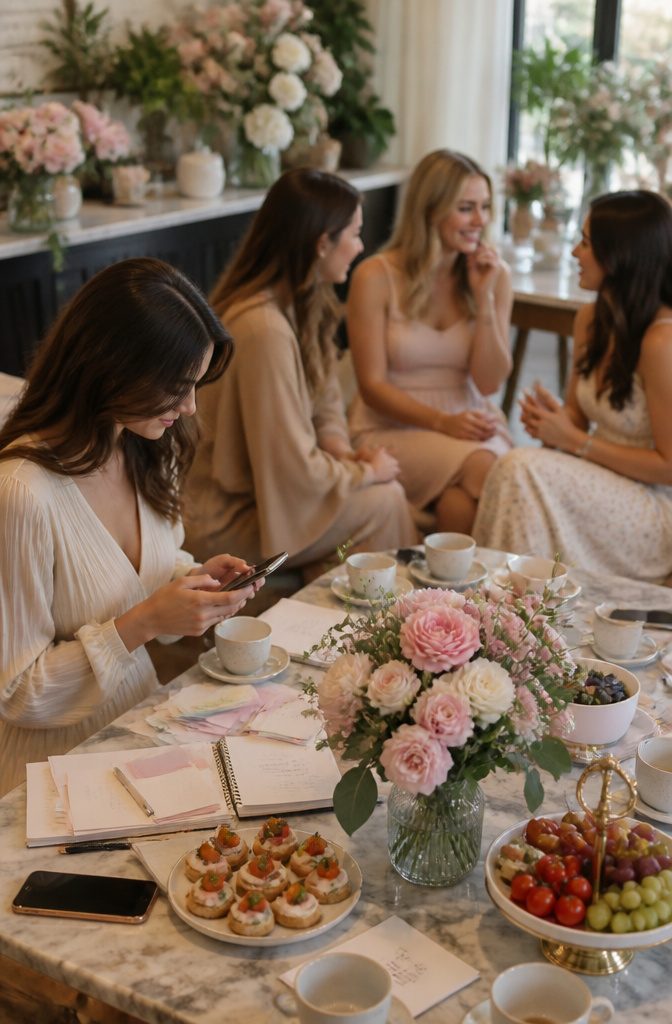
The bridal shower and bachelorette party sit on the maid of honor’s desk like two separate jobs that somehow share the same deadline. For the shower, the window is four to six weeks before the wedding: secure the venue, settle the guest list, and send invitations that give people time to plan around it. The bachelorette needs even more runway if it involves travel. Flights and the good group houses book out fast, so starting four to six months ahead is the safer bet. A local night out can wait until four to eight weeks out, though the popular restaurants still reward an early call.
What convinced me, reading through the guides, is how easy it is to turn these celebrations into your own production instead of the bride’s. The shower is meant to honor her with family and close friends in the room; the bachelorette is meant to actually relax her. That means checking her comfort level before you book the pole-dancing class or the wine-country bus tour, and it means splitting costs across the bridal party so no one drops out from sticker shock. Someone has to be the point person collecting Venmos and answering "what time do we meet" texts, and that someone is you. The bride should not be managing her own people while she is also managing caterer tastings and seating-chart politics.
Logistics and Planning Help
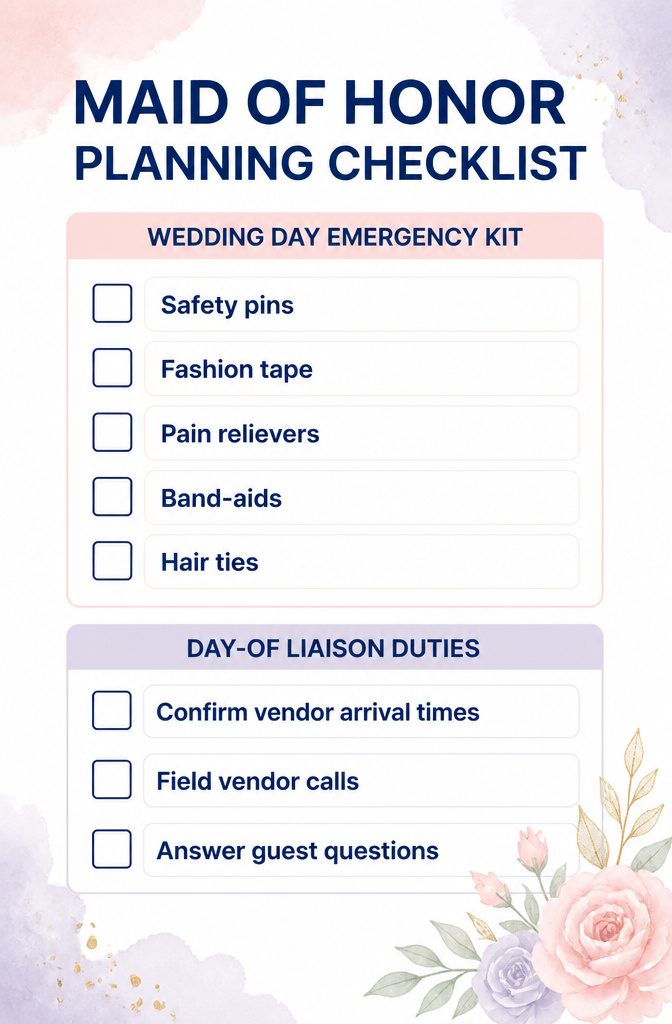
A wedding day emergency kit lives in your hands, not the bride’s. The sources all point to the same core items: safety pins for popped buttons, fashion tape for slipping necklines, pain relievers, band-aids, hair ties, tissues, mints, and a few extras like stain remover sticks and extra bobby pins. Keep it within reach from the moment you start getting ready, because the point is solving problems before the bride even notices them.
The other half of this role is running interference. In the final weeks, you should confirm vendor arrival times, payment schedules, and any special instructions they need, keeping a spreadsheet or document with all contacts and agreed services. On the day itself, step in as the liaison so the bride isn’t interrupted with logistical questions. That means fielding vendor calls, answering guest questions, and keeping an eye on the clock if the schedule starts slipping. The bride stays calm; you handle the hiccups.
Getting Ready Together
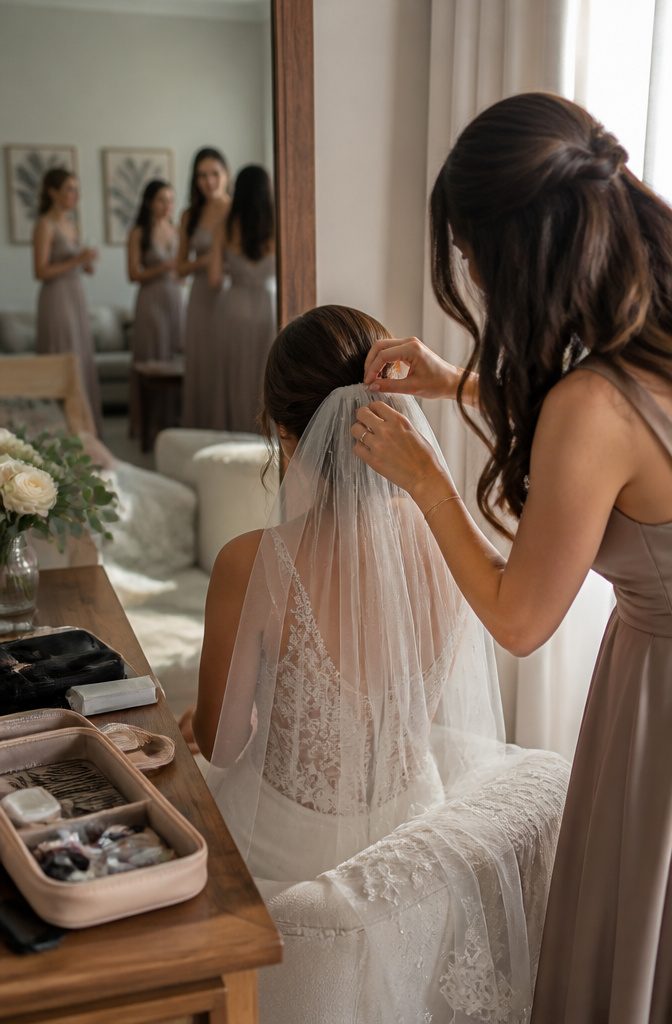
The morning of the wedding, the maid of honor’s real work starts in the getting-ready suite. She helps the bride into her gown, adjusts the veil, and checks that the bustle is secure enough to last through hours of photos. The photographers usually circle the room for candids during this, so the moment gets preserved without anyone posing for it.
She keeps a just-in-case kit within reach: pain relievers, band-aids, safety pins, fashion tape, hair ties. The bride will not think to ask for these, but she will need at least one of them.
During the ceremony itself, the maid of honor holds the bride’s bouquet while the couple exchanges vows and rings. She also arranges the train and veil at the altar so the photographer captures the dress exactly as intended. Some weddings assign her the groom’s ring too, if there is no ring bearer.
The harder part is the one no kit covers. She watches the bride’s breathing, steps in when the timeline slips, and quietly keeps the morning moving without making the bride feel managed. The best maids of honor do this so smoothly the bride never notices the moment she almost panicked.
Managing the Wedding Day
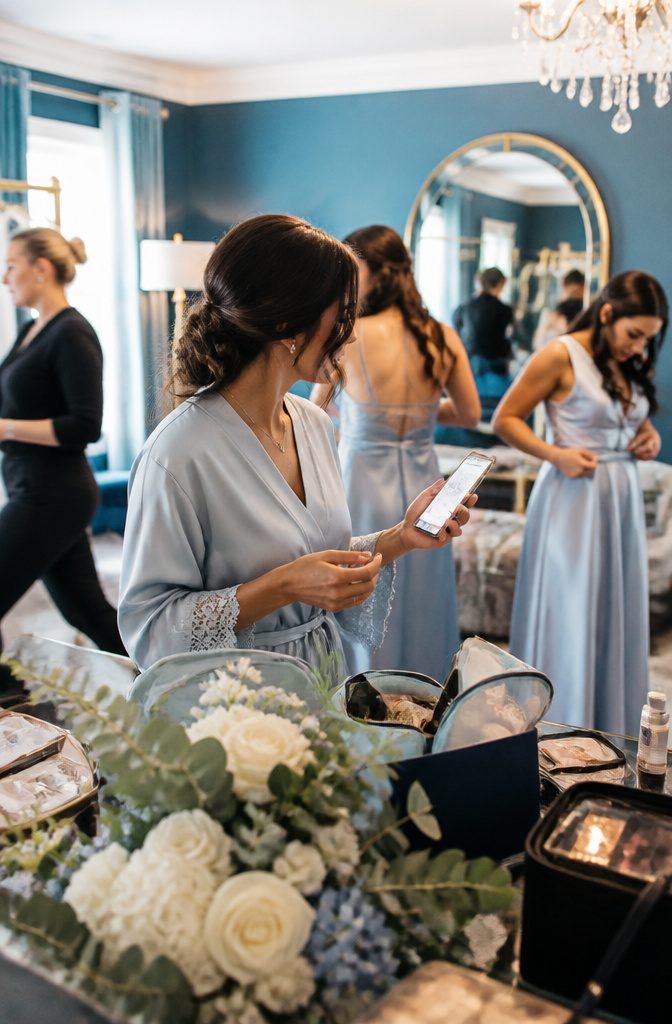
The morning of the wedding runs on a timeline that lives in your phone and nowhere else unless you put it there. Hair, makeup, dressing, photos, transportation: each block needs a hard start time and fifteen to twenty minutes of buffer before the next one, because someone will need a bobby pin, or the lipstick will be in the wrong bag, or the car will idle in the wrong driveway. Send the schedule to every bridesmaid the night before, then again at 6 a.m. The second send feels excessive until the first text comes in asking what time to show up.
Your real job is to make problems disappear before they reach the bride. The florist is running late, the groom’s mother has questions about the seating chart, the photographer wants to start family portraits early: these land on you, get solved, and never get mentioned. The bride stays in what one planner called a state of blissful ignorance, which sounds like a small thing until you watch a bride actually achieve it.
The toast comes later, after the ceremony and the cocktail hour. Keep it brief, warm, slightly funny, and rehearse it out loud at least twice. Reading it in your head is not the same; your voice will shake more than you expect, and knowing the exact next line keeps you moving through it. After that, the floor opens with you. First one out, arms up, terrible dancing encouraged.
Maid of Honor vs. Matron of Honor
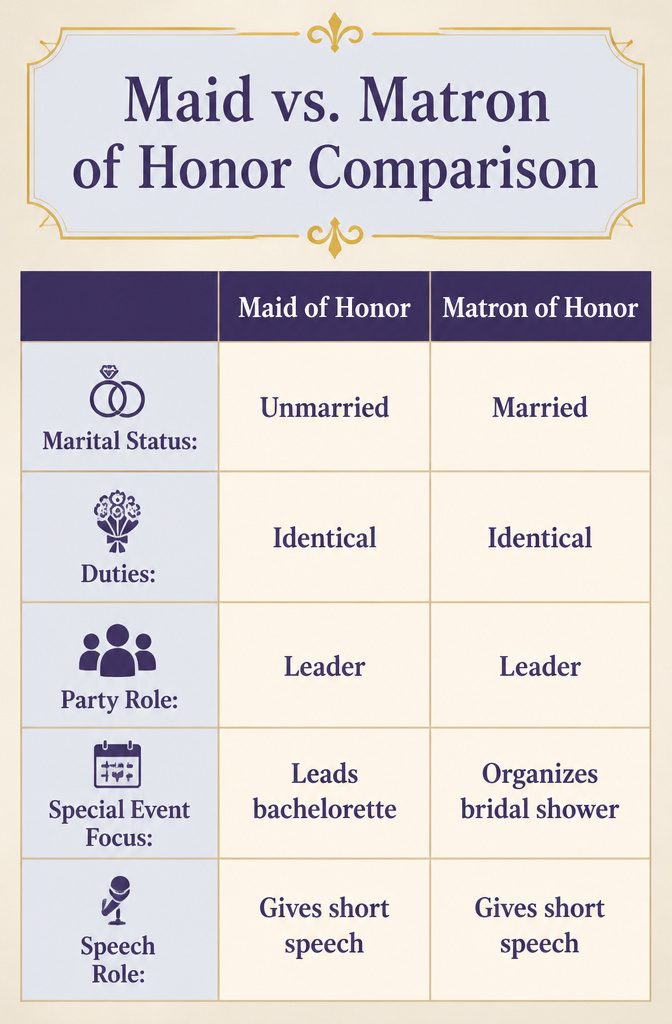
The formal distinction is marital status only. A maid of honor is unmarried at the time of the wedding; a matron of honor is married. Their duties, standing within the wedding party, and day-of responsibilities are otherwise identical.
Some brides choose both, a maid and a matron, when two people deserve equal honor. In that case, responsibilities typically split by category: one leads the bachelorette while the other organizes the bridal shower, or both give short speeches instead of one long one.
The title the bride gives you is based solely on your marital status. A matron carries the same level of importance as a maid. Think of it like a partnership where both stand out as her most important people.
In practice, the distinction matters far less than the relationship itself. Many modern couples use the terms interchangeably or replace them with gender-neutral alternatives entirely.
How the Role Differs from Bridesmaids
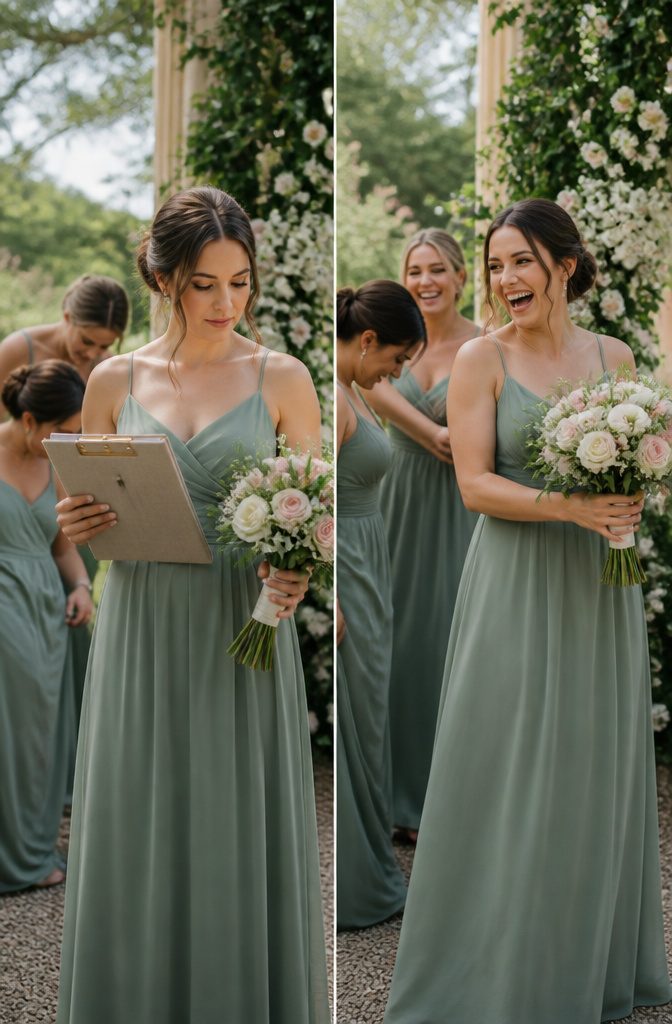
The maid of honor is the primary point person for the bride, while bridesmaids fill supporting roles. At my sister’s wedding, the distinction became obvious the morning of: the bridesmaids helped with hair and makeup, but the maid of honor was the one fielding calls from the venue, tracking down the photographer, and deciding whether the florist’s late delivery was worth waking the bride over.
Bridesmaids attend events and assist when asked. The maid of honor coordinates them. She plans the bachelorette, organizes the bridal shower logistics, and makes sure the other bridesmaids know fittings from final alterations. If a bridesmaid drops out or a dress order goes wrong, the maid of honor handles it so the bride does not have to.
On the wedding day itself, bridesmaids walk the aisle and pose for photos. The maid of honor keeps the timeline moving, holds the bouquet during the ceremony, and helps the bride navigate a gown in the restroom. She is the one the bride leans on, literally and otherwise.
The gap is not about closeness. A bride may love every woman in her party equally. The maid of honor simply carries the managerial weight so the bride can focus on getting married.
What Being a Maid of Honor Costs
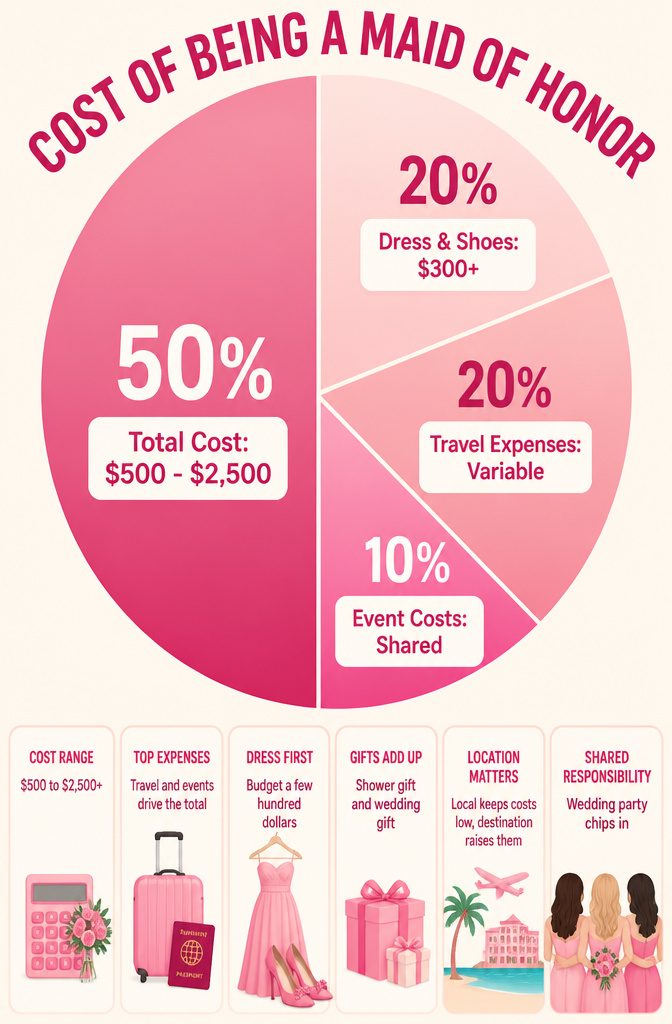
The total cost of standing beside a close friend at the altar usually lands somewhere between $500 and $2,500, and the upper end keeps climbing if the wedding involves flights, hotels, or a destination bachelorette. The dress and shoes come first, typically running a few hundred dollars before alterations. Travel expenses pile on fast for out-of-town ceremonies, especially when the wedding party arrives a day early for rehearsal. Gifts follow: one for the shower, another for the wedding itself, with most of us spending more on the latter. The pre-wedding events sting more than people expect. The maid of honor plans and partly funds both the bridal shower and the bachelorette party, but the whole wedding party chips in rather than leaving her to carry it alone. Location and scale shift everything. A hometown wedding with a casual bachelorette dinner keeps costs near that $500 floor. A cross-country flight to a resort wedding with a weekend-long party can push well past $2,500 before the dress even enters the picture.
What Goes in the Wedding Day Emergency Kit
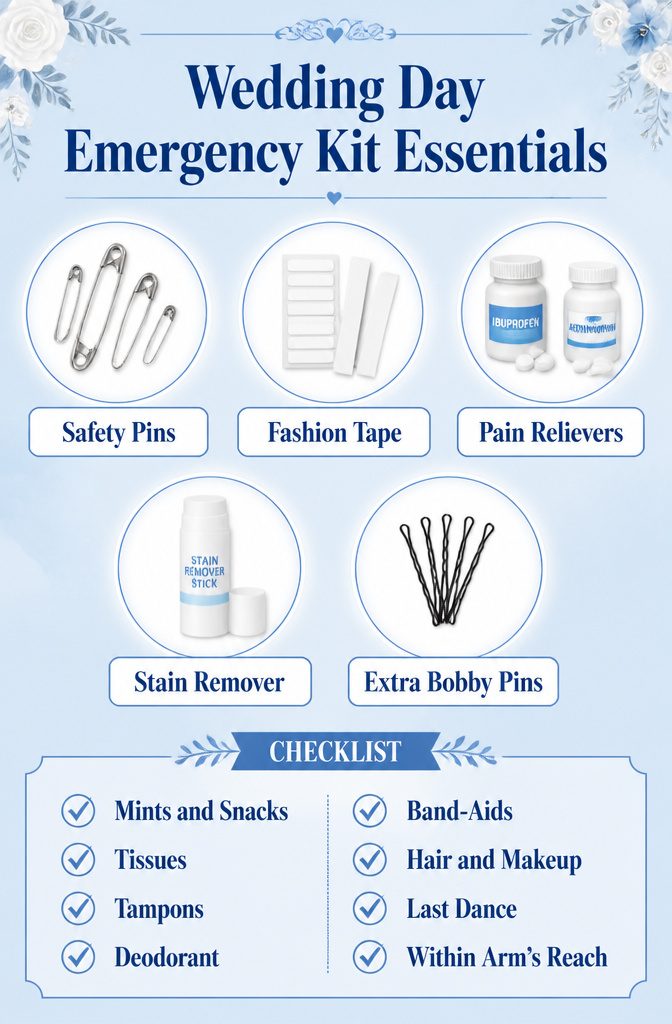
The morning I watched a bride’s bustle tear loose thirty minutes before the ceremony, I learned why safety pins belong in every emergency kit first. A handful in two sizes, small for delicate fabric and large for heavy satin, buys you the twenty minutes a seamstress would need.
Fashion tape handles what pins cannot: a plunging neckline that shifts during photos, a strapless bra that peeks from a sweetheart cut, a hem that grazes the floor just wrong. Double-sided strips, not the roll, because precut pieces save fumbling.
Pain relievers matter more than most maids of honor pack for. The bride wakes with a tension headache, or a bridesmaid’s new heels blister before the first look. Ibuprofen and acetaminophen together cover inflammation and pain type differently; include both.
Beyond those three, the kit fills with what the day actually demands: stain remover sticks for lipstick on ivory, extra bobby pins for humidity-frizzed updos, mints and snacks for a bride who forgot to eat, tissues, tampons, deodorant, band-aids. Keep the bag within arm’s reach from hair and makeup through the last dance, because the moment you leave it in the bridal suite is the moment someone needs it.
Frequently Asked Questions
What are the responsibilities of a maid of honor?
A maid of honor serves as the bride’s chief attendant and closest support system throughout the wedding process. She coordinates communication across the wedding party, plans the bachelorette party and bridal shower, and acts as the operational hub and emotional anchor. On the wedding day itself, she holds the bride’s bouquet during the ceremony, keeps the timeline moving, fields vendor calls, and handles problems before they reach the bride.
How does a maid of honor differ from a matron of honor?
The difference is strictly marital status. A maid of honor is unmarried at the time of the wedding, while a matron of honor is married. Their duties, standing within the wedding party, and day-of responsibilities are otherwise identical. Some brides choose both, splitting responsibilities by category such as one leading the bachelorette while the other organizes the bridal shower.
What should be included in a wedding day emergency kit?
A maid of honor’s emergency kit should include safety pins in two sizes, fashion tape, pain relievers, band-aids, stain remover sticks, extra bobby pins, hair ties, tissues, mints, snacks, tampons, and deodorant. The kit stays within arm’s reach from hair and makeup through the last dance, because problems arrive the moment you walk away from it.