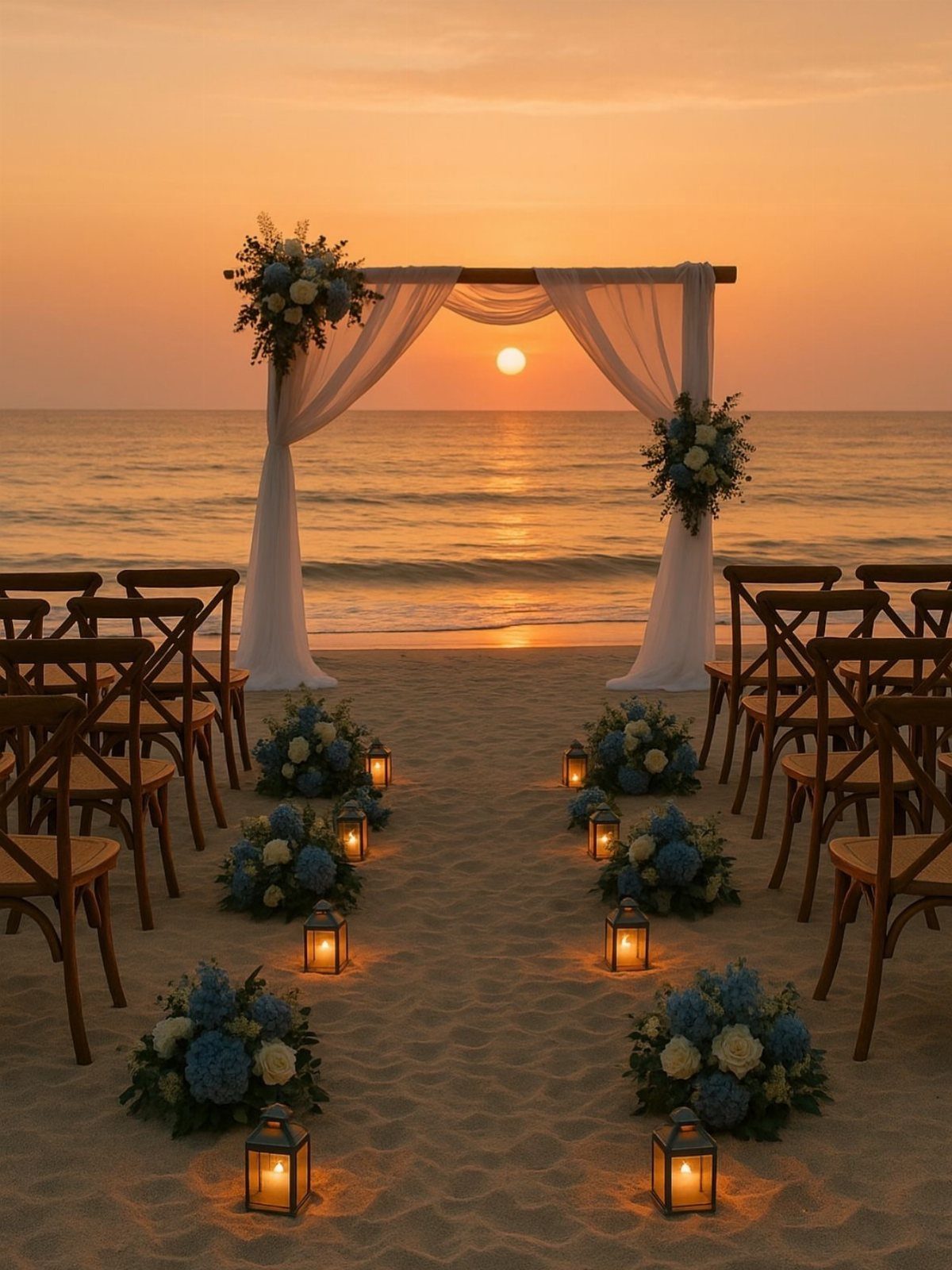
A beach wedding lets you skip most of the decor budget since the ocean does the work, but you still need a plan for wind, sand and sunset timing.
The ideas that work depend on what your venue allows: open flame often gets banned, chairs need stabilizing in sand, and anything lightweight has to be weighted down or staked.
A driftwood arch needs buckets of sand or sandbags to stay upright, and string lights over the tables run on battery packs if the beach has no outlets.
1. Beach Wedding Arches
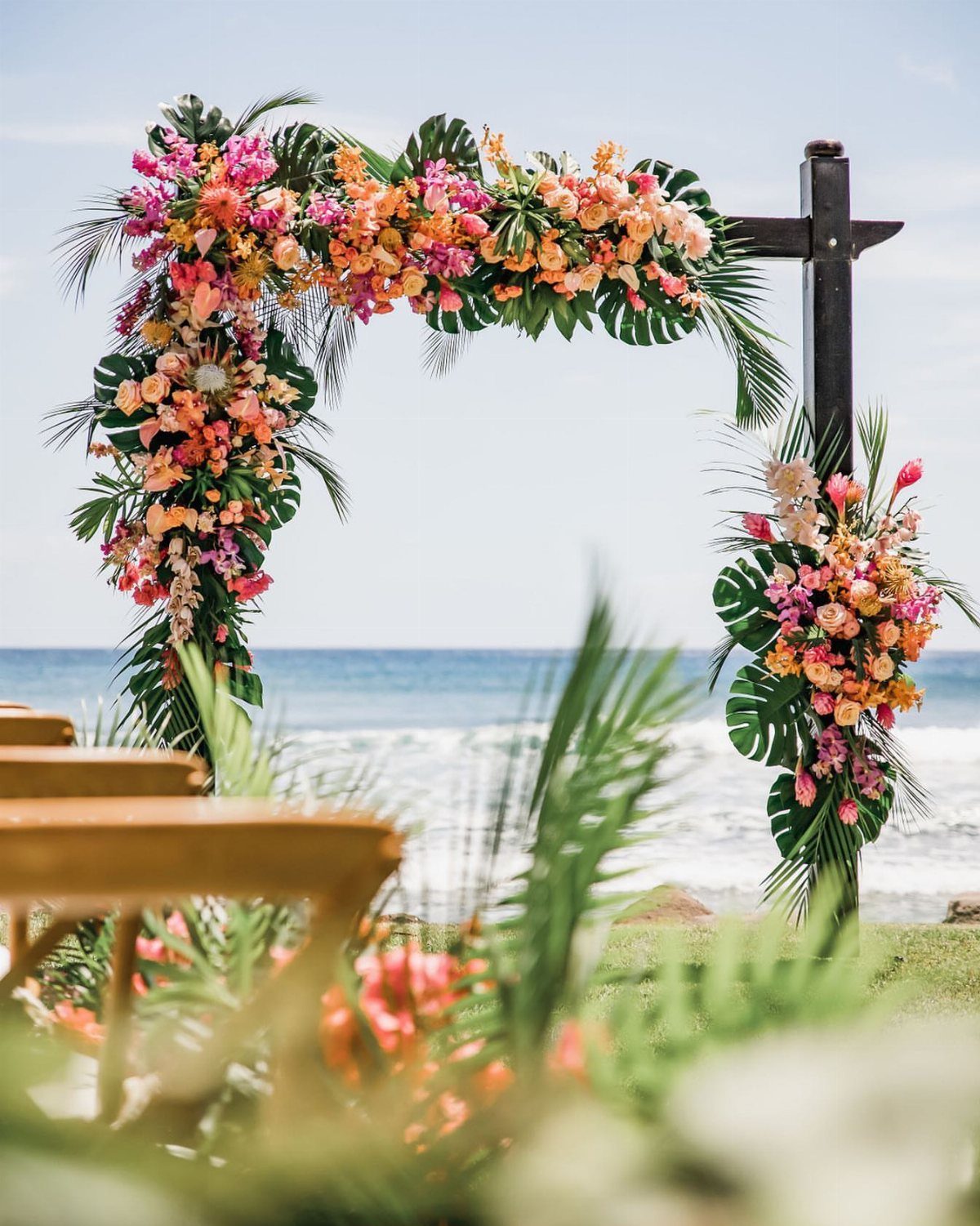
An arch gives the ceremony a defined focal point and frames the couple against the ocean. A dark wood arch feels substantial without blocking the view, especially when you dress it with tropical blooms in coral, fuchsia and orange.
If you are getting married on sand, anchor the legs in buckets filled with concrete or wet sand and buried a foot down.
On grass or a patio, weight alone usually holds. Fabric draping works too, but wind picks it up fast; flowers and greenery stay put better in coastal breeze.
2. Seashell Centerpieces
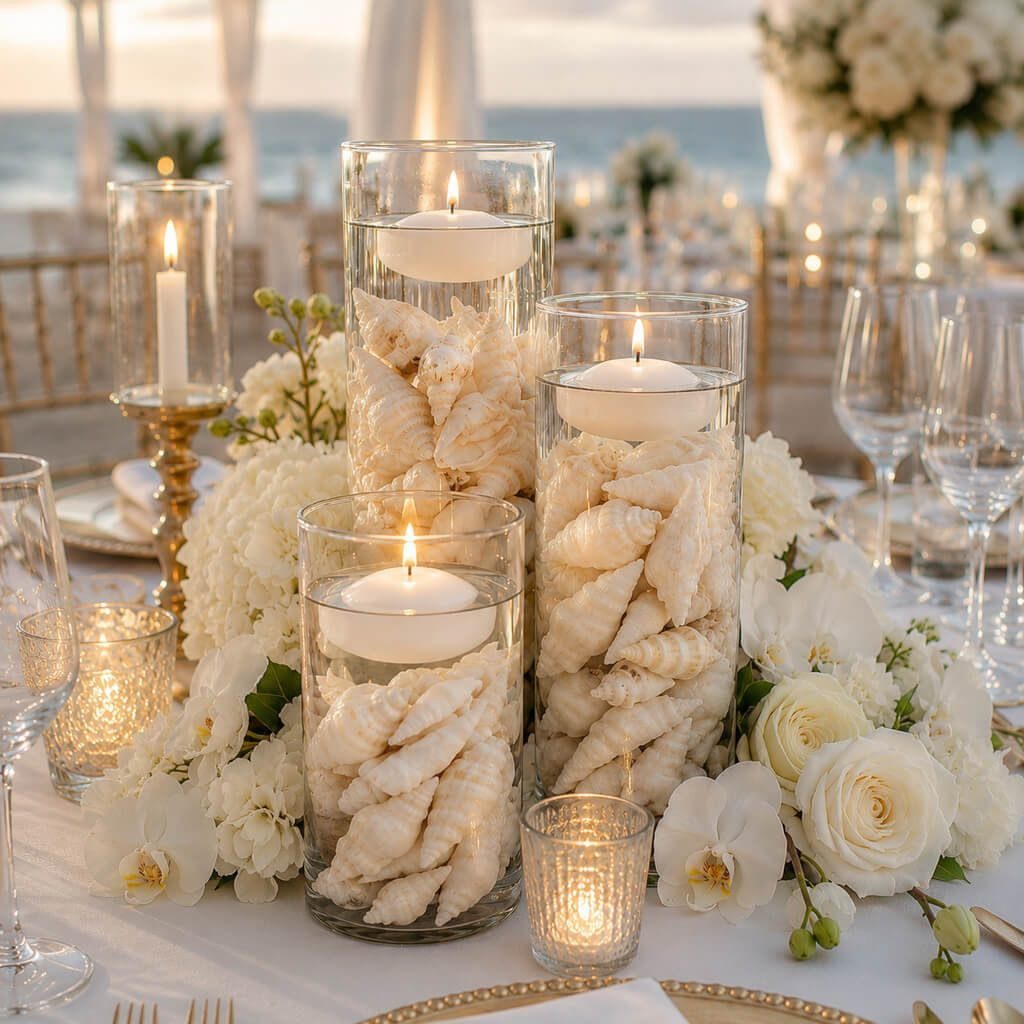
Fill glass cylinders or fishbowls with shells you collected or bought in bulk, float tea lights on top, and set them on white or cream linens.
The setup visible here uses 3 cylinders per table with white flowers clustered around the base.
Shells are free if you gather them yourself; online you can find them sold in bulk by the pound.
Floating candles burn long enough for most receptions. Glass containers catch the light and show off the shells without adding bulk to the table.
3. Beach Wedding Signs
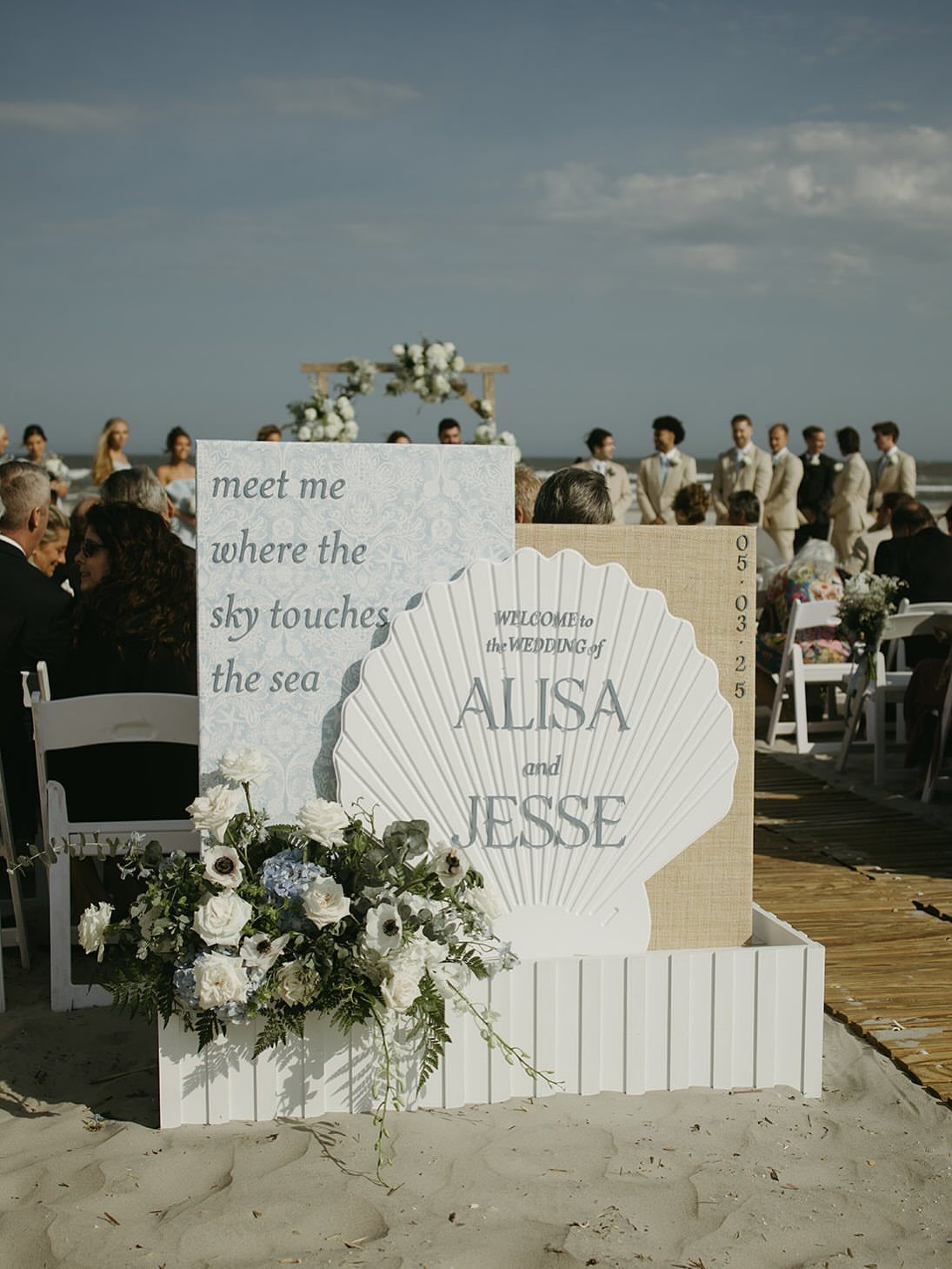
A welcome sign tells guests they are in the right place and sets the tone before they reach their seats.
You can make a version from plywood: trace a large shell shape, cut it with a jigsaw, sand the edges smooth, and paint it white or pale blue.
Hand-letter the names and date in a dark color, seal the whole thing with outdoor mod podge, and mount it on a wooden stake.
4. Beach Wedding Cakes
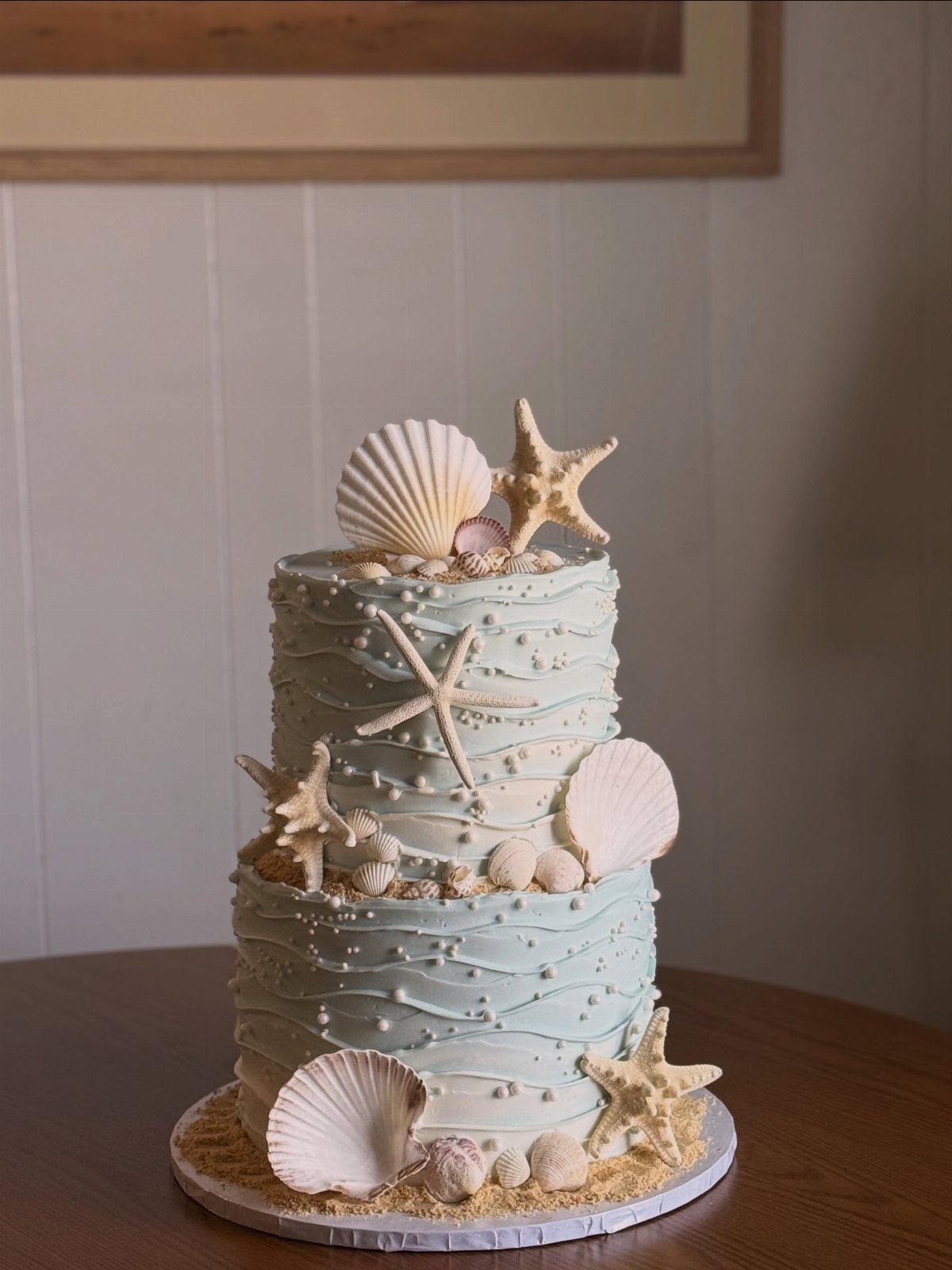
A cake decorated with sugar shells, starfish and edible sand brings the beach to the dessert table without requiring an actual oceanfront venue.
A 3-tier cake frosted in pale blue buttercream works well, with white and cream fondant or royal icing shells arranged on each tier.
Most bakeries can make edible shells using molds; graham cracker crumbs dusted along the base look like sand.
If you are working with a tight budget, ask for a small decorated display cake and sheet cakes in the back to serve from.
5. Beach Wedding Table Settings
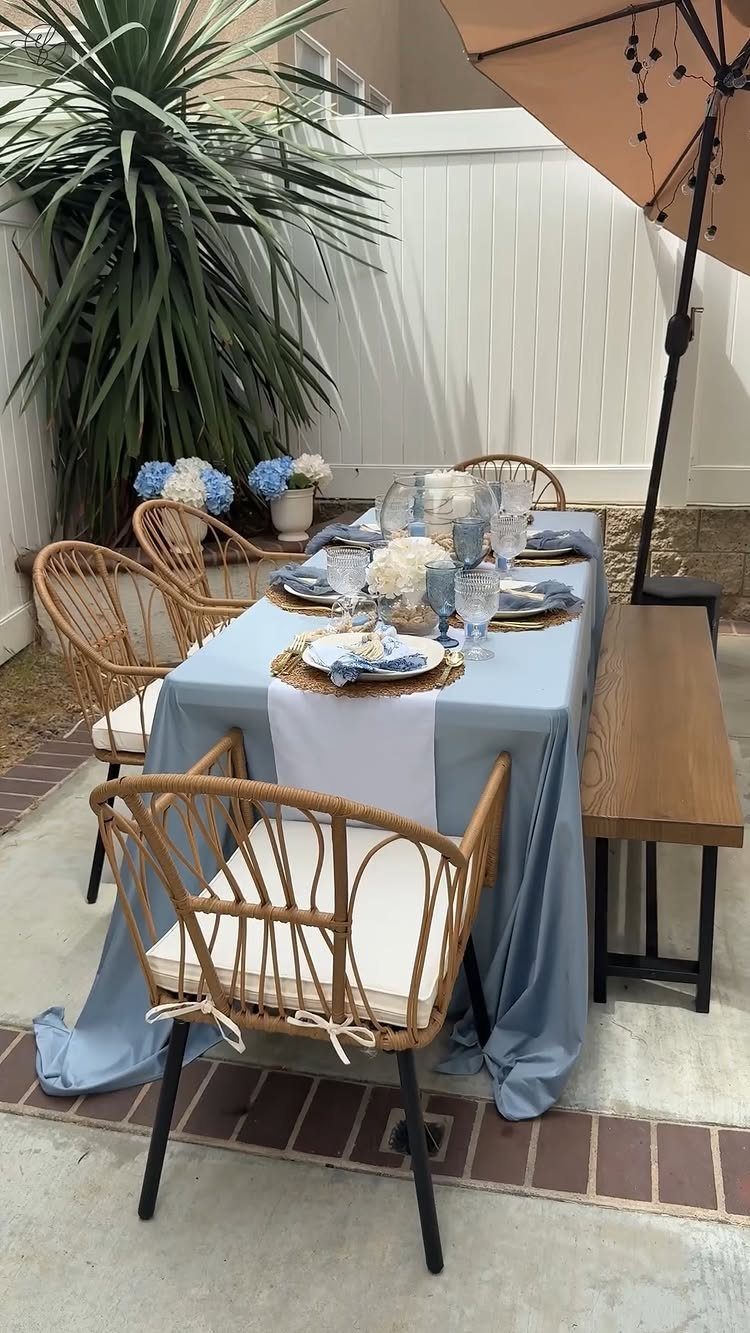
Layer pale blue linens, white plates, and natural textures like wicker or rattan to keep the look soft and coastal without going full nautical.
Swap in what you have or can rent cheaply: burlap runners, driftwood pieces as place card holders, or small potted succulents instead of cut flowers.
The palette does the work; the materials just need to feel relaxed and a little weathered.
6. Beach Wedding Lighting
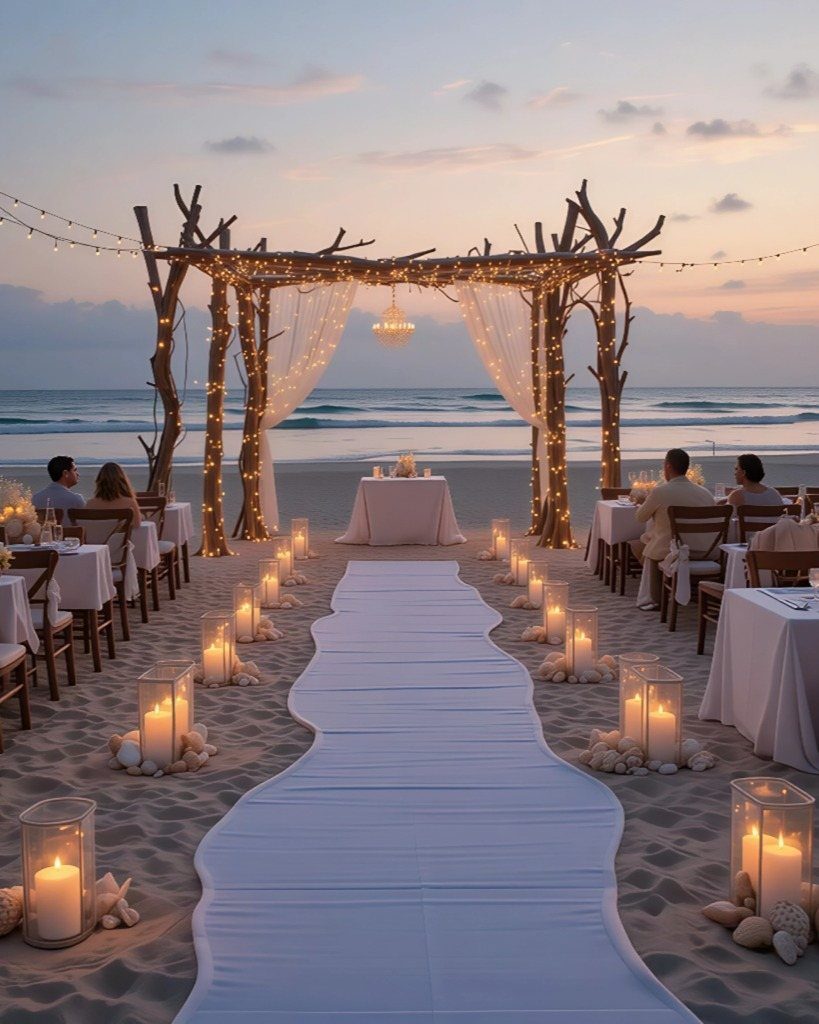
Lanterns, string lights and candles in glass hurricanes turn a beach ceremony or reception into something you can stay at after the sun goes down.
Line the aisle with lanterns on both sides, wrap fairy lights around the arbor, and cluster votives on the dinner tables.
Battery-operated LED candles work if open flame is not allowed; real ones need windproof glass.
String lights need a power source or a generator if the beach has no outlets. Plan for setup time before guests arrive to get everything lit and positioned.
7. Beach Ceremony Seating
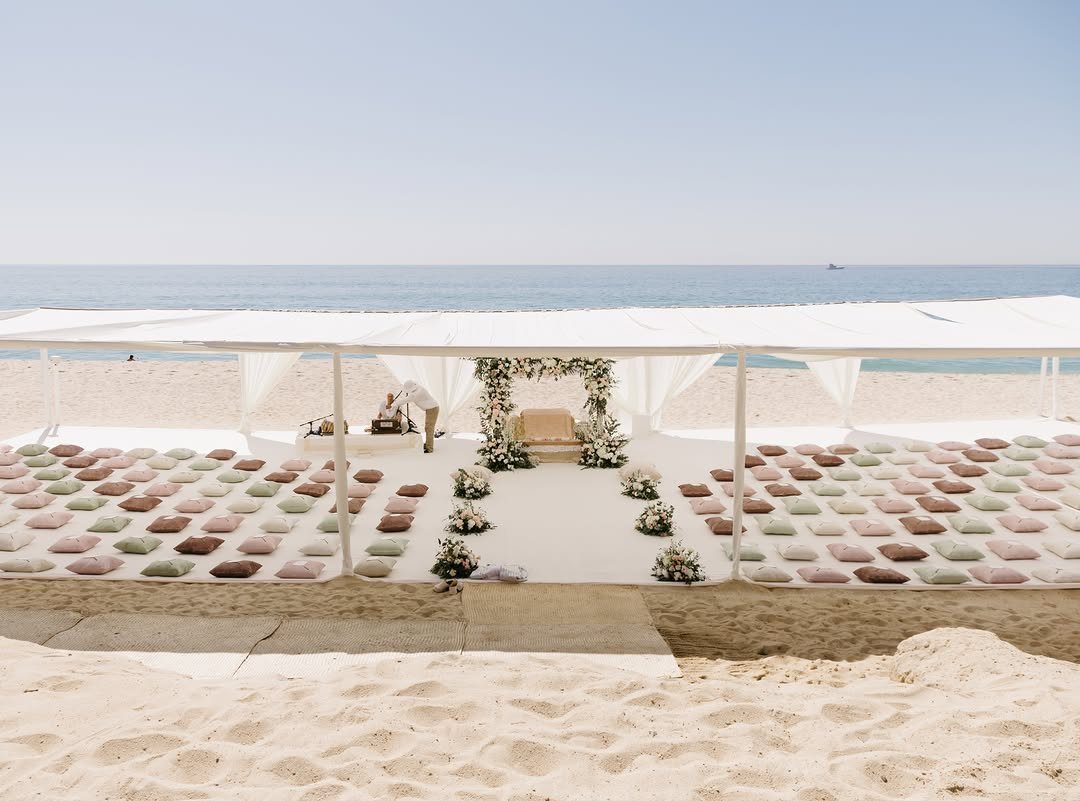
Floor cushions let guests sit comfortably on sand without hauling chairs. Arrange them in rows or clusters, and weight each one with a sandbag tucked inside the cover so they stay put in wind.
Rent them by the dozen or buy cheap outdoor cushions and recover them in fabric that matches your palette. They pack flat for transport and store easily after the wedding.
8. Coastal Floral Arrangements
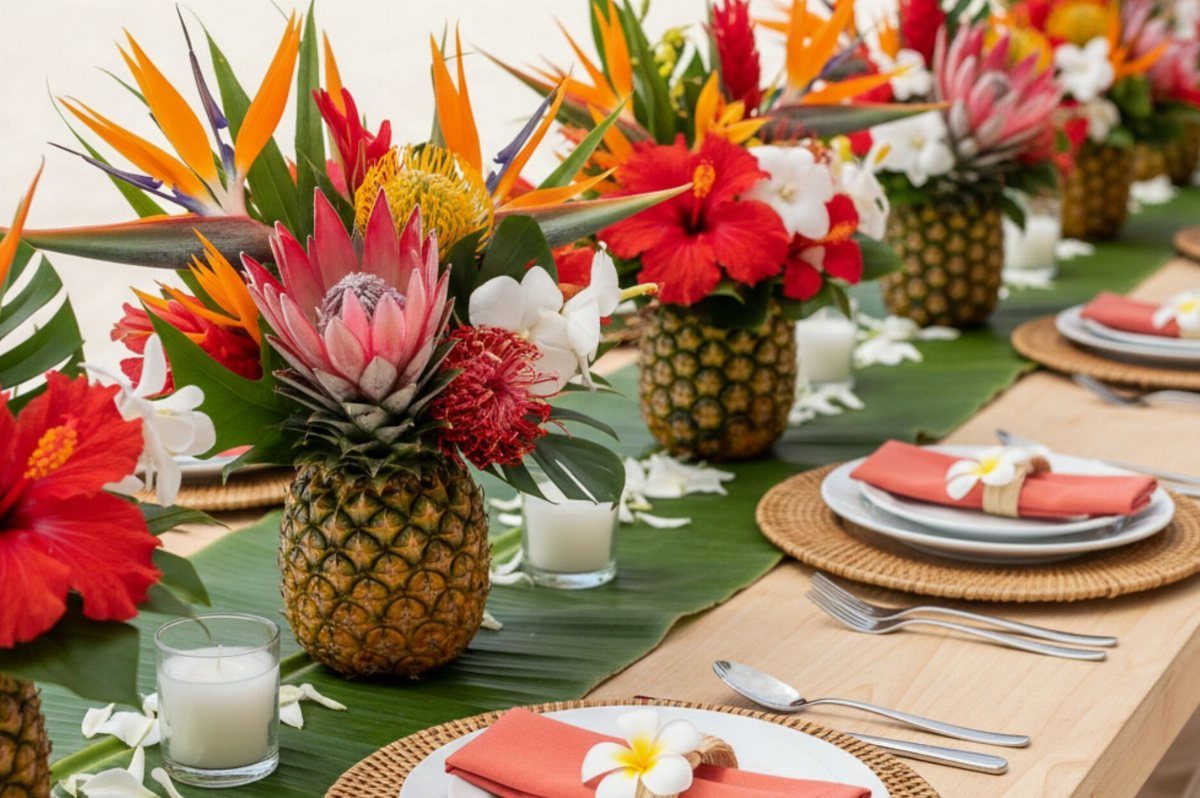
Tropical blooms like hibiscus, bird of paradise and plumeria hold up better in heat and salt air than roses or peonies.
Pineapples work as vases when you hollow them out: cut the top off, scoop out the fruit, and drop in a plastic liner before adding water and stems.
Palm fronds and monstera leaves fill out arrangements without costing much. Buy flowers the morning of and keep them in water until the last possible moment.
9. Tropical Drinks
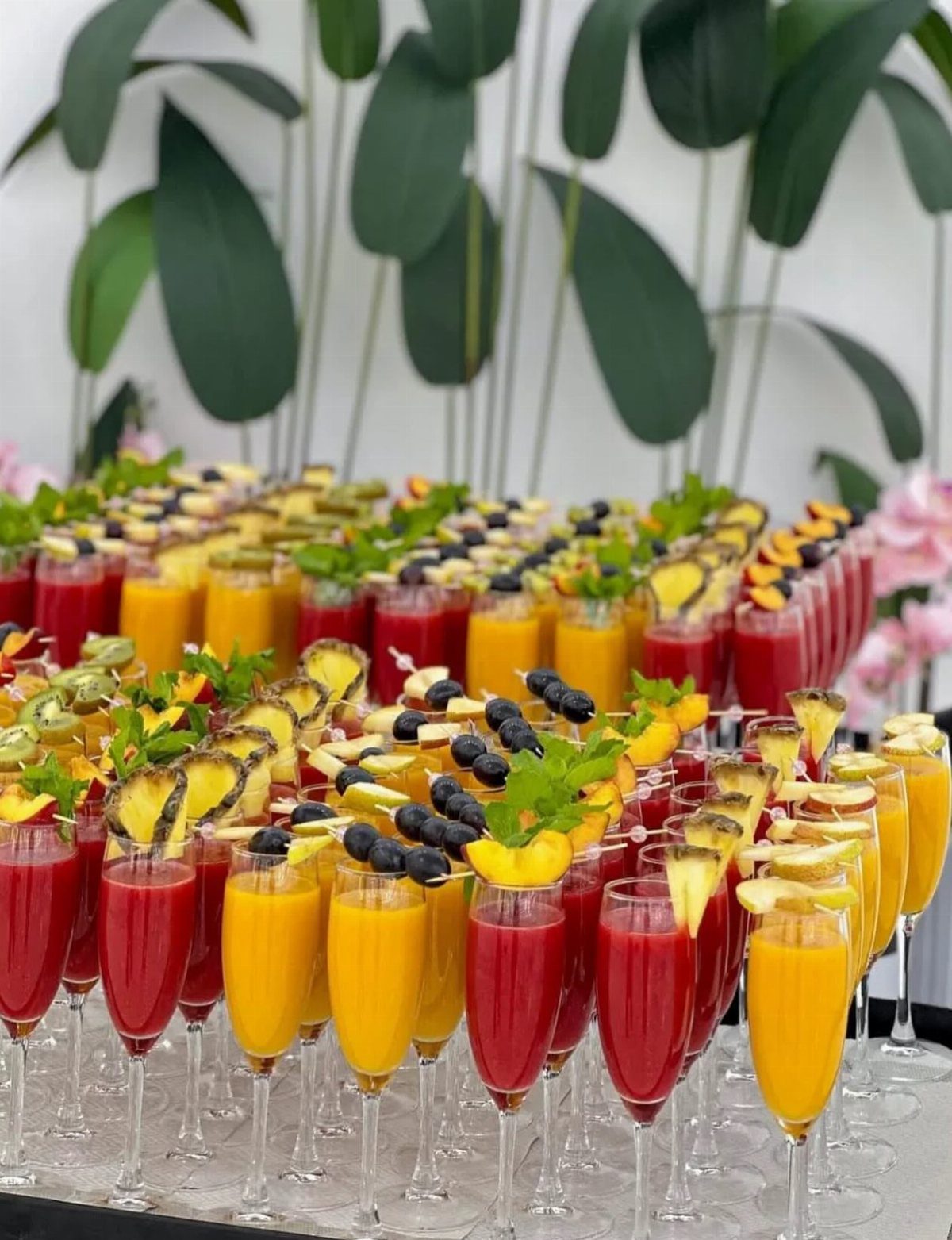
Serve a signature drink in bright coral, yellow or turquoise and garnish it with fruit slices, mint or a paper umbrella.
Set up a table during cocktail hour with pre-poured glasses arranged on a tray, or station a bartender to mix drinks to order.
Frozen options like piña coladas and daiquiris need a blender and ice, which means a cooler and a power source.
A pitcher of sangria or a batch of margaritas stays cold longer and pours faster when you are serving a crowd.
10. DIY Driftwood Arch
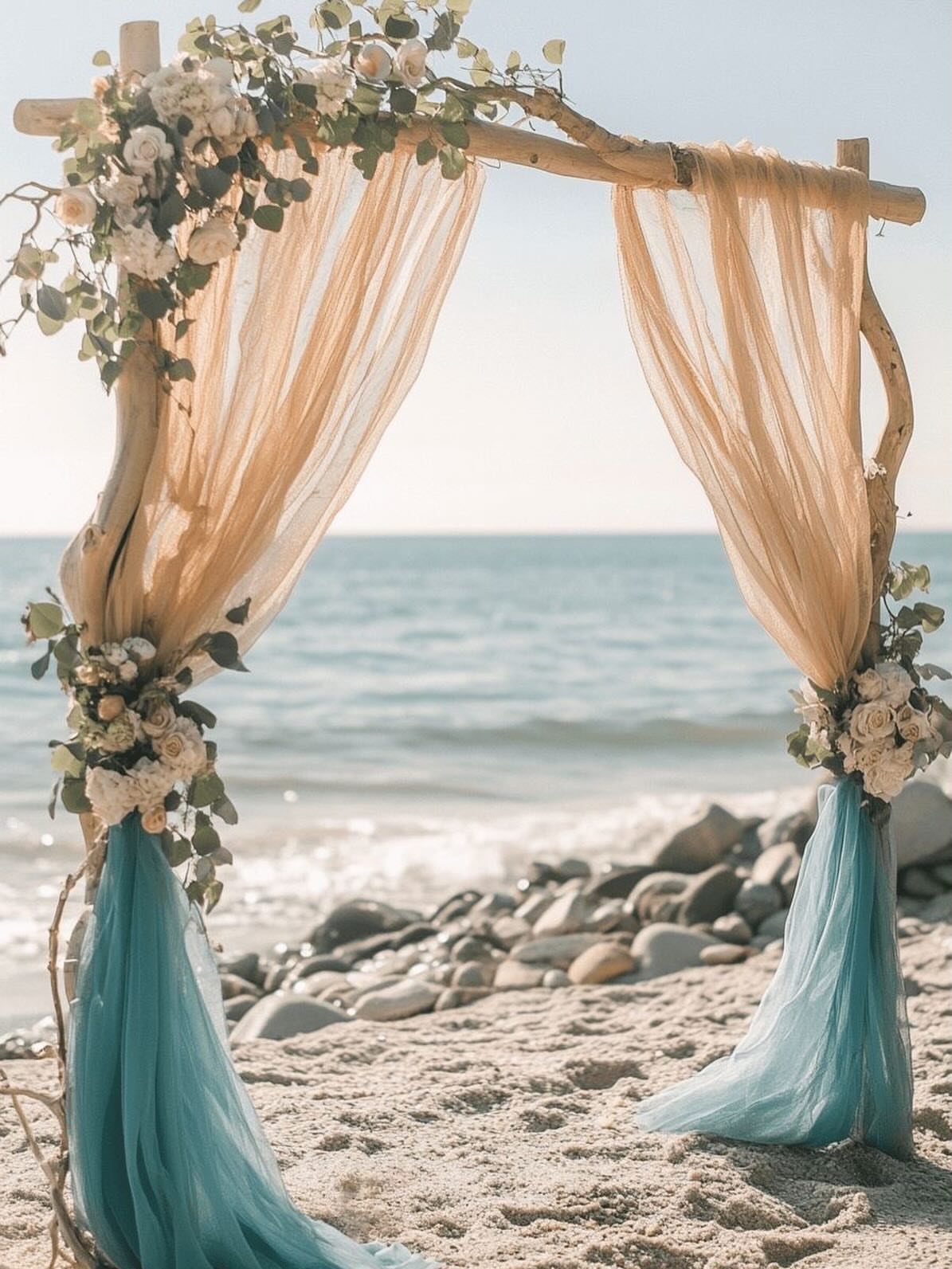
Gather pieces of driftwood from the beach or buy them online, then lash them together with rope or zip ties to form an upright frame. Drape fabric through the center and wire on flowers where the wood meets.
Driftwood is lighter than milled lumber and looks like it belongs on sand.
Bury the base legs in buckets of sand to hold it upright. If you are short on time, rent a wooden arch and attach driftwood pieces to the front with wire.
11. Tiki Torch Lighting
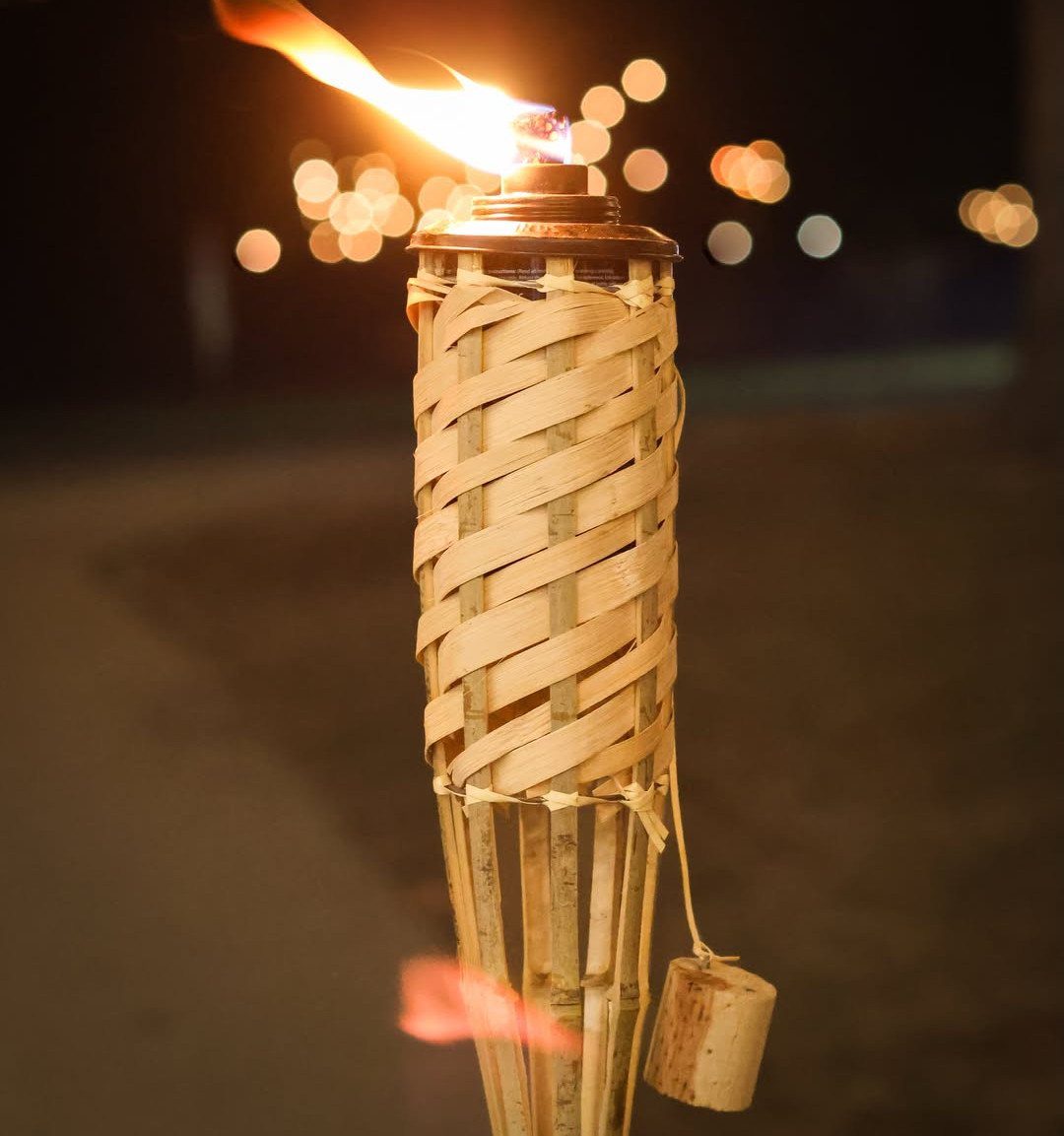
Tiki torches line pathways, mark the edge of the reception area, and give off enough light to see by once the sun sets.
Push the stakes into sand or soft ground, fill the canisters with citronella oil, and light them an hour before guests arrive.
Check with the venue first; some beaches ban open flame.
Battery-powered LED torches look similar and work where fire is not allowed. Space them close enough for steady light without gaps.
12. Beach Dessert Table
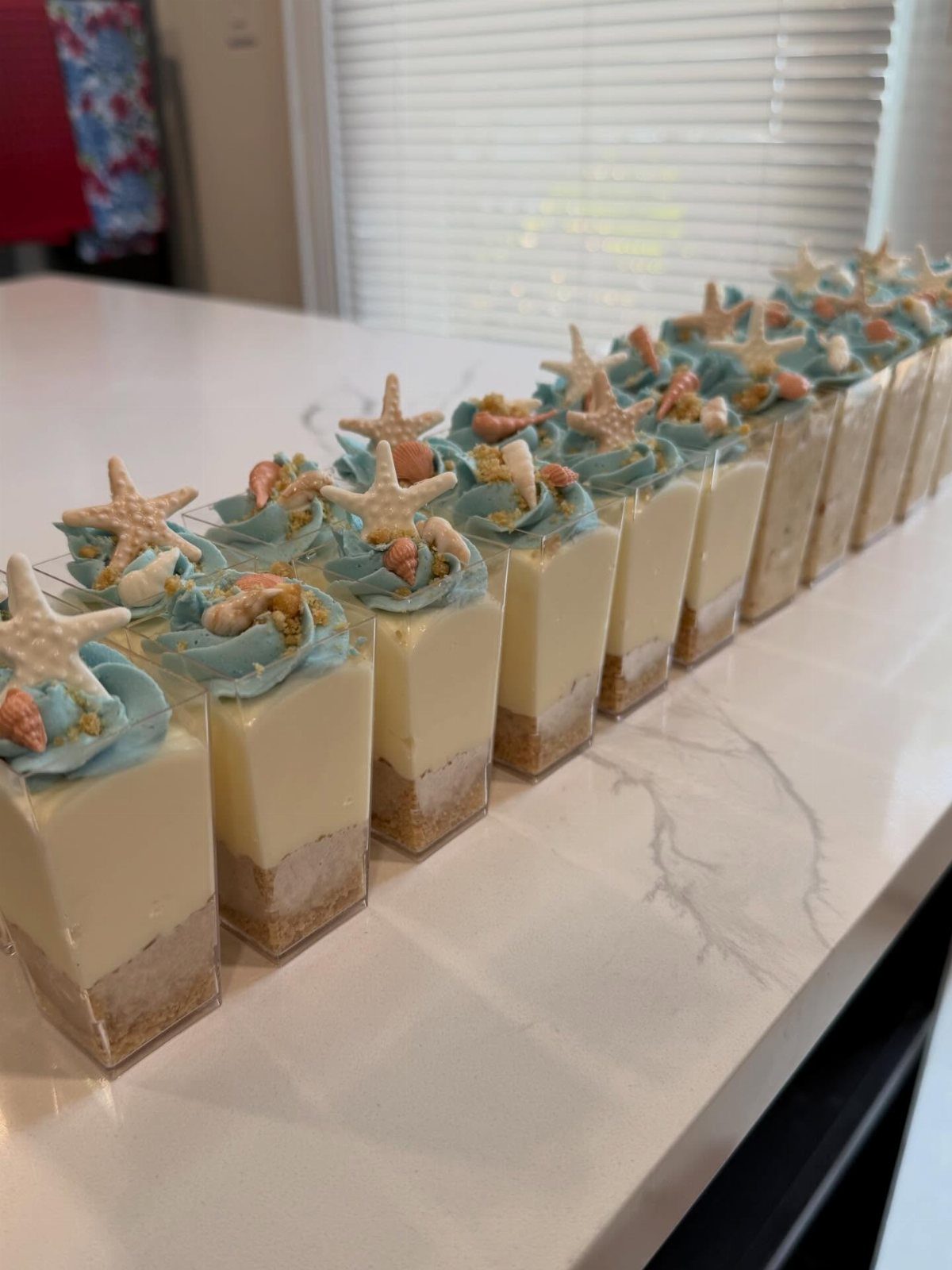
Individual dessert cups in glass or plastic let guests skip the cake line and take what they want. Layer cheesecake, mousse or pudding with crumbs, top with blue or teal frosting, and finish with a sugar starfish or edible pearls.
Make them the day before and refrigerate them until an hour before serving. A dessert table costs less than a tiered cake and gives guests more choice.
13. Coastal Photo Backdrop
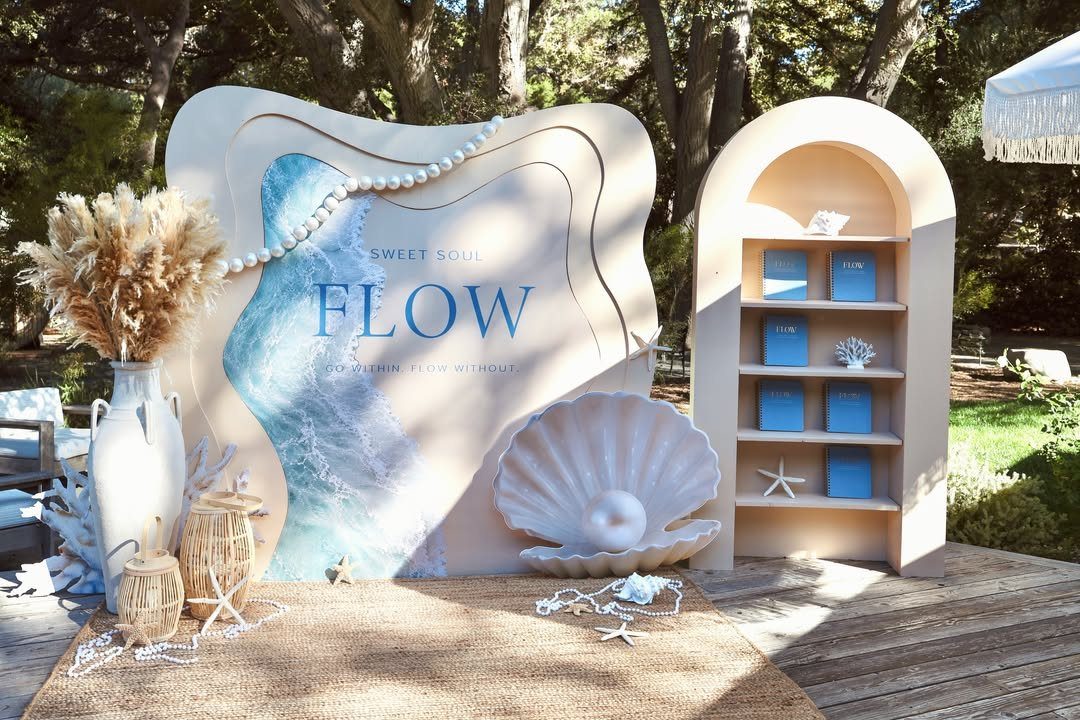
A backdrop gives guests a place to take photos that feels intentional to the event rather than borrowed from the venue.
Set up a painted wave panel, anchor it with a large decorative shell or driftwood piece, and add a low shelf stocked with coastal props like books wrapped in blue paper or dried pampas grass in a vase.
Paint the wave on plywood or buy a fabric banner printed with the design.
Weight everything so it stands up to wind. Guests will use it during cocktail hour and after dinner without needing someone to run it.
14. String Light Canopy
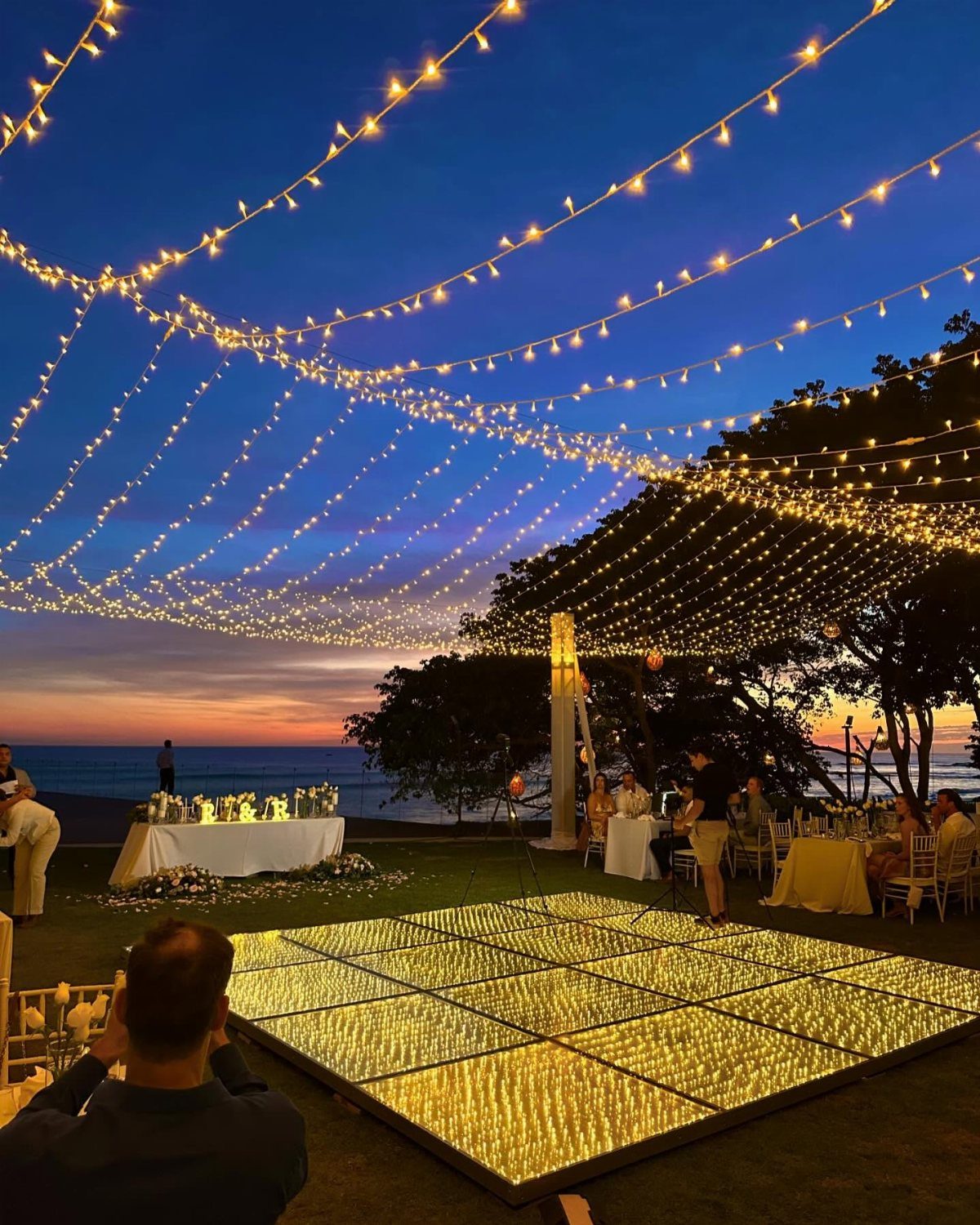
Suspend string lights over the reception tables and dance floor in a grid or diagonal pattern to create a ceiling of light that holds the space together after dark.
Attach the strands to poles driven into the sand at each corner, or run them from existing structures like pavilion beams or tall trees.
You need enough cable to cover the span, plus extension cords and a generator if the beach has no power.
Hang the lights high enough that guests can walk underneath without ducking. Test everything before the ceremony starts so you know it works when you need it.
15. Sea Glass Escort Cards
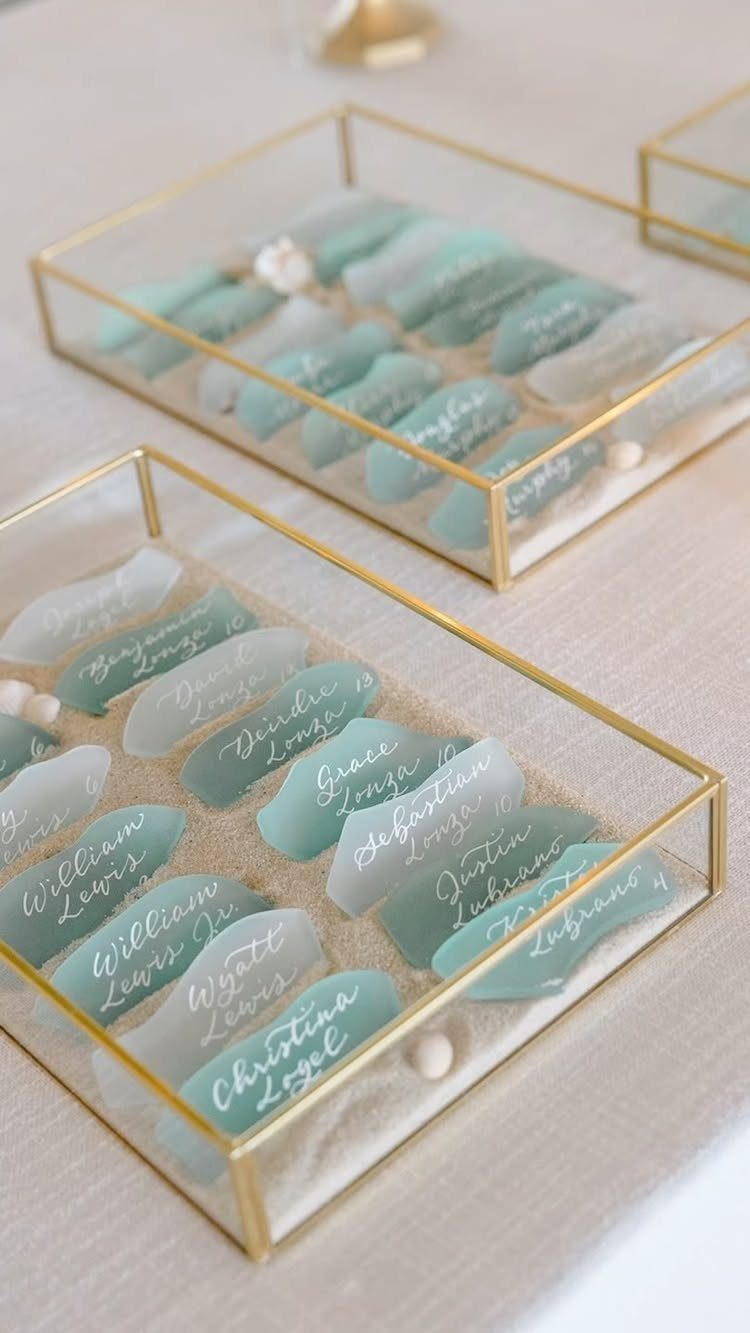
Write each guest’s name and table number on pieces of sea glass with a white paint pen, then arrange them on a tray filled with sand. The glass catches light and reads as beach without looking like a craft project.
Buy sea glass in bulk online or collect it yourself if you live near the coast.
Frosted and pale blue pieces show the lettering best. Practice on a spare piece first; the paint pen needs a steady hand and dries fast.
16. Guest Blanket Basket
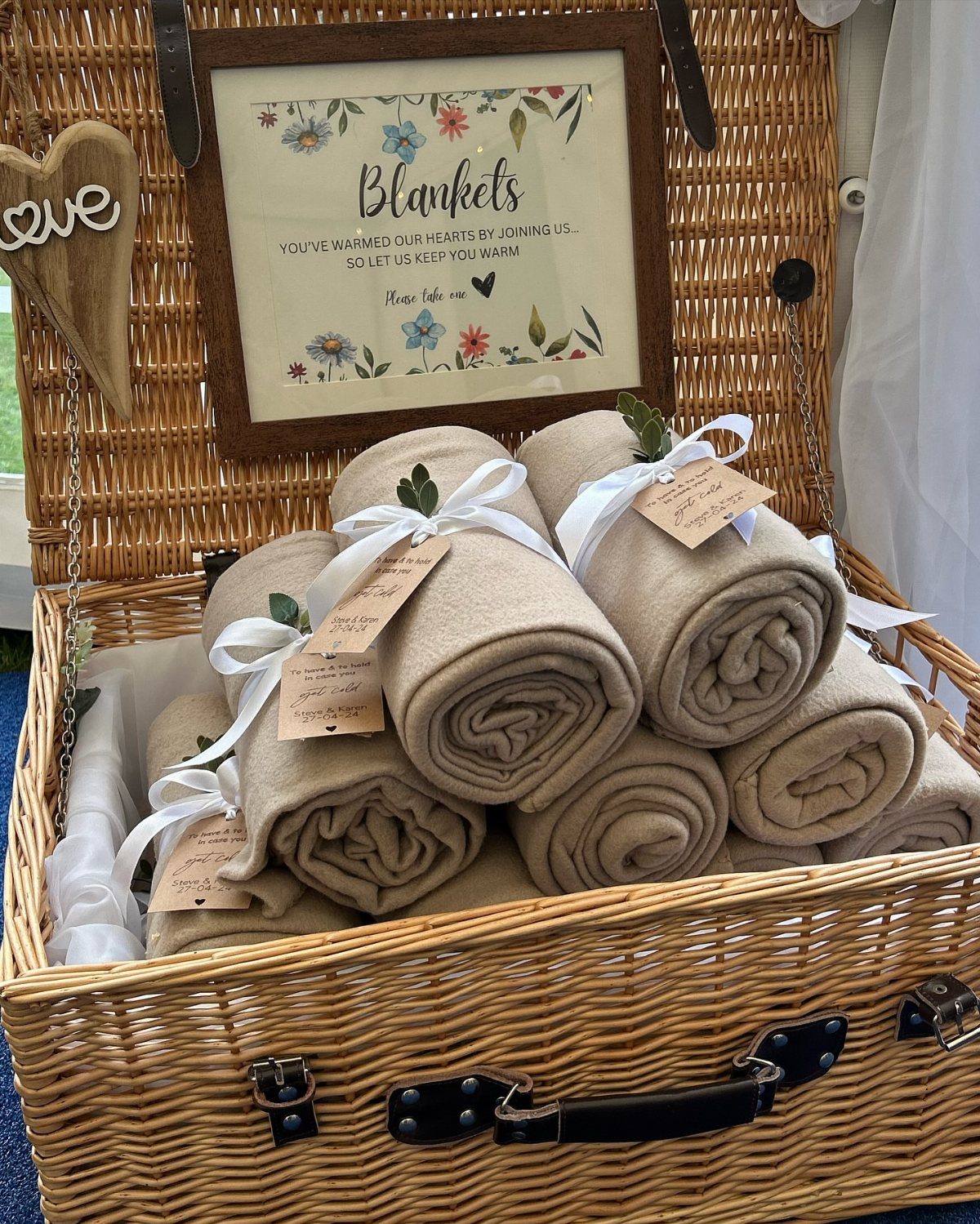
Set out a basket of rolled blankets for guests to grab when the temperature drops after sunset.
Tie each one with a ribbon and add a tag that matches your color scheme, then place the basket near the ceremony or reception entrance with a sign explaining what they are for.
Use fleece or cotton throws in neutral colors that work for anyone.
Guests can take them to their seats, drape them over their laps during dinner, or keep them wrapped around their shoulders on the walk back to the parking lot.
17. Beach-themed Fruit Display
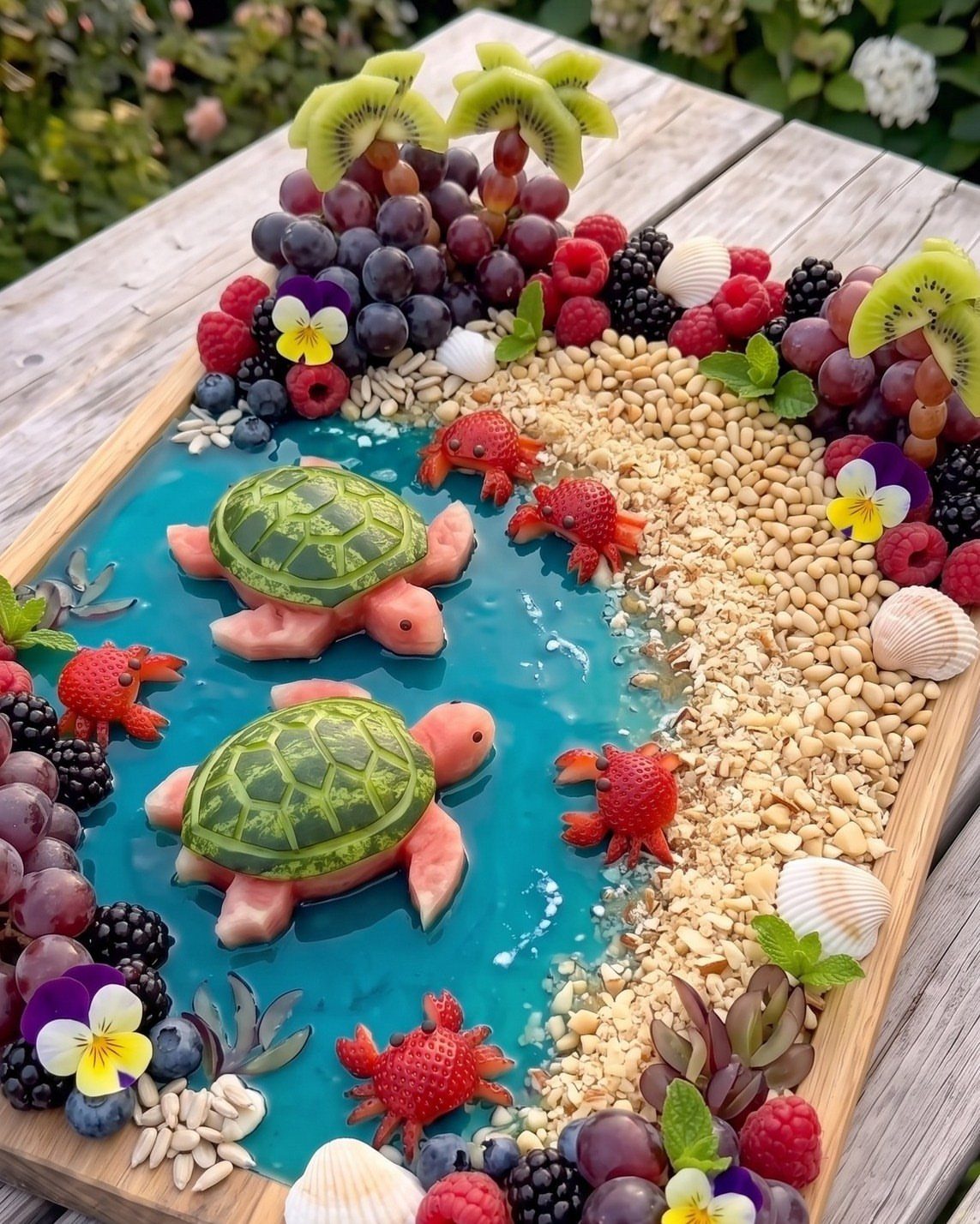
Carve melon into turtle and crab shapes, set them in a shallow tray filled with blue gelatin, and surround them with grapes, berries, kiwi slices and edible flowers. The gelatin looks like water and holds the carved pieces in place.
This takes time and a steady hand with a paring knife.
Make the gelatin the day before so it sets firm, then carve the melon the morning of the wedding and assemble everything an hour before guests arrive. Keep the tray cold until you set it out.
18. Coastal Wedding Look
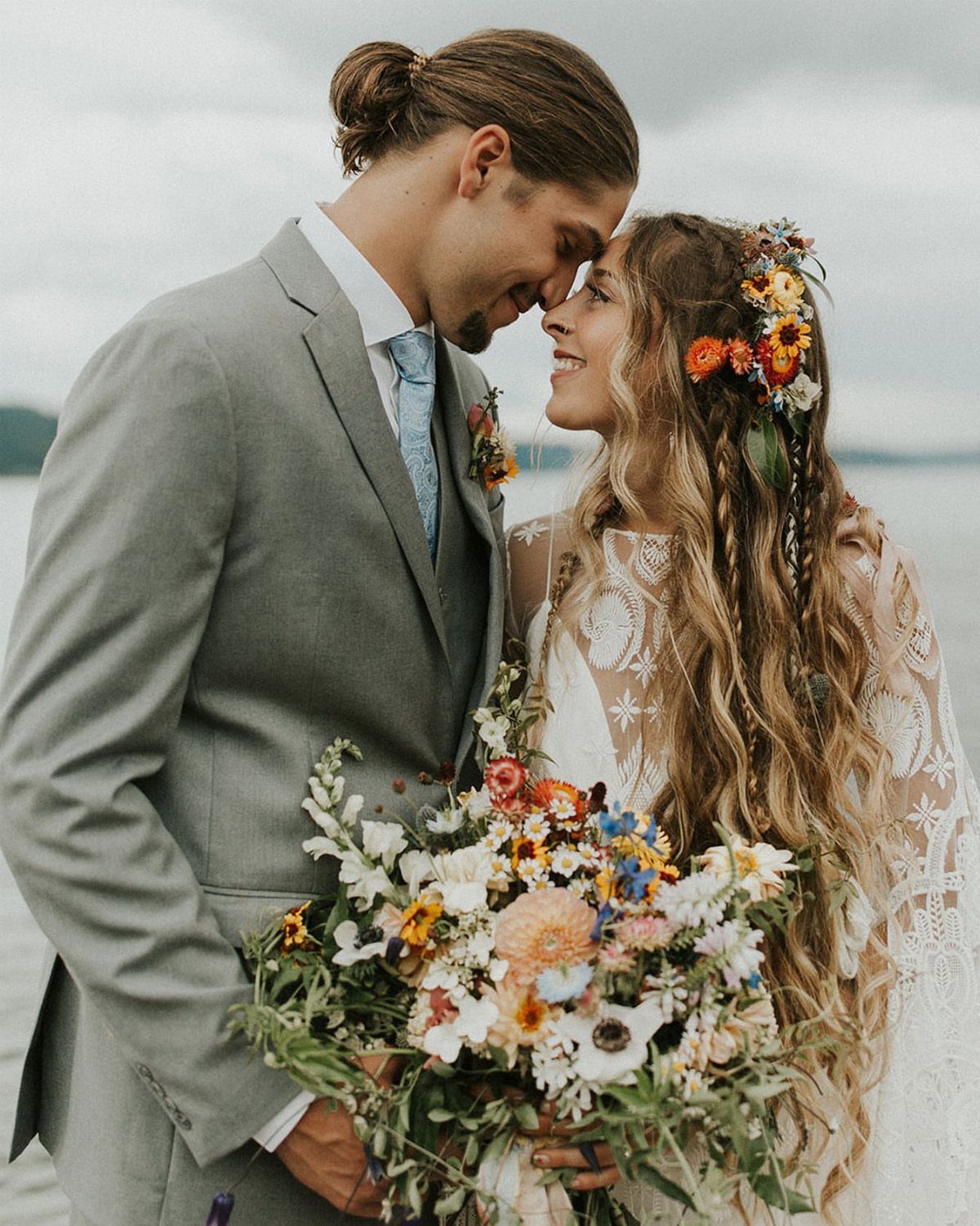
A lace gown and a grey suit photograph well on sand and let the background stay visible. Add a floral crown or loose bouquet in coral, peach and cream to pull in color without going full tropical.
Grey reads as formal but does not trap heat the way black does.
Lace gives texture in photos without requiring heavy beading or a long train that drags through sand. Bare feet or sandals work better than heels, which sink.
19. Beach Shoe Valet

Hang a wooden rack or pallet near the ceremony entrance so guests can remove heels and dress shoes before stepping onto sand. Label it with a sign and add hooks or slots for each pair.
Make one from a shipping pallet sanded smooth, or buy a wall-mounted shoe organizer and secure it to a post.
Guests pick up their shoes on the way out. If you skip this, shoes end up in a pile or guests carry them during the ceremony.
20. Unity Sand Ceremony
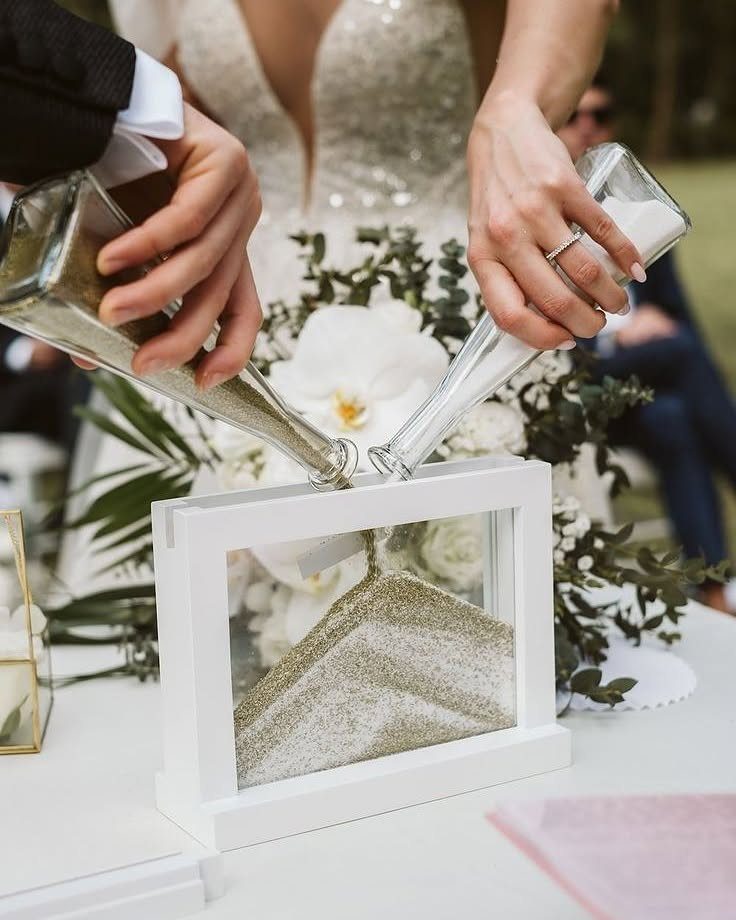
Each person pours sand from their own container into a shared vessel, layering the colors so they blend but stay visible. The filled vessel goes home as a keepsake.
Use 3 glass bottles or vases: one for each person and one larger vessel to pour into.
Choose sand colors that contrast, like white and gold or blue and tan. Pour slowly in turns to build the layers.
A funnel keeps the sand from spilling. The ritual works in any ceremony format and fits comfortably into the flow.
21. Beach Wedding Venue
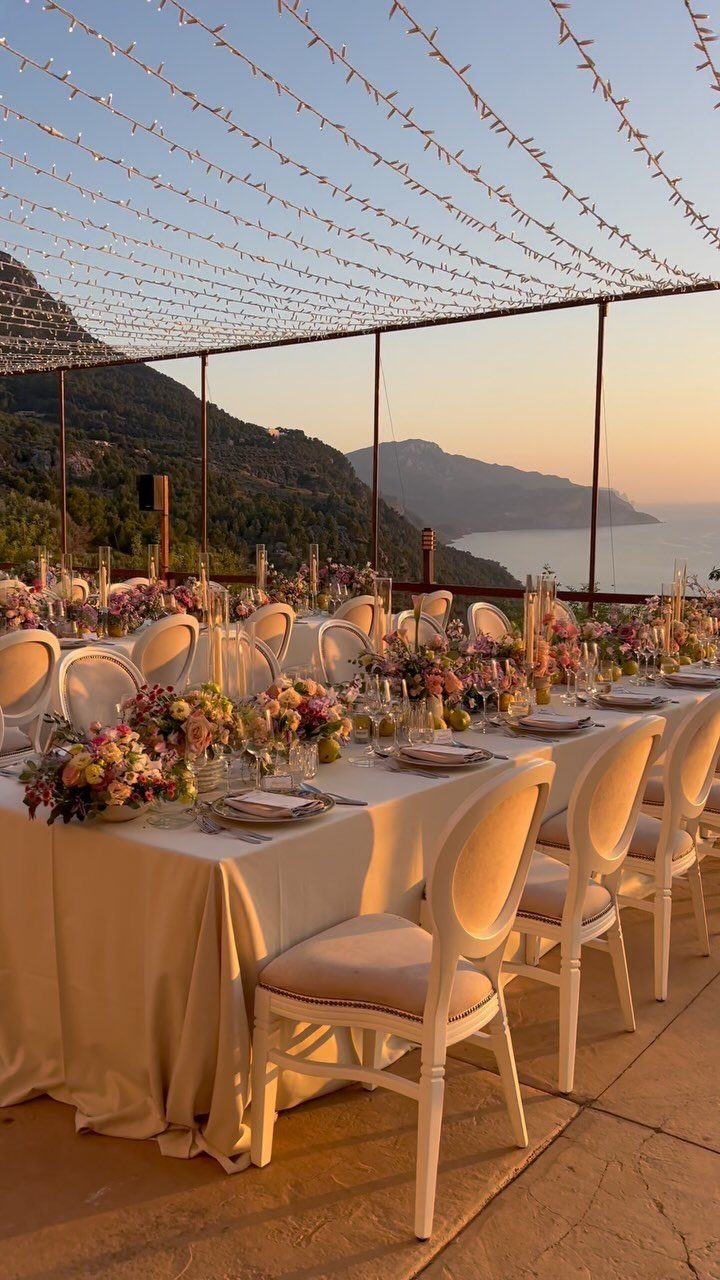
Pick a venue with ocean views, direct beach access, or a terrace that overlooks the water. The location does the decorating; you just need tables, chairs and lighting to match the setting.
Beachfront sites often limit setup options because of wind, tide or permit rules.
A bluff or hillside venue gives you the view with fewer restrictions and easier access for catering and guests. Check what the rental includes: some provide tables and chairs, others charge separately for everything.
22. Beach Wedding Groom Attire
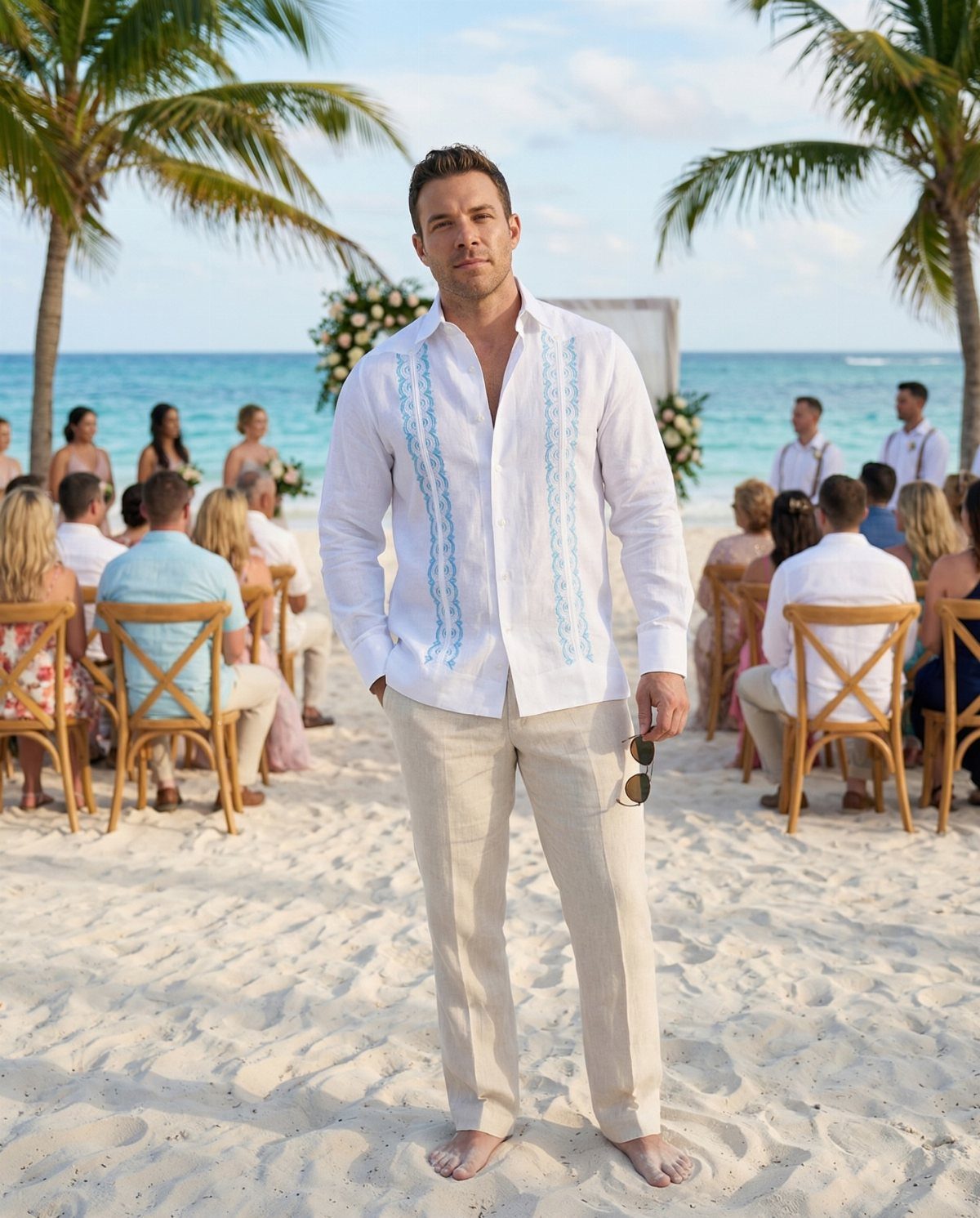
Swap the suit for a linen shirt and lightweight pants in cream, beige or pale blue. The fabric breathes in heat and photographs well against sand and water.
Linen wrinkles fast but stays cooler than cotton or wool. Roll the sleeves and skip the tie.
Barefoot works if the ceremony is on sand; leather sandals or loafers give a finished look on grass or pavement. Embroidery or texture on the shirt adds detail without requiring a jacket.
23. Beach Wedding Favors
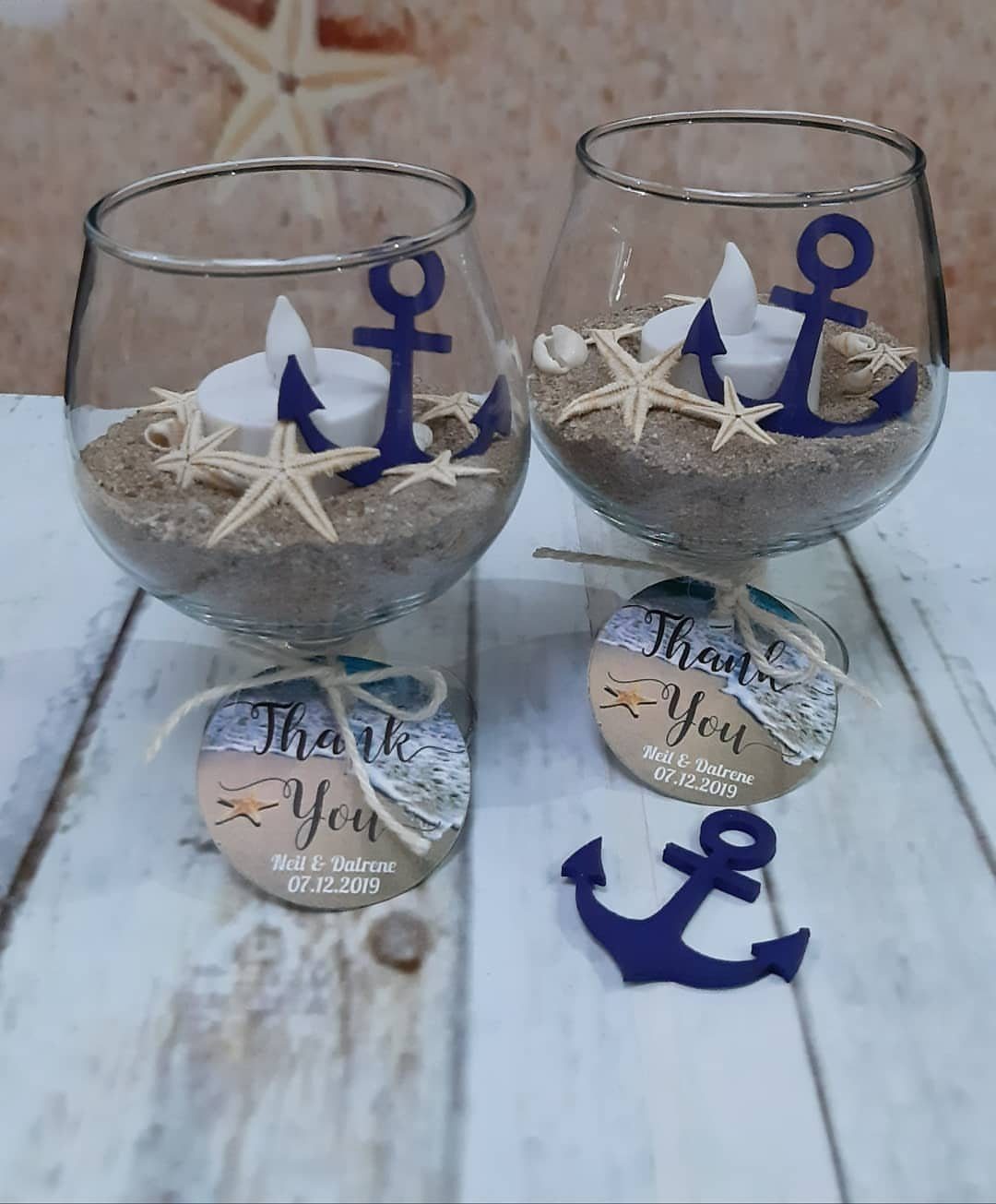
Glass jars filled with sand, a tea light and a few shells give guests something useful that ties to the location.
Add a tag with your names and the date, then set one at each place setting or arrange them on a table near the exit.
Buy jars in bulk, collect sand from the beach or order it online, and glue shells to the outside or tuck them inside.
The jars cost very little to assemble if you source the materials yourself. Guests can burn the candle at home or refill the jar and use it again.
24. Handmade Bamboo Fans
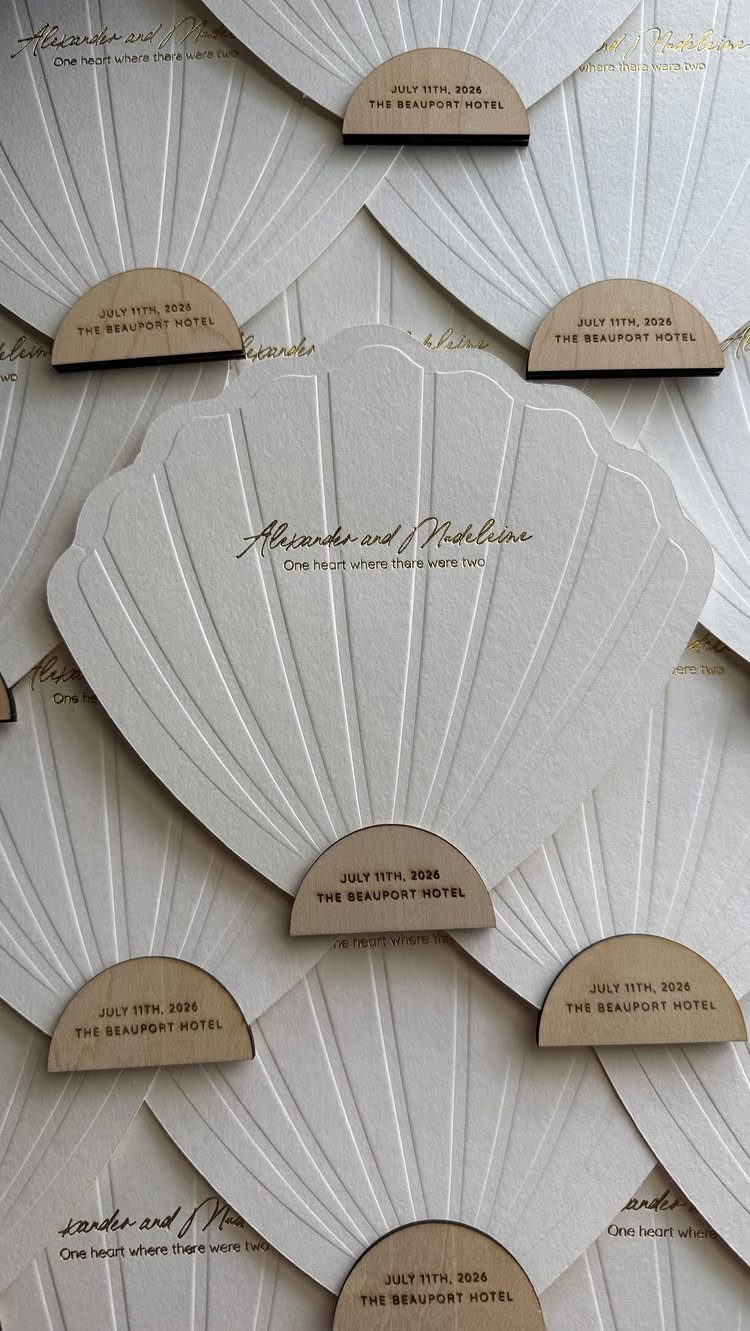
Pass out fans at the ceremony so guests can cool off while seated in the sun.
Print your names, the date, or a short message on the surface, then leave them in a basket at the entrance or hand them out as guests arrive.
Order printed fans online or buy blank ones and add the text yourself with a stamp or stencil. Paper fans cost less but tear easily; bamboo or wood handles last longer and feel sturdier.
Figure one fan per guest. They double as programs if you print the ceremony order on the back.
Beach Permits and Venue Rules
Public beaches often require a permit, and regulations vary by location.
Some restrict the number of guests, prohibit alcohol, or limit the size and type of structures you can set up. Private beach access through a resort or venue simplifies this, since the property handles permits and knows what is allowed.
Visit the site at the same time of day you plan to hold the ceremony. A quiet morning beach can fill with families by afternoon, and noise or foot traffic can interrupt vows.
If you are using a public beach, check whether you need separate permits for music, chairs, or a tent.
Processing time runs anywhere from a few days to several weeks depending on the municipality. Local wedding planners who work in the area regularly can tell you what the process looks like and what restrictions apply.
Rules include having less than 150 people, and do not use a tent with side panels. Most public beaches do not allow alcohol, either.
Weather and Backup Plans
Coastal weather shifts faster than inland conditions.
Rain, wind, and sudden temperature drops happen even in dry seasons, and hurricane zones carry risk during peak months. Hurricane season in Florida spans June through November, while California gets most of its rain between January and April.
Arrange a backup location before the wedding day.
A beachside hotel with indoor event space puts plan B in the same building. If you are committed to an outdoor ceremony, rent a tent large enough to cover seating and work with a vendor experienced in beach setups.
Wind requires heavier anchoring than grass or pavement, and covered walkways keep guests dry between spaces.
Check the forecast a week out and confirm the backup plan with your vendors so everyone knows where to go if conditions turn.
Beach Ceremony Timing
Schedule the ceremony with enough daylight left for portraits after.
Sunset timing changes through the year, so check the date-specific time for your location and work backward from there. An hour before sunset gives you golden light for photos without rushing through the ceremony in failing light.
If you are holding the reception on the same beach, plan the ceremony early enough that dinner can start while guests can still see.
A 4 p.m. ceremony in summer leaves time for cocktail hour and the first course before you need artificial lighting. In winter, when the sun sets earlier, move everything up or accept that most of the reception happens after dark.
Beachside hotels with both outdoor ceremony space and indoor reception rooms let you transition between the two without losing time to transportation.
Frequently Asked Questions
What is a beach wedding?
A beach wedding is a ceremony held on a beach, with the ocean as the backdrop. The natural setting provides views, light and a relaxed atmosphere without requiring heavy decoration.
Why are beach weddings so popular?
Beach weddings offer ocean views and natural beauty without requiring much decoration, and the setting feels relaxed and tropical. Many beaches are near resorts that can provide services, backup indoor space and easy guest accommodations.
What should I wear to a beach wedding?
Choose lightweight fabrics that breathe in heat and move easily.
A linen shirt and light pants work better than a full suit for grooms, and a lace gown without a heavy train photographs well for brides without dragging through sand. Skip heels in favor of sandals or bare feet.
How do I make guests comfortable at a beach wedding?
Set out sunscreen, cold water, bug spray and paper fans so guests stay comfortable through the ceremony.
A shaded area or tent gives guests somewhere to go if they get overheated, and a shoe valet near the entrance lets them remove heels before stepping onto sand.
Can I get married on the beach in the UK?
UK law requires a registrar and a licensed venue for a legal marriage, and sand doesn’t count. Sign the paperwork at a licensed spot nearby, then head to the beach for vows and the party.