
A French braid runs from the crown down the back and can be worn loose, coiled into a bun, or left to transition into a ponytail.
The choice comes down to formality: sleek, tight styles suit structured gowns and minimalist weddings, while loose braids with pulled strands and added flowers or pearls fit garden ceremonies and softer silhouettes.
1. Voluminous French Braids
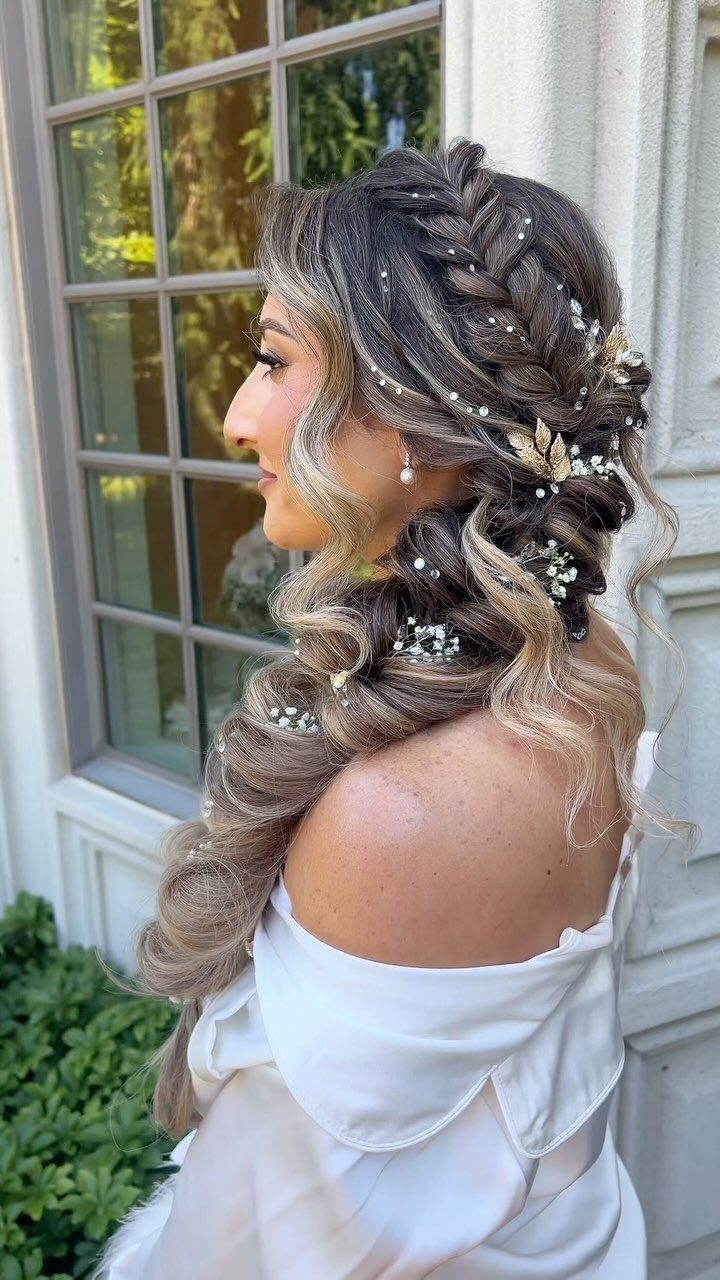
The braid sits high on the crown and runs with deliberate fullness, built up through backcombing or gentle teasing before you begin. Strands are loosened after braiding to let the weave spread wider.
Flowers and metallic leaves are wired or pinned directly into the plait once it is secured. This look holds best on medium to thick hair, where the added volume reads as texture rather than frizz.
Plan for a stylist if you want the structure to last through a full reception.
2. Elegant Half-Up Hairstyle
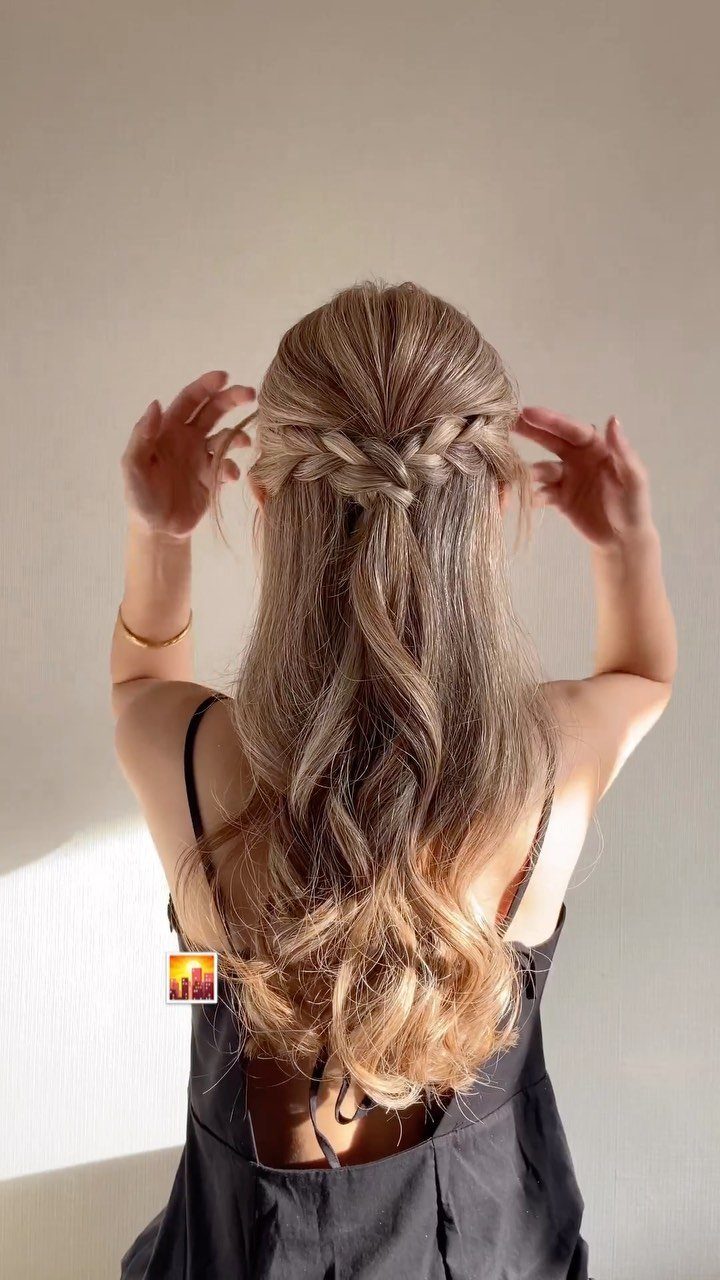
A horizontal braid runs across the back of the head, gathering the top half while the rest falls in loose waves or curls. The bottom section is curled first, then pinned out of the way while you braid.
Once the braid is secured at both ends, release the curls and arrange them so they blend with the braided crown. This style keeps hair off the face without losing length or movement.
A texturizing spray before curling gives the waves more grip and helps them hold through the evening.
3. Chic Updo
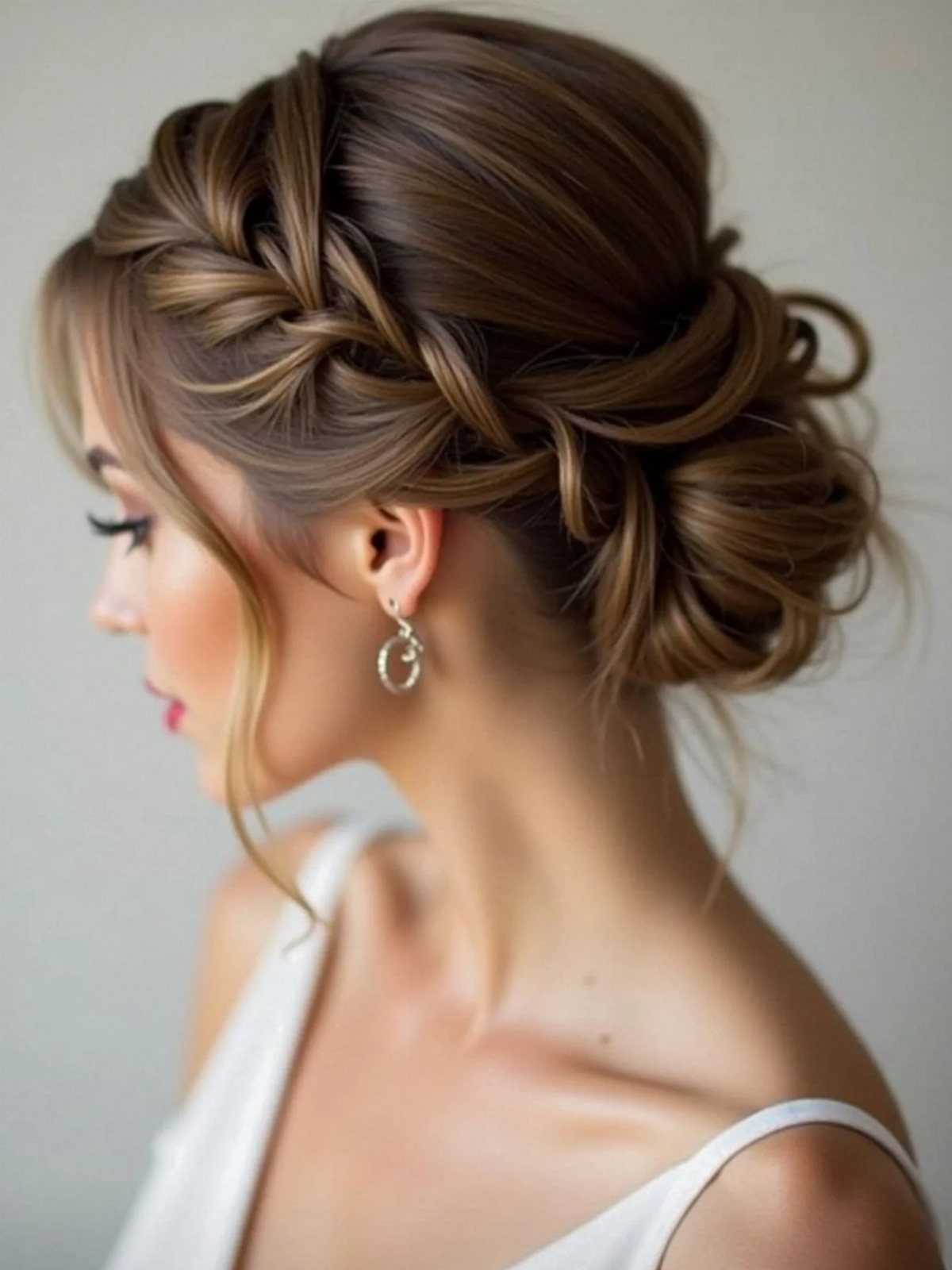
Sections are braided close to the scalp, then twisted and pinned into a compact, polished bun at the back of the head. The braids add structure without softness, so the updo sits smooth and controlled.
This works well when you want a formal silhouette that will not shift or sag. Hair is pulled taut from the roots, which means any flyaways need to be smoothed with gel or pomade before you start pinning.
The clean lines suit minimalist dresses and statement earrings.
4. Loose Chignon
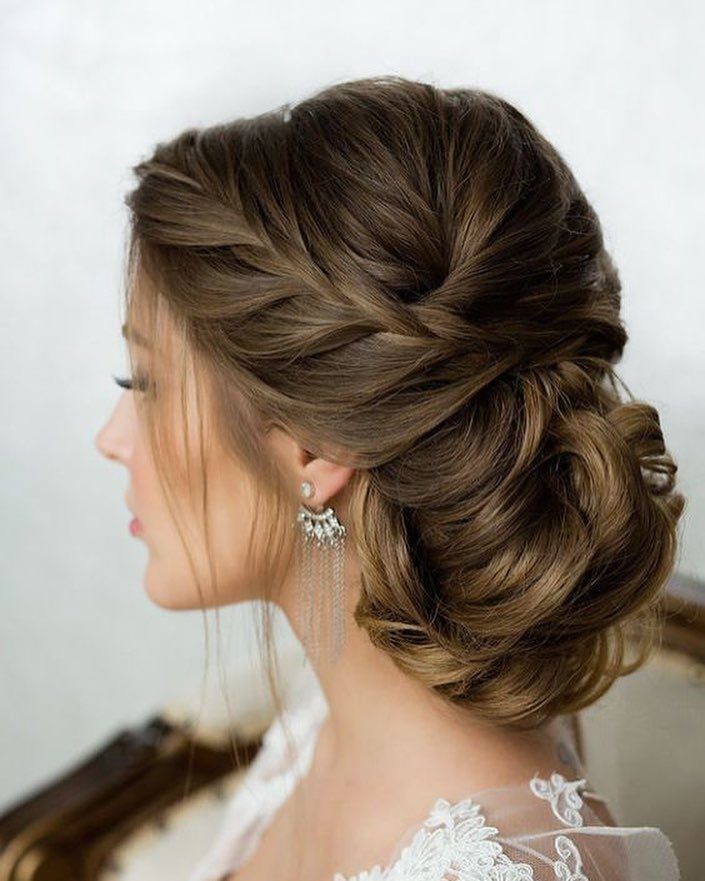
A side braid begins near the temple and curves back toward a low knot, where hair is gathered loosely and pinned without tension. The chignon sits soft and slightly undone, with a few strands left free at the nape.
This version gives you the formality of an updo with a more relaxed finish. The braid keeps one side anchored while the rest drapes naturally.
Pull gently at the braid after pinning to widen it, and leave the bun loose enough that it moves.
5. Slicked Back-Bun
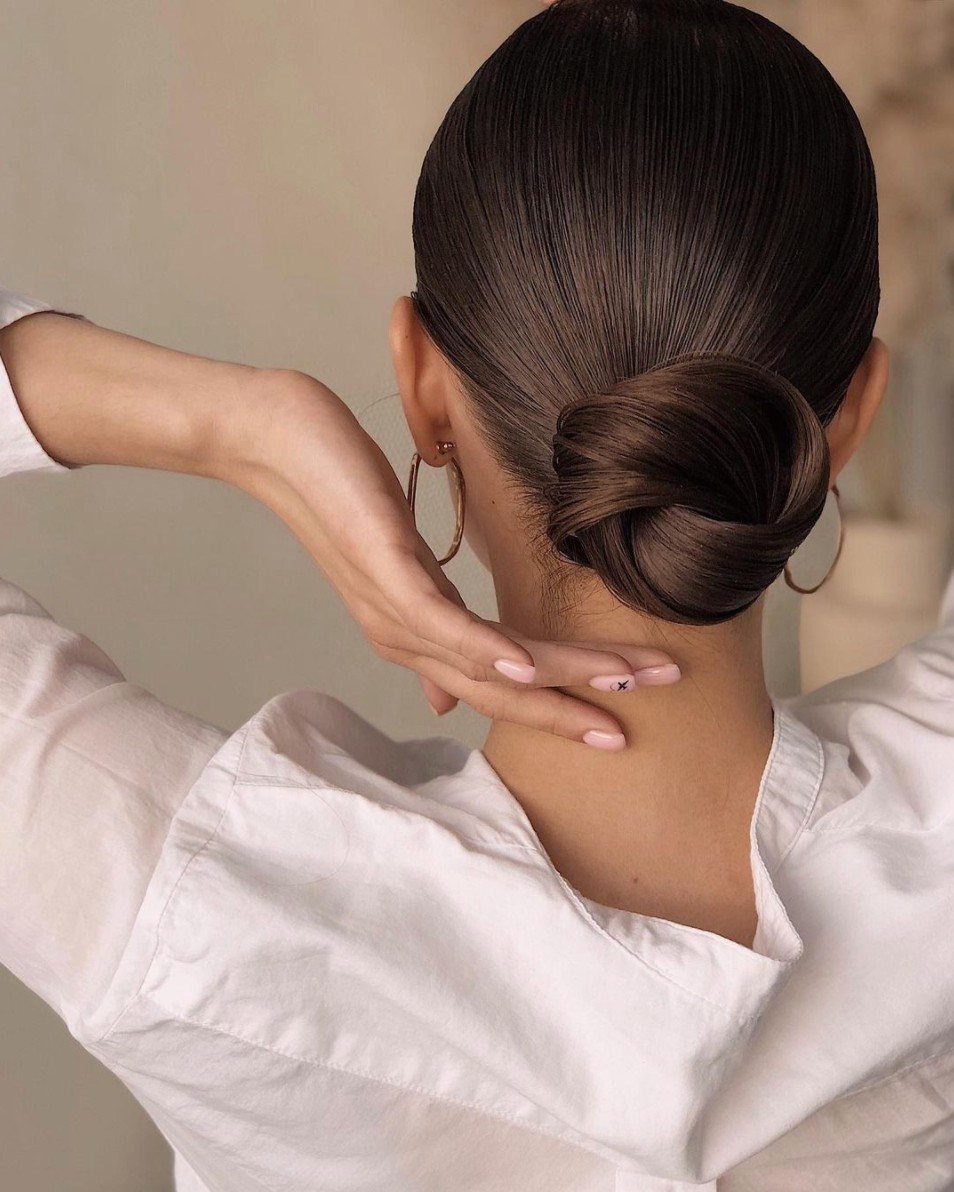
Hair is combed straight back with gel or mousse, then gathered into a low bun at the nape without texture or volume. The surface stays smooth and close to the scalp, so this reads as intentionally severe rather than casual.
A fine-tooth comb and a firm-hold product are what keep the finish tight. The bun itself is twisted and pinned flat, not rounded.
This suits structured gowns and high necklines, and holds better on straighter hair where the sleekness does not require constant smoothing.
6. Boho Braids Updo
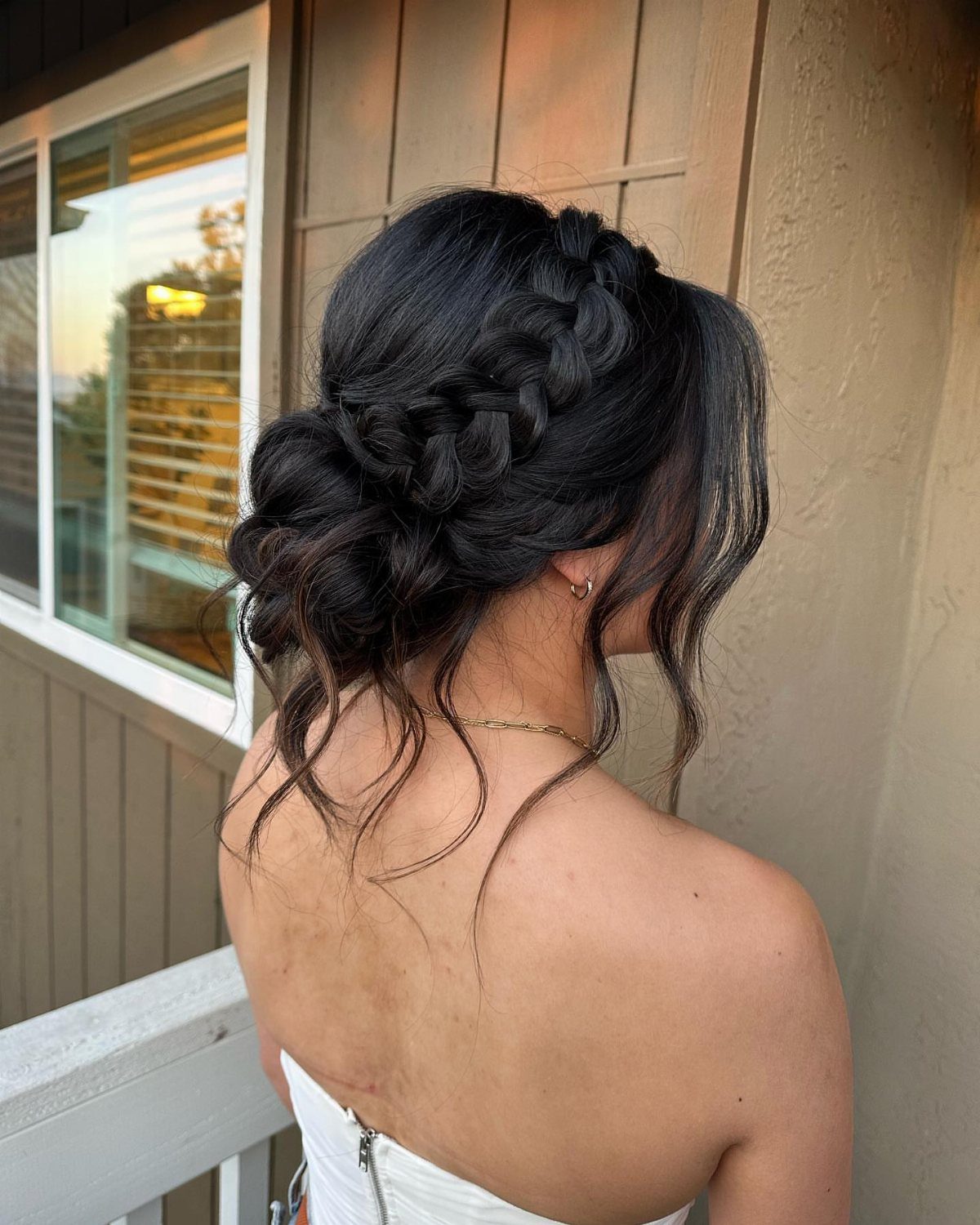
A thick braid begins at the crown and is pinned into a loose, textured bun at the nape, with smaller braids woven through and a few strands left to hang free.
The updo has dimension without stiffness, and the braids give it a handmade, unfinished quality.
This takes more time to arrange than a single-braid style, but you get a look that feels layered and slightly undone. Pin the braids in sections rather than all at once, so you can adjust the shape as you go.
7. French Braid Low Bun
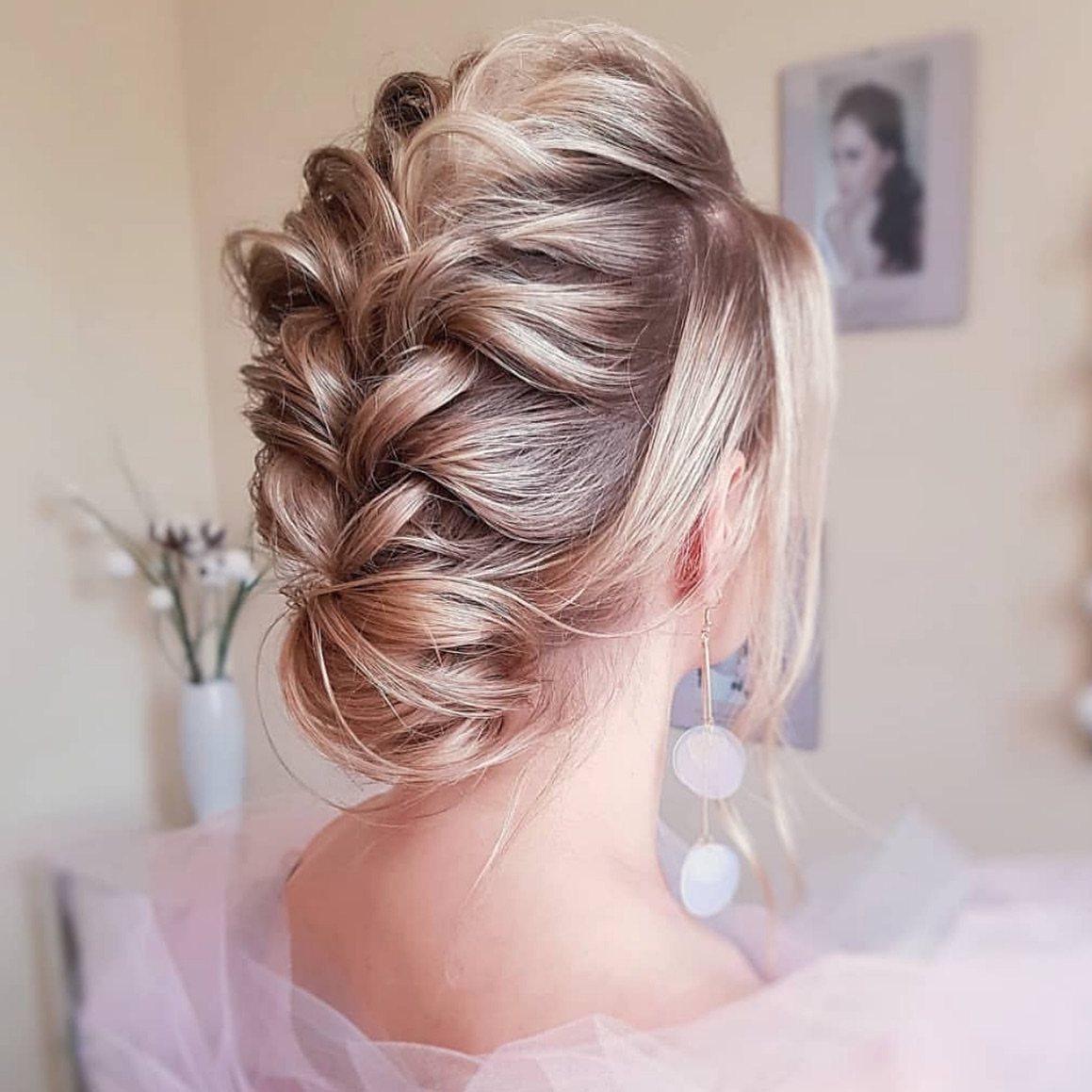
The braid starts high and pulls everything into a soft, full bun that sits low. The bun sits soft and rounded, not slicked or pinned flat.
This gives you the formality of a full updo with more weight and presence than a loose chignon. The braid holds everything in place, so the bun can stay relaxed without falling apart.
Pull at the edges of the braid once it is secured, and leave a few strands loose around the bun to soften the finish.
8. Braided Bun Updo
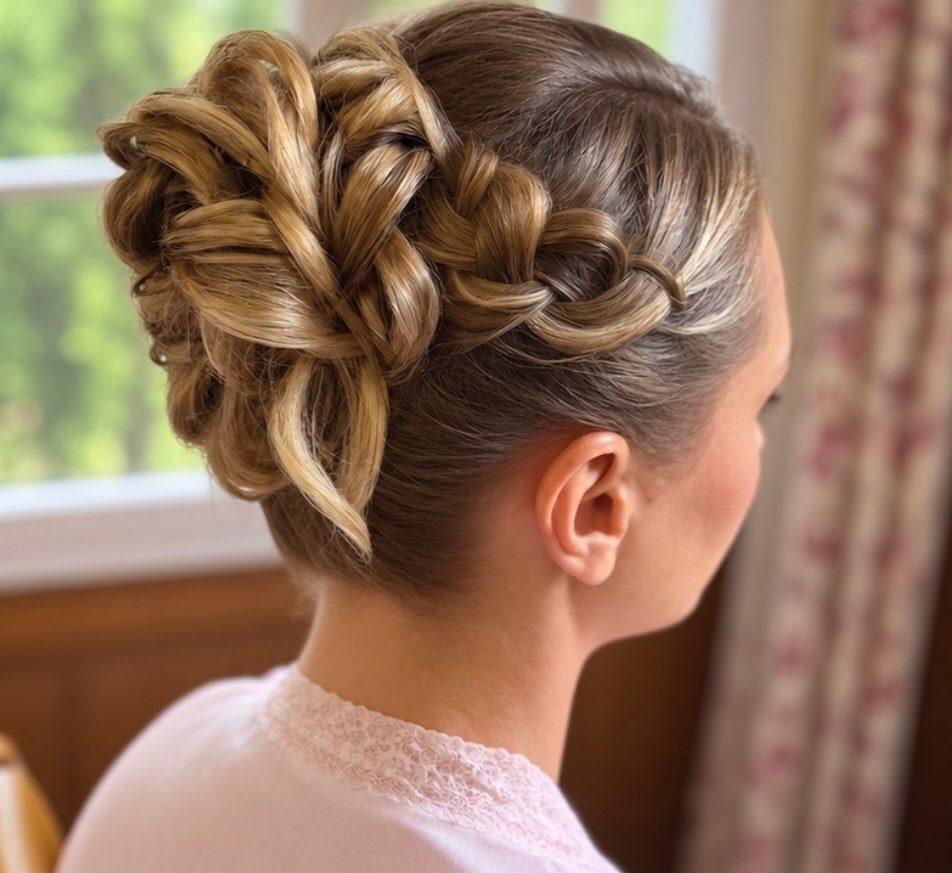
The braid runs from the crown into a high, rounded bun, with the plait twisted and coiled to build volume at the back of the head.
Hair is gathered tightly at first, then pinned in layers so the bun sits full and structured.
This suits formal weddings where you want height and polish. The braid keeps the crown smooth, and the twisted coils add dimension without loose strands.
A volumizing spray before you start gives the bun more body, and bobby pins hold better when the hair has some grip.
Some braid styles, like cornrows, are difficult to fasten a veil into because all your hair is braided down flat.
— Allure
9. French Braid Ponytail
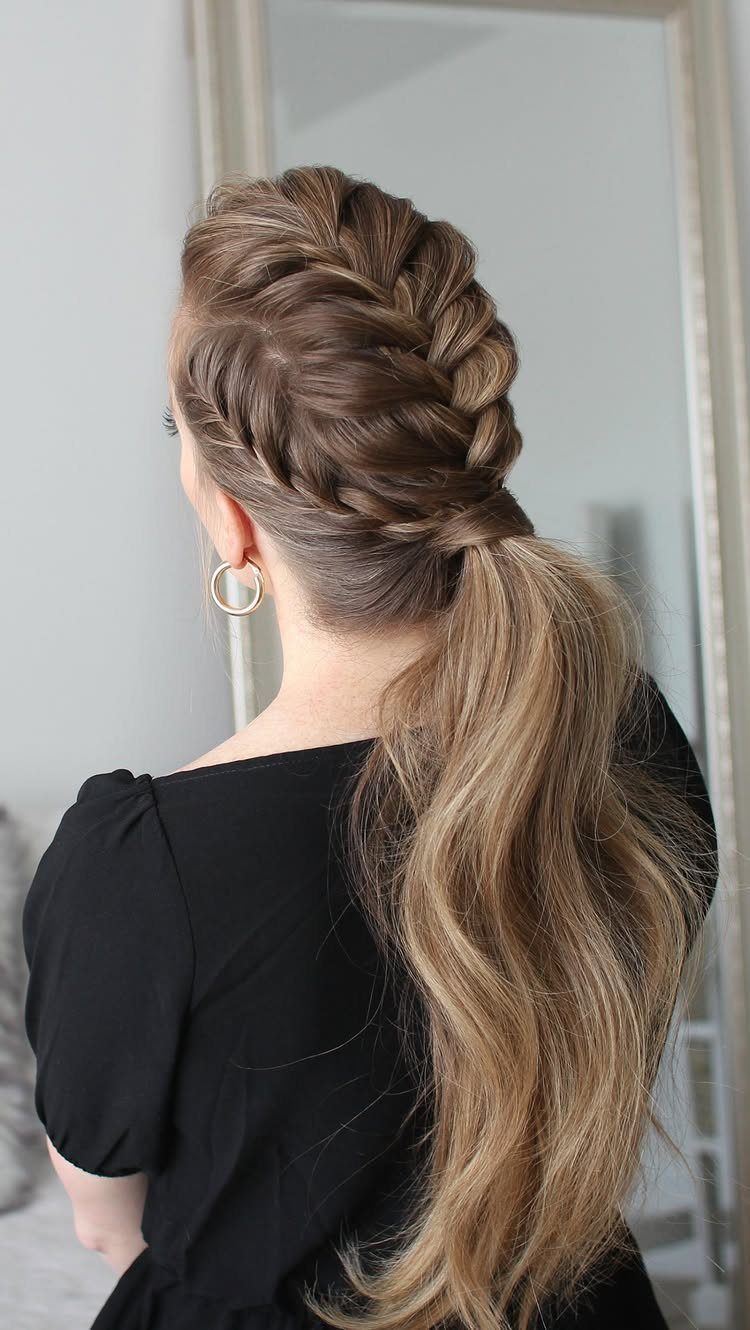
The braid gathers hair from the crown down to the nape, where it transitions into a low ponytail with curls or waves left loose. The braid sits thick and slightly loosened, so the ponytail flows naturally from the end.
Length stays visible without hair falling forward. Curl the ponytail section after the braid is secured, so the texture stays distinct.
A clear elastic at the base of the ponytail keeps the transition clean, and you can wrap a small section of hair around it to hide the band.
10. French Braid with Pearls
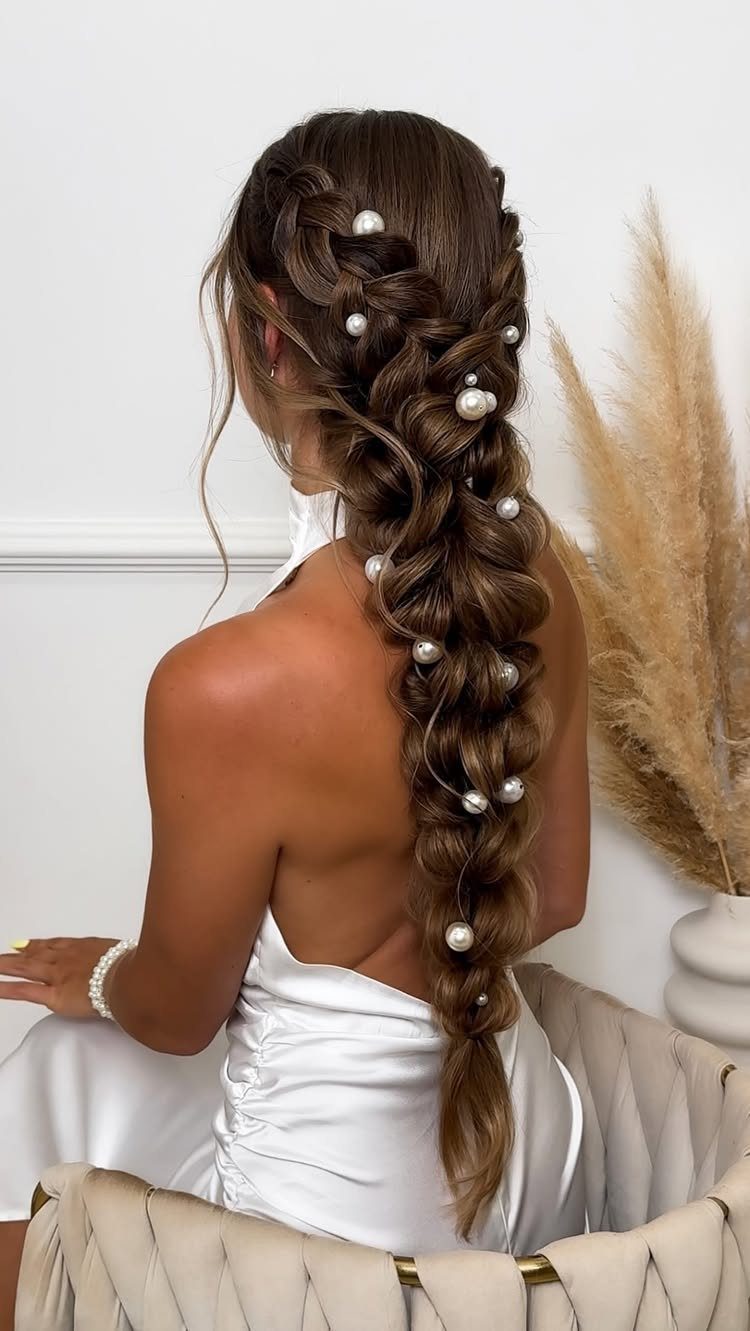
The braid runs long and thick down the back, with white pearls pinned or threaded into the plait at intervals. The weave is loosened after braiding to let the pearls sit visible between the strands.
This reads bridal without flowers, and the pearls stay in place better when the braid is secured first, then decorated. Use bobby pins with pearls already attached, or thread pearl strands through the braid and pin them at both ends.
The pearls show best on darker hair, where the contrast holds.
11. Flower-Adorned French Braid
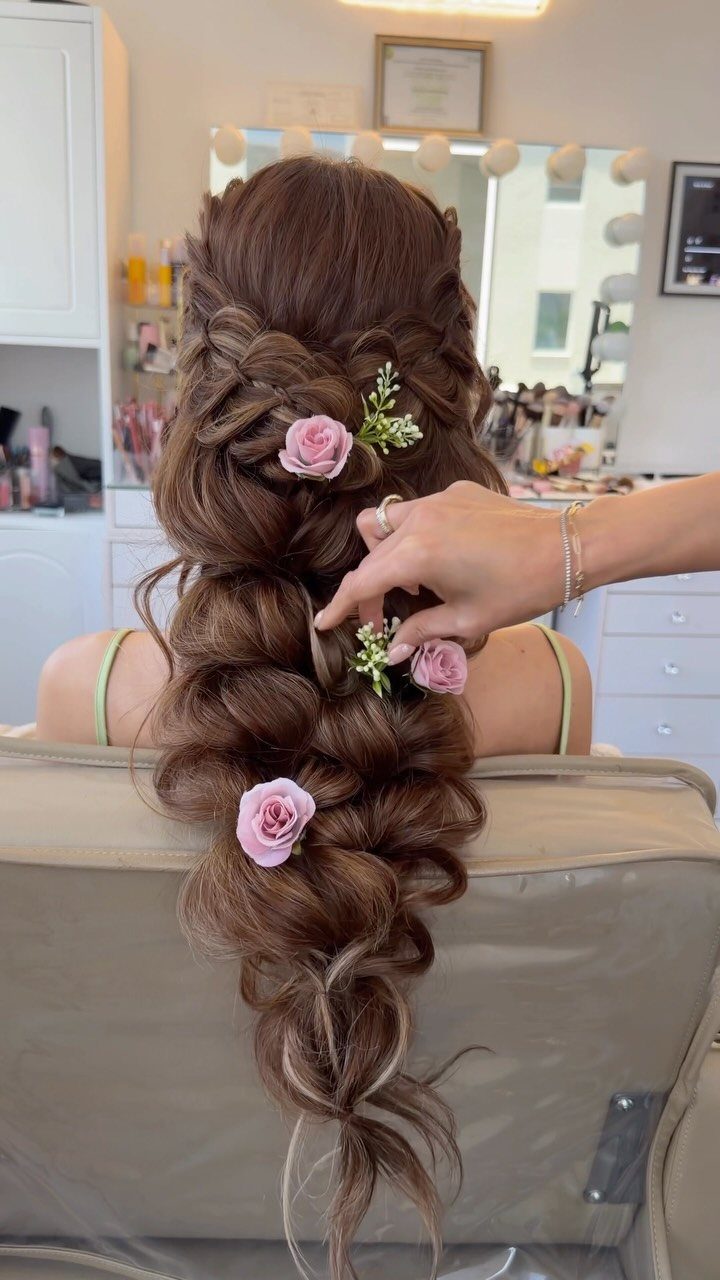
Small roses or blossoms are pinned into a loose, textured braid that runs down the back, with greenery tucked between the flowers for depth.
The braid is woven loosely from the start, so the flowers sit naturally into the weave rather than stacked on top.
This takes longer to arrange than a braid with pearls, but the flowers give you color and a softer, more garden-style finish. Pin the stems directly into the braid after it is secured, starting at the top and working down.
Real flowers wilt, so plan for a stylist to add them shortly before the ceremony.
Frequently Asked Questions
Does a French braid work for thin or fine hair?
The way the strands cross over each other gives fine hair more visible body.
Use a volumizing product before you braid, then gently pull the sections wider after you secure it to add fullness. The braid holds better than loose styles on hair that tends to fall flat.
Can I wear a French braid with a cathedral veil?
The comb slides right under the braid where it meets your scalp, usually just above the nape, and the fabric falls without catching on the weave.
The braid gives the veil a secure anchor point and creates a layered look. Pin the veil after the braid is finished so you can adjust the placement.
How do I keep my French braid from getting frizzy outdoors?
Smooth a light serum through damp hair before you braid, and once everything is secured, lock it down with a spray made to block humidity.
The weave itself controls flyaways better than loose hair, so the braid holds up well in humidity or wind.
Will a French braid stay secure through dancing and all-day wear?
Yes, the braid weaves hair tightly from the scalp down, so it holds better than most other styles.
Pin any loose sections and finish with hairspray, and the braid will stay in place from the ceremony through the reception. Updo versions hold longest because the weight sits low and pinned.