
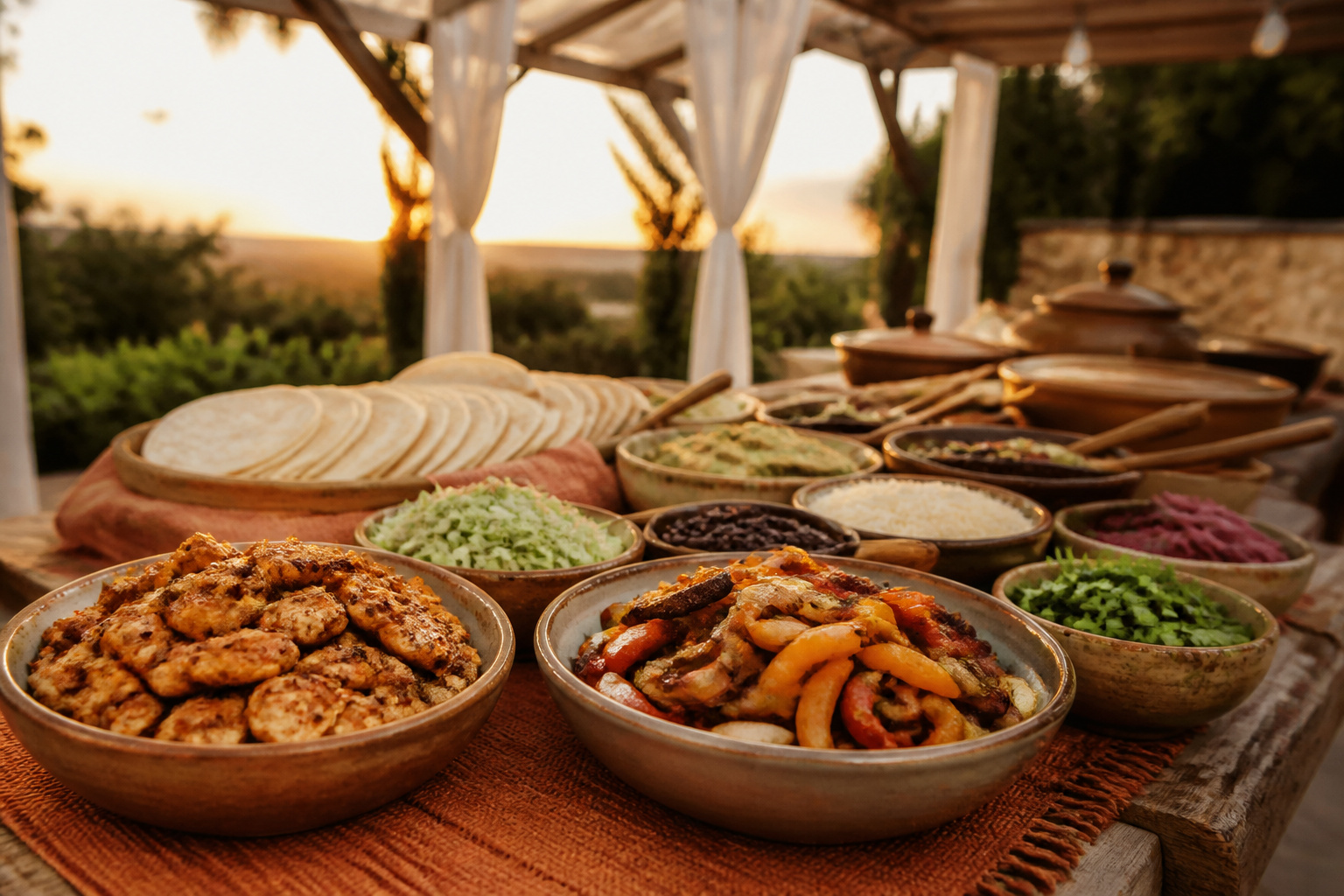
The best wedding food for most 2026 receptions is a taco bar, because two proteins and a spread of fixings lets guests handle their own dietary restrictions while the couple saves 25–40% on staffing and plating costs.
Skip it if you are set on a formal seated dinner where guests expect to be served.
The real savings live in limiting those proteins to two choices, not three or four, which keeps rental chafing dishes down and the line moving on already-discounted Friday or Sunday slots.
1. Taco Bar for Dietary Flexibility
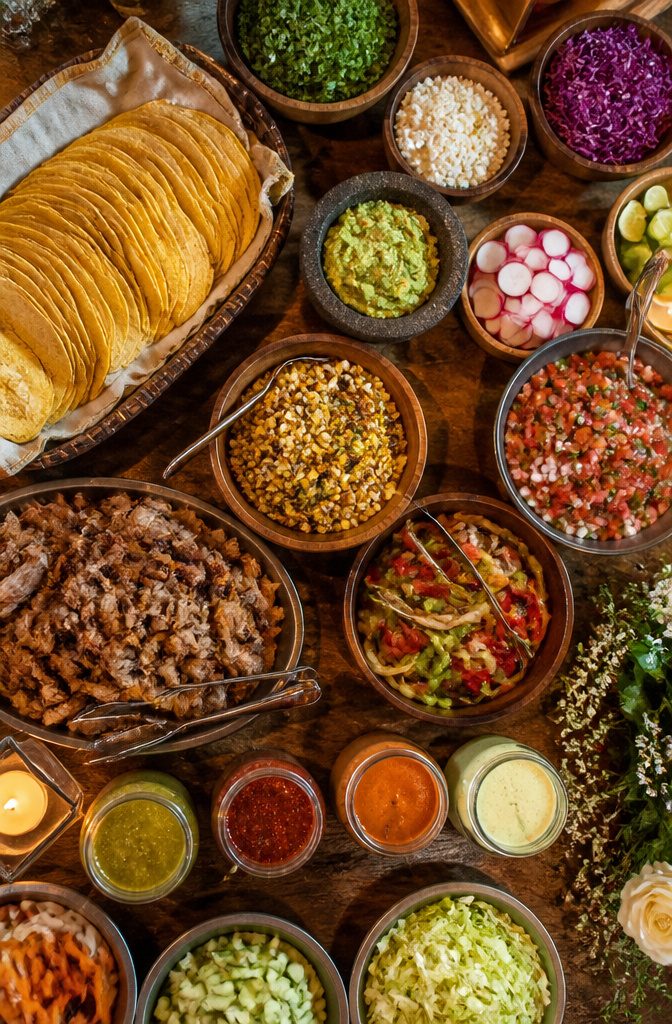
A taco bar lands hard on the intersection of cheap and inclusive, which is why it keeps showing up at weddings where the budget sits under $10,000.
Guests build their own plate from two proteins max, maybe carnitas and grilled vegetables, and the fixings handle the rest: corn tortillas for the gluten-free crowd, beans and rice for anyone skipping meat, salsa verde to fire, crema to cool.
The couple saves on servers because nobody plates anything, and the caterer drops the per-head cost when portions stay self-controlled.
What convinced me, reading through the catering breakdowns, is how the format turns restriction into feature.
A plated dinner with a vegan option and a gluten-free option and a nut allergy notation becomes three separate kitchen tracks and a briefing for every server.
A taco station just labels the bowls and lets guests sort themselves. The weddings people actually remember, the ones they talk about for years, tend to have this in common: the food felt abundant and personal, not precise and performed.
The real move is keeping proteins to those two choices, not three or four. Every additional protein adds a chafing dish, a holding temperature, a line slowdown.
Two keeps the line moving and the rental bill down. Limiting proteins to two max is where the real savings live, especially on a Friday or Sunday when caterers already cut rates.

[Multi Occasions] :By changing the place direction of the chalkboard, These buffet food signs can be used horizontally or vertically: Labeling the drink/food on dessert table, a guide board for themed parties, Used as small sale signs for retail store and much more.

GREAT VALUE: Ample 6-bowl pack ensures convenience, perfect for gatherings or daily use. Never run out of bowls, stay prepared to serve with ease. Enjoy flexibility and style with this convenient supply.
2. Pasta Station by the Numbers
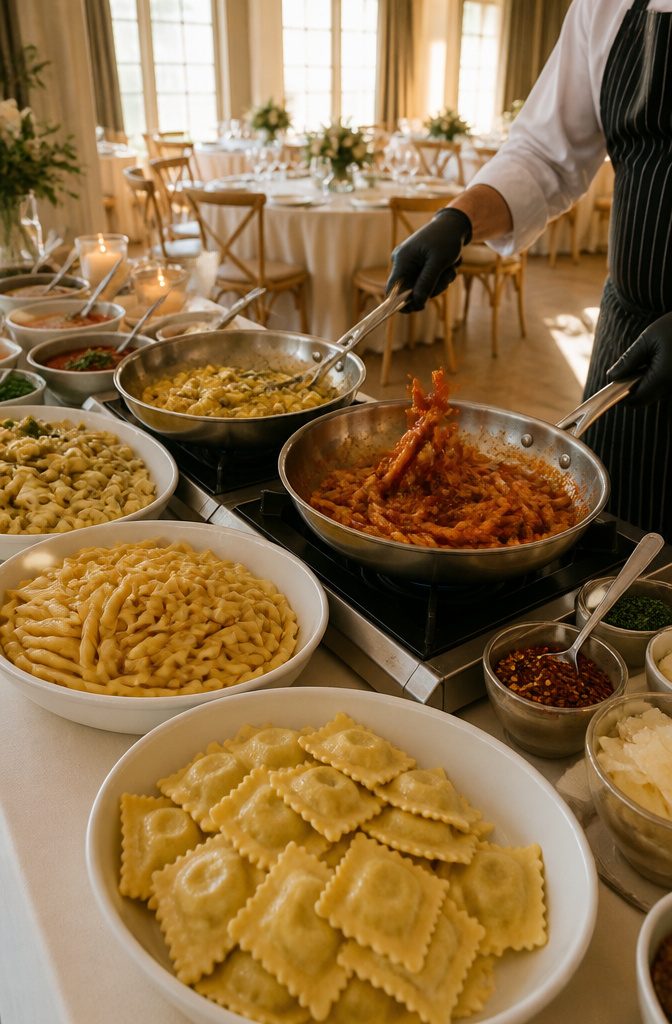
A pasta station works because guests build their own plate from three moving parts: the shape, the sauce, and what gets tossed in at the end.
At one Tuscan setup I kept returning to, the choices ran raviolo, penne, or cheese tortellini; sauces were brown butter sage, garlic alfredo, and spicy marinara; toppings finished with chili flakes, shaved parm, or fresh basil.
The chef worked two skillets at once, noodles parcooked in back, sauces held warm in vats up front, so the whole thing moved faster than it looked.
Caterers typically add 15–20% over base portions for buffet-style service, which sounds like extra cost until you run it against plated math.
A seated dinner budgets 5–7 oz of protein per person plus sides; a station trades that single heavy plate for smaller portions guests can circle back through.
The proteins, if you offer them, become toppings rather than centerpieces, so a little shrimp or grilled chicken stretches further.
The real savings sit in the labor line: one cook with two burners and a ladle replaces the brigade that plated individual dinners in the kitchen.
The catch is space and staff footprint. A pasta station needs room for the line to form without choking the dance floor, and someone has to stay at the pan.
For a crowd under a hundred, that trade usually pays. Above that, you multiply stations or accept a wait.

One 30-count package of Mission White Corn Tortillas

Enjoy crunchy, gluten free taco shells made with just three ingredients

One 30-count package of Guerrero White Corn Tortillas
3. Charcuterie Grazing Tables for Crowds
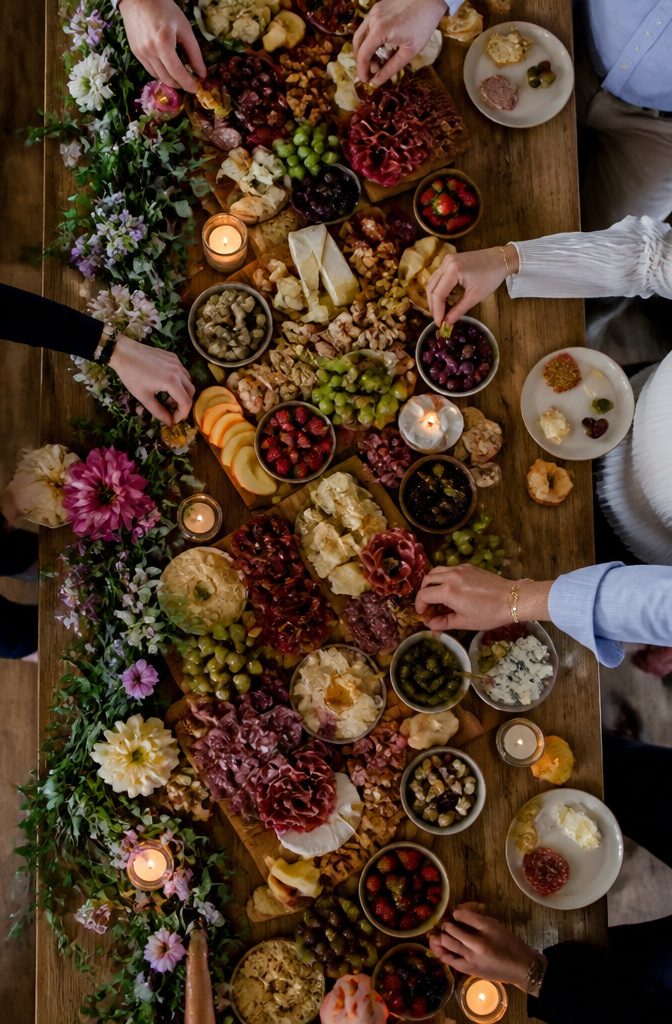
A single charcuterie grazing table can feed a crowd while cutting 25–40% per head compared to plated service.
The spread itself does the work: meats, cheeses, fresh and dried fruits, nuts, crackers, dips, breads, olives, honeycomb, and seasonal vegetables arranged across one long surface or several.
Guests circulate, pick what they want, and keep returning through the night. Almost zero service staff is needed, which is where the real savings land.
The visual payoff matters too. Add simple signage and the table doubles as décor, replacing some of what you might have spent on flowers or installations.
I have watched this setup at outdoor and backyard weddings in particular, where the abundance reads as luxury without the plated-dinner price tag.
The format suits large guest counts especially well; no one waits for a seated course, and dietary preferences sort themselves out when guests choose their own combinations.
The trade-off is that grazing demands space and a caterer comfortable with display rather than timing.
If your venue has the footprint, the table becomes both meal and centerpiece, and the budget you free up can move elsewhere in the evening.

FOOD GRADE STAINLESS STEEL: This chafing dishes for buffet set is made of reinforced and thickened stainless steel for superior durability and corrosion resistance, ensuring that it maintains its quality over time during regular use and storage. The enhanced insulating properties of this chafing dish set also contribute to its ability to keep food warm or fresh for long periods of time. The elegant mirror finish and rounded edges prevent scratches and your fingers from getting cut.

Cooling / Warming Functions:Our cold food serving trays for party buffet Simply add hot water or ice cubes to maintain the ideal temperature,helps keep food warm or cool for extended periods providing superior food preservation and optimal flavor

Crafted with practical design, our chafing dishes for buffet maintain food warmth efficiently during events. The durable construction ensures consistent performance, making these chafing dishes suitable for various buffet settings while preserving meal quality
4. Slider Station as Mini-Burger Bar
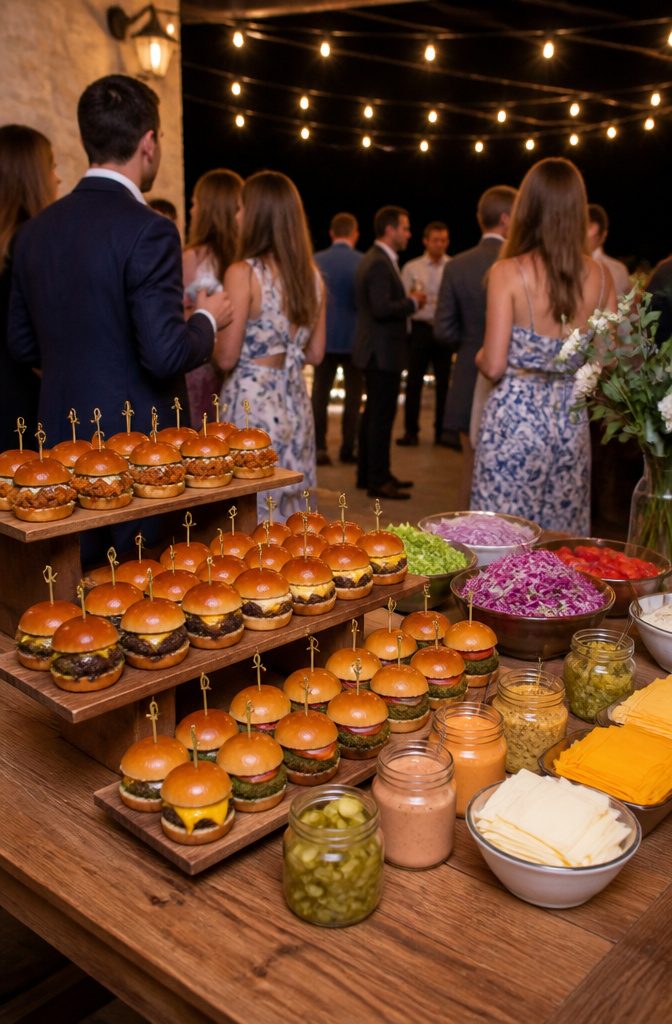
A slider station works best when guests build their own plate. Caterers usually set out beef, chicken, and veggie patties with a spread of cheeses, pickles, sauces, and slaw so people can stack what they want.
The small size means a single slider runs about two or three bites, which keeps lines moving and lets guests mingle instead of sitting down to a full plated meal.
That mobility is exactly why this format shines during cocktail hour or as a late-night station.
For cocktail hour, budget 5–8 passed bites per person per hour; for a late-night setup, plan 2–3 small bites per person. The slider lands comfortably in that range.
Guests expecting a seated dinner will feel shorted, and outdoor summer weddings can turn the meat and cheese into a food-safety risk if heat sits on the station too long.
I would skip this entirely for a formal reception or any July afternoon without solid refrigeration backup.

Cater Like a Pro: Whether you are preparing for a big event or you want to impress your guests with a mouthwatering buffet, the Alpha Living disposable chafing dish buffet set has everything you need to display and keep the food at the perfect temperature, keeping it fresh and full of flavor!

Cater Like a Pro: Whether you are preparing for a big event or you want to impress your guests with a mouthwatering buffet, the Alpha Living disposable chafing dish buffet set has everything you need to display and keep the food at the perfect temperature, keeping it fresh and full of flavor!

Cater Like a Pro: Whether you are preparing for a big event or you want to impress your guests with a mouthwatering buffet, the Alpha Living disposable chafing dish buffet set has everything you need to display and keep the food at the perfect temperature, keeping it fresh and full of flavor!
5. Breakfast for Dinner Timing
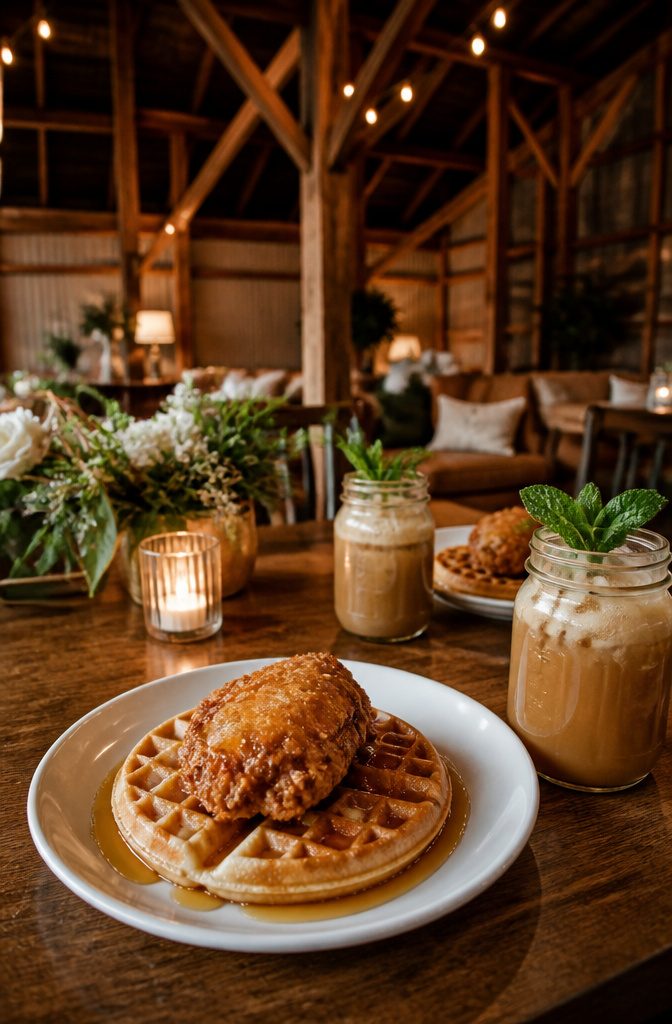
Chicken and waffles at nine in the evening lands differently than it does at brunch.
The salt, the syrup, the heavy starch: it satisfies a crowd that has been dancing and drinking, but it can feel like a costume if the rest of the wedding reads formal.
I have seen it work beautifully at barn receptions and warehouse spaces where the couple’s attitude carried the joke. It falls flat in ballrooms where guests arrived expecting a seated filet.
Yogurt parfaits and fruit cups suffer the opposite risk.
By 8 PM, most guests want protein and warmth, not a refresh of the hotel breakfast they ate that morning. A parfait bar reads as a cost cut too visible, unless it sits beside something substantial.
The successful breakfast-for-dinner receptions I have watched commit fully: paper-thin pancakes passed as appetizers, biscuit sandwiches at peak hunger, coffee cocktails spiked enough to feel like evening. Half measures make guests wonder why the kitchen ran out of dinner.

32-PIECE DESSERT BOWL & CANDY BAR CONTAINER SET: Complete serving set includes (16) 6 oz clear angled dessert bowls, (8) plastic scoops, and (8) serving tongs ideal for parties and events. They're the perfect for candy bar containers, candy table display sets, ice cream bar supplies, popcorn bar supplies, taco bars, dessert tables, and buffet stations.
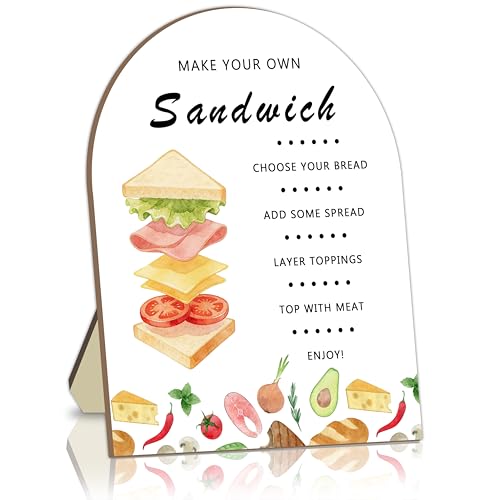
Perfect Buffet Table Display: This Sandwich Bar wooden sign measures 8 x 10 inches, making it the perfect size for buffet tables, sandwich stations, food bars, and party setups. It adds a stylish and welcoming decorative touch to your celebration.

Versatility: Pizza topping station is exquisitely designed to adapt to a variety of occasions, whether it is a home kitchen, banquet hall, buffet, party, or commercial environment such as restaurant, hotel, barbecue, bakery, etc., it can play its storage and dispensing functions. Condiment station can hold a variety of ingredients such as seasonings, sauces, salads, jams, fruits, etc. to meet the storage needs of different foods.
6. Mini Desserts for Varied Tastes
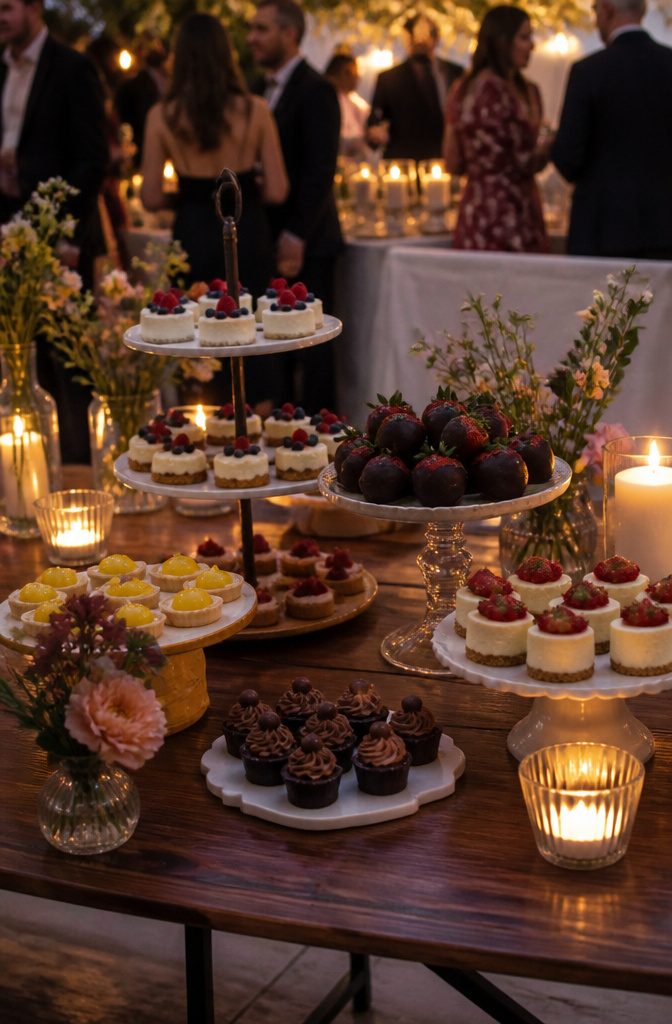
Mini cheesecakes land better than a single towering slice ever did. At one reception I watched, guests circled back three times for two-bite versions, sampling key lime, strawberry, and plain without the guilt of committing to a full plate.
A dessert table of bite-size sweets replaces the cake cutting entirely, or runs alongside it for guests who want variety without the ceremony.
Chocolate-dipped strawberries hold up as a wedding classic for good reason: they look expensive, require zero utensils, and disappear fast.
The practical win is sampling. Someone can grab a cheesecake bite, a strawberry, and a citrus tart without the social pressure of finishing a standard slice.
For couples watching the budget, this setup often costs less than a tiered fondant cake while feeding the same head count.
The stations that stick in memory pair sweets with something unexpected: local coffee beside a donut wall, tropical toppings at an ice cream bar, or Cuban coffee flan for a late-night caffeine jolt.
Guests talk about the combination longer than they remember any single flavor.

MULTIPURPOSE USE: These 32 oz white plastic serving bowls are great for any occasion. Whether you're hosting a salad bar, serving snacks, candies, chips, or even using them for arts and crafts, these thanksgiving serving bowls meets all your needs. Enhance your party setup with these practical and stylish bowls that fit seamlessly into any event. Use them as candy dishes, chip bowls for parties, white plastic bowls, taco bar serving set for a party, and party bowls.

Easy to Write & Erasable: Includes 20 food signs for party buffet and 12 colors of water-based chalk, a bottle and a cleaning cloth. Simply wipe to clean and reuse.

CAPACITY: Taco plates can hold 2 tacos and 2 sides
7. Late-Night Snack Stations That Keep the Floor Full
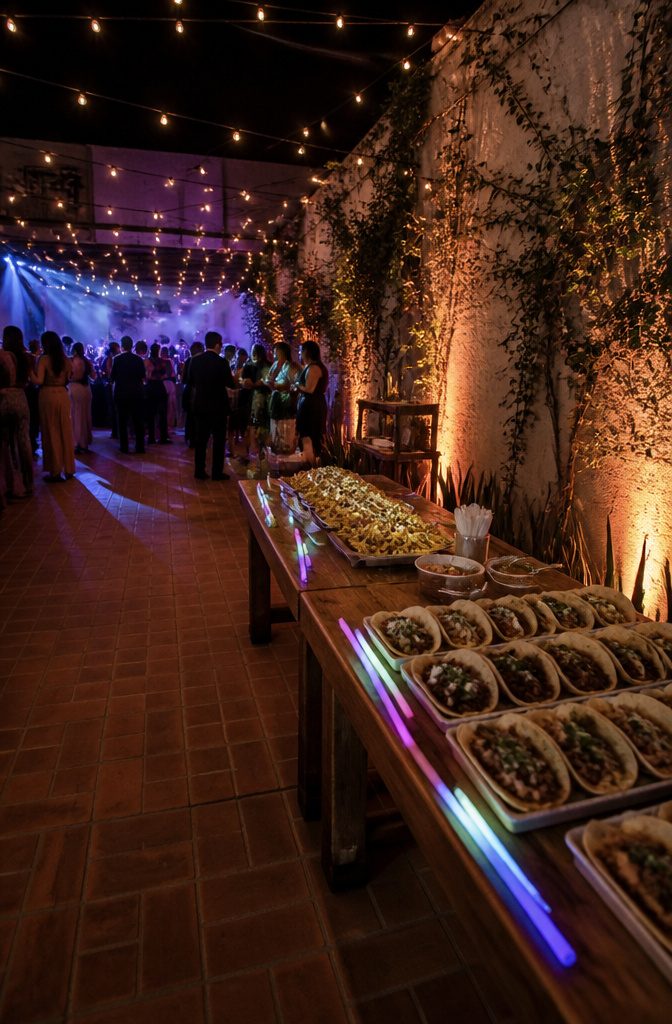
Late-night snack stations hit differently because the timing is everything. After two or three hours of dancing, guests need that second wind, and the food that arrives after 10 PM carries an energy the formal meal never had.
Tacos lead the pack here, especially al pastor at that hour, and the street-taco format keeps people moving rather than sitting back down.
Loaded fries and sliders run close behind as the most talked-about formats nationally, while pizza keeps it simple: order it straight to the venue, no extra staffing, and it vanishes within minutes.
Popcorn bars cost the least if budget is tight that late in the night, and mini donuts near the exit double as a send-off.
The logistics matter more than people expect. Outside vendors need their own insurance, and without kitchen access, everything must arrive fully prepared; warming equipment holds it at temperature once it lands.
Skip the sushi unless your crowd genuinely leans seafood over comfort food. The real win is keeping the floor full: guests fuel up standing, eat with their hands, and head straight back to dancing.

No hydrogenated fats or high fructose corn syrup allowed in any food

The package dimension of the product is 12.8'L x 7.5'W x 13.3'H

One 24-count package of Mission Street Taco Corn Tortillas
Buffet Against Plated Service
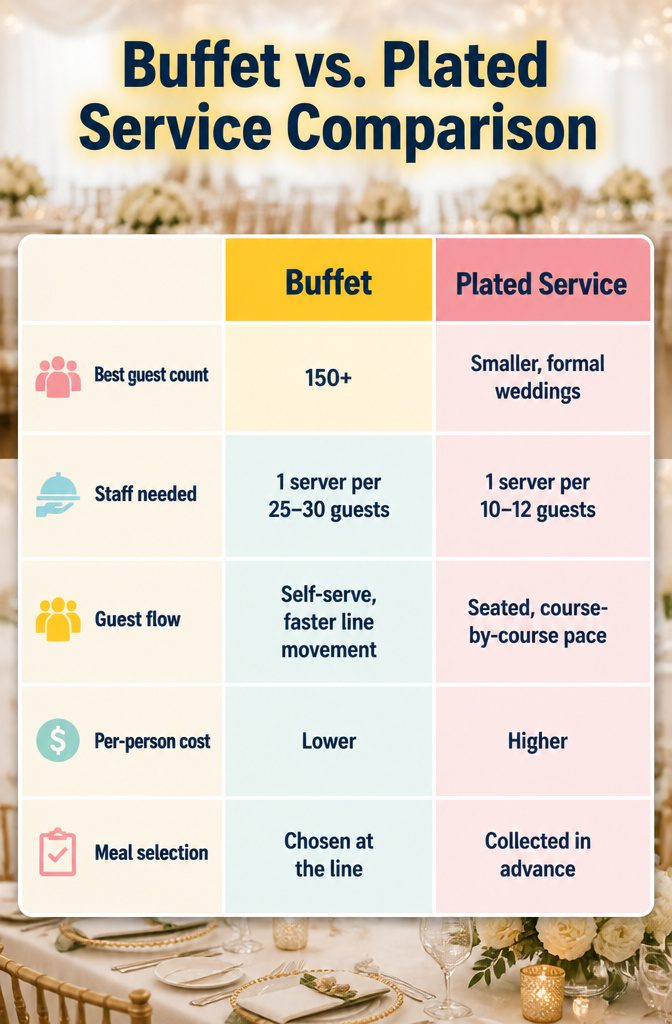
The first catering quote I pulled for my own reception had me staring at the per-head line item until the numbers blurred.
Plated service ran higher mostly because of the staff: one server for every 10–12 guests, compared with one per 25–30 for buffet. That ratio alone changed my total by thousands.
Buffet wins on variety and speed for larger crowds. Guests choose what they want, lines move fast, and you skip collecting advance meal selections.
Plated service keeps everyone seated, delivers that formal "white glove" atmosphere, and works better when the head count sits lower. The trade-off is real: plated costs more per person and stretches your timeline because courses arrive in sequence.
How the two stack up:
| Factor | Buffet | Plated Service |
|---|---|---|
| Best guest count | 150+ | Smaller, formal weddings |
| Staff needed | 1 server per 25–30 guests | 1 server per 10–12 guests |
| Guest flow | Self-serve, faster line movement | Seated, course-by-course pace |
| Per-person cost | Lower | Higher |
| Meal selection | Chosen at the line | Collected in advance |
Choosing buffet over plated typically drops your catering spend by 25–40% per head.
That gap comes straight from payroll and china. For my budget, the buffet made the difference between two proteins and one.

Countertop Food Serving Display Container: This comprehensive set includes 6 small food-grade stainless steel pans, 1 large bottom basin, and a clear roll top cover, ensuring your salads, sushi, and more are presented elegantly. Each pan, measuring approximately 7 x 6.4 x 4 inches, fits seamlessly into the 21 x 13 x 13inch tray, creating a sophisticated, modern cold food buffet server for any occasion.

Generous 8L Capacity: Spacious round food pan provides plenty of room for entrées, seafood, pasta, vegetables and side dishes, making it practical for buffet service, receptions, banquets and family gatherings

Roomy Serving Pan: The 8L round pan gives you plenty of space for roast meats, pasta, seafood, vegetables and side dishes, helping reduce frequent refills during receptions, holiday meals, catered functions and buffet service
Interactive Stations Against Traditional Service
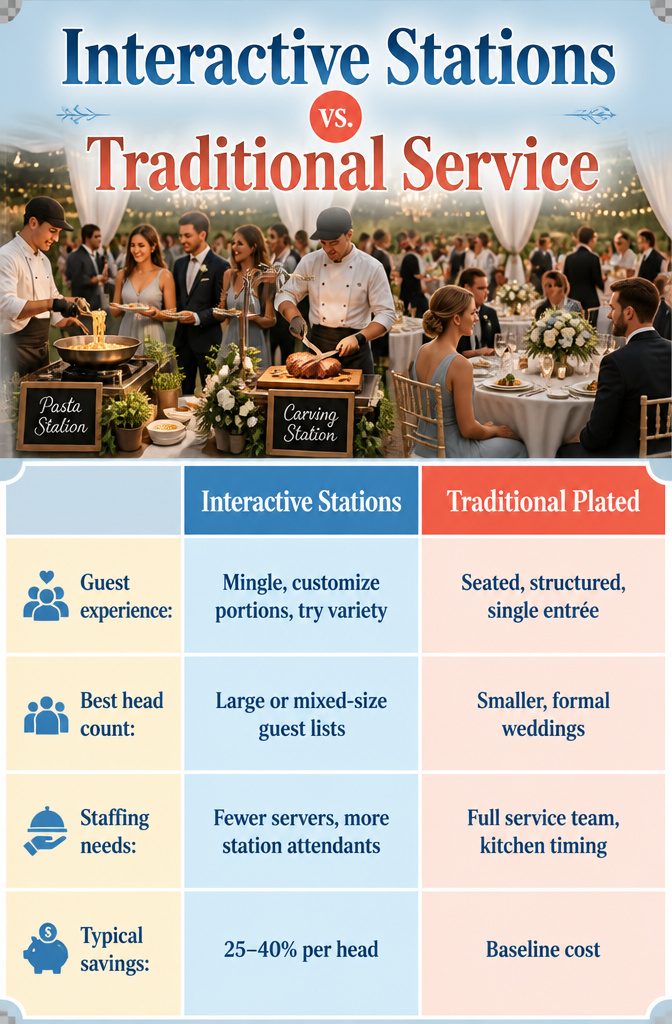
Plated dinners run expensive because you are paying for timed service, china, and cleanup staff. Switching to interactive formats usually drops the per-head cost by 25–40% while guests move through the room instead of waiting to be served.
| Interactive Stations | Traditional Plated | |
|---|---|---|
| Guest experience | Mingle, customize portions, try variety | Seated, structured, single entrée |
| Best head count | Large or mixed-size guest lists | Smaller, formal weddings |
| Staffing needs | Fewer servers, more station attendants | Full service team, kitchen timing |
| Typical savings | 25–40% per head | Baseline cost |
Food stations spread throughout the space, like a pasta or carving station, let guests choose exactly what they want at cook-to-order spots.
The tradeoff is square footage: you need a spacious venue, and guests who want one big hot meal may leave hungry.
For tight budgets or outdoor setups, a food truck lands even cheaper, often 30–50% below traditional catering, with guests ordering only what they will actually eat.

Serve Hot or Cold Foods: Add hot water to the water pan and light the fuel holder to keep hot foods warm. Add ice to switch to cold serving mode, ideal for salads, seafood, and other chilled dishes

KEEP YOUR FOOD WARM AND READY - Alpha living’s 4 pack chafing dish allows for users to maintain their foods heat, with top-quality stainless-steel frame and body.

【Keep food Warm or Cold for Hours】Hetorosu 4 Pack buffet servers and warmers are crafted from premium stainless steel, designed to provide superior heat retention and durability. Featuring an advanced steam circulation system, it can keep food warm for hours, and you can also add ice to the water pan for chilled salads、sashimi、and beverages.Ensuring food stays at the perfect temperature and texture for extended periods makes it ideal for long events and gatherings.
Dietary Restrictions on RSVP Cards
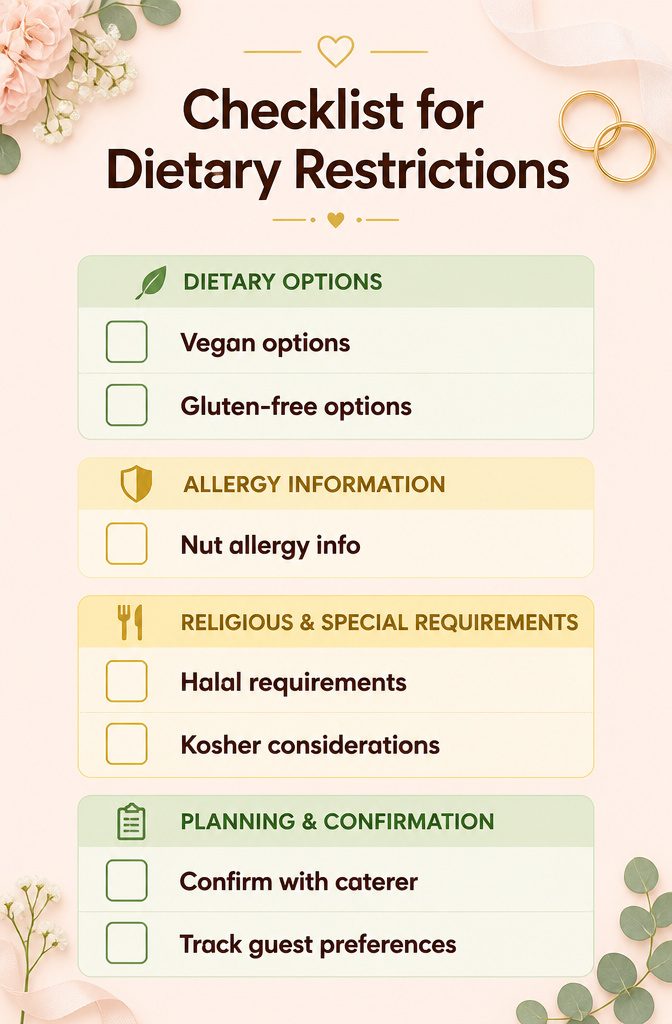
A checkbox line on the RSVP card for vegan, gluten-free, nut allergy, halal, or kosher needs changes everything about how your caterer builds the menu.
I used to think a polite note in the margin was enough, but raw counts let the kitchen prep exact portions instead of guessing.
Share that breakdown at least three to four weeks out so proteins and starches can be ordered without rush fees.
The real difference shows up in service style. A plated dinner tracks each guest to their seat, so the kitchen plates the vegan entrée for table six, seat four, and delivers it directly.
Stations or buffets need every dish labeled and cross-contamination prevented at the line, which means separate utensils and prep areas for gluten-free options.
A menu that is naturally vegan and gluten-free covers most restrictions in fewer total dishes, saving both money and the chance of a sauce slip-up.
Halal and kosher are stricter, often requiring certified meat or a supervised kitchen; if those guests are on your list, ask your caterer early whether they can source it or whether you need a specialist.

8 Pans: Contains 8 independent plates that can hold various ingredients such as lettuce, tomatoes, cucumbers, nuts, salad dressing, etc. Store different ingredients in different zones to avoid mixing and skewing of flavors. Clear at a glance when retrieving, greatly improving meal preparation efficiency

【Complete 6-Piece Pizza Prep Station】Kalolary 6-piece pizza topping station with lid offers organized convenience for pizza making, including 6 removable pans, 6 stainless steel lids, six clear acrylic lids, and six spoons. The 2-tier and inclined design keeps toppings visible and accessible enhancing your cooking efficiency and enjoyment.

Package Includes: you will receive a chilled condiment organizer set, comprising 2 large chilled condiment trays with lids (each equipped with 5 removable compartments), 1 two-tier acrylic display stand, 10 plastic serving spoons, and 4 food clips; It serves as a taco bar serving set or pizza toppings station, a stylish bar garnish caddy, a vegetable and fruit tray
Seasonal Ingredients by Quarter
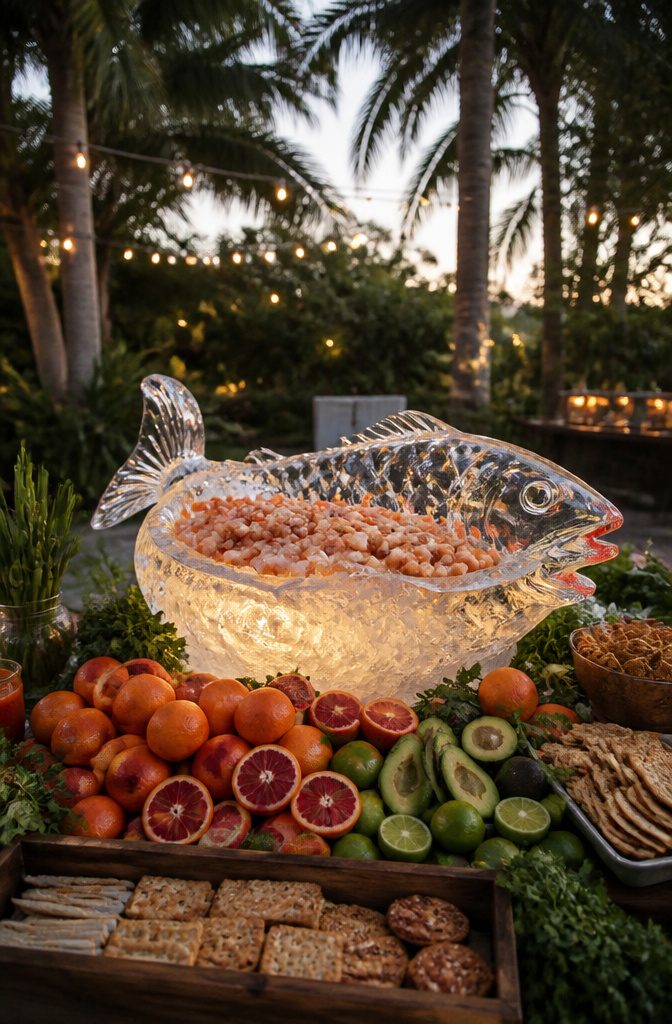
Seasonal menus do two things at once: they taste better because the produce is at peak ripeness, and they cost less because nobody is paying to ship tomatoes from another hemisphere.
At my sister’s March wedding in Florida, the caterer built the entire station concept around what was actually coming off the boats and out of the groves that week.
Gulf shrimp went into a chilled cocktail station with local grapefruit and avocado. The same seafood in December would have been frozen or flown in at triple the price.
Citrus peaks in winter through early spring, so a January or February reception gets blood orange garnishes and key lime accents at their cheapest and brightest. Summer shifts the advantage to tomatoes, peppers, and stone fruit.
A grilled vegetable station in July practically builds itself from farmers market overflow. Fall brings squash and apples that work for both savory stations and warm desserts.
The station format makes this easier to execute than a plated dinner. Guests understand a build-your-own bowl or a raw bar with rotating catches; it frames the seasonal limitation as intentional freshness rather than a missing option.
Coordinate with your caterer six to eight weeks out on what will be available, not what they hope to source.
If your date is flexible, a Friday or Sunday booking often drops the catering quote dramatically, and pairing that with peak-season ingredients is where the real savings stack.
Frequently Asked Questions
what is the best wedding food?
The best wedding food for 2026 depends on your crowd size, budget, and vibe, but taco bars, pasta stations, and charcuterie grazing tables consistently rank highest for balancing cost, guest satisfaction, and dietary flexibility.
Taco bars let guests build their own plates while keeping proteins limited to two choices for maximum savings.
Pasta stations stretch proteins further by making them toppings rather than centerpieces, and grazing tables cut 25–40% per head while doubling as décor.
What are the best food options for a large outdoor wedding?
Light, heat-tolerant dishes work best: grilled seafood, citrus-marinated proteins, pasta salads with oil-based dressings, and station-based formats like a low-country boil or taco bar.
Skip mayonnaise-heavy salads and delicate pastries that melt in the sun. Partner with a caterer experienced in outdoor service to maintain proper holding temperatures and timing.
How do I estimate quantities when planning food for a large wedding?
Start with 6–8 hors d’oeuvres per person for cocktail hour, 1.5–2 servings for a main-course buffet, and 2–3 dessert servings. For passed bites during cocktail hour, budget 5–8 per person per hour; for late-night stations, plan 2–3 small bites per person.
Bump quantities slightly for longer events or late-night service, and let your caterer refine based on your specific guest mix and menu.
Can I use local ingredients for my wedding menu?
Yes, and you should. Local seafood, citrus, and seasonal produce cost less and taste better than out-of-season ingredients shipped from elsewhere.
For a March wedding in Florida, Gulf shrimp paired with local grapefruit and avocado costs a fraction of what the same seafood would run in December.
Coordinate with your caterer six to eight weeks ahead on what will actually be available, not what they hope to source.