A trellis can be a garden arch wrapped in greenery or a custom welded metal sculpture rented for the day.
The choice turns on your ceremony space: wide open outdoor clearings need triple arches or wide statement frames to hold visual weight, while narrow aisles fit single metal hoops or garden gates.
If the venue already has a permanent stone trellis or vine-covered gate, you skip the rental and the setup entirely.
1. Arched Rose Gate
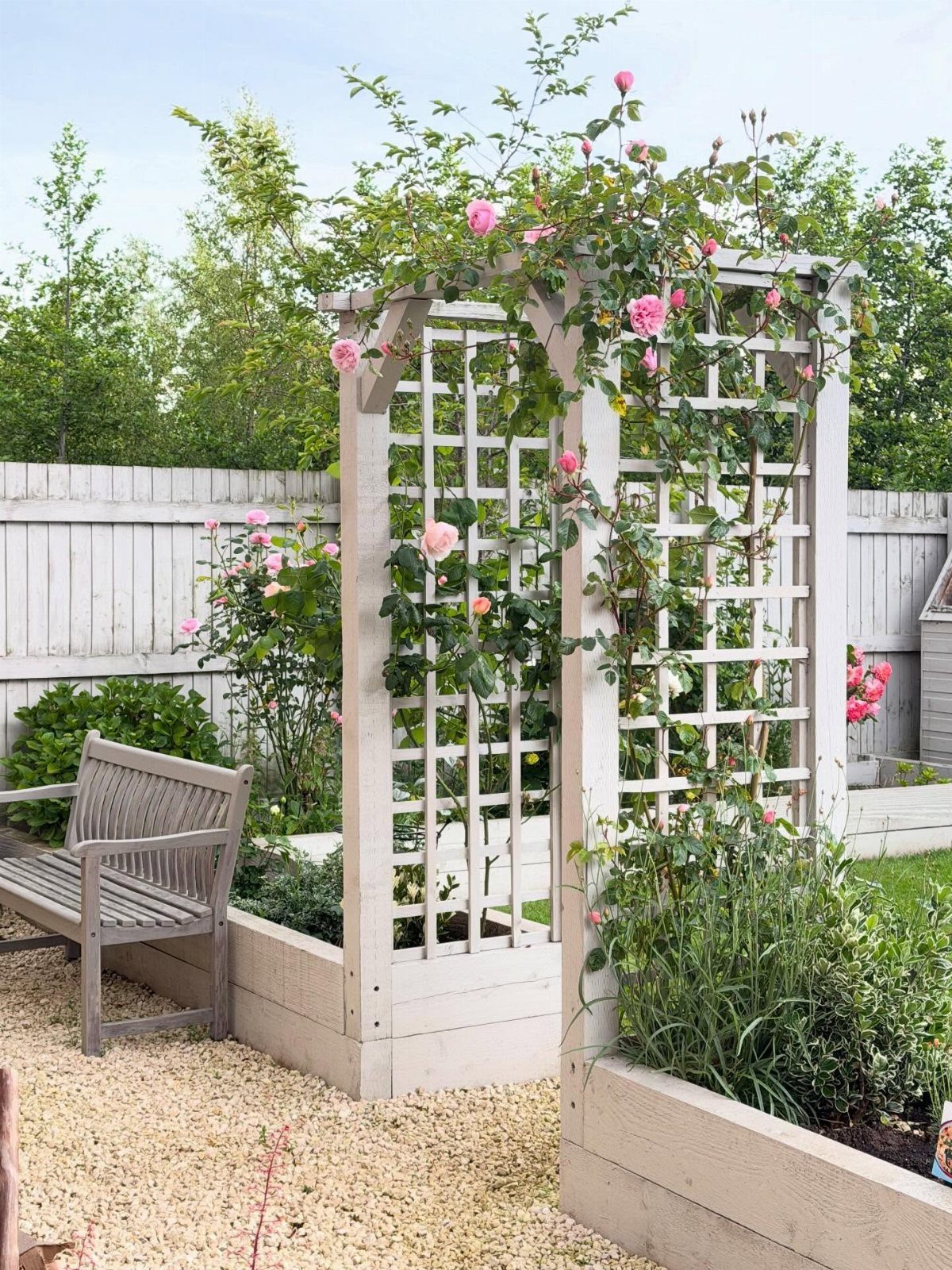
A wooden arch wrapped in climbing roses turns a garden gate into a ceremony focal point. The structure itself is simple: 2 posts and a curved top beam, often cedar or pressure-treated pine.
Plant climbers at the base well in advance if you want coverage by your wedding date.
Roses need time to grow enough to cover an arch. For faster coverage, train the canes horizontally along the sides before letting them climb.
If the wedding is sooner, drape cut roses and greenery over the existing frame the morning of the ceremony.
2. Circular Standalone Trellis
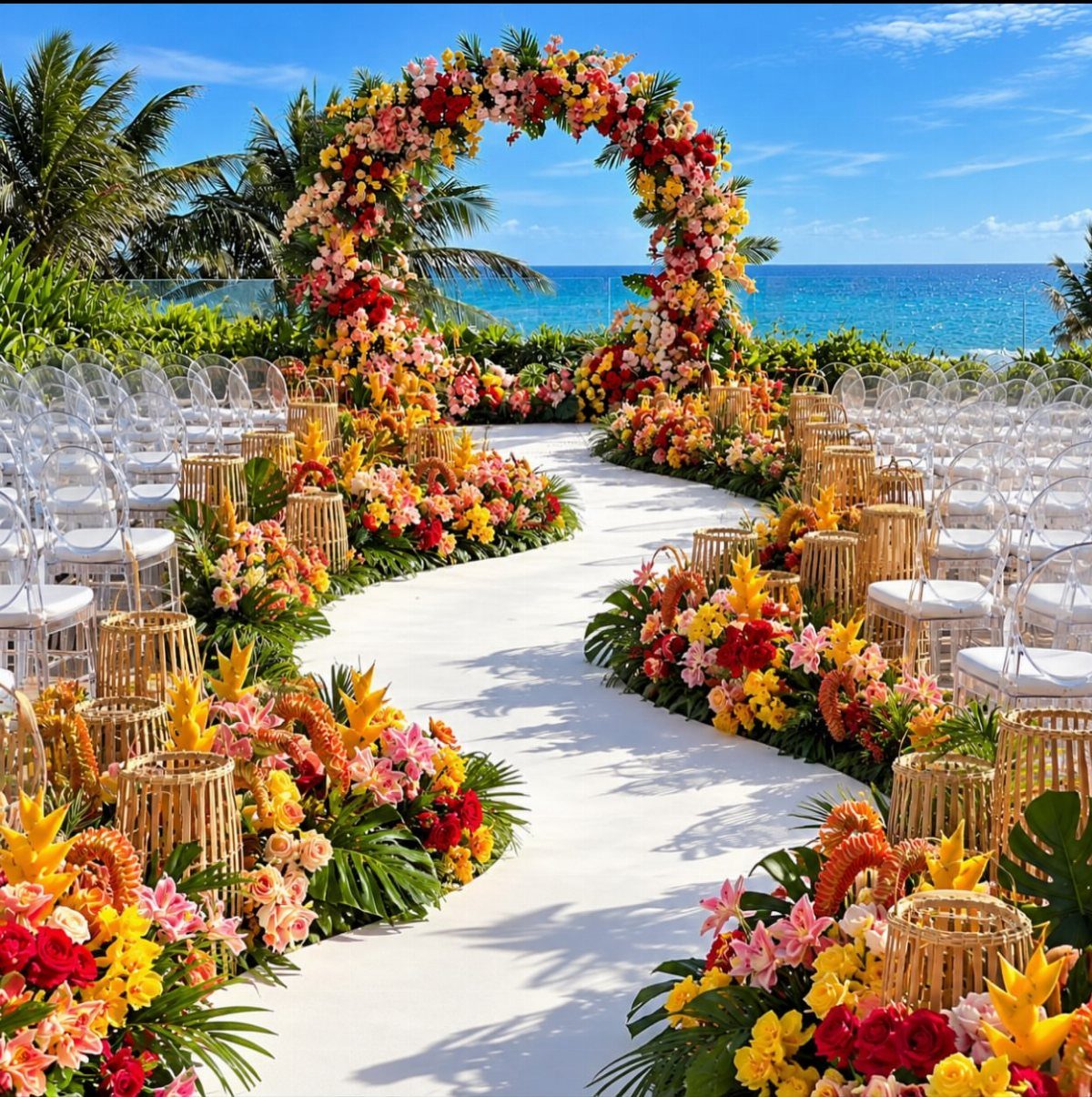
A circular metal hoop stands alone without anchoring to walls or posts, so it works in the center of an open space where a traditional arch would block the view.
Most standalone hoops come with a weighted base or ground stakes to keep them stable outdoors.
Florals cluster at the top or sides, leaving the rest of the circle bare to frame the backdrop. The design keeps sightlines open, so guests behind the arch still see the couple clearly.
Metal hoops ship flat and assemble in minutes.
3. Non-Square Trellis
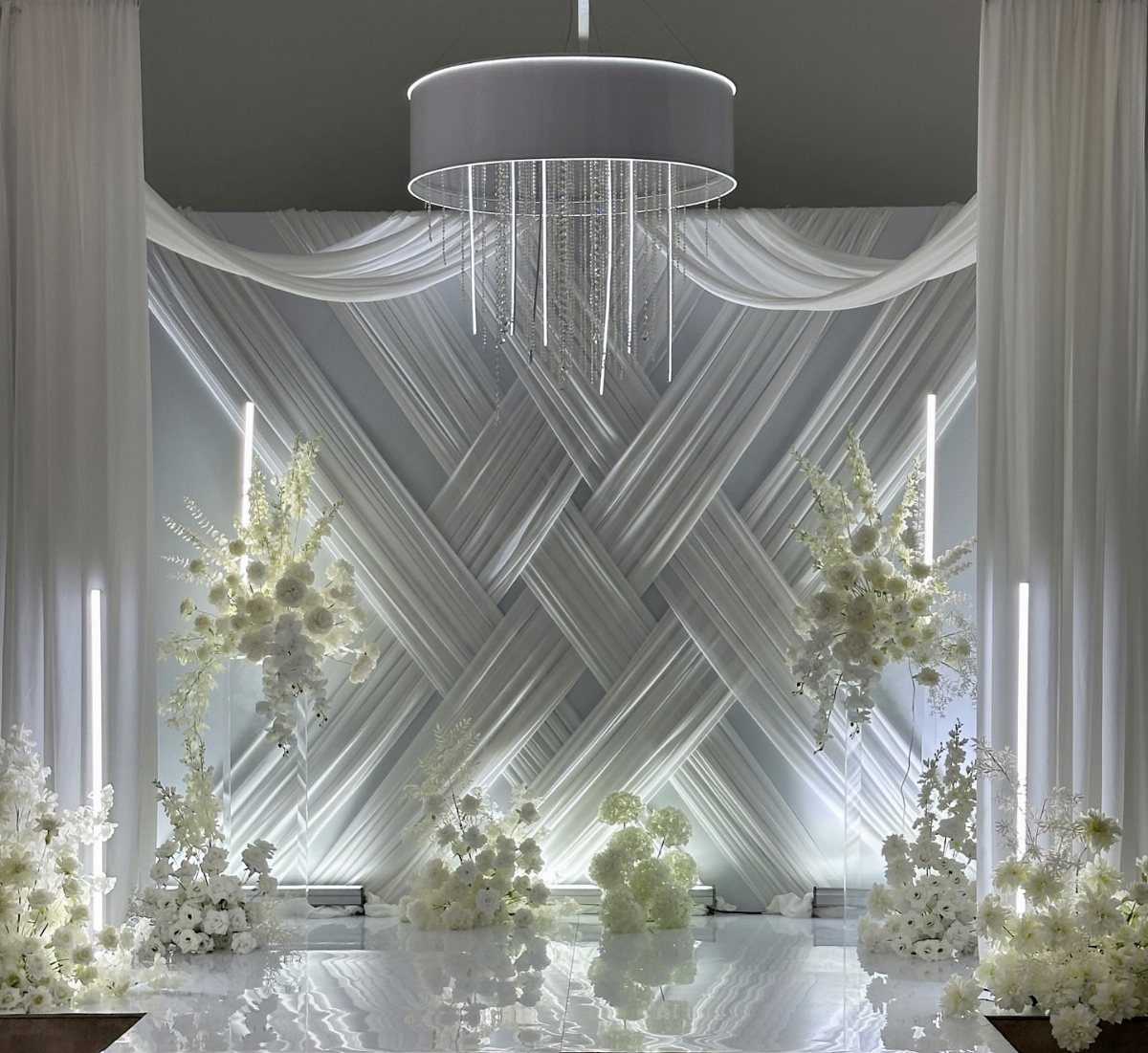
An angled lattice built from crossing fabric panels or wooden slats breaks up the rigid symmetry of a square backdrop. The crisscross design adds height in the center and pulls the eye upward past a full arch frame.
Fabric versions drape over a welded frame or suspended dowels. For a DIY build, attach wood strips to a rectangular base at crossing angles, creating diamond shapes instead of squares.
Hang a chandelier at the peak to emphasize the height, and cluster florals low and off-center so the geometry stays visible.
4. Simple Metal Trellis
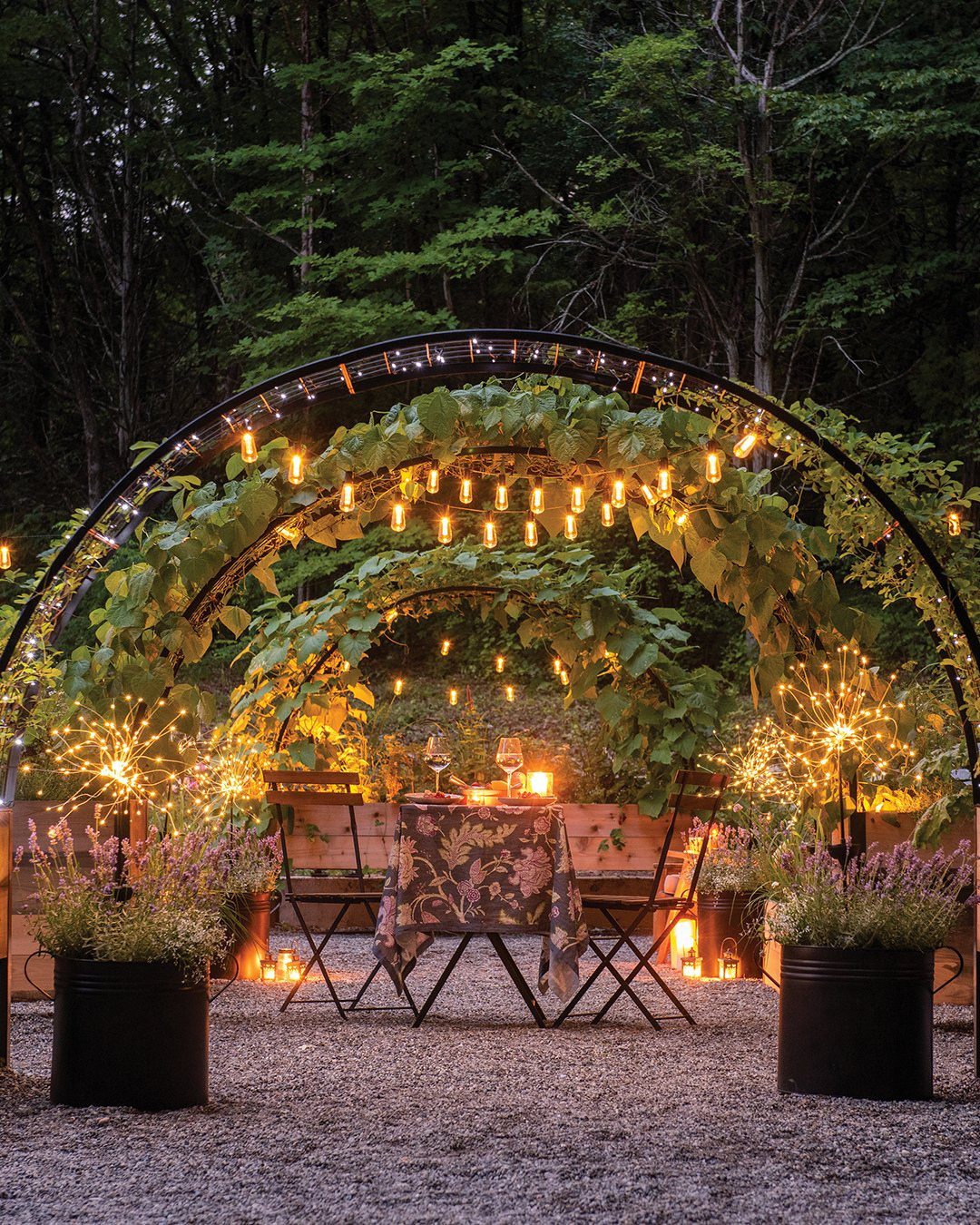
A curved metal trellis designed for garden pathways doubles as a ceremony backdrop when you need something narrow and not too tall. Most arbors in this style fit between rows of chairs with room to spare on the aisle.
The open metalwork supports vines and string lights without looking heavy. If you already have one in the yard, move it to the ceremony spot the day before and add fresh greenery or flowers to fill in gaps.
Metal garden arbors stay in place year-round, so they work for couples getting married at home.
5. Wooden Floral Wedding Arch
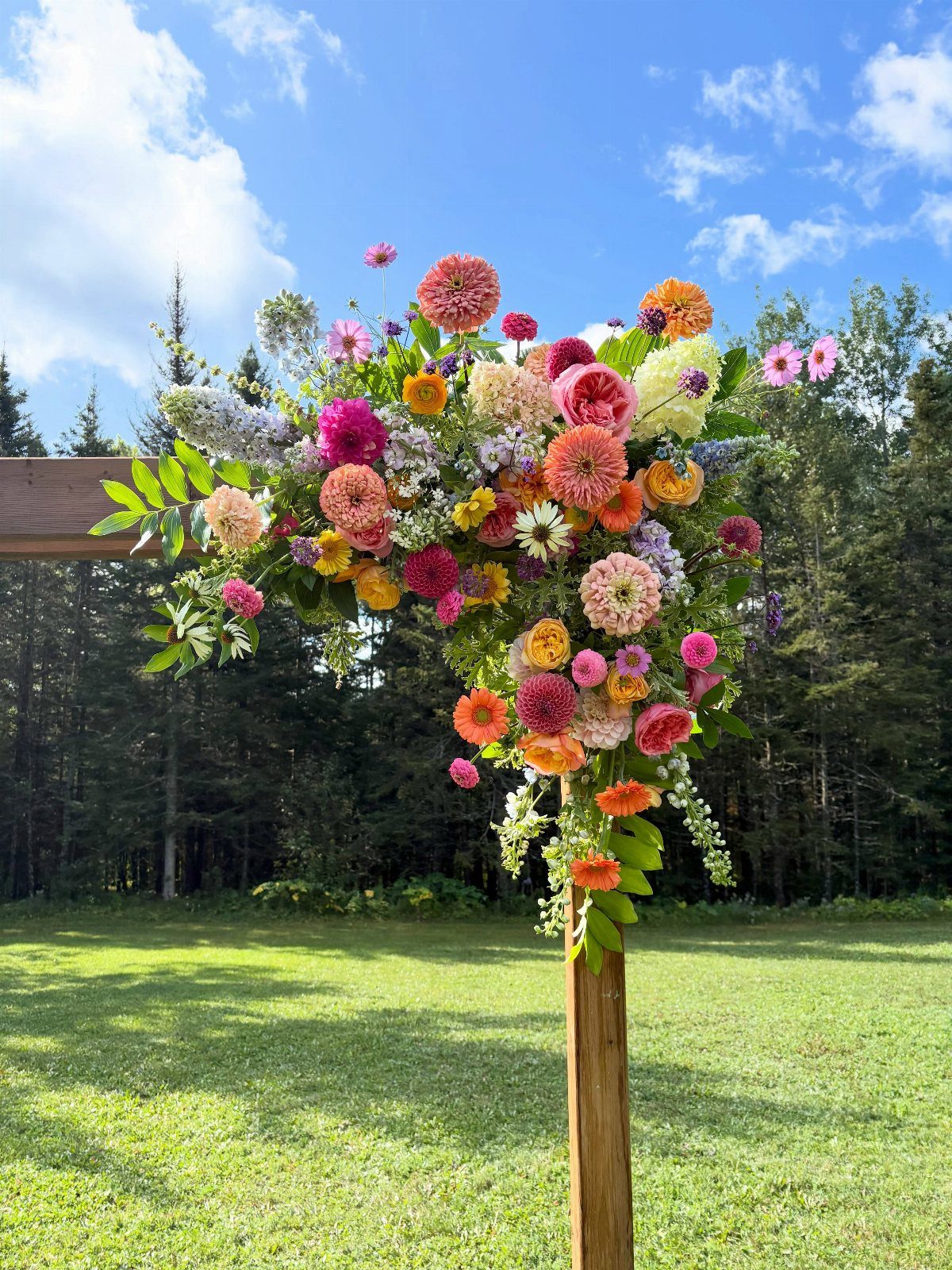
A wooden rectangular arch topped with a dense, one-sided floral arrangement creates a backdrop that does not compete with an open landscape.
The flowers cluster heavily on one side or across the top, leaving the wood visible underneath so the structure reads clearly from a distance.
Build the frame from 4×4 posts and 2×4 cross braces, stained or painted to match the venue. The base needs stakes or sandbags if the ground is soft.
Florals attach with zip ties or floral wire run through the gaps in the wood. Order blooms the day before and have someone assemble the arrangement on-site the morning of the ceremony.
6. Arched Flower Trellis
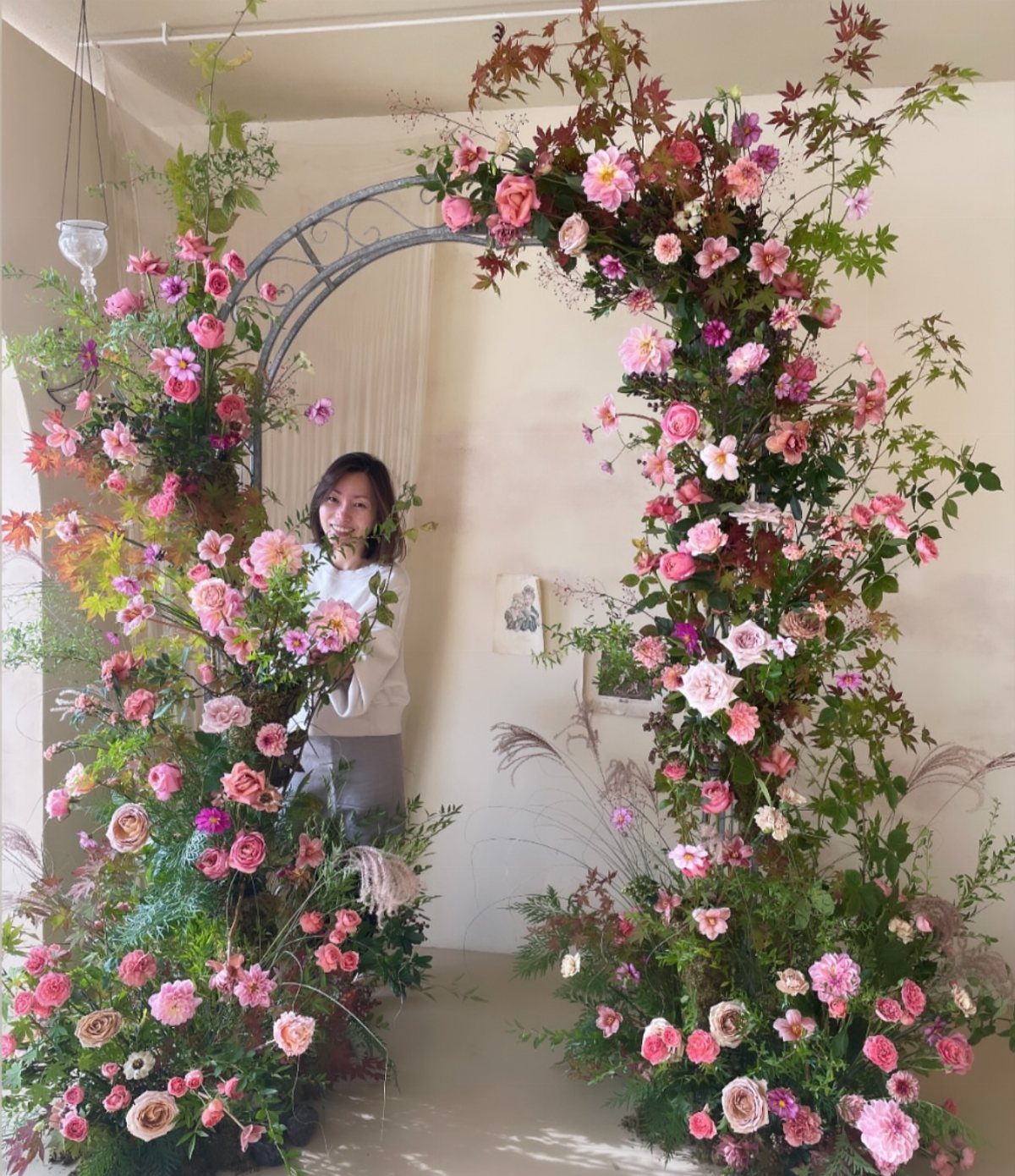
An arch filled completely with roses from top to bottom creates a full, romantic frame without showing the structure underneath. The density requires multiple stems per linear foot, so a wide arch needs dozens of roses plus filler greenery.
Buy wholesale roses 2 days ahead and keep them in water until the florist or a helper wires them to the frame. Floral foam cages attached to the arch hold stems in place and keep them hydrated through the ceremony.
This look suits ceremonies where the arch is the main visual focus and gets most of the floral budget.
7. Floral Arch with Table
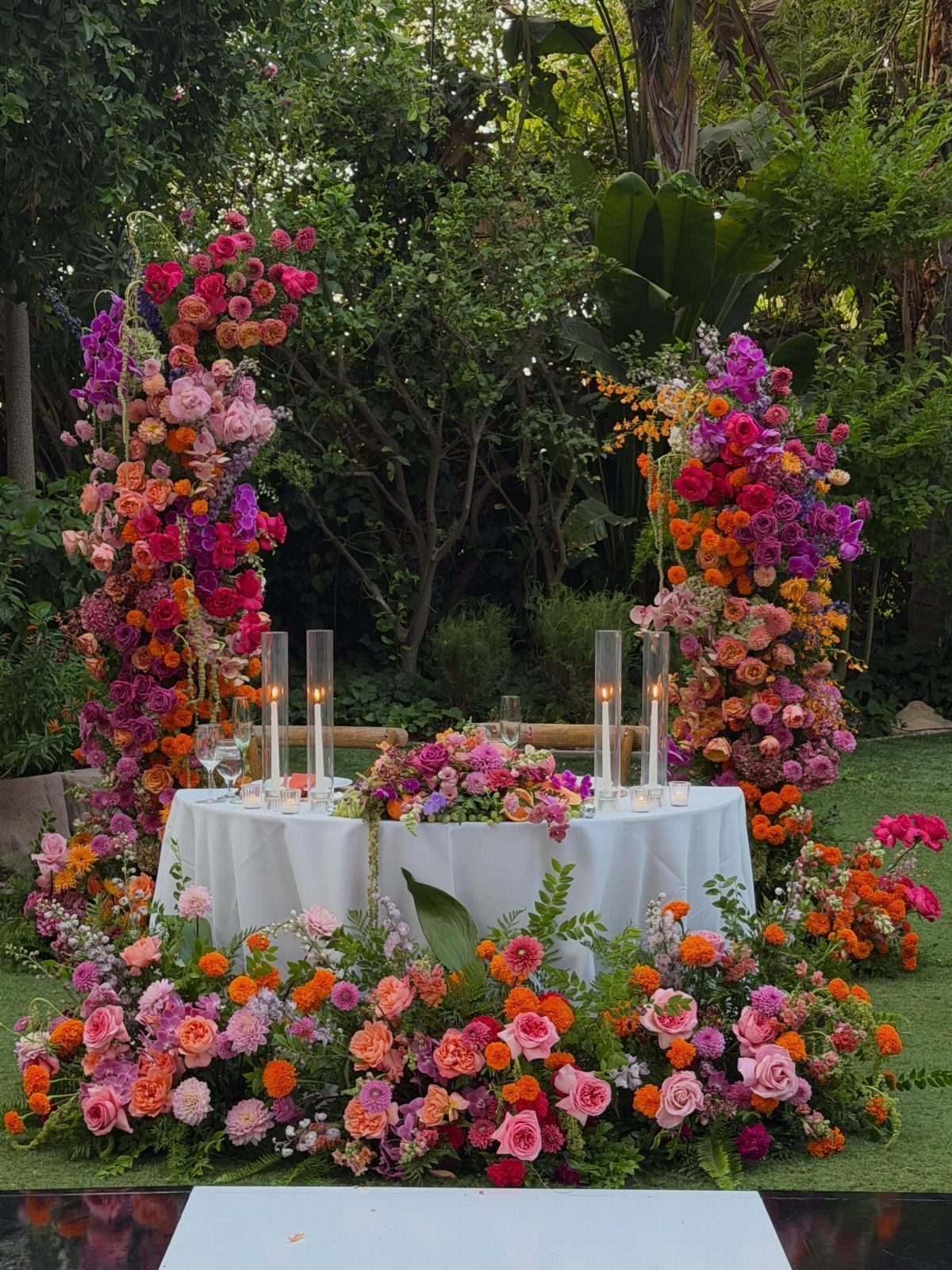
Two tall floral columns on either side of a low table create a frame that puts the signing moment or unity ritual at eye level instead of overhead.
The flowers build up from the ground, so the arrangement stays visible from the back rows.
The table holds a candle display, signing papers, or a sand ceremony. For stability outdoors, weight the columns with sandbags at the base or anchor them to stakes driven into the ground.
This setup works when the ceremony includes a table ritual and you want florals without blocking the view.
8. Triple Arch Wedding Backdrop
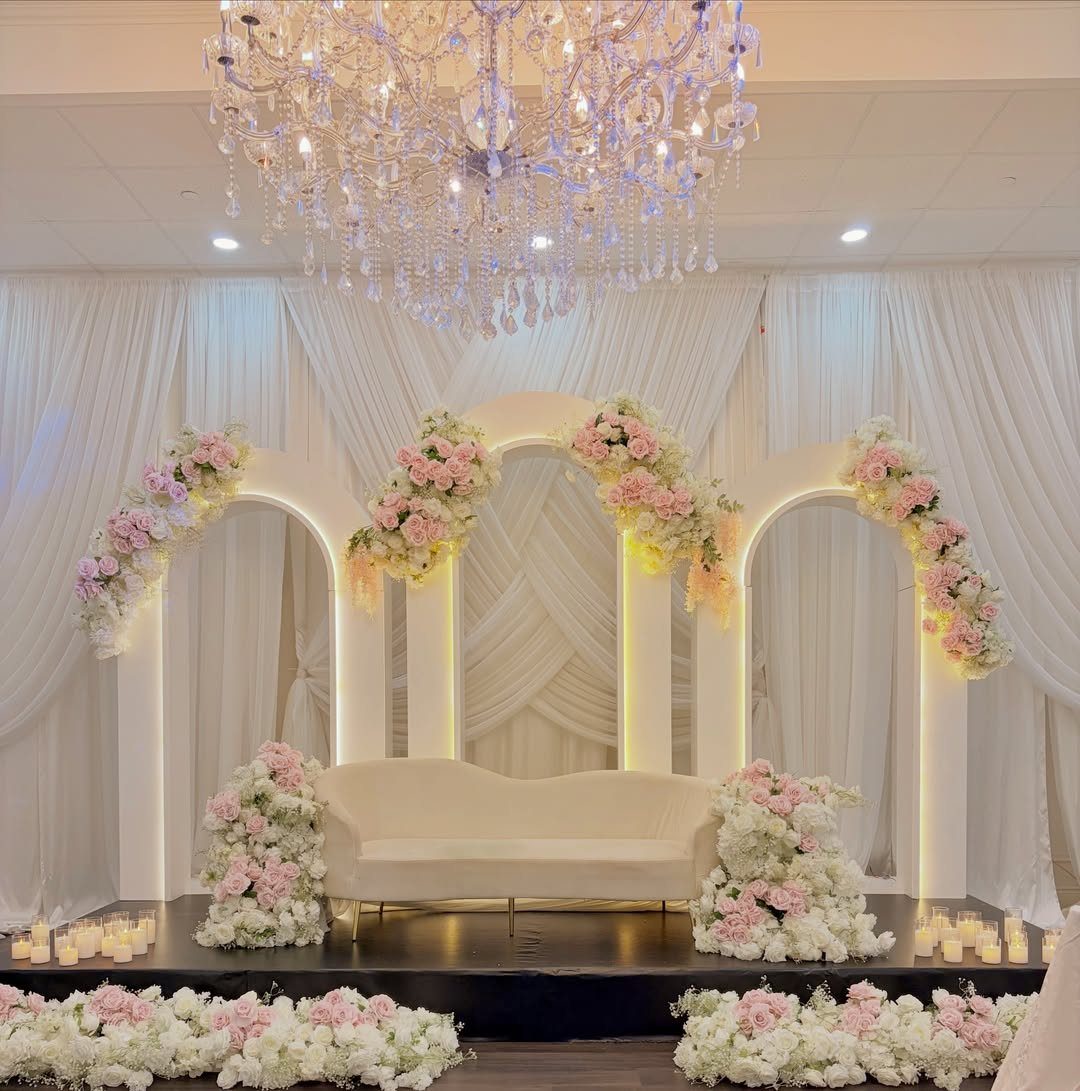
3 separate arches grouped together make a wide backdrop that fills the space behind a seated couple or a sweetheart table at the reception.
Each arch gets its own floral treatment, so you can vary the density or color across the three without committing to one heavy look.
Rent arches from an event supplier or build simple frames from PVC pipe spray-painted white. Space them a foot or two apart so they read as connected but not crowded.
The width suits stages or long head tables where a single arch would look too narrow.
9. Vine-Covered Garden Gate
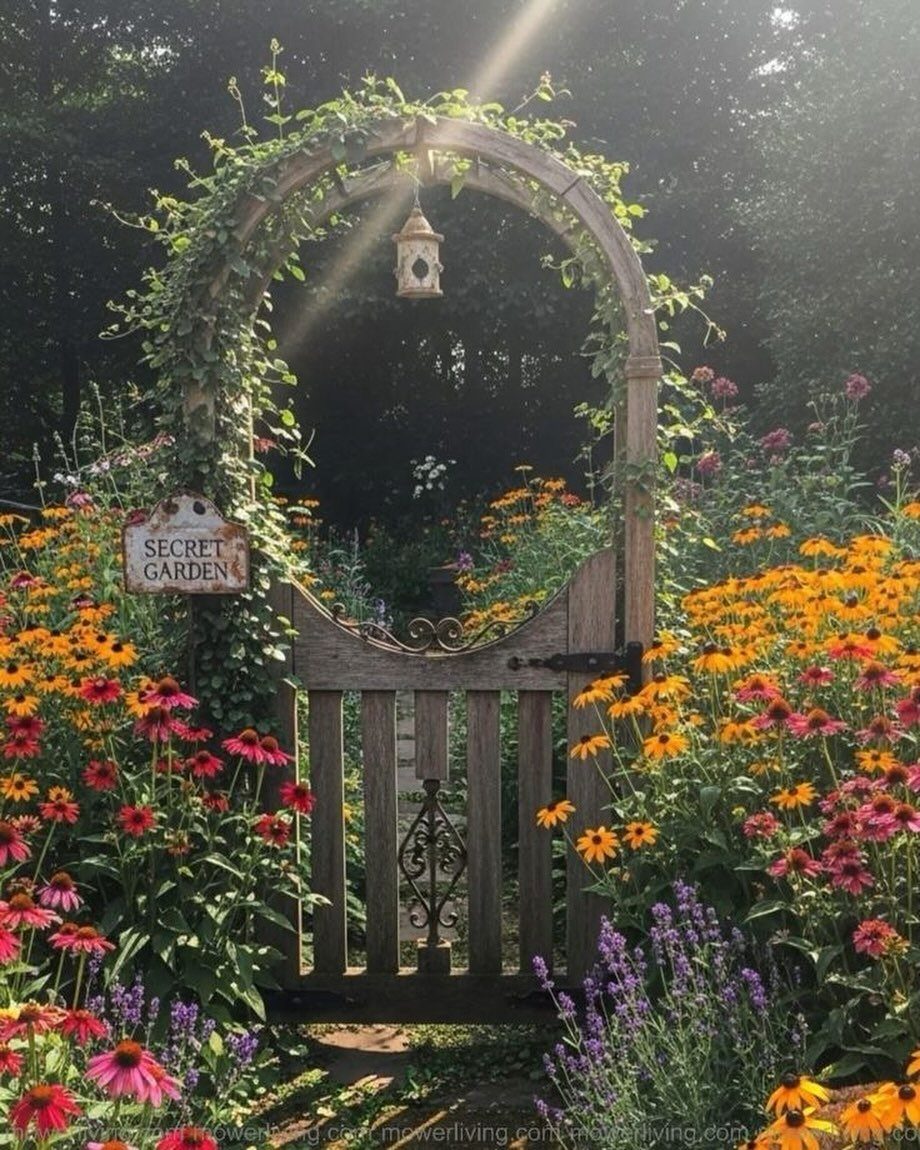
A permanent garden gate already covered in vines becomes a ceremony backdrop without added work. If the gate opens, prop it halfway or tie it back so it holds still during the ceremony.
Add potted flowers at the base to bring color closer to the couple. For a bare gate, hang cut greenery or flowering vines the morning of the ceremony with floral wire.
This option costs almost nothing if the gate is already in the yard and you only need to add a few blooms.
10. Fabric-Draped Wooden Arch
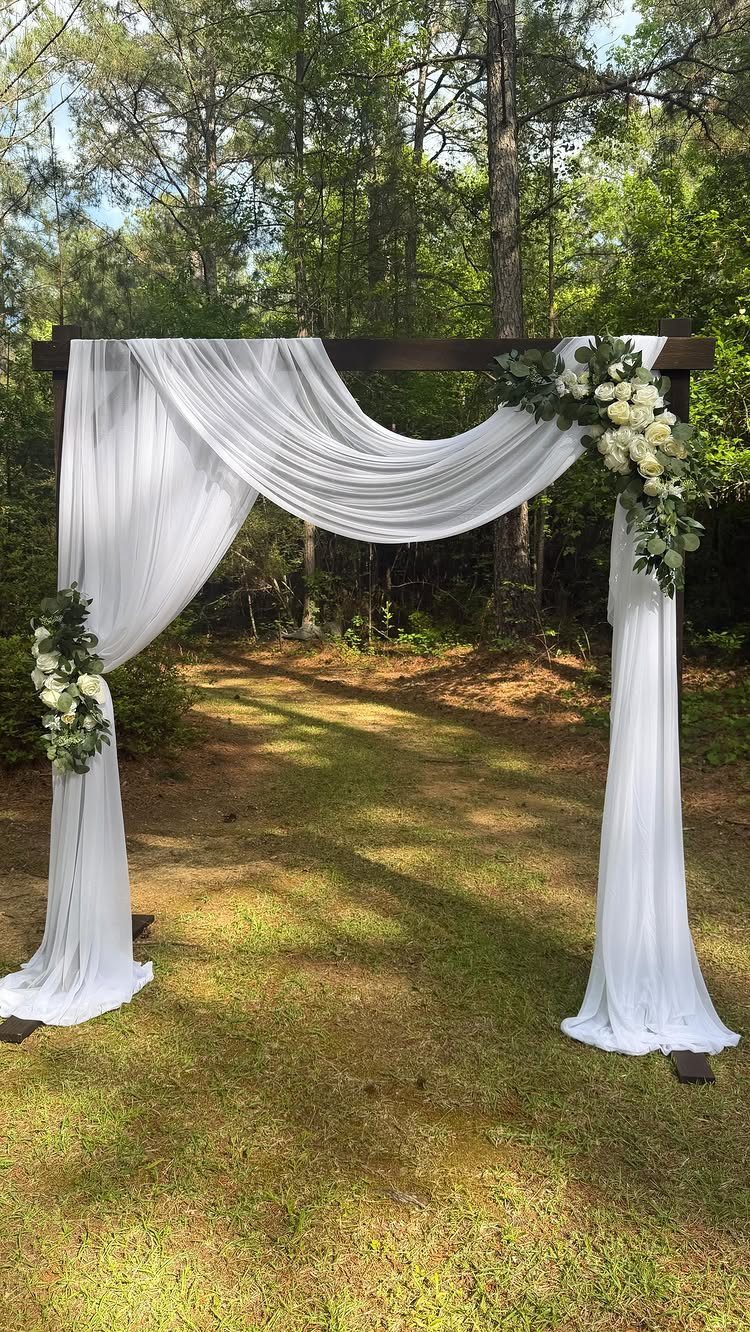
White fabric softens a dark wood arch without hiding the structure completely. Drape the fabric loosely across the top beam and down one side, leaving the other side bare so the wood grain stays visible.
Attach the fabric with zip ties or twist ties threaded through small holes drilled into the frame.
Clip white roses and greenery along the draped edge to hold the fabric in place and add weight so it does not blow around.
The contrast between dark wood and white fabric reads clearly in photos.
11. Circular Gold Fabric Arch
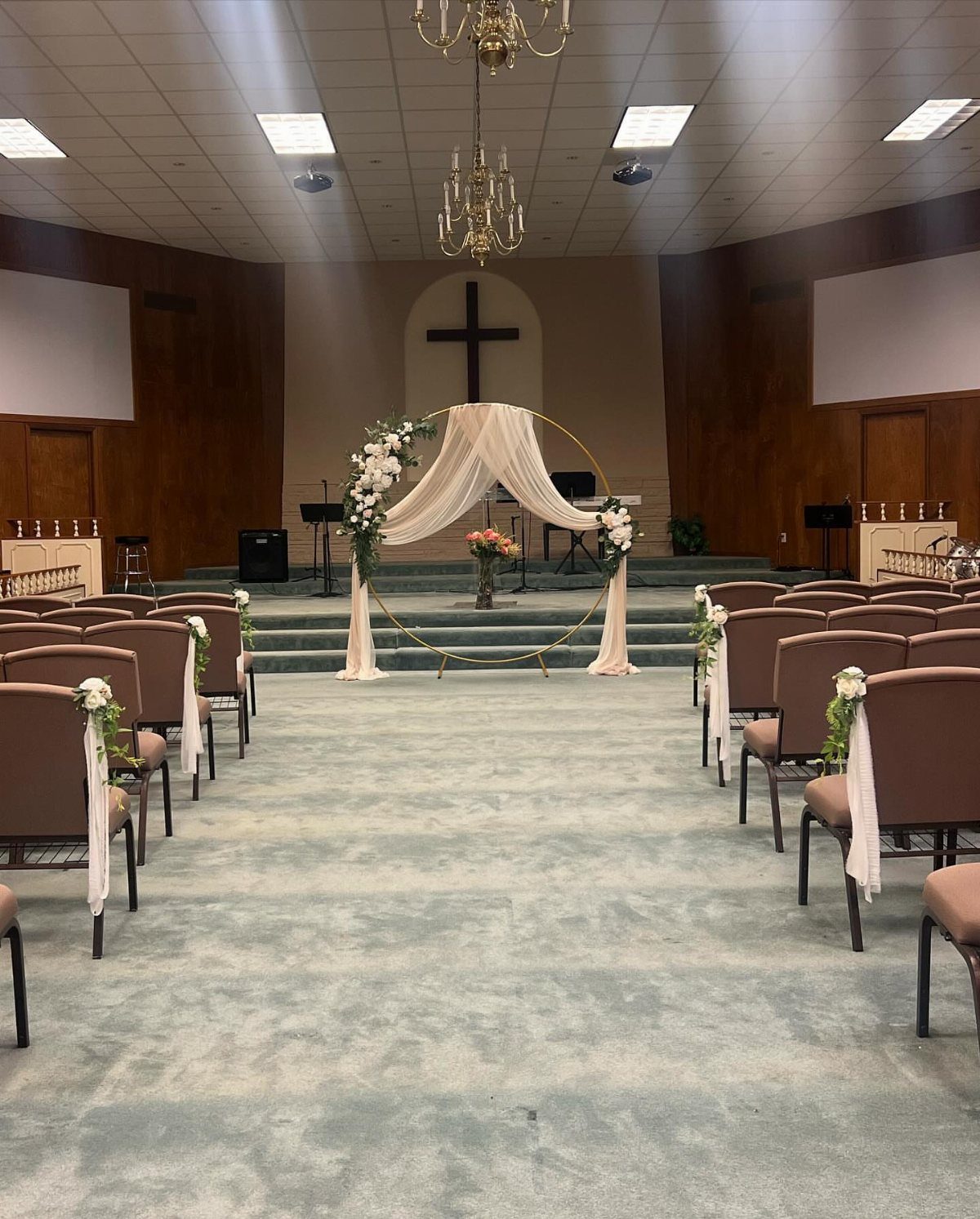
A circular gold frame takes up less floor space than a rectangular arch and fits in front of existing sanctuary features without covering them. The metal hoop needs a weighted base indoors, since you cannot stake it into the floor.
Drape sheer white fabric through the center and cluster florals at the top or sides. The openness of the circle keeps the cross or altar visible behind it.
Gold metalwork suits formal ceremonies where the venue already has traditional decor.
12. Circular Hanging Flower Arch
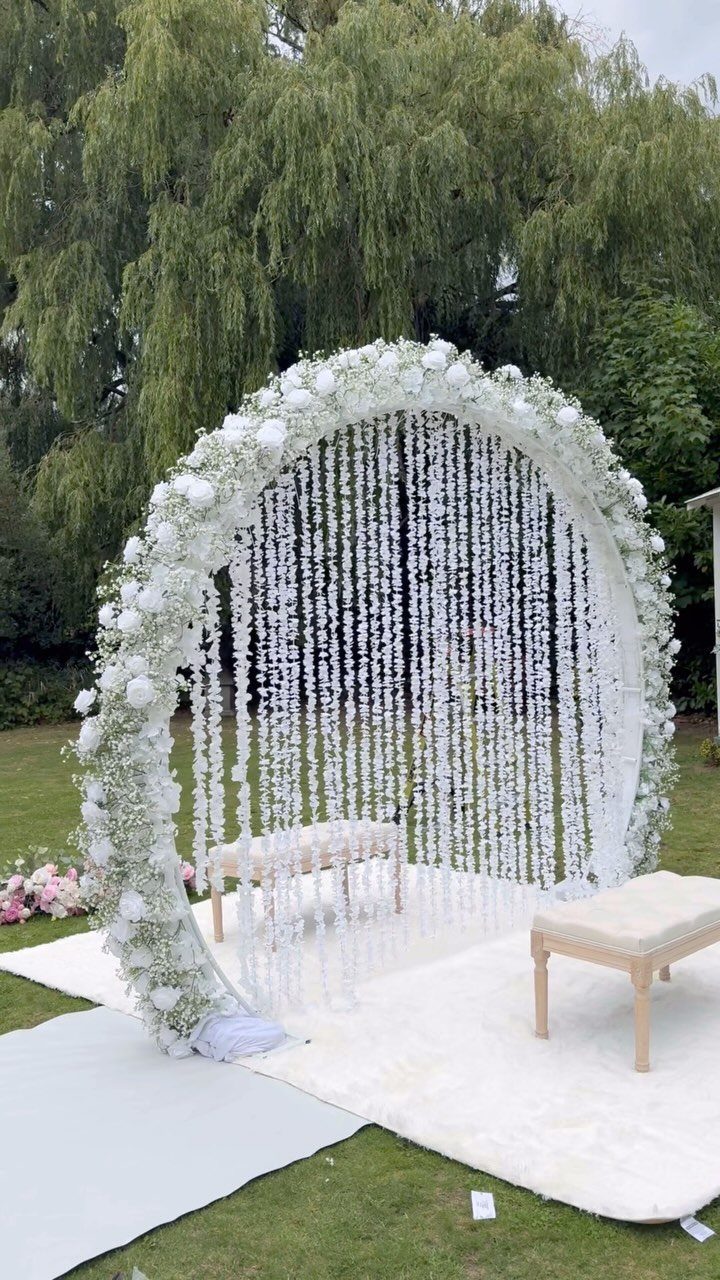
Florals hang in vertical strands from a circular arch, creating a curtain effect that moves slightly in the breeze. The hanging pieces attach to the hoop with fishing line or thin floral wire looped through the stems.
Cut the strands to staggered lengths so they graze the ground or stop a few inches above it. For outdoor ceremonies, hang them the morning of to keep the flowers from wilting.
Small benches or stools beneath the arch let the couple sit during parts of the ceremony without blocking the florals.
13. Stone Garden Trellis
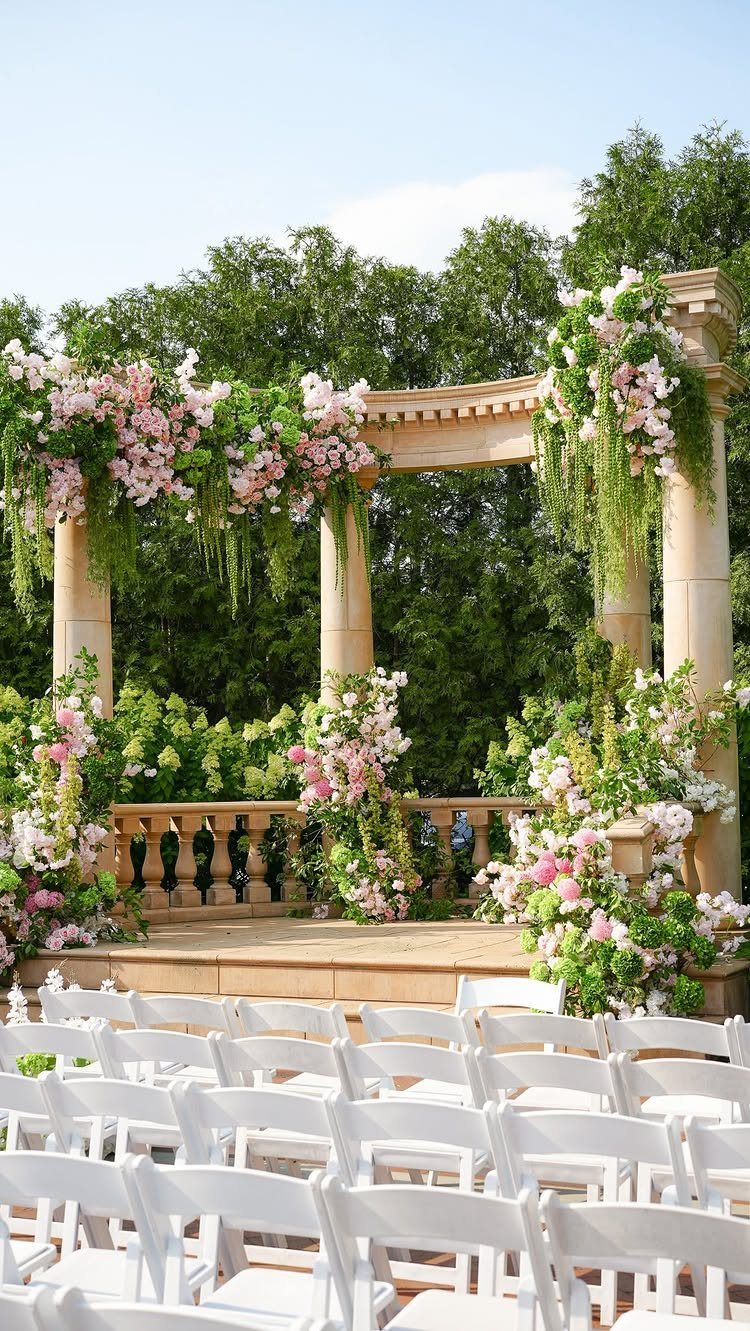
Stone columns with a curved top beam anchor the backdrop in place without stakes or weights, so this option suits permanent garden spaces where the trellis stays year-round. The stone reads formal, which works for estates or botanical gardens.
Attach florals by threading floral wire through the stonework gaps or looping it over the top beam. Pink and white roses soften the gray stone without covering the columns completely.
The structure is heavy enough that wind does not move it, but it cannot be repositioned once installed.
14. Floral Wooden Ceremony Trellis
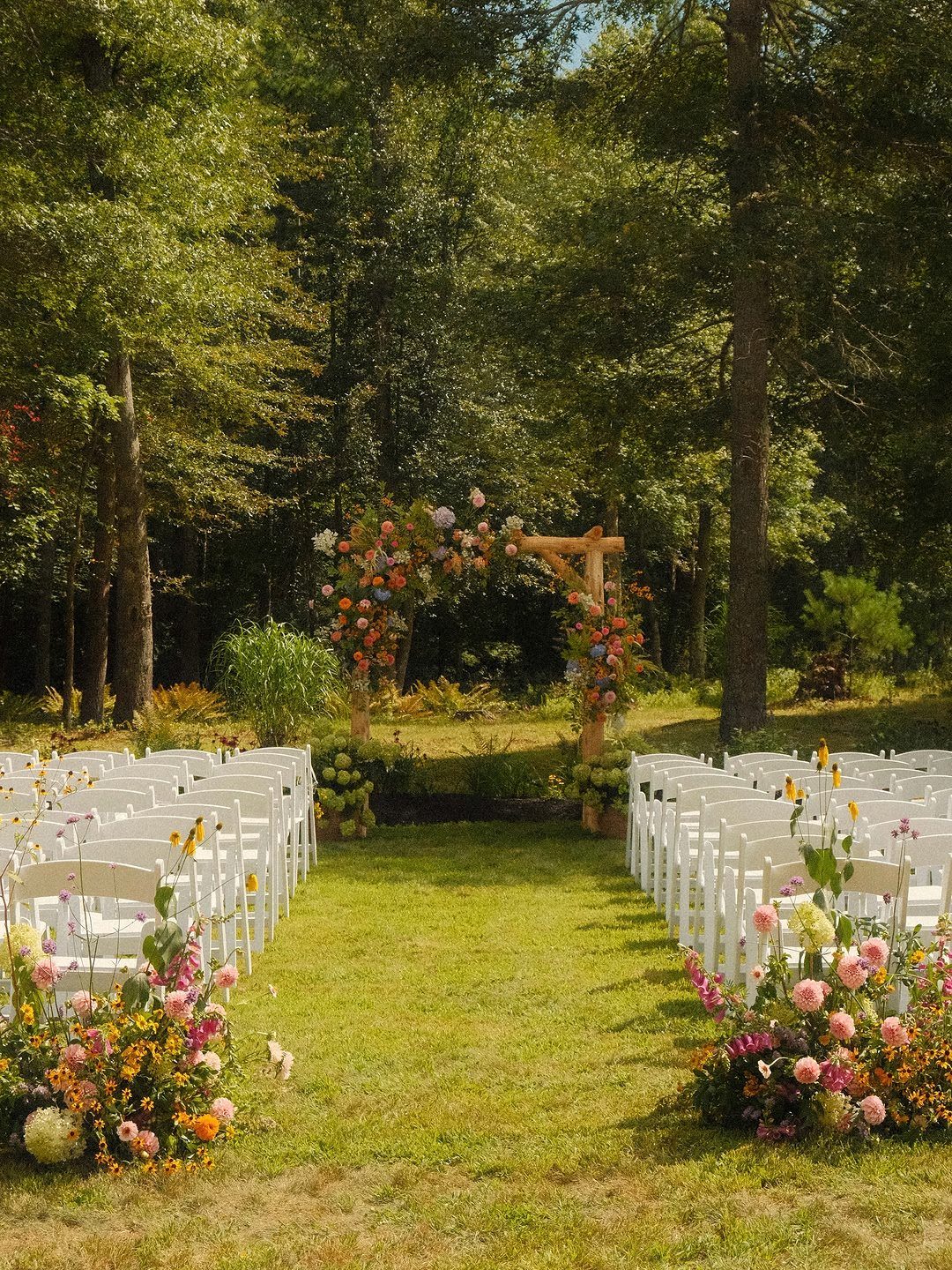
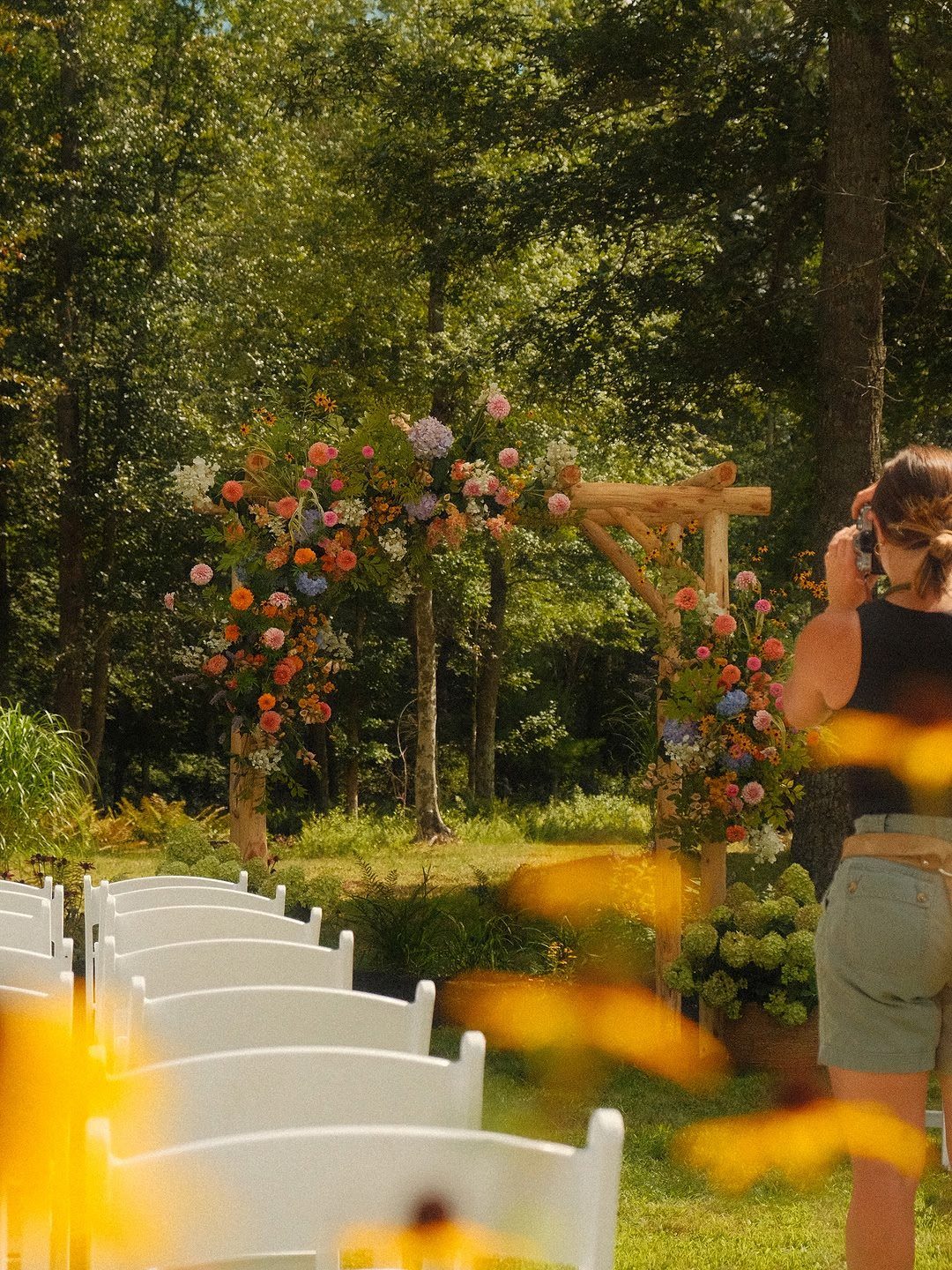
Bright mixed florals across the top beam pull color into a clearing where the forest backdrop is mostly green. The wood frame stays neutral so the flowers do the work.
Build the trellis from stained 2x4s or rent a prefab arch and wire fresh stems across the top bar the morning of the ceremony. Cluster blooms tightly enough that the arrangement reads as one piece from the back rows.
The low profile fits under tree branches without trimming.
15. Modern Gold Organic Arch
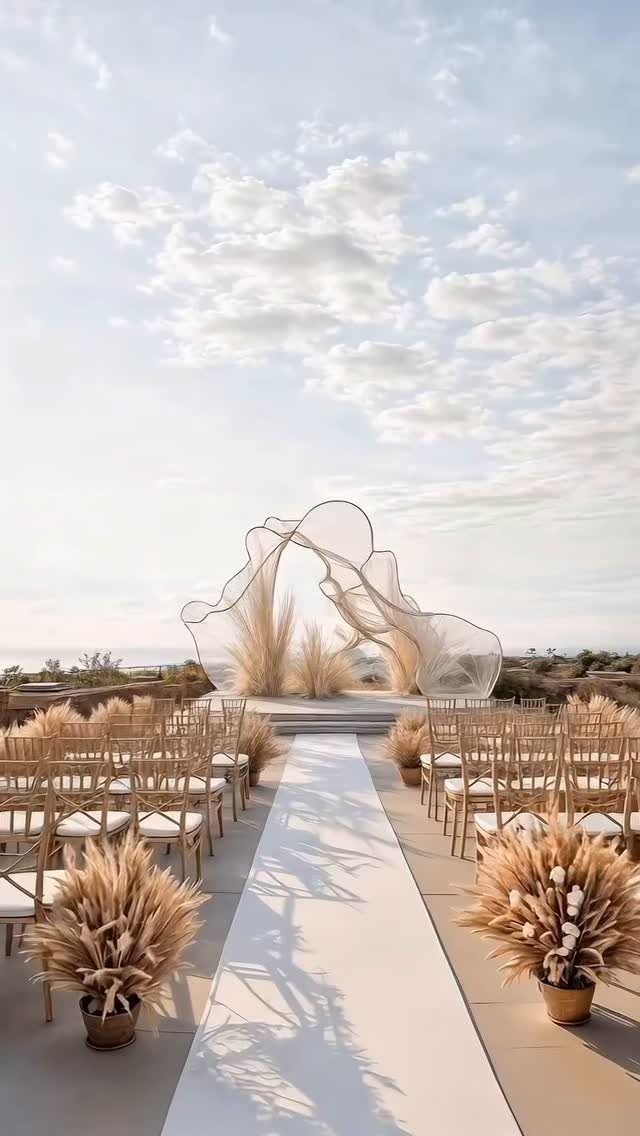
The sculptural gold frame curves organically instead of forming a perfect arch, so it reads as modern against traditional ceremony setups. Gold chairs and potted pampas grass carry the metallic tone through the aisle.
The shape needs a custom welded frame or a rental from a supplier with contemporary inventory. Set the base with sandbags to keep the asymmetrical structure from tipping in wind.
The design reads as a statement piece on its own, even before any florals go on.
16. Beachside Dried-Palm Trellises
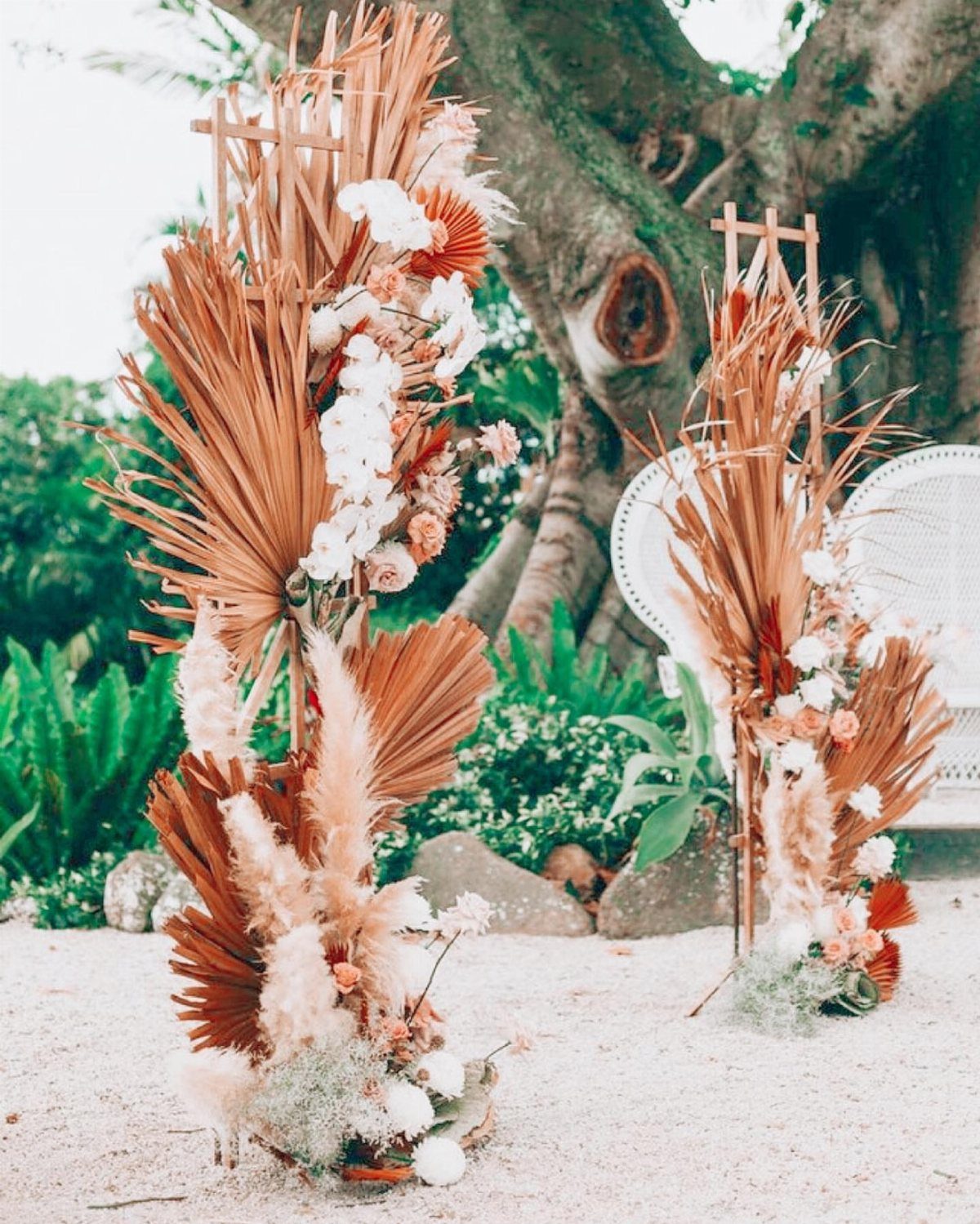
Dried palm leaves and pampas grass hold up in beachside wind better than fresh florals, and they do not wilt in sun. The 2 trellises frame the ceremony space without blocking the view of the water or tree behind them.
Wire the dried materials to a simple wooden frame a day or two ahead. Add a few fresh white or peach blooms the morning of for color.
The neutral palette suits sand and natural backdrops without competing for attention.
17. Floral Trellis on a Dock
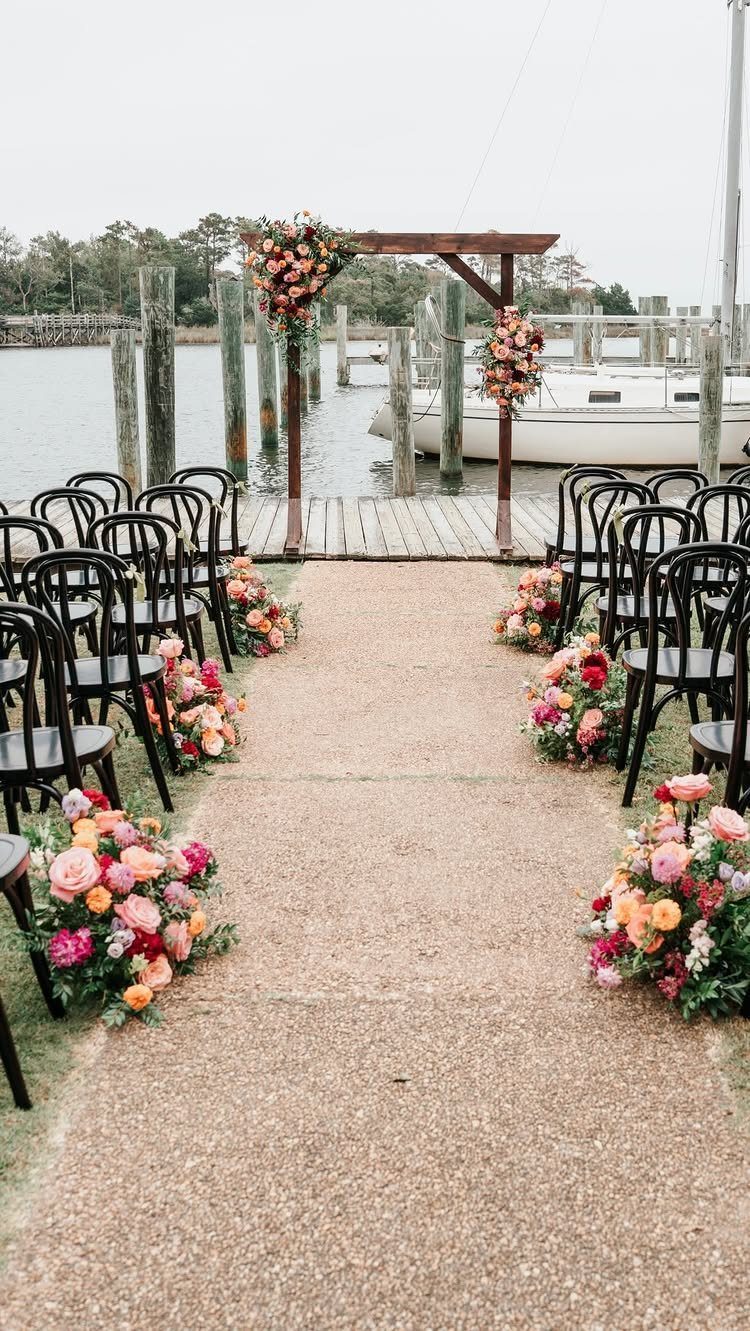
A trellis on a dock puts the ceremony right at the water and skips the boat or the large pier. The gravel aisle keeps guests from walking on bare wood, which can splinter or feel unsteady in heels.
Weight the base with sandbags tied to the posts, since you cannot stake into a dock. Florals cluster across the top to frame the couple against the water.
Check the dock’s weight limit before setting up chairs and the arch.
18. Tree-Trunk Floral Backdrop
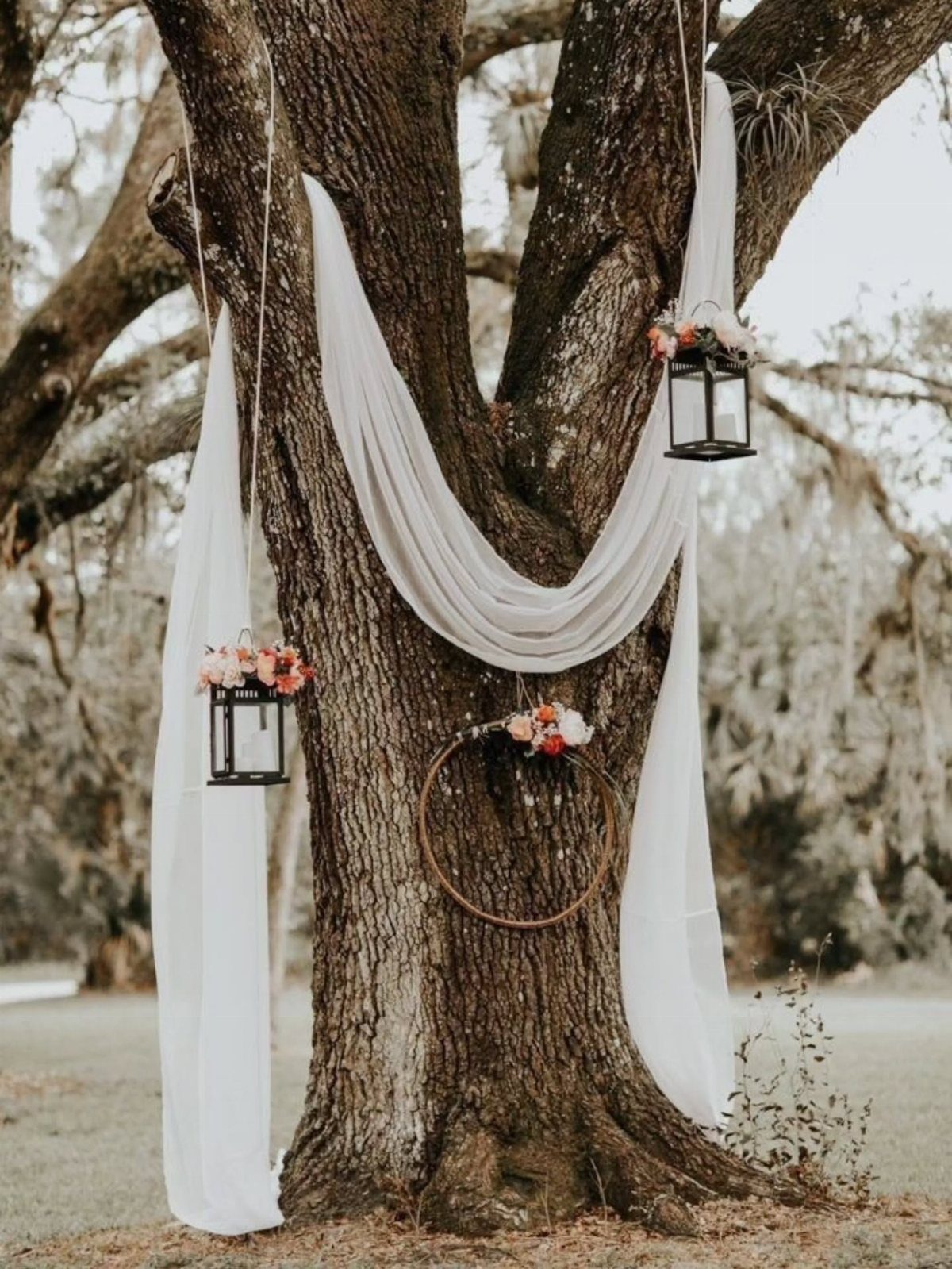
Fabric drapes from branches instead of a built frame, so this option costs almost nothing if the tree is already on the property. The lanterns hang at different heights to fill vertical space without blocking the couple.
Tie the fabric to branches with fishing line or rope, and let it pool slightly on the ground. The small floral hoop adds color without requiring dozens of stems.
This works for intimate ceremonies where the tree provides natural structure.
19. Locale-Inspired Arch
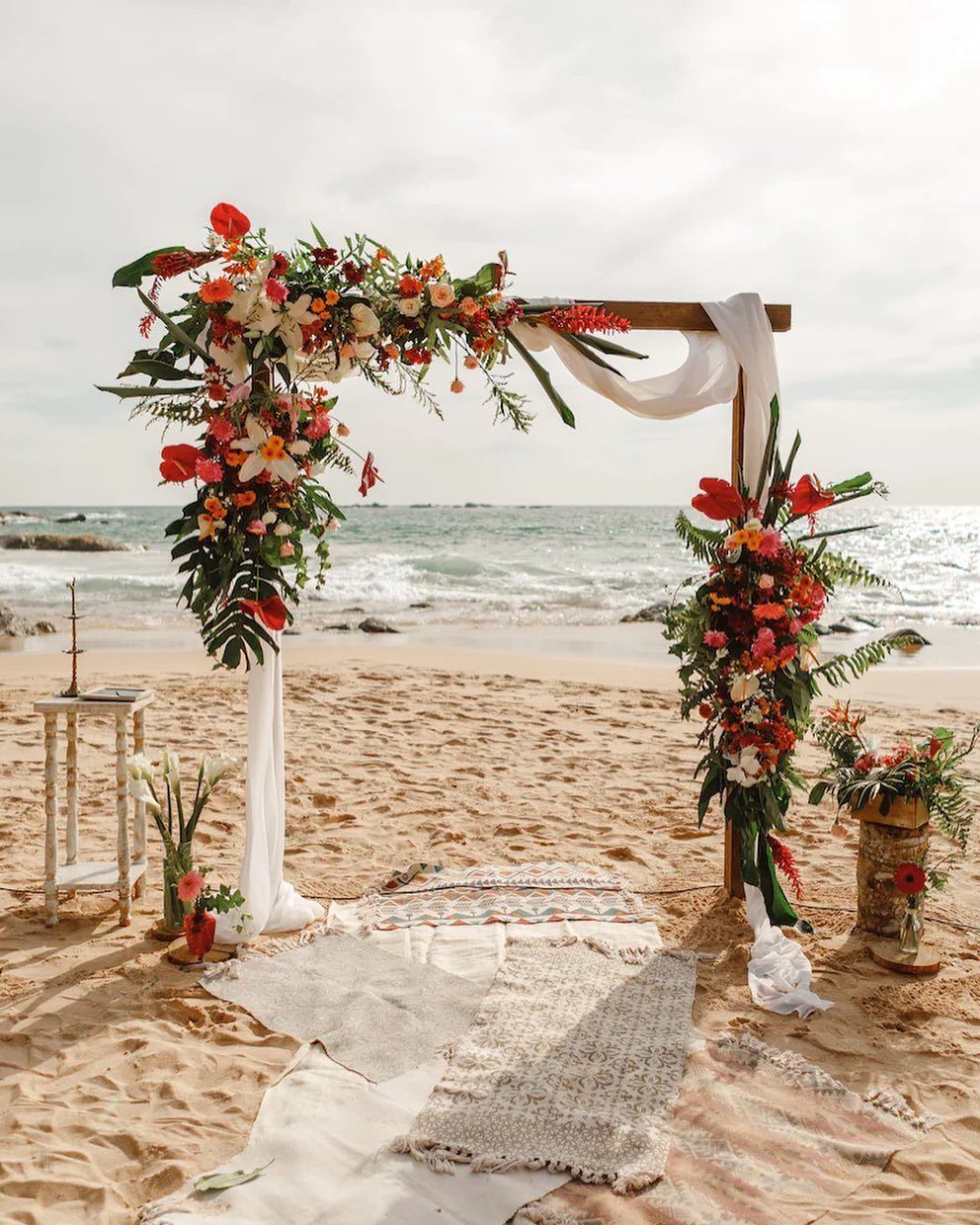
Red tropical blooms paired with white fabric match the surrounding sand and ocean palette without copying the landscape outright. The materials nod to the location instead of competing with it.
Choose flowers native to the region or those that read tropical in shape: anthuriums, ginger, hibiscus. The fabric drapes loosely for a relaxed feel instead of a formal one.
For a mountain ceremony, swap in pine boughs and wildflowers. A vineyard suits grapevine wrapped around the posts.
20. Chandelier Floral Arch
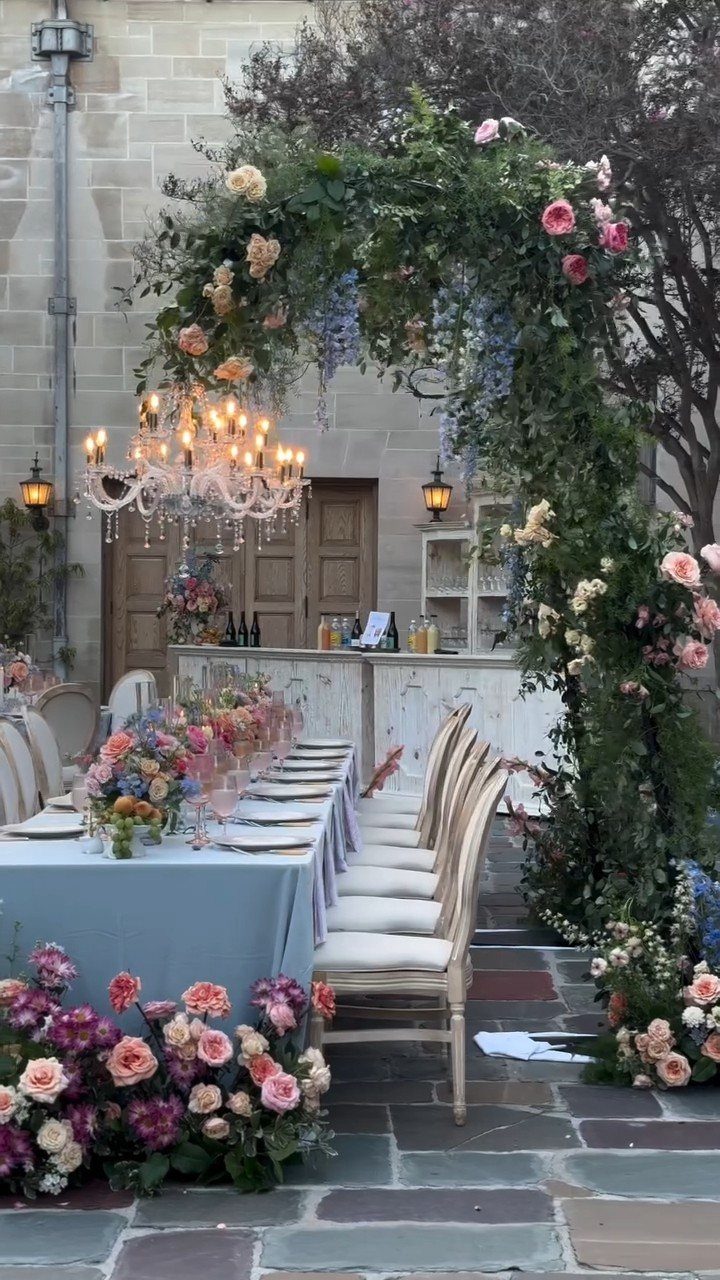
A crystal chandelier hung inside the arch shifts the formal tone upward and catches light during evening ceremonies. The chandelier hangs from the center beam with chain or aircraft cable rated for the weight.
Suspend it high enough that the couple can stand underneath without hitting their heads. Battery-operated LED candles inside the chandelier work outdoors where you cannot run power.
Pink roses clustered at the sides frame the chandelier without blocking it. The combination reads formal but not rigid.
21. Color-Blocked Arch
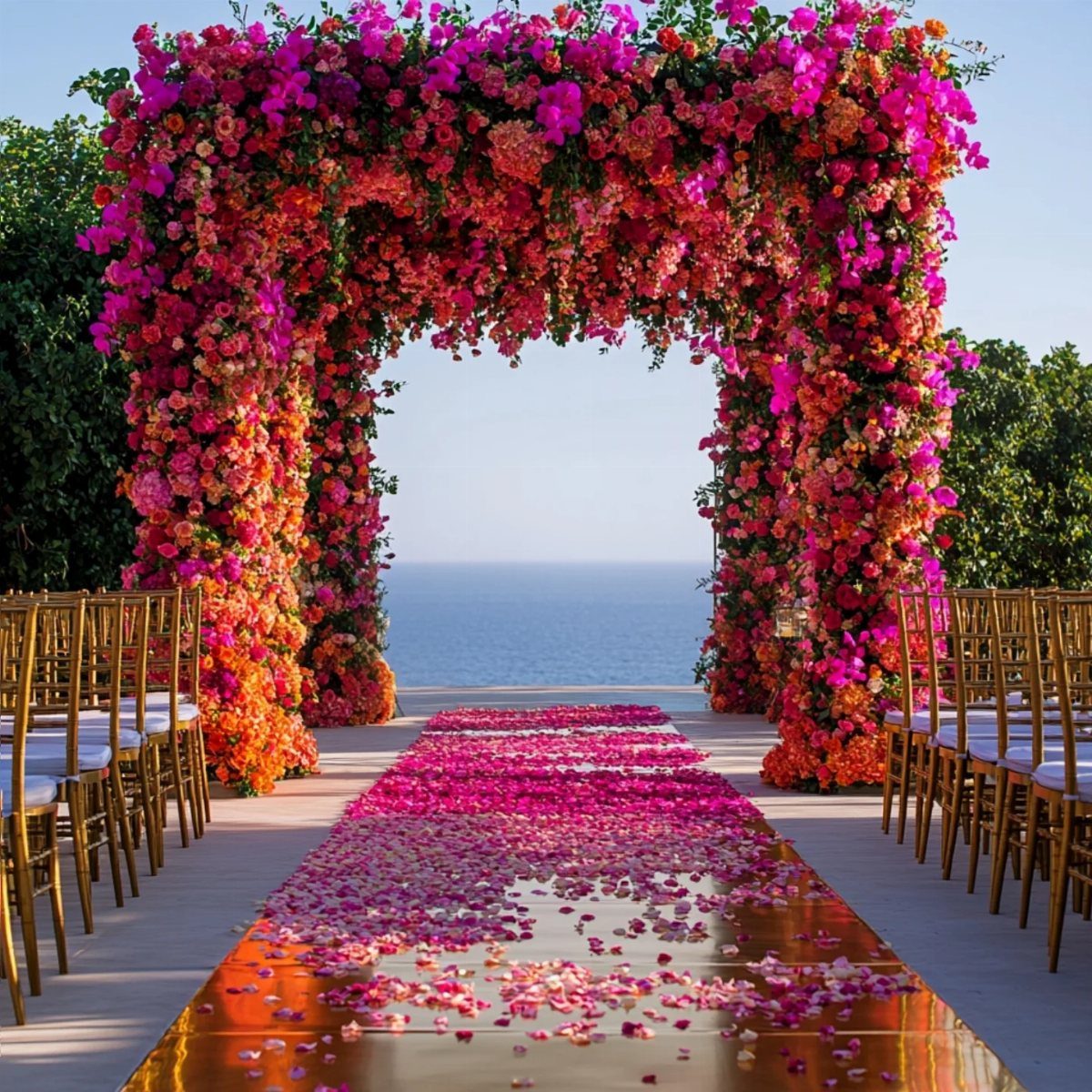
Pink transitions to orange and red across the arch in separate blocks instead of blending into a true gradient. The distinct color zones make the shift visible from a distance.
Wire blooms in clusters by color, moving from cool pink on one side through warm coral to deep red on the other. Order enough stems to fill each section densely so the colors do not mix.
The bold palette suits outdoor ceremonies with strong natural light and matches an aisle covered in petals.
22. Scenery-Framing Aisle Arches
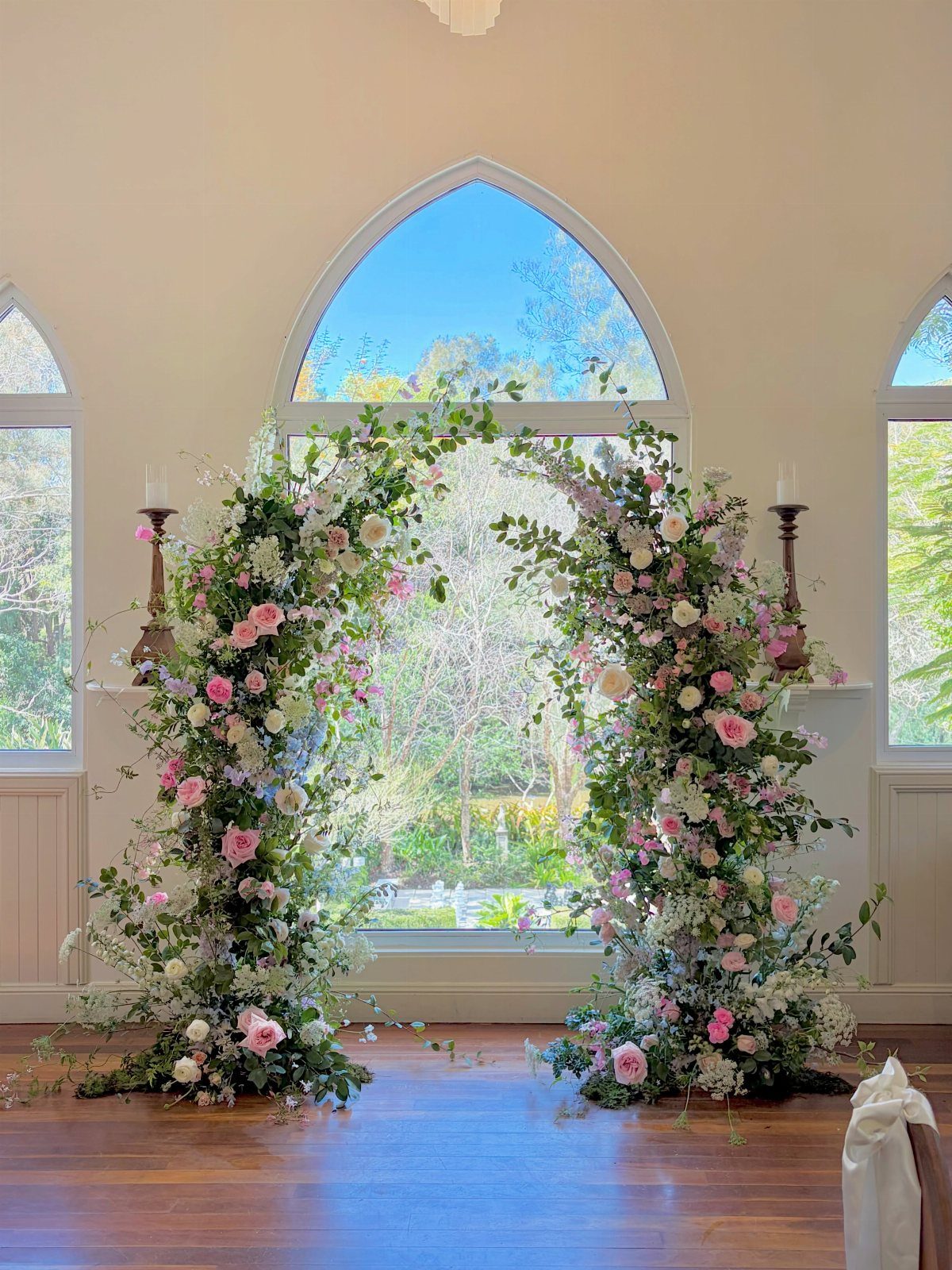
Floral arrangements positioned along the aisle pull attention toward the window or view at the front without obstructing it. The florals sit low and off to the sides, framing the scenery rather than covering it.
Place one arrangement on each side of the aisle at intervals that match the room’s proportions. For a single dramatic feature like a gothic window, position the florals closer to it so they read as part of the same composition.
This setup works indoors where the architecture or view does most of the visual work.
23. Wide Statement Arch
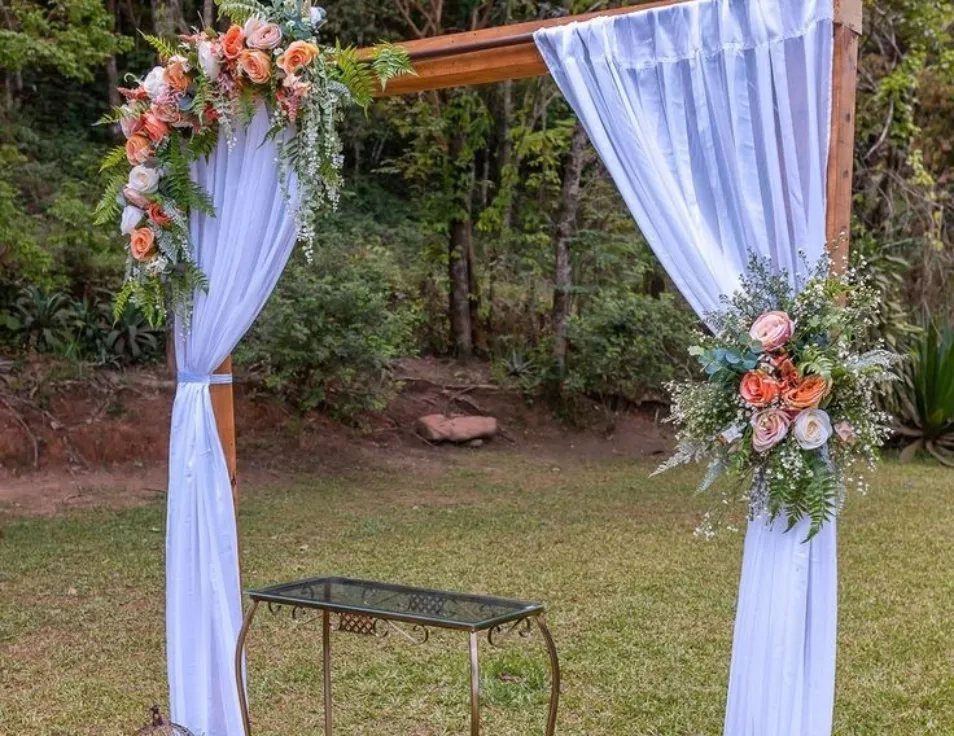
An arch twice the width of a standard frame requires more material but makes a stronger visual anchor for outdoor spaces where a narrow arch gets lost. The base needs reinforcement to keep the wider span stable.
Build the frame with 6×6 posts or double up 4x4s at each corner. Drape fabric across the full width and cluster florals at both outer edges, leaving the center open so the span reads clearly.
The scale suits large guest counts where rows of chairs extend wide on either side.
Frequently Asked Questions
How to make a wedding trellis?
Start with pressure-treated 4×4 posts for the uprights and 2x4s for the horizontals, secured with exterior screws and L-brackets at each joint.
Stake the base into soft ground or weight it with sandbags for stability. Anchor stems and garland to the frame with floral wire threaded behind crosspieces or through pre-drilled holes, working from the center outward to balance weight.
What are some cheap and effective ideas for trellises?
A vine-covered garden gate already on the property needs only potted flowers at the base for color, costing almost nothing.
For a built option, drape white fabric across a simple wooden frame and clip a few white roses along the edge. Both approaches deliver a finished look without the cost of dense floral coverage.
How wide should a wedding trellis be?
A span of 10–12 feet rather than the usual 5–6 creates presence in a field or lawn where the ceremony stands farther from guests.
Wider frames need corner posts heavy enough to resist wind and the weight of draped fabric; double up 4x4s or move to 6×6 lumber and diagonal bracing.
Match the width to the space so the arch does not get lost against the backdrop.
What can you do instead of a wedding arch?
Flanking arrangements on pedestals let you frame a moment without erecting an overhead structure, particularly useful when the couple will sign or light candles facing guests.
A freestanding hoop takes up less vertical space and leaves the officiant visible from every angle, which matters when seating wraps around 3 sides.
Fabric draped from tree branches with lanterns at different heights creates a natural backdrop without building a frame.