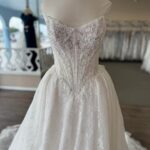

Wedding dress alterations take 6–10 weeks from first fitting to final pickup, though complex work or major redesigns can stretch to 12 weeks or more. The gap between fittings matters more than the total hours; handwork needs time to settle before the next round of pins. Bring your actual wedding shoes to that first appointment, or the hem you approved in flats will leave you tripping in heels.
How Long Wedding Dress Alterations Take
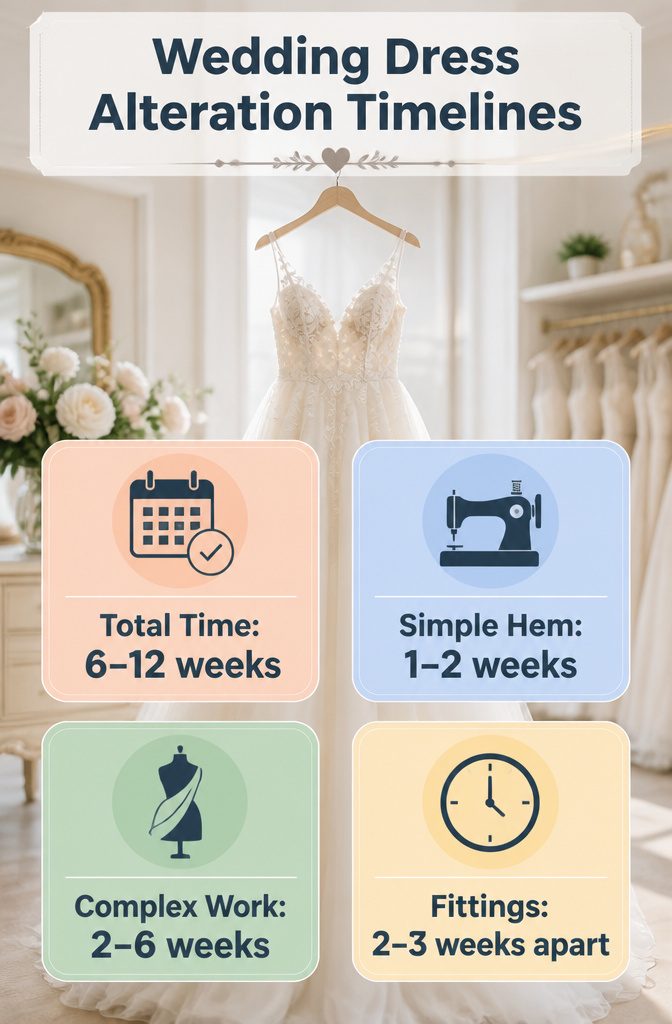
Wedding dress alterations typically run 6–10 weeks from first fitting to final pickup, with the full range stretching from 6 to 12 weeks depending on what the dress needs. A simple hem can wrap up in 1–2 weeks, while complex work or major redesigns demand 2–6 weeks of focused time.
Most seamstresses space fittings 2–3 weeks apart, and each appointment lasts 45 minutes to 1.5 hours. That rhythm matters more than the total hour count; the gap between sessions lets handwork settle and gives the tailor room to assess how the fabric responds before the next round of pins.
The 8–12 week buffer that planners recommend is not padding. It accounts for the reality that a bodice adjustment, a strap change, and a bustle addition do not happen in parallel the way you might hope. They sequence through the same hands, and a delay in one fitting pushes the whole chain toward the wedding date.

Complete 2-Piece Bridal Set Includes 2 matching pearl wrist bustles in one box. Keep one as a backup, add one to a bridal emergency kit, or use them for different wedding and formal dress looks.

Material: hooks and eyes are made of quality brass, then covered with fabric and seal with matching coloured adhesive to stop fraying.

【Practical & Pretty Train Management】This dual-purpose is designed to neatly your wedding. Its beaded design adds a decorative touch while solving the practical issue of a long train
1. Schedule Early
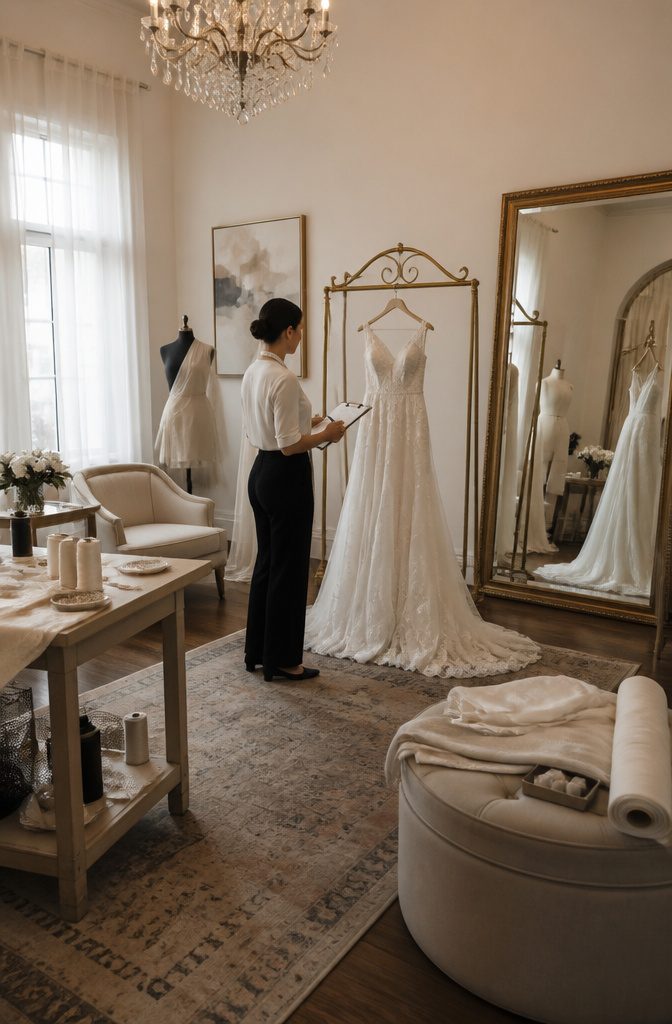
The moment your dress arrives, the clock starts running harder than you think. Booking a seamstress 8–12 weeks before the wedding leaves room for the two to three fittings most gowns need, spaced about two to three weeks apart. I learned the hard way that May through October fills fast; spring and summer weddings pile onto the same calendars, and a seamstress who had openings in January can be booked solid by March. Fall and winter dates give you more breathing room, but checking early still beats hoping for a cancellation. That buffer also saves you from the 35% rush surcharge that kicks in when you walk in three or four weeks out. Same-day bridal alterations do not exist, and the surcharge is steeper than standard rush rates because of the complexity involved. Early scheduling is not about being overly cautious. It is about keeping your options open when the hem needs redoing or the bodice sits differently than it did at the first pinning.

KEEP GOWN CLEAN – You’ve picked the perfect gown. When it’s time to use the bathroom you can keep your dress clean and off the floor with the Bridal Buddy.

Portable Size: you will receive a dress clips for fitting, each is about 4.17 inches/ 10.6 cm in length, and about 0.83 inch/ 2.11 cm in width, they are designed to securely hold dress clips without occupying excessive space

2. First Fitting
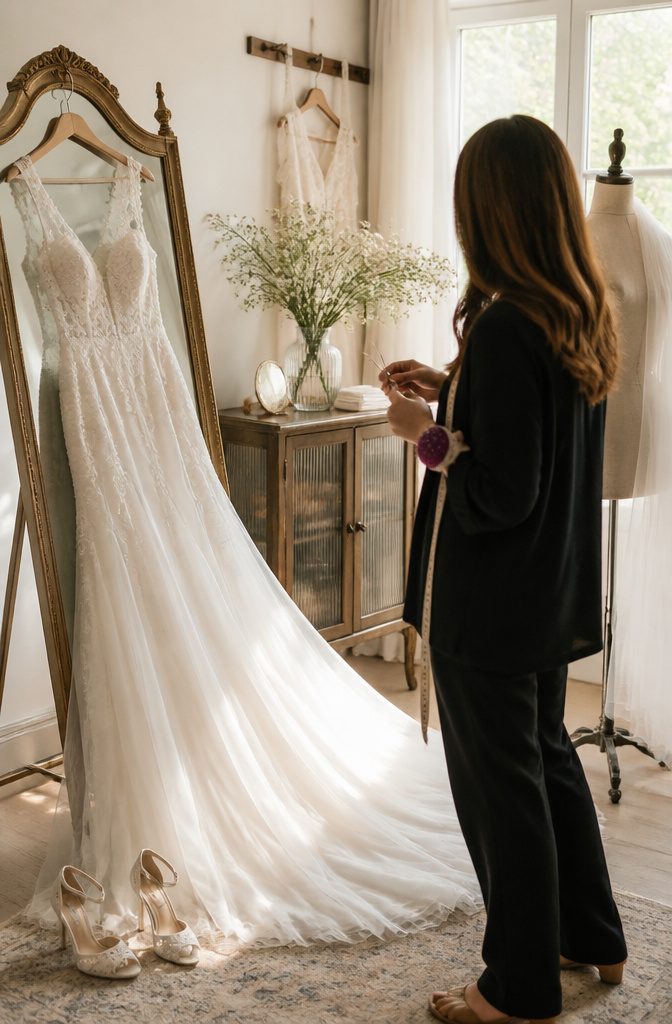
The first fitting usually lands 8 to 12 weeks before the wedding, though some shops push for 2 to 3 months out. Walking in without your wedding shoes is the mistake that keeps getting made: the hem gets pinned to whatever height you’re standing at, and swapping in four-inch heels afterward leaves the dress too short. The same logic applies to undergarments and any belt or veil. The seamstress needs the exact silhouette you’ll have on the day, not a close-enough approximation.
At this appointment, the gown comes off the hanger and onto your body for a full assessment. Resizing, bodice work, neckline changes, whether the dress needs a bustle: this is where the scope gets locked in and the timeline gets real. The seamstress pins the adjustments and builds the plan, and what she sees in that room determines whether you’re looking at three fittings or more. Major alterations mean more visits, more labor, and less room to slip. Brides who wait until 3 to 4 weeks out can still get the work done, but shops typically add a 35% rush surcharge for bridal work, and same-day service is not available. The first fitting is where you find out which category you’re in.

The chalk fits in the large end and the narrow end has a metal roller that draws the chalk on your fabric while you roll it along

Package Includes: Get 4 rolls of high-quality 1" wide floral pattern lace elastic trim, each roll containing 5 yards of premium lace ribbon.

🧵【Invisible Stitching - Quick Fixes in Seconds】: This upgraded stitch gun features a 5mm fine needle that creates invisible stitches. Perfect for hemming and emergency clothing repairs. The fasteners create durable yet easy-to-remove stitches without damaging your fabric. Works in just a few seconds—ideal for last-minute outfit fixes before you head out.
3. Intermediate Fittings
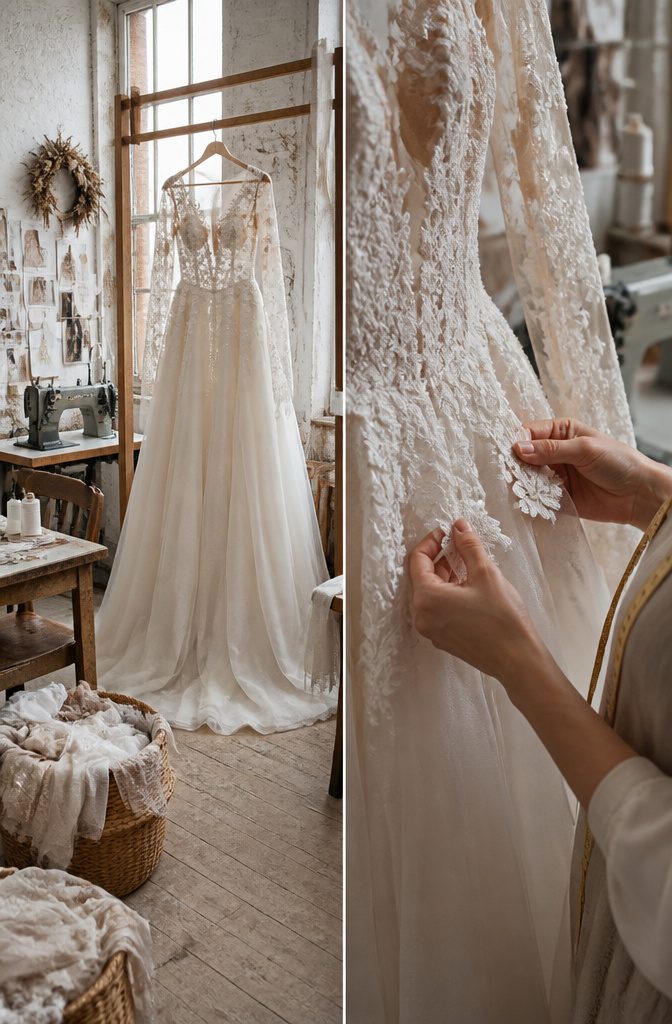
The middle stage is where a dress stops looking pinned together and starts looking like yours. Most brides need two to three fittings total, and this second visit, usually four to six weeks before the wedding, is where the real refinement happens. The seamstress checks what she took in or let out after the first appointment, sees how the fabric settled, and pins any further tweaks. Sleeves that gapped at the shoulder, a bodice that still pouches at the side seam, a hem that hangs unevenly when you walk: this is the appointment where those details get caught.
Complex dresses need more of these middle rounds. A gown with boning, layered skirts, or custom beadwork might need a third or even fourth fitting to get the fit exact. The seamstress reviews her progress against the plan from the first appointment and decides whether she is on track or whether the timeline needs adjusting. Bring the same shoes and undergarments every time; even a half-inch difference in heel height or a new bra changes where the waistline sits and can undo work you already paid for.

【Comfortable Walking】This wrist train loop offers an easy way to lift and carry your wedding dress train or veil without clips or complicated bustle hardware. Ideal for brides who need quick mobility throughout the day

Practical & Pretty Train Management: This dual-purpose bracelet is designed to neatly hold your wedding dress train. Its beaded design adds a decorative touch while solving the practical issue of a long train.

【Hands-Free & Free to Move】This wrist accessory allows you to walk, dance, and mingle freely throughout your wedding night without worrying about tripping or tangling with your gown. Crafted with high-density coarse edge tulle, it provides a secure structure while keeping your hands elegantly free
4. Final Fitting
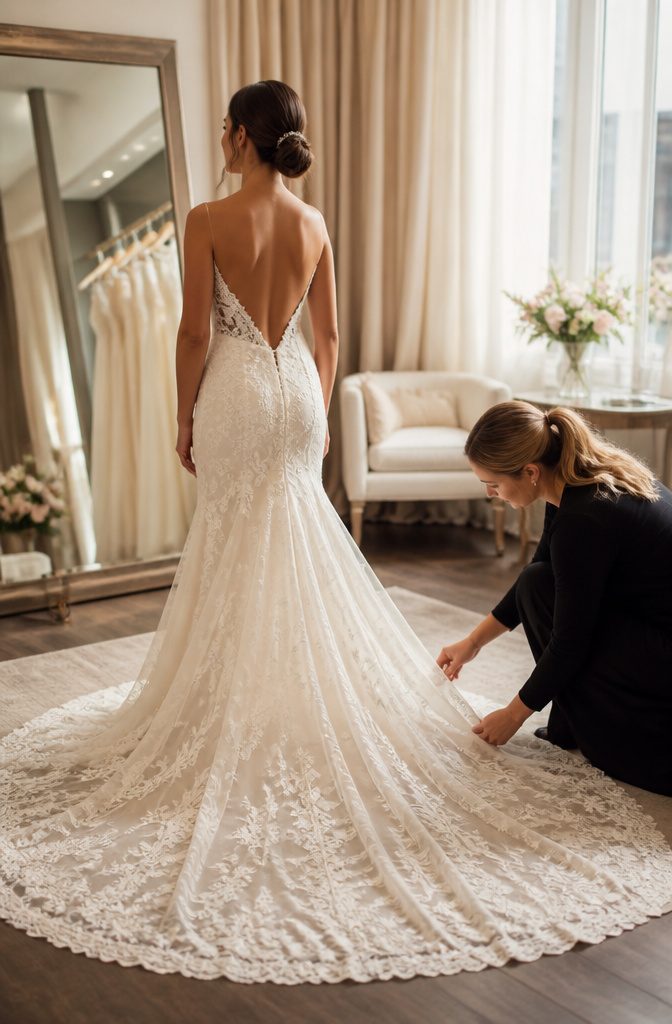
The final fitting lands 1–2 weeks before the wedding, and it is the appointment where everything either locks into place or gets flagged for a fast fix. The dress goes on with the exact undergarments and shoes you will wear that day, not the close-enough pair you grabbed last time. The seamstress checks the hem, the bodice, the closures, then has you walk, sit, and raise your arms. Comfort matters as much as fit; a gown that looks flawless in the mirror but digs at the waist or restricts a hug will wear on you for hours.
This is also when you learn the bustle, and you need to bring whoever will help you with it. The seamstress demonstrates the hooks, buttons, or ribbons, then hands the train to your person and watches them do it back. Practice until it feels automatic. Last-minute issues, a zipper that catches or a bustle point that slips, get noted and scheduled for correction before pickup. Skipping this appointment and discovering a problem on the wedding day leaves no runway to fix it.

【Ample Supply for Creativity】Receive 30 sets of no sew pearl buttons, perfect for DIY projects, clothing alterations, and crafting. Share the creative fun with loved ones and enhance garments and accessories with these versatile pearl pins.

【High-Quality Material】 Boutonniere pins are made of stainless steel pins and plastic faux pearl head, sturdy and sharp for repeat use, crystal floral bouquet pins with sharp point makes it easier to slide into flowers and fabrics.

PEARL SAFETY PINS FOR CLOTHES: Add a decorative touch while helping adjust and secure clothing styles. These pearl brooch safety pins combine fashion detail with everyday outfit styling
5. Pickup and Preparation
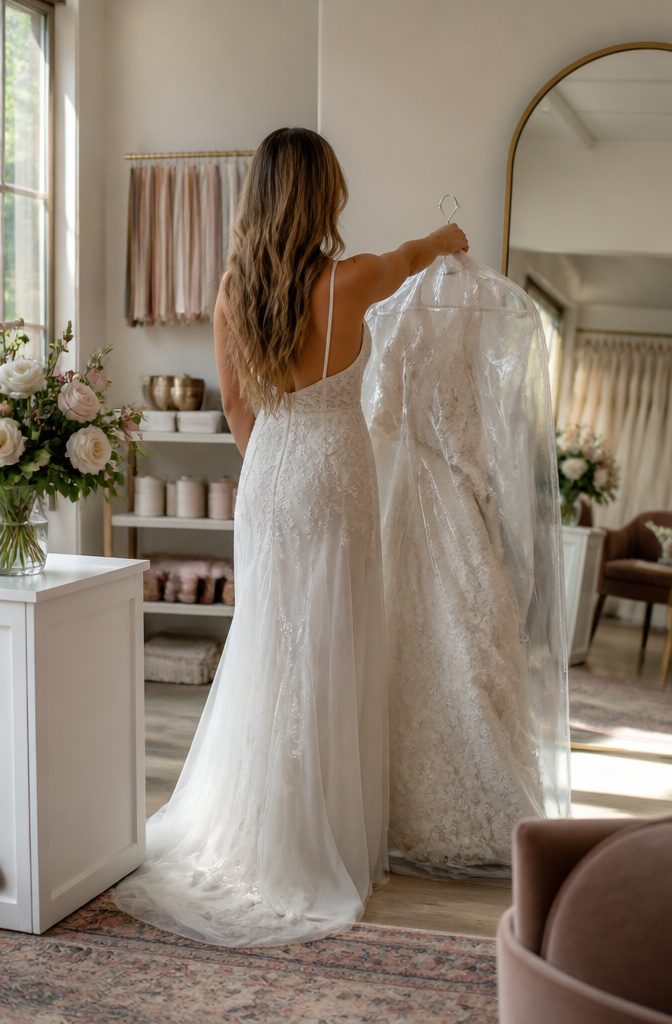
The last handoff happens 1–2 weeks before the wedding, not the morning of. By then the gown has been steamed, pressed, and bagged for transport. I have watched brides schedule this pickup for the Friday before a Saturday ceremony and then panic when the zipper catches on a thread nobody noticed in the shop. Days of buffer matter.
Weight fluctuation between the final fitting and pickup is the one problem a seamstress cannot easily solve at this stage. The dress was closed out to the body that stood in it last; if that body has shifted up or down since, there is rarely time to open seams and rebuild. Bring the undergarments and shoes you will actually wear, give the gown a full look-over under good light, and walk out with enough days left to breathe.

Material: The brooch pins are made of premium quality metal, which is sturdy and durable

Portable Size: you will receive 12 dress clips for fitting, each is about 4.17 inches/ 10.6 cm in length, and about 0.83 inch/ 2.11 cm in width, they are designed to securely hold dress clips without occupying excessive space

6. Hemming
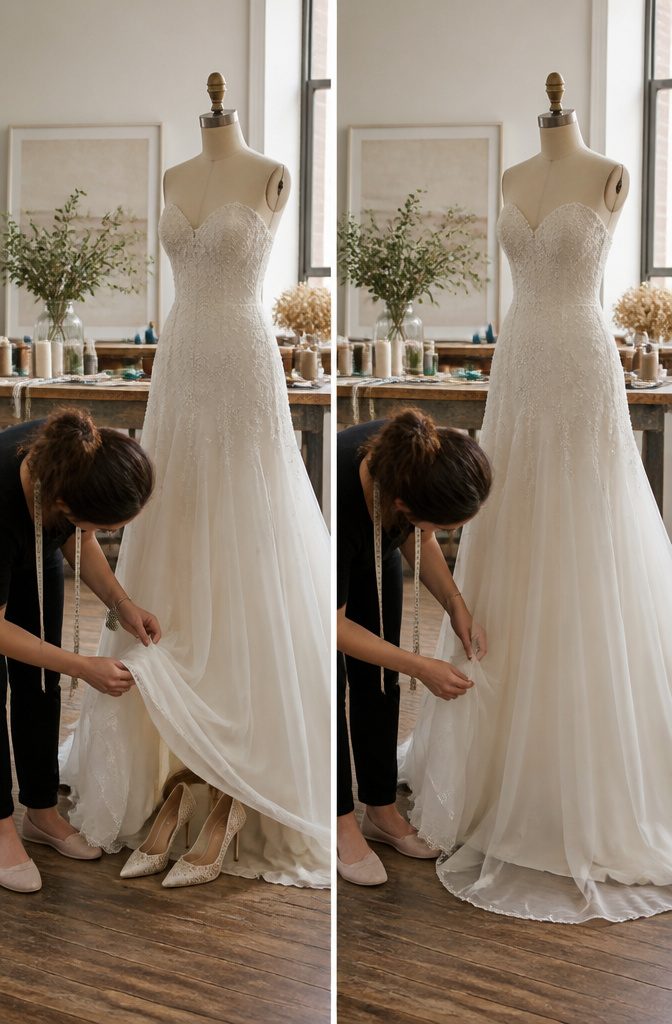
A hem is the alteration brides book first, and for good reason: the work itself takes only 1–2 weeks, making it one of the quickest fixes in tailoring. The catch is that the math only works if you bring your actual wedding shoes to the fitting. A two-inch heel versus a three-inch heel shifts the break point of the skirt by a full inch, and guessing wrong means either tripping on fabric or flashing ankle in every photo.
I learned this the hard way watching a friend swap her planned kitten heels for platforms after her first fitting. Her seamstress had to re-mark the entire hemline, burning a week she did not have.
Multi-layer skirts or horsehair braid stiffening the edge add time beyond that 1–2 week baseline. Each layer gets trimmed and finished separately, and the braid itself holds shape too precisely to rush. If your dress has either, book the hem appointment earlier than the simple timeline suggests, not later.

Size: Please check Our Size Chart before you placed the order.

Instant Glamour: Instantly enhance your bustline in your wedding gown, bridesmaid dress, or evening wear with these discreet push-up bra inserts that slip or sew in, creating a natural, fuller shape and enhanced cleavage.

7. Bust and Waist Fit
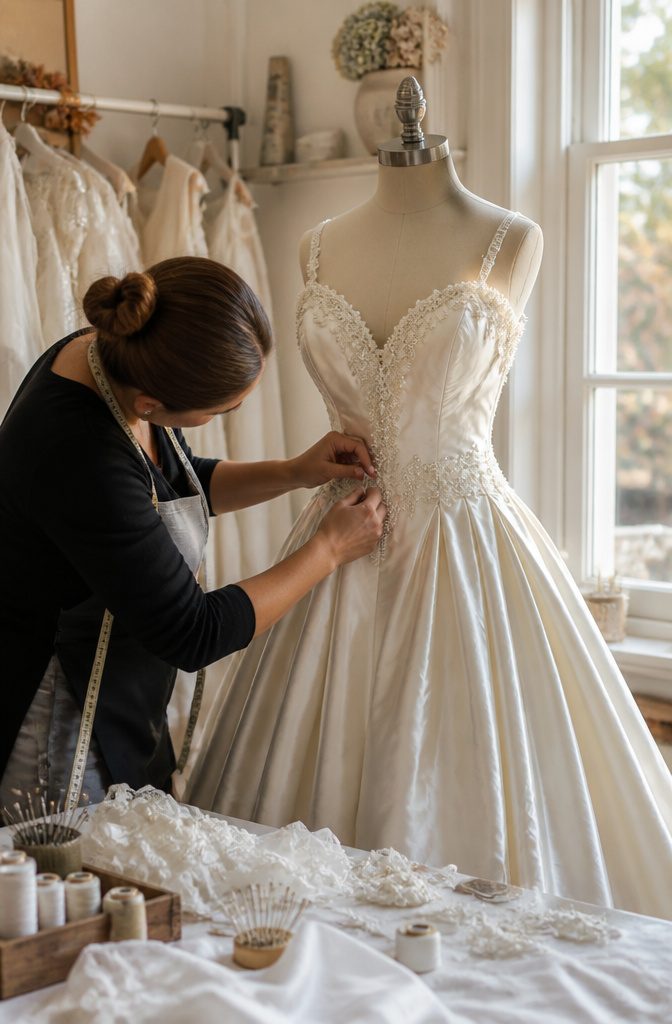
A bodice that gaps at the bust or slides down at the waist will read wrong in every photo, so this is where tailors spend real time. Taking in a bodice runs 1–2 weeks if the fabric cooperates, but letting one out is a gamble: the seam allowance inside the dress is all there is, and many gowns leave you less than an inch to work with. I have watched brides learn this the hard way when a sample sale dress ran small.
Beading and boning change the math entirely. A simple satin bodice opens up cleanly, but each row of beads has to be removed and reapplied by hand, and boning channels cannot be narrowed without rebuilding the structure. Those jobs push toward the longer end of the range, and some tailors treat them closer to the 2–4 week window that major bodice work can demand. If your dress has both, book the earlier fitting and ask directly how much seam allowance is hiding inside.

Elegant 17cm lotus leaf ruffle lace trim, designed to add a soft, voluminous wave to wedding dresses, veils, or evening gowns.

Elegant 17cm lotus leaf ruffle lace trim, designed to add a soft, voluminous wave to wedding dresses, veils, or evening gowns.
8. Strap and Sleeve Adjustment
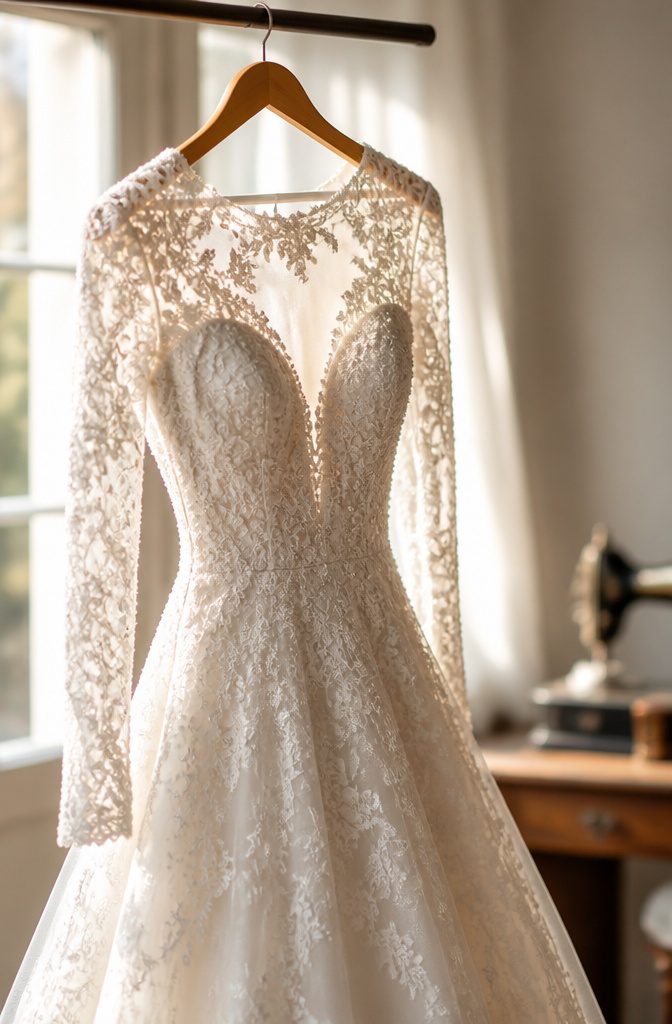
Shortening a strap or taking up a sleeve sounds minor until the fabric involved is lace appliqué or illusion mesh. Those materials do not forgive a crooked seam, so the work moves slowly. A simple length tweak on plain fabric runs about a week, maybe two. Reshaping is different. Converting cap sleeves to off-the-shoulder, for instance, changes how the bodice carries weight and usually means rebuilding the armscye, not just trimming fabric. That restructuring pushes the timeline closer to two or three weeks, and more if the sleeves carry beading that must be removed and reapplied by hand.
Lace appliqué demands the most patience. The motif has to be lifted intact, the alteration made underneath, then the motif repositioned so the pattern reads uninterrupted. One source lists strap or sleeve work at one week, another at two to three. The gap is real, and it tracks exactly this difference between a straightforward shortening and anything that touches decorative structure. If your dress has illusion mesh or lace sleeves, book the longer window. Mesh in particular distorts under the machine foot and often needs to be hand-basted first, which adds hours most brides do not budget for.

Decorative Beaded Floral Design Includes one ivory wrist bustle decorated with a dimensional cluster of pearl-style and faceted white beads, adding an elegant accent to...
9. Neckline Alteration
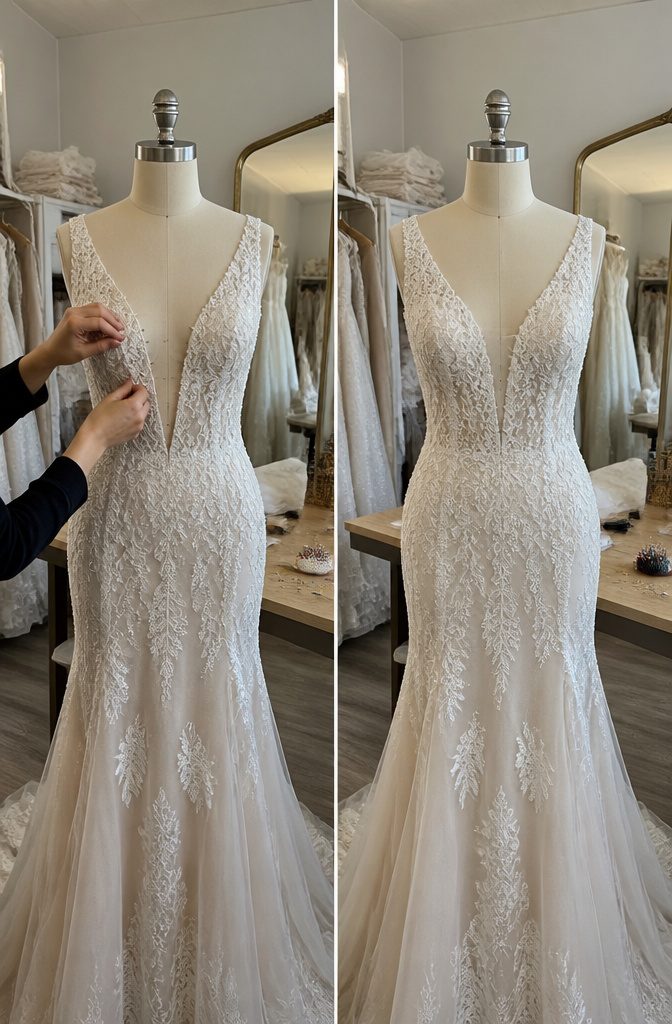
Neckline changes look small on paper but eat more time than almost any other single fix. Raising a plunging V by two inches, softening a square neck into a curve, or adding an illusion panel so the dress reads modest in church means the bodice no longer hangs the way it was engineered. The internal structure, the boning and stay tape that keep the bodice upright against your body, was cut for the original line. Change that line and the load shifts. I have watched a seamstress unpick an entire bodice to rebuild the interior, and neckline alteration alone takes two to three weeks because of that hidden rebuild. The dress may also need new facings or a re-rolled edge to finish cleanly, which is handwork. If your gown has lace or beading at the neck, the appliqué gets removed, the structure changed, and the detail reapplied, sometimes with new material if the original motif cannot survive the seam ripper. That is the difference between a neckline tweak and a true redesign: once you are restructuring the internal bones and reworking lace, you have crossed into major redesign territory, which runs four to six weeks or more.

Instant Fit Adjustment: The pant waist tightener provides immediate 1-3 inch waist reduction - simply fasten to instantly resize jeans, trousers or skirts with no sewing or tailoring required. The dual-prong security system keeps adjustments firmly in place while the elegant pearl detailing maintains a polished look

Elegant anti-exposure brooch: these faux pearl brooch pins can not only add new life to lapels and collars, but also protect your body from exposure when wearing decorative dress cardigan shawl
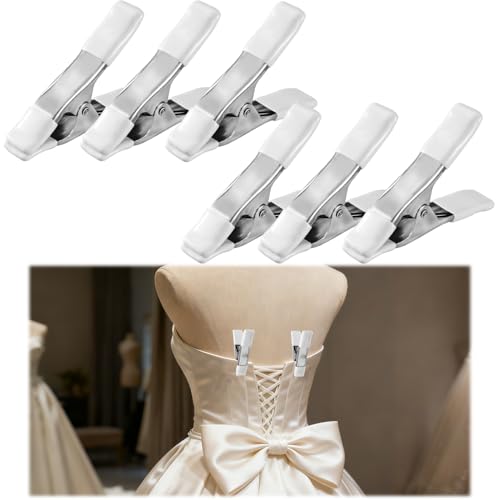
Compact & Handy Size: You will receive 6 metal dress clips, each measuring about 4.17inch/10.6cm long and 0.83inch/2.11cm wide. Small yet strong, they securely hold garments in place without taking up extra space—ideal for professional or personal use
10. Bustle Creation
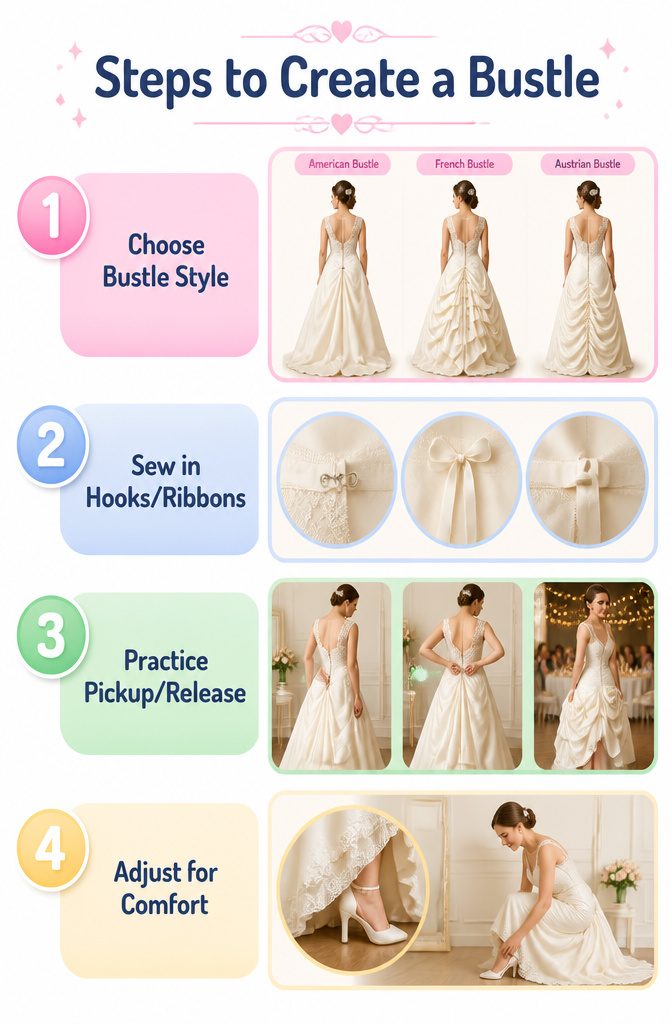
Bustle creation usually takes about a week, but the work itself is deceptively simple on paper and anything but under a dance floor spotlight. Your seamstress sews in hooks, loops, or ribbons that let you lift the train for the reception, and the style she chooses changes how the fabric falls and how much weight those attachment points have to bear.
Three main styles show up in most shops. An American bustle ties or hooks the train up at a single point near the back waist, creating a folded look that works best on lighter skirts. A French bustle tucks the fabric underneath itself with ribbons running between multiple points, which distributes weight more evenly and keeps the silhouette cleaner from behind. The Austrian bustle draws the fabric up through channels, almost like a curtain pull, and creates soft gathered rows rather than distinct folds.
Each one behaves differently when you move. The French and Austrian styles generally stay put better through hours of dancing, but the only way to know yours will hold is to practice the pickup and release at your final fitting. Stand in it, walk in it, have someone mimic pinning it while you twist. A bustle that looks perfect in stillness can gap or drag if the attachment points sit wrong for your stride. My advice: bring the shoes you’ll actually wear, not the pair you hope to break in later. The extra inch of heel changes where the skirt hem falls and how the train pools behind you, which changes where the bustle points need to anchor.
11. Major Redesigns
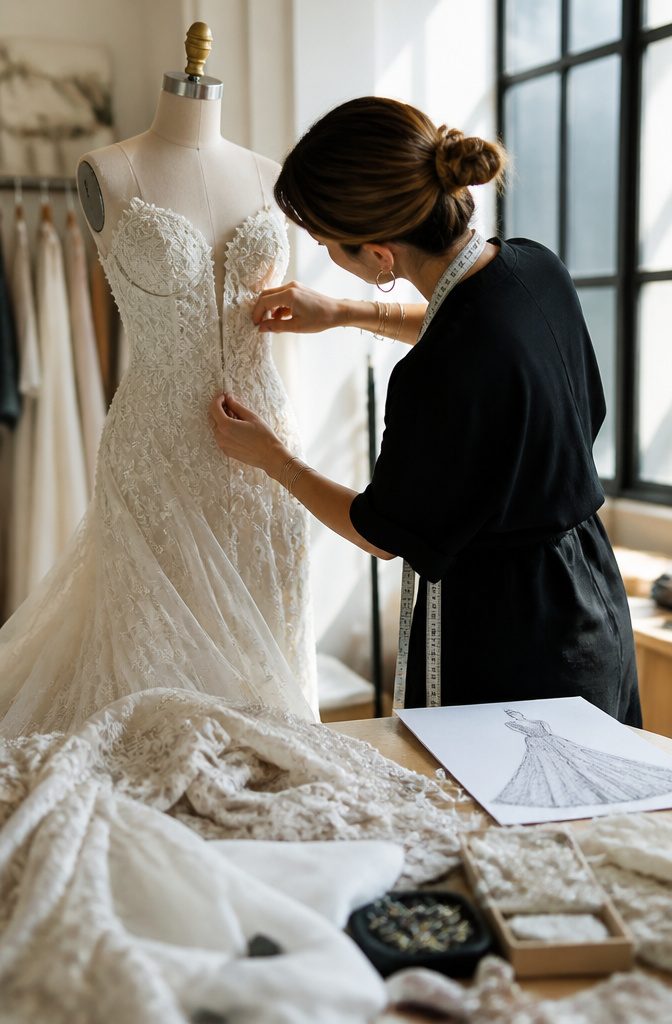
Structural work on a wedding dress runs 4–6 weeks minimum, and that assumes the seamstress even takes the job. Not every shop handles corsetry installs, full skirt rebuilds, or sleeve removals that leave clean armscyes. The ones who do charge for the rebuild, not a tweak.
I watched this timeline slip on a friend’s dress last spring. She booked her first fitting eight weeks out, thinking two months sounded generous. The bodice needed boning added and the skirt deconstructed to remove volume. Her seamstress quoted six weeks just for that scope. Rush fees got her to the altar, but the stress cost more than the money.
Two to three months is the safer window if you’re restructuring anything major. That includes adding sleeves, extensive lace appliqué, or converting a zipper to a lace-up back. These changes essentially rebuild the garment. Book late and you are gambling on a seamstress’s cancellation list or paying premium rates for overnight work that still may not sit right.
What Changes the Timeline
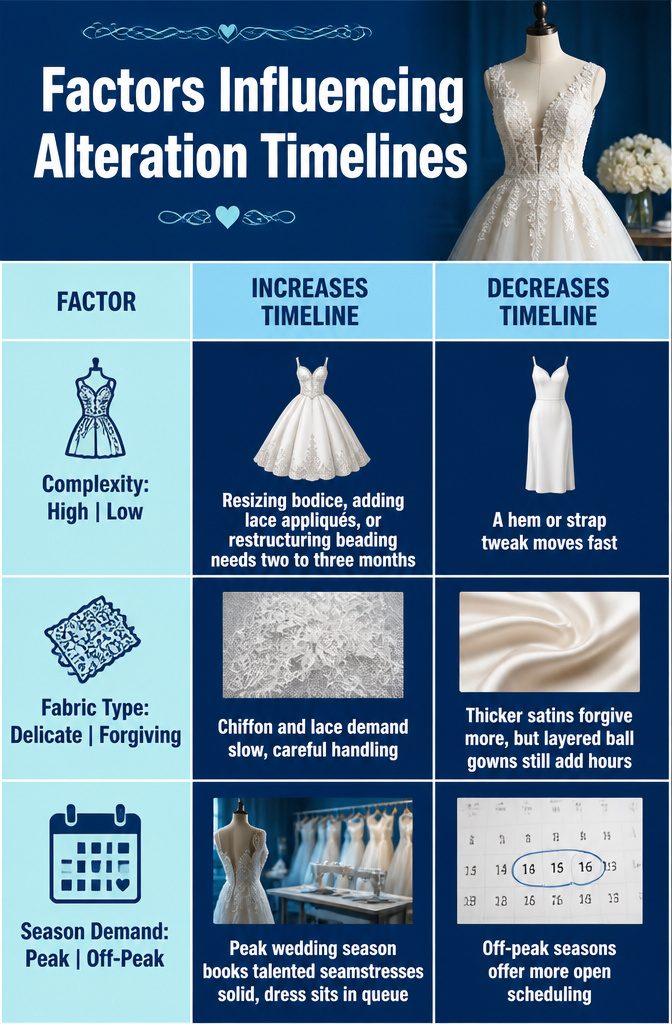
Three things pull the timeline in different directions, and only one of them you can really control.
Complexity of alterations matters most for your specific dress. A hem or strap tweak moves fast; resizing the bodice, adding lace appliqués, or restructuring beading needs two to three months. I have seen brides assume all "alterations" are the same small job, then panic when a bodice rebuild eats their buffer.
Fabric type either protects or punishes that schedule. Chiffon and lace demand slow, careful handling; one slipped stitch and the whole panel shows it. Thicker satins forgive more, but layered ball gowns still add hours compared to a simple sheath or A-line.
Seasonal demand squeezes availability from the outside. Peak wedding season books talented seamstresses solid, so your dress sits in queue even if the work itself is straightforward. The interaction here is what hurts: a complex gown plus peak season means waiting longer to start, then needing longer to finish. My read is that complexity sets your minimum timeline, and season determines whether you actually get it.
Rush Alterations and Their Cost
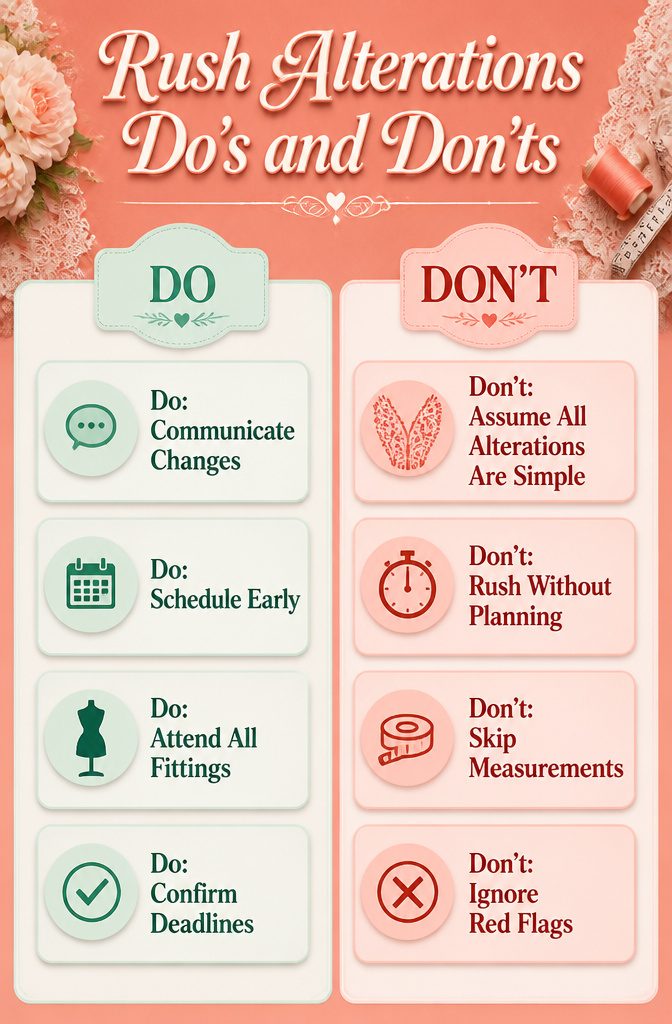
Rush alterations can compress the typical timeline down to 2–4 weeks, but that speed comes at a cost. Most shops charge a rush surcharge around 35% for bridal work, and not every seamstress will take the job even at that premium. Complex restructuring, major size changes, or detailed beadwork may simply be impossible to finish on a rush schedule regardless of budget.
The stress runs both ways. Your fittings get squeezed closer together, leaving almost no margin if the first pass misses the mark. A single delayed appointment can cascade into a gown that is not ready until days before the wedding.
I would only plan for rush alterations if something genuinely unavoidable happened, a late delivery or a sudden body change. Building your timeline around the hope that someone can rush it is betting against the odds, and the price of losing that bet is walking down the aisle in a dress that does not fit.
Handling Body Changes Mid-Alteration
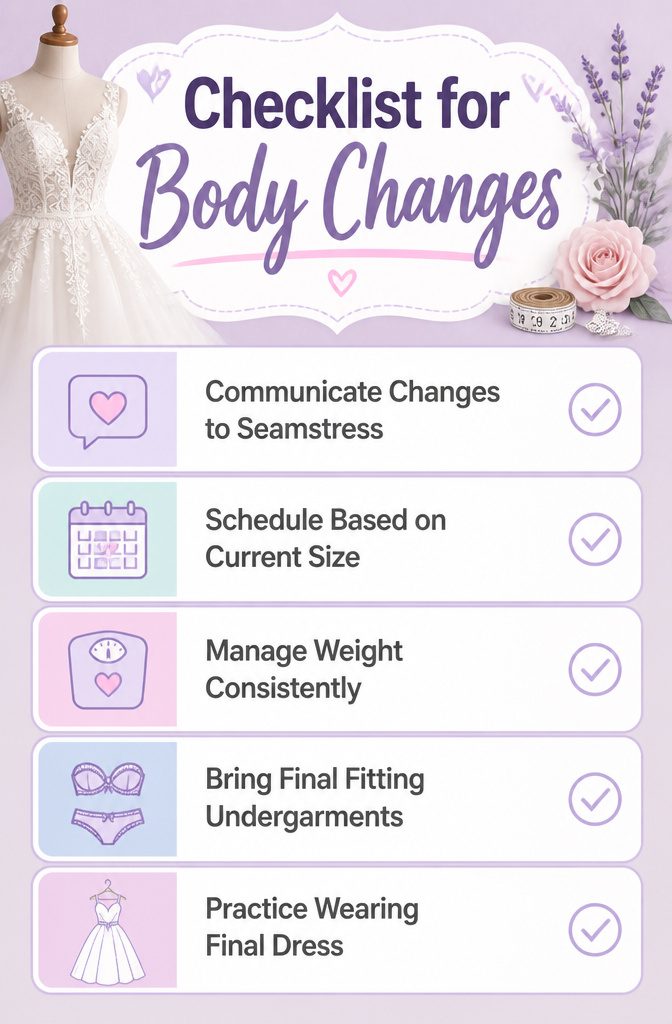
Body changes after alterations begin are more common than most brides expect, and the seamstress needs to hear about them immediately. A shift of a few pounds either way is usually manageable within the existing work, but the line between adjustment and restart sits closer than you’d hope.
The real problem is timing. Major fluctuations close to the wedding are hard to accommodate because structured gowns, especially those with boning or multiple layers, don’t simply shrink or expand symmetrically. Beading and lace complicate this further, since the embellishment was placed for a specific dimension and moving it risks visible puckering or mismatched pattern alignment.
I read enough seamstress accounts to notice the pattern: the brides who panicked least were the ones who treated their first fitting weight as their working baseline rather than a temporary stop. If you’re actively losing weight, scheduling fittings accordingly helps, but staying consistent mid-process matters more than the number on the scale. One bride I read about held her final fitting two weeks out and treated any change after that as her problem to manage with undergarments, not the seamstress’s to solve with scissors.
Frequently Asked Questions
How many fittings are normal for wedding dress alterations?
Most brides need two to three fittings total, though complex gowns with boning, layered skirts, or custom beadwork may need a third or even fourth. The first fitting locks in the scope, middle fittings handle refinement, and the final fitting confirms everything is ready. Each appointment is spaced two to three weeks apart so handwork can settle and the fabric response can be assessed.
When should I start wedding dress alterations?
Book your seamstress 8 to 12 weeks before the wedding, with the first fitting landing in that same window. This leaves room for the standard two to three fittings and builds in buffer if a hem needs redoing or the bodice sits differently than expected. Spring and summer weddings fill calendars fast, so checking early beats hoping for a cancellation.
Can I alter a dress closer to my wedding date?
Rush alterations can compress the timeline to 2 to 4 weeks, but most shops add a 35% surcharge for bridal work and not every seamstress will take the job. Your fittings get squeezed together with almost no margin for error, and complex restructuring or detailed beadwork may simply be impossible regardless of budget. Plan for rush only if something genuinely unavoidable happened.
What happens if I lose weight after alterations start?
Tell your seamstress immediately; small shifts are usually manageable within existing work, but major fluctuations close to the wedding are hard to fix. Structured gowns with boning or beading do not shrink or expand symmetrically, and moving embellishment risks visible puckering. Treat your first fitting weight as your working baseline rather than a temporary stop, and stay consistent mid-process.