A small wedding ceremony in 2026 still runs $23,000–$30,000, but the money buys memory instead of volume.
The stage people get wrong is the guest list: they trim until the day feels hollow, or they keep too many and lose the intimacy they came for.
The trick is deciding what you are unwilling to lose before you write a single name down.
1. Define Your Small Wedding Type
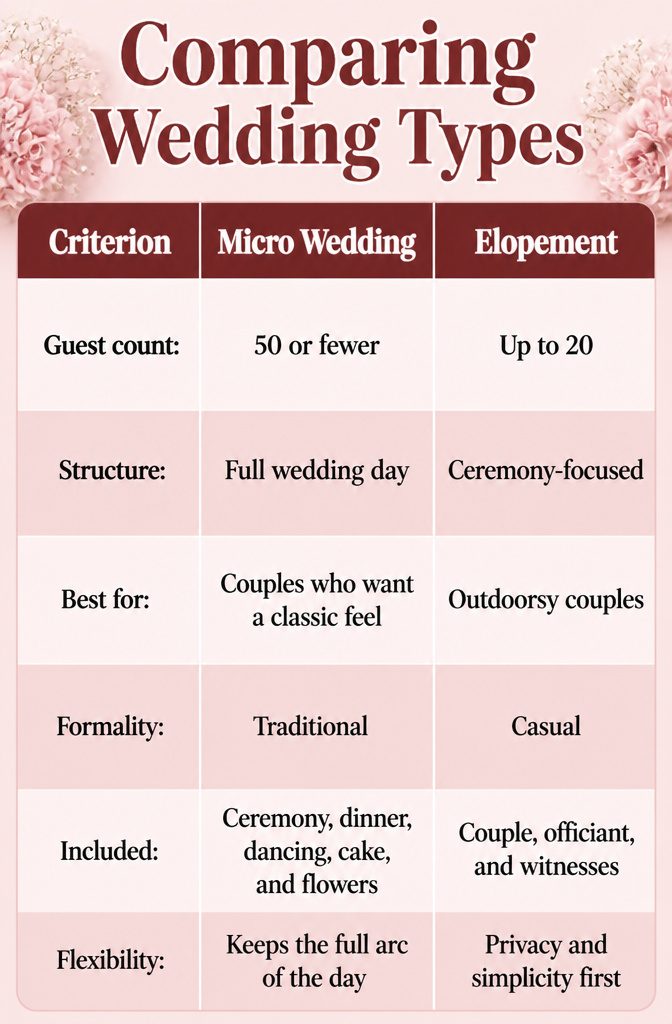
A micro wedding keeps the structure of a traditional day, just capped at 50 guests or fewer. The ceremony, dinner, dancing, cake, and flowers all stay on the table; only the headcount shrinks.
An elopement strips that down to the couple, an officiant, and two witnesses, though the definition has loosened enough that some now include up to 20 of their closest people.
The minimony goes smaller still, a ceremony with 10 guests or fewer that may stand alone or serve as a prelude to a larger celebration later.
The choice depends on what you are unwilling to lose. If the thought of skipping the first dance or a seated dinner with your people feels like giving up the wedding itself, the micro wedding is your fit.
It is the only format of the three that preserves the full arc of the day. Elopements work when the privacy matters more than the production, or when logistics, family dynamics, or budget make a guest list impossible.
Minimonies suit couples who need the legal or symbolic moment now and want to party later without pressure, or who simply want the smallest possible footprint for the ceremony itself.
I spent longer than I should have waffling between micro wedding and elopement for a friend who had a strict budget and a mother who would never forgive being excluded.
The micro wedding let her keep both the budget and the relationship intact. That is the judgment call: not what is smallest, but what is actually non-negotiable in your day.

The Set Includes: 1 "Our Favorite" seating chart sticker, 24 sage-green blank invitation cards, 24 vintage wax seal stickers, and 12 (24 pieces) self-adhesive stickers; Easily create a sophisticated wedding seating chart, adding a vintage and romantic touch to your wedding reception
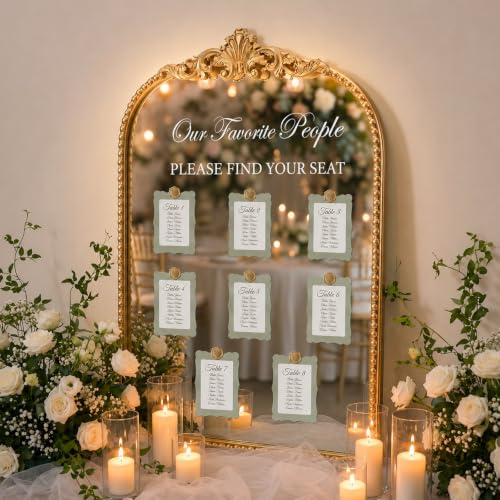
Complete Kit: this kit includes a 24 x 18 inches mirror seating chart, seating assignment stickers with a "we love" theme, 24 sage green blank invitation cards, 24 vintage wax seal stickers, and 24 self-adhesive decorative stickers; This DIY wedding seating chart mirror set offers a solution for wedding entry and seat guidance
2. Set a Realistic Budget
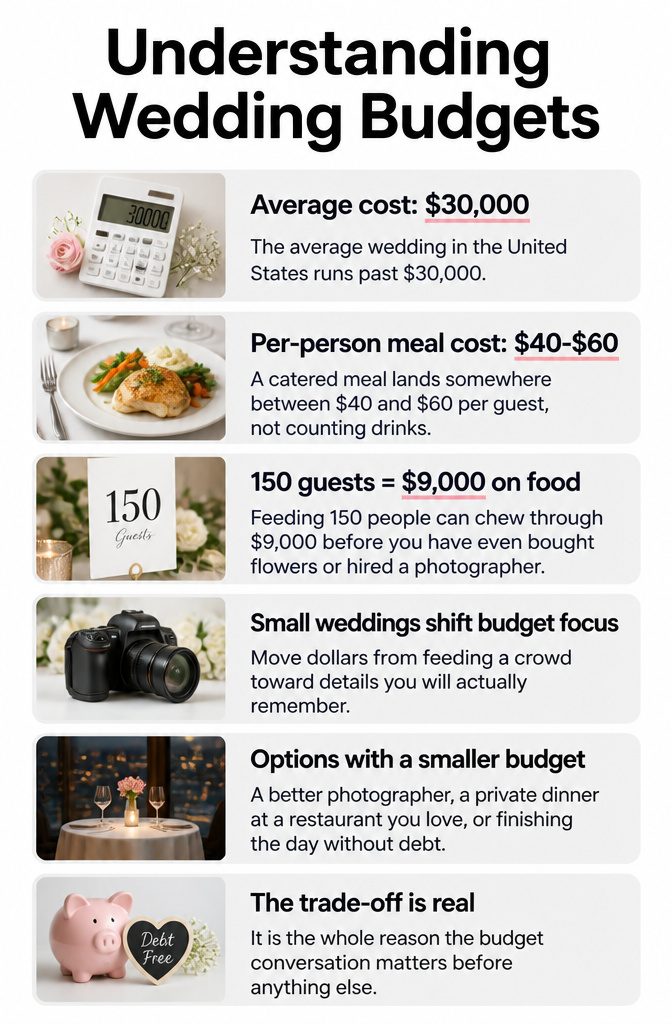
The average wedding in the United States runs past $30,000, and that figure alone is what pushes a lot of couples toward something smaller. I remember sitting with that number when I started researching what a traditional reception actually costs.
The per-person math is brutal: a catered meal lands somewhere between $40 and $60 per guest, not counting drinks, so feeding 150 people can chew through $9,000 before you have even bought flowers or hired a photographer.
Fewer guests changes where the money goes, not just how much of it disappears. A small wedding lets you move dollars from feeding a crowd toward details you will actually remember.
Maybe that means a better photographer, a private dinner at a restaurant you love, or simply finishing the day without debt. The trade-off is real, and it is the whole reason the budget conversation matters before anything else.

LARGE SIZE:The large size of Mr and Mrs sign for wedding table. "Mr"-10" x 5.9" x 0.7" (25. 4cmx15cmx1.8cm), "Mrs"-12.2" x 5.9" x 0.7" (31. 3cmx15cmx1.8cm), "&"-4.3" x 4.7" x 0.7" (10. 9cmx12. 1cmx1.8cm). The just married banner includes 12 cards and a white rope, and size of each card is 4.5" x 5.9" (11.5cm x 15cm). The length of the white rope is 19.6"(50cm).

Elegant Greenery Wedding Favors: designed with soft greenery leaves and thank you lettering, these wedding hand fans add an elegant touch to summer outdoor weddings, garden ceremonies, rustic receptions, bridal showers, and greenery themed celebrations
3. Build Your Guest List

The guest list is where a small wedding lives or dies, and the work starts before you send a single save-the-date.
Set expectations early, while the decision is still fresh. Once you and your partner commit to keeping it intimate, start telling people in your circle that the wedding will be small.
That way, no one builds an expectation of an invitation, and the few who do receive one feel genuinely special rather than entitled.
When you actually sit down to write names, the test is stricter than you think. Ask yourself who you cannot imagine getting married without, not who you simply enjoy at Thanksgiving.
Cousins you see twice a year, colleagues from a previous job, friends from college you mostly follow on social media, these are the names that fill seats without filling the room.
One useful filter: if someone is not actively supportive of your relationship or your choices, they do not belong there regardless of how close the bloodline runs.
Location helps narrow things further. A remote venue or an adults-only celebration naturally trims plus-ones and family children without you playing the villain.
For the people who do not make the cut, plan a phone call or video chat before or after the day. It costs nothing and keeps the relationship intact.

Elegant Design: The ivory plastic plates with gold rim create a striking impression at any event, enhancing the table setting with an air of elegance and refinement.Whether for a wedding, showers, or special event, baroque plastic plates exude elegance, complementing any color scheme or decor style and making your table look both upscale and timeless.

Premium Wave-Edge Elegance: Crafted with a unique scalloped wave-edge design, our disposable plastic plates combine striking aesthetics with durability. The luxurious gold-trimmed adds a sophisticated flair. Perfect for elevating table settings at upscale events

Disposable dinnerware set: This 175 piece elegant gold disposable plates set includes all essentials: 25 plates, 25 dessert plates, 25 cups, 25 napkins, 25 knives, 25 forks, and 25 spoons. Whether it's a bridal shower, wedding, or other special occasions, you can easily handle them without having to cram for utensils!
4. Choose a Venue That Fits
Traditional wedding venues usually set minimum guest counts that start around 75 or 100 people, which immediately rules them out for a ceremony with twenty or thirty.
I spent one afternoon calling a country club near my sister’s place and the coordinator wouldn’t even quote below 80 guests. That dead end pushed me toward places that treat small gatherings as normal business instead of an inconvenience.
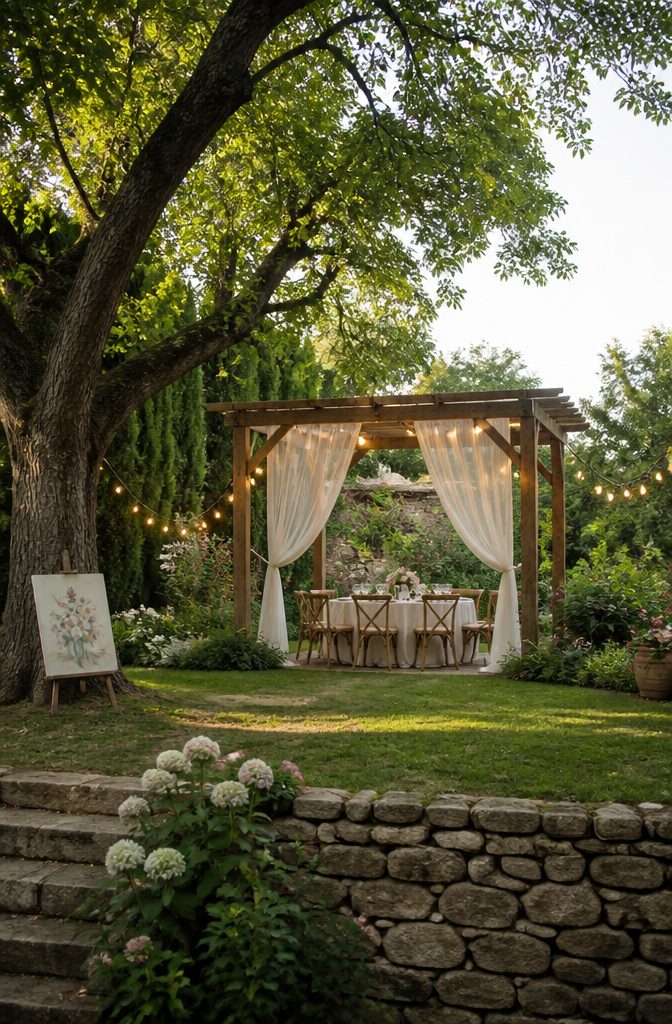
Parks, restaurant private rooms, inns, and backyards become realistic territory once you drop the headcount.
A local botanical garden or museum that would drown in a crowd of 150 can host a small group without strain. I looked at a converted barn that capped at 40 and the owner sounded relieved rather than disappointed by our number.
Check capacity against your actual headcount, not a padded estimate.
A space rated for 50 seated guests leaves no margin if your list runs 35 and you want a band corner or a separate cocktail setup. Ask specifically about chairs, restrooms, parking, and weather backup.
A backyard saves the rental fee but borrows every other detail back from you: tables, tent, portable toilets, generator for the lights. An inn or restaurant bundles enough of those pieces that the math shifts.

Personalized invitations and stationary. Printed on 100 lb cardstock. Order only what you need!

✨ FULLY PERSONALIZED WEDDING SIGN: Create a unique experience for your guests by customizing this Order of Events sign with your names, wedding date, and specific event timeline. Our professional design ensures a beautiful, tailored look that perfectly matches your wedding theme and helps guests navigate your special day smoothly.

5. Find Vendors Who Get Small Weddings
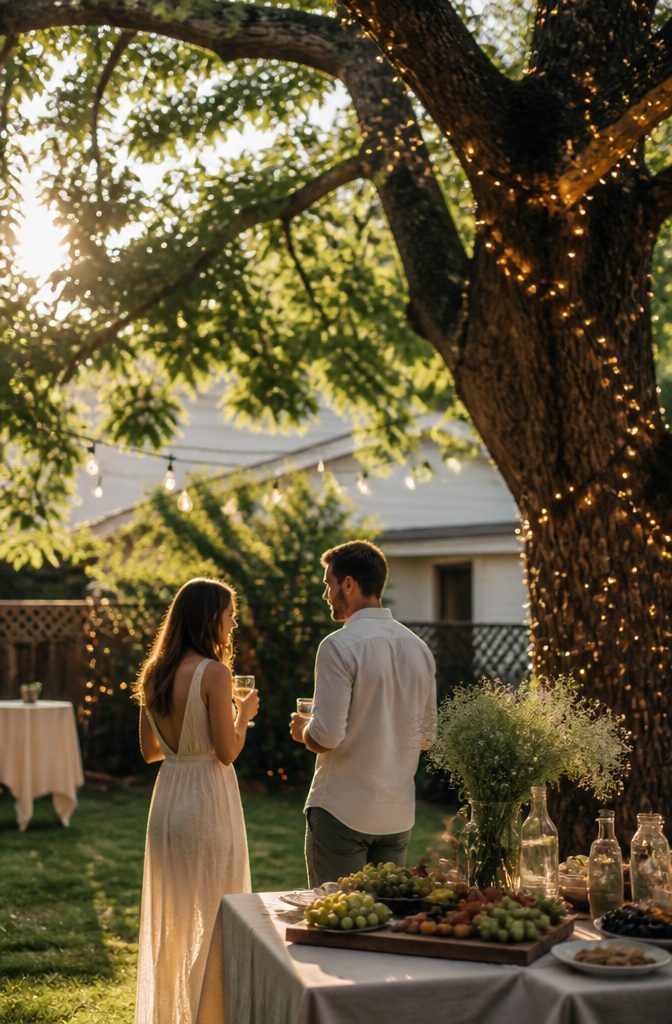
Not every vendor who shoots ballroom receptions knows what to do with twelve people in a backyard.
I learned that the hard way after booking a photographer whose portfolio was all staged bridal-party lineups and drone shots of packed dance floors.
At a small wedding, those tricks fall flat; there is no crowd to hide behind, no production to carry the frame.
Story-driven photography is the shift that saves it.
The photographers who specialize in intimate ceremonies leave gaps in the timeline for unscripted moments: a walk at golden hour, a letter reading where nobody else is present, guests actually talking to each other instead of waiting for the bouquet toss.
Their work looks less like wedding coverage and more like a still from a film you lived.
Catering loosens up too at small scale, and that is where the budget breaks your way. A food truck feeding thirty people runs a fraction of the per-head cost of a plated dinner for two hundred.
Picnic setups with blankets and benches skip the seating-chart headache entirely and let guests settle where they want. Barbecue buffets and family-style spreads work here in ways they would look out of place at a hotel gala.
A planner still earns their fee even with a short guest list, but only if their portfolio shows small weddings they have actually executed.
The ones who do will know which caterers drop minimums and which photographers shoot the quiet stuff without being asked.


The Set Includes: 1 "Our Favorite" seating chart sticker, 24 sage-green blank invitation cards, 24 vintage wax seal stickers, and 12 (24 pieces) self-adhesive stickers; Easily create a sophisticated wedding seating chart, adding a vintage and romantic touch to your wedding reception

Peel off the protective film from both sides before use,Package includes: one wedding seating chart board and 20 golden eucalyptus sealant stickers, 24*29 inches to ensure that guests can easily read and find their seats, the reserved hanging hole 8mm diameter can be used with the hanging stand for display, seat cards are not included
6. Map a Flexible Timeline
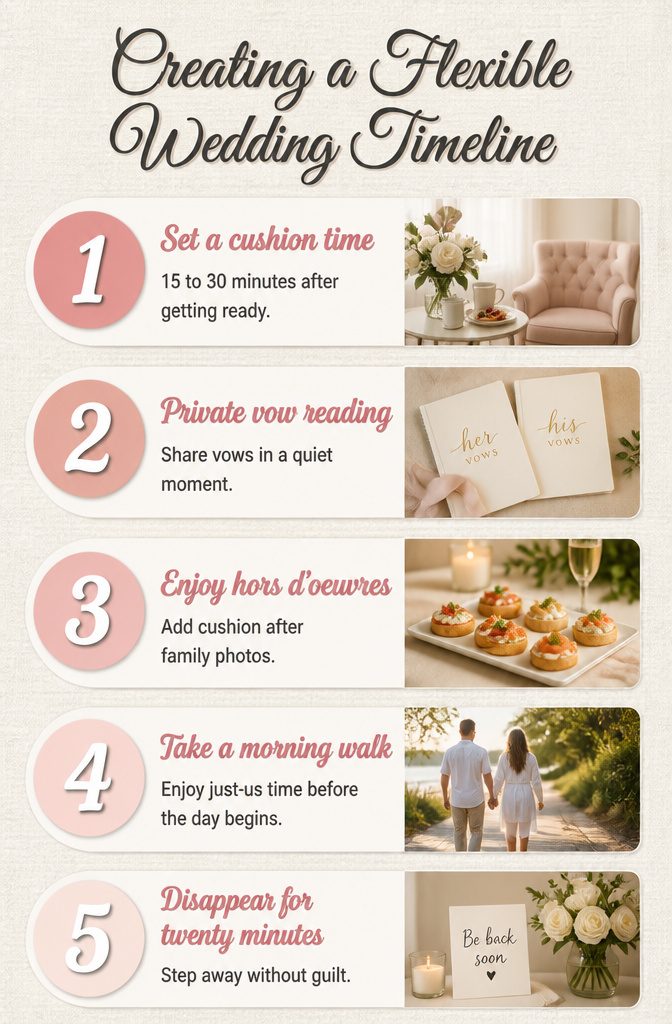
A small wedding ceremony gives you something large ones rarely do: room to breathe between events. The schedule can hold gaps without collapsing into chaos.
At my own wedding, the planner stacked everything back-to-back. By the time we reached the first look, I was still pinning a boutonniere and sweating through my shirt.
With fewer than thirty guests, nobody needed that rush. The couple sets the pace, not the crowd.
Build in an extra fifteen to thirty minutes after getting ready before you see each other.
Use it to sit, eat something, or just stand in the room without an audience. Add cushion after family photos so you actually taste the hors d’oeuvres you budgeted for.
Small weddings let you split the day between just-us time and guest time.
A private vow reading, a morning walk, or letters exchanged before the ceremony gives you quiet moments large weddings crowd out. The guest list is short enough that no one feels abandoned if you disappear for twenty minutes.
The padding is not empty space. It is where the day becomes yours instead of a checklist you survive.

【Wedding Arch Draping Fabric】Package includes 1 panel ivory sheer drapes, each panel is 28.7 inches wide and 20 ft long. The length of wedding arch draping fabric is long enough to fit different size arch decoration. This polyester sheer drapery backdrop can create a romantic and elegant atmosphere on your party.

1. Versatile for Various Occasions These wedding reserved seat signs are perfect for a variety of occasions, including weddings, church ceremonies, outdoor weddings, receptions, business meetings, graduation ceremonies, religious ceremonies, high-end restaurants, and private gatherings. Whether for wedding seating arrangements or banquet and business event seating reservations, these signs clearly mark reserved areas, helping honored guests find their seats with ease, preventing confusion, and ensuring a smooth, well-organized experience while making every special guest feel truly valued.

Remember Loved Ones at Your Wedding: Create a heartfelt place for family members who are no longer with you. This in loving memory wedding sign helps keep their presence close during your ceremony and reception.
7. Add Details That Mean Something
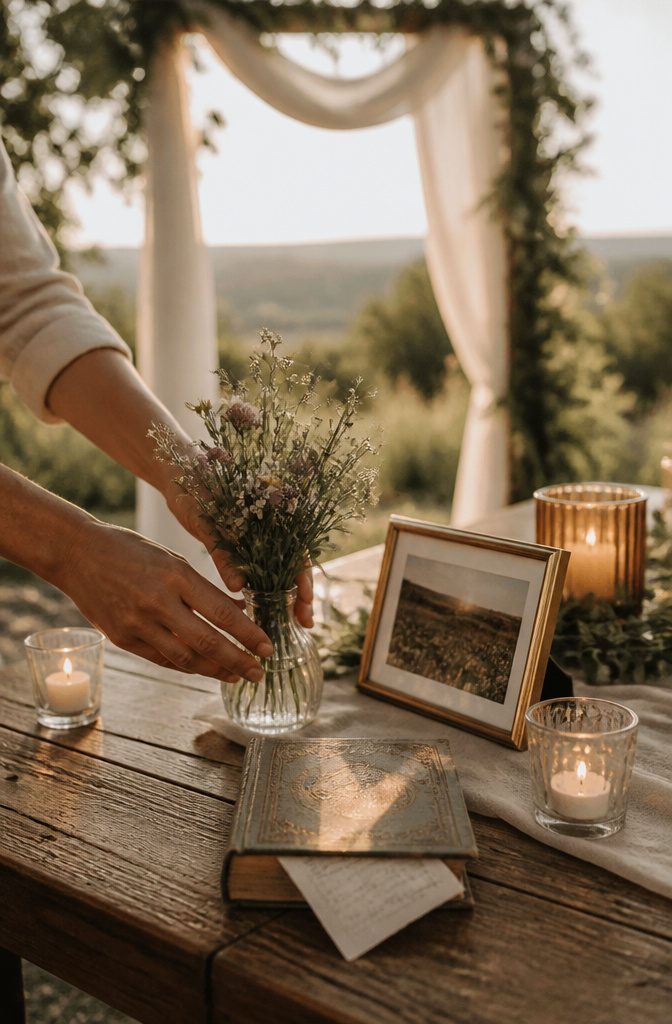
With fewer guests, the money you kept back from catering and venue minimums can buy something harder to fake: a moment that actually happened between the two of you.
I have watched couples spend $40–$60 per head on a meal they barely tasted because they were circulating through a room of 150, and I have watched others spend that same amount on a single table where they lit candles together, served the pasta they ate on their first date, and read vows that mentioned the coffee mug and the road trip and the exact words of the first "I love you."
The second version costs the same or less; it just spends the budget on memory instead of volume.
The details do not need to be grand.
Flowers that grew near your first apartment, the wine from the night you got engaged, a line pulled from an old letter worked into the ceremony: these are cheap in dollars and expensive in the time it takes to remember them accurately.
That is the trade a small wedding makes. A big wedding inflates the guest list until the couple becomes hosts; a small one lets the couple stay the protagonists of their own day.
Write the vows first, before you book anything else. Everything else can be adjusted to fit the story they tell.

SAFETY MATERIAL: 100% food grade, BPA-free plastic. Extra heavy weight in the silver plates, strong enough to any food, proper size and Weight meet to need. Easy to take along with sturdy box.
100% BPA Free - These disposable party plates are made of food-grade, reusable plastic that is BPA-free. If you need to reuse the dishes, simply wash them with water. NOTE: These disposable dishes are not recommended for use in the microwave or dishwasher.

What Is Included: The package includes 30 pieces scalloped disposable plates with exquisite design, the amount of package is sufficient for wedding parties
Micro Wedding, Elopement, or Minimony
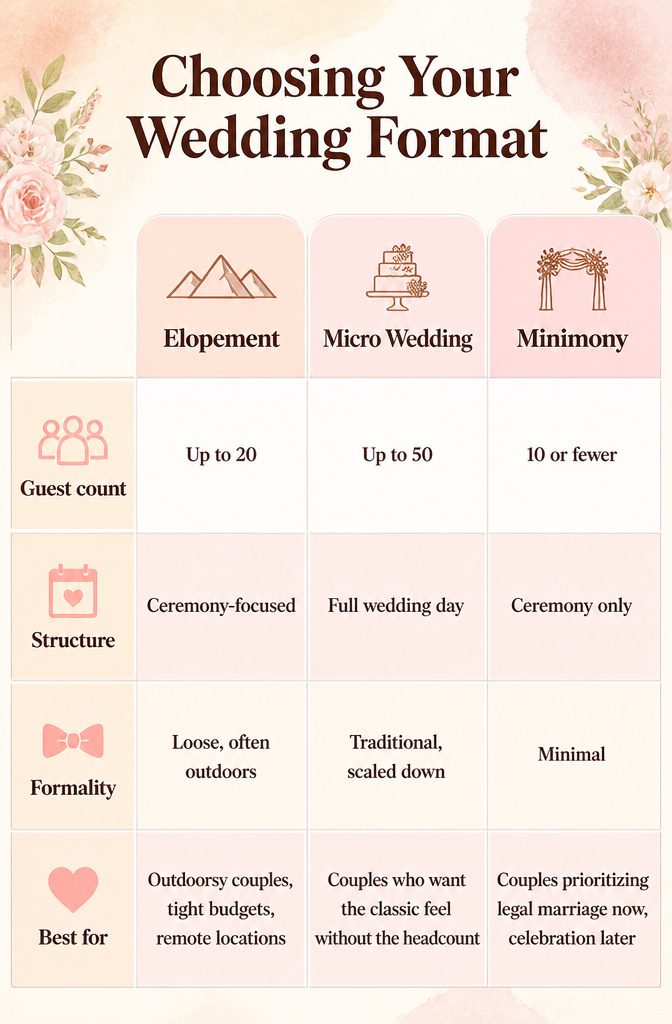
The word "elopement" has loosened up. What used to mean just the couple, an officiant, and two witnesses now stretches to about 20 people, usually the pair’s nearest family or friends.
A micro wedding keeps all the traditional pieces, just shrunk down: 50 guests or fewer, with dinner, dancing, flowers, and cake still on the table.
A minimony is smaller still, topping out at 10 guests, and strips the day to just the ceremony itself.
| Elopement | Micro Wedding | Minimony | |
|---|---|---|---|
| Guest count | Up to 20 | Up to 50 | 10 or fewer |
| Structure | Ceremony-focused | Full wedding day | Ceremony only |
| Formality | Loose, often outdoors | Traditional, scaled down | Minimal |
| Best for | Outdoorsy couples, tight budgets, remote locations | Couples who want the classic feel without the headcount | Couples prioritizing legal marriage now, celebration later |
The distinction that matters is not the label but what you actually want from the day.
A 10-person hike to a mountain viewpoint with no reception is an elopement. A 25-person dinner with a DJ and a first dance is a micro wedding, even if some vendors would call it a small elopement.
If your plan is to marry now and throw the party in a year, you are looking at a minimony.

🎁𝐏𝐄𝐑𝐅𝐄𝐂𝐓 𝐏𝐑𝐎𝐃𝐔𝐂𝐓: Yard sign design plays an important role in attracting attention and conveying the desired message. Our affordable yard signs do not fade and are perfect as gifts for loved ones, friends and family at wedding receptions


CUSTOMIZABLE OUR STORY TIMELINE WELCOME SIGN: Give your wedding ceremony a personal touch by adding your name to our rose theme wedding sign. We also allow you to add text of your choice on the wedding sign. Click on the “Customize Now” button to create your wedding welcome sign.
Venue Minimums and How to Work Around Them
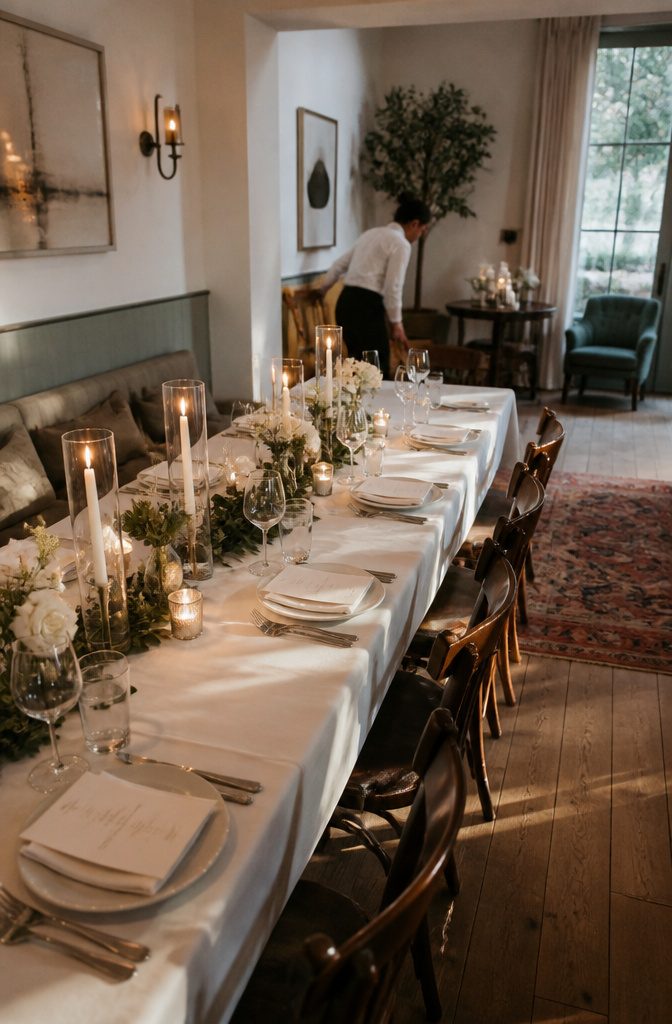
Traditional wedding venues make their money on volume, and a guest list of twenty breaks their math.
Most operate with minimum head counts built into the contract, sometimes fifty guests, sometimes a hundred, which means a small wedding pays the same room fee as a large one and still gets charged per plate for dinners that never get served.
The first question to ask any venue is whether that minimum exists and whether it is negotiable for a weekday or off-season date.
If the answer is no, the search shifts to places that price by the event rather than by the chair.
Restaurants with private dining rooms, inns, bed-and-breakfasts, and rental properties listed on Airbnb or VRBO often have no minimum at all.
Art galleries, museums, and libraries work the same way. The tradeoff is usually logistical: a restaurant includes tables, chairs, and food service, while a backyard or rental house leaves the tent, the caterer, and the rain plan to you.
A venue with built-in catering and an indoor ceremony backup saves more money than it costs if your guest list stays under thirty.
One couple I read about chose a ski resort not for the ballroom but for the mountain biking trails, which mattered more to them than the room minimum they would have fought at a hotel downtown.

Warm and Inviting: Enhance your wedding with our "Our Favorite People Your Seat Awaits" letter wall decal in a delightful black color, providing a warm and welcoming environment for the wonderful event.

24 DIY Wedding Seating Kit: This set includes everything you need for elegant seating arrangements: 1 large “Our Favorite People” chart sticker, 24 pink blank seating cards, 24 vintage wax seal stickers, and 12 sheets (24 pieces) of writable self adhesive labels. Perfect for weddings, bridal showers, baby showers, anniversaries, and birthday parties.
What to Do About the People You Did Not Invite
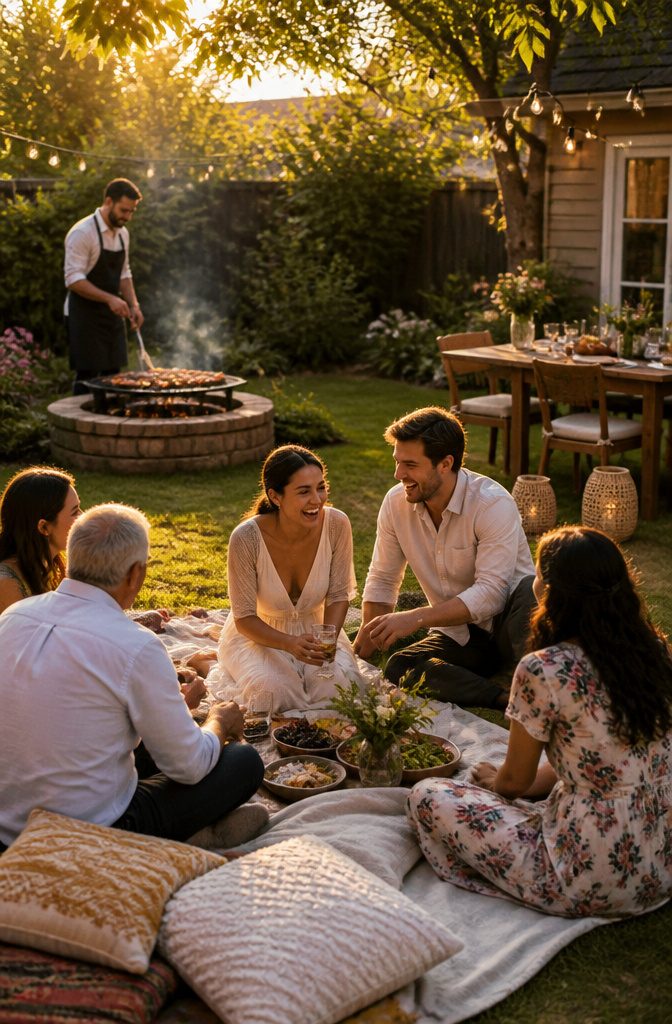
The people left off a small wedding list do not disappear. They are still your cousins, coworkers, and college friends, and the silence after invites go out can feel louder than any ceremony.
What convinced me, reading through how couples actually handle this, is that a later celebration works only when it is clearly not a consolation prize.
One option is a casual barbecue a month or two after the wedding. Another is a photo-sharing party where you walk guests through the day with prints or a slideshow.
A few couples I read about treated it as a bigger blowout party, less structured than a full-scale wedding, which let them keep the private moment private while still toasting with everyone else.
The key difference: the small ceremony was the wedding, and the later event was simply a celebration of the marriage that already happened.
Phone calls or video calls with the uninvited before or after the day also help, not as apology tours but as genuine check-ins.
The choice that wins, in my judgment, is the one you would plan even if no feelings were hurt.

What You Will Get: this package comes with 6 pieces of wedding signs in different styles, the quantity is sufficient to meet your home and wedding party decoration needs,...
Small Wedding Costs vs. Traditional Wedding Costs
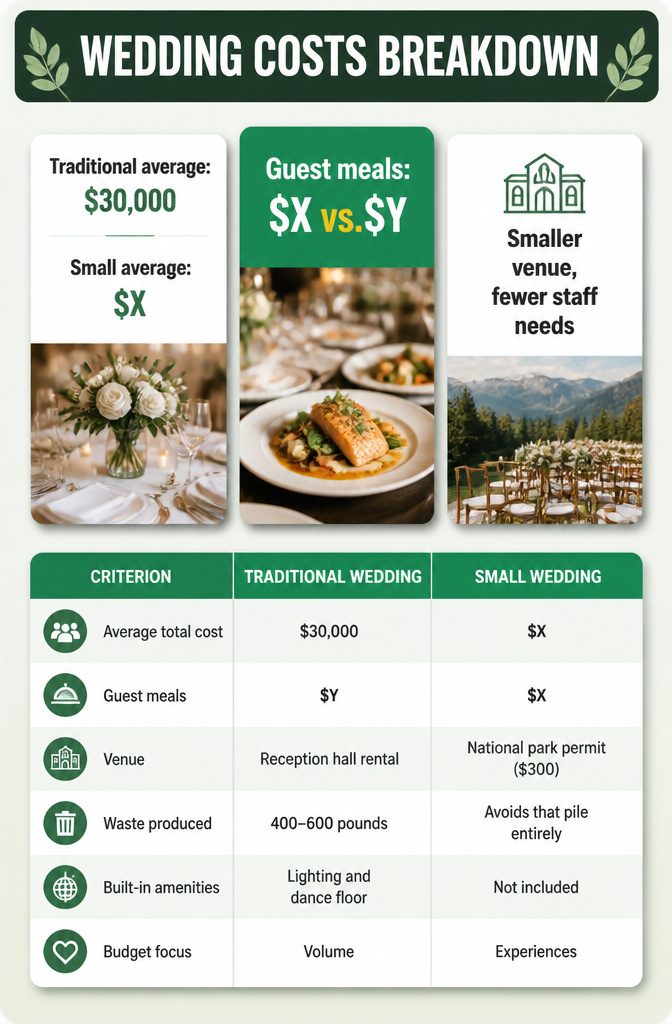
Most couples who set out to spend around $23,000 on a traditional wedding end up closer to $30,000 once the final invoices land.
A small ceremony breaks that pattern, but the savings show up in specific places rather than across the board. Fewer guests means fewer plated meals, a smaller venue footprint, and less staffing.
The per-person food budget, though, often moves upward. A caterer cooking for twenty can source better proteins and spend more time on presentation than one feeding two hundred on a tight timeline.
Where the money shifts matters more than where it drops. A national park permit runs about $300, which is far below the rental fee for a traditional reception hall.
The trade is real: you lose the built-in lighting and dance floor, and you gain a backdrop that does not get bagged up as trash.
The average traditional wedding produces 400–600 pounds of waste in a single day, most of it single-use plastics. A small outdoor ceremony avoids that pile entirely.
What convinced me, reading through the options, is that the budget does not shrink so much as it changes shape. You are still spending, but on experiences rather than volume.
A private vow reading, a morning walk built into the schedule, a letter exchange with just the two of you: these are line items a large wedding rarely has room for.
Guest List Tactics That Actually Work
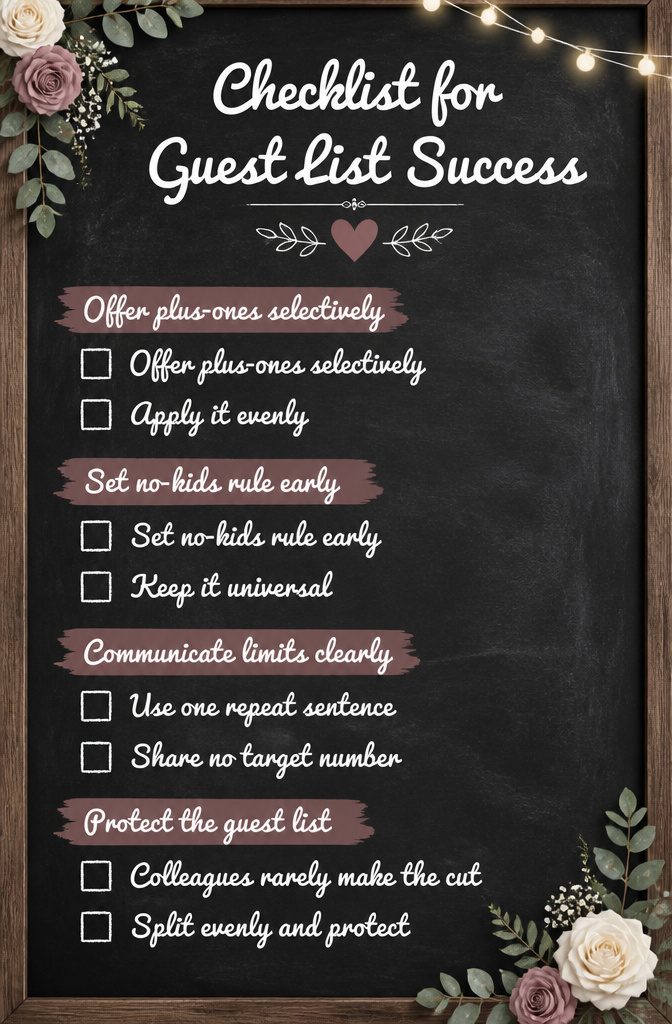
The plus-one rule is where most guest lists quietly explode. My approach: offer a plus-one only to guests who will not know anyone else at the wedding.
A college friend flying in solo gets one; your local cousin who grew up with half the guest list does not. Apply this evenly, or the resentment becomes obvious in a room of thirty people.
- Set the no-kids boundary early and make it universal. One exception, and you are renegotiating with every parent on the list. If your sister’s babysitter falls through, she becomes a no-show; that risk belongs to her, not to your seating chart.
- Handle family pressure with a single repeated sentence: "We are keeping the wedding small, which means not everyone can be invited, and we would love to celebrate with you another time." Do not offer explanations that sound like problems to solve. Do not share your target number; it becomes a target to argue over.
- Colleagues rarely make the cut for a ceremony under fifty. The test is whether you would spend a Saturday with them unpaid. If the answer is no, the office collection and a photo shared Monday covers it.
- Split the list evenly between partners, then protect it. One partner’s extra parent or step-sibling does not entitle the other to filler guests. The count stays fixed; the names shift.
Frequently Asked Questions
What is a micro wedding?
A micro wedding keeps the structure of a traditional wedding day, just capped at 50 guests or fewer.
The ceremony, dinner, dancing, cake, and flowers all stay in place; only the headcount shrinks. It is the only format among small wedding types that preserves the full arc of the day.
How do I create a guest list for a small wedding?
Start by telling people in your circle early that the wedding will be small, so no one builds false expectations. When you write names, ask who you cannot imagine getting married without, not who you simply enjoy at holidays.
Apply filters strictly: guests who are not actively supportive of your relationship do not belong there, and plus-ones go only to people who will not know anyone else.
What are some unique venue options for small weddings?
Parks, restaurant private rooms, inns, backyards, botanical gardens, museums, and converted barns all work well for guest counts between 10 and 50.
Traditional venues often set minimums starting at 75 or 100 guests, which rules them out. Check capacity against your actual headcount, not a padded estimate, and ask specifically about chairs, restrooms, parking, and weather backup.
How can I make my small wedding meaningful?
Write your vows before you book anything else, then build the day around the story they tell.
Spend the budget on memory instead of volume: a private vow reading, the wine from the night you got engaged, flowers from near your first apartment, or a shared meal that centers the day.
Small weddings let you stay the protagonists rather than hosts circulating through a crowd.