
A floral arrangement wedding is any setup of cut flowers and greenery placed where guests will see it during the ceremony or reception.
The cost per piece changes drastically based on size and bloom count: a simple table centerpiece starts around $75, while a full ceremony arch can hit $4,000.
Most couples spend $700 to $2,200 on a standard package covering bouquets, boutonnieres, ceremony flowers and centerpieces for the tables.
1. Table Flowers and Centerpieces
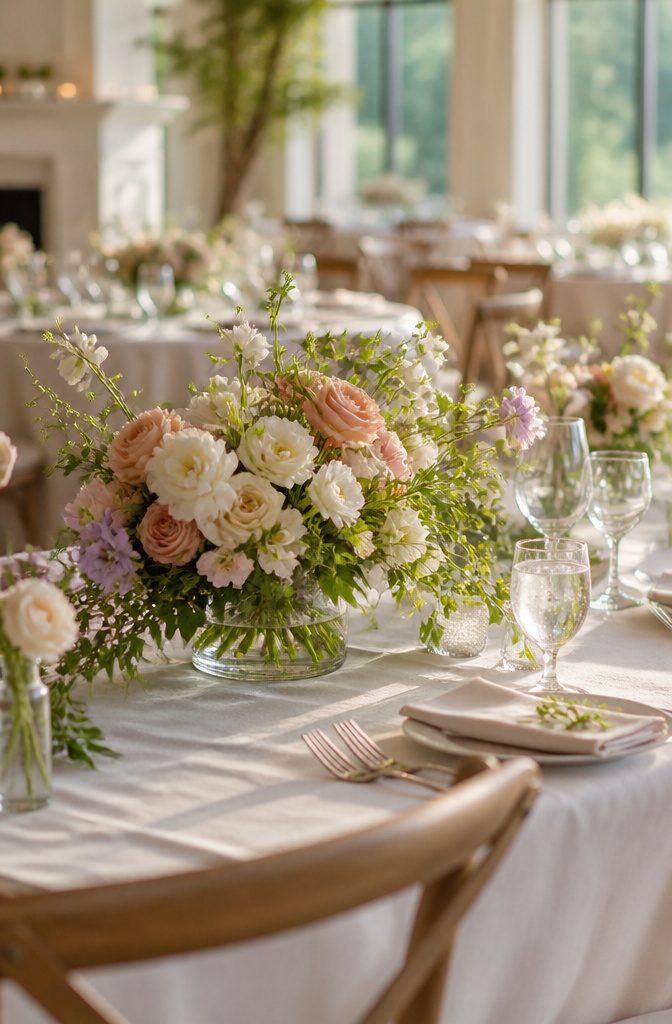
Table centerpieces sit at a scale most couples underestimate until they price them.
A floral centerpiece can run anywhere from $75 to $600 per table, and the difference shows: a simple arrangement in a clear vase stays modest, while a lush focal piece with trailing greenery or premium blooms pushes into the upper range fast.
Height matters as much as budget.
Guests need to see and talk across the table, so arrangements either stay low enough to look over or lift high enough on stands to clear the sight line entirely. Bud vases work well for intimate tables or budget-conscious receptions.
One DIY bride made eight centerpieces for her wedding and kept the cost manageable by repeating a single design across all the tables. If you are handling your own flowers, that repetition saves time and sanity on setup day.
2. Ceremony Arches, Arbors, and Altar Structures
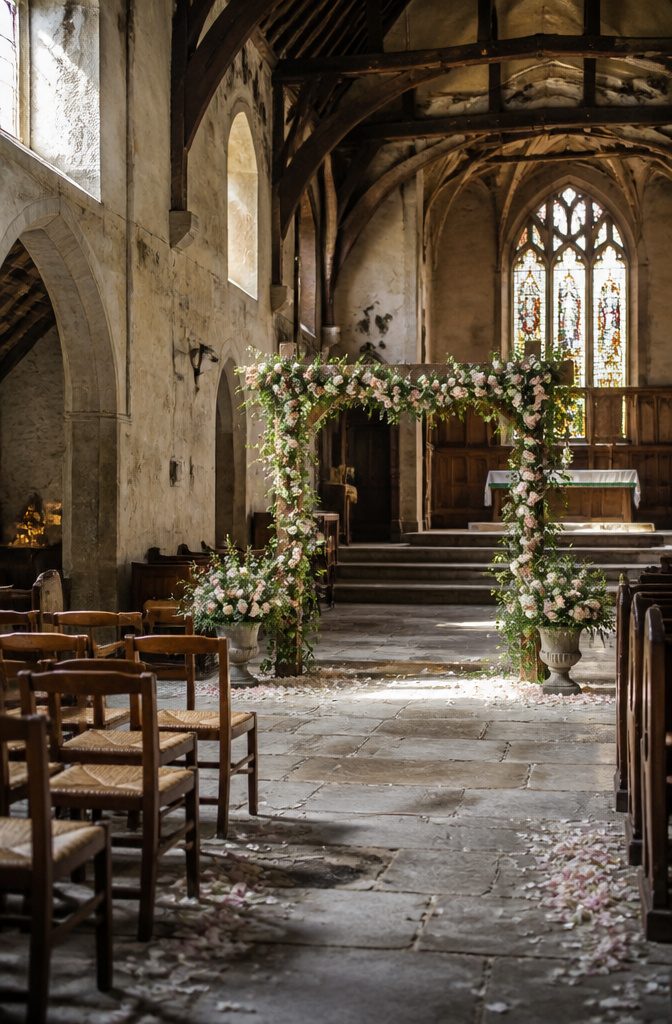
The floral frame behind your vows lands every camera angle, so it gets one of the higher line items in the flower budget.
Ceremony structures typically cost $1,500–$4,000, depending on size, flower density, and whether you’re renting an arch or building a custom install.
That covers full coverage on a wooden arbor, a metal hoop wrapped in roses and greenery, or a freestanding triangular frame draped corner to corner in blooms.
Smaller altar arrangements run $60–$400 and include a pair of matching sprays set on pedestals or low urns flanking the officiant.
Most florists need at least two weeks’ notice for fresh ceremony work, since these pieces are assembled close to the event and timed around petal drop.
Rental packages often include two sprays as a set, which keeps symmetry simple and cuts the per-piece price.
If the venue already has a permanent arch or altar backdrop, a pair of sprays may be all the floral weight you need.
3. Aisle Flowers and Markers
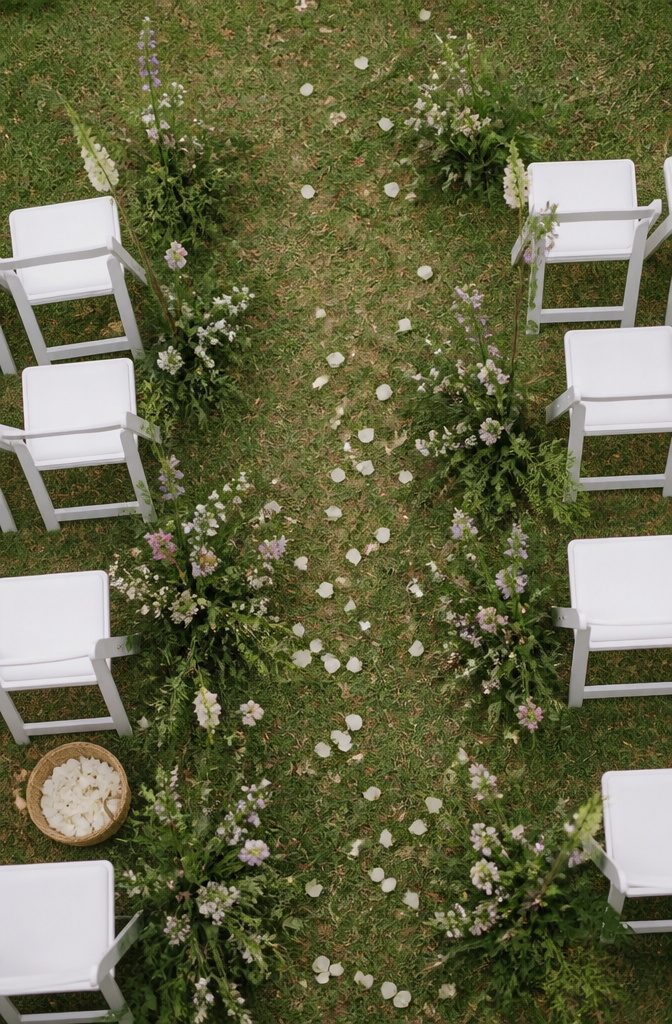
Aisle decor moves the eye forward, and the simplest version costs almost nothing.
Scattered petals start around $20 and run to $60 depending on the variety and how thickly you want them laid. They photograph well from any angle and disappear into the lawn if you’re outdoors, so cleanup is faster than you’d think.
Pew markers add height without blocking sightlines. Rental pricing runs $75 for six markers, $125 for twelve, or $160 for twenty-two, which works out cheaper per piece the more you order.
I’d rent them if the venue offers a design that suits your palette, since you won’t keep silk arrangements after the day anyway.
Ground clusters and meadow-style borders photograph best in wide ceremony shots where the aisle reads as a corridor rather than a line.
They’re placed low and loose, so guests in the back rows still see over them. If your ceremony site is already scenic, let the flowers frame it instead of competing with it.
4. Bouquets
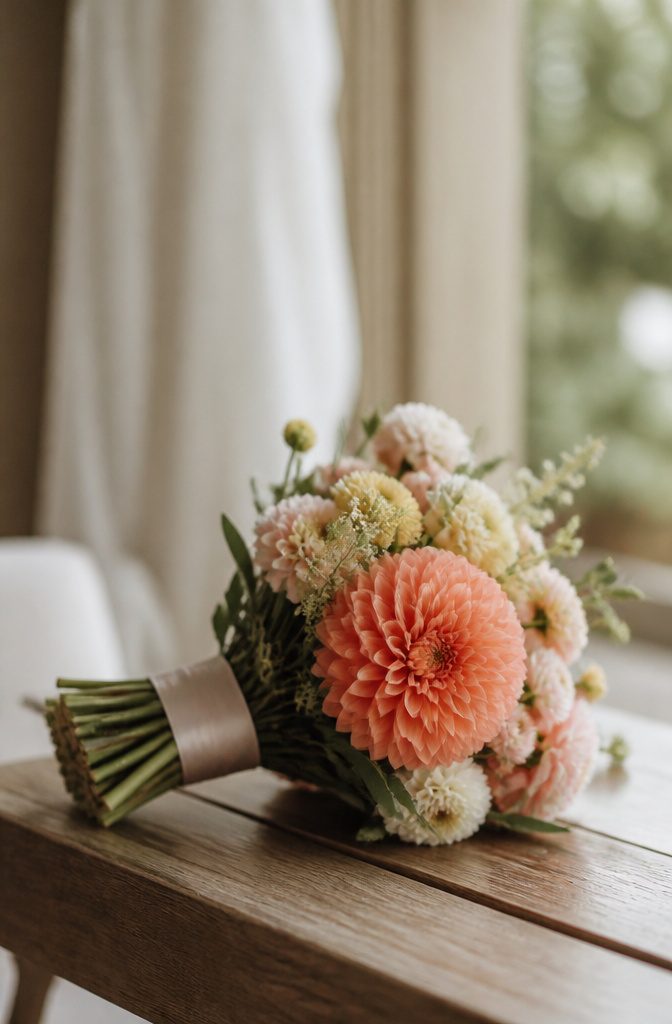
The bridal bouquet is the most visible floral arrangement wedding guests will see, carried through photographs and held during the ceremony itself.
Most brides spend $100 to $250 on their own bouquet, choosing blooms that either echo the wedding palette or provide a deliberate contrast against the dress. Dahlias work especially well for volume and texture without adding much weight to the grip.
Bridesmaid bouquets run smaller and simpler, typically $55 to $100 each, and the choice splits two ways: match them directly to the bridal bouquet for a cohesive look, or coordinate them with the bridesmaids’ dress colors instead.
A party of four bridesmaids puts the total around $220 to $400 before the bride’s flowers are added.
The toss bouquet, if you want one separate from the bridal bouquet, costs $30 to $55 and is built lighter and smaller so it survives the throw.
5. Boutonnieres and Wearable Flowers
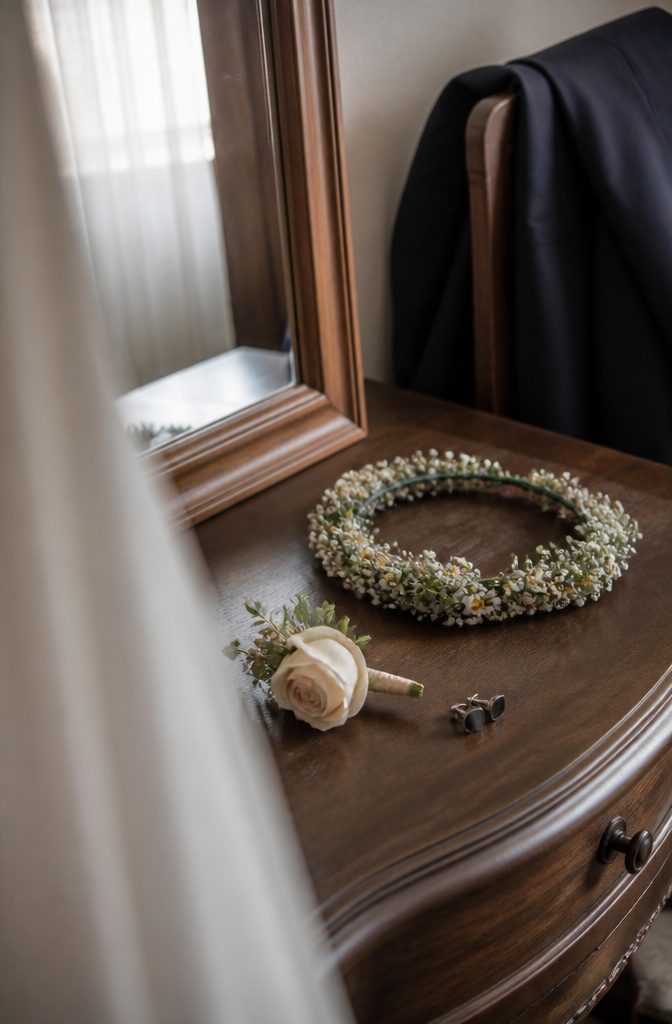
Boutonnieres run $10–$20 apiece and give the groom and groomsmen a floral tie to the ceremony without competing with the bouquets.
A single bloom—often a rose, ranunculus, or spray of greenery—gets wrapped and pinned to the lapel. I keep them simple, matching the palette rather than copying it exactly, so the wedding party looks coordinated without looking identical.
Flower crowns offer another wearable option, priced at $75–$250 depending on size and bloom count. They work for bridesmaids who want florals without carrying anything, and they are a popular choice for flower girls.
The circular base gets wrapped in smaller blooms like baby’s breath, daisies, or mini roses, creating a cohesive look that ties back to the ceremony and reception arrangements.
The cost reflects the handwork—each stem is individually wired and bound—but the effect is hard to replicate any other way.
6. Entry and Welcome Flowers
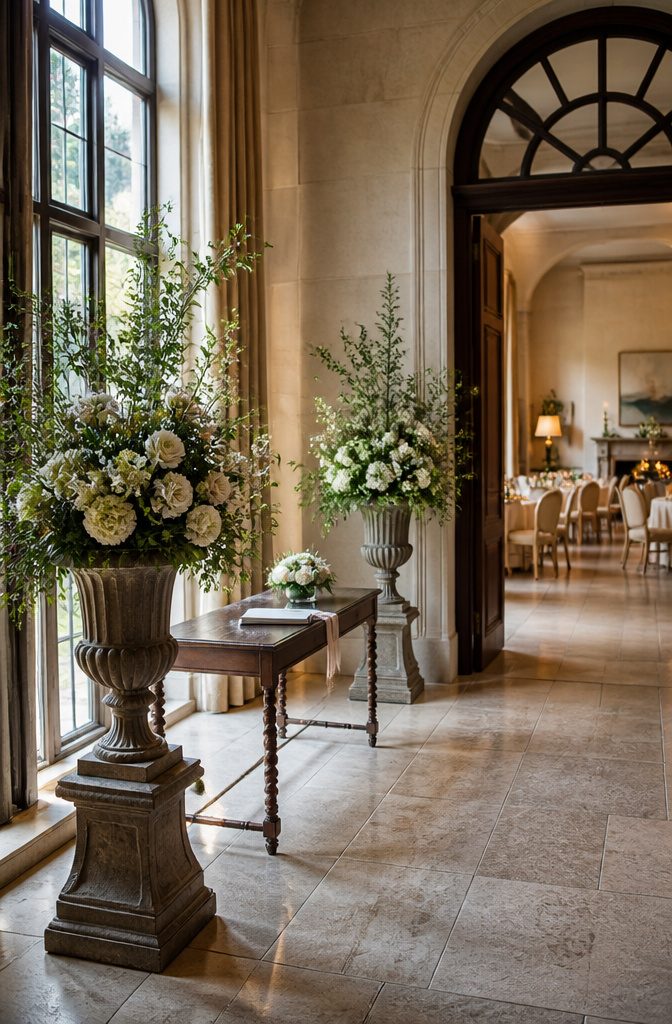
The first flowers your guests see frame everything that follows. I put arrangements on either side of the welcome sign — large urns filled with greenery and seasonal blooms — because they anchor the entrance without blocking movement or sightlines.
The urns themselves matter: oversized ones read formal, low bowls feel relaxed, and mismatched vintage pieces land somewhere personal in between.
A smaller arrangement on the guestbook table keeps the focus tight.
I prefer a compact design rather than something tall that guests have to lean around while signing. Bud vases work if the table is narrow, a low posy if there is room.
The color palette here should tie directly to what guests will see once they walk inside, so the entrance feels like a deliberate opening move rather than an isolated moment.
For venues with a grand entryway, flanking arrangements create symmetry.
For smaller spaces or outdoor settings, a single cascading piece on the welcome sign itself does the job without crowding the area. Either way, both options do the same thing: set the tone before anyone steps through the door.
7. Floral Backdrops and Decorated Walls
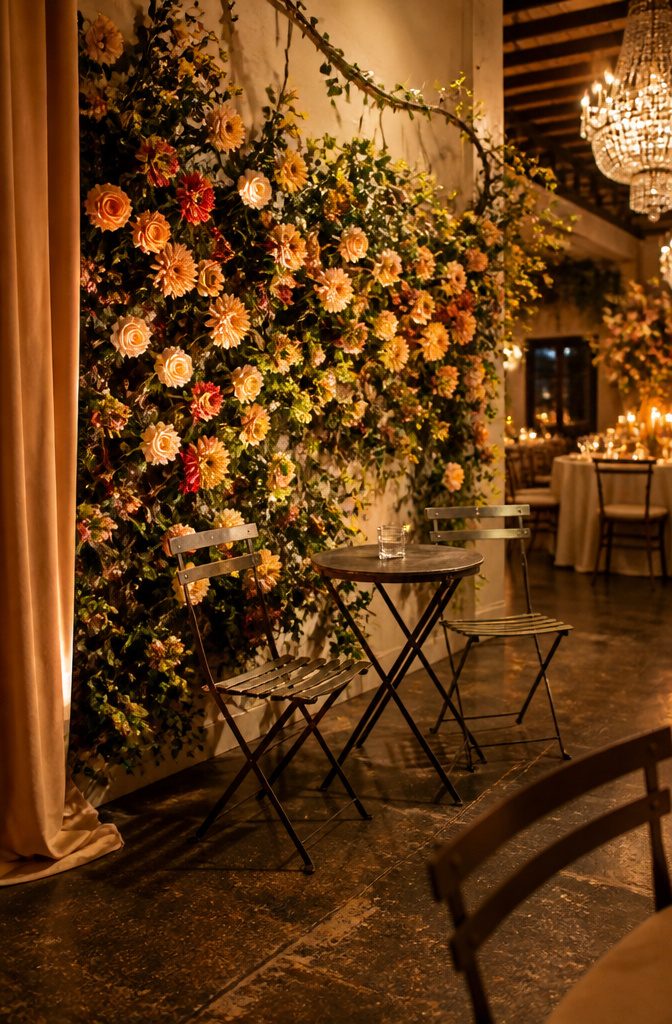
Floral Backdrops and Decorated Walls
A wall covered in wreaths and garlands turns into a backdrop that every guest will photograph against, and the pictures come back looking intentional rather than just another corner of the venue.
You could use nothing but roses, or mix dahlias and greenery, or go for a single type of flower repeated in different sizes.
The backdrop becomes a visual anchor for the ceremony or the reception, and it gives you one place where you know the light and the composition are already working.
The grand staircase gets similar treatment if your venue has one. Cascading florals and lush greenery follow the line of the railing and turn architecture into a feature worth shooting.
You can add decorations that complement the flowers, small ribbons or trailing vines, anything that makes the frame more memorable. The room is going to smell incredible, and that matters more than most couples budget for.
8. Garlands and Greenery
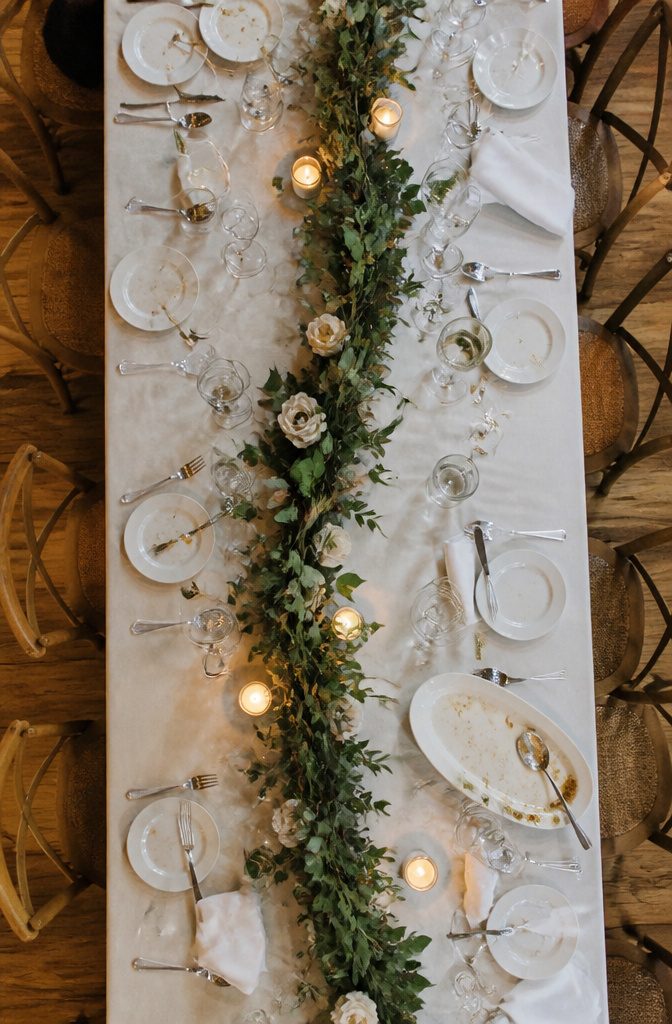
Greenery stretched along a banquet table or looped down an aisle can fill a lot of visual space for less than you would spend on the same length in flowers.
Eucalyptus, smilax, and Italian ruscus run $3 to $8 a foot when bought fresh, and a sixteen-foot table dressed with a runner of mixed greenery might cost $60 in material where an equivalent floral garland could hit $200.
I have seen greenery used overhead as well, draped across pergola beams or strung between pillars, often with a few blooms tucked in at intervals or votives set along the base to break up the green.
The effect reads as lush without requiring dense flowers everywhere, and it solves the problem of empty space in a large venue.
Greenery also holds up longer than most cut flowers, so it can be installed the day before without wilting.
9. Hanging Flowers and Floral Chandeliers
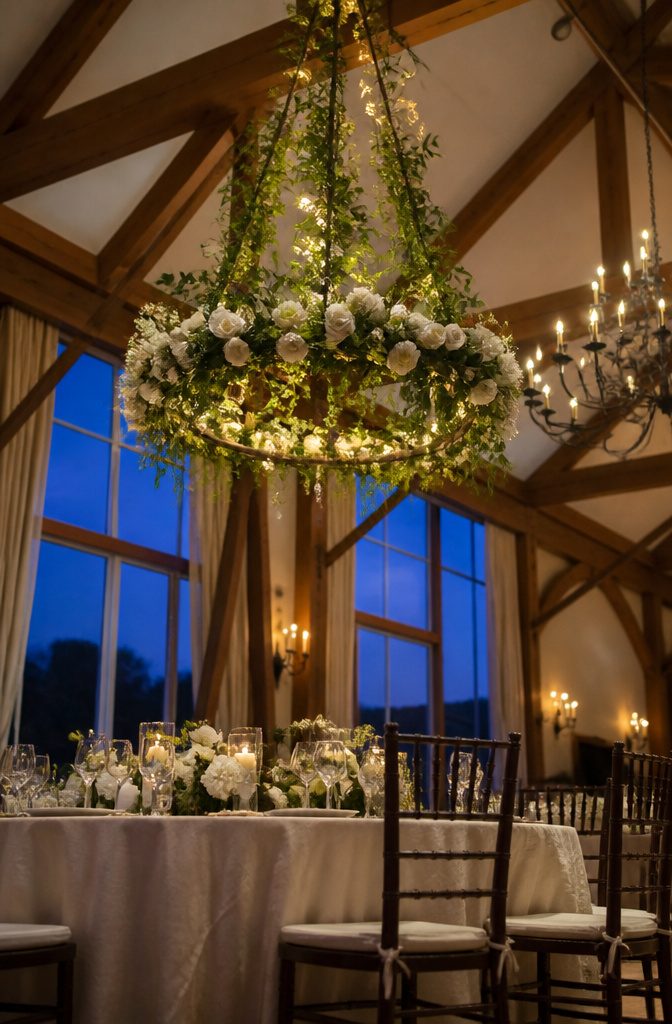
Hanging flowers create a focal point overhead, but venue restrictions often rule them out — ceiling height, fire codes, or rigging limits mean you cannot always suspend anything at all.
When hanging is off the table, the impact moves elsewhere. A staircase arrangement gives you the same vertical drama: cascading florals and greenery wrapped around the banister or massed at the landing, visible as guests arrive and ready for photos.
Entry pieces work the same way, drawing the eye up without requiring ceiling access.
Where the venue does allow it, floral chandeliers made from blooms, greenery, and sometimes crystals or candles hang from the ceiling to add romance and height.
High ceilings suit them best. The arrangement becomes part of the architecture rather than sitting on a table, and the effect reads as more opulent than the same flowers would at eye level.
Tall centerpieces are the third shift when you cannot hang anything. They pull focus upward without needing permission from the venue, and they sit where you already planned to put flowers.
10. Floor and Staircase Arrangements
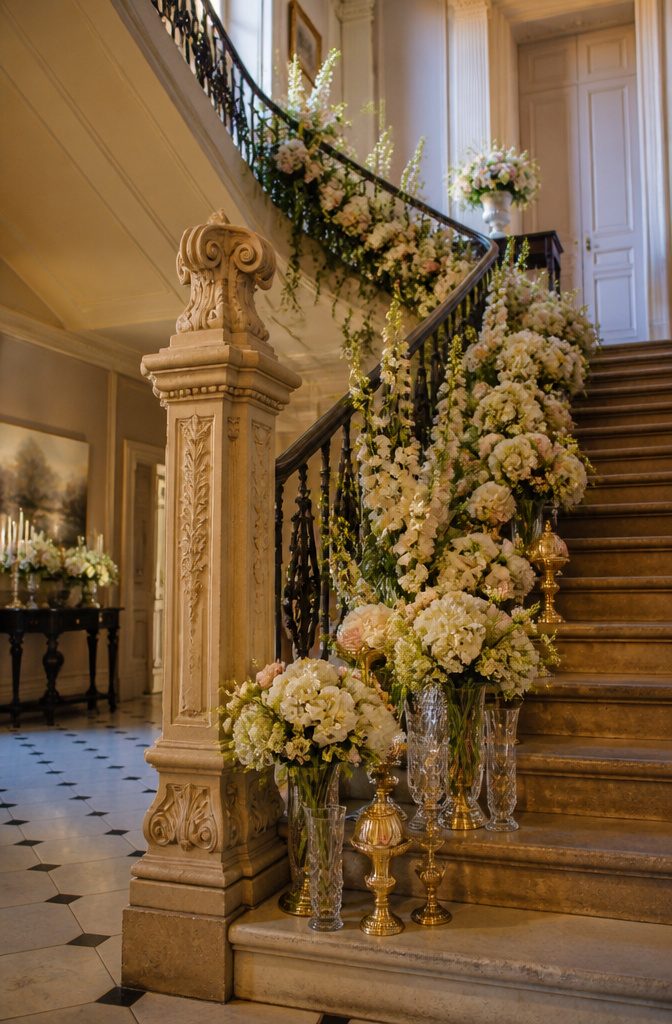
Floor and staircase arrangements turn architectural features into floral statements, and they work best when the flowers amplify what the room already gives you.
A floor arrangement in front of the head table layers tall stems with low clusters and cascading greenery, often in crystal or gold-accented vases, so the setup reads as luxurious without blocking sight lines to the couple.
The mix of heights keeps the look from sitting flat, and the arrangement draws attention to the newlyweds without competing with them.
Staircases get the same treatment but on a larger scale. Cascading florals and greenery follow the line of the railing, turning the staircase into a backdrop worth photographing and a focal point as guests arrive.
The effect is dramatic if the venue has a grand staircase to work with, and I’ve found that the arrangement enhances the architecture rather than covering it—the flowers follow the shape the stairs already make.
Matching Flowers to Your Wedding Style and Venue
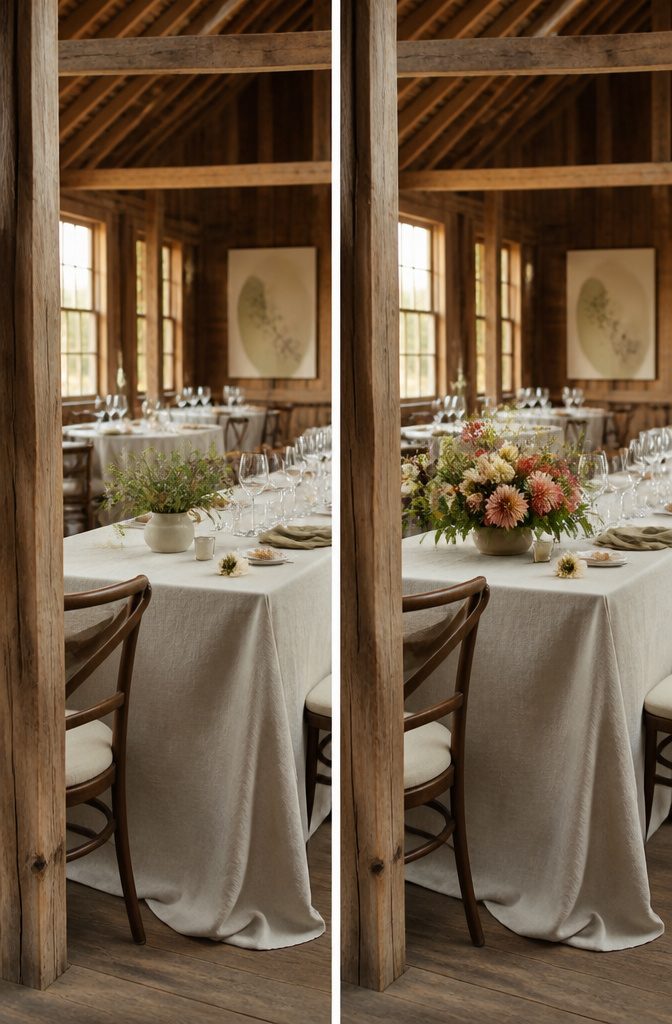
The venue decides half the work before you touch a stem. A barn with exposed beams wants something different than a ballroom with gold trim, and the flowers that photograph well against raw wood look wrong on marble.
Your color palette follows from what is already in the room — the wall paint, the linens, the natural light at your ceremony time — and the flowers fill in rather than fight it.
Style narrows the field fast.
A formal wedding in a hotel runs on symmetry and tight arrangements: roses, calla lilies, orchids in structured centerpieces. A garden ceremony or outdoor reception loosens that up — wildflowers, dahlias, mixed greenery in arrangements that look like they grew there.
The tighter your vision of the overall aesthetic, the faster you rule out half the options and zero in on what actually works.
Budget shapes every other decision. Standard floral packages run $700 to $2,200 and cover the ceremony, the tables, and what everyone wears.
That gets you cohesion without custom design, and it is the most common choice for a reason: you get enough flowers to make the room look intentional without blowing the line item.
If flowers are lower on your list, you pull back to bouquets and boutonnieres and let the venue do more of the visual work.
If they are the priority, you add statement pieces — large urns at the entrance, overhead installations, floor arrangements — and spend accordingly.
How to Get Your Wedding Flowers
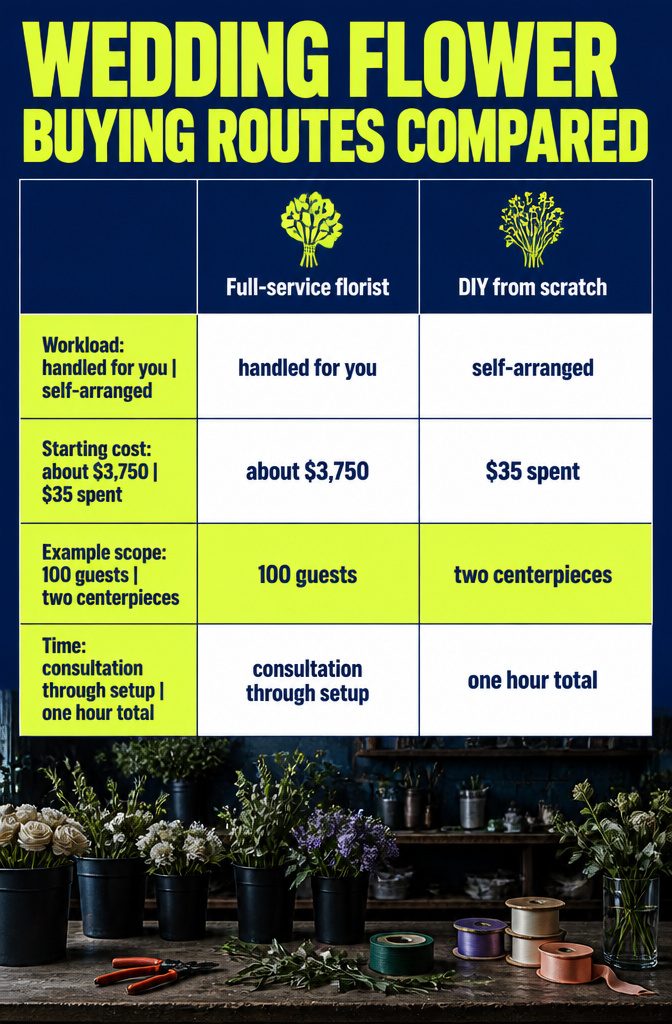
You’ve got five ways to get your flowers, depending on how much hands-on work you want and how much control you need over the look.
- Full-service florists handle everything from consultation to setup. Allen’s Flowers & Plants in San Diego offers preset packages with bridal bouquet, bridesmaids bouquets, boutonnieres, ceremony arrangements, and centerpieces in one transparent price, or à la carte design for custom installations and large ceremony arches. Minimum budgets start around $3,750 for 100 guests, according to one couple on Reddit comparing quotes for a barn venue.
- Wholesale DIY packs from suppliers like Blooms by the Box ship bulk flowers in pre-selected themes or by flower type — Pantone Ultra Violet, Sorbet, calla lilies, garden roses — so you arrange them yourself but skip the guesswork on pairings.
- Sola wood flowers from Pine and Petal Weddings come loose for crafting, dyed or undyed, and never wilt.
- Rental arrangements let you book ceremony sprays and altar pieces by the event. Little Chapel in Las Vegas rents a Victorian altar spray with roses and stock flowers for $150 with two weeks’ notice.
- DIY from scratch means buying flowers from Trader Joe’s or a local supplier and arranging them yourself. One Reddit user spent $35 on flowers and foraged greenery for two large centerpieces that took an hour total.
Frequently Asked Questions
What are some creative ideas for a civil wedding bouquet?
Dahlias offer volume and texture without adding weight, making them a popular choice for brides who want a full look that stays comfortable to hold.
You can also echo the wedding palette directly or create deliberate contrast against the dress. Bridesmaid bouquets can match the bridal bouquet for cohesion or coordinate with the bridesmaids’ dress colors instead.
When to make floral arrangements for a wedding?
Most florists need at least 2 weeks’ notice for fresh ceremony work, since these pieces are assembled close to the event and timed around petal drop.
Greenery holds up longer than most cut flowers, so it can be installed the day before without wilting. Full-service florists handle setup on the day, while DIY arrangements typically get assembled the morning of or the night before.
What are the current floral design trends in weddings?
Cascading florals and greenery wrapped around staircases or railings turn architecture into a feature worth photographing. Floral chandeliers made from blooms, greenery, and sometimes crystals or candles hang from high ceilings to add romance and height.
Aisle meadow borders and ground clusters create the feeling of walking through a field and photograph well in wide ceremony shots.
How much do wedding flowers typically cost?
Standard floral packages run $700 to $2,200 and cover the ceremony, the tables, and what everyone wears.
Table centerpieces cost $75 to $600 per table depending on size and bloom density. Ceremony structures typically cost $1,500 to $4,000, while bridal bouquets run $100 to $250 and bridesmaid bouquets cost $55 to $100 each.
What wedding flowers photograph best in bright daylight and in candlelight?
Garden roses, ranunculus, and dahlias with soft greens keep dimension in daylight photography.
For candlelit reception scenes, airy cloud elements and smoky foliage catch warm highlights and create depth. Petal-rich focal blooms work well across both lighting conditions.
How do you handle venues with rules about hanging installations or candles?
When hanging is restricted, shift the impact to staircase arrangements, entry pieces, or tall centerpieces that pull focus upward without needing ceiling access.
If open flame is limited, use venue-approved glass holders. Staircase arrangements give you the same vertical drama as hanging installations without requiring permission from the venue.
What are sola flowers?
Sola flowers are made from soft, delicate sola wood along with paper, faux or silk materials, and dried or preserved natural elements.
They come loose for crafting, dyed or undyed, and never wilt. Each flower is unique and will contain natural characteristics such as wood grains, wood chips similar to bark, cracks, and varied colors.
How long will it take for sola flower orders to ship?
Made-to-order processing takes about 3 to 4 weeks before your order ships. Rush options are available if you need your floral sooner.