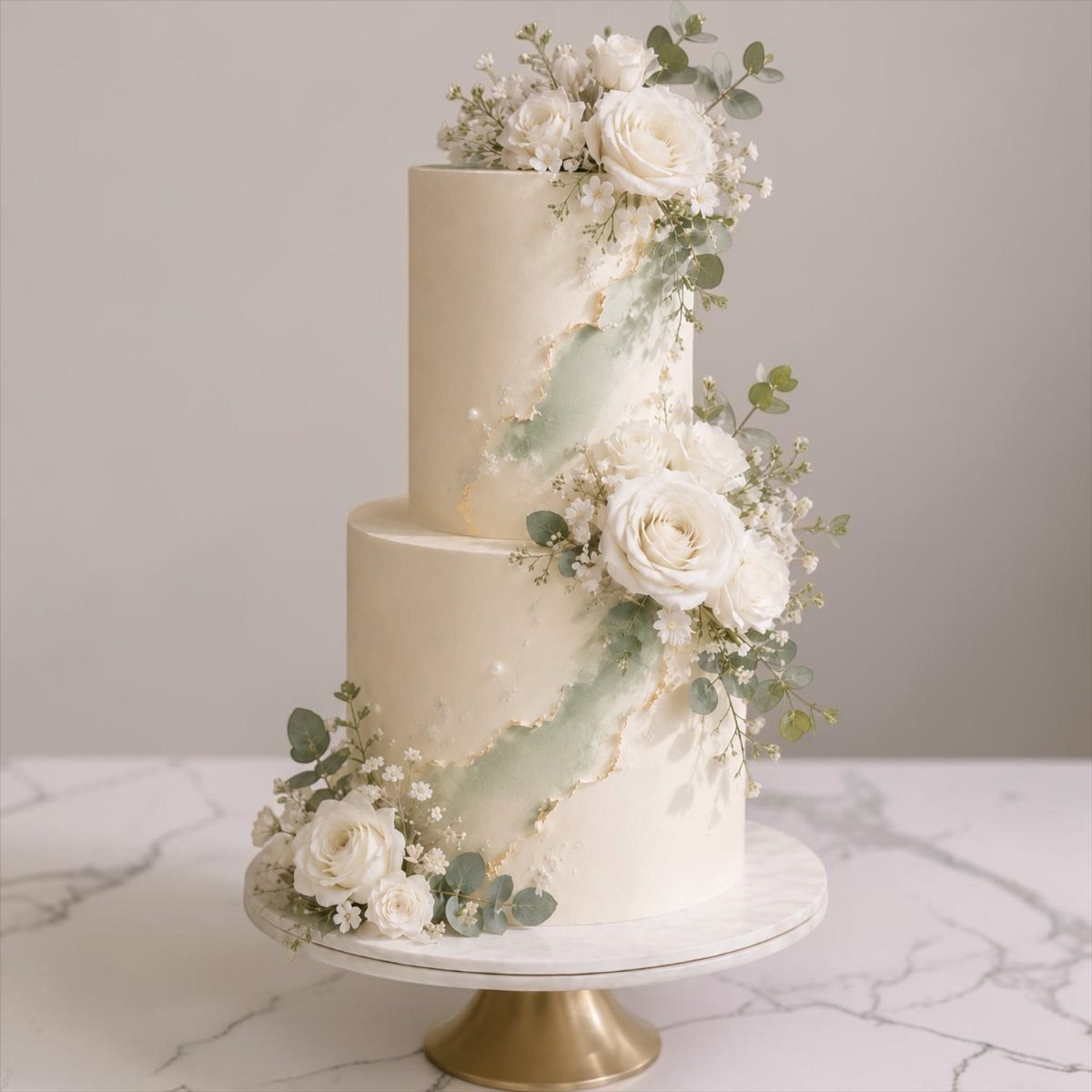
Flowers sit directly on the frosting, cascade down the side, gather at the base or get painted on the fondant, and the placement decides whether your baker needs fresh stems the morning of the wedding or can assemble the cake days ahead.
If your reception runs longer than a few hours or the venue stays warm, sugar flowers and painted designs outlast fresh blooms without wilting.
1. Cascading Flowers
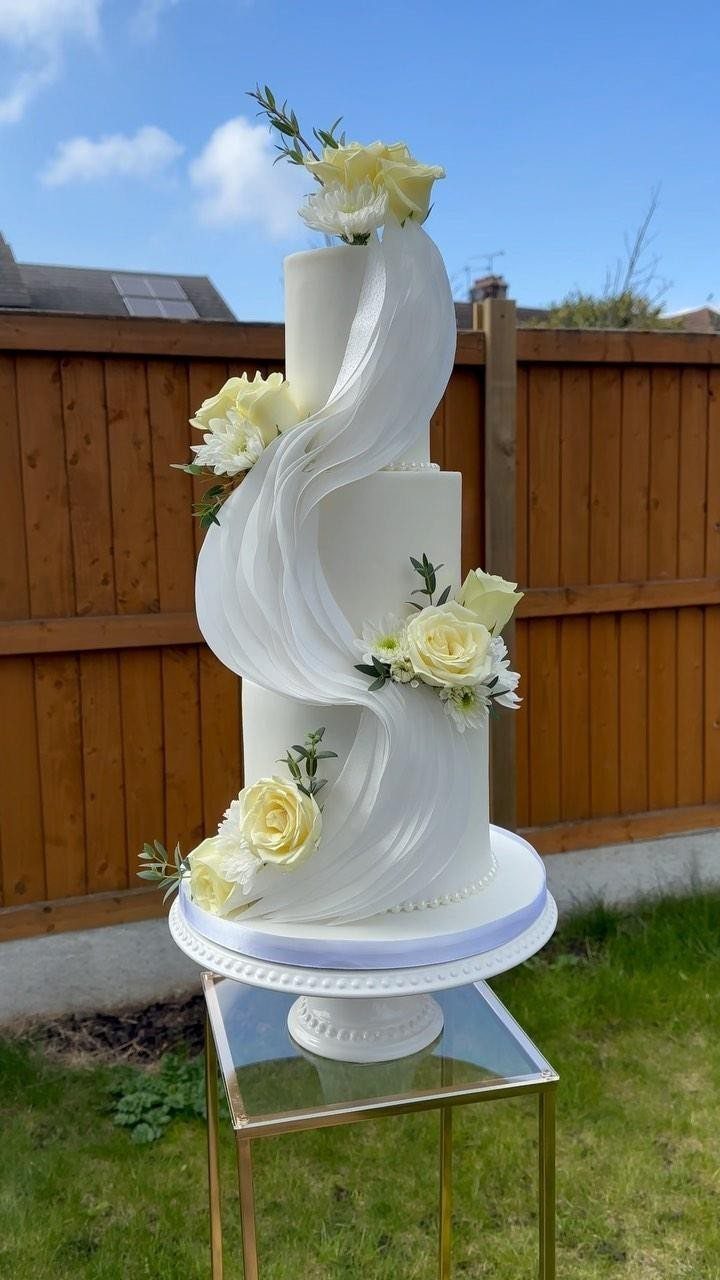
Flowers descend along the side of the cake in a curve, drawing the eye from top to bottom. The effect works particularly well on taller cakes, where the path has room to travel.
Roses hold up best for this look.
Their weight stays manageable when you cluster them close together, and they keep their shape through the reception. Arrange them in a gentle spiral or let them follow one side in a loose diagonal.
If your baker is placing fresh flowers, ask them to add each bloom the morning of the wedding. Fondant swirls can match the curve and soften the line between tiers.
Decorating wedding cakes with fresh flowers is not as easy as it may seem. The couple, along with their baker and florist, needs to consider issues of safety and presentation when coordinating this type of floral motif.
2. Floral Toppers
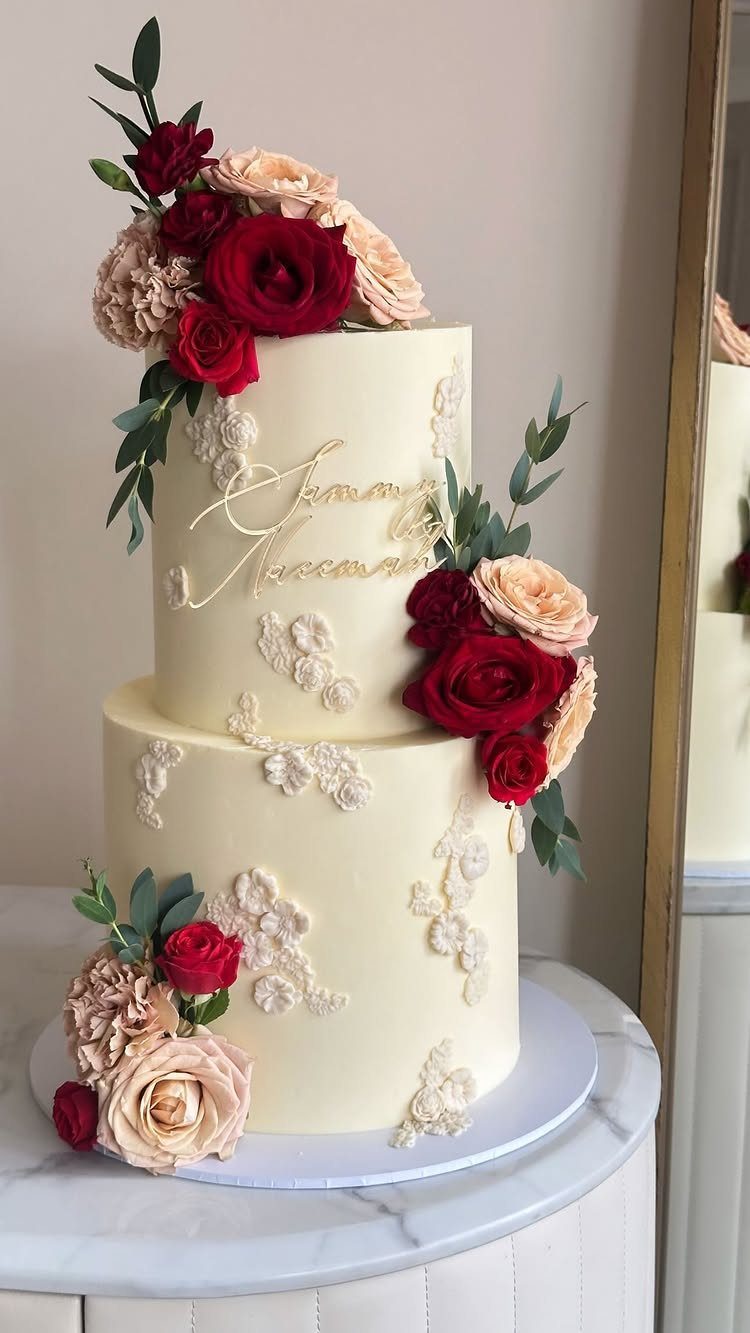
A cluster of blooms at the top replaces the traditional cake topper. The arrangement sits directly on the uppermost tier, giving you a way to bring color into a simple white or cream cake without covering the whole surface.
Garden roses, peonies and spray roses fill out the shape without tilting. Keep the cluster low and wide rather than tall, so it stays secure and fits under any covering during transport.
Combine the flowers with a bit of greenery to anchor the arrangement. Text on the side of a lower tier stays visible instead of getting hidden by flowers.
3. Scattered Flowers
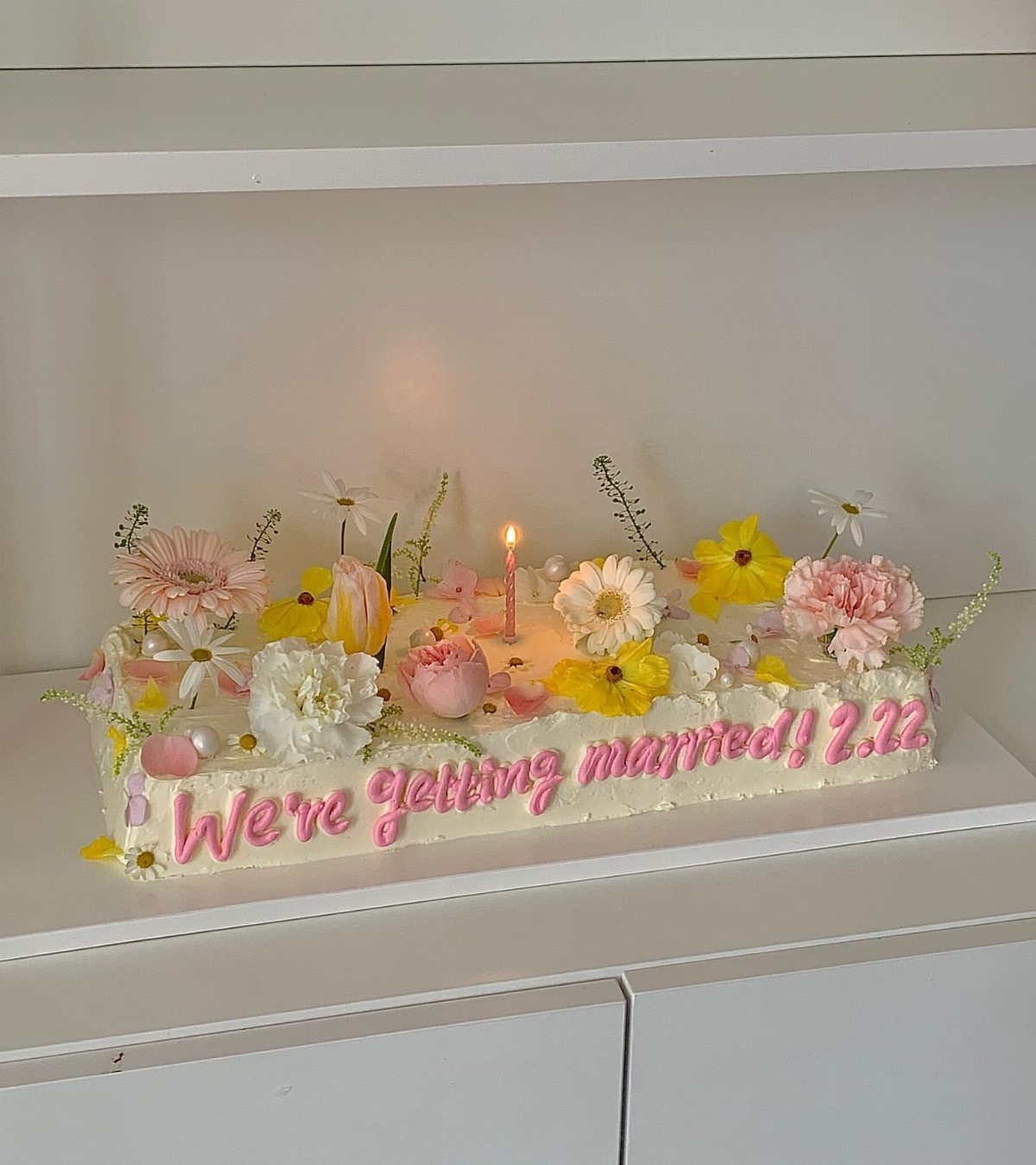
Blooms sit wherever the design needs them, scattered across the top and down the sides with no obvious pattern.
The look works on both round and rectangular cakes, and it lets you use whatever flowers you have left over from centerpieces or bouquets.
Place larger blooms first, then fill gaps with smaller heads and single petals. Fresh flowers go on the morning of the wedding so they stay crisp through the reception.
Match the scattered flowers to your color palette.
A mix of shades keeps the design from looking too busy. If you are adding a candle or message in frosting, leave space for it when you start arranging.
4. Greenery with Flowers
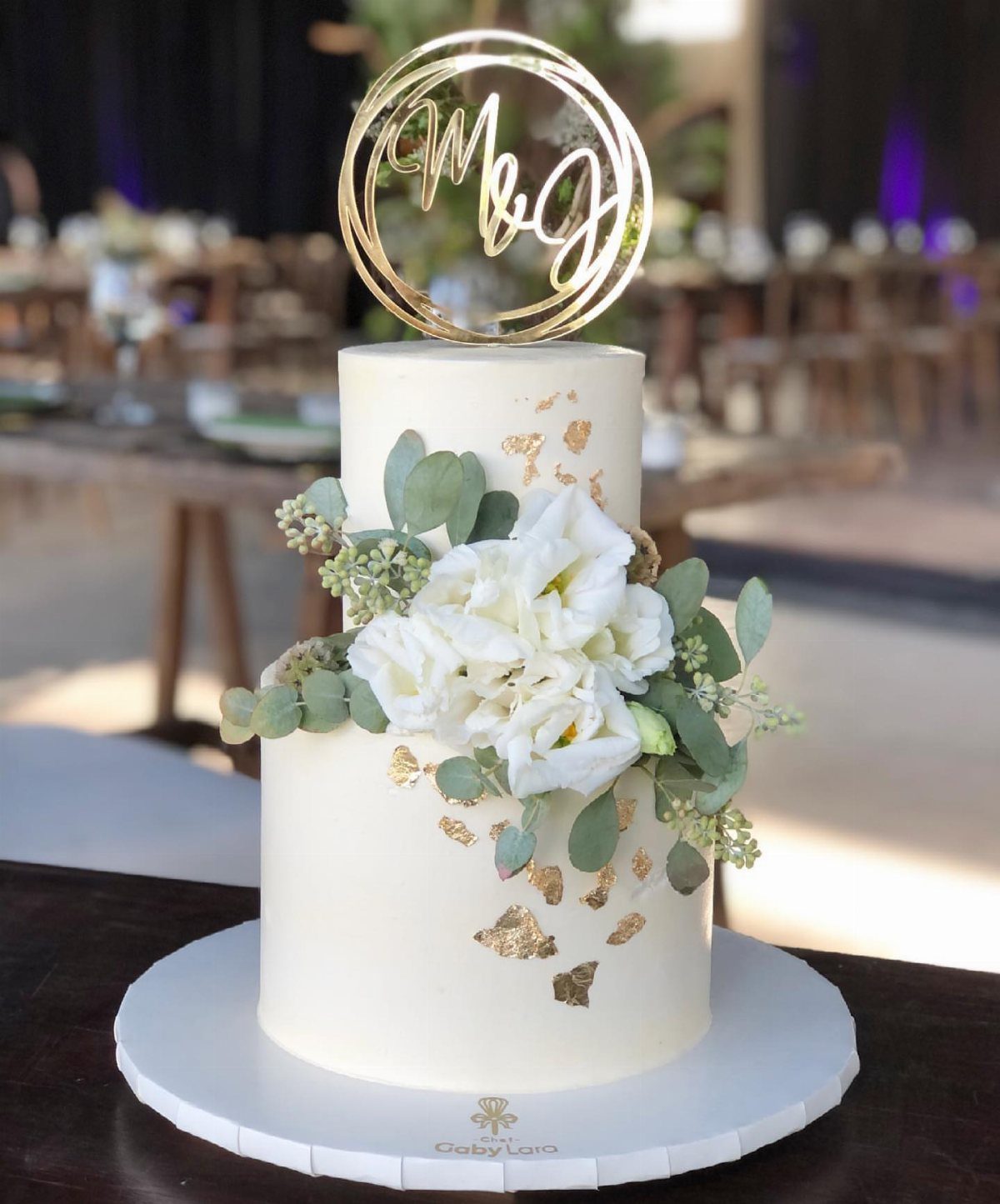
Eucalyptus, ivy or olive branches give the floral arrangement a looser, garden-gathered feel. The greenery softens the edge between tiers and fills space without adding more blooms.
Pair it with white or blush flowers to keep the palette quiet, or use it as a backdrop for deeper shades like burgundy or mauve.
Greenery also stretches your flower budget, since you need fewer stems to make the design feel full.
Ask your florist for stem greenery rather than filler, so the leaves stay defined against the frosting.
5. White Fondant Flowers
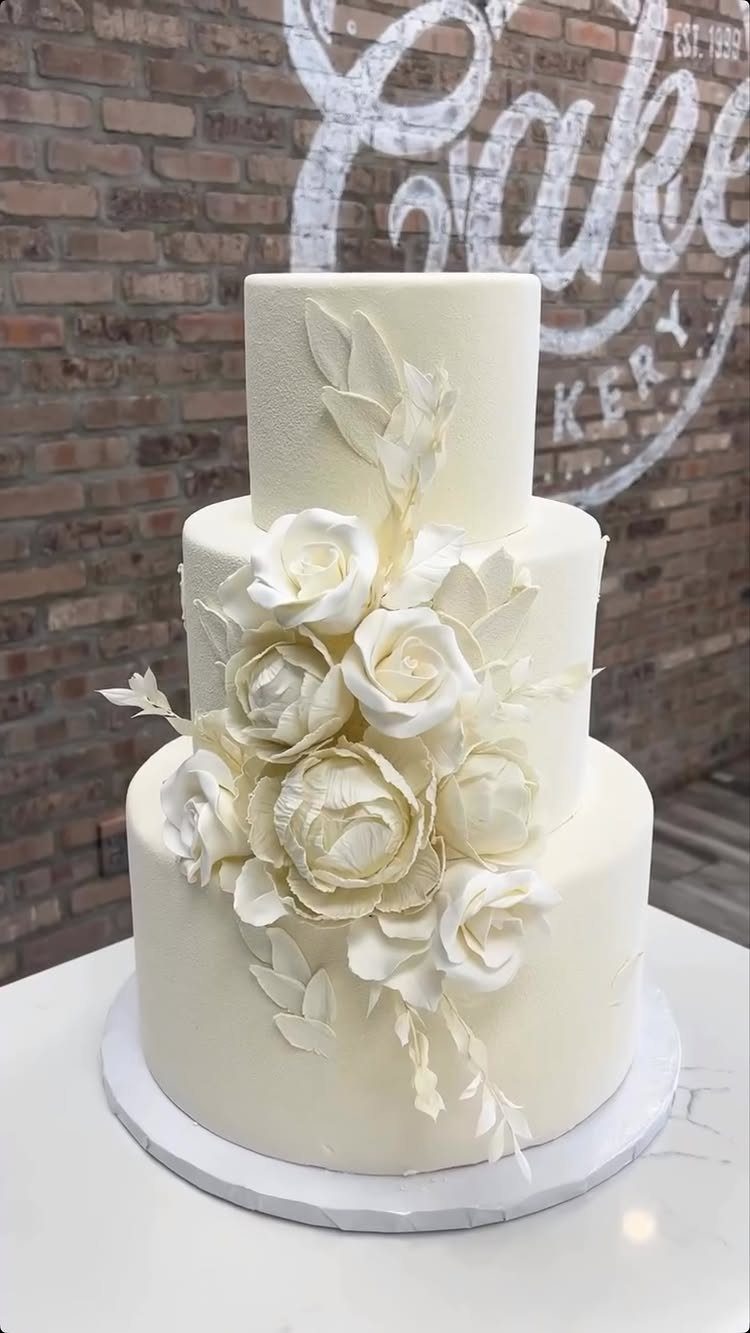
A full cap of sculpted white roses, peonies and leaves covers the top tier, each petal shaped by hand from sugar paste.
The maker describes this cake as having a soft velvet finish on the fondant, with handcrafted flowers arranged to look freshly picked.
Sugar flowers stay in place through heat and travel, and they can be saved after the wedding. The all-white palette keeps the focus on the texture and shape of each bloom rather than on color.
Ask your baker to mix in a few smaller flowers or buds between the larger roses for variety. The velvet finish on the fondant gives the surface a matte texture that contrasts with the glossy sugar petals.
6. Succulents and Garden Roses
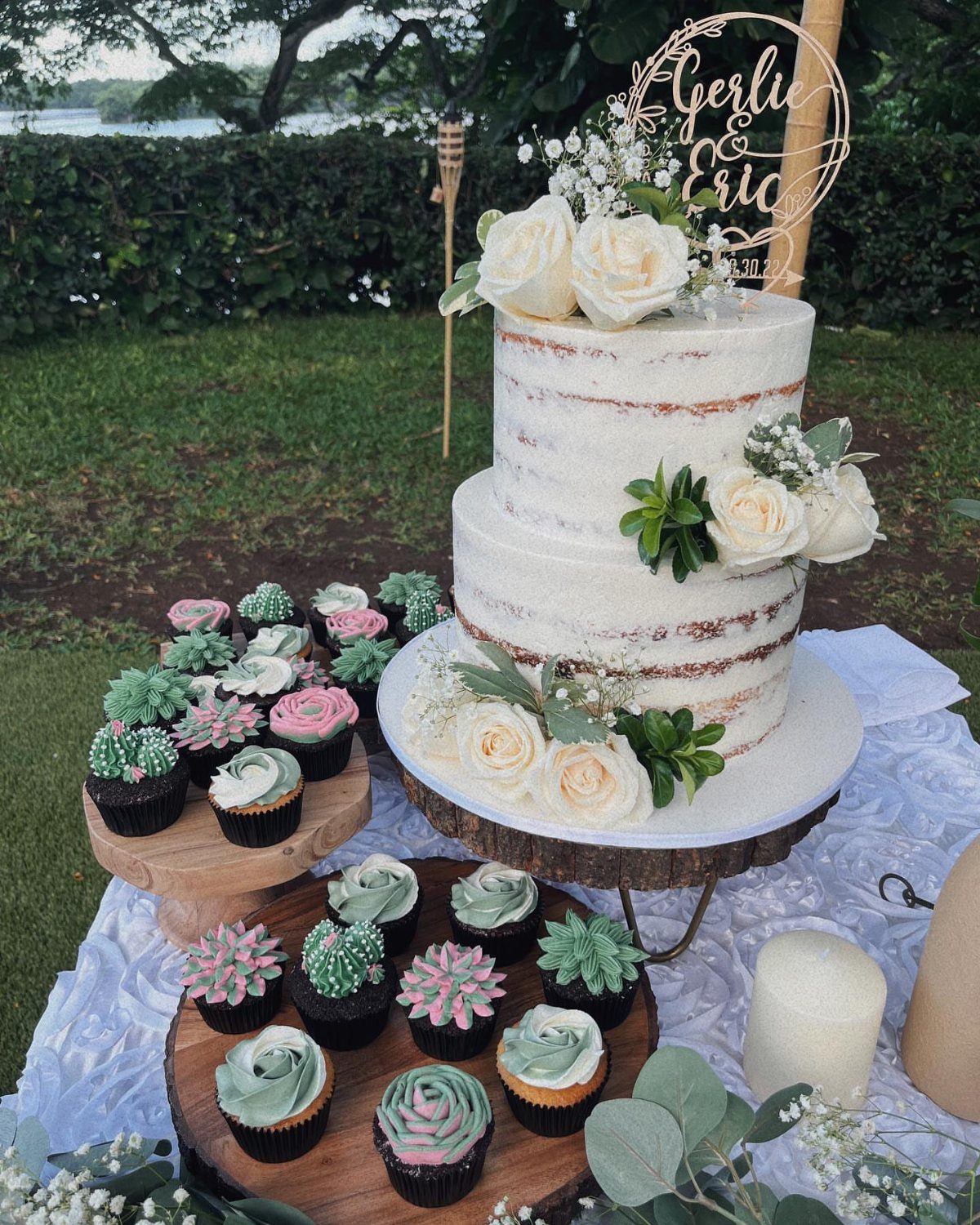
A loose swag of white garden roses and green succulents curves along one side of a semi-naked cake. The succulents add structure and a modern edge that softens the romantic look of the roses.
Succulents hold up through warm weather better than most flowers, and they stay intact for replanting after the wedding.
Arrange them with the roses in a cluster rather than spacing them evenly, so the swag has weight in one spot and trails off at the ends.
The semi-naked frosting shows some of the cake layers through a thin coat of buttercream, which suits outdoor weddings and rustic venues.
7. Citrus and Floral Cake
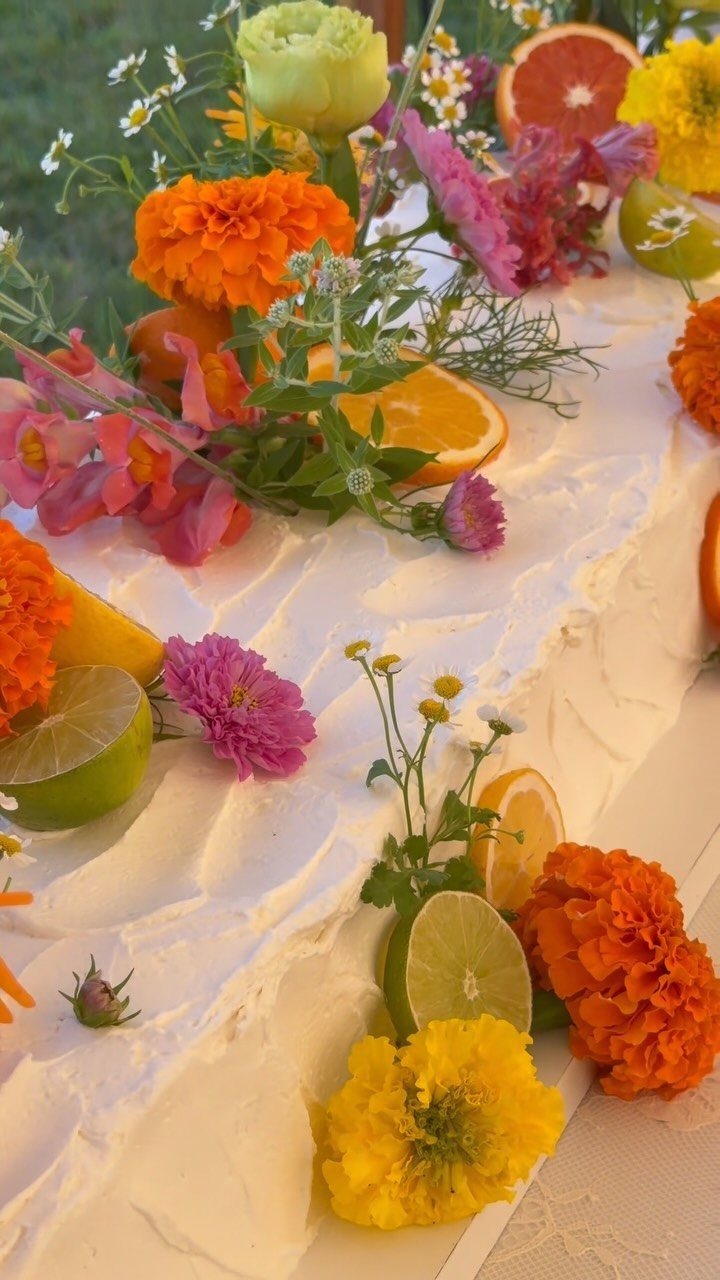
Sliced citrus doubles as decoration here, arranged with marigolds and greenery across the top and sides. The orange and lime wheels add color and a laid-back look that suits garden weddings or brunch receptions.
Place the citrus slices flat against the frosting so they stay in place. Fresh flowers go on the same day as the event, since citrus can weep moisture over time and soften the frosting underneath.
This look works best on a cake served within a few hours. If your reception runs longer, ask your baker about candied citrus instead, which holds its shape and stays dry.
8. Purple Floral Fantasy
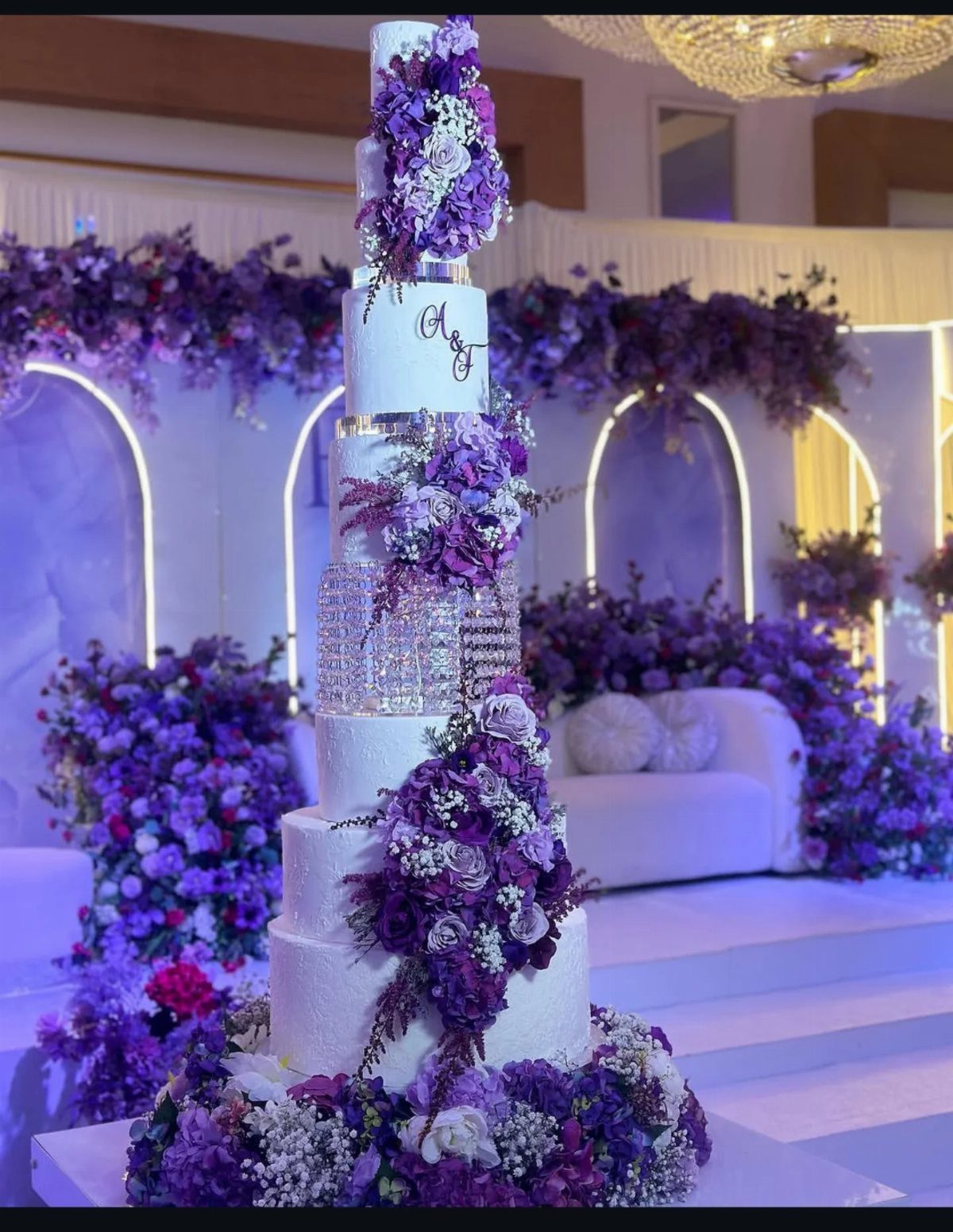
Deep purple and lavender blooms cascade down the side of this tall cake, turning the color into the main event. The contrast against white frosting makes the flowers read from across the room.
Orchids, lisianthus and delphinium hold their shade longer than roses, which can darken as they dry. Arrange them in a sweeping line so the cluster has a clear start and finish.
Purple reads formal, so this suits evening receptions and ballrooms more than daytime garden weddings. Pair it with gold or silver details on the table to keep the palette from feeling too heavy.
9. Pressed and Natural
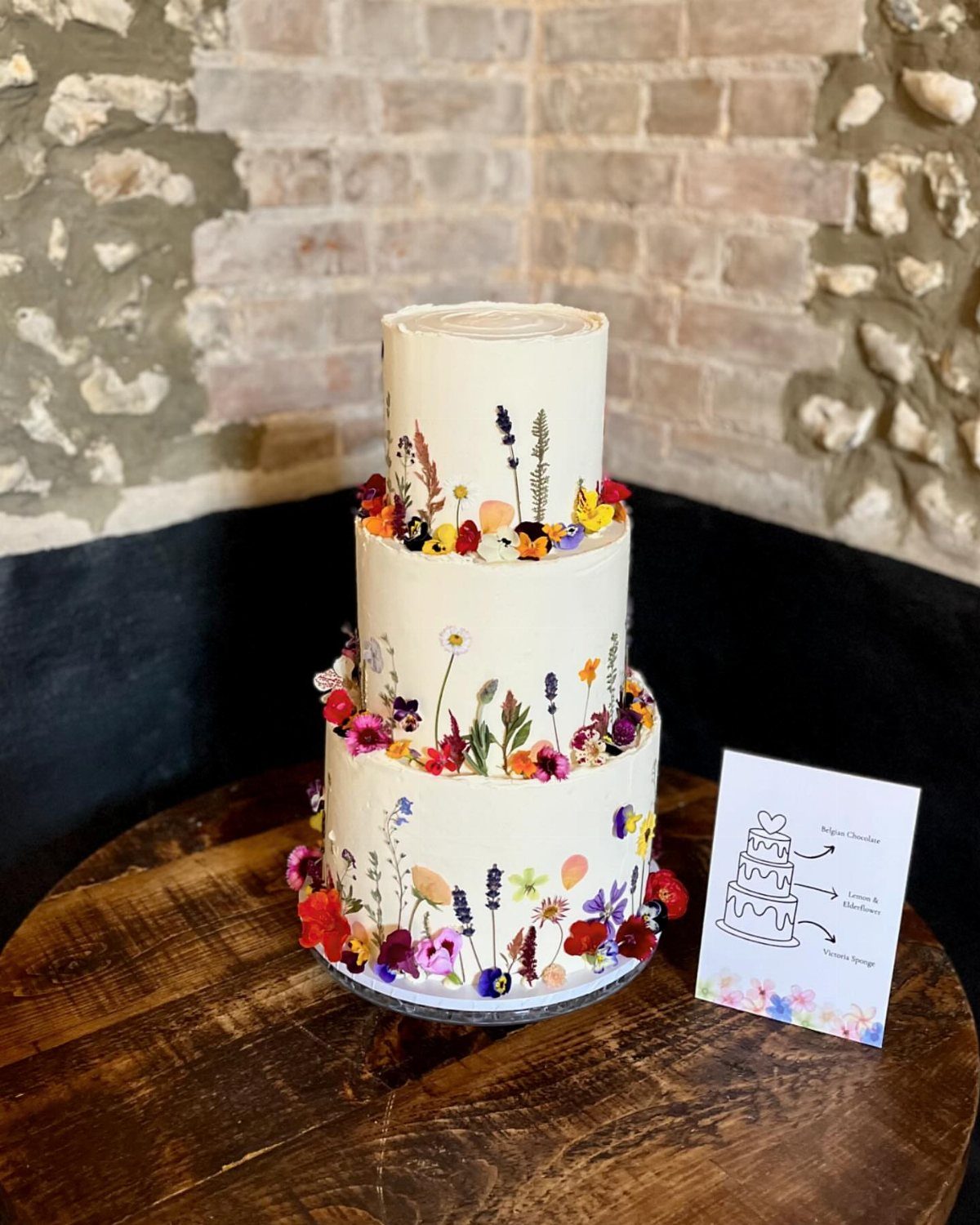
Pressed flowers sit directly on the fondant alongside fresh blooms, giving you two textures in one design. The pressed ones stay flat and show their full shape, while the natural flowers add dimension.
Press wildflowers or small garden blooms ahead of time, then attach them with a thin layer of piping gel.
This look works when you want color without bulk. The pressed flowers take up no space, so you can add as many as you like without the design tipping over.
10. Flowers with Height
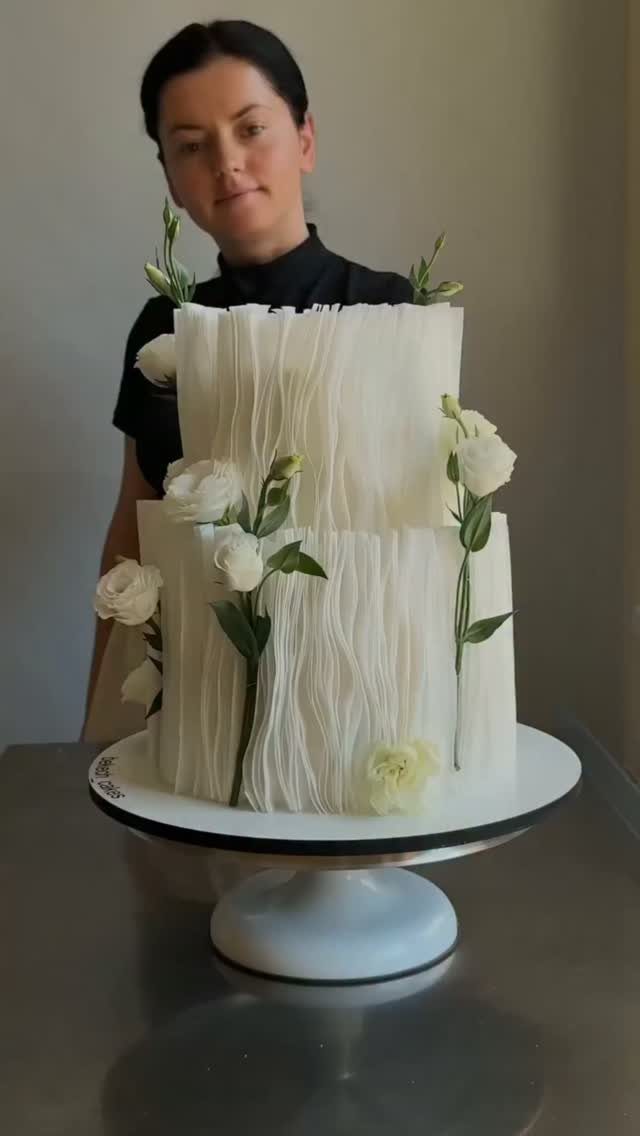
Long-stemmed roses stand upright instead of lying flat, giving the cake height without adding another tier. The stems tuck into the frosting or into a holder, and the blooms sit above the surface.
Roses with sturdy stems hold their position best. Keep the arrangement simple so the flowers stay the focus and the cake underneath stays visible.
This look suits smaller cakes that need a bit more presence on the table. It also works when you want fresh flowers but do not want to cover the frosting.
11. Whole Stems
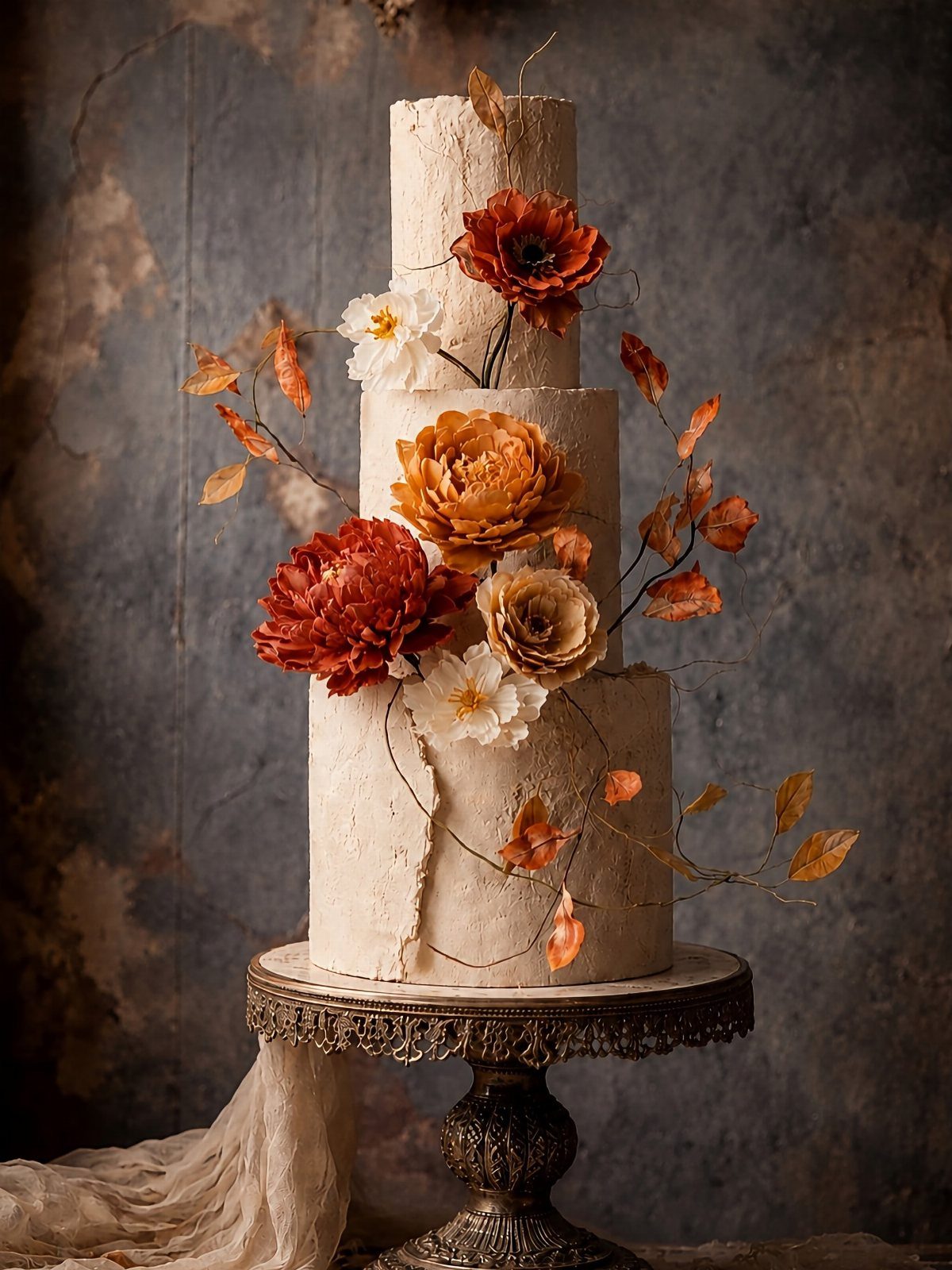
Individual stems with their leaves still attached poke out from the cake at different angles, as though the flowers grew there. The unpolished look suits outdoor weddings and venues with exposed wood or brick.
Ask your florist to leave the stems long, then trim them to different lengths so some blooms sit close to the frosting and others stand higher.
Orange and white daisy-shaped blooms give this cake a wildflower feel. Match the stem color to your florals or let them contrast with the frosting.
12. Asymmetric Blooms
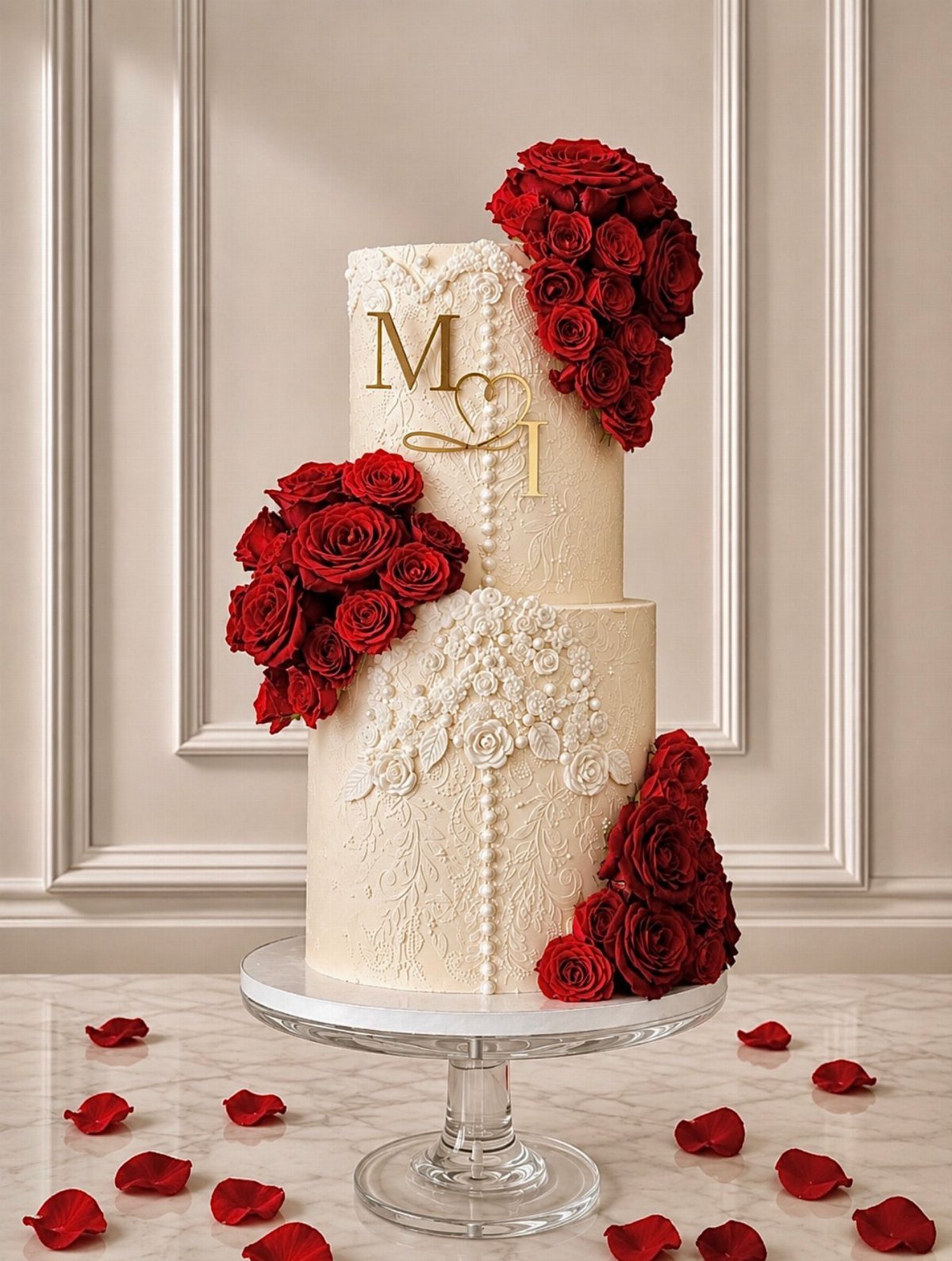
A cluster of roses gathers on one side of the cake, leaving the rest of the frosting open. The asymmetric placement lets lace piping and monogram details stay visible instead of getting hidden by flowers.
Roses anchor the look here, but the idea works with any bloom that holds its shape. Place the cluster where it balances the text or other decoration on the opposite side.
This suits cakes with detailed frosting work, where covering the whole surface would hide what the baker already made. Keep the cluster tight so it reads as one element.
13. Semi-Naked Rose Cake
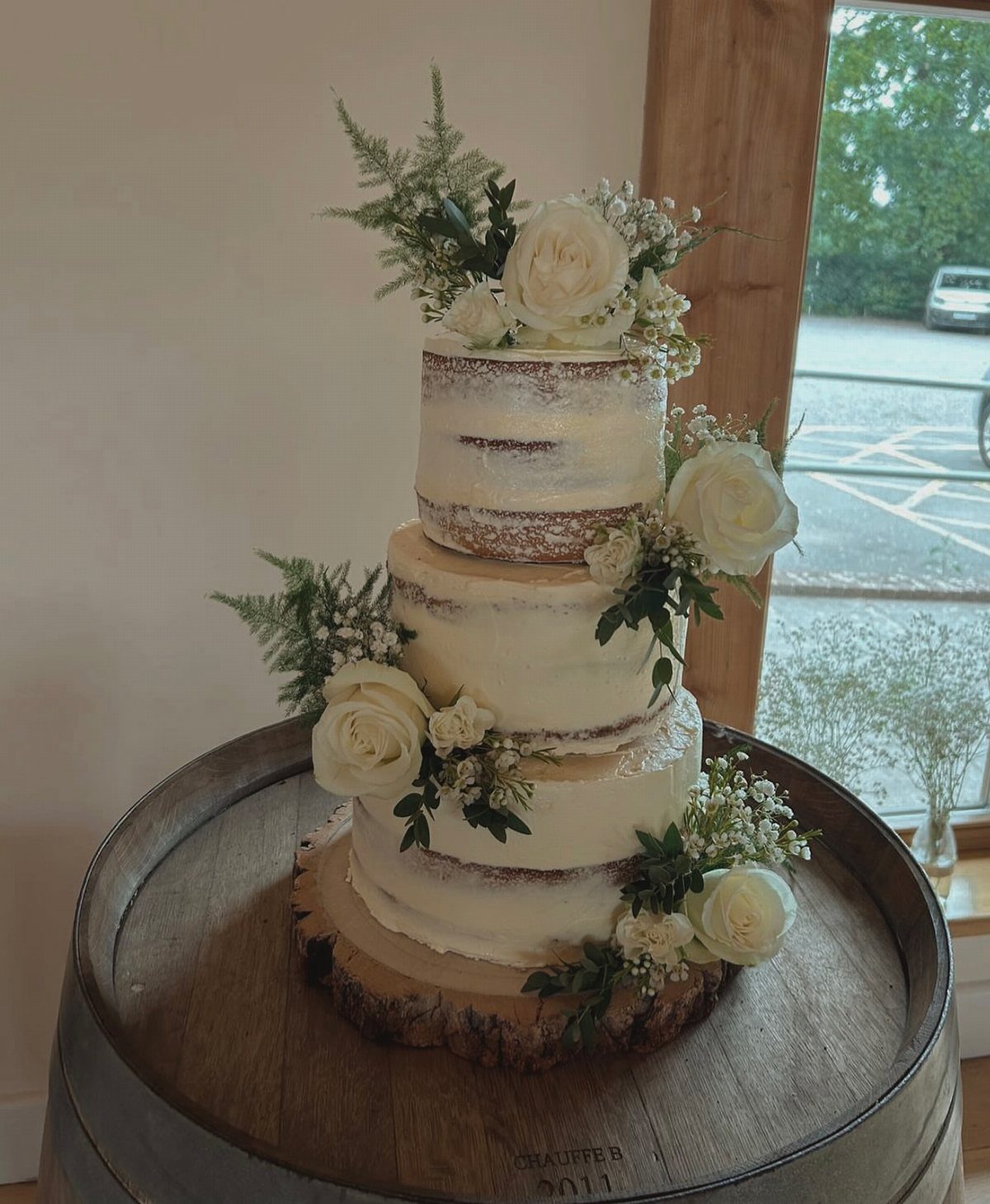
The frosting goes on thin enough to show patches of sponge between the layers, giving you a less formal look that suits barn venues and garden receptions.
White roses keep the palette simple and let the texture of the cake do the work.
Fresh roses go on the morning of the wedding, arranged in a loose cluster rather than evenly spaced.
This look skips the smooth fondant finish, so your baker can charge less for the frosting work.
14. Painted Floral Art
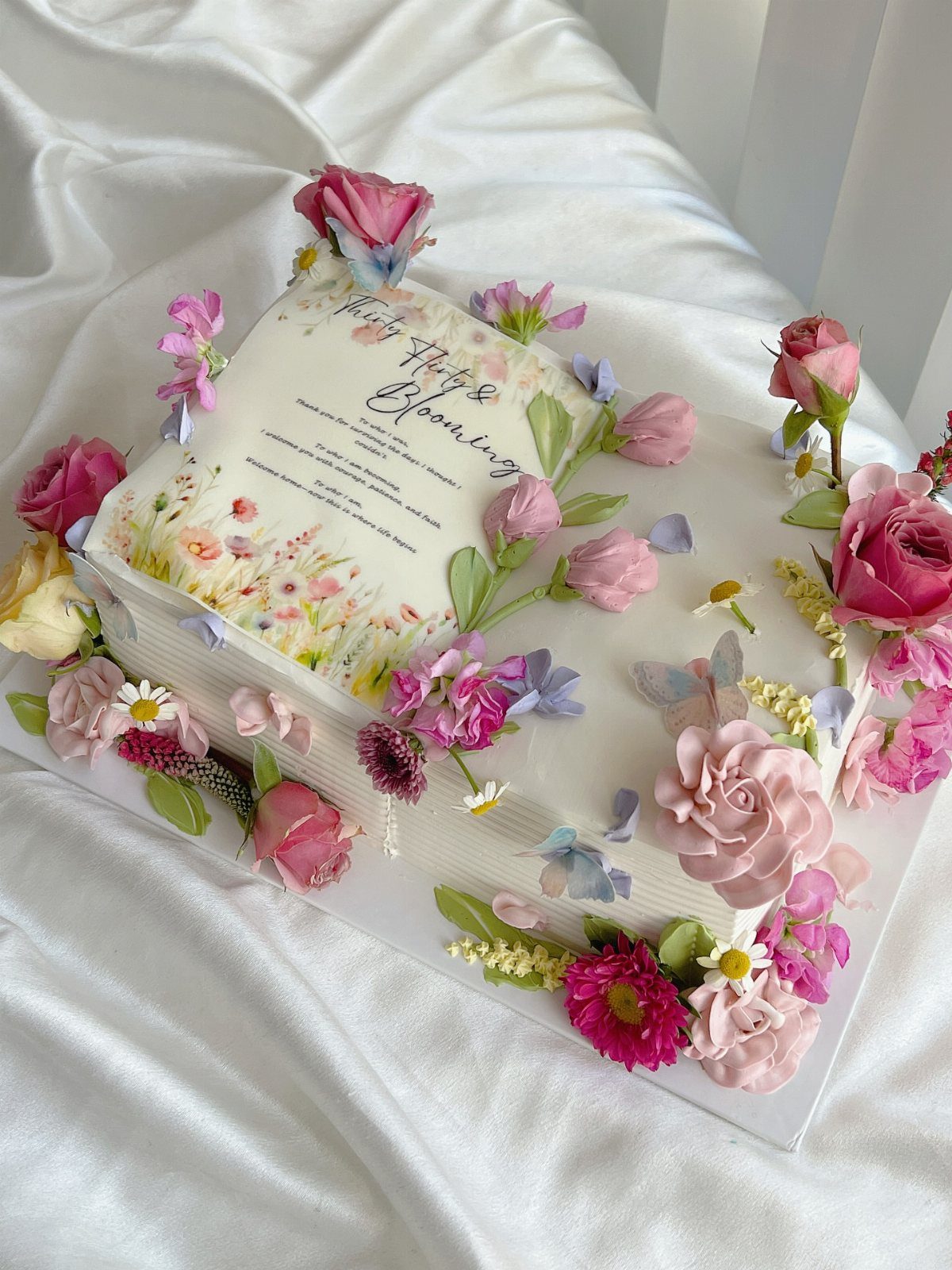
Flowers painted directly onto fondant stay flat and permanent, giving you color without the weight or timing concerns of fresh blooms. The painted florals can match your wedding flowers or stand alone as the only decoration.
Ask your baker to paint the design freehand or use an edible ink printer for detailed patterns. Pairing painted flowers with a few fresh blooms on top or at the base gives you both textures in one cake.
This suits couples who want a floral look but need the cake assembled days ahead, or who are working in a venue where fresh flowers wilt quickly.
15. Bright Blooms
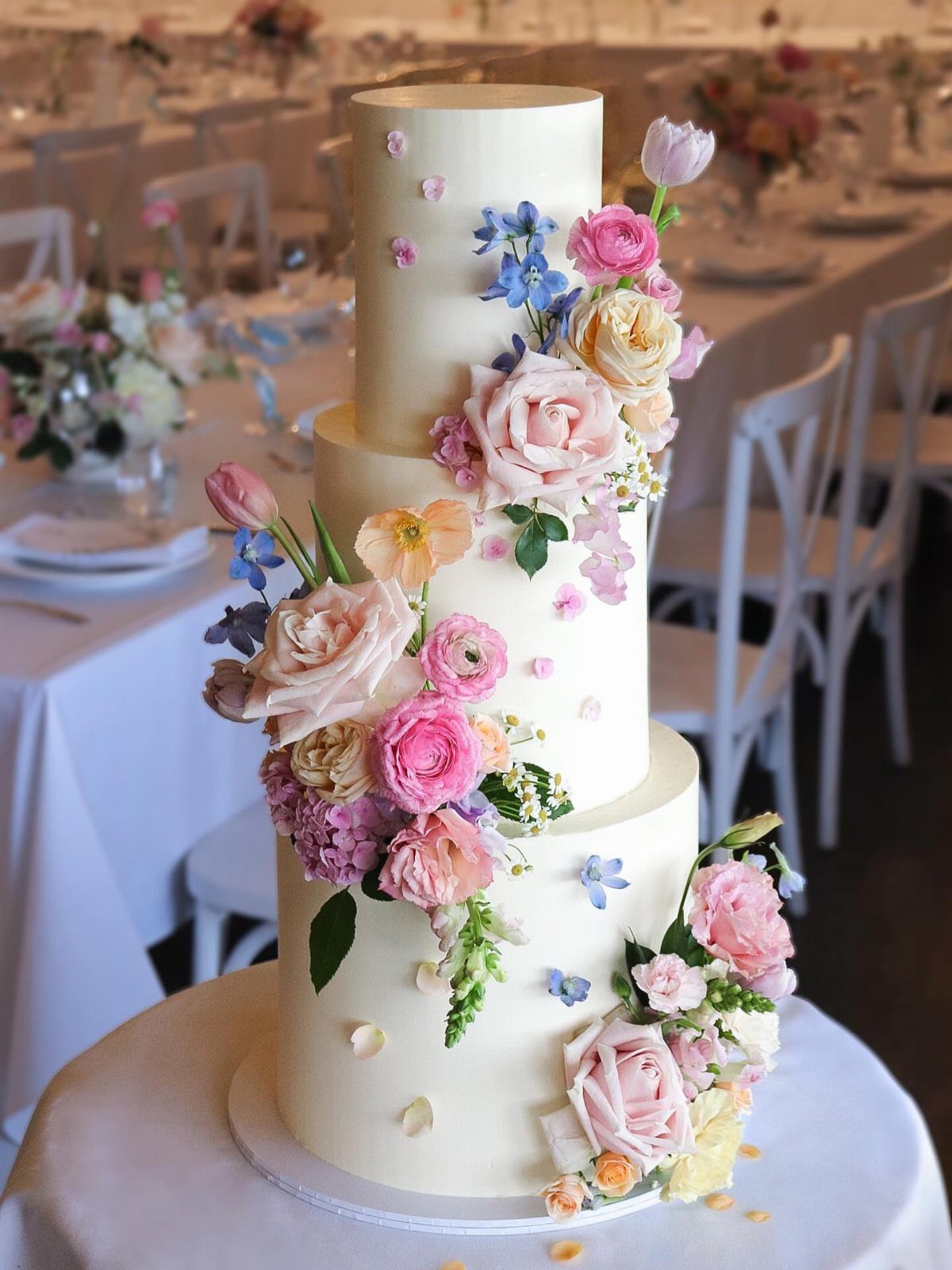
Pink, blue, orange and coral blooms cover the tiers in a mix that reads bold from across the room. The variety of shades keeps the design from feeling flat, and the white frosting background holds the colors together.
Choose flowers in your wedding palette, then add one or two accent shades to fill gaps. Roses, ranunculus and spray roses hold their color longest, while daisies and mums give you budget-friendly options that still photograph well.
This look works best at daytime receptions and outdoor weddings, where bright colors suit the setting. Evening ballrooms can handle it if the rest of the décor stays quieter.
16. Tropical Flower Cake
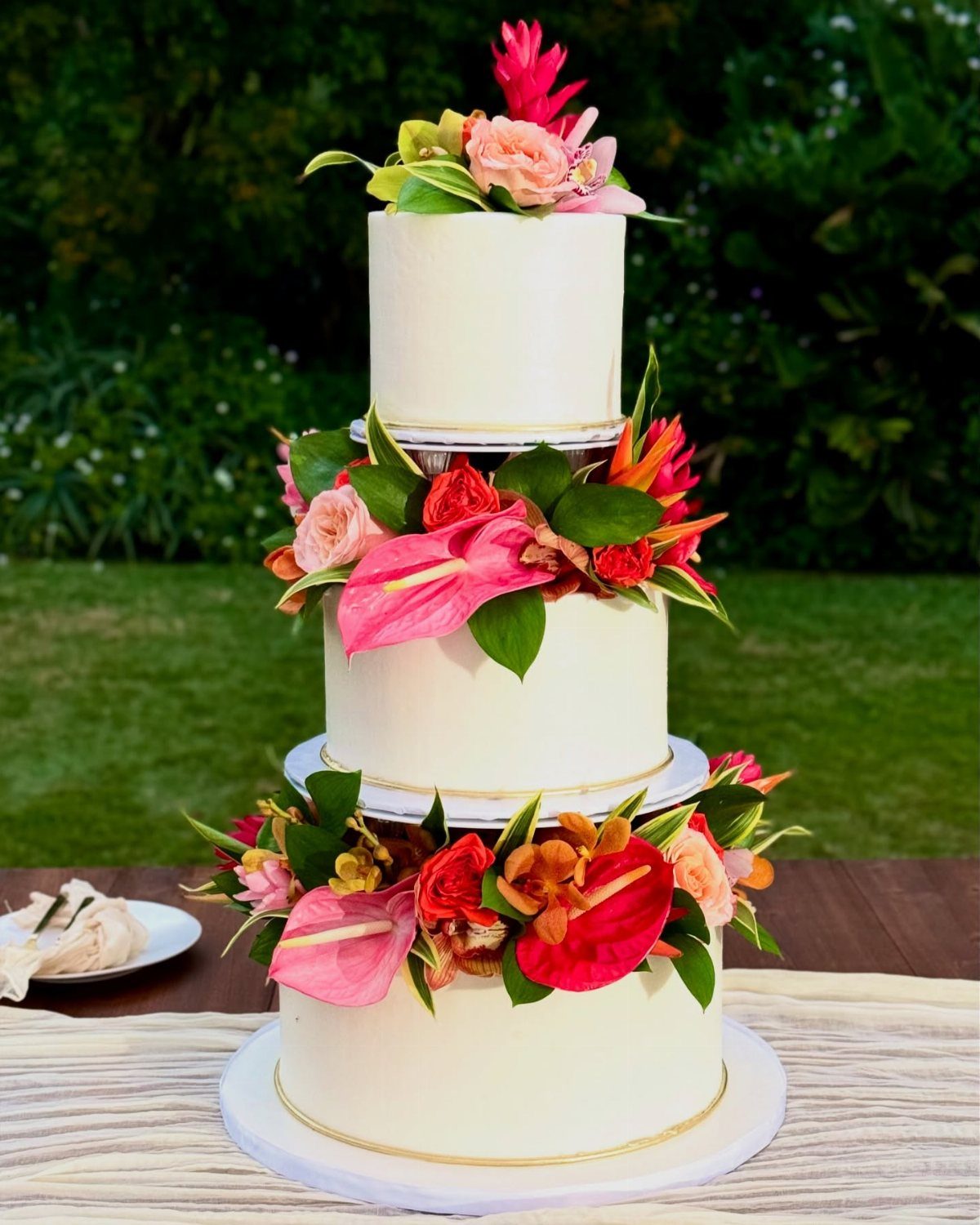
Anthuriums, hibiscus and tropical leaves replace garden roses for a cake that suits beach weddings and destination receptions. The large petals and glossy leaves read as one statement instead of a scattered arrangement.
Tropical flowers hold up in heat better than most temperate blooms, and they need less filler to look full. Place them in a cluster on one side or let them cascade down the tiers.
Pair this with a simple white frosting so the flowers stay the focus. Gold or coral accents on the table tie the tropical palette into the rest of the décor.
17. Earth Tone Blooms
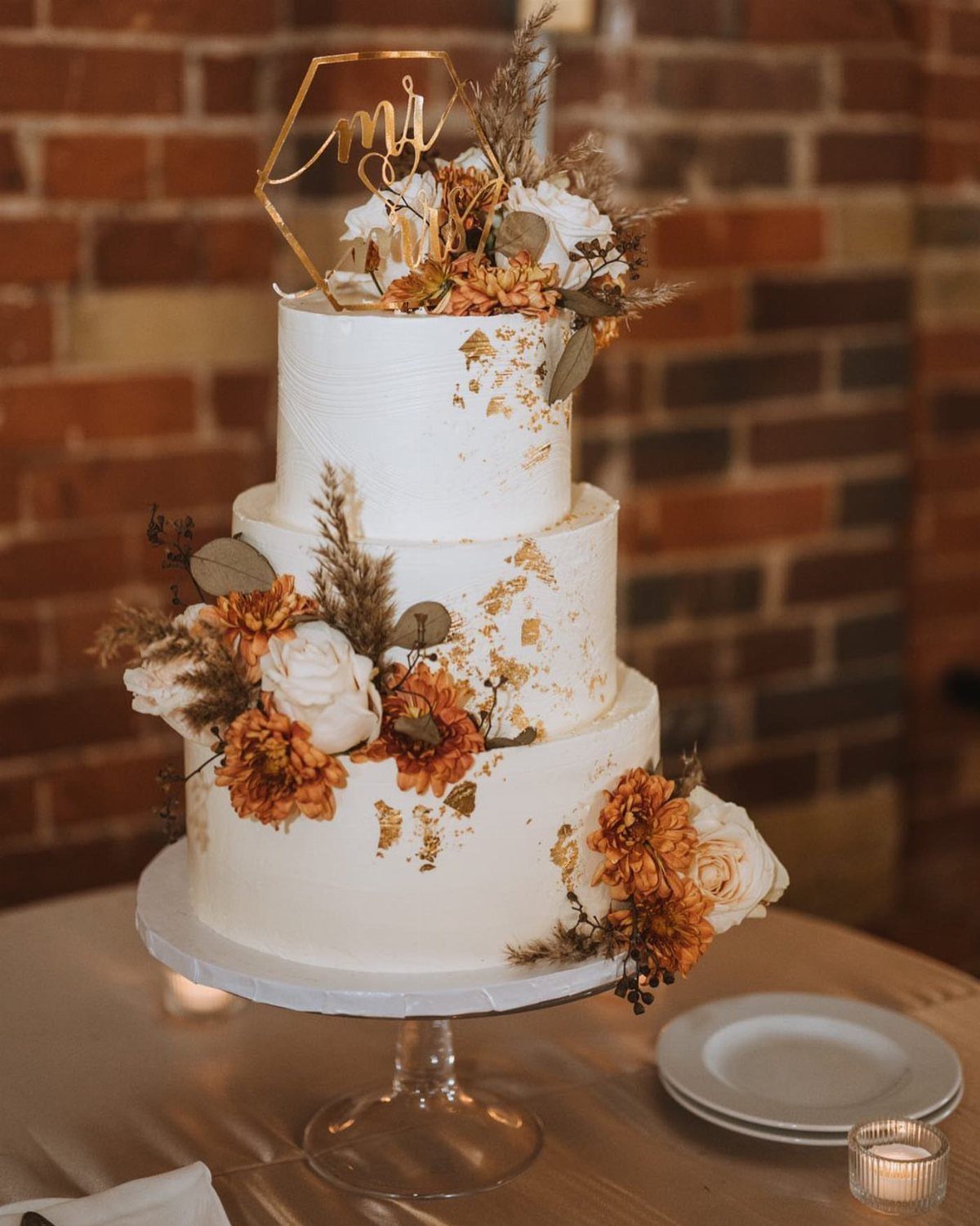
Burnt orange, rust and cream roses sit against white frosting and gold leaf, giving you a warm palette that suits fall weddings without relying on burgundy or navy.
The gold leaf catches the light and adds a formal edge to the earthy tones.
Ask your baker to apply the gold leaf in patches rather than covering the whole tier, so it reads as an accent.
This palette works in rustic venues and ballrooms alike. Pair it with greenery to soften the arrangement.
18. Spring Blossom Cake
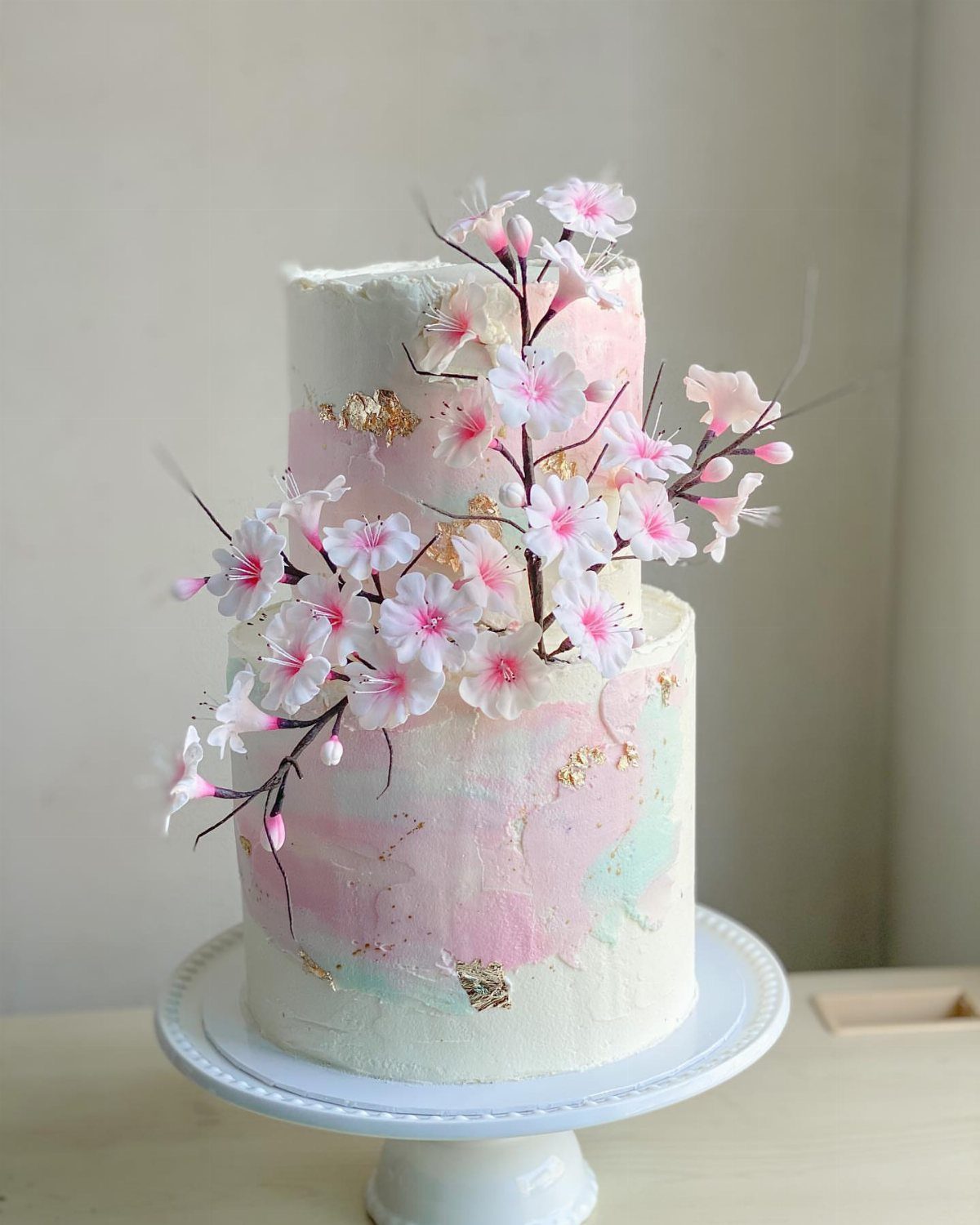
Cherry blossoms signal spring without needing a full floral arrangement. The small pink blooms sit lightly on the surface, and the watercolor frosting gives you soft color that complements the flowers instead of competing with them.
Watercolor frosting goes on in thin washes of pink, peach or green, blending into the white base. A few pieces of gold leaf give the whole thing a finished look without competing with the flowers.
This suits smaller cakes and intimate weddings, where the delicate details stay visible. Cherry blossoms wilt faster than roses, so ask your baker to add them the morning of the event.
19. Sweeping Flowers
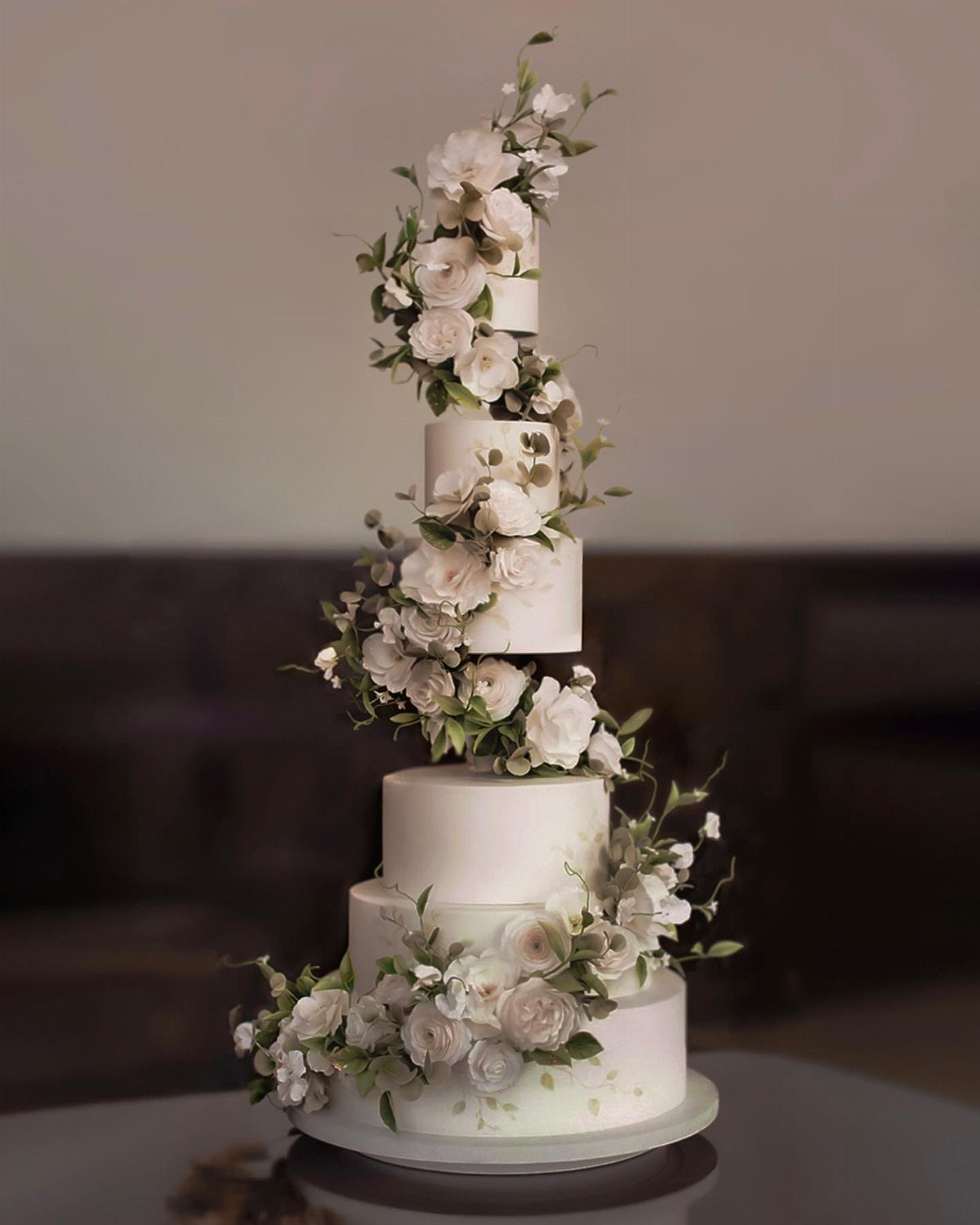
White roses and greenery wind around the tiers in a continuous line, connecting the layers without covering the frosting completely. The arrangement starts low on one side and curves upward, giving the cake movement instead of static placement.
Ask your florist to wire the stems together before attaching them, so the swag holds its shape through transport. Roses with smaller heads, like spray roses, bend more easily than full garden roses and stay proportional to the tiers.
This works when you want flowers on every tier but still need the frosting visible. The sweeping line draws the eye up without adding weight to one side.
20. Gold Leaf Flowers
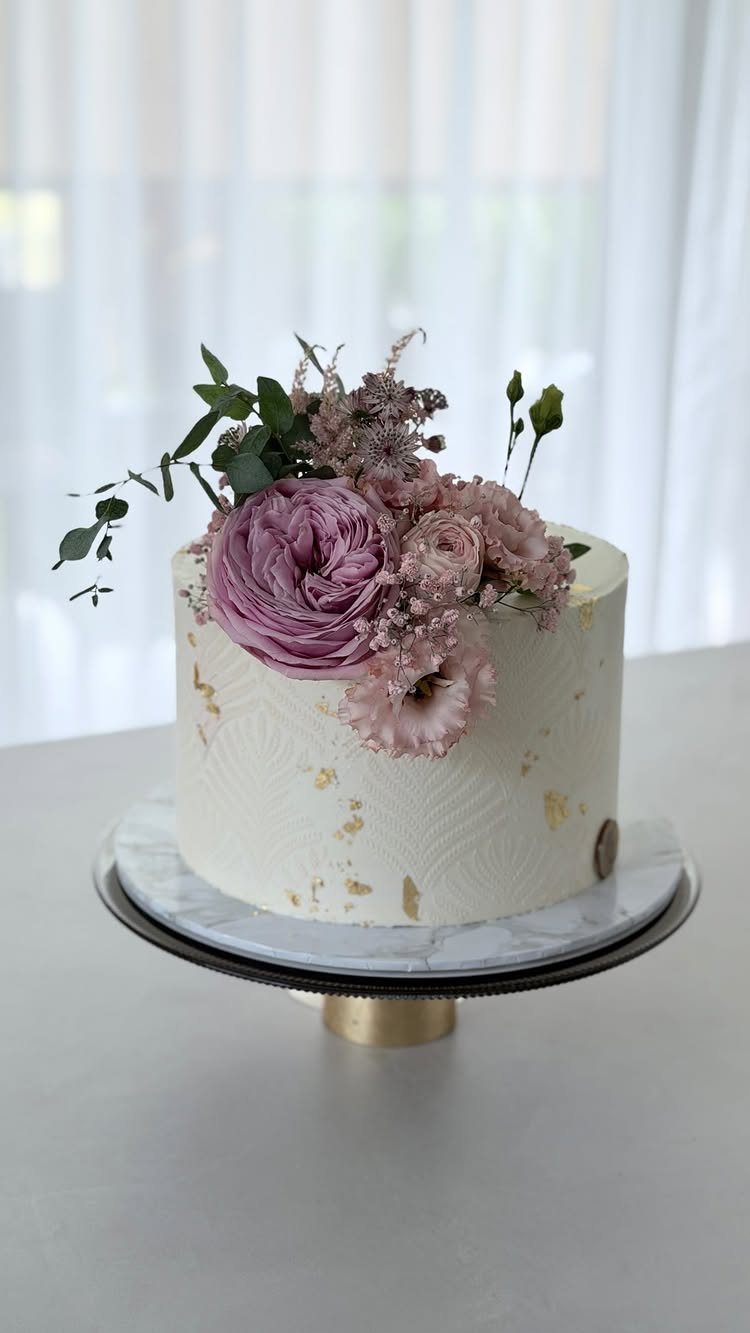
Gold leaf patches sit between the flowers rather than underneath them, so both elements stay visible. The metallic flakes catch light and add formality to a cake that might otherwise read too casual for an evening reception.
Apply the leaf in irregular shapes rather than smooth sheets, so it looks intentional instead of patchy. Pair it with roses in deep pink or purple to keep the gold from looking too soft.
This suits ballrooms and formal venues where the cake needs to match other metallics on the table. The gold stays in place through transport and does not wilt.
21. Flower Wall Backdrop
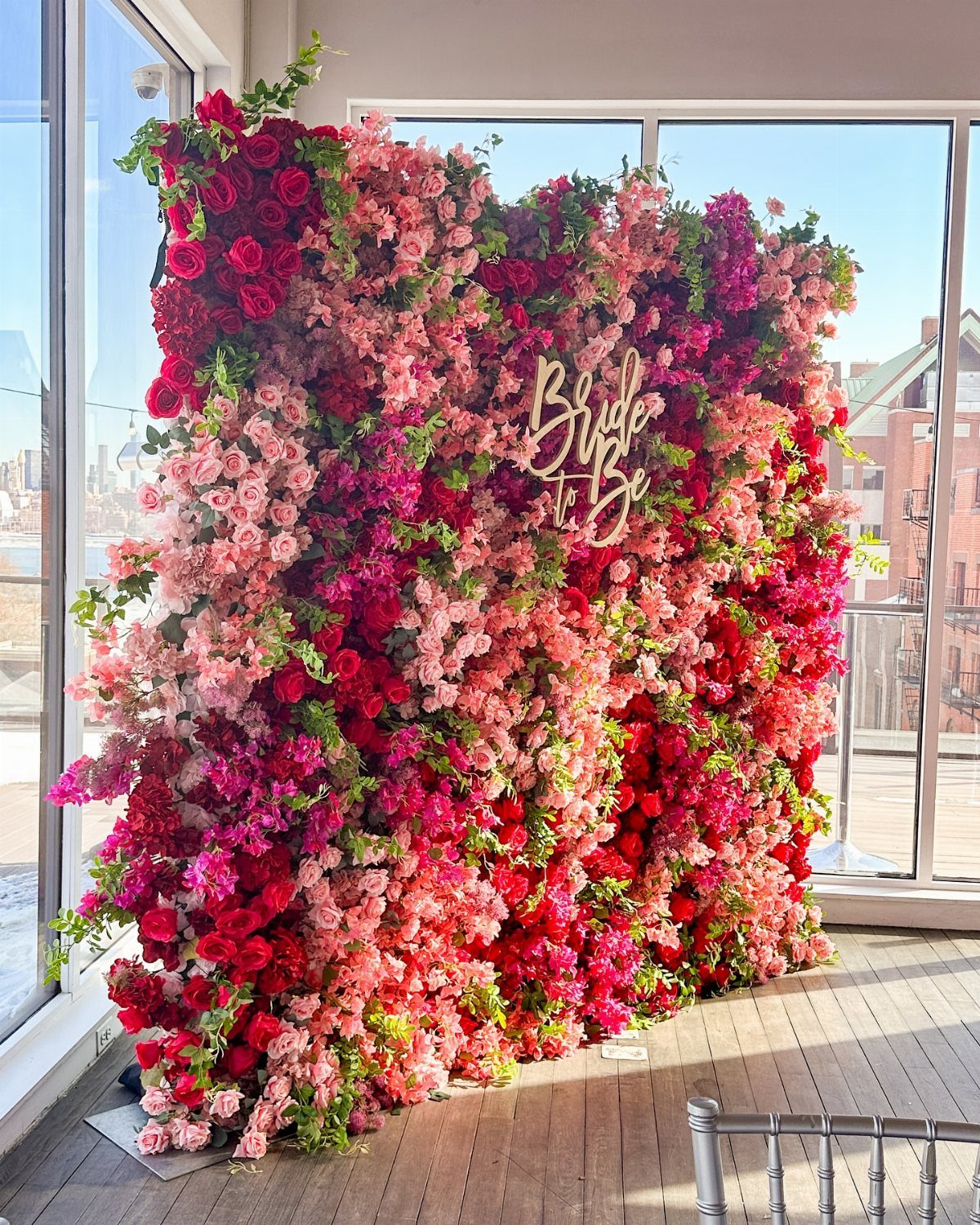
A full wall of flowers behind the cake table makes the whole setup photograph as one piece instead of a cake sitting alone on a cloth.
The wall gives you a backdrop that does not need draping or hanging fabric, and it works indoors or outside.
Artificial flowers hold up longer than fresh ones and can be assembled days ahead. Attach them to a foam or wire frame so the wall stands on its own, then position the cake table in front of it.
This suits receptions where the cake sits in a separate area rather than on the main guest tables. The flower wall also works as a photo backdrop for guests during cocktail hour.
22. Floral Cupcakes
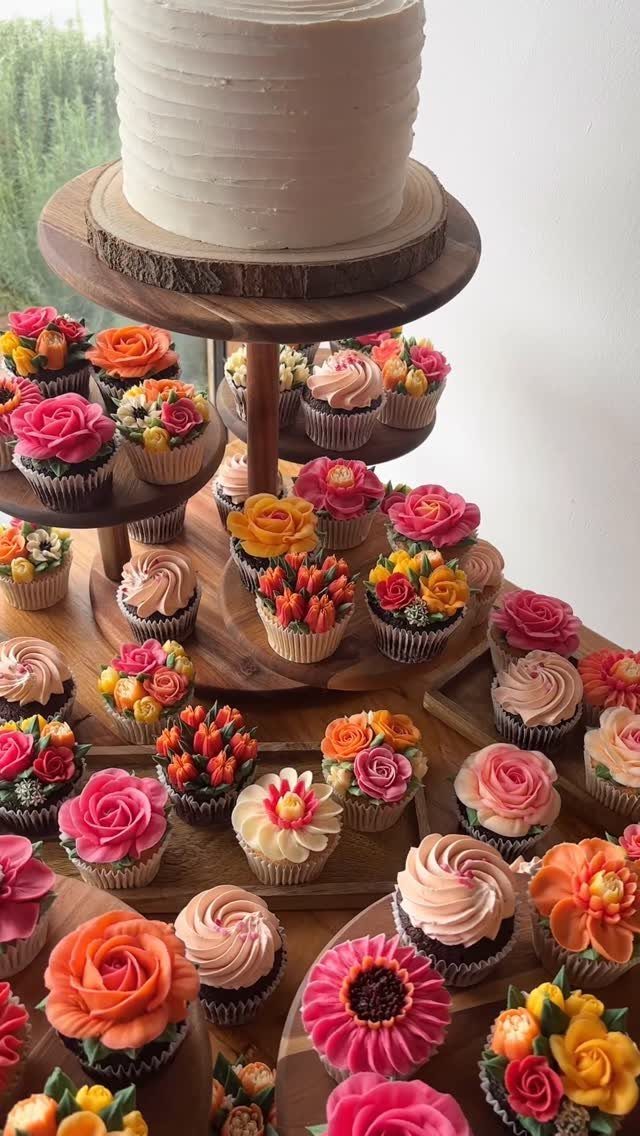
Frosted flowers on cupcakes give every guest their own dessert without cutting a tiered cake. Pipe the petals in buttercream using a petal tip, starting from the outside and working toward the center.
Mix the colors across the batch so each table gets variety, or match them to your wedding palette.
Cupcakes stack on a tiered stand to give you height, and the small cakes stay easier to serve than slicing portions from a large one.
This works when you want individual servings and still want a floral look. The cupcakes also cost less per guest than a multi-tier cake, since you skip the structure and fondant.
23. Invisible Tier
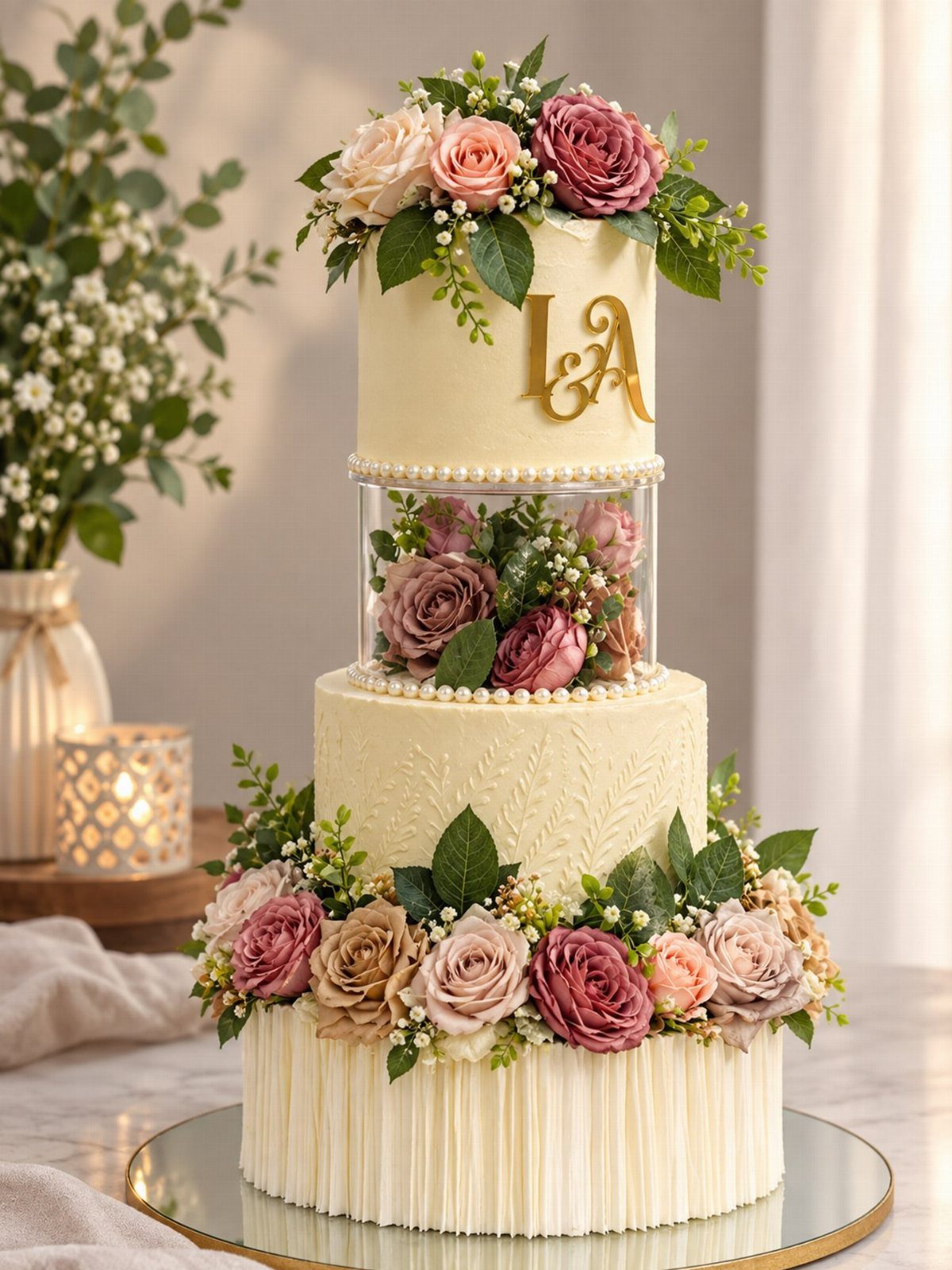
A clear acrylic tier holds flowers inside instead of on the surface. The transparent layer gives the cake height without adding more sponge, and the flowers stay visible from all sides.
Order the acrylic tier from a cake supplier and fill it with blooms that match the rest of your arrangement. Small roses, ranunculus or filler flowers work best, since they pack tightly without gaps.
This suits modern venues and minimalist décor, where the acrylic reads as intentional rather than unfinished. The flowers inside stay protected and do not need replacing if the reception runs long.
24. Botanical Press
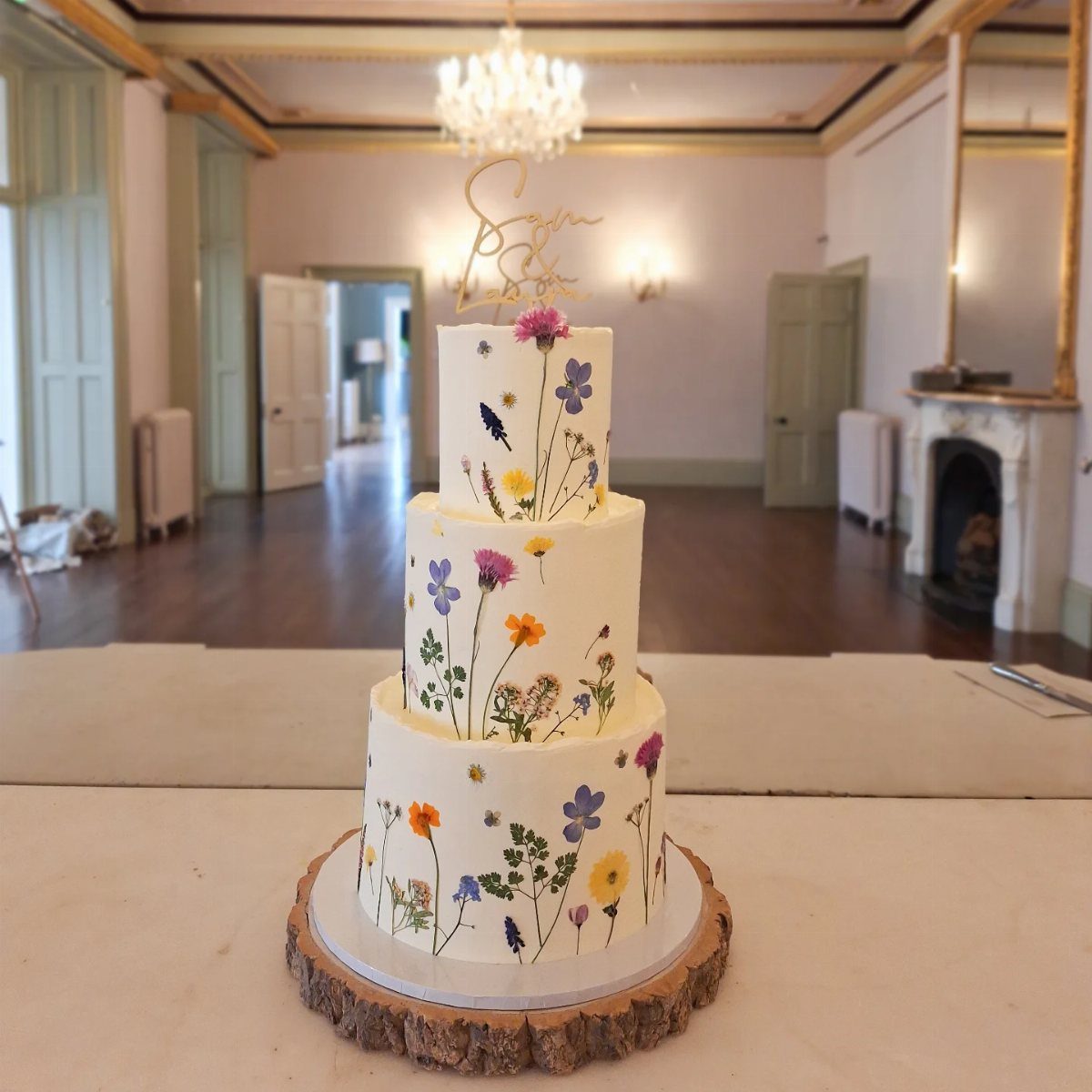
Edible images printed with pressed flowers sit flat against the frosting, giving you a botanical look without the texture of real petals.
The printed design covers more surface than actual pressed flowers could, and it stays in place through heat and handling.
Ask your baker to print the design on wafer paper or frosting sheets, then apply it to fondant or buttercream.
Pair it with a few fresh flowers on top to add dimension, or let the printed design stand alone for a fully flat surface.
This works when you want floral decoration but need the cake assembled ahead of time. The printed flowers do not wilt, and they photograph as clearly as real ones from a distance.
25. Fruit and Flowers
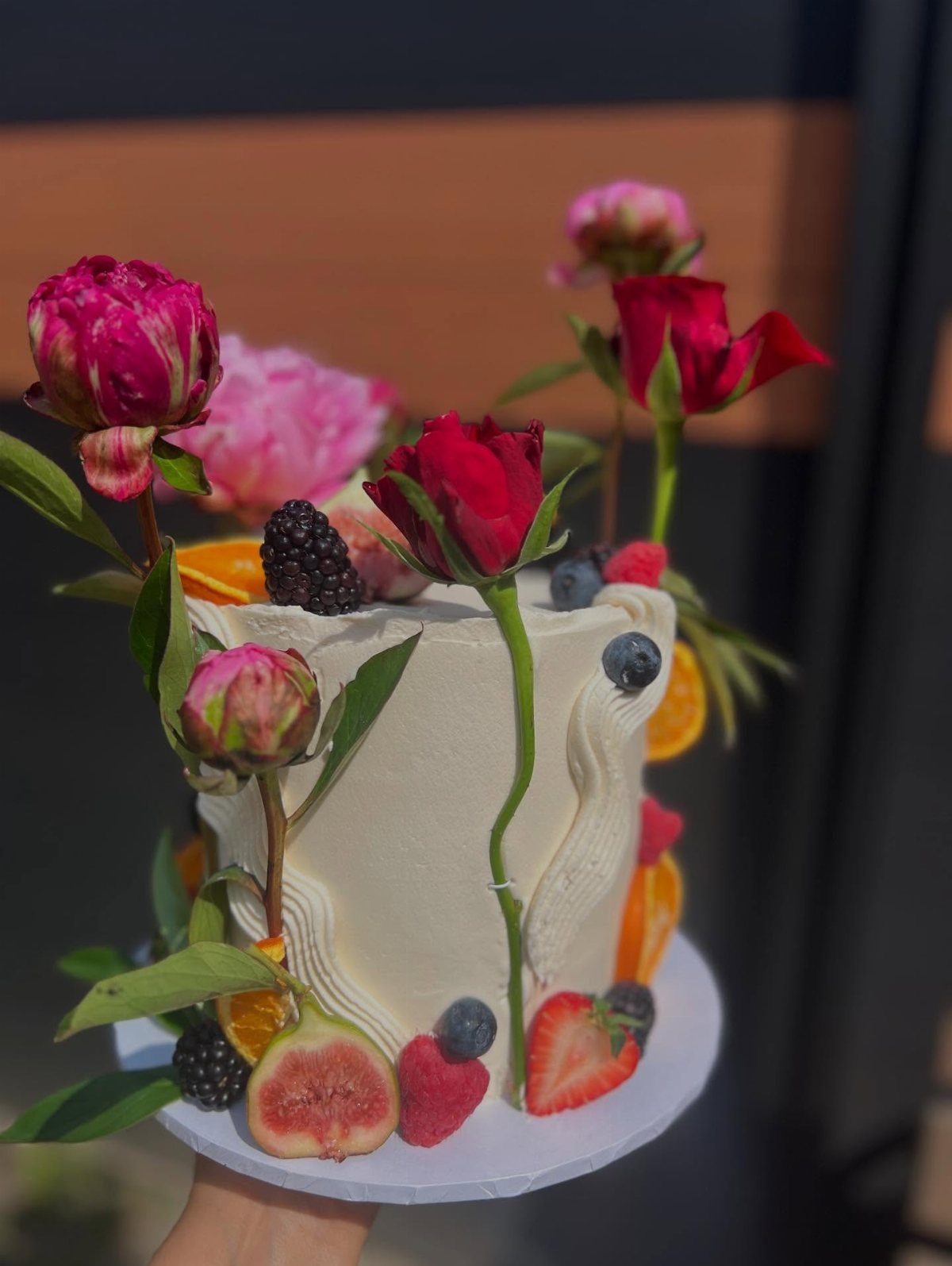
Sliced citrus, halved figs and berries sit between the flowers instead of replacing them. The fruit adds texture and color that photographs well, and the combination suits garden weddings where produce fits the setting.
Choose fruit that holds its shape without weeping juice onto the frosting. Berries stay firm longest, figs show their interior without needing prep, and citrus slices dry slightly on the surface so they do not bleed.
This works when you want color beyond what flowers alone give you, and it keeps costs lower than covering the whole cake in blooms.
26. Gypsophila Cake
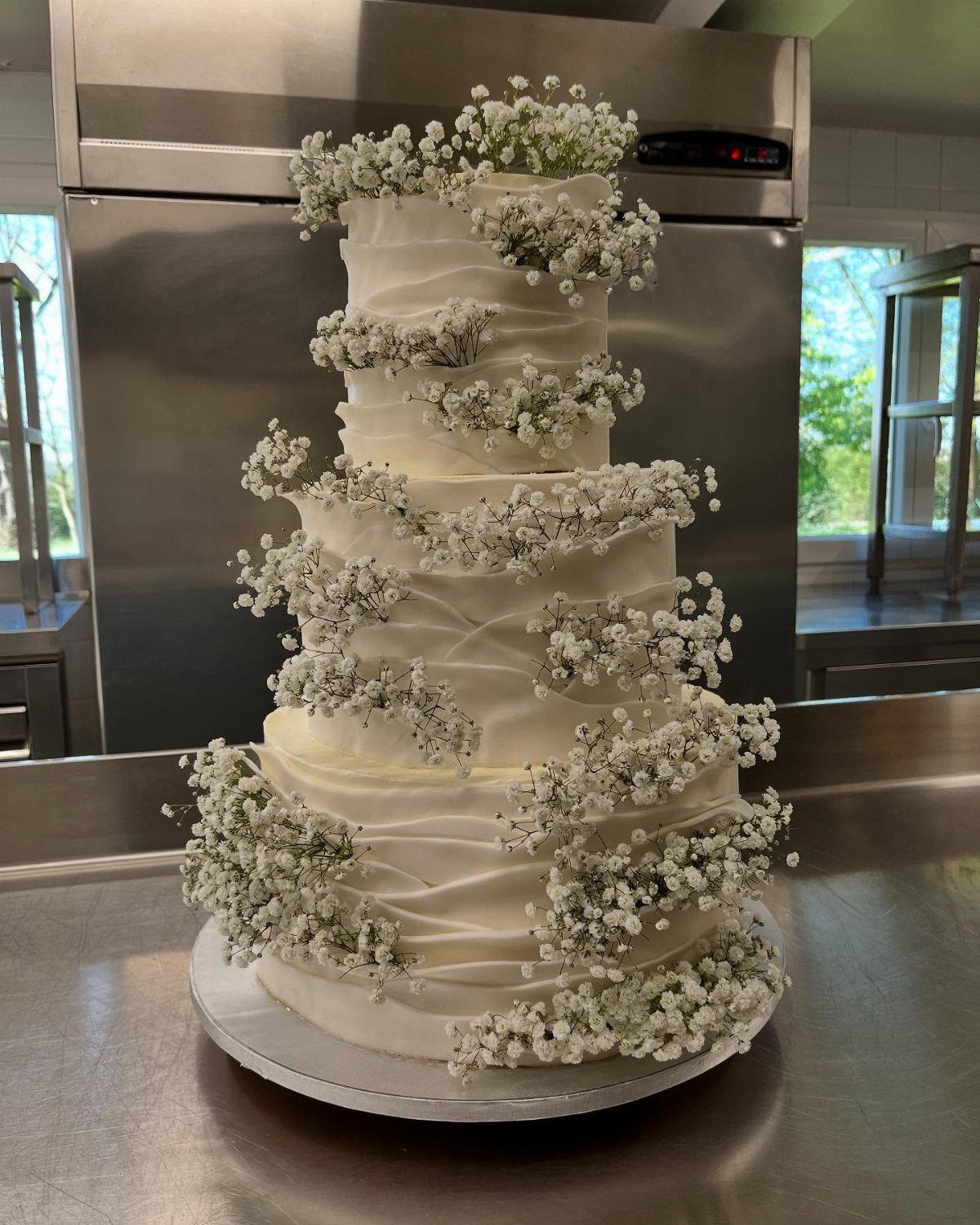
Clusters of gypsophila cover the tiers in a cloud of small white blooms. The tiny flowers read soft from a distance and give you full coverage without the cost of roses or peonies.
Time the application for just before guests arrive, since gypsophila starts drooping within hours of being cut. The stems bend easily and tuck into gaps between larger arrangements, or they cover the cake on their own for an all-white look.
This suits couples working with a tight floral budget who still want the cake covered in blooms.
27. Flowers Around the Cake Base
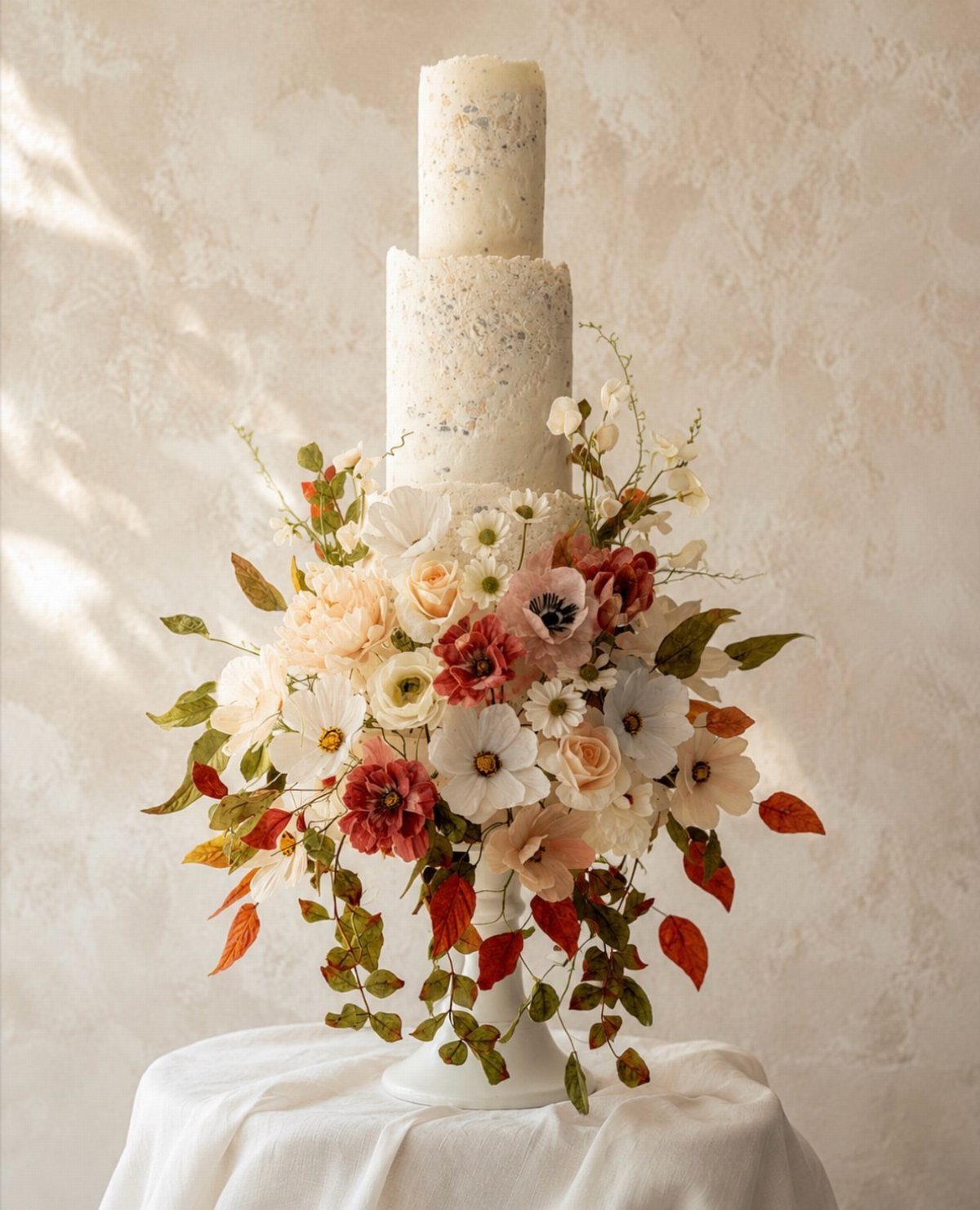
Roses, dahlias and autumn leaves gather at the base and climb partway up the lower tier, leaving the lace texture on top visible. The arrangement frames the cake instead of covering it, and the seasonal palette suits fall receptions.
Place the flowers on the table around the cake stand first, then add a few stems directly to the frosting.
This keeps most of the arrangement off the cake itself, so your baker does not need to account for the weight.
The autumn tones work in rustic venues and ballrooms with warm lighting.
28. Flowers in Floral Bands
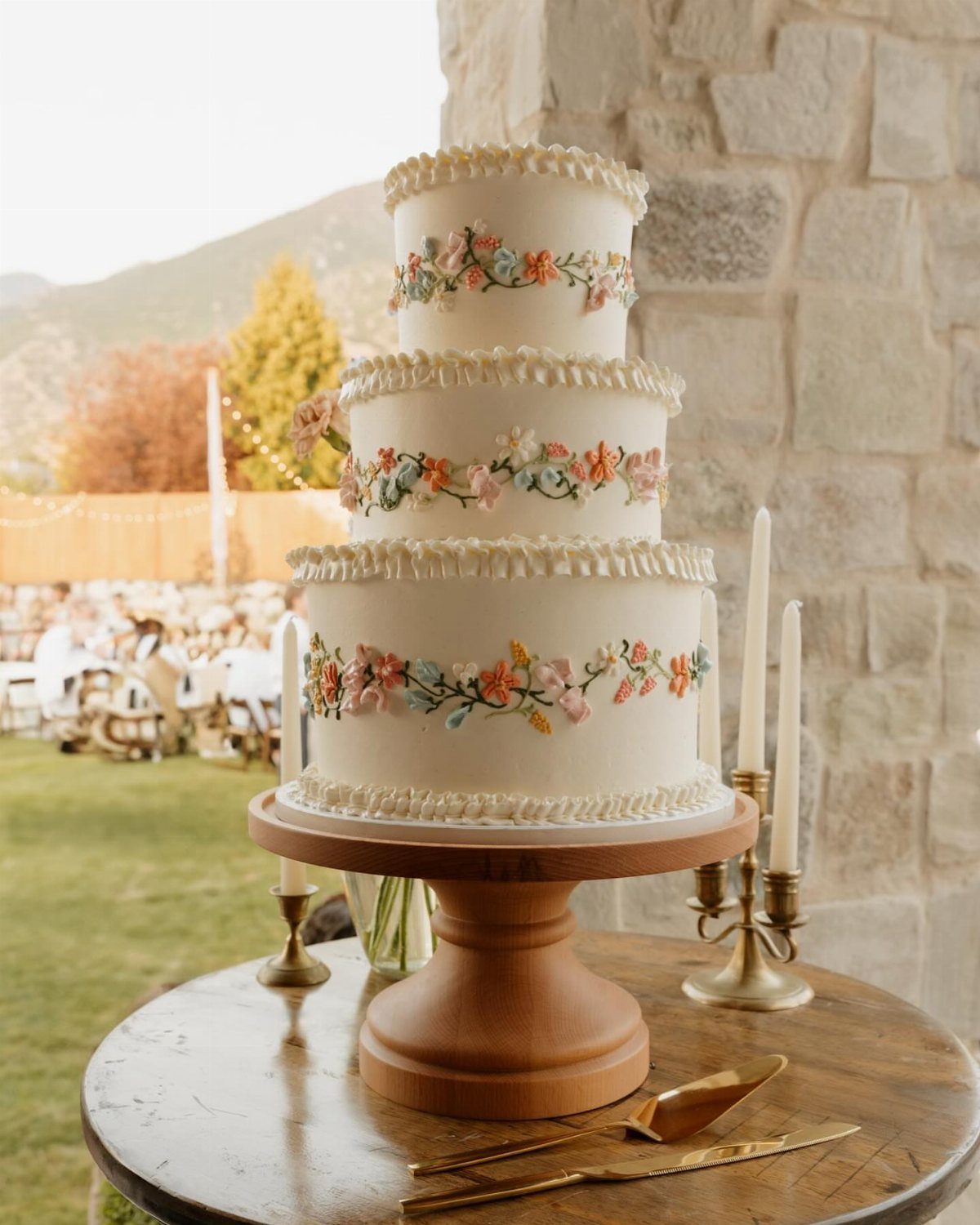
Horizontal bands of small blooms and greenery wrap each tier at different heights, breaking up the white frosting without covering it completely. The bands give you color on every layer while keeping the design light.
Wire gives the bands structure so they hold their position when the cake moves from kitchen to table. Smaller flowers like daisies, spray roses or wildflowers work better than full garden roses, which add too much bulk.
This suits outdoor weddings and casual receptions where the cake needs decoration but not full coverage.
29. Flower Cluster on Top
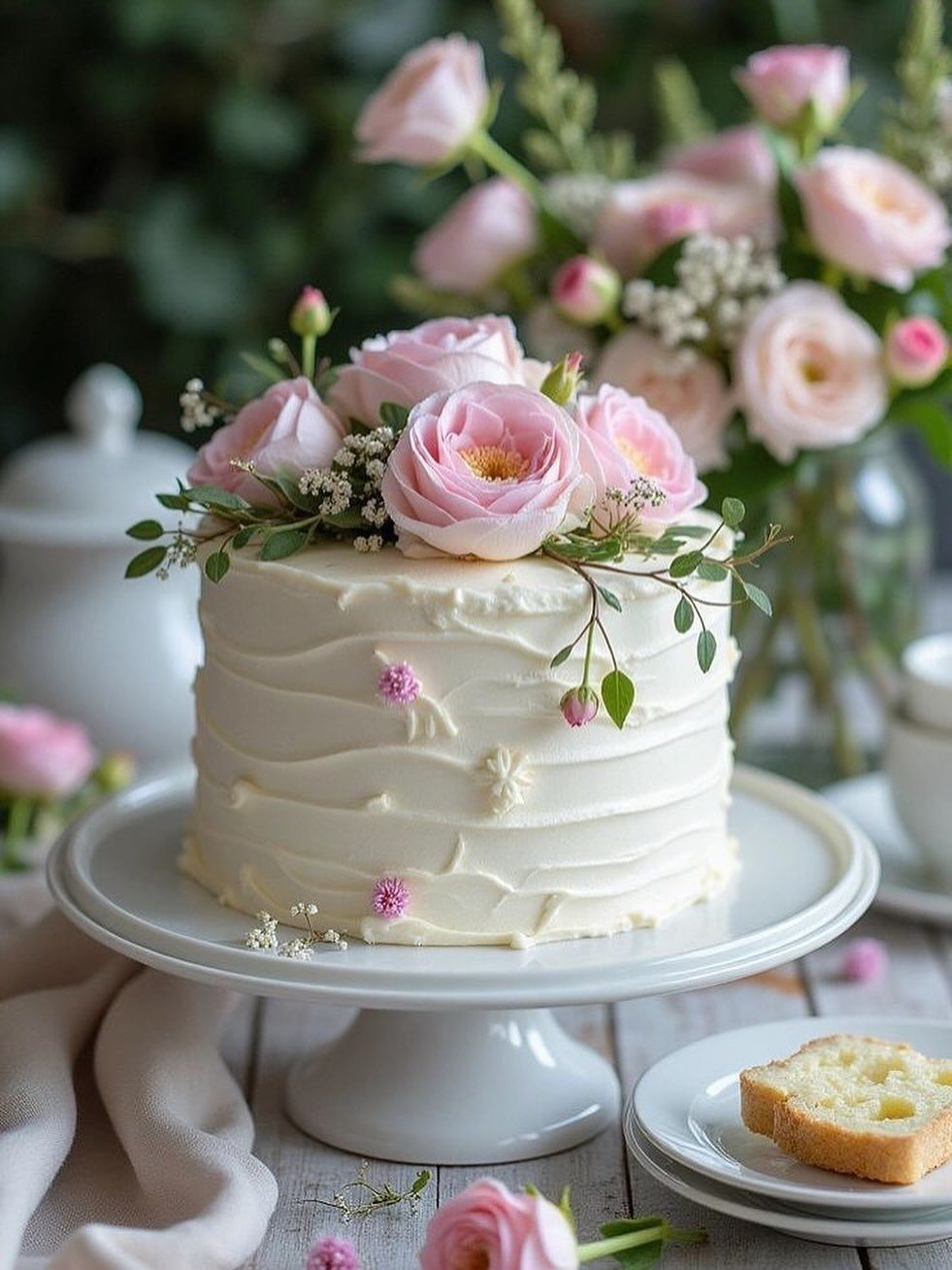
Roses and greenery gather in one tight arrangement on top of the cake, leaving the textured frosting unadorned below. The cluster gives you a focal point without needing flowers on every tier, and the simple placement keeps costs down.
Choose blooms that hold their shape and do not droop. Roses work best, and adding greenery fills the cluster without more flowers.
This works when you want a floral cake but need to stay within a smaller budget. The single cluster still photographs well and suits intimate weddings where the cake does not need to fill a large space.
30. Pastel Sugar Flowers
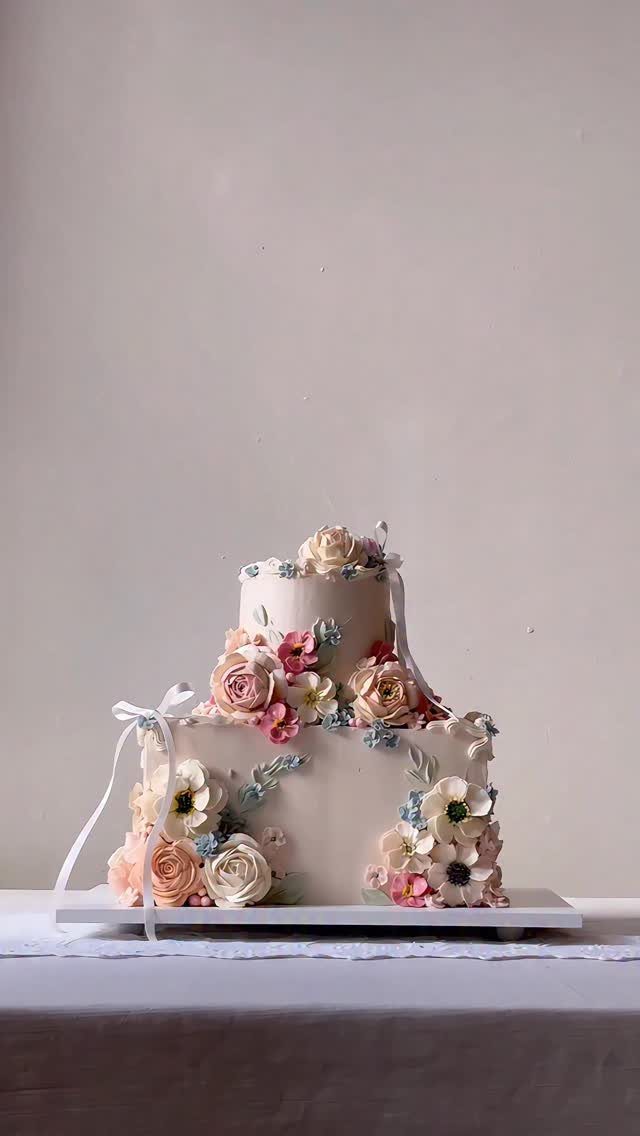
Sugar flowers in soft pink, peach and blue sit against white frosting and ribbon, giving you a pastel palette that stays permanent.
The sugar petals do not wilt, so your baker can finish the cake days ahead without worrying about timing.
Sugar flowers cost more than fresh ones in labor, since each petal gets shaped by hand, but they hold up in heat and humidity where real blooms would droop.
Match the colors to your wedding palette or choose pastels that suit spring and summer receptions.
This works when you need the cake assembled early or when your venue runs too warm for fresh flowers.
31. Frosting Rose Cluster
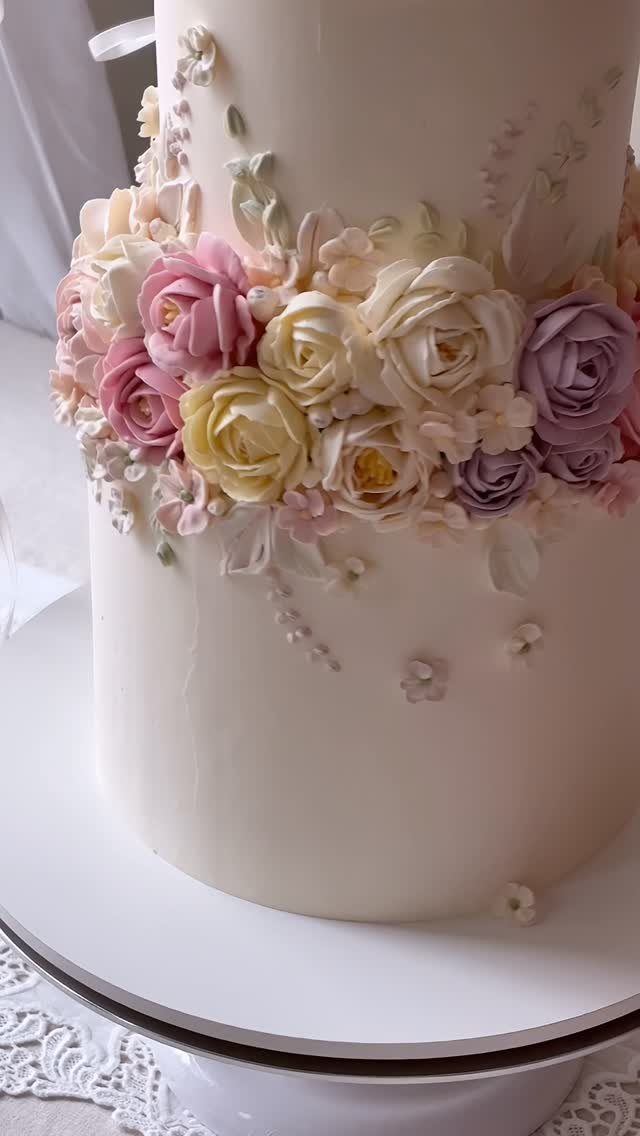
Buttercream roses in pink, yellow and purple cluster on top, piped directly onto the frosting instead of placed as fresh blooms. The dense arrangement gives you color without needing a florist, and the roses stay permanent through setup and serving.
Pipe each rose with a petal tip, building from the center outward. Mix the colors across the cluster rather than grouping them by shade, so the arrangement photographs with variety.
This works when you want a floral look but need the cake finished ahead of time. The buttercream roses stay put without water or refrigeration.
32. Fresh Mixed Flowers
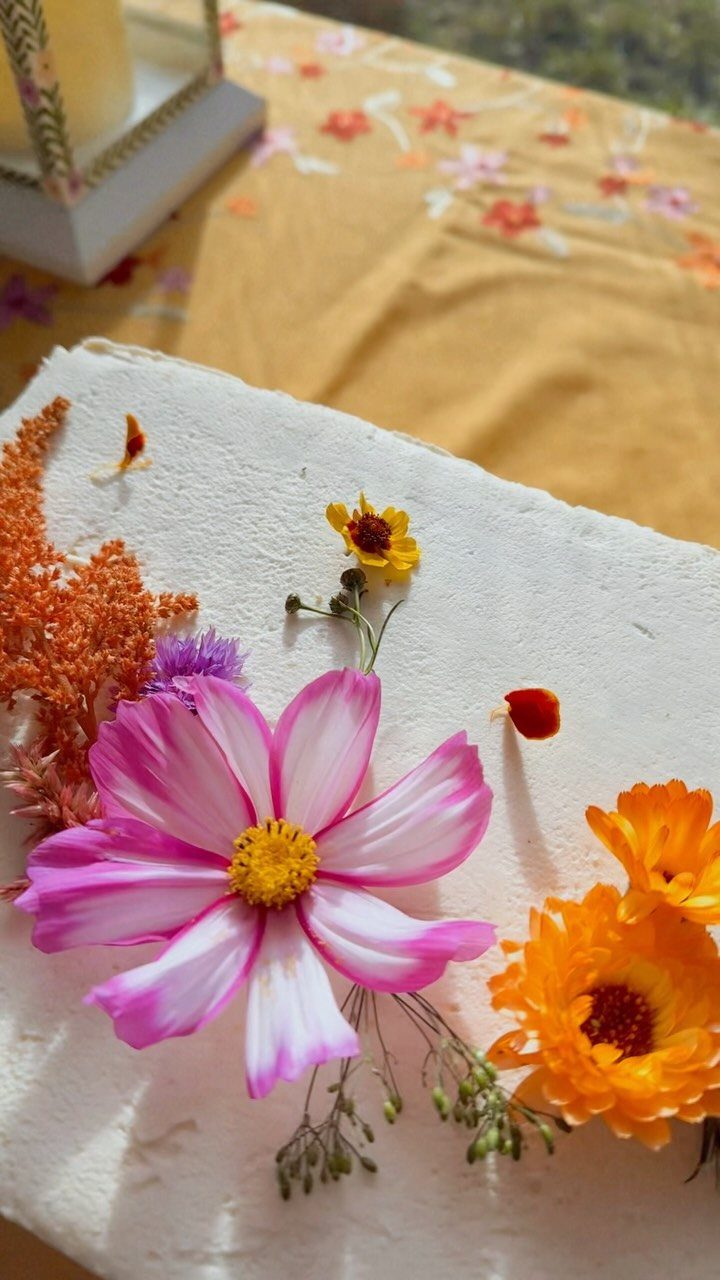
Pink cosmos, orange marigolds and small yellow blossoms sit on white frosting, giving you a bright mix that suits garden weddings and outdoor receptions.
The casual arrangement reads cheerful without needing symmetry, and mixing flower types keeps the cost lower than roses alone.
Cosmos and marigolds both last several hours once placed, and their flat faces photograph clearly from above.
This suits daytime receptions and spring or summer weddings where the palette can run bright.
33. White Sugar Roses
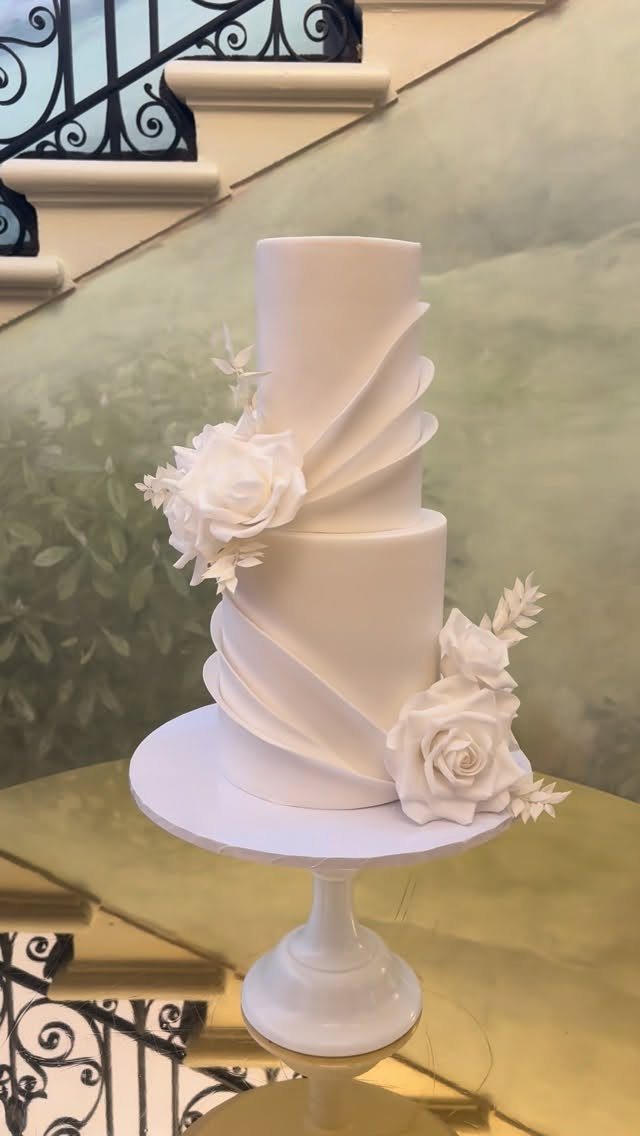
White sugar roses cover the tiers in a monochrome arrangement that matches formal ballrooms and classic wedding palettes. The sculpted petals add texture without introducing color, and sugar flowers stay intact through transport and heat.
Each rose gets shaped by hand, so labor costs run higher than fresh flowers, but the finished cake can sit assembled for hours without wilting.
This works when you want full floral coverage but need the cake ready early. The sugar roses photograph as clearly as fresh ones and hold their detail through the reception.
34. Gold-Accented Blooms
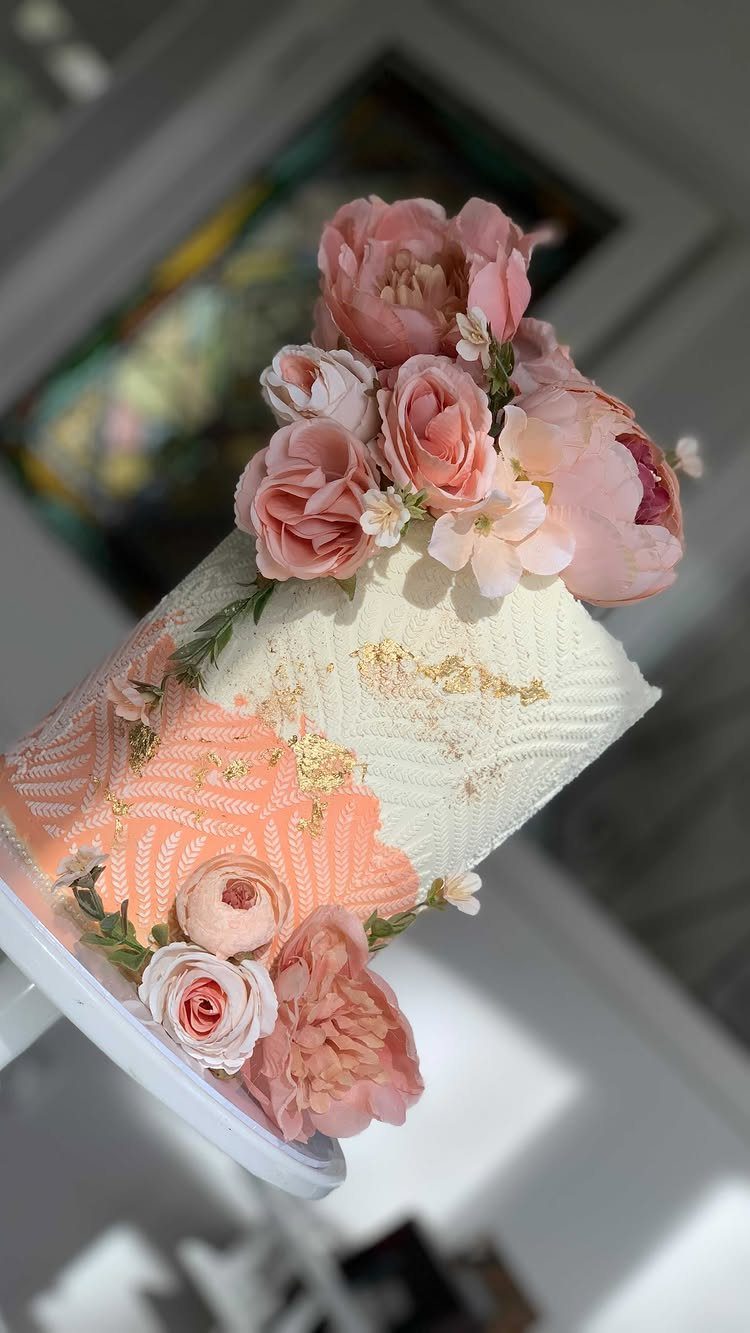
Pink and peach roses sit against textured white frosting with small white blossoms and patches of gold leaf. The metallic accents catch light without covering the flowers, and the soft palette suits spring and summer weddings.
This works in ballrooms and garden venues alike, where the gold adds formality without competing with the flowers. The combination photographs well in natural light and stays balanced across the tiers.
35. Tropical Flower Arrangement
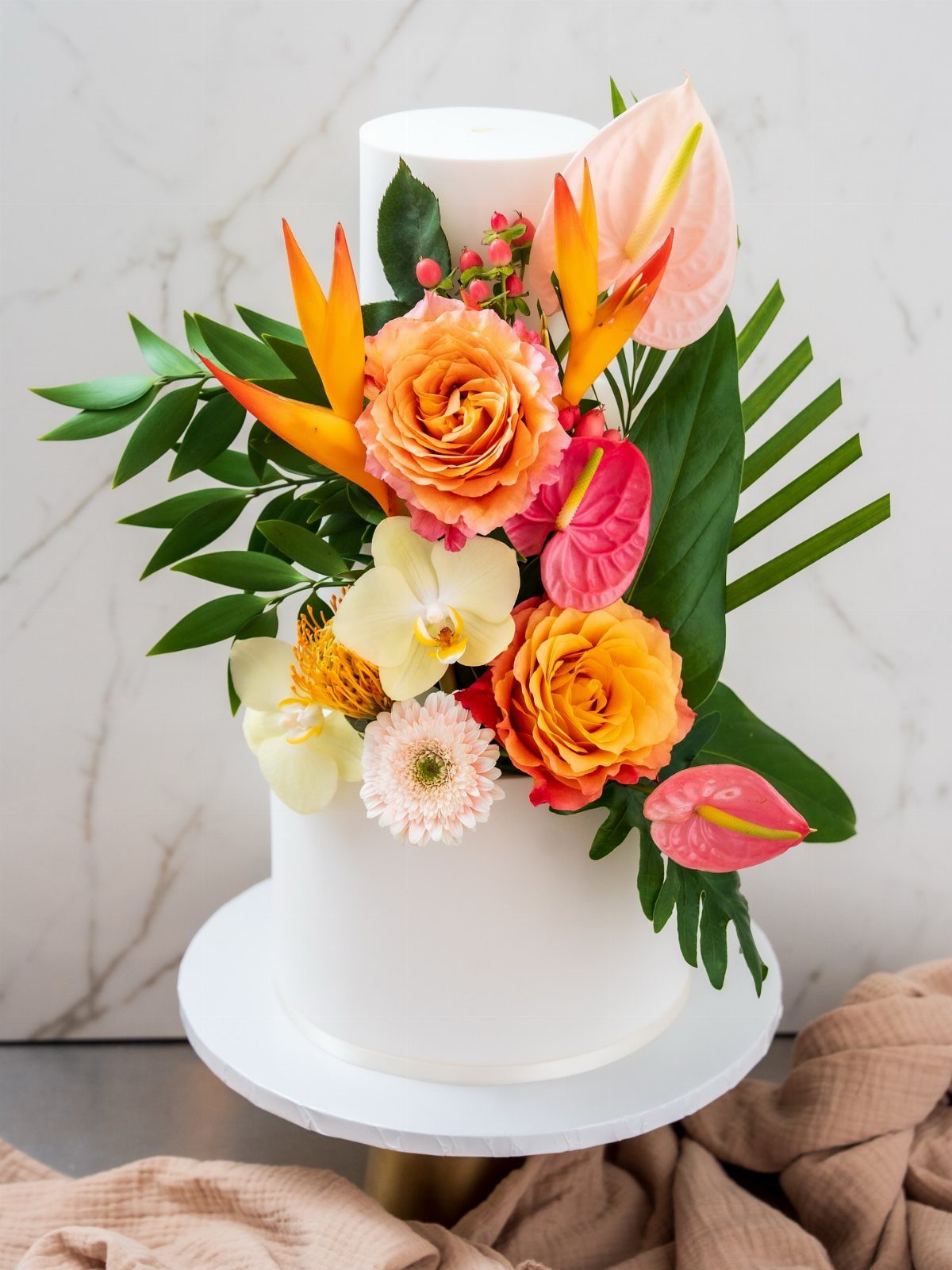
Anthuriums, orchids and roses in saturated tropical shades cover the top tier and spill down the side. The bold colors suit destination weddings and summer receptions, and the lush greenery adds volume without more blooms.
Tropical flowers hold up better in heat than roses or peonies, so this works in outdoor venues and warm climates.
This suits couples working with a tropical theme or venue, where the bright arrangement matches the setting. The flowers give you height and color without needing multiple tiers covered.
36. Calla Lily Cake
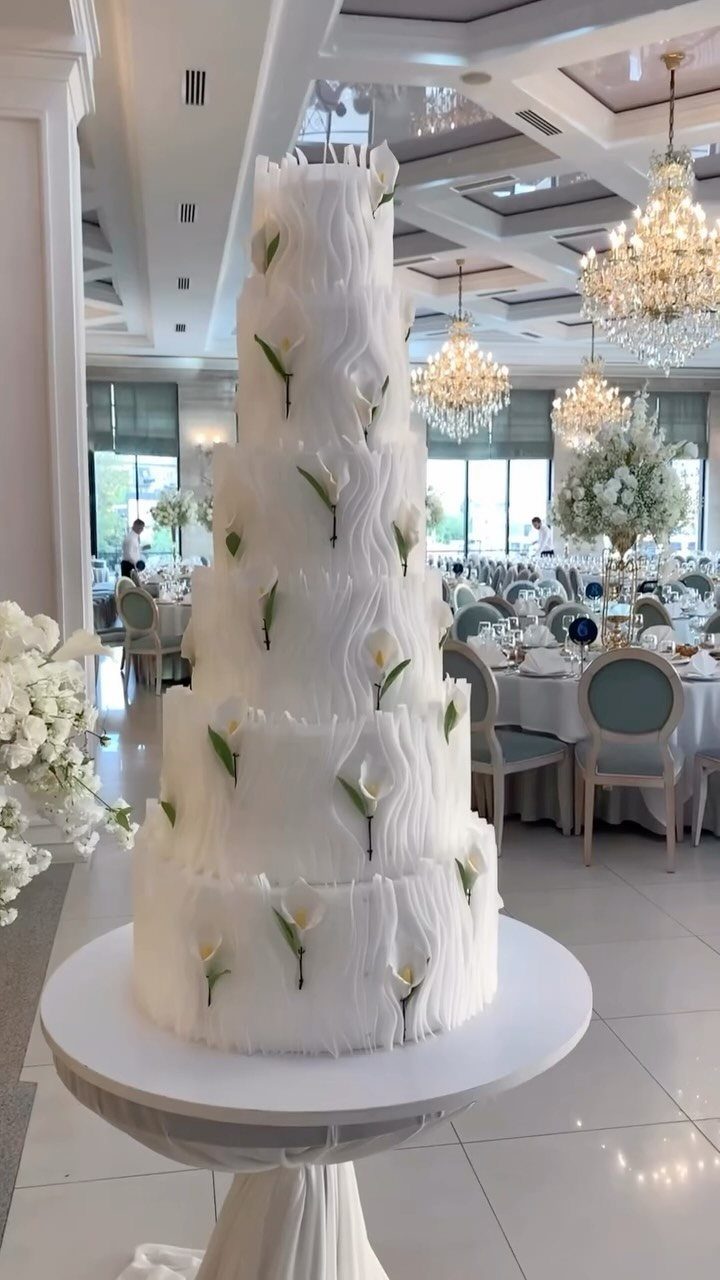
The sculptural blooms read elegant without needing filler flowers, and their shape stays distinct when photographed from a distance.
Calla lilies hold their form longer than roses and need less water once cut, so your florist can attach them earlier in the day. The stems bend easily and tuck into the frosting without wiring.
This works when you want a formal floral cake but need a simple arrangement. The white-on-white palette matches neutral décor and lets the cake stand as a sculptural piece rather than a color accent.
37. Ombre Floral Cake
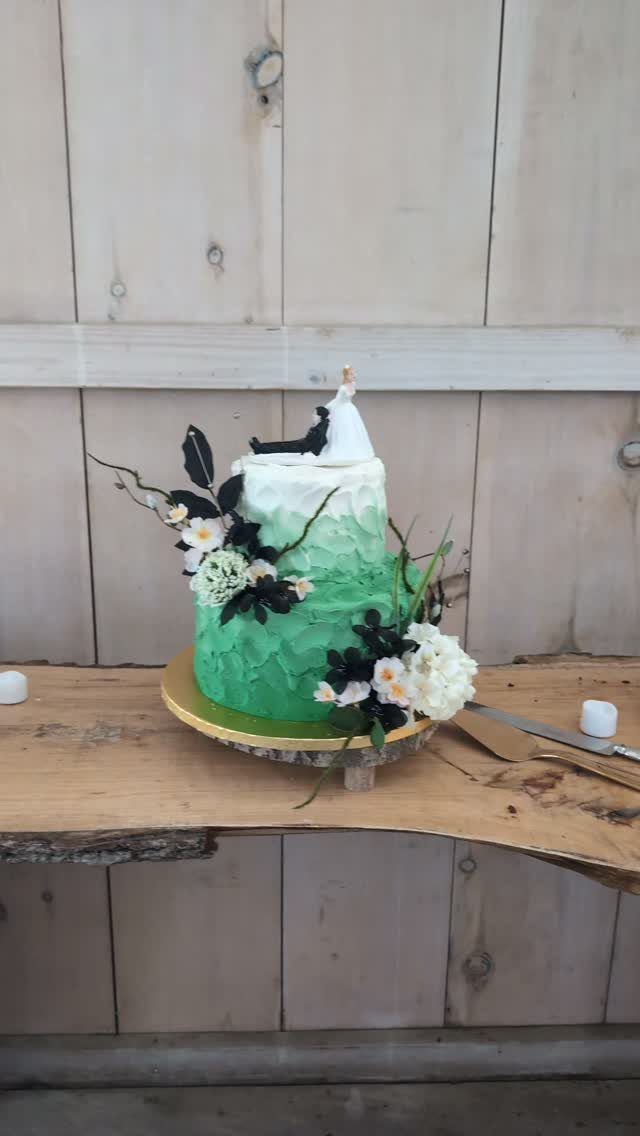
Ombre frosting fades from deep green at the base to white at the top, giving you gradient color that stays even under flowers. The fade works best when mixed into buttercream rather than fondant, since the tones blend softer.
White and black blooms sit against the ombre without adding more color, and the green-to-white fade suits garden weddings where the cake matches the setting.
The black flowers add contrast that photographs clearly, and the arrangement works when you want texture without bright tones.
Fresh Flower Safety
Not every flower belongs on a cake.
Roses, peonies, ranunculus and most garden blooms are safe, but skip anything treated with pesticide or floral preservative spray. Avoid flowers sold at grocery stores unless the label confirms they are pesticide-free.
Some flowers are toxic even without chemicals.
Lily of the valley, hydrangea, oleander and most lilies should stay off the table entirely. Before your baker starts adding blooms, confirm each variety with your florist.
Plastic picks keep stems out of the frosting and make flowers easy to remove before cutting. The picks keep sap and pollen away from the cake layers.
Tell your caterer to pull all flowers and greenery before cutting and plating, even when the blooms are safe. Guests should not have to guess.
Cake Style and Coordination
The flowers on your cake can pull together the whole room when they match your bouquet or centerpieces.
If you are using blush roses and eucalyptus on the tables, the same combination on the cake ties the look together without needing extra coordination.
A simple frosted finish shows off the flowers better than heavy piping or textured buttercream.
White or cream frosting keeps the focus on the blooms, while a colored frosting that picks up one shade from your palette gives you a quieter way to coordinate.
If your cake has lace details, a monogram or other decoration already in place, keep the flowers to one side or the top so the frosting work stays visible.
Frequently Asked Questions
How long will fresh flowers stay fresh on a cake?
Fresh flowers hold their shape for several hours if added the morning of the wedding.
Roses, peonies and spray roses last longest, while delicate blooms like cherry blossoms wilt faster. Plan to add them within a few hours of the reception start time, and keep the cake in a cool spot until it’s displayed.
What kind of flowers are used on wedding cakes?
Roses, garden roses, peonies and spray roses appear most often because they hold their shape and weight well.
Orchids, lisianthus, ranunculus and succulents work for specific looks, while tropical flowers like anthuriums and hibiscus suit beach weddings. For less money, wildflowers and daisies hold up fine and look good in photos.
Which flowers are safe on wedding cakes?
Check that any flower touching the cake has not been sprayed with pesticide, dyed, or treated with essential oil.
Check with your florist or baker that the blooms you choose are non-toxic, since not all flowers sold for arrangements are safe to place on food.