
These range from hand-detail frames that skip faces to full wedding-party lineups that need 15 minutes of organizing, and which ones work depends on how much you want to be looked at.
If standing still for the camera makes you freeze, walking toward the lens or twirling gives you something to do and keeps the photographer shooting while you move.
A forehead kiss or a frame that stops just before your lips meet reads as affectionate without holding a staged pose, and a tight crop on joined hands lets the rings and skin texture carry the shot when faces feel like too much attention.
1. Walking Toward Camera
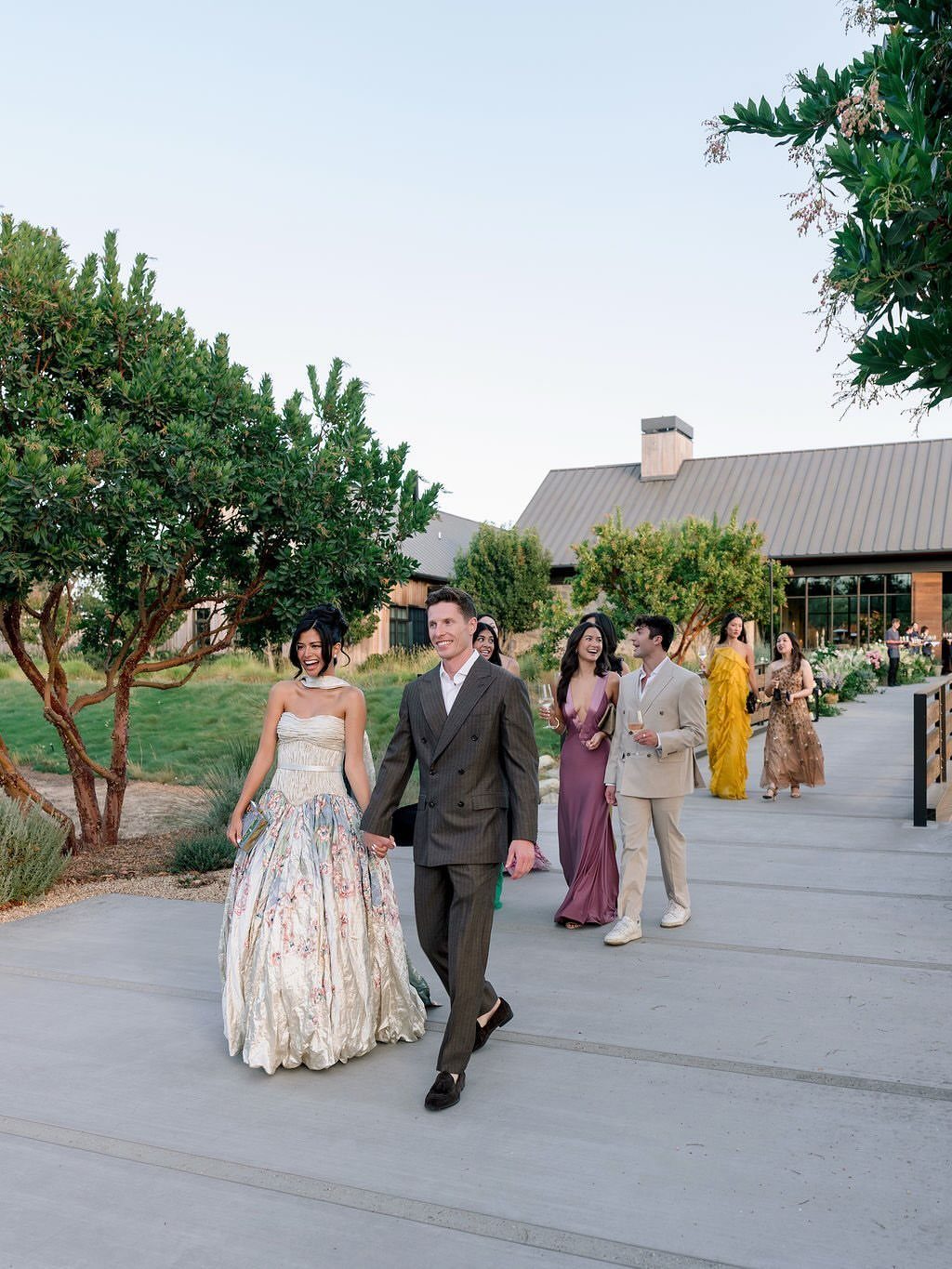
The couple moves toward the camera, holding hands or walking side by side. This captures natural movement and keeps both partners relaxed if standing still feels awkward.
Pick a path, hallway or open stretch that gives the photographer room to back up as you walk.
Move slowly so the photographer has time to shoot multiple frames, and glance at each other or down at your hands rather than straight into the lens if direct eye contact feels forced.
The shot works alone or with your wedding party following a few steps behind.

❤️【Size】7x5FT 210cm wide by 150cm high. Bridal Shower Supplies Photo Booth Props Background,Using a series of high-tech digital design and computer-printed enough to decorate your birthday party and leaving a deep impression on your guest's mind

Premium 10x10ft Tulle Backdrop with Lights: Includes 2 panels, each measuring 5ft wide x 10ft high, 1 set of 10ftx10ft USB operated warm white string lights (10 strands) and 12 pcs clips. Offering a seamless and elegant backdrop for weddings, parties, and photo shoots
Size and Package -- 7x5ft (Width×Height). Only 1 Pc backdrop. Backdrop stand or clips are not included
2. Hug from Behind
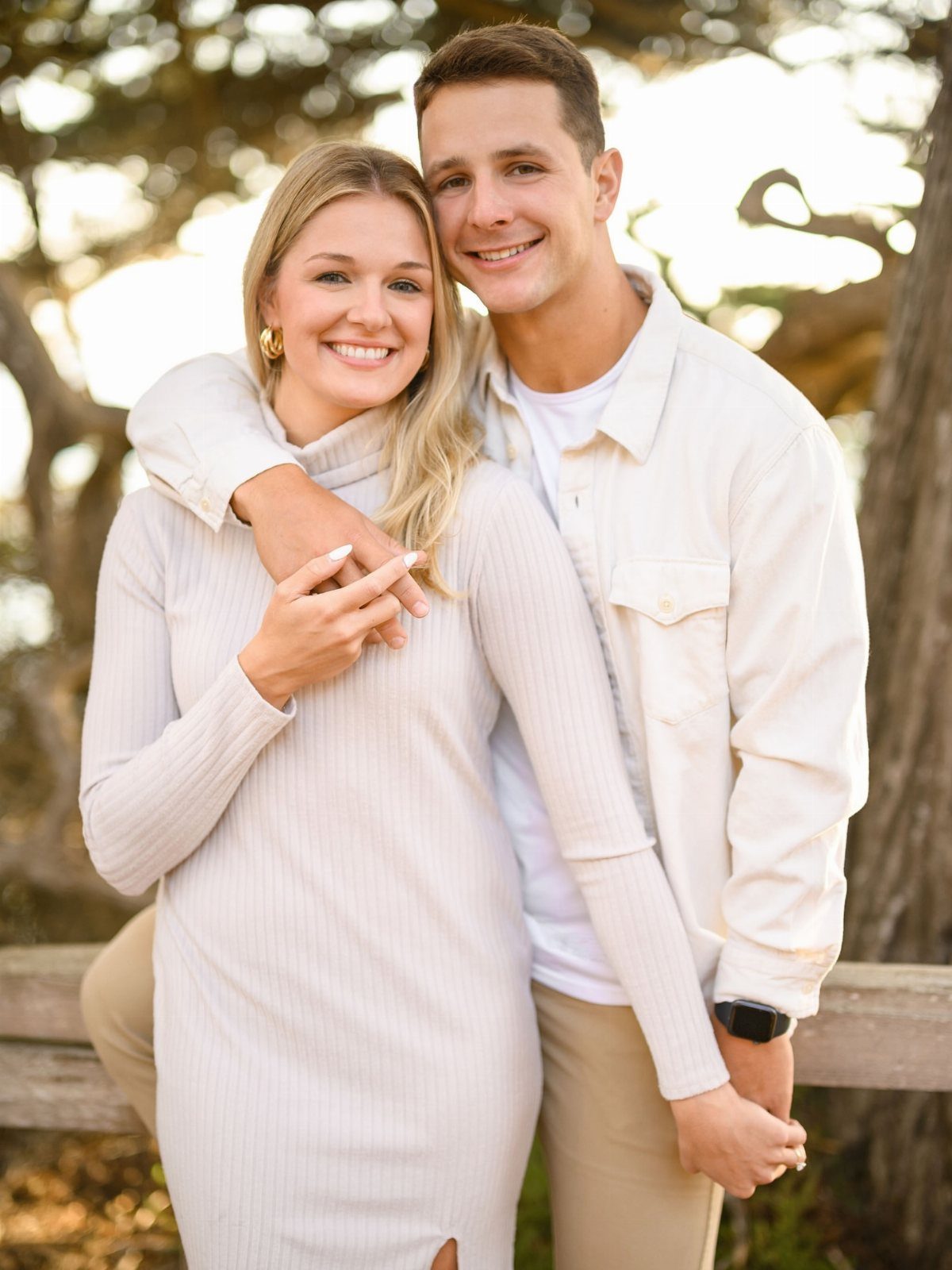
One of you stands behind the other, arms wrapped around their waist or shoulders. The framing keeps both faces visible, either in profile or with the person in front looking at the camera.
This pose feels more natural than standing side by side for couples who don’t love being looked at, and it works in tight spaces where a wider setup won’t fit.
The person in back can rest their chin on the other’s shoulder or press a cheek to theirs.
I like this one for engagement shoots in casual clothes, but it translates to wedding day portraits just as easily.

White Ivory Wedding Bridal Veil: Perfect for any wedding, bridal shower, prom or special occasion.


Bridal Lace Veil: A soft white lace moment that turns your bride era into instant glam!
3. Holding Hands
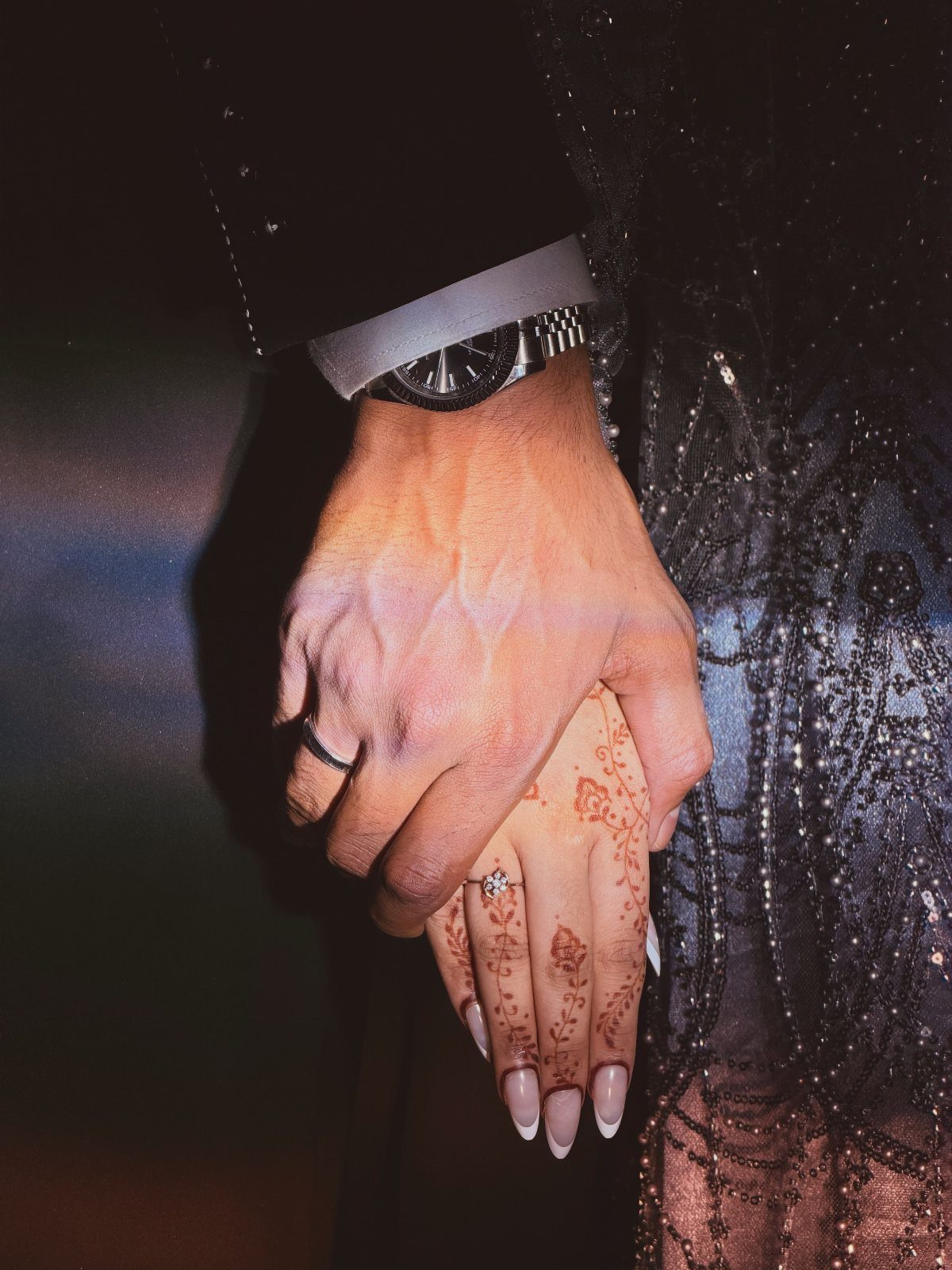
Frame the shot tight on your joined hands, so the rings, dress details or jewelry become the focal point. This one skips faces entirely and lets texture and ornament do the work.
The angle matters: shoot straight down or from the side, and make sure both hands are in good light. If one of you has henna, metalwork or a family ring, position that hand on top.
You end up with a detail shot that still feels like a couple portrait, and it’s easy to get right even if you feel stiff in front of the camera.

150 Creative Posing Ideas: No more awkward pauses during shoots! This set includes 150 carefully curated couple and wedding poses across 8 categories: Facing Camera, Facing Each Other, Hugging & Kissing, Movement, Back View, Sitting & Lying, Ring Shots, and Maternity. A true gem among photography accessories, it helps spark creativity and keeps your sessions flowing

These F-REVER letters make great engagement props

✅ Embroidered "Bride to Be" Lettering: Features neatly stitched wording instead of plain printing. The raised embroidery delivers an elegant, high-end texture, looking stunning and eye-catching in all party snapshots
4. Kissing
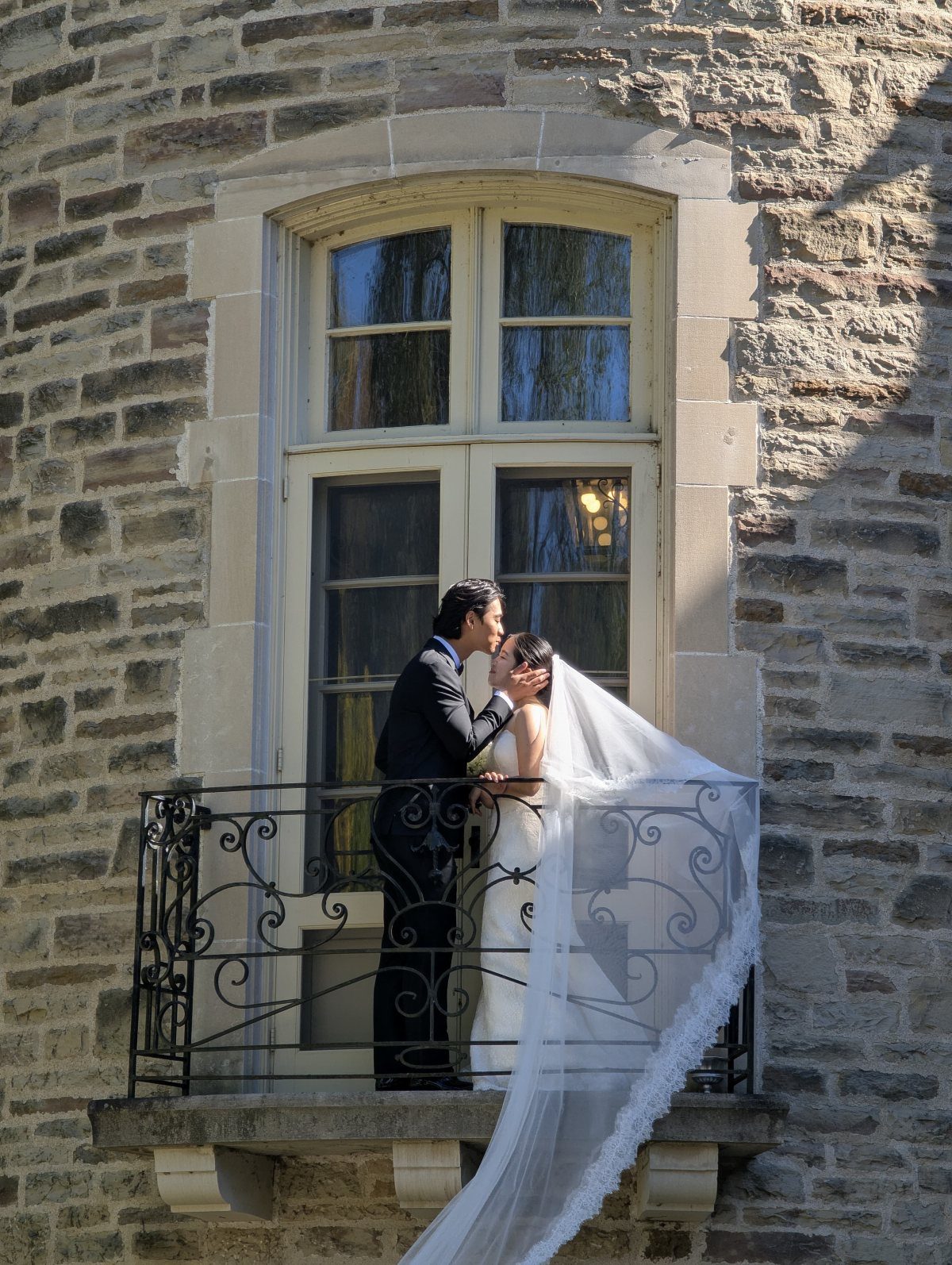
A kiss can be a quick staged moment or something the photographer catches as it happens. Either way, it reads as genuine affection and fills the frame with connection rather than posture.
Turn slightly toward the camera so both profiles stay visible, or face each other fully if the setting and light support it.
A veil, dramatic architecture or strong natural light gives the shot additional shape without requiring you to hold a complicated pose.
If a long kiss feels performative, ask the photographer to shoot you leaning in just before or just after.


5. Walking Away
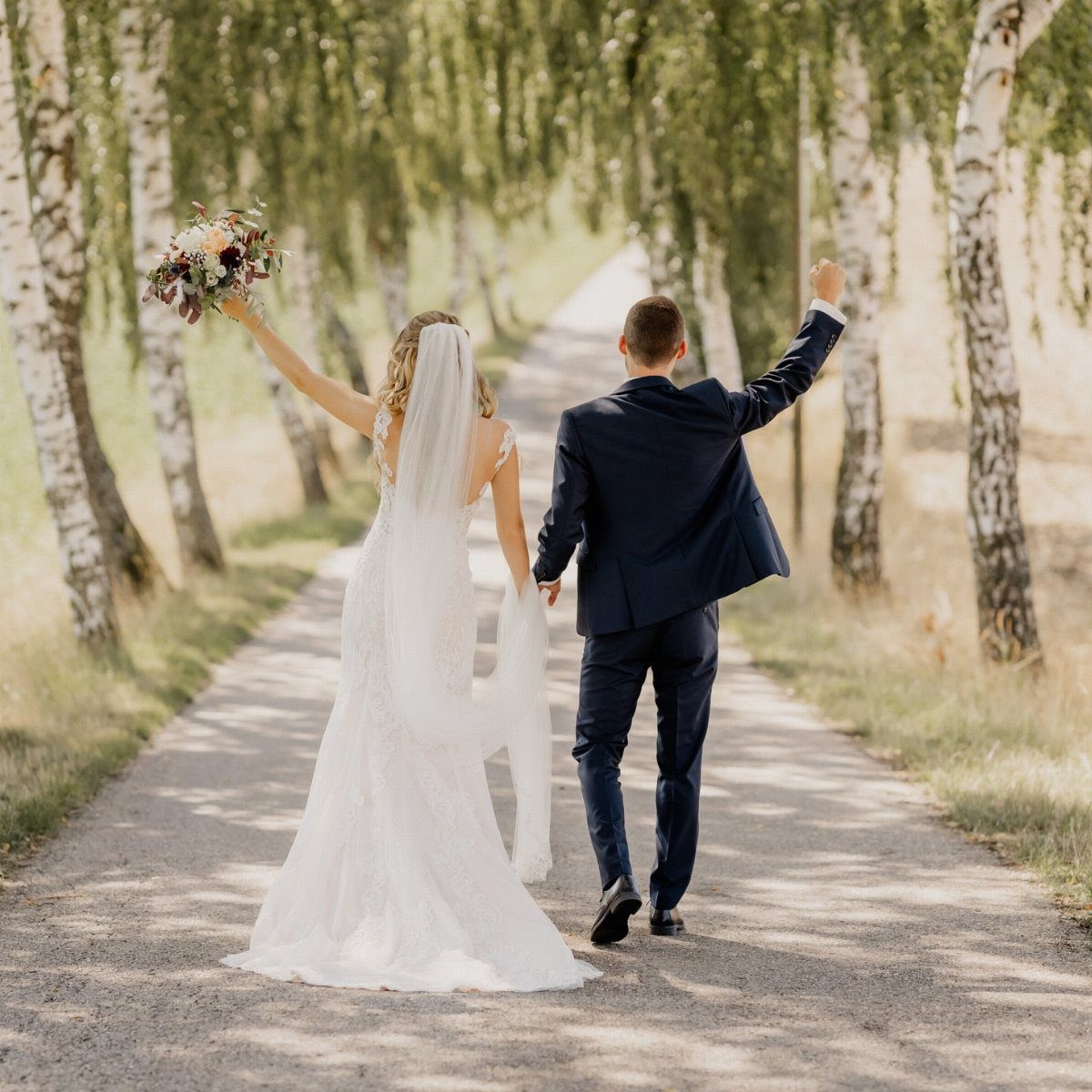
Walking away lets the photographer capture the back of the dress, the train, the veil and the full silhouette without asking you to hold still. It also gives you something to do, which helps if posing makes you self-conscious.
Choose a location with a clear sightline so the background stays uncluttered.
Hold hands, link arms or raise your joined hands overhead if the moment feels celebratory. Glancing back over your shoulder adds a second expression to the sequence.
This works especially well right after the ceremony, when the energy is still high and you’re moving naturally.
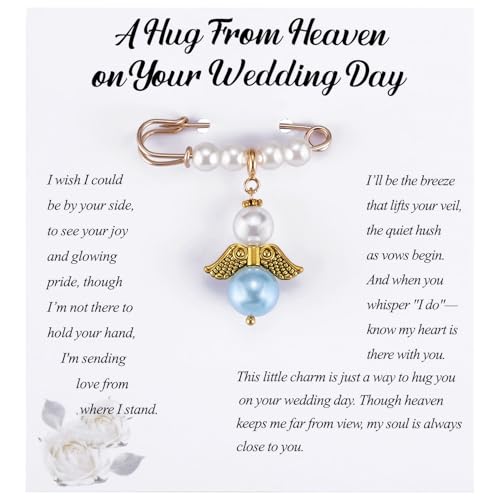
*Angel Wings Pearl Charm Wedding Pin* Features a gold safety pin adorned with 4 gold faux pearls and a delicate angel charm made of a blue pearl and a white pearl and antique-style silver wings, representing the presence of your guardian angel. This "Something Blue" themed angel wings pearl pin has been designed to bring a loved one in heaven to the wedding day

【Vivid Styling】Delicate and romantic abstract couple figurine, modern Nordic ornament, fine workmanship and vivid details, interesting and creative.

🖤 STILL NOT SICK OF YOU THEME – A gothic romantic pocket hug featuring skeleton hands, floral details, custom couple names, and the quote “Still Not Sick Of You.” A sweet keepsake for couples with a playful dark-love style.
6. Couple Portraits
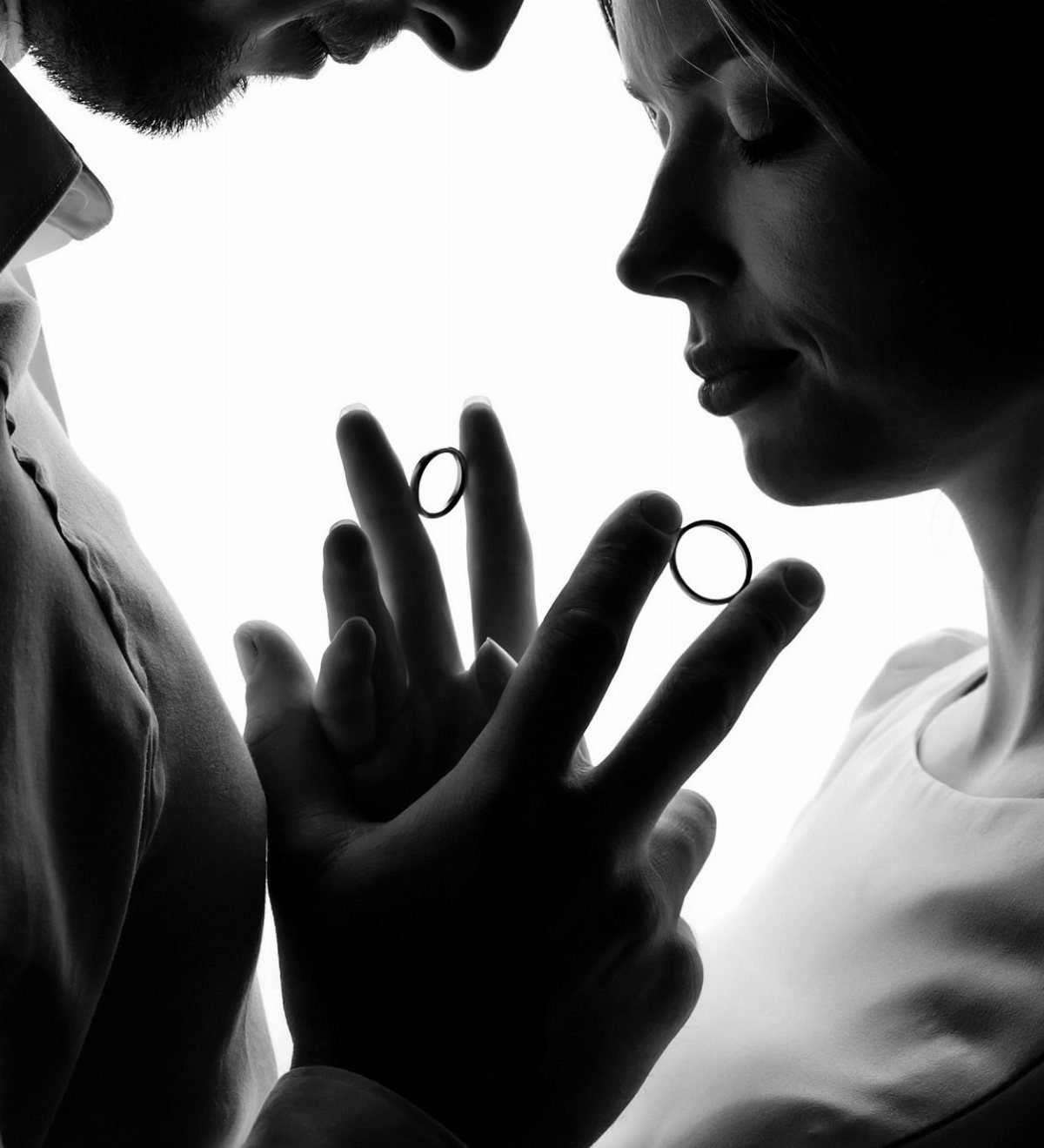
A portrait of just the two of you, no movement or distraction, gives the photographer space to focus on faces, light and the way you stand together. This is the shot that usually gets framed.
Position yourselves close, with shoulders touching or foreheads nearly meeting, so the framing stays tight. Profile shots work when the light is directional, and straight-on framing works when you want both faces fully visible.
Ask for a few variations: one smiling, one serious, one looking at each other instead of the camera. That gives you options when you’re choosing what to print.


※【Package】Fold 1 Pics Decoration Backdrop. Lightweight and easy storage for photo studio.

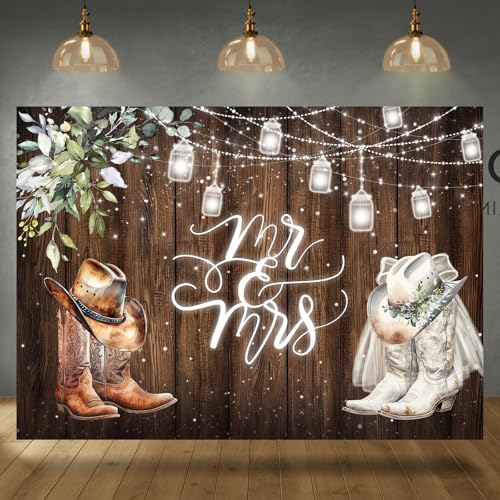
Wedding Party Decoration: You will get 1 pc 82.67 in width, 59 in height birthday backdrop, with “Mr & Mrs" on it; this blue floral wedding backdrop will create a great party scene for the photo
7. Laughing Together
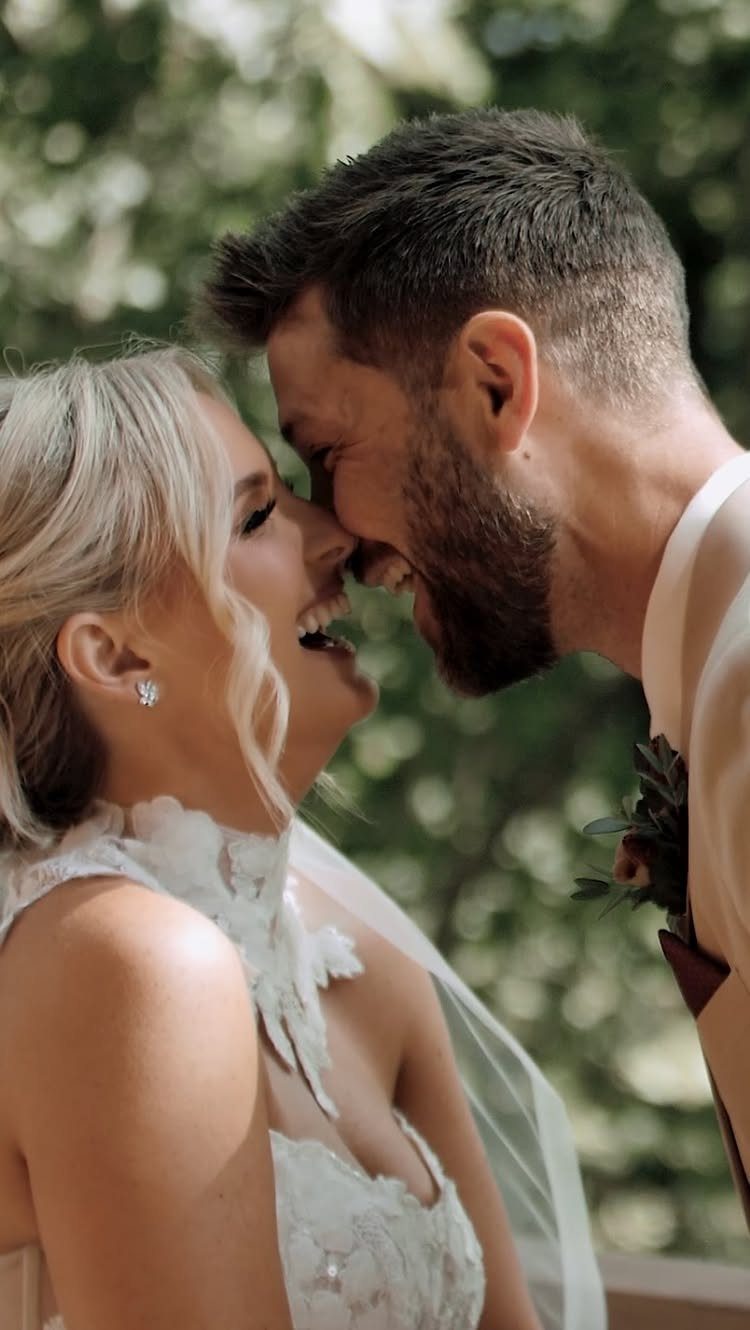
Ask your photographer to say something that gets a real reaction instead of waiting for a natural moment. Genuine laughter holds for only a second or two, so the timing matters more than the setup.
Stand close enough that your faces stay in frame together. Tilting toward each other keeps both faces visible when one of you naturally throws your head back.
This reads as candid even when it’s staged, and it’s easier to pull off than a smile you have to hold.

Elegant Sculpture: These wedding cake toppers recreate the nostalgic charm of vintage weddings. The groom's sharp black suit contrasts beautifully with the bride's flowing white veil. The cake topper wedding is the perfect size to decorate the top of a multi-tiered cake without obscuring delicate frosting details

Elegant Design: This exquisite bridal veil features a sheer, lightweight tulle material that cascades gracefully.

BREATHTAKING 118" x 118" EXTRA WIDE VOLUME: Measuring an impressive 3 by 3 meters, this cathedral length wedding veil offers an ultra-wide, dramatic floor-sweeping train. The expansive width creates a stunning, full-bodied drape that flawlessly surrounds your wedding gown, perfect for grand church entrances and capturing unforgettable bridal photography.
8. The Dip
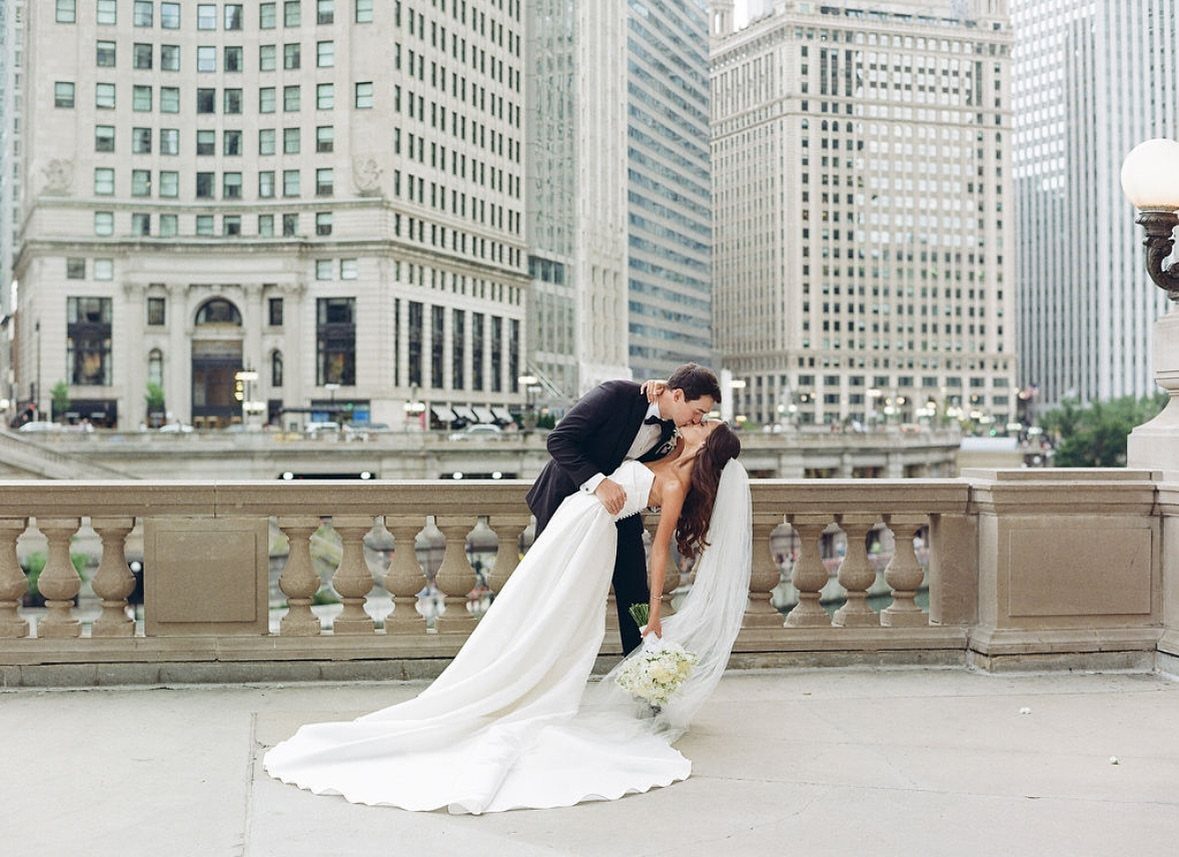
The dip pose needs some strength and balance, so practice the angle once before the photographer starts shooting.
Keep the dip shallow if either of you feels unsteady, and make sure the train or veil is clear of your feet.
A deeper angle looks more dramatic but takes longer to hold, and the person being dipped should keep their neck supported rather than letting their head drop all the way back.
The shot works best when both of you commit to the movement rather than hesitating halfway through.

60 REAL PHOTO EXAMPLES: Includes 60 Wedding pose cards featuring real photo examples to help photographers guide clients with confidence.

A great gift for Anniversaries, Birthday, Engagements, Weddings, Couples, First dates, Valentine’s Day, Christmas, or any Memorable Date.

Durable: made from pu, lace, and fabric, these bouquets are designed to last and maintain their vibrant appearance,wedding bride bouquet,wedding bouquet for bride
9. The Twirl
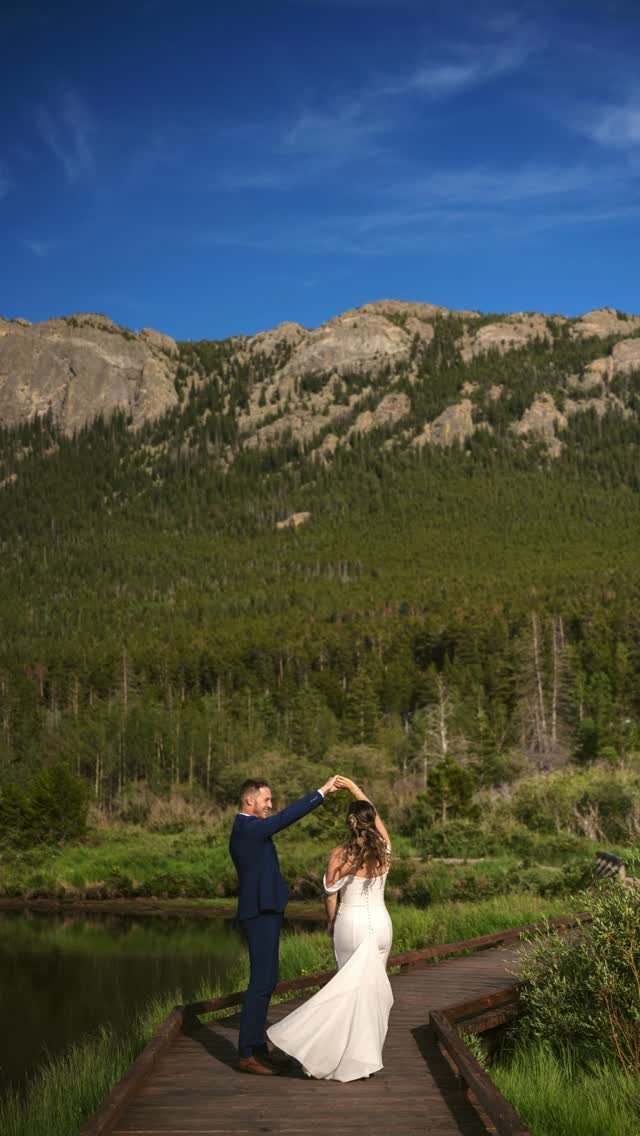
One of you holds the other’s hand overhead and guides them through a spin. The movement shows off the dress in motion and keeps both of you doing something rather than standing still.
Spin slowly so the photographer can catch multiple frames, and keep your joined hands high enough that the fabric has room to flare. If the skirt is full or the train is long, practice the direction once so nothing tangles.
This works well in an open space where the dress has room to move without catching on furniture or low branches.
10. Couple in Wide-Angle Landscape
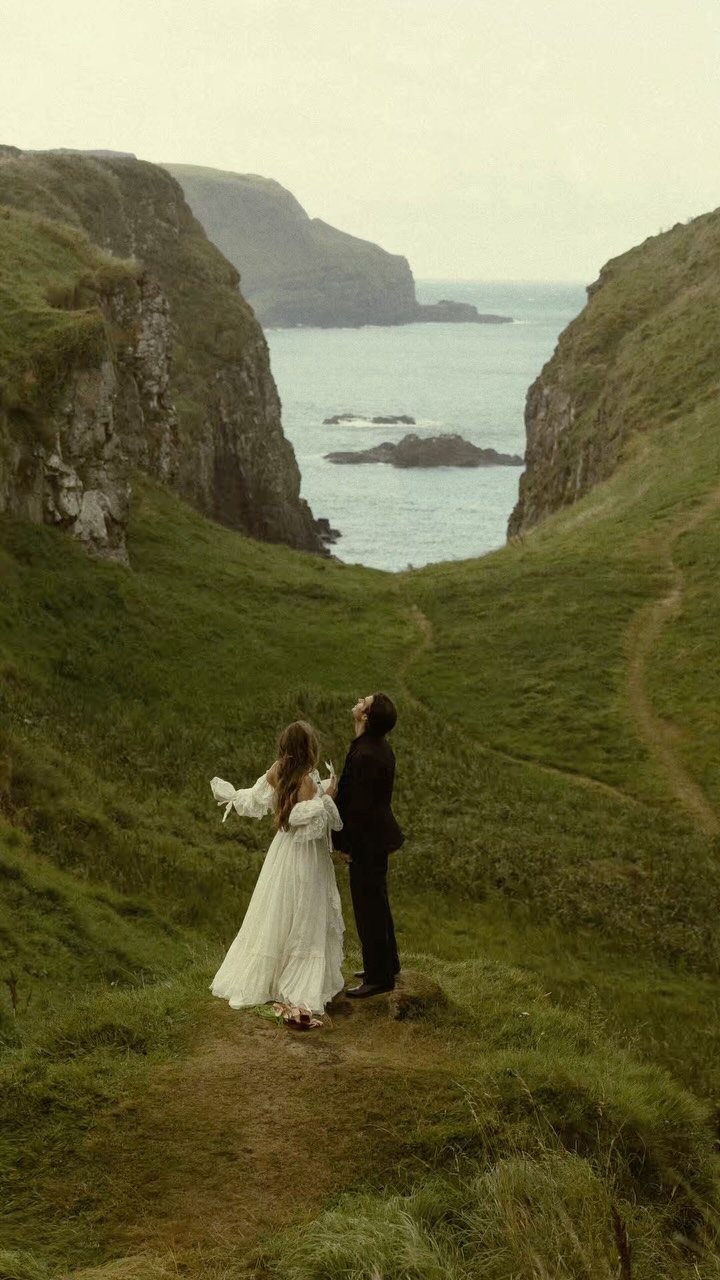
Positioning the couple in a wide-angle landscape gives the shot scale and context, especially if you’re getting married somewhere with striking architecture or natural scenery.
Stand where the light hits both of you evenly, and wear something with enough contrast that you don’t disappear into the background. A wide lens exaggerates distance, so you’ll look farther apart than you are if you’re not touching.
The composition shifts attention from your faces to the setting, which makes it easier if direct portraits feel uncomfortable.

Wedding Gift to Your Son: Your sons wedding day is one of the most memorable occasions of yours and his life so this personalized keepsake wedding day gift from you to him will be treasured forever.
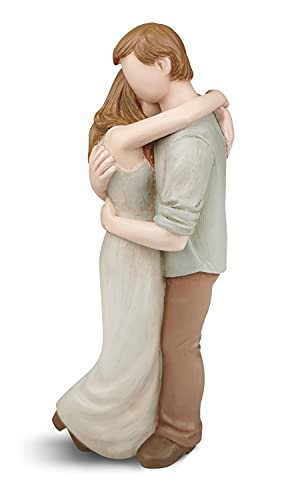
❤ Precious Gifts: Promised Lovers' Sculpted hand-painted figure. Celebrating the love we have and remenber the moments we hug each other .A hug is the perfect gift- one size fits all. A premium resin hug couple figurine is the great gift to express all.

Sweet Embrace Design --- This charming couple figurine captures a tender hug between a boy and girl, symbolizing love, affection, and togetherness.
11. Forehead Kiss
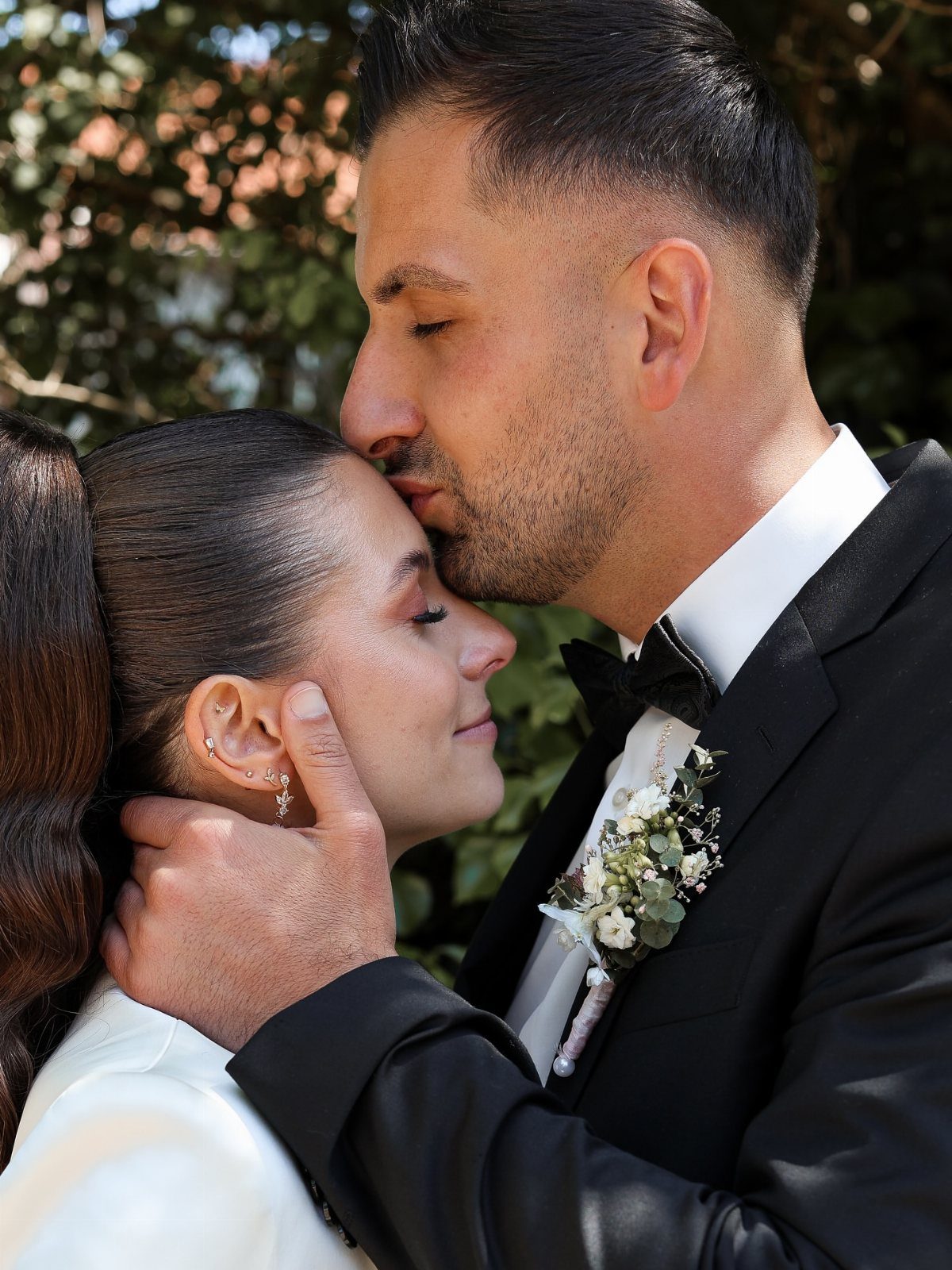
One of you leans in and presses a kiss to the other’s forehead or temple.
This reads as tender without requiring both faces to be visible, and it’s easier to hold than a mouth-to-mouth kiss if you’re waiting for the photographer to get the shot.
The person receiving the kiss can close their eyes or look down, and the one giving it should angle their face so the profile stays clear.
If a veil is involved, pull it back or drape it so it doesn’t block either face.
A forehead kiss reads as affectionate on camera but feels less staged than a mouth-to-mouth pose.
12. Almost Kiss
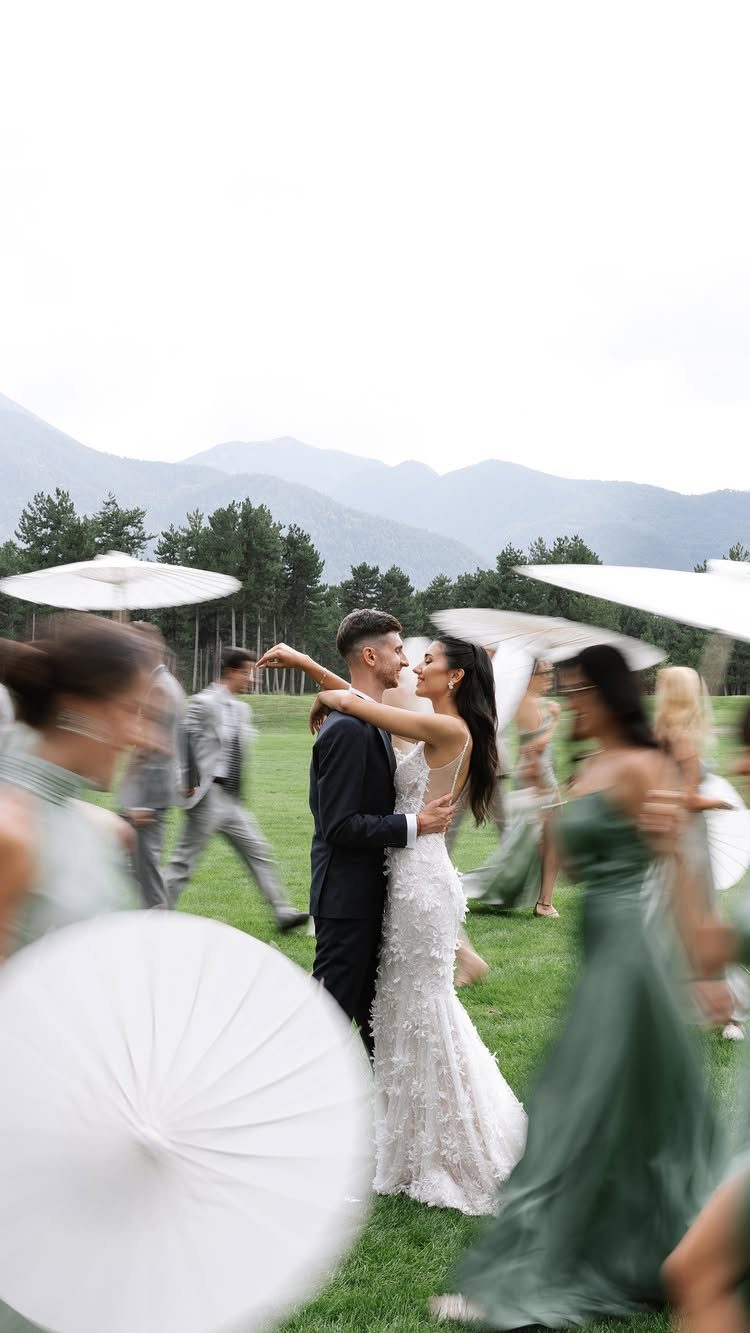
Stop just before your lips meet, close enough that the space between you stays visible. The tension in the pause gives the shot its shape, and it feels less staged than holding a kiss for the camera.
Angle your faces so both profiles stay in frame, and keep your eyes closed or looking at each other rather than at the lens. The photographer needs to shoot quickly because the moment doesn’t hold for long.
This lands somewhere between a candid and a posed shot, and it’s easier to time than waiting for a spontaneous kiss.
13. Lifting a Partner
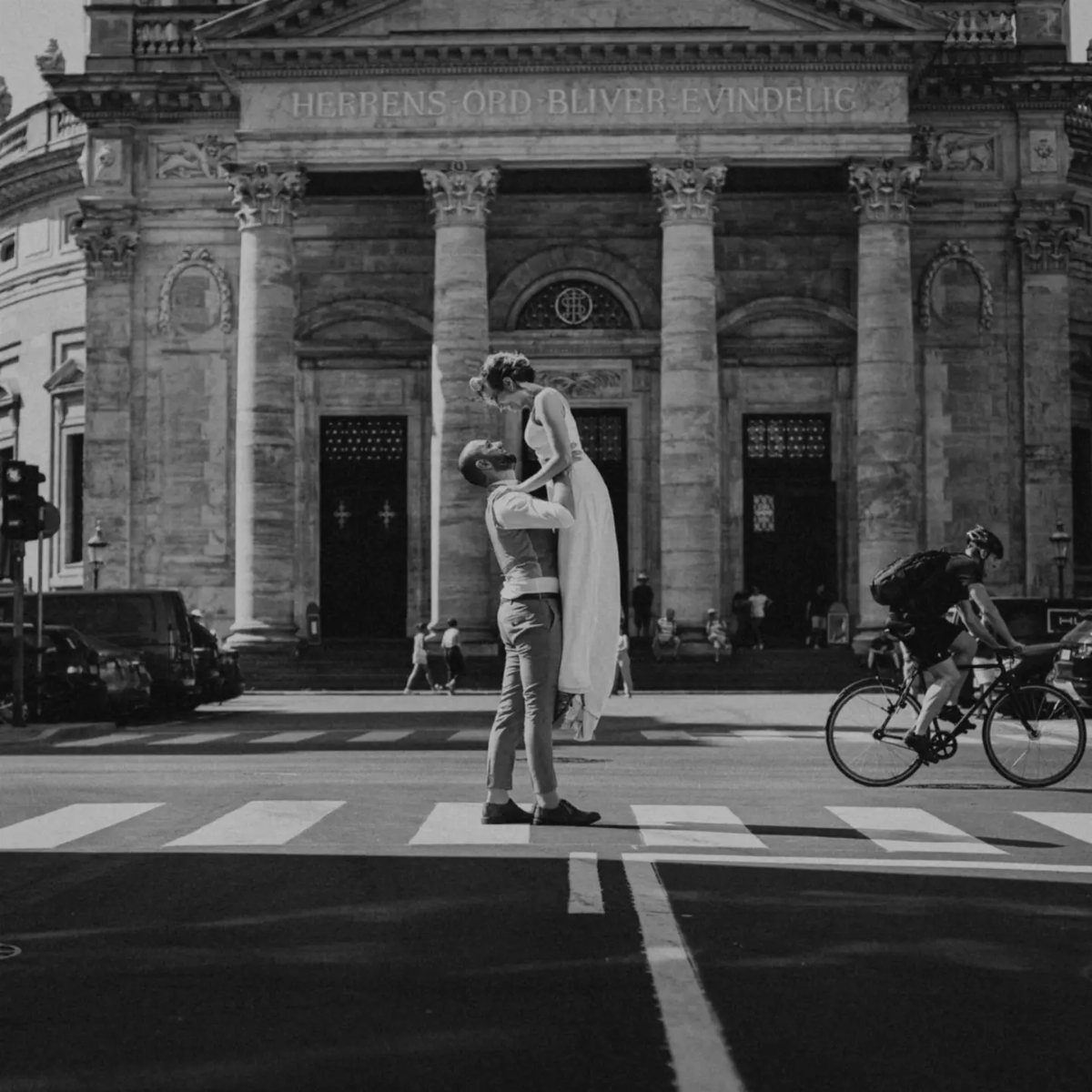
One partner lifts the other off the ground for a second or two, usually with hands around the waist or under the thighs.
The lift shows strength and spontaneity, and it gives the photographer a high-energy frame that breaks from the usual standing poses.
Make sure whoever is doing the lifting can hold the position long enough for the photographer to get the shot. Test the angle once before committing, and keep the lift brief if balance feels uncertain.
An open space gives you room to move without stepping into traffic or tripping on a curb.
14. Standing Side by Side
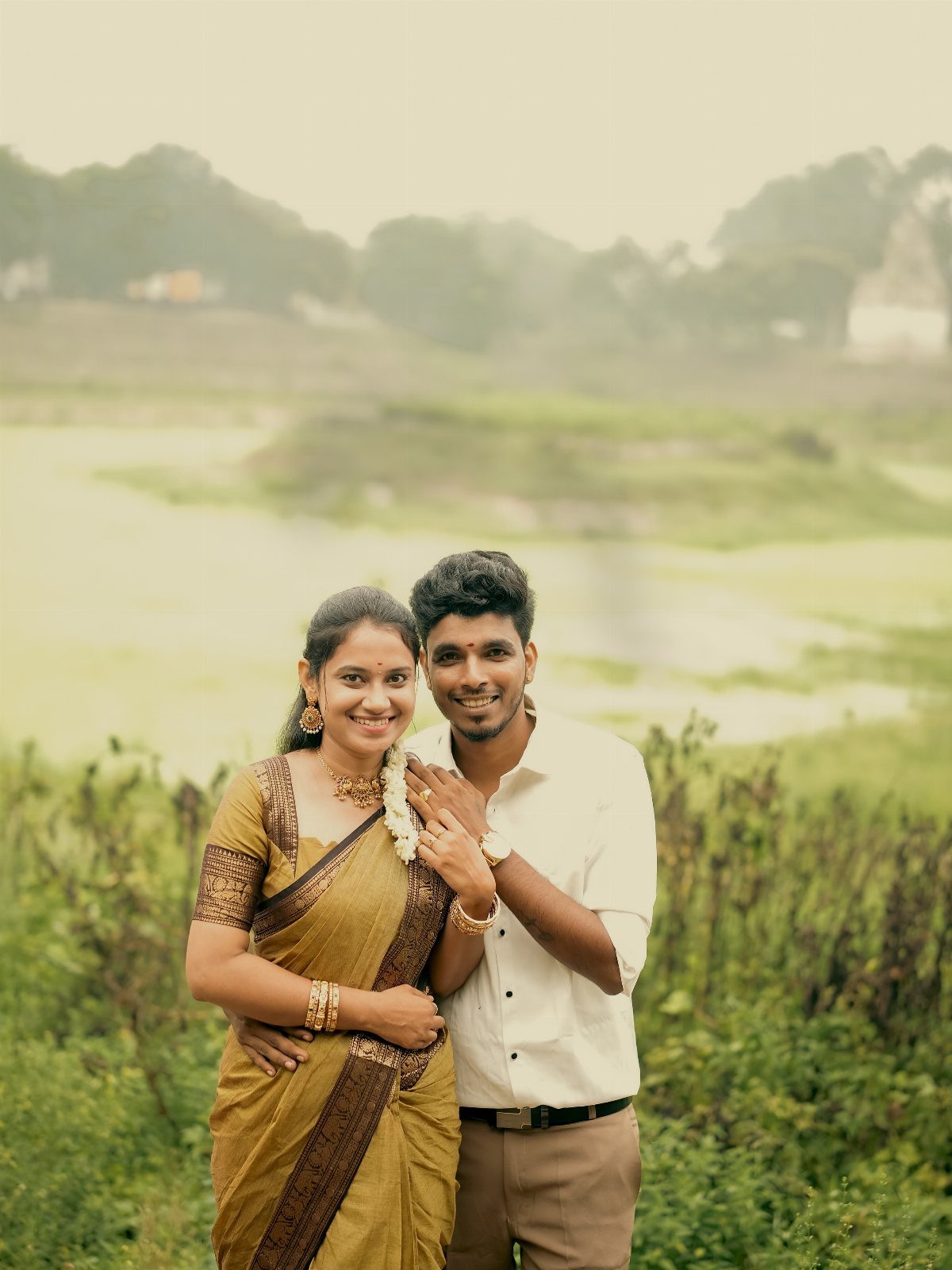
Standing next to each other, shoulders close or touching, keeps the framing simple and lets the photographer focus on your faces and what you’re wearing.
This reads as straightforward and composed, and it works when you want a formal portrait without adding movement or layers.
Face the camera or angle slightly toward each other, depending on how the light falls.
This setup works anywhere, indoors or out, and it’s easy to repeat with different backdrops if you’re shooting in multiple locations.
15. Couple with Their Baby
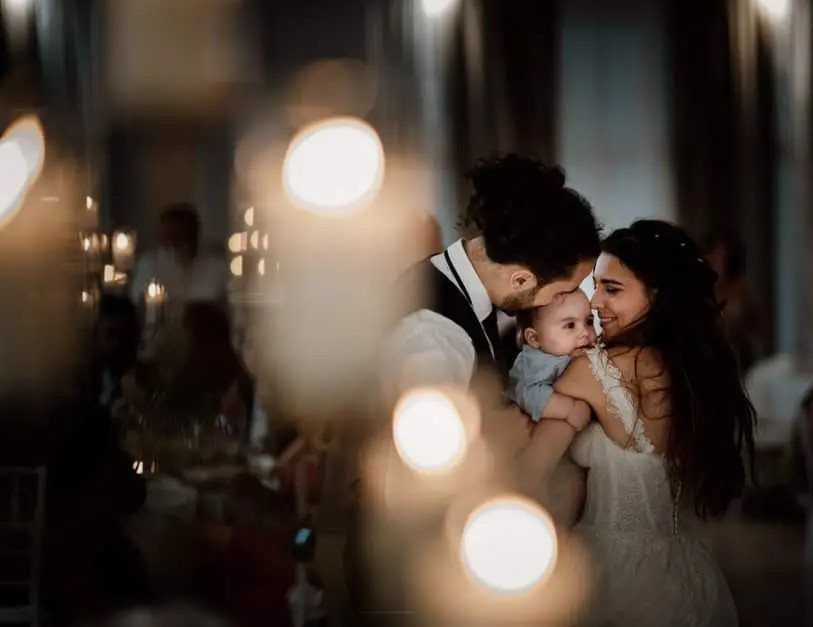
Holding your baby together in a softly lit indoor setting adds a family dimension to your wedding portraits. The low light and close framing keep attention on the three of you rather than the surroundings.
Position yourselves so the baby is visible between you, and make sure the lighting is even across all 3 faces. If the baby is very young, support their head and keep the pose brief so no one gets uncomfortable.
This shot works best when the light is warm and indirect, which keeps the mood gentle and gives the frame a lived-in feeling.
16. Reflection in a Car Window
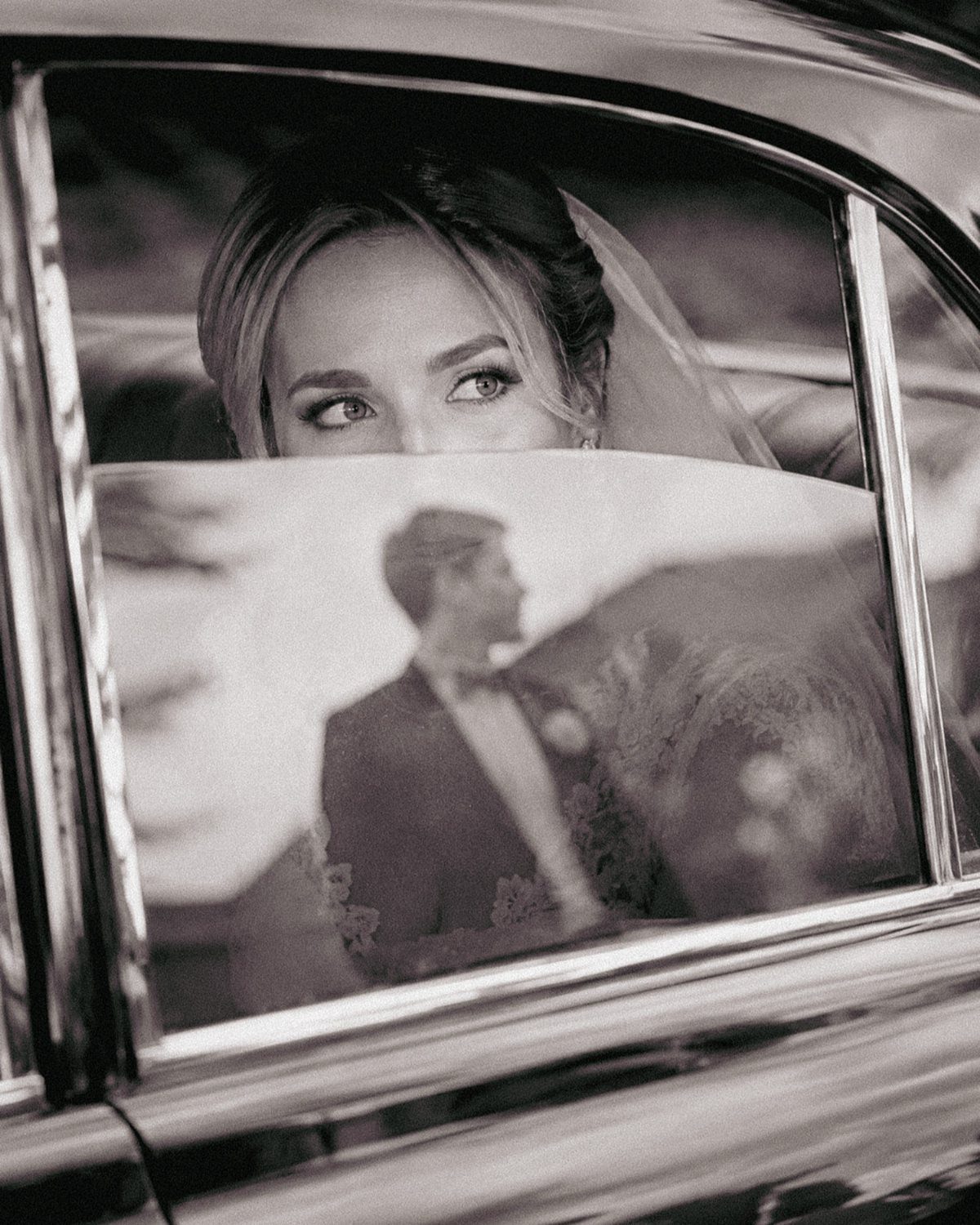
Shoot through a car window so the groom’s reflection appears on the glass while the bride looks out or toward the camera.
The window needs to be clean, and the light has to hit the glass at an angle that shows the reflection without washing it out.
Position the groom close enough to the car that his face stays sharp in the glass.
17. Groom Adjusting the Dress
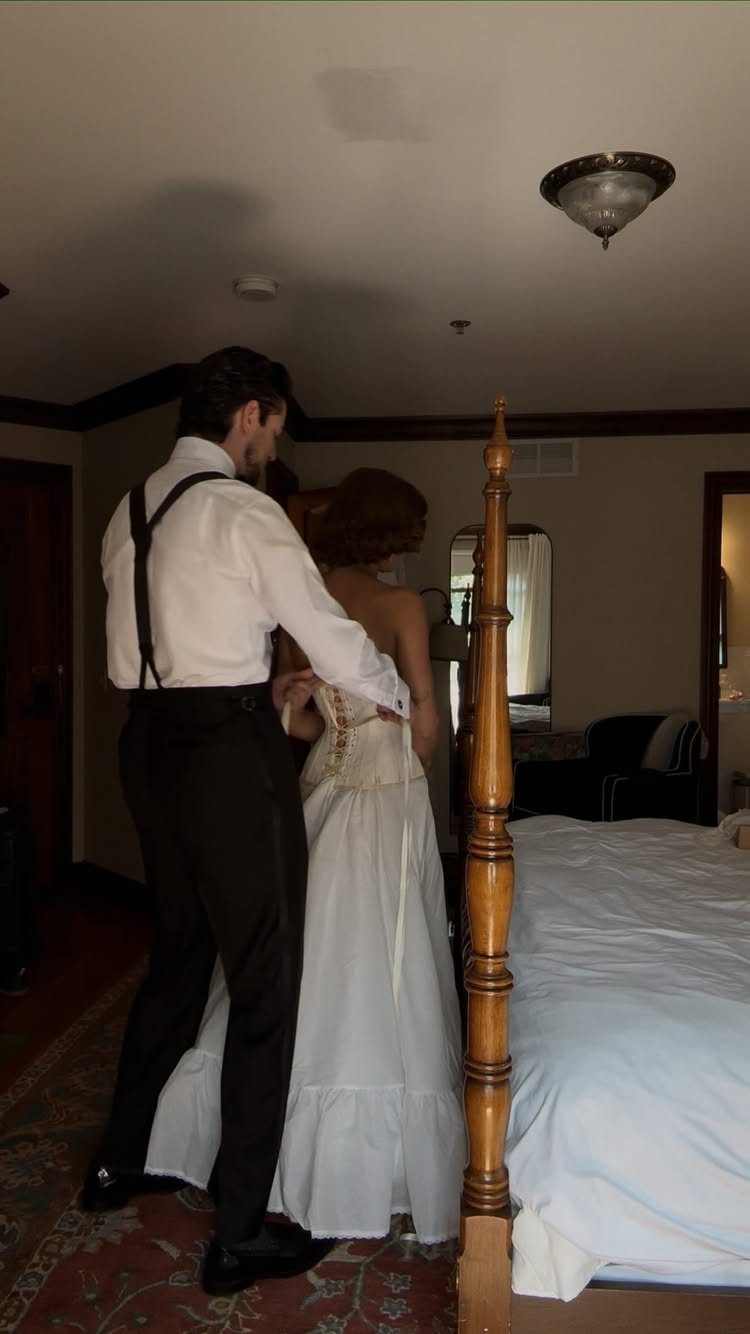
The groom fastens buttons, adjusts the train or helps with the back of the dress while the bride stands still.
This captures a quiet, practical moment that feels more intimate than a posed portrait, and it works well in a bedroom or dressing space where natural light comes in.
The photographer should shoot from behind or to the side so the groom’s hands and the dress details stay visible. If the groom is fastening something, give him time to actually do it rather than just placing his hands there.
This reads as candid even when you know the camera is present.
18. First Kiss
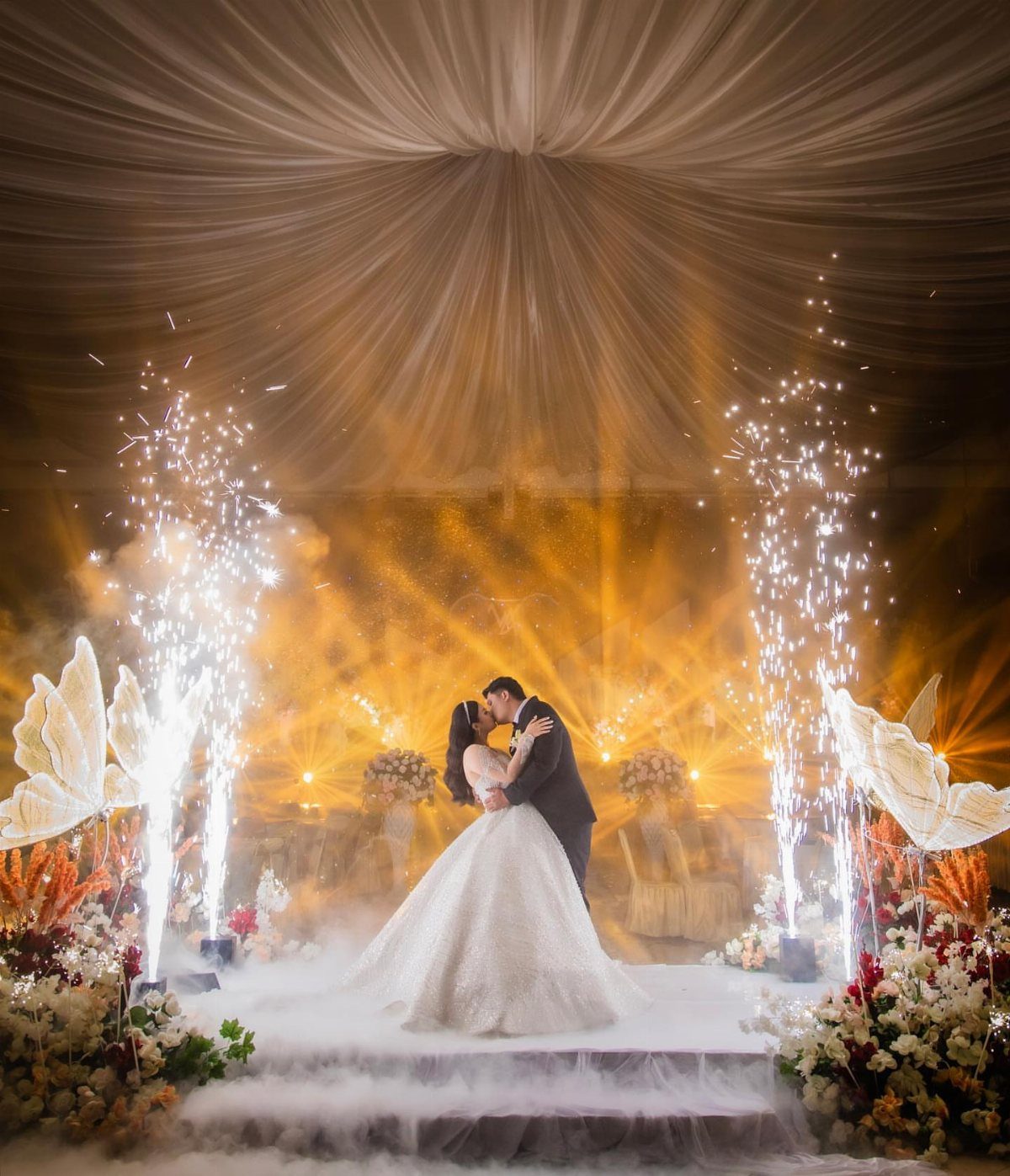
The photographer captures the moment your officiant pronounces you married and you kiss for the first time as a married couple.
This is the shot that marks the ceremony’s turning point, and it usually gets more attention than any other single frame from the day.
Tell your photographer where you’ll be standing so they can position themselves for a clear sightline. If you’re using sparklers, fog or dramatic lighting, test the setup during rehearsal so the effect doesn’t block your faces.
The kiss itself should feel like the real thing, not a performance, because this is the one everyone will remember.
19. Wedding Exit
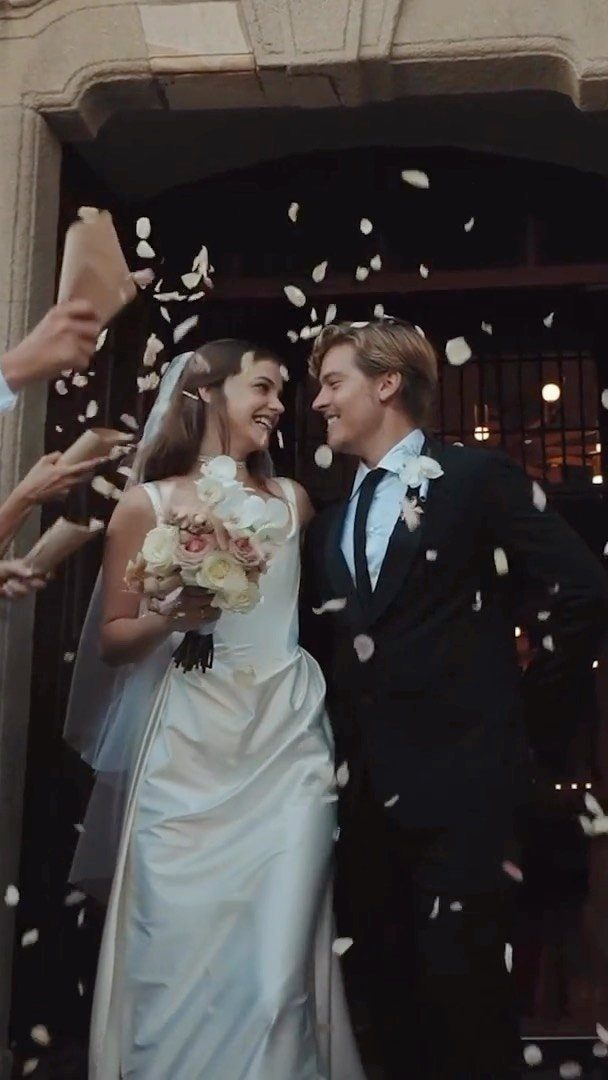
The exit is the final shot where both of you are still in full wedding attire, and it usually involves petals, sparklers or rice falling as you walk out together.
Stand close and keep walking so the photographer can shoot a sequence rather than a single frame. If petals or confetti are involved, ask guests to throw them high so they fall around you instead of hitting you directly.
Even light and a clear path make the difference.
20. Full Wedding Party
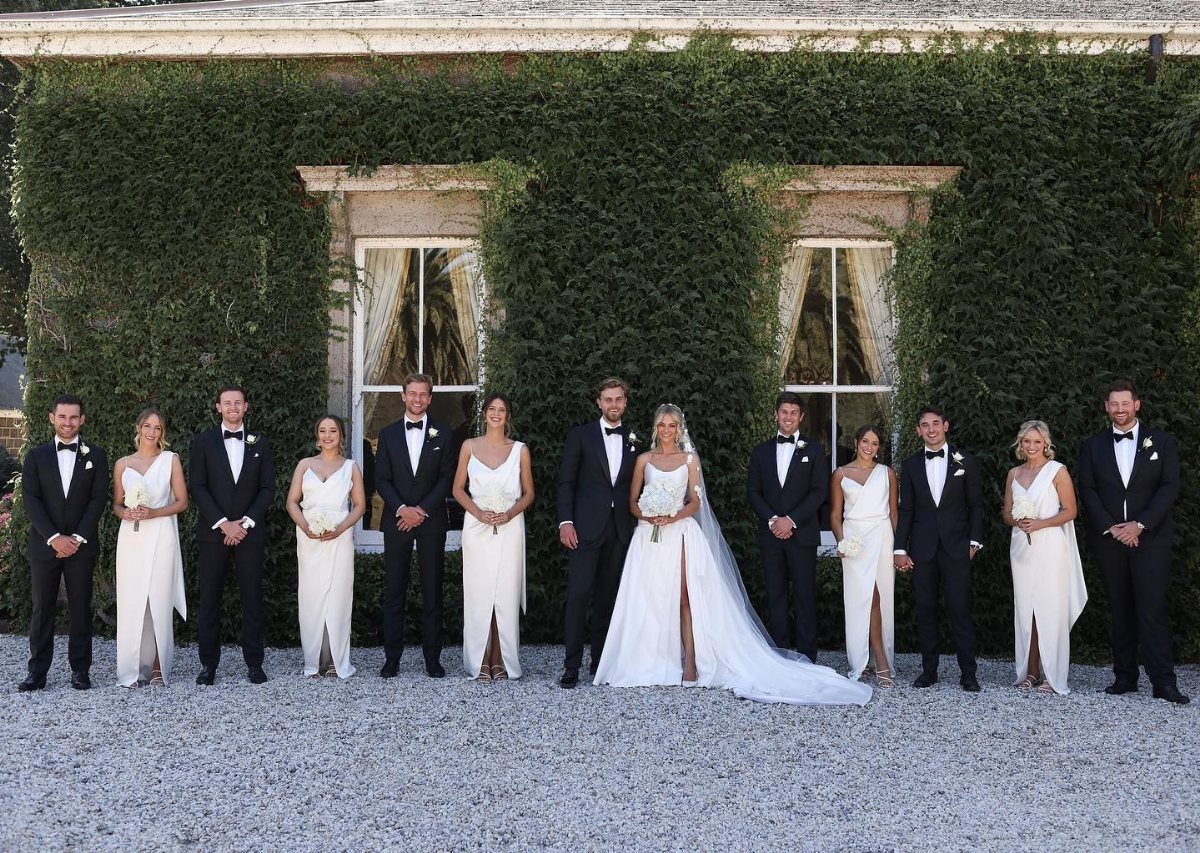
A group shot of the full wedding party gets everyone into one frame, and it’s usually the only photo that includes all your bridesmaids and groomsmen at once.
Arrange the group in a line or a shallow arc so every face stays visible, and make sure no one is standing directly behind someone else.
Choose a spot with enough space to fit the full group comfortably. The photographer should shoot from a slight distance so the edges of the group don’t get cut off.
This is the shot you’ll use if you’re making a group thank-you card or a photo book that includes everyone.
21. Couple’s First Look
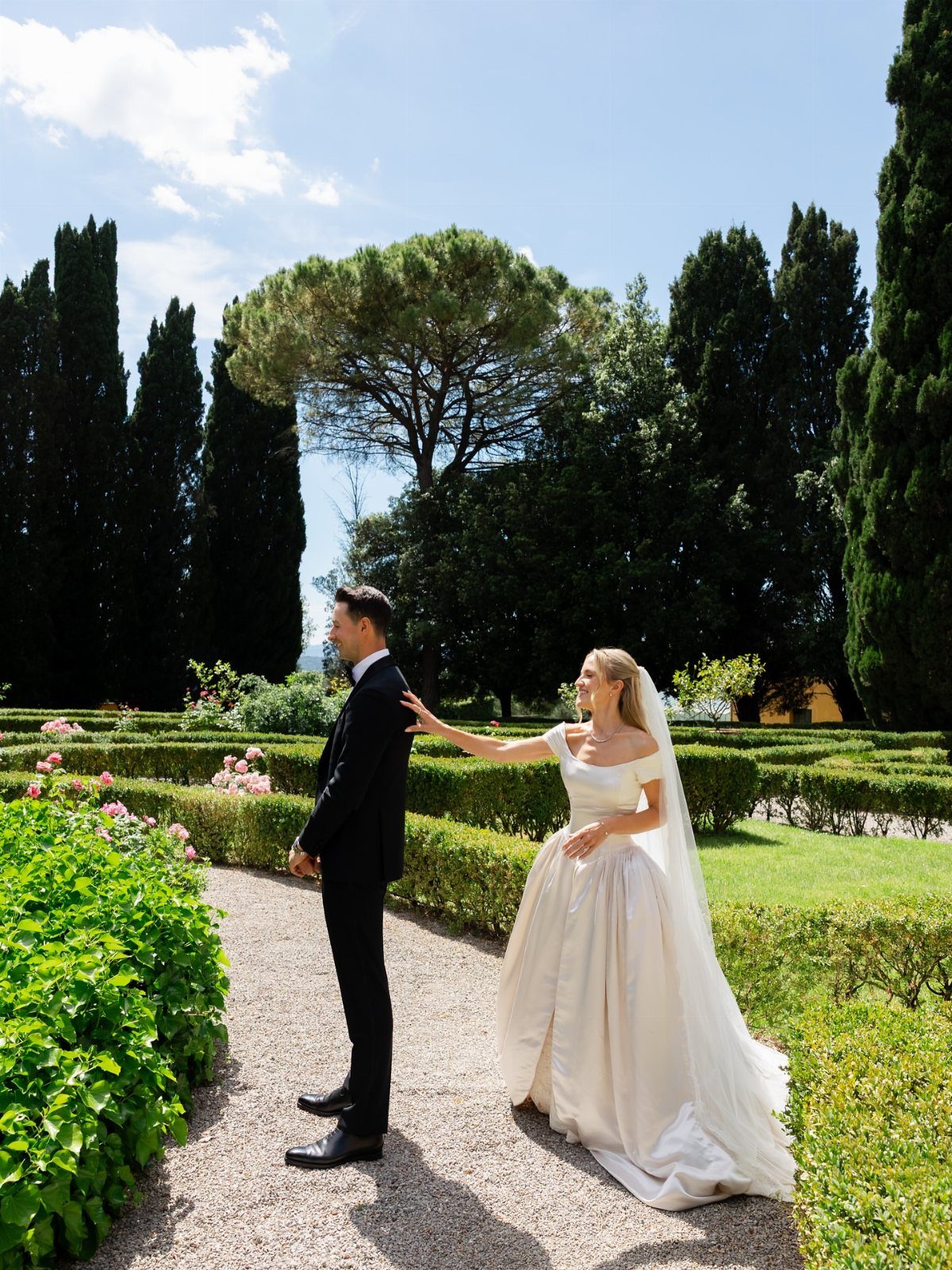
A first look happens before the ceremony, when the groom sees the bride in her dress for the first time.
One of you stands with your back turned while the other approaches and taps your shoulder, and the photographer captures the reaction when you turn around.
Pick a quiet location where you won’t be interrupted, and give yourselves a few minutes without the rest of the wedding party nearby. The reaction only lasts a second, so the photographer needs to be ready before you turn.
It takes some of the pressure off the ceremony itself, and you get a private moment before the day gets busy.
22. Veil Toss
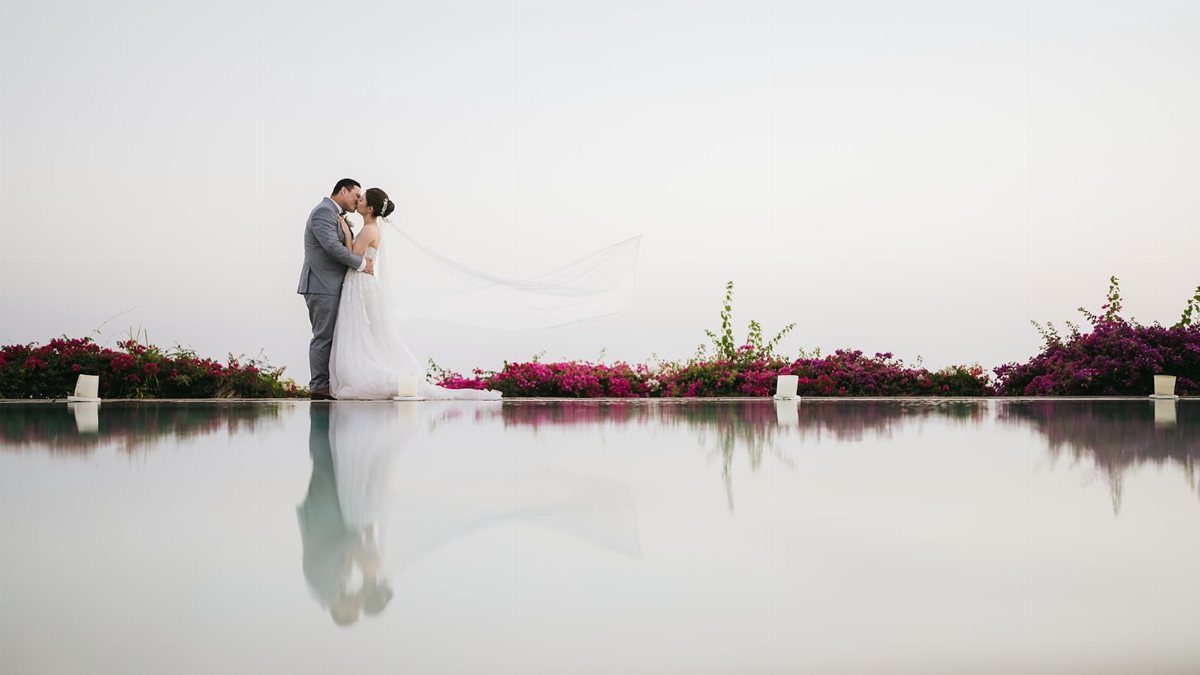
Wind or a deliberate toss sends the veil into the air behind the couple while they kiss or stand together.
The fabric in motion adds drama to the shot, and it works especially well if the veil is long and sheer enough to catch the light.
Time the toss so the photographer is ready, and make sure the veil has enough length to create a shape when it’s airborne.
A breeze does most of the work, but someone can also lift and release the veil from behind if the air is still.
This shot needs open space and good timing, and it’s easier to repeat than most action shots if the first attempt doesn’t land.
23. Group with Parents
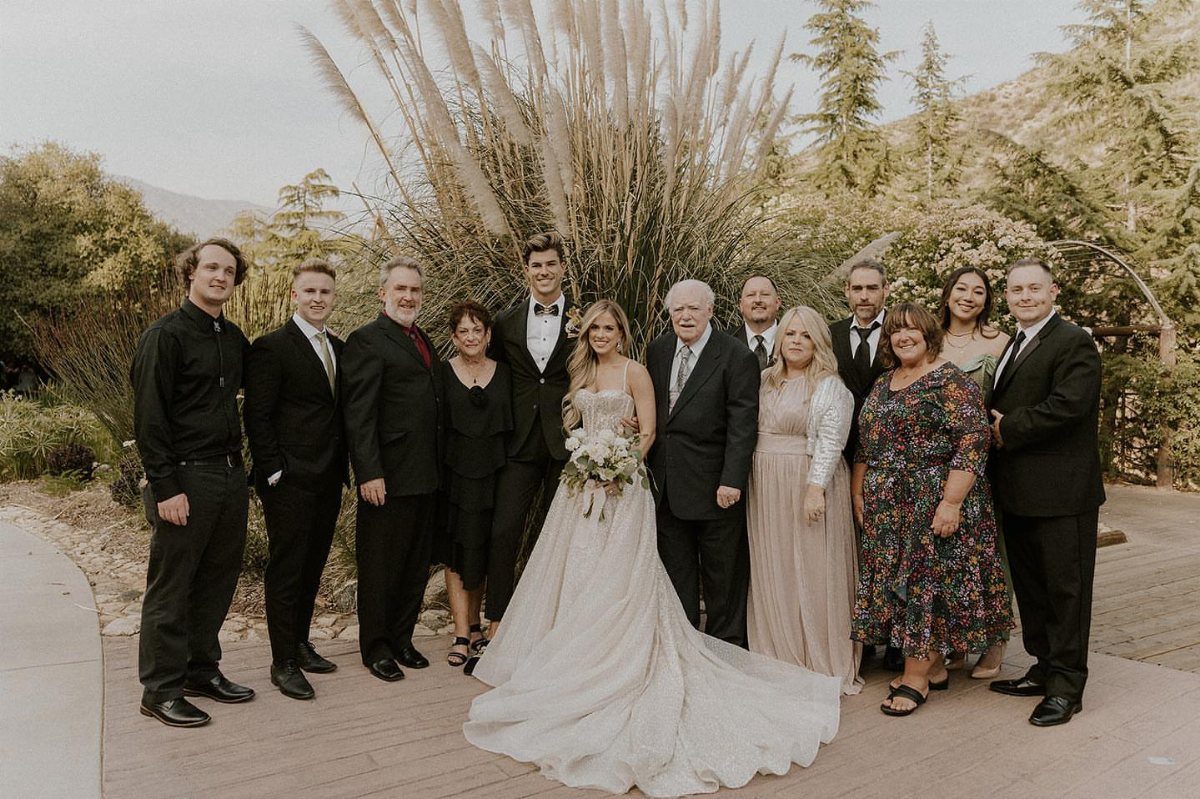
A photo of the couple with both sets of parents captures the families together, and it’s often the only formal portrait that includes parents from both sides.
Stand in a line or a shallow cluster so all faces stay visible, with the couple in the center and parents on either side.
Choose a spot with even lighting and enough room for everyone to stand comfortably without crowding. If one parent is significantly shorter or taller, adjust the spacing so the height difference doesn’t throw off the framing.
This is the shot parents usually ask for, and it’s worth taking a few frames to make sure everyone’s eyes are open.
24. Groom with Groomsmen
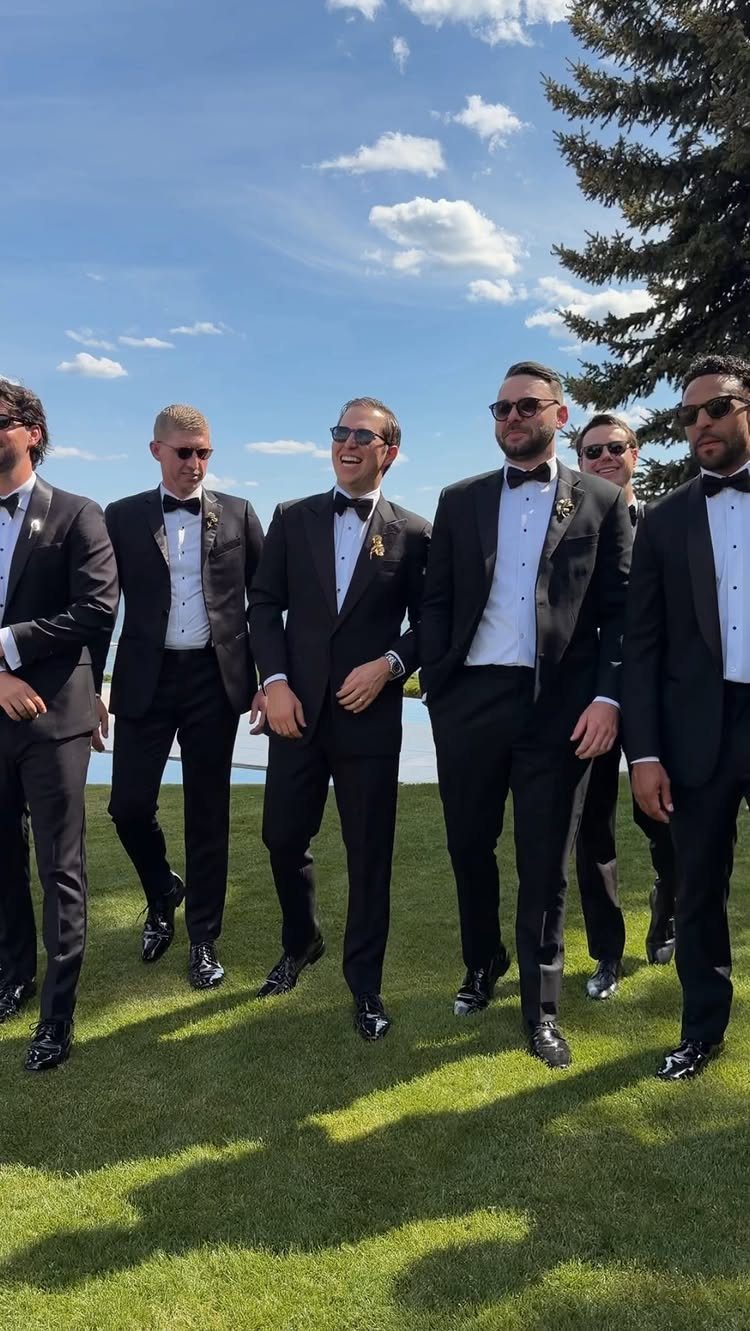
The groom and groomsmen in matching attire, posed or walking together, gives the photographer a chance to capture the group dynamic without the rest of the wedding party.
Line up side by side or walk in a loose cluster, and make sure everyone’s face is visible rather than blocked by someone in front.
A clear background keeps attention on the group, and open space gives you room to move if you’re walking. If sunglasses are part of the look, wear them consistently so the framing stays uniform.
This is the groomsmen equivalent of the bridesmaids’ group shot, and it works well right before the ceremony when everyone is already dressed.
25. Kids at Wedding
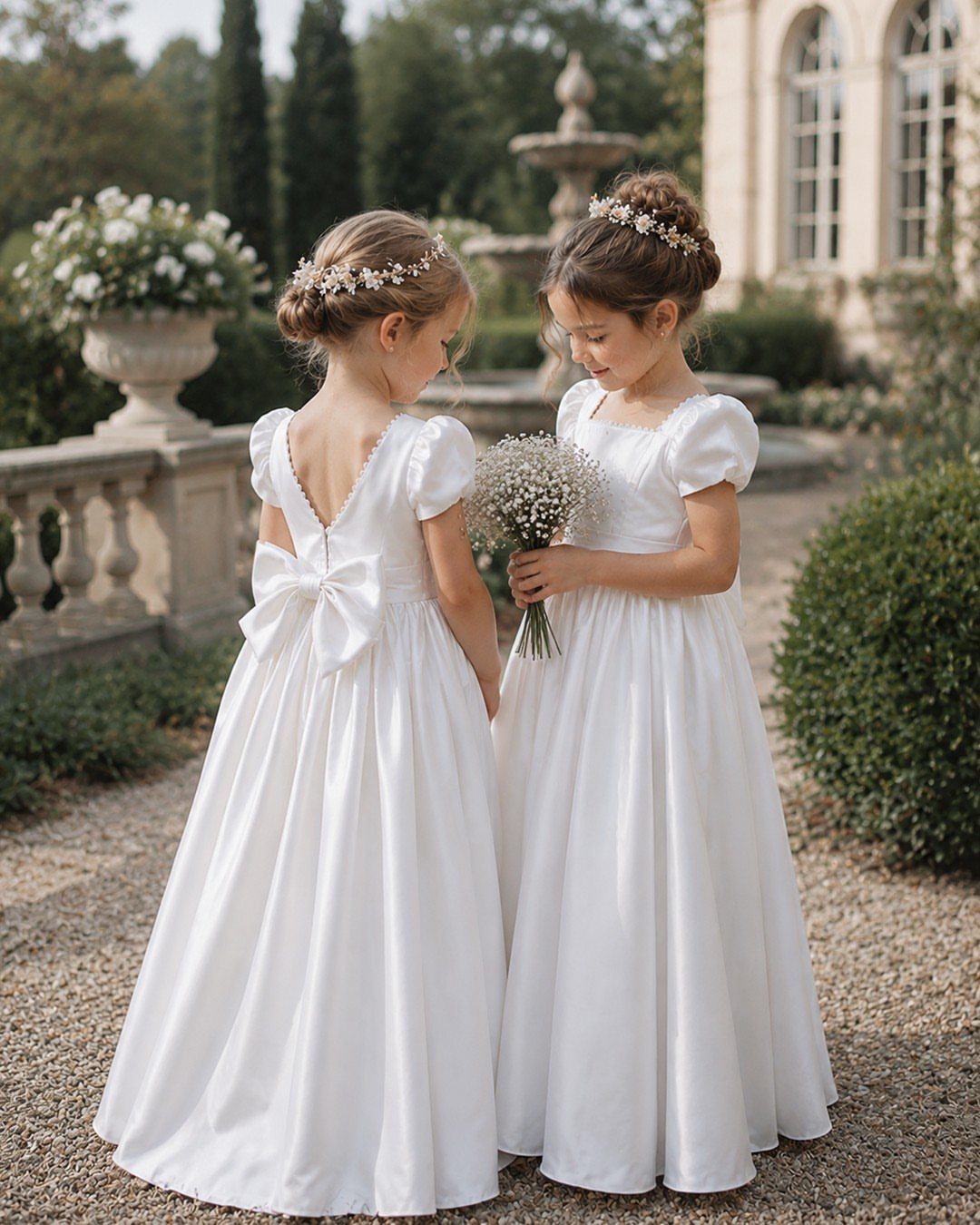
Children at a wedding give the photographer candid moments that feel spontaneous even when you’ve asked them to stand still for a second.
Position flower girls or ring bearers near the couple or in a spot with good natural light, and let them hold bouquets or props so their hands have something to do.
Kids won’t hold a pose for long, so the photographer needs to shoot quickly and be ready for whatever expression comes through.
If the children are very young, keep the session short and have a parent nearby to help redirect attention.
The best shots usually happen in the few seconds before they get distracted.
Help Camera-shy Couples Relax
Movement makes the difference when one or both of you freeze in front of a camera.
Walking, swaying or twirling gives you something to do instead of holding a pose, and the photographer can shoot while you’re in motion rather than asking you to stay still.
A whisper or a quiet conversation keeps your attention on each other instead of the lens, which takes the pressure off performing for the camera.
Clear direction from the photographer keeps you from standing around wondering what comes next, but then they should step back and let you move through it without hovering.
If direct portraits feel unbearable, plan fewer of them.
A handful of shots where your faces aren’t visible or where you’re looking at each other instead of the camera can carry the album, and you’ll look more comfortable in those than in 20 forced smile-and-stare frames.
Plan Portrait Time and Light
Timing determines which portraits are possible.
Sunset light means finishing the ceremony at least an hour before the sun goes down, then allowing 10–15 minutes or more for couple portraits. Trees move that deadline earlier, since the canopy blocks direct light before the sun actually sets.
Weather and the season change how long usable light lasts, so check sunset time for your date and location rather than assuming you’ll have an extra hour.
A photographer can’t shoot good portraits in the dark, and trying to squeeze them in after the timeline has already run over leaves you with rushed, poorly lit frames.
If golden hour matters to you, build the ceremony start time backward from sunset and leave room for delays.
Organize Family Group Photos
Tell everyone exactly where and when to gather for family portraits, and ask someone other than the photographer to round people up when it’s time.
An usher or a family member who knows faces can queue the next group while the current one finishes, which keeps the sequence moving.
Split immediate family and extended family into separate blocks so you’re not holding 30 people while you wait for one cousin. The fewer people in each shot, the faster you can rotate through the list.
Ask other family members not to photograph from the side while the formal portraits are being taken.
Frequently Asked Questions
What are some good wedding photo poses for couples?
Walking toward the camera, a hug from behind, kissing, and the almost-kiss work well because they give you something to do instead of standing still.
Movement keeps you relaxed, and the photographer gets multiple frames to choose from. Other reliable options include standing side by side for a formal portrait, the dip for drama, and a forehead kiss when mouth-to-mouth feels too staged.
What are some good ideas for wedding photography?
Capture movement like walking away or a twirl to show the dress in action, and mix in quiet moments like the groom adjusting the dress or a forehead kiss for variety.
Include at least one formal couple portrait, a first kiss shot, and a full wedding party group photo. If your venue has strong scenery or architecture, position yourselves in a wide-angle landscape to give the shot scale.
What Makes a Couples Photoshoot Actually Fun?
Pick an activity you already enjoy together, shoot in a setting that feels relaxed, and ask for direction that feels like guidance rather than rigid posing.
Walking, laughing, or sitting close gives your body something real to do, so the photographer catches moments that look natural instead of posed. Movement and connection matter more than props or trying to manufacture chemistry.
What You Don’t Need for a Fun Couples Photoshoot?
Skip the matching outfits, modeling experience, forced laughter, and dramatic location.
A relaxed setting and natural interaction give the photographer more to work with than forced performance. Simple movement and real connection create better photos than trying to stage something elaborate.
How can you use perspective to make a photo better?
Place one partner slightly behind the other so the camera reads their sizes differently.
If you have a large height difference, position the shorter person in front or on higher ground so the framing stays balanced and both faces stay visible without awkward angles.
Can you take couple photos without a photographer?
Yes. Set up a tripod and use your camera’s self-timer, a remote, timed delay, or a phone connection to trigger the shot.
This gives you control over framing and timing, and you can repeat the setup as many times as you need to get the shot right.
Fun and Informal or Serious and Staged?
It depends on the couple, guests, personalities, and what you want from the photos. Some couples naturally lean into fun shots and end up with images that suit them, while others prefer a mix of sensible portraits and lighter moments.