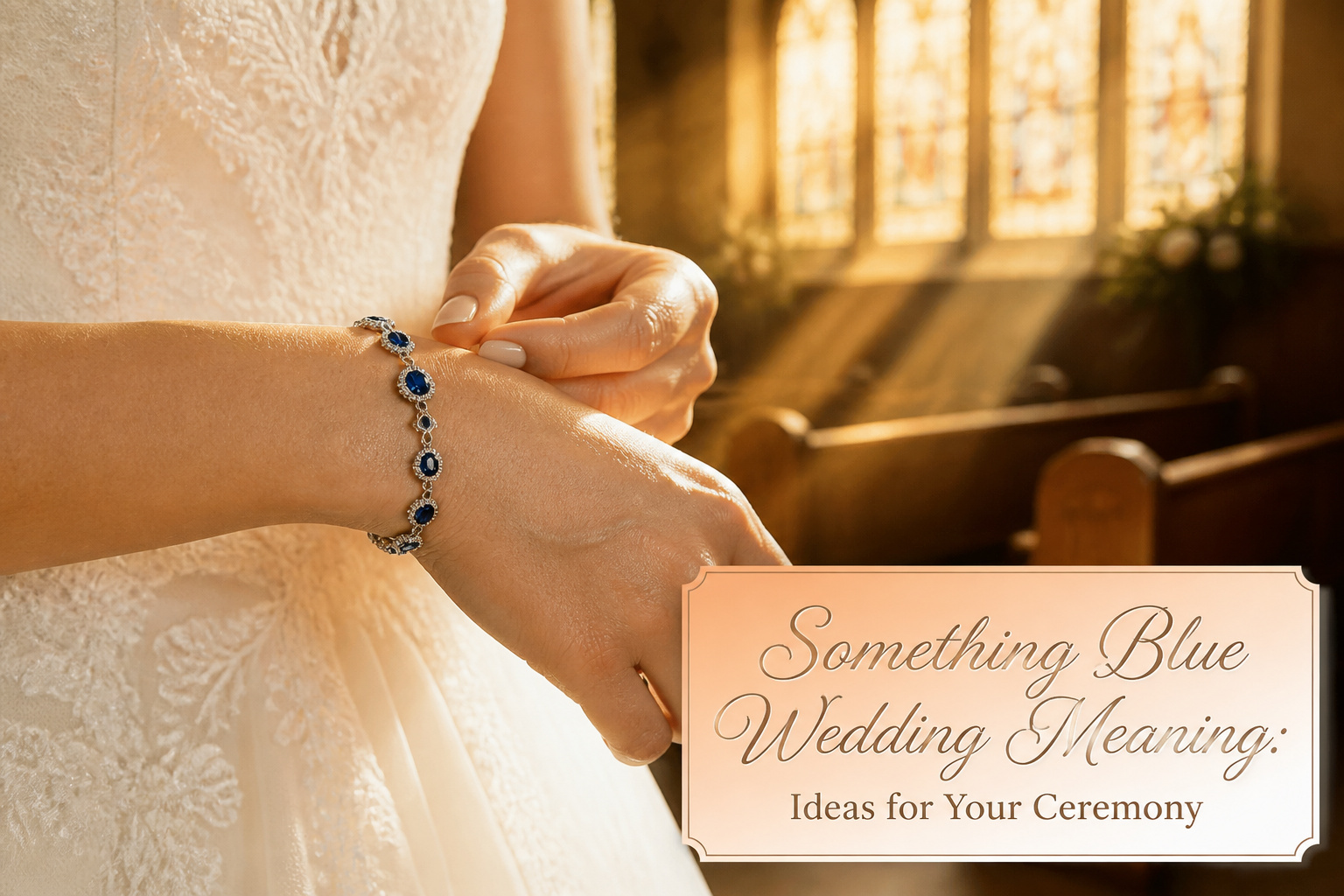
Something blue in a wedding means fidelity, faithfulness, and purity, inherited from a Victorian rhyme meant to stack luck for the bride.
The catch is that the tradition survives only as a small accent now, since white gowns replaced blue dresses long ago.
A bride might tuck a satin ribbon inside her shoe, stitch her partner’s initials in blue thread behind the gown’s lining, or pass a sapphire bracelet from morning prep to ceremony to reception, letting the color move with her rather than sit static.
Something Blue
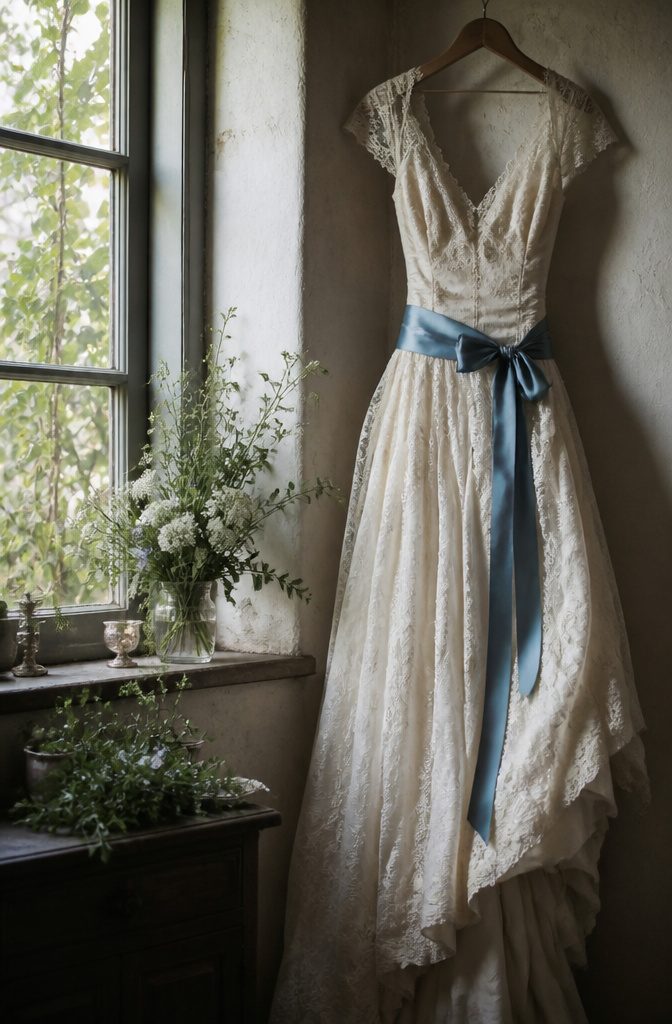
The Victorian rhyme most brides still hear runs: "Something old, something new, something borrowed, something blue, and a sixpence in her shoe."
Each line was meant to stack luck for the wedding day, and blue carried the weight of love, fidelity, and purity. That last virtue is why blue, not white, once dominated bridal color.
The sixpence itself has largely faded from modern ceremonies, the coin discontinued in the 1980s, though some families still slip one to the bride as a keepsake rather than footwear.
What struck me reading through how couples actually use this tradition is how rarely they pack all four items into the ceremony itself.
A bride might wear borrowed family jewelry for the walk down the aisle, then switch to a vintage piece for the after-party, or wear her blue to the welcome dinner instead.
The meaning holds whether the color hides inside the shoe or shows at the neckline. What matters is that the bride chose it deliberately, not that a guest spots it.
Blue Gemstones
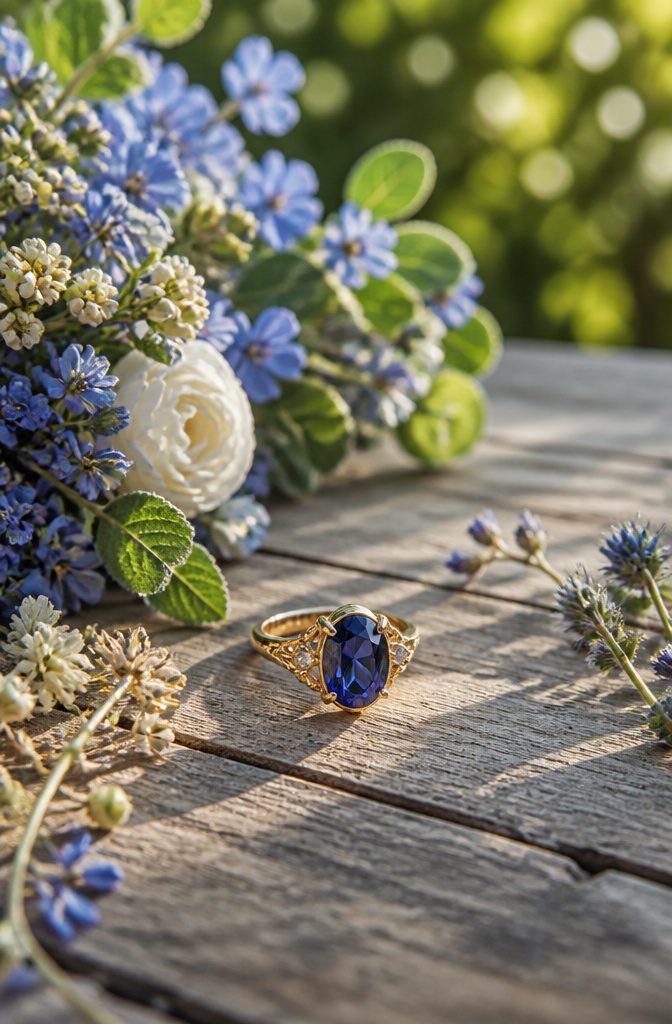
Sapphires carry the weight of centuries: loyalty and sincerity, the two things a marriage runs on.
That deep blue stone has sat in royal engagement rings for generations, most famously the sapphire and diamond ring that moved from Princess Diana to the Duchess of Cambridge in 2010.
A bride can wear it as a pendant, bracelet, or a pair of climber studs tucked against the earlobe.
Aquamarine offers a lighter, more watery blue for the same purpose. Where sapphire reads formal, aquamarine reads ethereal, and either works without fighting a white dress.
"Aquamarine or sapphire jewelry is a great option for something blue."
— Vogue
The point is practical: you do not have to sew a ribbon into your gown or hunt for blue shoes if the jewelry you already planned to wear can carry the tradition.
A stacking ring with a small sapphire, a solitaire pendant, even cufflinks for someone in the wedding party, all count. The stone does the symbolic work; the bride simply chooses which shade of blue suits her.
The Blue Garter
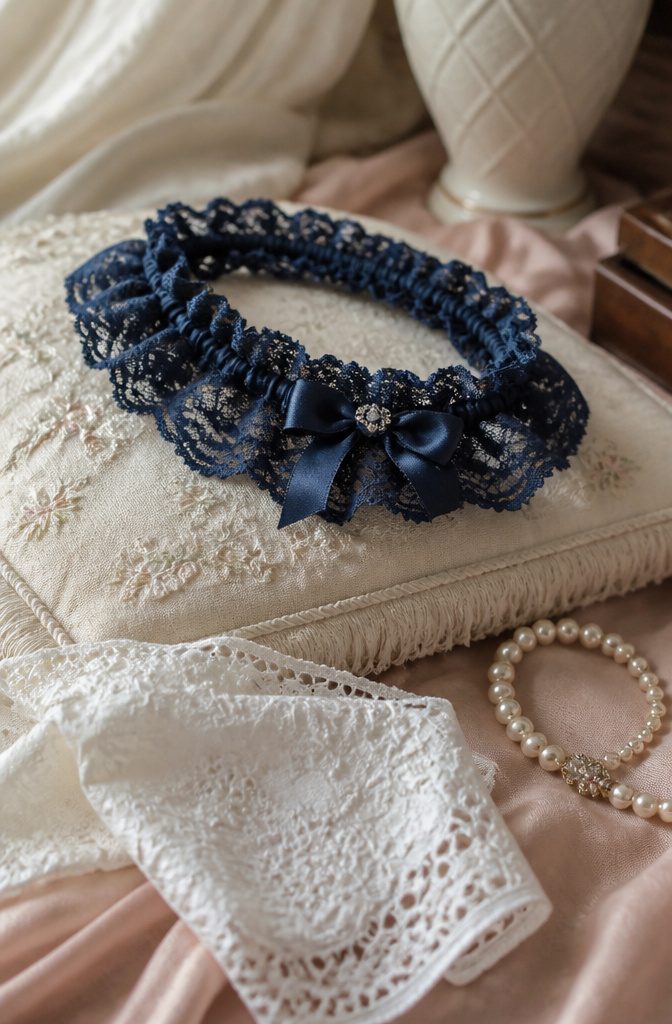
The blue garter sits right at the origin of this tradition.
An 1898 English folklore compilation noted that "something blue" usually took the form of a garter, an article already central to wedding customs like the old practice of plucking it from the bride.
That history gives the garter a weight other blue accessories do not carry, even if most guests never know it is there.
Most brides wear it high on the thigh, hidden entirely beneath the dress. The toss is optional, and skipping it does not make the garter any less traditional.
What matters is that you know it is there: a private nod to fidelity and the old rhyme, visible to no one unless you choose to show it.
That hidden quality is what makes this option work for brides who want the meaning without the color dictating their whole look.
A thin band of navy or dusty blue lace against skin does not have to match anything else you are wearing.
If you are doing the toss, the garter you keep and the one you throw can be two different pieces.
The one that stays hidden carries the actual something-blue role; the toss version is just for the moment. Either way, this is the most discreet route into the tradition, and the one with the deepest roots in it.
Bouquet Ribbon and Flowers
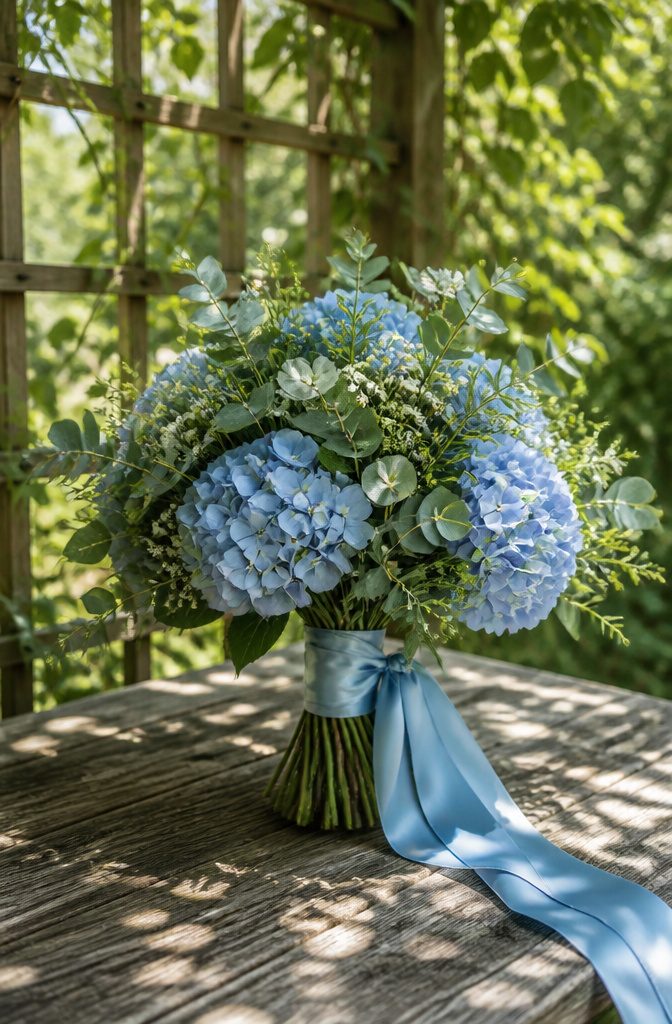
Blue ribbon wrapped around bouquet stems is the quietest way to wear the tradition without actually wearing it.
A florist can tuck a satin strip under the wrap so only a thin edge shows, or let a longer tail trail for photographs.
Hydrangeas and forget-me-nots are the blooms that read as genuinely blue rather than purple; thistle works if the wedding leans rustic.
The catch is that blue flowers cost more than whites and blush tones because they are harder to source out of season, and some photographers warn that deep blues photograph darker than they appear in person, especially in evening light.
For someone who wants the meaning without the visibility, the stem wrap beats the blooms: it costs less, it will not clash with a chosen palette, and it stays in frame only when you want it to.
Blue Shoes
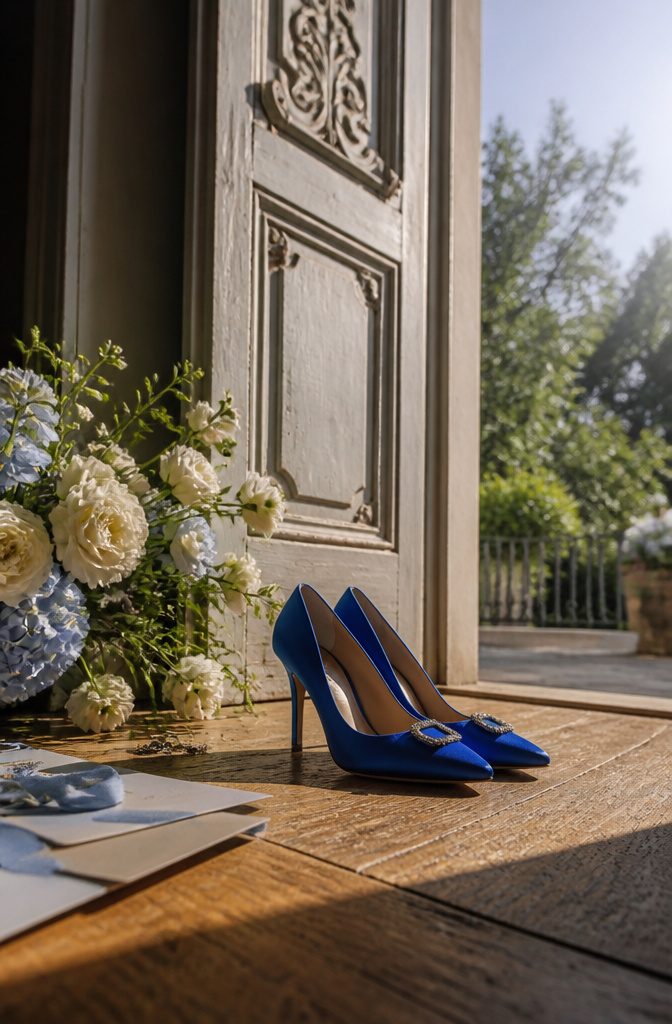
Blue shoes let you wear the tradition instead of hiding it.
Satin pumps dyed to match a bridesmaid dress, navy velvet block heels, even a re-wearable pair of leather loafers in cobalt: the color stays visible in every photo where the dress lifts.
The mistake I have watched brides make is picking the shoe for the portrait and forgetting the reception.
A three-inch stiletto in dyed satin looks sharp at the altar, but by hour six the balls of the feet are screaming and the dye is rubbing onto the hem.
What actually worked, in the weddings I have studied, were shoes the bride already knew she could stand in for eight hours: a low block heel with ankle support, or a ballet flat in navy suede that she wore to work twice to break in.
The blue sole, a small nod some designers build in, keeps the tradition alive only when someone lifts the dress to look.
That is fine if you want subtle. If you want the color to read in photos, the shoe itself has to carry it, and the camera does not care whether your feet hurt.
Nail Polish
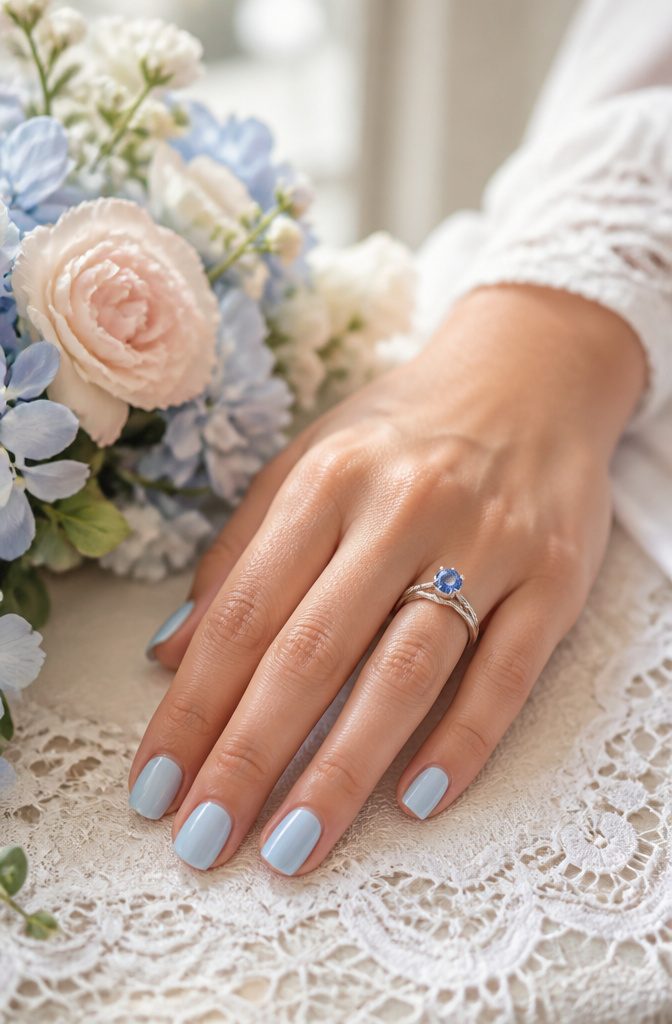
A pale blue polish on a single nail, or a sheer wash across all ten, reads as something only the bride notices until the photographer asks for a ring shot.
Then it becomes a quiet thread of color against the metal and the stone.
The sources mention this as one of the more playful places to tuck the tradition in, and I think that is exactly right: it does not fight the dress for attention the way sapphire drops or a bold shoe might.
The cost lands at nearly zero for most brides. A bottle of polish borrowed from a friend, or a $6–$8 drugstore shade in a soft robin’s egg, covers it.
Some nail technicians will add a subtle blue accent, a dot or a half-moon, for no extra charge if it is built into the manicure you are already booking.
The choice is between keeping it hidden, a blue pedicure under the gown where no one sees, or letting it show in the close-ups.
A barely-there blue reads as intentional in ring photos; a bright one can pull focus from the ring itself.
Table Settings and Florals
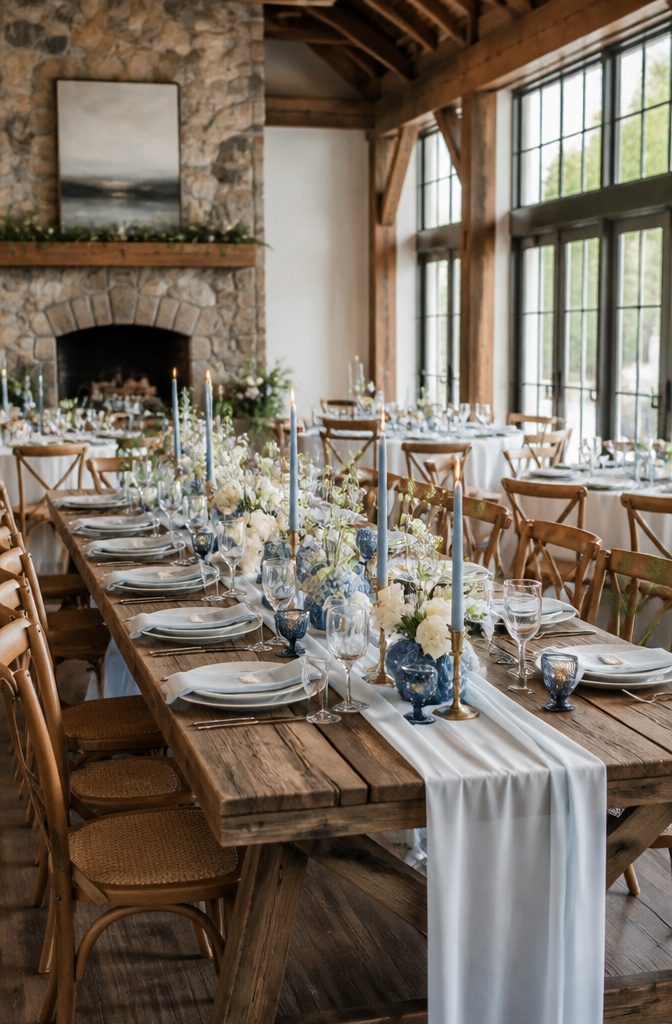
Colorful taper candles spread the tradition across every table instead of pinning it to one outfit. I have seen a whole room shift when the light catches blue wax against white linen, and the guests notice without being told why.
For a quieter move, muted blue table number or place card holders sit low enough that the color reads as atmosphere, not theme.
Either way, the something blue stops being a bride-only secret and becomes something the whole party walks through.
Blue flowers on the cake or a blue signature drink carry the same logic: one person does not have to carry the meaning alone when the setting itself holds it.
Groom and Groomsmen Accessories
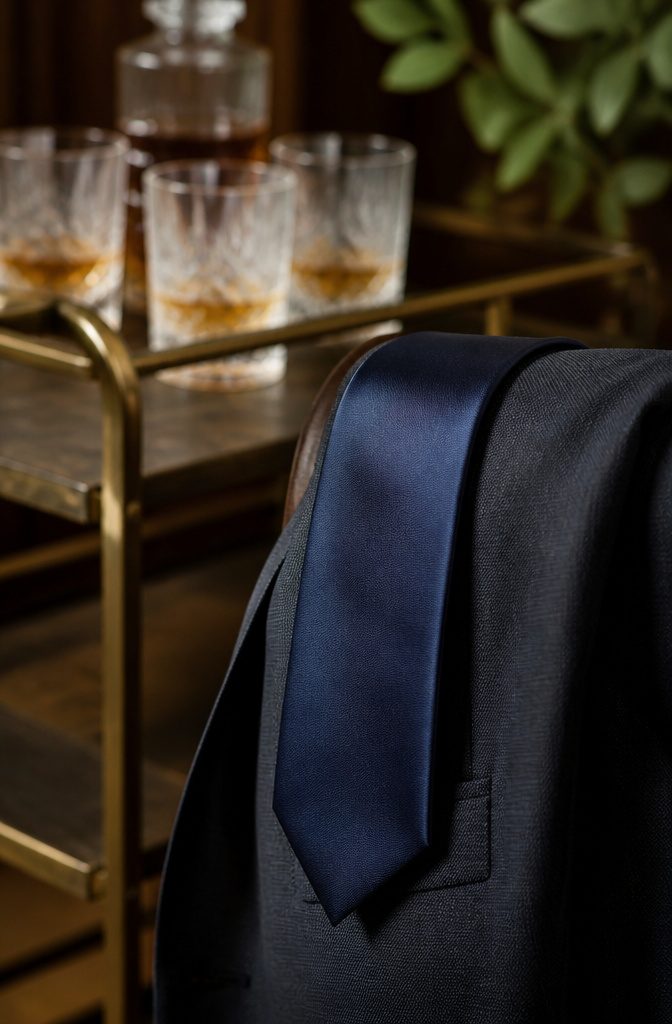
A navy tie or pocket square reads as intentional something blue because it sits where the eye already expects color against a neutral suit.
Dark navy socks work the same way: they substitute directly for black without looking like a costume choice, while a brighter blue sock turns the same item into a deliberate accent.
The question couples actually face is whether this counts when the bride is not the one wearing it. The tradition names the bride’s own tokens, so groomsmen accessories count only if the couple decides they count.
Two ways to play this: treat the groom’s blue as his separate pledge within the same ritual, or keep the tradition strictly with the bride and let the groom’s party wear blue as pure coordination.
The second option risks looking like a missed match if the bride carries no blue of her own.
If the groom wears the tie and the groomsmen wear the socks, the layer of shades needs a single anchor tone; otherwise the group photograph reads as five people who shopped alone.
Suspenders add another variable because they sit under the jacket and flash only in motion, which makes them a subtle choice for a groom who wants the token present without the group photo turning into a color study.
The Blue Handkerchief
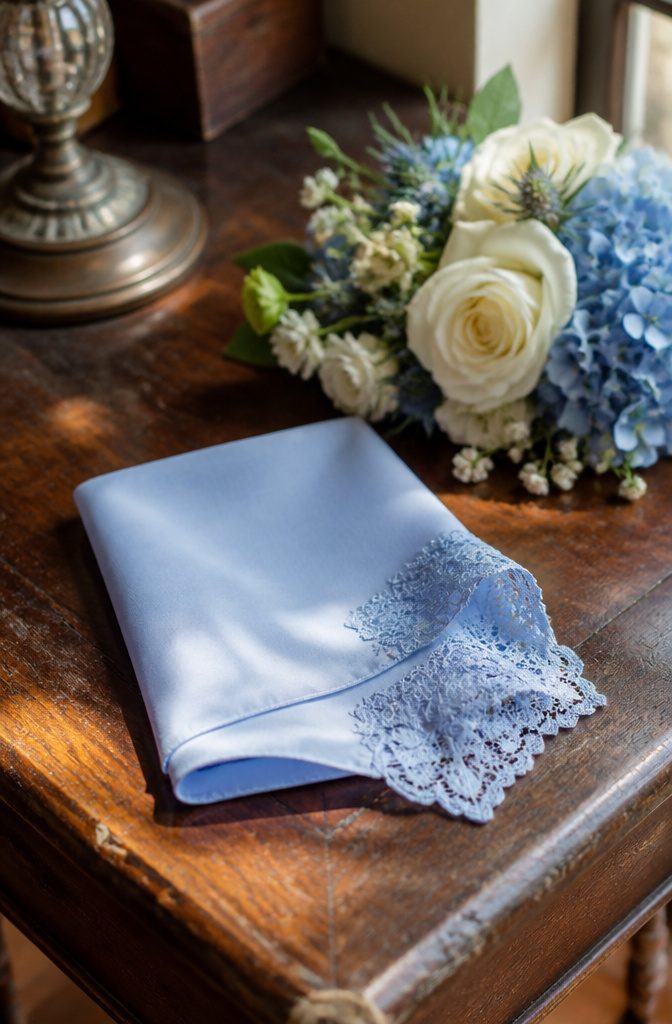
A blue handkerchief works because it is the only something-blue you will actually use during the ceremony. Tears at the vows are not hypothetical; they happen, and a pressed cotton square beats a wadded tissue in every photograph.
The handkerchief can be borrowed from a grandmother, bought new with custom embroidery, or stitched from old lace that carries its own history.
Anna, married in 2014, carried one piece that did double duty: her grandmother’s handkerchief with blue lace from her great-great-grandmother, covering both "old" and "blue" in a single pocket.
The question is whether you want the handkerchief to stay crisp and symbolic or to get wrinkled and real.
A bridesmaid or officiant can hold a spare if you prefer the first look untouched, or you can carry it yourself and let the day’s emotion show.
Either way, the handkerchief is the something-blue that justifies its place by function, not just tradition.
Where the Rhyme Came From
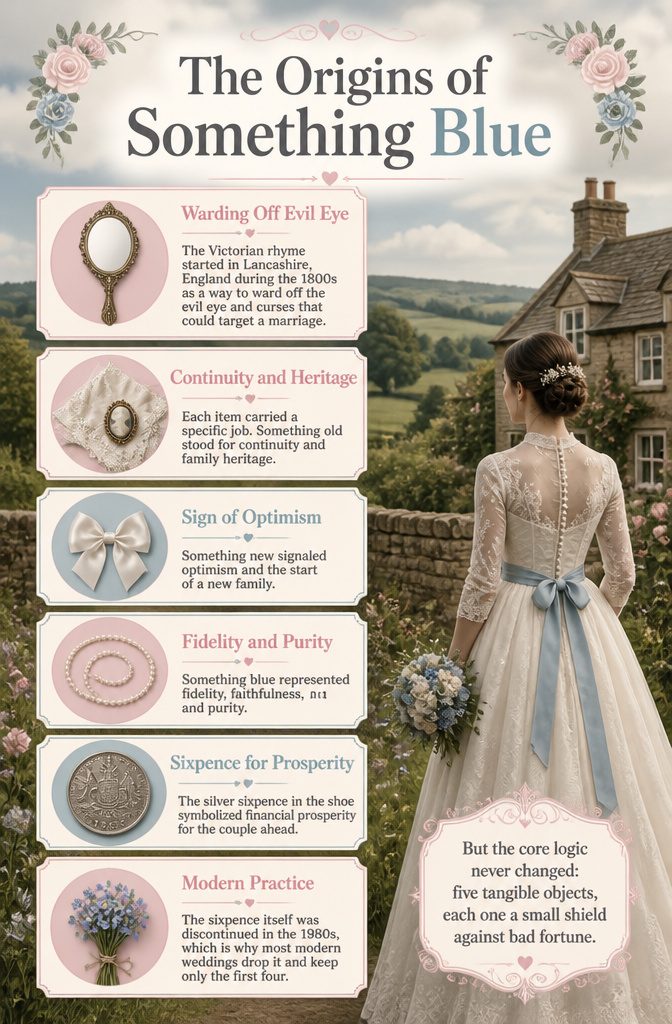
The Victorian rhyme started in Lancashire, England during the 1800s as a way to ward off the evil eye and curses that could target a marriage.
"Something old, something new, something borrowed, something blue, and a sixpence in your shoe" gave brides a checklist for luck.
Each item carried a specific job. Something old stood for continuity and family heritage.
Something new signaled optimism and the start of a new family. Something borrowed was meant to transfer happiness from a bride who was already happily married.
Something blue represented fidelity, faithfulness, and purity. The silver sixpence in the shoe symbolized financial prosperity for the couple ahead.
The sixpence itself was discontinued in the 1980s, which is why most modern weddings drop it and keep only the first four. But the core logic never changed: five tangible objects, each one a small shield against bad fortune.
Why Blue Meant Purity Before White Did
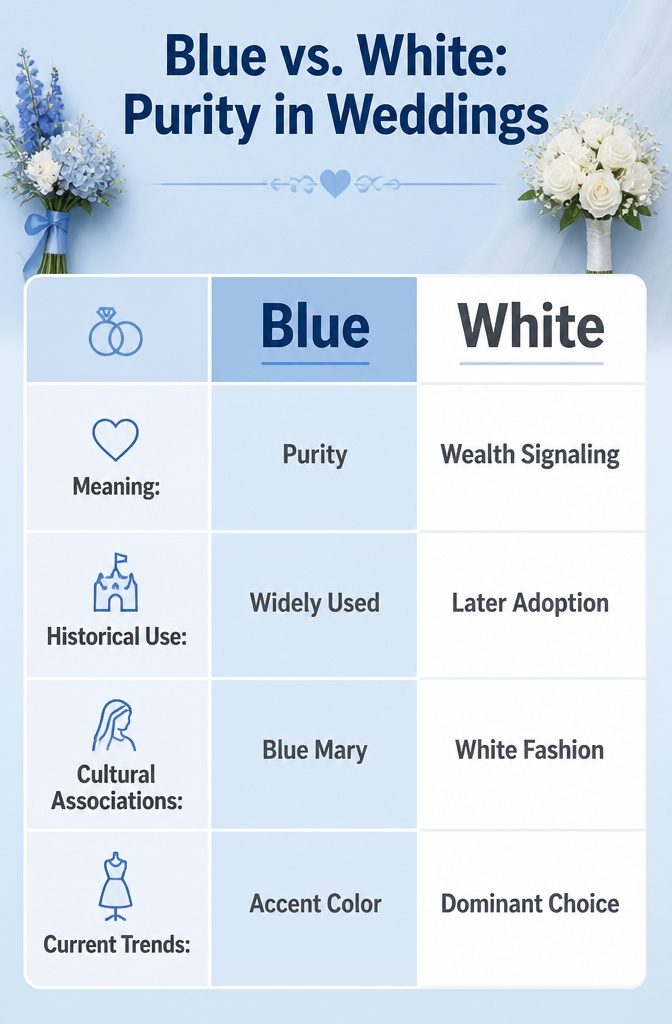
Blue carried the meaning of purity long before white ever did. In Christianity, the Virgin Mary appears in blue robes, and that association shaped how Western cultures read the color.
Brides in Medieval Europe often wore blue wedding dresses, not white, and the same held in Ireland and Vietnam. The old proverb put it plainly: "Marry in Blue, lover be true."
White gowns only took over later, pushed by fashion and wealth signaling rather than symbolism.
Yet the Victorian rhyme kept its blue line intact, pairing it with "something old, something new, something borrowed." Blue stood for fidelity and faithfulness, the qualities a marriage actually runs on.
The sixpence in the shoe dropped away, but blue stayed, partly because it also carried protection against the evil eye, an older layer of meaning most brides today have forgotten.
The color survived as a small accent rather than the whole dress, a way to honor the original idea without upstaging the white gown that replaced it.
How Brides Spread It Through the Day
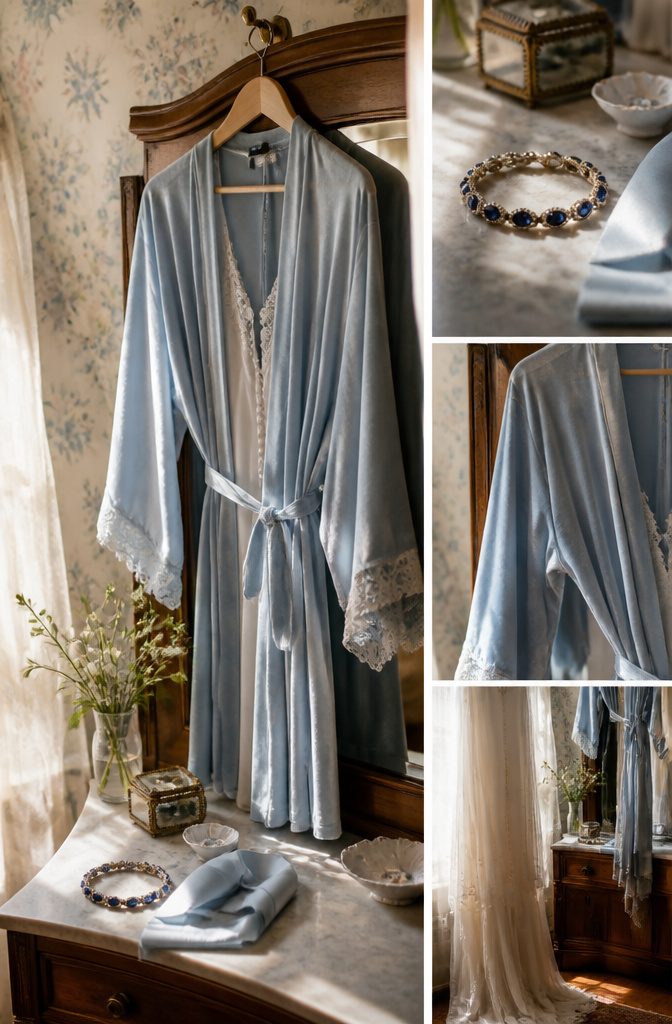
A bride I watched last spring treated her something blue like a relay baton, handing it off from one moment to the next rather than pinning everything on a single garter or pair of shoes.
She started in a dusty blue velvet robe while getting ready, then switched to a sapphire bracelet for the ceremony, and finished with a thin blue ribbon sewn inside her gown hem that only showed when she lifted the skirt to walk.
The color moved with her, which felt more alive than one static accessory sitting in place all day.
That approach, one concentrated item versus several small ones, comes down to how much you want the blue to do. A single sapphire earring or aquamarine pendant keeps the tradition tidy and photographable.
Scattering it thin, a blue note on the shoe sole, a ribbon stitched behind the label, navy nail polish barely visible, turns the whole day into a scavenger hunt only you fully map.
Unexpected placements matter most when they carry actual weight. A bride I read about embroidered her partner’s initials in blue thread inside the gown lining, which is the kind of hidden detail that outlasts the wedding in memory.
Another wrote a small note in blue ink on the bottom of her shoe, a message she saw each time she slipped it on during the day.
These work because they require proximity to matter; a guest three feet away never spots them, but the bride feels the loyalty and purity the color has stood for since long before white dresses took over.
The modern twist that convinced me was the bride who gave her bridesmaids matching blue loungewear for the morning, spreading the color outward before she even stepped into her own dress.
It turned a private token into shared texture, which is what most of the old traditions were trying to do anyway.
Frequently Asked Questions
What does something blue mean in a wedding?
Something blue symbolizes love, fidelity, and purity. The color carried this meaning long before white wedding dresses became standard; in Medieval Europe, Ireland, and Vietnam, brides often wore blue gowns because the shade was tied to faithfulness and modesty.
The tradition also traces back to protection against the evil eye, an older layer of meaning from Victorian England where the full rhyme originated.
How can I incorporate something blue into my wedding?
You can weave blue through jewelry like sapphire or aquamarine pieces, a blue garter worn high on the thigh, ribbon wrapped around bouquet stems, blue shoes, nail polish, or even table settings and candles that spread the color across the reception.
The article notes that most brides do not pack all four rhyme items into the ceremony itself; they scatter them through the day or keep some hidden as private tokens.
What are some ideas for something blue?
Specific ideas include a blue garter with historic roots in the tradition, sapphire or aquamarine earrings or bracelets, a satin ribbon on your bouquet stems, cobalt or navy shoes you have already broken in, pale blue nail polish for ring shots, a pressed cotton handkerchief with blue lace, or embroidery inside your gown lining such as your partner’s initials in blue thread.
The article also mentions blue taper candles, signature drinks, or giving bridesmaids matching blue loungewear to spread the color outward.